In brief
A practical checklist for AI cluster Ethernet fabrics, covering RoCE, lossless transport, congestion control, telemetry, optics, and open networking evidence.
Key takeaways
- Most data center Ethernet networks were designed around the idea that traffic is loss-tolerant and flows are independent.
- AI training clusters flip that assumption. When a GPU collective operation such as an all-reduce starts, every GPU in the group sends and receives large data blocks simultaneously.
- The SONiC Foundation describes SONiC as 'an open source network operating system (NOS) based on Linux that runs on switches from multiple vendors and ASICs' offering 'a full suite of network functionality, like BGP and RDMA, that has been production-hardened in the data centers of some of the largest cloud service providers' (sonicfoundation.dev).
Why AI Clusters Break Traditional Ethernet Assumptions
Most data center Ethernet networks were designed around the idea that traffic is loss-tolerant and flows are independent. A web request does not care if a packet arrives a few microseconds late.
AI training clusters flip that assumption. When a GPU collective operation such as an all-reduce starts, every GPU in the group sends and receives large data blocks simultaneously. A single packet drop can stall the entire collective, forcing a retransmission that cascades across thousands of GPUs. At that scale, the network is not just a connector — it is a performance multiplier or a silent bottleneck.
The SONiC Foundation describes SONiC as ‘an open source network operating system (NOS) based on Linux that runs on switches from multiple vendors and ASICs’ offering ‘a full suite of network functionality, like BGP and RDMA, that has been production-hardened in the data centers of some of the largest cloud service providers’ (sonicfoundation.dev). That production hardening came from exactly these kinds of demanding workloads.
The Open Compute Project Networking project states its scope as ‘fully disaggregated and open networking HW and SW’ covering the operating system, ‘fully automated configuration management and bare metal provisioning,’ and ‘universal and multi-form factor switch motherboard hardware’ (opencompute.org/projects/networking). The OCP community recognized early that monolithic, vendor-locked switches could not keep pace with how fast AI cluster designs change.
For data center teams evaluating a new fabric, the question is not ‘which switch brand is cheapest?’ It is ‘which switching platform gives us the RDMA behavior, telemetry visibility, congestion management, and multi-vendor hardware choice that AI workloads actually require?’
This article breaks those requirements into a practical checklist, maps each one to source-backed technical evidence, and explains where xSONiC data center AI switches and solution pillars address the gap.
Requirement 1: Lossless RDMA over Ethernet (RoCE v2)
AI training frameworks like PyTorch Distributed and NVIDIA NCCL rely on RDMA to move data between GPUs with near-zero CPU overhead. The Ethernet implementation of RDMA is RoCE v2 — RDMA over Converged Ethernet version 2.
RoCE v2 requires a lossless or near-lossless network path. Unlike TCP, which handles packet loss through retransmission and buffering, RDMA treats a packet drop as a fatal event. The NIC either stalls the transfer or reports an error to the application.
To make Ethernet lossless, two foundational mechanisms are needed:
-
Priority Flow Control (PFC): IEEE 802.1Qbb PFC allows a switch or NIC to send a pause frame on a per-priority basis. When a downstream port’s buffer fills up, it signals the upstream sender to stop transmitting on that traffic class while letting other classes continue.
-
Data Center Bridging Capability Exchange (DCBX): PFC and other lossless parameters need to be consistent across every hop in the fabric. DCBX automates the negotiation and synchronization of these settings between switches and NICs.
For xSONiC buyers, this maps directly to the RoCE v2 and DCBX solution pillars. When evaluating xSONiC data center AI switches, confirm that the switch ASIC supports PFC per-priority pause, ECN marking at line rate, and DCBX LLDP-based negotiation with standard NICs. The xSONiC data center AI switch portfolio is built on Enterprise SONiC with RDMA-aware forwarding, which is the foundation for any GPU backend fabric.
Buyer checklist:
- Does the switch support IEEE 802.1Qbb PFC on all ports at the target speed?
- Can PFC and DCBX settings be managed through SONiC configuration or NETCONF/YANG?
- Has the switch been validated with RoCE v2 NICs from at least two vendors?
- Does the ASIC handle PFC pause frames at full line rate without head-of-line blocking?
Requirement 2: Explicit Congestion Notification and Fast Congestion Feedback
PFC pause is the safety net, but relying on PFC alone creates a problem called PFC storms. If congestion is severe and widespread, PFC pause frames can ripple backwards through the fabric, stalling unrelated traffic and causing timeouts.
The better approach is to detect congestion early and signal the sender to slow down before buffers overflow. This is the role of Explicit Congestion Notification (ECN), defined in RFC 3168 and extended for data center use in DCTCP (Data Center TCP) and DCQCN (Data Center Quantized Congestion Notification).
ECN works by marking packets in the IP header when a switch queue depth crosses a configured threshold. The receiving NIC echoes the congestion signal back to the sender, which reduces its transmission rate. This feedback loop happens at microseconds granularity in modern ASICs.
For AI workloads, the speed of this feedback matters. NVIDIA’s reference architectures emphasize congestion notification at sub-microsecond latency for RoCE v2 traffic. The Fast CNP solution pillar from xSONiC addresses this directly: it covers the Congestion Notification Packet (CNP) generation and response cycle that keeps RDMA flows smooth under load.
The INT Telemetry solution pillar adds another dimension. In-band Network Telemetry (INT) allows switches to embed per-hop latency and queue depth data into packet headers as they traverse the fabric. Network operators can then extract this telemetry and visualize congestion hotspots in real time — without relying on SNMP polling or external probes.
Buyer checklist:
- Does the switch support ECN marking with configurable tail-drop and WRED thresholds?
- Can the switch generate CNPs at hardware speed for RDMA traffic?
- Is INT (In-band Network Telemetry) supported on the switch ASIC, including metadata insertion for queue depth, latency, and egress port?
- Does the switch support INT sink and transit roles in a spine-leaf topology?
Requirement 3: Multi-Speed Optics and Cabling Flexibility
AI clusters do not use a single port speed. A typical GPU backend fabric might run 400GbE or 800GbE on spine-to-leaf interconnects, 100GbE or 200GbE on leaf-to-compute links, and 25GbE on management or storage interfaces.
This means the switch platform needs to support multiple port speeds in the same chassis or across the same product family, and it needs compatible optics at every speed tier.
NVIDIA’s Spectrum switch portfolio spans from the SN2000 series at 100GbE up through the SN5000 at 800GbE and the SN6000 series at 102.4 Tb/s with co-packaged silicon photonics (nvidia.com/en-us/networking/ethernet-switching). The SN5400, for example, offers ‘64x QSFP-DD 400GbE’ with backward compatibility to 200G, 100G, and lower speeds per port.
The OCP Networking project includes SONiC, SAI (Switch Abstraction Interface), and ONIE as sub-projects, alongside Optical Circuit Switching (opencompute.org/projects/networking). This scope reflects the industry’s recognition that optics and switching are tightly coupled decisions.
For xSONiC buyers, the optical transceiver product line covers SFP, SFP+, SFP28, QSFP28, QSFP-DD, and OSFP form factors at 100G, 400G, and 800G. When designing an AI fabric, the transceiver and switch port compatibility matrix is as important as the ASIC. A switch that supports 400GbE ports but cannot source matching QSFP-DD transceivers and DAC/AOC cables creates a procurement bottleneck.
Buyer checklist:
- What port speeds does the switch family support across leaf, spine, and super-spine roles?
- Are QSFP-DD and OSFP transceivers available in the same product family for 400G and 800G?
- Does the switch support DAC and AOC cabling for short-reach intra-rack connections?
- Can transceiver and cable part numbers be cross-referenced against the switch firmware compatibility list before purchase?
Requirement 4: Spine-Leaf Fabric Scale and EVPN-VXLAN Overlay
AI clusters are built as spine-leaf (Clos) fabrics. Every leaf switch connects to every spine switch, creating a non-blocking, predictable-latency topology. Adding capacity means adding more leaves or spines, not redesigning the network.
At scale, a single fabric might need to interconnect 1,000 to 10,000 endpoints (GPU servers). The switch needs enough forwarding table entries for:
- MAC addresses (one per GPU NIC, potentially multiple per server)
- IP routes (host routes for RDMA traffic plus underlay routes for EVPN-VXLAN)
- ECMP next-hop groups (multi-path forwarding across all spine links)
- VXLAN tunnel endpoints (VTEPs for overlay segmentation)
NVIDIA’s SN5000 and SN6000 series list ‘512K max flow counters’ and ‘512K max IPv4 routes’ (nvidia.com/en-us/networking/ethernet-switching), indicating the table scale required for large AI fabrics.
EVPN-VXLAN is the standard overlay for segmenting AI traffic from management, storage, and tenant flows without requiring separate physical networks. The EVPN-VXLAN solution pillar provides the architectural framework for this overlay on xSONiC switches.
The SONiC open source NOS supports BGP-based EVPN and VXLAN encapsulation as part of its core feature set. SONiC’s modular, container-based architecture means the EVPN control plane runs in its own container, separate from the data plane and system management services. This separation allows independent upgrades and reduces the blast radius of configuration changes.
Buyer checklist:
- How many MAC addresses and IP host routes does the switch ASIC support?
- Does SONiC on this platform support BGP EVPN with VXLAN encapsulation?
- How many VTEP tunnels can the switch terminate simultaneously?
- Is the EVPN configuration manageable through NETCONF/YANG or only CLI?
- Does the switch support ECMP across all uplinks at full line rate?
Requirement 5: Network Visibility and Telemetry for AI Workload Correlation
Running a training job that takes eight hours and failing at hour six because of silent packet drops is a worst-case scenario for AI infrastructure teams. Network visibility is not optional in AI fabrics — it is operational hygiene.
Traditional network monitoring tools (SNMP polling every five minutes, syslog aggregation) are too slow for AI fabric troubleshooting. By the time a five-minute poll catches a congestion spike, the training job has already checkpointed or failed.
Modern AI fabric visibility requires:
- Streaming telemetry at sub-second intervals
- INT-based per-hop latency and queue depth data
- Flow-level counters exported via gNMI or sFlow
- Packet capture or replication for security and compliance
The IPTPath Telemetry and INT Telemetry solution pillars from xSONiC address this gap. IPTPath telemetry provides end-to-end path visibility for specific flows, while INT adds per-hop granularity.
For security and compliance teams, the packet broker product line enables traffic aggregation, filtering, replication, and load balancing to deliver copies of AI fabric traffic to monitoring, IDS, or forensics tools without impacting production flow.
The OCP Podcast episode featuring David Hirst, CEO of Macquarie Data Centres, highlights how Australian data centres are shifting design thinking from ‘real estate’ to ‘chip-out thinking’ driven by AI workloads, with requirements for ‘liquid cooling and megawatt-per-rack designs’ and the need for infrastructure that handles ‘bursty, unpredictable AI workloads’ (opencompute.org/ocp-podcast, Episode 18). These operational realities amplify the need for real-time network telemetry — when a rack draws a megawatt and runs thousands of GPU sessions, knowing exactly where congestion or drops occur is the difference between a five-minute fix and a five-hour outage.
Buyer checklist:
- Does the switch support gNMI streaming telemetry with configurable cadence?
- Is INT transit and sink mode supported in hardware?
- Can flow-level counters (per-port, per-queue, per-ECMP member) be exported to an analytics platform?
- Is sFlow or packet mirroring available for compliance and security tool delivery?
- Does the packet broker support header stripping, deduplication, and filtering for AI workload traffic?
AI Cluster Ethernet Acceptance Matrix
| Requirement | Evidence to capture | Acceptance gate | Rework trigger |
|---|---|---|---|
| RoCE transport | PFC, ECN, DCBX, MTU, queue profile, NIC firmware, and CNP counters | 30 minutes lossless traffic test at 100G/400G/800G target speed | RDMA is assumed from datasheets rather than tested |
| Fabric topology | Leaf/spine design, ECMP, oversubscription, optics, and growth plan | Failure and maintenance tests cover 3 representative paths | The design cannot map GPU count to switch and optics count |
| Congestion response | Buffer telemetry, ECN marks, pause behaviour, drop counters, and job symptoms | Operators can identify congestion source within 15 minutes | Packet drops or pause storms are visible only after user complaints |
| Visibility layer | INT, gNMI/OpenConfig, packet broker feeds, and tool capacity | 24 hours telemetry and capture path record under load | Security and platform teams rely on different evidence |
| Operations | Upgrade, rollback, support handoff, spare optics, and incident runbook | P1 simulation produces an evidence bundle within 2 hours | The fabric is performant but not supportable |
Engineering FAQ
What should be proven before approving AI cluster Ethernet? Prove RoCE transport, congestion response, optics, telemetry, failure recovery, and support ownership on the exact switch, NIC, optics, and NOS image.
Why is average throughput a weak acceptance metric? AI fabrics fail in microbursts, congestion events, and failure recovery. Buyers need p95/p99 job impact, queue telemetry, ECN/CNP counters, and packet-loss evidence.
Where does packet visibility fit? Packet brokers and telemetry pipelines provide independent evidence for security and performance teams. They should be designed with the fabric, not bolted on after the GPU cluster is live.
Related xSONiC Resources
Sources Reviewed
- Ethernet Network Adapters - ConnectX NICs | NVIDIA
- NVIDIA BlueField Data Processing Unit
- NVIDIA Spectrum-X Ethernet Platform
- OpenConfig gNMI Specification
- OpenConfig
- RFC 7950 - The YANG 1.1 Data Modeling Language
- RFC 6241 - Network Configuration Protocol (NETCONF)
- ACSC Essential Eight
- OAIC Notifiable Data Breaches
- APRA CPS 234 Information Security
- NETSCOUT Network Packet Definition
- Cloudflare Network Packet Definition
- SONiC Project Documentation
- Broadcom Ethernet Switching
- Marvell Switching
- NVIDIA Ethernet Switching
- Open Compute Networking
- SONiC GitHub
- SONiC Foundation
Product fit
Products referenced for evaluation
These products are referenced for evaluation context in the article. Confirm workload, port, optics, software, interoperability, and support requirements against the exact deployment before procurement.
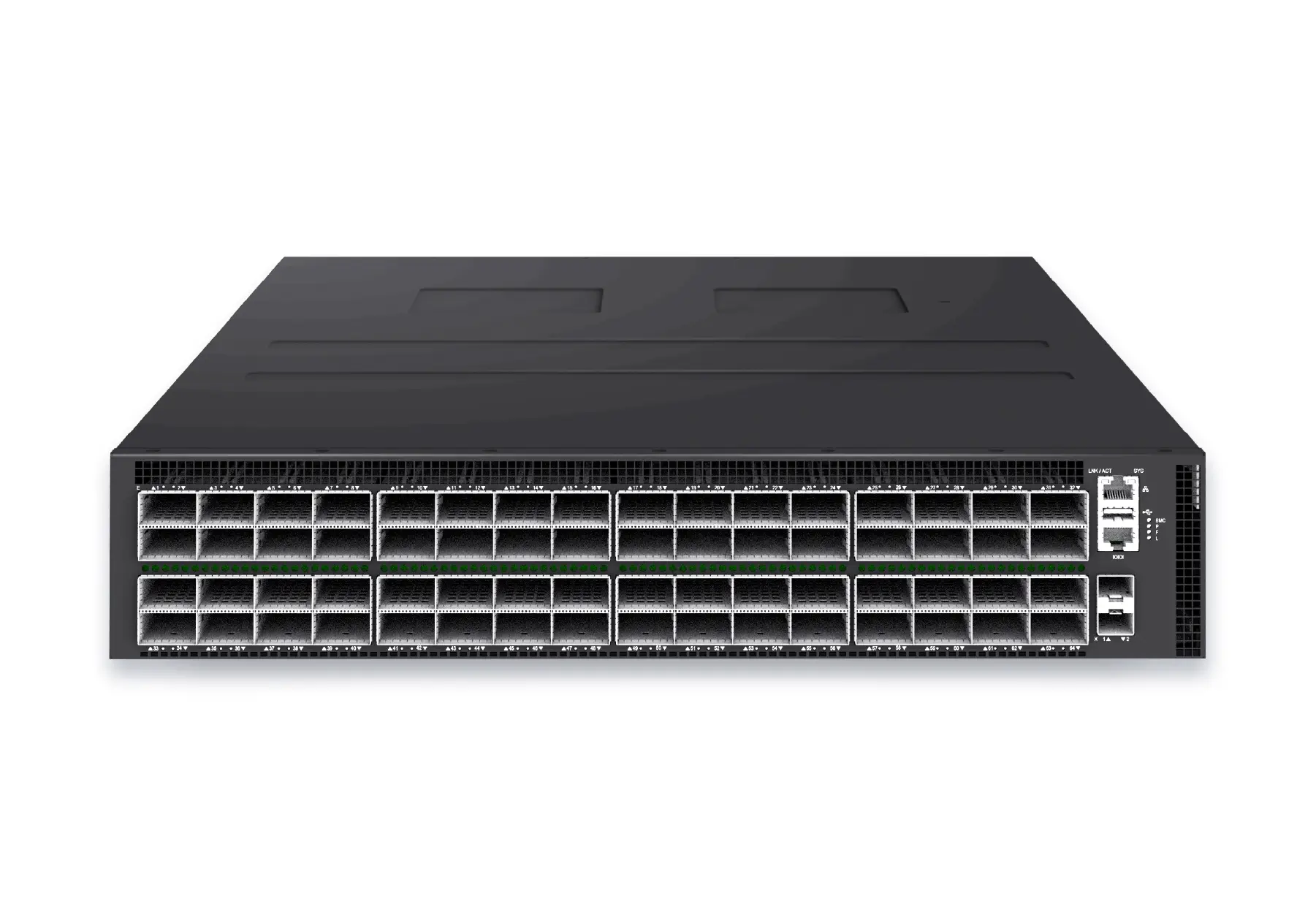 datacenter aiXS-DC-64X800-AI-G164-port 800G AI fabric switch for large-scale GPU clusters, HPC backbones, and ultra-high-throughput data center networks.View product
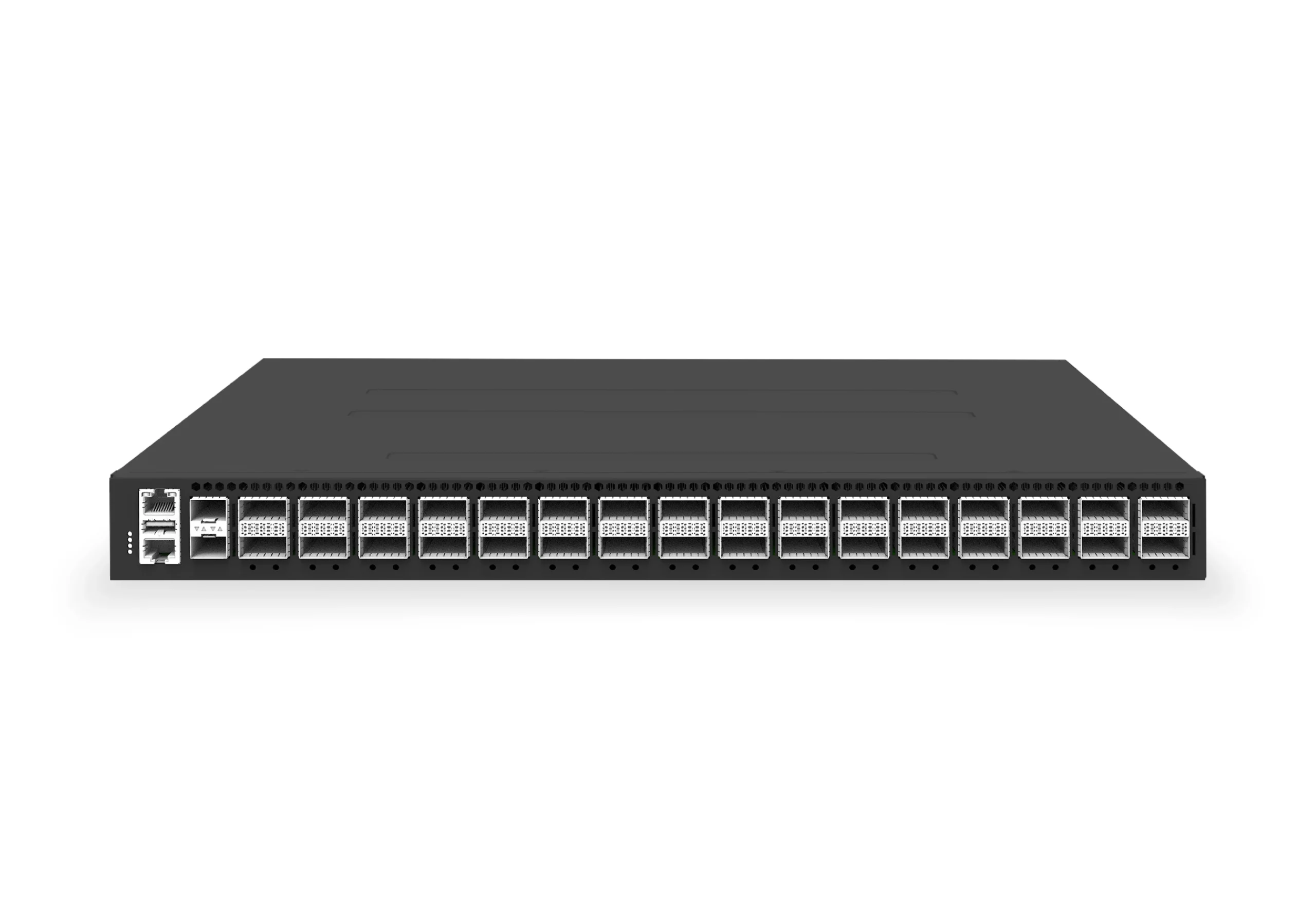 datacenter aiXS-DC-32X400-SP-G232-port 400G spine/core switch for high-capacity data center fabrics and AI-ready backbones.View product
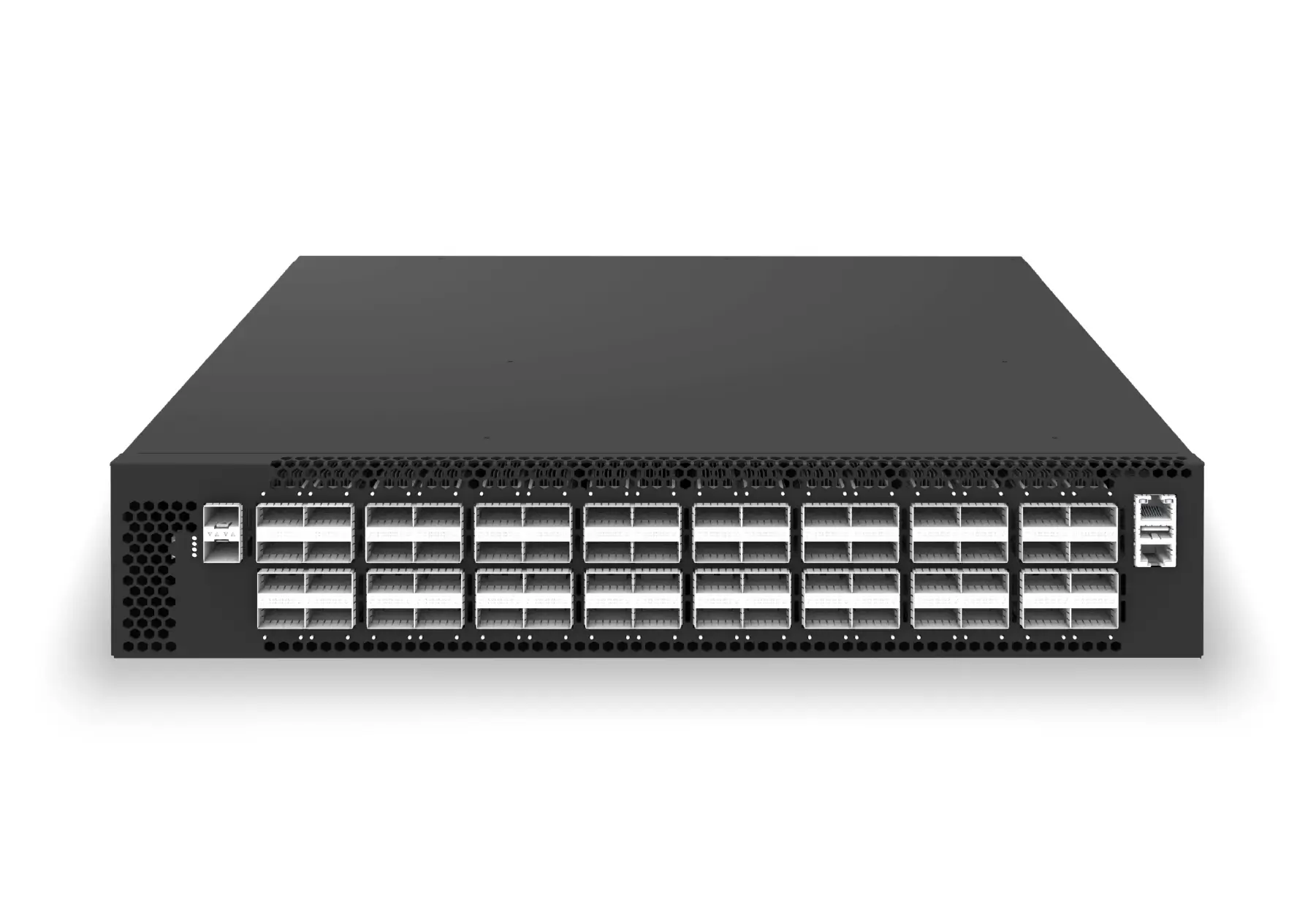 datacenter aiXS-DC-64X200-LS-G164-port 200G leaf/spine switch for high-bandwidth storage, compute, and scale-out data center fabrics.View product
Continue reading
Related articles
 Technical ArticleHow SONiC-Powered 400G and 800G Switches Change AI Data Center Fabric Design in AustraliaEngineering guide for 400G and 800G optics planning covering form factor, reach, telemetry, thermal limits, supply risk, and validation.Read article
 Technical ArticleRoCE v2 GPU Backend Fabrics at 400G and 800G: What Australian Data Center Operators Need to Know in 2026Engineering guide for AI fabric buyers covering RoCE, SONiC, telemetry, optics, support ownership, and deployment validation.Read article
 Technical ArticleWhat Australian Data Center Buyers Need to Know Before Choosing SONiC Switches for 400G and 800G UpgradesEngineering guide for 400G and 800G optics planning covering form factor, reach, telemetry, thermal limits, supply risk, and validation.Read article