
In brief
Engineering guide for 400G and 800G optics planning covering form factor, reach, telemetry, thermal limits, supply risk, and validation.
Key takeaways
- Software for Open Networking in the Cloud (SONiC) is a free, open-source network operating system built on Linux that runs on switches from multiple vendors and ASIC families.
- For Australian data center operators planning 400G or 800G fabric upgrades, SONiC represents an alternative to proprietary NOS stacks from the major switch vendors.
- The Australian market adds specific wrinkles. Local data center operators face constrained supply chains for networking hardware, a concentrated pool of network engineering talent, and increasing demand driven by AI workload deployments and cloud region expansion by hyperscalers.
Why SONiC Is Entering the 400G/800G Buying Conversation in Australia
Software for Open Networking in the Cloud (SONiC) is a free, open-source network operating system built on Linux that runs on switches from multiple vendors and ASIC families. The SONiC Foundation, a Linux Foundation project, describes SONiC as offering a full suite of network functionality including BGP and RDMA that has been production-hardened in the data centers of some of the largest cloud service providers. Its container-based architecture separates each network function into its own Docker container, which the project says provides better fault isolation, easier debugging, simplified upgrades, and enhanced scalability.
For Australian data center operators planning 400G or 800G fabric upgrades, SONiC represents an alternative to proprietary NOS stacks from the major switch vendors. The value proposition is familiar to anyone who has followed the open networking movement: decouple hardware from software, gain multi-vendor portability, and leverage a growing open-source community. What has changed in 2024 and 2025 is the arrival of 800G-capable silicon from multiple ASIC vendors, combined with maturing SONiC support across the switch hardware ecosystem.
The Australian market adds specific wrinkles. Local data center operators face constrained supply chains for networking hardware, a concentrated pool of network engineering talent, and increasing demand driven by AI workload deployments and cloud region expansion by hyperscalers. Whether SONiC-based 400G and 800G switching is the right move depends on engineering capacity, vendor support expectations, and the specific workload profile of each deployment.
The Vendor Landscape: Who Ships 400G and 800G Hardware with SONiC Support
The SONiC GitHub repository confirms that the project supports a wide range of network switches and provides multiple installation methods including ONIE-based bare-metal provisioning, Docker installation for development, and virtual machine deployments for testing. The project documentation emphasizes that SONiC runs on switches from various hardware vendors, though the exact supported device list is maintained in the SONiC wiki and requires cross-referencing with specific hardware platform compatibility.
NVIDIA is currently the most visible vendor shipping 800G Ethernet switches with explicit SONiC support. The company’s Spectrum Ethernet switch portfolio spans multiple generations: the Spectrum-2 SN3000 series (up to 200Gb/s per port), the Spectrum-3 SN4000 series (up to 400Gb/s), the Spectrum-4 SN5000 series (up to 800Gb/s, described by NVIDIA as purpose-built for AI), and the new Spectrum-6 SN6000 series featuring co-packaged silicon photonics. NVIDIA explicitly lists “Pure SONiC” as a supported NOS option alongside Cumulus Linux, describing it as a community-developed, open-source network operating system based on Linux.
Broadcom’s product pages list Ethernet switches and switch silicon families used across the bare-metal switching ecosystem, though Broadcom’s own page does not specifically enumerate SONiC compatibility by platform. Marvell’s switching product page returned a 403 error during this review, leaving a gap in the evidence base for that vendor’s current SONiC-ready 800G positioning.
For Australian buyers, the practical question is which hardware platforms are actually available through local distribution channels and which have verified SONiC image support. This requires checking the SONiC supported devices list against regional distributor inventory, a step that goes beyond what public documentation alone can confirm.
400G vs 800G: Where the Fabric Speed Decision Actually Matters
The jump from 400G to 800G is not simply a port speed upgrade. It changes the economics of spine-leaf fabric design, the optics required, and the cooling and power profile of each rack. NVIDIA’s Spectrum-4 SN5000 series supports 64 ports of 400GbE in a 2U form factor with 25.6 Tb/s throughput. The Spectrum-4 SN5400 variant offers 64 QSFP-DD ports at 400GbE. Moving to 800G, the Spectrum-4 SN5600 delivers 64 OSFP ports at 800GbE with 51.2 Tb/s throughput in the same 2U height, effectively doubling per-slot bandwidth.
For an Australian data center operator, the 400G vs 800G decision should be driven by GPU cluster interconnect requirements, east-west traffic growth projections, and optics procurement timelines. AI training clusters with large RDMA requirements may justify 800G spine links today, while general-purpose cloud or enterprise workloads may find 400G sufficient for the next two to three years.
SONiC Buyer Checklist: What to Verify Before Committing
The SONiC project describes several key characteristics that buyers should evaluate. SONiC uses standard Linux interfaces and tools, is fully open-source with active community development, and supports modern network programming paradigms. The project is licensed under the Apache License 2.0 and runs each network function in its own Docker container for modularity.
However, the gap between SONiC as a community project and SONiC as a production-ready NOS for 800G fabrics is significant. Australian buyers evaluating SONiC-based 400G or 800G switching should verify the following before committing:
- Hardware compatibility: Does the specific switch SKU have a verified SONiC image? The SONiC supported devices list is the authoritative source, but buyers should also confirm with the hardware vendor or bare-metal switch supplier.
- Feature completeness: Does the SONiC build for that platform support the specific features needed, including BGP, RDMA/RoCE, EVPN-VXLAN, and telemetry? Not all SONiC builds support all features on all platforms.
- Enterprise SONiC vs community SONiC: Several vendors offer commercially supported Enterprise SONiC distributions. Buyers need to understand the difference between community SONiC builds and vendor-supported Enterprise SONiC distributions in terms of release cadence, security patches, and support SLAs.
- Optics compatibility: At 400G and 800G, optics choices narrow. OSFP and QSFP-DD modules must be validated with the specific switch platform and SONiC build. Co-packaged optics platforms like NVIDIA’s Spectrum-6 eliminate pluggable optics entirely.
- Local support: Who provides Tier 2 and Tier 3 support for SONiC deployments in Australia? This is a critical gap for operators without deep in-house NOS expertise.
- Upgrade path: How does the SONiC community handle major version upgrades on production 800G platforms? Container-based architecture should simplify this, but real-world upgrade testing on the specific hardware is essential.
The AI Fabric Angle: Why 800G SONiC Switches Are Being Evaluated for GPU Clusters
For Australian organizations building private AI infrastructure, whether for large language model training, RAG inference pipelines, or multimodal AI services, the network fabric is a critical performance bottleneck. GPU-to-GPU communication patterns in distributed training create bursty, high-bandwidth east-west traffic that demands lossless or near-lossless Ethernet with RDMA support.
SONiC’s support for RDMA and BGP, combined with its production heritage in hyperscaler data centers, positions it as a candidate NOS for these AI fabric deployments. However, the integration between SONiC and specific RDMA/RoCE tuning parameters, congestion notification mechanisms like DCBX and Fast CNP, and telemetry frameworks like INT and IPTPath requires careful validation on each target hardware platform. These are not features where buyers can afford to discover gaps during production deployment.
The Australian AI infrastructure market is still early-stage compared to US and APAC hubs, but data center capacity constraints and GPU availability challenges make fabric efficiency even more critical. An operator deploying a 64-node GPU cluster with 800G interconnects cannot afford fabric-level inefficiencies that waste compute cycles.
Competitive Framing: SONiC vs Proprietary NOS at 400G and 800G
The SONiC value proposition at 400G and 800G must be weighed against the proprietary alternatives. The major switch vendors offer tightly integrated hardware and NOS stacks with tested feature sets, dedicated support organizations, and validated upgrade paths. The trade-off is vendor lock-in and potentially higher per-port costs.
SONiC offers the opposite trade-off: hardware portability, open-source transparency, and community-driven development, but with the burden of integration, testing, and support falling more heavily on the buyer or their systems integrator. The SONiC Foundation lists premier members and contributing organizations, indicating broad industry participation, but community support is not the same as enterprise SLA-backed support.
For Australian buyers, the decision often comes down to team capability. Organizations with strong Linux and open-source operations teams may find SONiC’s container-based, standard-Linux approach more natural to operate than proprietary CLIs. Organizations without that depth may find the operational risk of community SONiC on 800G platforms unacceptable.
There is also a middle path emerging: bare-metal switch hardware running vendor-supported Enterprise SONiC distributions. This model preserves hardware choice while providing a commercial support relationship, though the specific Enterprise SONiC offerings and their Australian availability vary by vendor.
What This Means for Australian Data Center Procurement
The SONiC ecosystem for 400G and 800G data center switching is maturing but not yet turnkey for every buyer profile. The open-source NOS runs on production-grade hardware from multiple vendors, has proven itself in hyperscaler environments, and supports the advanced networking features that AI and high-performance workloads demand. What remains uneven is the buyer experience: the amount of integration work, validation effort, and ongoing support required varies significantly by platform, feature set, and deployment scale.
The coming twelve months will likely see additional 800G SONiC-compatible platforms entering the Australian market through both bare-metal switch suppliers and established networking vendors with Enterprise SONiC offerings. Buyers who invest in SONiC evaluation now will be better positioned to take advantage of that expanding ecosystem.
Engineering Evidence Floor
For optics topics, speed is not the acceptance criterion. The evidence package should include form factor, reach, fibre type, link budget, DOM telemetry, FEC counters, CRC errors, temperature, breakout plan, spare availability, and switch/NOS compatibility. A useful validation run should capture 24 hours of link telemetry at 400G or 800G, include one optics replacement, and test the packet visibility path where SecOps or monitoring tools depend on copied traffic.
| Evidence area | What to validate | Acceptance gate | Rework trigger |
|---|---|---|---|
| Link health | DOM, FEC, CRC, flaps, temperature, and power | 24 hours clean record at 400G/800G | Errors are accepted without cause |
| Form factor | QSFP-DD, OSFP, DAC, AOC, fibre, and breakout | Exact module works on target switch image | Generic compatibility is assumed |
| Visibility | TAP/SPAN, packet broker, filter rules, and tool capacity | 30 minutes traffic replay without drops | SecOps path is designed after cabling |
| Supply | Local stock, RMA, spare optics, and lead time | 12 months spare plan approved | Replacement depends on unknown import timing |
| Operations | Replacement runbook, rollback, escalation, and evidence bundle | Fault isolated within 4 hours | Ownership splits across network and supplier |
Engineering FAQ
What should be proven before adopting EVPN-VXLAN on SONiC? Prove underlay routing, BGP sessions, VTEP behaviour, MAC/IP learning, route scale, multi-homing design, failure convergence, and observability. The overlay should be accepted as a system, not a feature checkbox.
Why does the underlay design still matter in an overlay network? EVPN-VXLAN depends on a stable routed underlay. MTU, ECMP, addressing, route policy, link failure behaviour, and telemetry determine whether the overlay remains predictable under load and during faults.
What should be included in an EVPN-VXLAN operations runbook? Include naming, IP plan, BGP policy, VNI mapping, change process, rollback commands, failure checks, telemetry fields, backup and restore steps, and escalation ownership for the selected SONiC image.
Related xSONiC Resources
Sources Reviewed
- Ethernet Network Adapters - ConnectX NICs | NVIDIA
- NVIDIA BlueField Data Processing Unit
- NVIDIA Spectrum-X Ethernet Platform
- ACSC Essential Eight
- OAIC Notifiable Data Breaches
- APRA CPS 234 Information Security
- NETSCOUT Network Packet Definition
- Cloudflare Network Packet Definition
- SONiC Project Documentation
- Broadcom Ethernet Switching
- Marvell Switching
- NVIDIA Ethernet Switching
- Open Compute Networking
- SONiC GitHub
- SONiC Foundation
Product fit
Products referenced for evaluation
These products are referenced for evaluation context in the article. Confirm workload, port, optics, software, interoperability, and support requirements against the exact deployment before procurement.
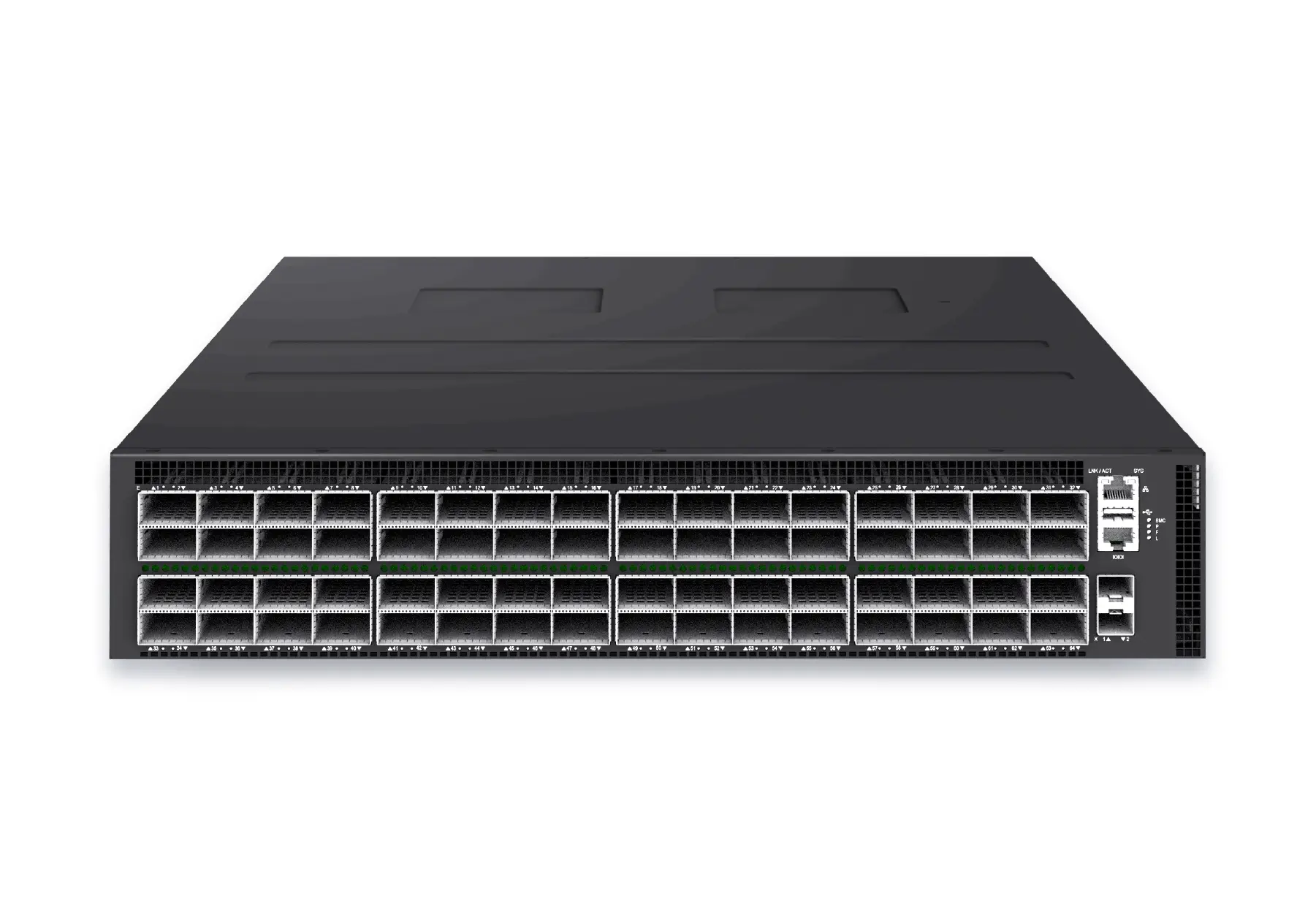 datacenter aiXS-DC-64X800-AI-G164-port 800G AI fabric switch for large-scale GPU clusters, HPC backbones, and ultra-high-throughput data center networks.View product
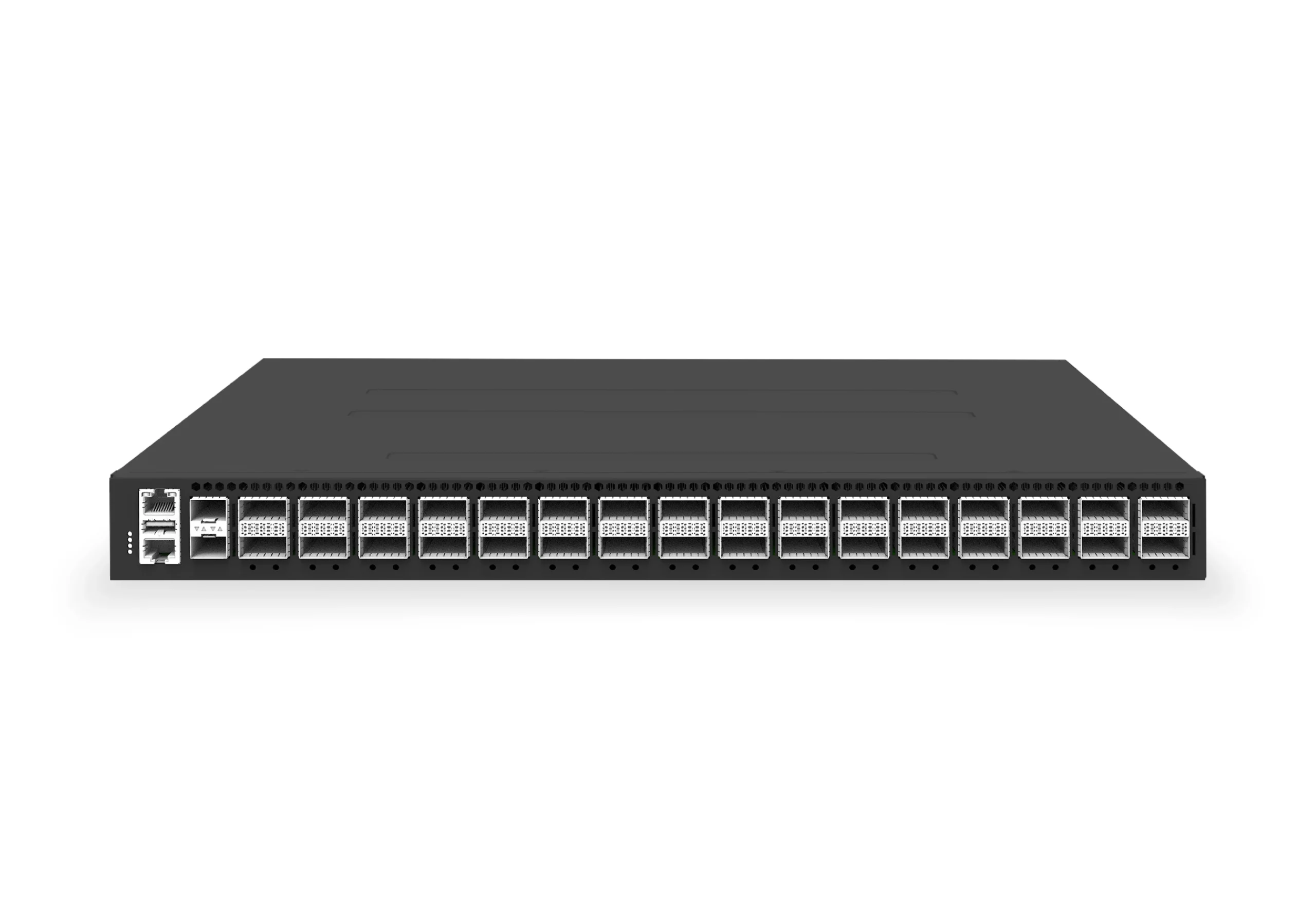 datacenter aiXS-DC-32X400-SP-G232-port 400G spine/core switch for high-capacity data center fabrics and AI-ready backbones.View product
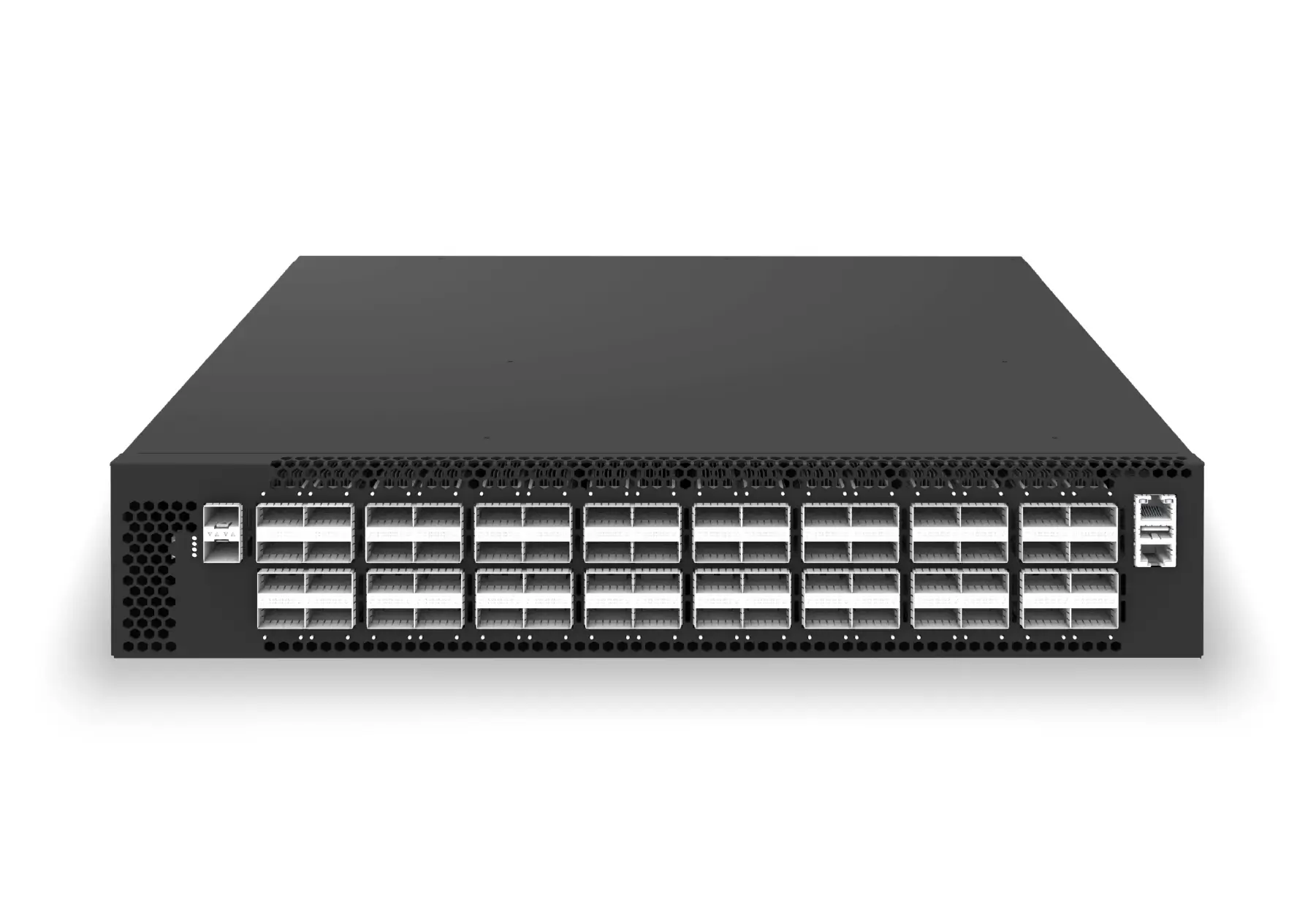 datacenter aiXS-DC-64X200-LS-G164-port 200G leaf/spine switch for high-bandwidth storage, compute, and scale-out data center fabrics.View product
Continue reading
Related articles
 Technical ArticleHow SONiC-Powered 400G and 800G Switches Change AI Data Center Fabric Design in AustraliaEngineering guide for 400G and 800G optics planning covering form factor, reach, telemetry, thermal limits, supply risk, and validation.Read article
 Technical ArticleRoCE v2 GPU Backend Fabrics at 400G and 800G: What Australian Data Center Operators Need to Know in 2026Engineering guide for AI fabric buyers covering RoCE, SONiC, telemetry, optics, support ownership, and deployment validation.Read article
 Technical ArticleRoCE RDMA and Lossless Ethernet Fabric Design: What AI Cluster Buyers Need to KnowEngineering guidance on RoCE RDMA and Lossless Ethernet Fabric Design for Australian AI fabric teams, covering RoCE validation, congestion control, telemetry, optics.Read article