Overview
GPU backend networks carry the east-west traffic created by distributed AI training. These networks are different from general data center networks because application performance depends on synchronized communication phases such as all-reduce, parameter exchange, checkpointing, and storage access.
An xSONiC backend fabric should be designed around bandwidth symmetry, low tail latency, congestion behavior, and operational visibility.
Traffic Characteristics
| Workload Pattern | Network Impact | Design Response |
|---|---|---|
| All-reduce | Many GPUs exchange data in synchronized phases. | Keep oversubscription low and ECMP behavior predictable. |
| Parameter exchange | Repeated east-west bursts. | Provide headroom and monitor queue pressure. |
| Checkpointing | Large periodic writes to storage. | Separate or carefully engineer storage paths. |
| Failure recovery | Traffic shifts after link or device failure. | Validate convergence and remaining bandwidth under failure. |
Fabric Roles
| Role | Function | xSONiC Platform Fit |
|---|---|---|
| Backend leaf | Connects GPU servers or accelerator nodes. | 400G/800G ports for high-density server attachment. |
| Backend spine | Provides non-blocking east-west capacity. | 400G/800G spine platforms with high radix. |
| Storage leaf | Connects high-performance storage targets. | 100G/200G/400G depending on storage tier. |
| Frontend boundary | Connects management, user, or service networks. | 100G/200G platforms for controlled separation. |
Reference Topology
GPU servers       GPU servers       GPU servers
    |                 |                 |
    v                 v                 v
Backend leaves  -- Backend spines -- Backend leaves
    |                 |                 |
    +------ storage / checkpoint fabric boundary ------+
For large clusters, separate backend, frontend, and storage networks can reduce operational risk. Smaller clusters may converge some roles, but the traffic classes and failure domains should still be designed explicitly.
Lossless Ethernet Controls
| Control | Purpose | Validation |
|---|---|---|
| PFC | Protect selected RDMA priorities from loss. | Confirm pause is limited to intended priorities. |
| ECN | Mark congestion before queues overflow. | Verify sender response under incast and all-reduce. |
| ETS | Allocate bandwidth across traffic classes. | Confirm storage or management traffic does not starve backend traffic. |
| DCBX | Exchange DCB parameters with adjacent devices. | Check negotiated state on server-facing links. |
Sizing Considerations
- Estimate per-GPU and per-server network demand during peak collective operations.
- Decide acceptable oversubscription for backend traffic; many AI backend fabrics target very low oversubscription.
- Reserve headroom for retransmission, failure reroute, storage bursts, and telemetry.
- Validate ECMP hashing with realistic flow counts and packet patterns.
- Test failure scenarios at the workload level, not only at the routing protocol level.
Operational Validation
| Test | What It Proves |
|---|---|
| All-reduce stress | Backend fabric can handle synchronized GPU communication. |
| Incast test | Queue and congestion controls behave under fan-in. |
| Link failure | Remaining paths can absorb traffic without severe job impact. |
| Storage checkpoint | Storage traffic does not destabilize backend communication. |
| Telemetry correlation | Operators can connect application slowdown to network state. |
xSONiC Platform Fit
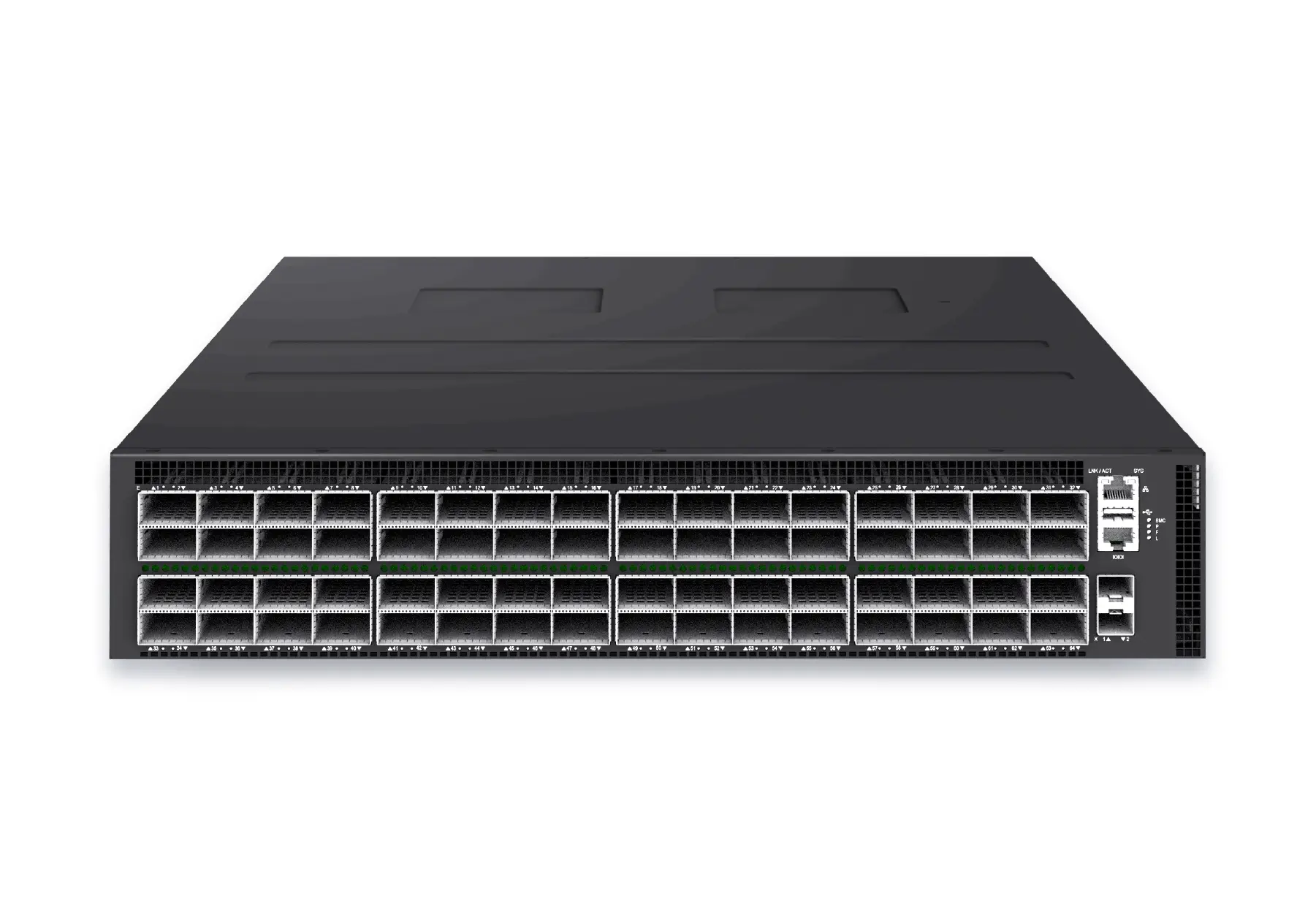
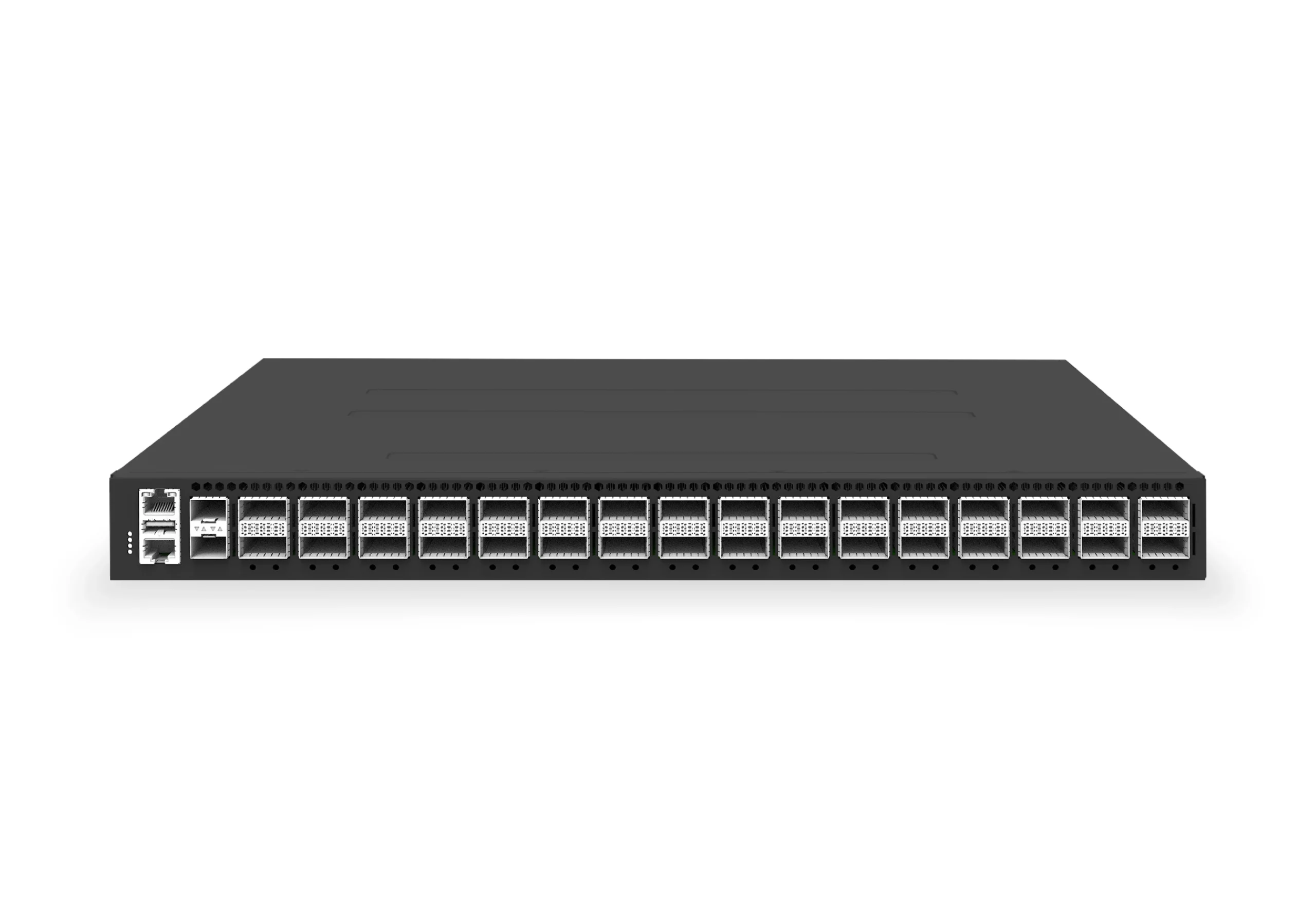
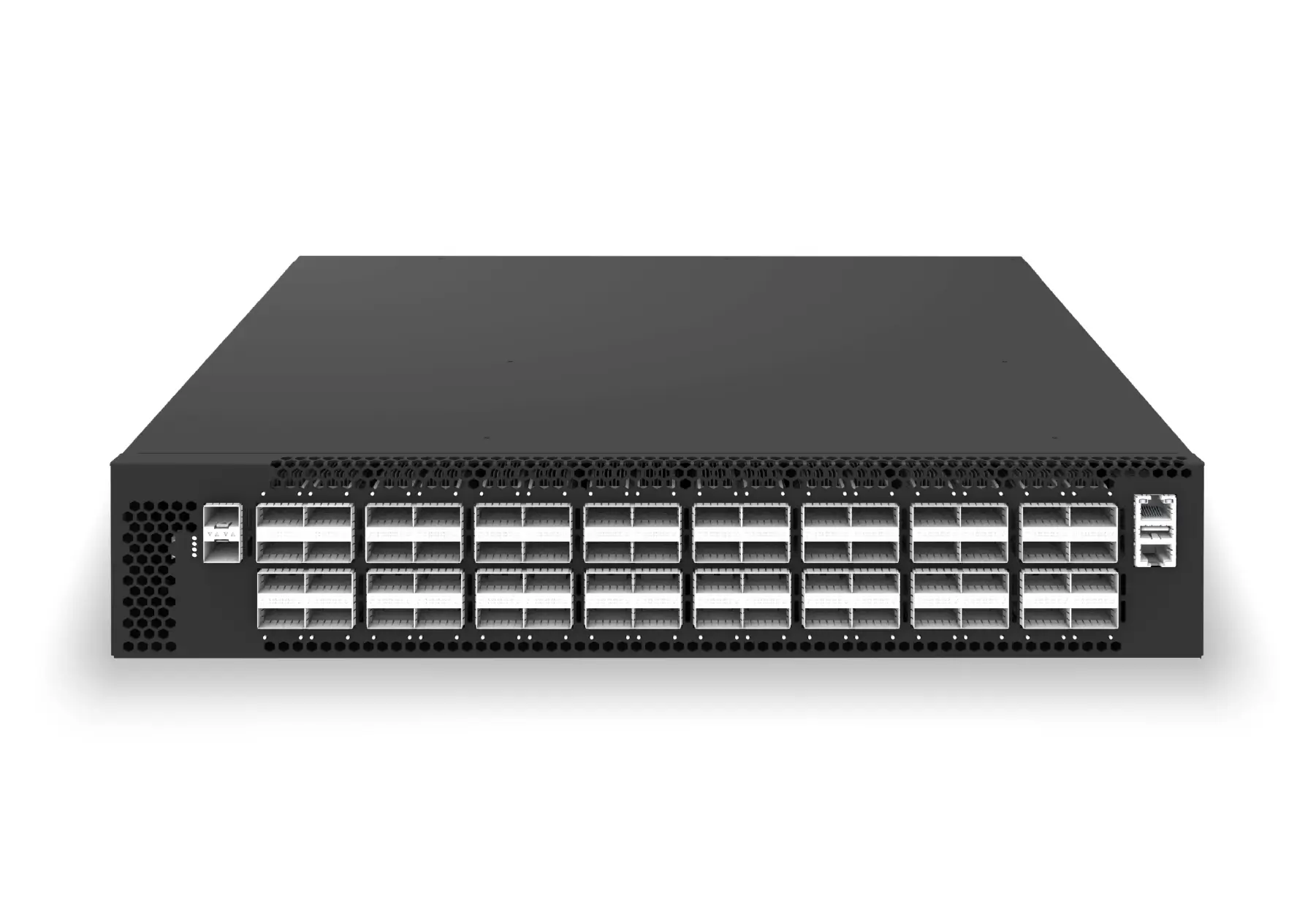
Use 800G xSONiC platforms for high-radix AI backend fabrics, 400G platforms for spine or high-density leaf roles, and 100G/200G systems for frontend, storage, or staged migration layers. The exact mix depends on GPU generation, NIC speed, cluster size, and failure-domain design.
Procurement Boundary
The backend fabric should be purchased against the workload envelope, not a generic port-speed target. The bill of materials should state the GPU NIC speed, number of servers per leaf, leaf-to-spine ratio, optical reach, accepted oversubscription, storage path, and telemetry fields that operations will use after handoff. If any of those fields are unknown, the first action should be a pilot, not a production order.
Do not mix backend, frontend, and storage traffic by accident. A converged fabric can be valid, but only when the traffic classes, queue policy, and failure domains are explicit. If checkpoint traffic can consume the same queue as GPU collective traffic, the validation plan has to prove that the storage burst does not extend training step time beyond the agreed SLO.
Engineering Validation Checkpoint
A GPU backend fabric should be accepted against job behavior, not only switch throughput. Run at least 2 model-parallel or all-reduce style tests, 2 storage flows, and one topology failure while capturing queue telemetry, packet loss, p99 latency, ECMP path use, and job step variance.
| Check | Evidence to collect | Reject condition |
|---|---|---|
| Backend load | Link utilization, queue depth, ECN/PFC counters, and step-time variance. | High average bandwidth but unstable job completion time. |
| Path diversity | ECMP distribution, failed-link replay, and route convergence logs. | Hot paths persist after hashing or topology changes. |
| Operator evidence | SONiC service health, telemetry export, and rollback records. | No way to connect workload symptoms to fabric counters. |
Engineering FAQ
Is 800G always required for GPU backend fabrics?
No. 800G helps when GPU generation, server density, and workload behavior can use the bandwidth. A 400G design with better path symmetry, lower oversubscription, and stronger telemetry may be a better first production step for smaller private AI clusters.
What is the most common design mistake?
The common mistake is validating the network at the link layer only. Backend fabric acceptance should include application job timing, storage checkpoint behavior, congestion counters, and failure replay. Otherwise the team may prove that links are fast while missing the queue event that slows the training job.