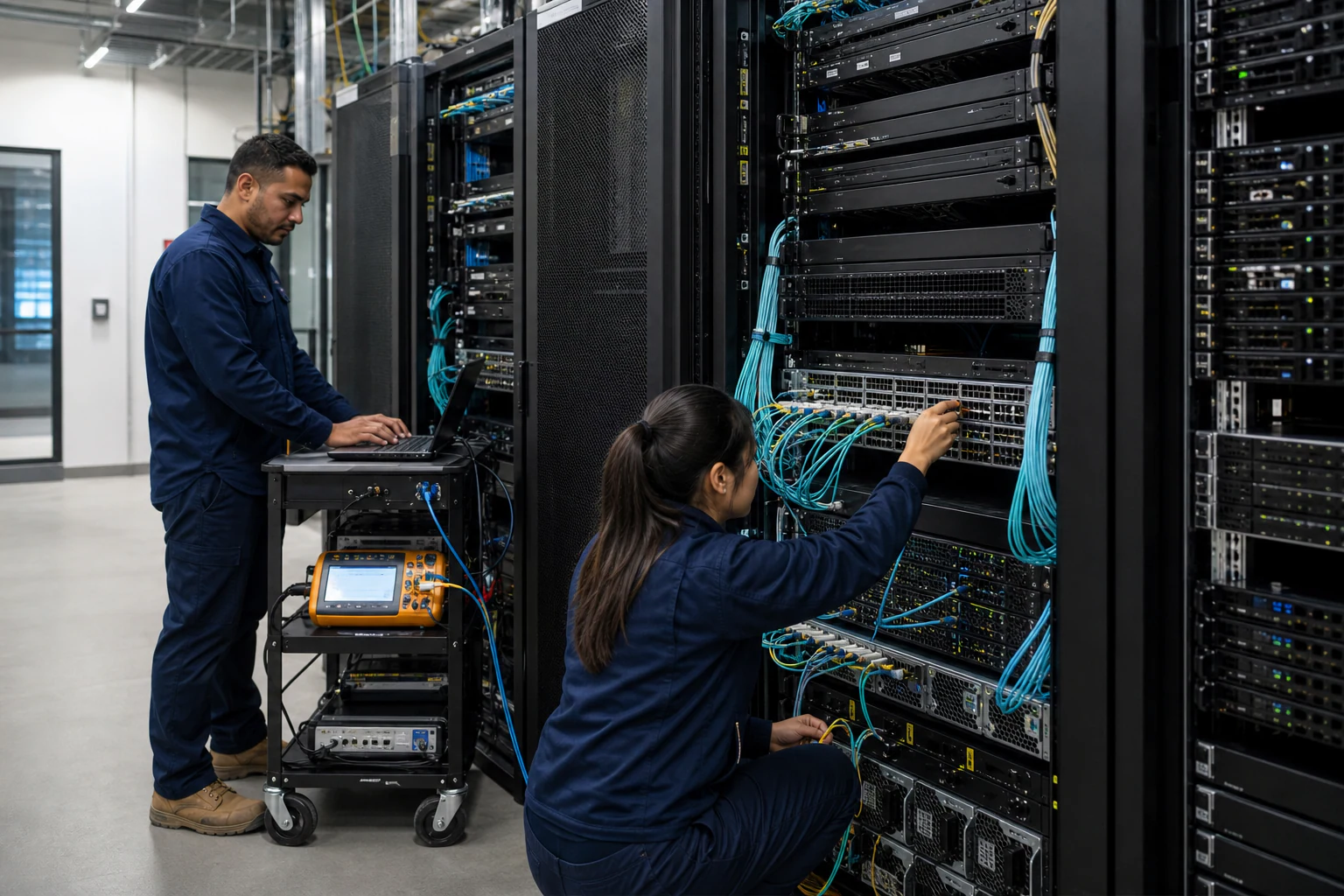
In brief
Engineering guide for 400G and 800G optics planning covering form factor, reach, telemetry, thermal limits, supply risk, and validation.
Key takeaways
- Australian enterprises and colocation providers evaluating GPU clusters should treat the network as part of the compute system, not as a late-stage cabling choice.
- The traditional answer from incumbent switch vendors is a proprietary fabric stack: a closed NOS, a closed management plane, and a licensing model that scales cost faster than port count.
- First, vendor lock-in at the network layer limits negotiating leverage on hardware refresh cycles.
The AI Fabric Problem Australian Data Centers Cannot Ignore
Australian enterprises and colocation providers evaluating GPU clusters should treat the network as part of the compute system, not as a late-stage cabling choice. Every rack of GPU servers multiplies east-west traffic. Training jobs stress collective communication. Private inference clusters add bursty storage and retrieval traffic. At 400G and 800G line rates, the fabric design determines whether expensive accelerators stay busy or wait on congestion.
The traditional answer from incumbent switch vendors is a proprietary fabric stack: a closed NOS, a closed management plane, and a licensing model that scales cost faster than port count. For Australian operators facing rising bandwidth demands at 400G and 800G line rates, this model creates three compounding problems.
First, vendor lock-in at the network layer limits negotiating leverage on hardware refresh cycles. Second, proprietary fabric software ties operational tooling to a single ecosystem. Third, the total cost of ownership for proprietary 400G and 800G spine-leaf fabrics often exceeds what open alternatives can deliver.
SONiC — Software for Open Networking in the Cloud — offers a different path when the platform is validated properly. For Australian AI infrastructure buyers evaluating next-generation data center fabrics, the question is not simply whether a switch runs SONiC. The question is whether the SONiC image, SAI layer, ASIC SDK, optics, congestion control, and telemetry behave correctly together under AI traffic.
What SONiC Actually Is (and Why It Matters for AI Fabrics)
SONiC is an open source network operating system built on Linux and maintained under the SONiC Foundation, a Linux Foundation project. It runs on switches from multiple hardware vendors and multiple ASIC families, which means the NOS and the silicon are decoupled.
This decoupling is not a theoretical benefit. According to the SONiC Foundation, the platform is built on the Switch Abstraction Interface (SAI), which accelerates hardware innovation by allowing switch silicon vendors to compete on chip performance without requiring the NOS to be rewritten for each ASIC generation. The GitHub project documentation confirms that SONiC offers a full suite of network functionality — including BGP and RDMA — that has been production-hardened in the data centers of some of the largest cloud service providers.
The container-based architecture is equally important. SONiC decomposes monolithic switch software into multiple Docker containers, each handling a discrete function: routing, switching, telemetry, configuration management. This design provides better fault isolation, easier debugging, and simplified upgrades — characteristics that matter when a single spine switch failure can impact hundreds of GPU endpoints in a training cluster.
For AI fabric builders, SONiC’s support for RDMA over Converged Ethernet (RoCE) is the key functional requirement. RoCE enables GPU-to-GPU memory access across the Ethernet fabric without CPU involvement, which is essential for distributed training workloads that rely on collective communication primitives like AllReduce.
400G and 800G: The Port Speed Transition Happening Now
The shift from 100G to 400G spine-leaf fabrics is well underway in hyperscale data centers. The next transition — to 800G per port — is accelerating, driven by GPU cluster density and backend bandwidth requirements.
The industry direction is clear. IEEE 802.3 lists active work around 200G, 400G, 800G, and 1.6T Ethernet; UEC publishes Ethernet specifications aimed at AI and HPC at scale; and OCP ESUN focuses on Ethernet scale-up networking for accelerated AI infrastructure. These efforts matter because AI fabrics are no longer just a port-speed race. They require lossless behavior, congestion control, link resiliency, efficient headers, and interoperability.
At the product level, 400G and 800G switches are already available across multiple vendor ecosystems. For a buyer, the port-speed question should immediately become a validation question: which optics are approved, what cable lengths are supported, what power draw applies with populated optics, how does the switch expose queue telemetry, and what happens during link flap, PFC pause storms, and image rollback?
For Australian operators, the practical question is not whether 400G and 800G are real. The question is which fabric architecture delivers the right performance-to-cost ratio at these line rates while preserving operational flexibility.
RoCE v2: The Non-Negotiable Protocol for GPU Backend Fabrics
RoCE v2 operates over UDP, enabling Layer 3 RDMA transport across routed spine-leaf topologies. This is critical for AI clusters because it allows the fabric to scale beyond a single Layer 2 domain while maintaining the zero-copy, kernel-bypass performance characteristics that GPU collective operations require.
However, RoCE v2 is sensitive to congestion. When a fabric link approaches saturation, RoCE packets can experience drops or jitter that degrade training throughput. This is where Data Center Bridging Capability Exchange (DCBX), Priority Flow Control (PFC), and explicit congestion notification mechanisms become essential.
SONiC-based switches can be configured for the DCB and telemetry primitives that RoCE fabrics need, but implementation details vary by ASIC, SAI layer, and vendor image. For GPU backend fabric design, the acceptance test should include DCBX negotiation, PFC priority mapping, ECN/CNP behavior, buffer thresholds, queue counters, and fabric-level telemetry under representative AI traffic.
The xSONiC solution portfolio addresses these exact requirements. The AI Fabric and GPU Backend Fabric solutions provide architectural reference designs for building SONiC-based AI clusters. The RoCE v2 Guide and DCBX Technology pages offer detailed configuration guidance. For operators who need telemetry visibility into fabric health, INT Telemetry and Fast CNP solutions round out the operational toolkit.
Why SONiC Changes the Buyer Calculus for Australian Operators
Australian data center operators face a specific set of constraints. Geographic distance from major semiconductor supply chains affects hardware lead times. Limited local competition among networking vendors can reduce price competitiveness. And the skills pool for proprietary NOS platforms is smaller than in markets with deeper hyperscale presence.
SONiC addresses each of these constraints differently than a proprietary approach.
Multi-vendor hardware sourcing. Because SONiC decouples the NOS from the switch hardware via SAI, operators can source 400G and 800G switches from multiple vendors and run the same operational stack on all of them. This reduces dependency on a single vendor’s supply chain and pricing. The SONiC ecosystem includes switch silicon from multiple ASIC vendors, and the supported hardware list continues to grow.
Portable operational tooling. SONiC uses standard Linux interfaces, JSON-based configuration, and supports programmatic management. Operators who build automation on SONiC are not locked into vendor-specific management platforms. NETCONF and YANG model support enables integration with existing network automation frameworks.
Community-driven feature velocity. As a Linux Foundation project, SONiC benefits from an active contributor community. Features like BGP, EVPN-VXLAN, and RDMA enhancements are developed in the open. Operators can adopt community releases or work with distribution partners who provide enterprise support and validation.
Cost structure. The open source licensing model (Apache 2.0) eliminates per-switch NOS licensing fees. Total cost of ownership shifts toward hardware, support, and internal skills — categories where operators have more control.
SONiC in an 800G AI Fabric: Practical Design Considerations
Building an 800G AI fabric with SONiC involves several design decisions that buyers should evaluate before committing to an architecture.
Spine-leaf topology sizing. At 800G per port, a 64-port spine switch provides 51.2 Tb/s of aggregate throughput. Leaf switches with 400G uplinks and 100G server-facing ports remain common, but 200G server-facing ports are emerging as GPU server NICs advance. The topology must account for oversubscription ratios appropriate for the workload profile — AI training typically demands lower oversubscription than general-purpose compute.
Transceiver and cabling planning. 800G links require OSFP or QSFP-DD transceivers and appropriate fiber plant. For intra-rack connections, direct attach copper (DAC) cables at 400G and 800G reduce cost. For inter-rack links, optical transceivers are mandatory. The xSONiC optical transceiver portfolio addresses these requirements across SFP, SFP28, QSFP28, QSFP-DD, and OSFP form factors.
RoCE fabric tuning. PFC buffer allocation, ECN marking thresholds, and CNP response timing must be tuned to the specific traffic patterns of the AI framework in use. Different collective communication libraries (NCCL, RCCL, custom implementations) generate different flow patterns, and fabric configuration should be validated against the actual workload.
Telemetry and observability. SONiC supports streaming telemetry via gNMI and INT-based in-band telemetry. For AI fabric operators, monitoring per-flow latency, queue depth, and congestion events is essential for identifying fabric bottlenecks before they impact training throughput.
Failure-mode testing. The design should prove more than line-rate forwarding. Test link failure during load, optic replacement, warm reboot, cold reboot, ECMP path imbalance, queue buildup, PFC storms, management-plane loss, and rollback to a known-good configuration. A fabric that passes only a clean throughput test has not been proven for AI operations.
A Buyer Checklist for Australian AI Fabric Evaluations
For Australian operators evaluating SONiC-based 400G and 800G AI fabrics, the following checklist summarizes key evaluation criteria:
| Evaluation Area | What to Verify |
|---|---|
| Port speed and radix | 400G/800G port count, breakout modes, 100G/200G server-facing migration path, and 1.6T roadmap assumptions. |
| SONiC image | Release version, support owner, SAI version, ASIC SDK version, known defects, upgrade and rollback method. |
| RoCE readiness | PFC, DCBX, ECN/CNP behavior, buffer thresholds, pause counters, and traffic-class mapping. |
| Optics and cabling | Approved QSFP-DD/OSFP modules, DAC/AOC/fiber lengths, DOM visibility, power draw, thermal behavior, and lead times in Australia. |
| Observability | gNMI/OpenConfig, queue telemetry, PFC/ECN counters, path visibility, link error counters, and integration with existing monitoring tools. |
| Operations | Warm reboot, cold reboot, config backup, image rollback, RMA path, local spares, and escalation ownership. |
The Competitive Landscape: Open vs. Proprietary AI Fabric Stacks
The market for AI data center networking is not a two-player game. In addition to SONiC-based open networking, proprietary NOS platforms from major switch vendors, cloud-provider-internal fabric stacks, and InfiniBand-based alternatives all compete for the same budget.
The SONiC value proposition is not that it is free. It is that it gives operators architectural control. When the NOS is open, the operator chooses the hardware. When the hardware is multi-vendor, the operator negotiates on price. When the operational tooling is Linux-native, the operator leverages existing skills.
For Australian operators building AI infrastructure that must scale over multiple hardware refresh cycles, this architectural control may be worth more than any single vendor’s feature roadmap.
Next Steps
If you are evaluating SONiC-based data center switching for an AI fabric deployment in Australia, xSONiC provides data center AI switches, optical transceivers, and solution reference architectures designed for these workloads. The xSONiC Data Center AI Switches product family covers 400G and 800G platforms, and the AI Fabric and EVPN-VXLAN solutions provide architectural guidance for building production SONiC fabrics.
Australian buyers can contact the xSONiC team to discuss specific deployment requirements.
Engineering FAQ
How should NVMe form factor selection be made? Start with workload profile, usable capacity, serviceability, thermal envelope, write endurance, PCIe generation, slot layout, and replacement process. U.2, E1.S, M.2, and AIC devices solve different mechanical and operational problems.
What matters more than peak sequential speed? Sustained performance, thermal throttling behaviour, write endurance, latency under load, firmware stability, power-loss protection, and fleet manageability usually matter more than a single benchmark number.
How should storage be validated for AI or cloud workloads? Test the selected form factor in the real chassis with expected airflow, queue depth, write mix, temperature range, and monitoring stack. Validation should include steady-state and recovery behaviour, not only fresh-drive performance.
Related xSONiC Resources
Sources Reviewed
- Ethernet Network Adapters - ConnectX NICs | NVIDIA
- NVIDIA BlueField Data Processing Unit
- NVIDIA Spectrum-X Ethernet Platform
- OpenConfig gNMI Specification
- OpenConfig
- RFC 7950 - The YANG 1.1 Data Modeling Language
- RFC 6241 - Network Configuration Protocol (NETCONF)
- SONiC Project Documentation
- Broadcom Ethernet Switching
- Marvell Switching
- NVIDIA Ethernet Switching
- Open Compute Networking
- SONiC GitHub
- SONiC Foundation
- Supports: SONiC container architecture, Redis state model, and SAI hardware abstraction.
- Supports: syncd, ASIC_DB, SAI API, and hardware-vendor SDK relationship.
- Supports: active 200G, 400G, 800G, 1.6T, and Ethernet-for-AI standards work.
- Supports: UEC focus on open, interoperable, high-performance Ethernet for AI and HPC at scale.
- Supports: Ethernet scale-up networking work around efficient headers, link resiliency, lossless networking, and standards alignment.
- Supports: AI Ethernet congestion behavior, RoCE congestion control, telemetry, and endpoint rate-control discussion.
Product fit
Products referenced for evaluation
These products are referenced for evaluation context in the article. Confirm workload, port, optics, software, interoperability, and support requirements against the exact deployment before procurement.
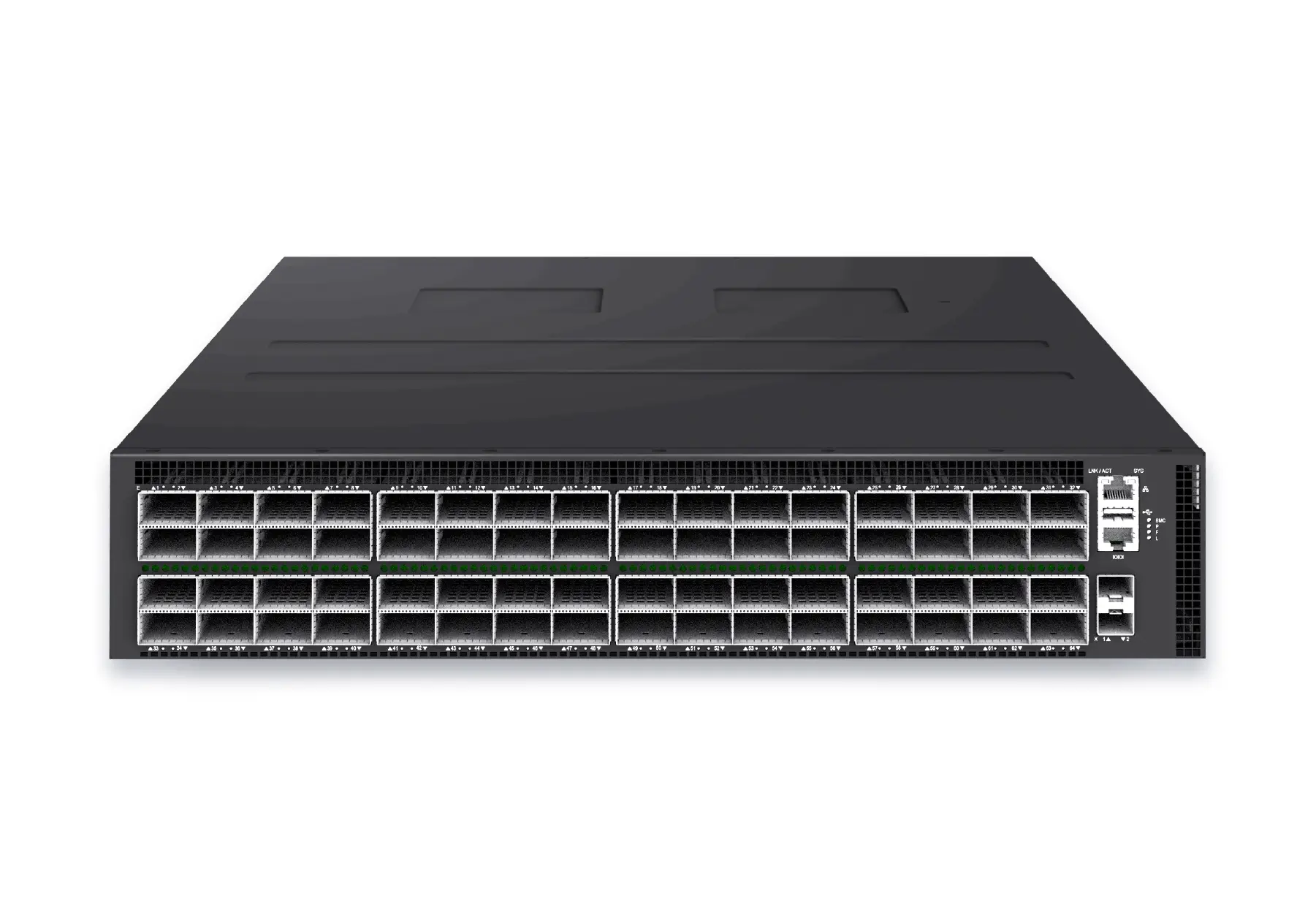 datacenter aiXS-DC-64X800-AI-G164-port 800G AI fabric switch for large-scale GPU clusters, HPC backbones, and ultra-high-throughput data center networks.View product
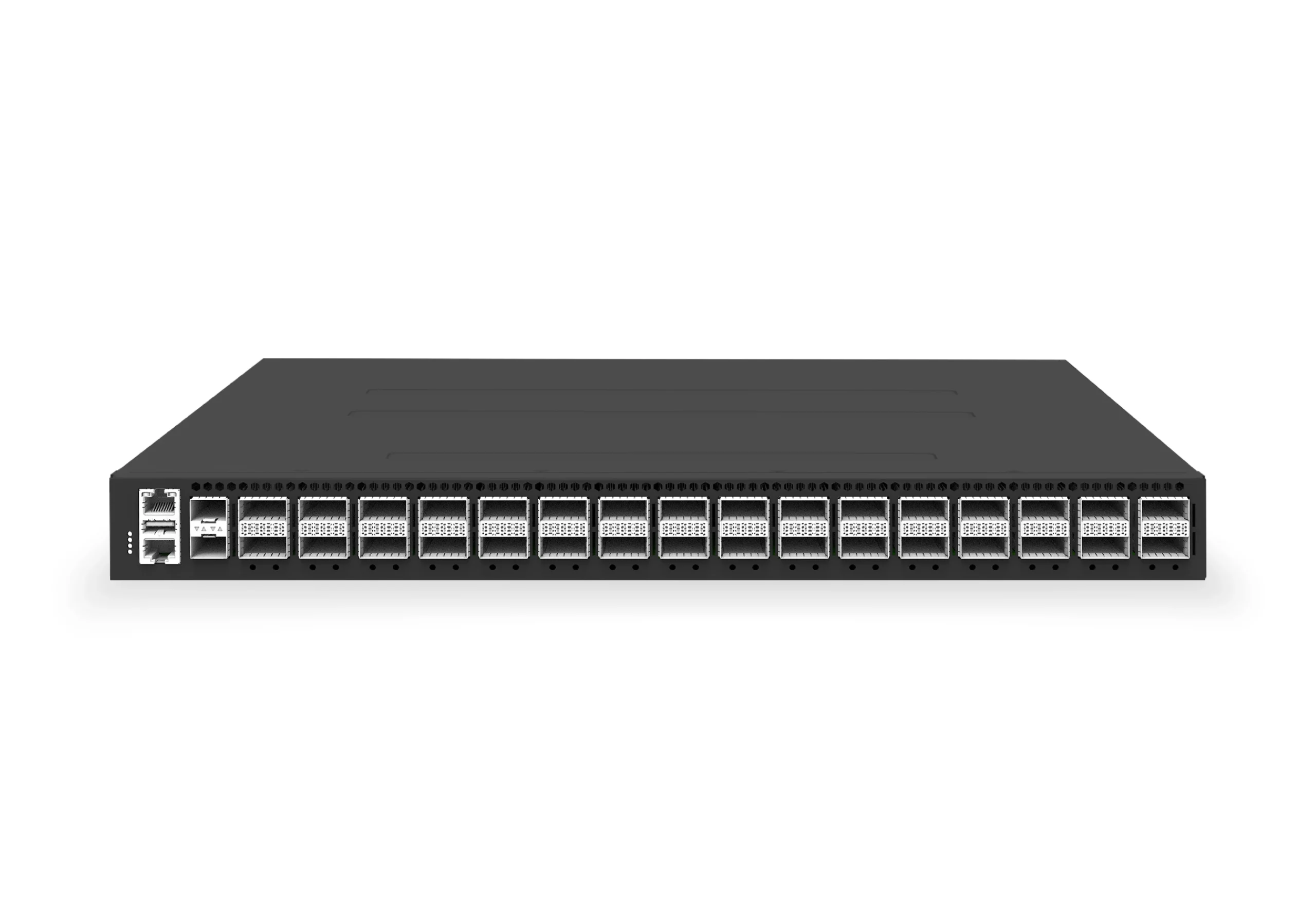 datacenter aiXS-DC-32X400-SP-G232-port 400G spine/core switch for high-capacity data center fabrics and AI-ready backbones.View product
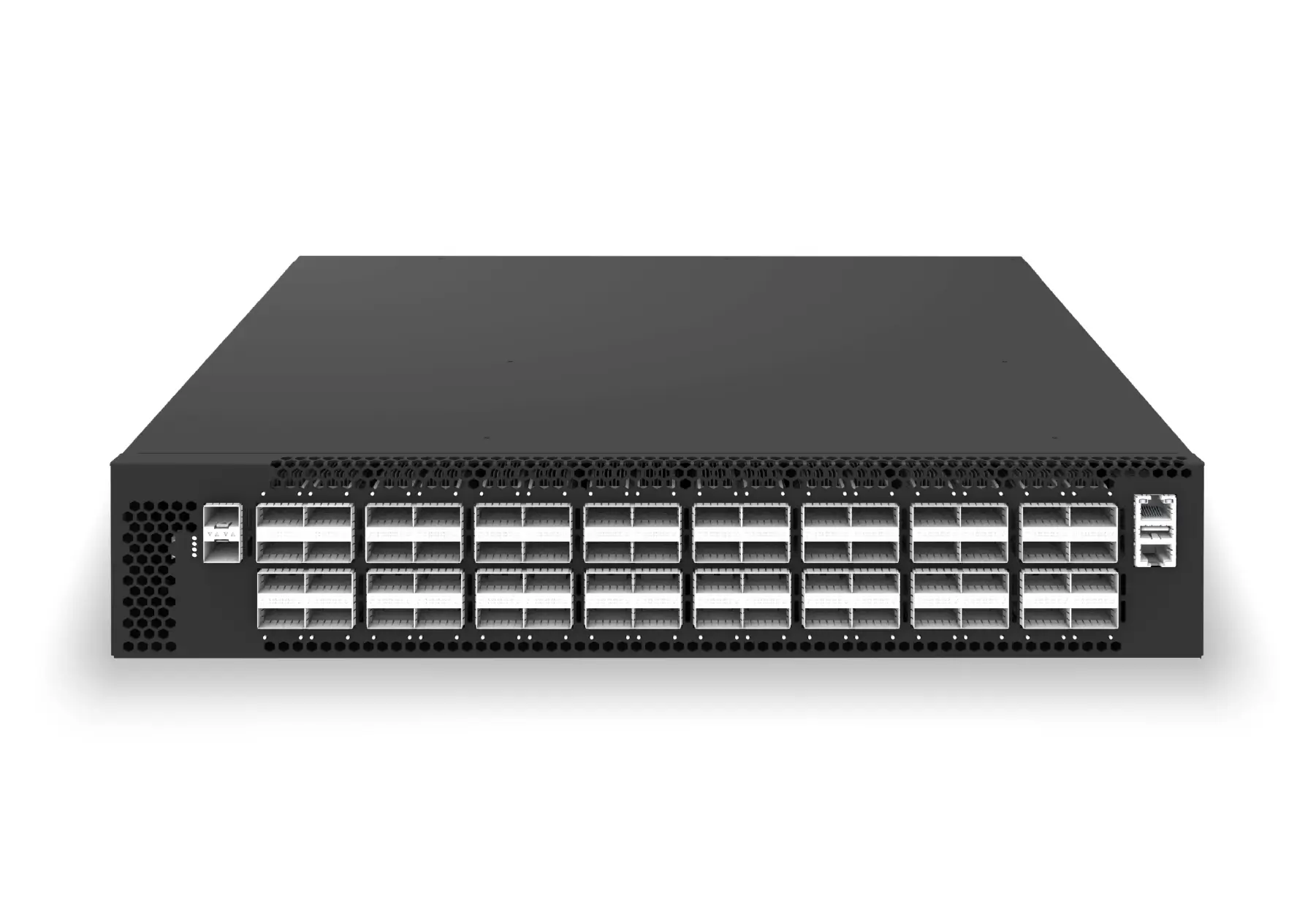 datacenter aiXS-DC-64X200-LS-G164-port 200G leaf/spine switch for high-bandwidth storage, compute, and scale-out data center fabrics.View product
Continue reading
Related articles
 Technical ArticleRoCE v2 GPU Backend Fabrics at 400G and 800G: What Australian Data Center Operators Need to Know in 2026Engineering guide for AI fabric buyers covering RoCE, SONiC, telemetry, optics, support ownership, and deployment validation.Read article
 Technical ArticleWhat Australian Data Center Buyers Need to Know Before Choosing SONiC Switches for 400G and 800G UpgradesEngineering guide for 400G and 800G optics planning covering form factor, reach, telemetry, thermal limits, supply risk, and validation.Read article
 Technical ArticleRoCE RDMA and Lossless Ethernet Fabric Design: What AI Cluster Buyers Need to KnowEngineering guidance on RoCE RDMA and Lossless Ethernet Fabric Design for Australian AI fabric teams, covering RoCE validation, congestion control, telemetry, optics.Read article