In brief
A technical migration brief for Australian data centre teams evaluating SONiC, open switch hardware, ASIC support, automation, optics, and operational risk.
Key takeaways
- Australian data centres are not moving beyond proprietary switch operating systems because proprietary NOS platforms suddenly stopped working.
- The migration decision should be framed as a control-plane and operations decision, not a brand comparison.
- That bundle is convenient, but it also limits buyer leverage. A fabric refresh, automation project, or AI backend build may require new telemetry, queue visibility, EVPN behaviour, RoCEv2 tuning, or optics flexibility before the incumbent roadmap or licensing model makes it easy.
Engineering Position
Australian data centres are not moving beyond proprietary switch operating systems because proprietary NOS platforms suddenly stopped working. They are evaluating alternatives because the operating model has changed. AI clusters, EVPN-VXLAN fabrics, 400G/800G optics, automation, telemetry, and supply-chain resilience all put pressure on vertically integrated switch stacks.
The migration decision should be framed as a control-plane and operations decision, not a brand comparison. If the buyer can validate ASIC behaviour, SAI support, SONiC feature coverage, optics compatibility, automation workflow, and escalation ownership, an open switch OS can reduce lock-in and give the engineering team more direct control. If those items are not validated, an open NOS migration simply moves risk from the incumbent vendor to the buyer.
What a Proprietary Switch OS Locks Together
A proprietary switch OS usually bundles five things:
- Hardware platform and ASIC selection.
- Network operating system features and release cadence.
- CLI, telemetry, and automation model.
- Optics qualification and transceiver policy.
- Support path, feature licensing, and lifecycle terms.
That bundle is convenient, but it also limits buyer leverage. A fabric refresh, automation project, or AI backend build may require new telemetry, queue visibility, EVPN behaviour, RoCEv2 tuning, or optics flexibility before the incumbent roadmap or licensing model makes it easy.
Open networking separates those concerns. The buyer can select switch hardware for port speed, power, form factor, and ASIC capability, then run SONiC or an enterprise SONiC distribution as the operating layer. The benefit is flexibility. The cost is that compatibility evidence must be built deliberately.
What SONiC Changes
The SONiC Foundation describes SONiC as an open source Linux-based network operating system that runs on switches from multiple vendors and ASICs. The project includes production-hardened network functions such as BGP and RDMA and is now under the SONiC Foundation, a Linux Foundation project.
The important engineering detail is the Switch Abstraction Interface. OCP SAI defines a vendor-independent API for controlling forwarding elements such as switching ASICs and NPUs. In the SONiC architecture, services publish intended state through Redis-backed databases; orchestration components translate that state; syncd uses SAI and the vendor ASIC SDK to program the hardware.
That architecture is why SONiC can support multiple ASICs. It is also why migration testing must include the exact hardware, ASIC, SAI version, NOS build, optics, and feature set planned for production.
Migration Readiness Framework
| Migration area | What to prove before cutover |
|---|---|
| Fabric design | L3 leaf-spine, EVPN-VXLAN, MLAG/MC-LAG alternative, routing policy, and failure domains. |
| ASIC and SAI | ACL scale, ECMP behaviour, buffer counters, QoS, PFC/ECN, telemetry, and drop accounting. |
| Optics | QSFP28, QSFP-DD, OSFP, DAC, AOC, breakout, FEC, DOM/DDM, and temperature behaviour. |
| Automation | Config generation, validation, diff, backup, rollback, and day-2 change process. |
| Observability | Streaming telemetry, syslog, SNMP/gNMI/NETCONF support, interface counters, queue counters, and alert paths. |
| Security | Management-plane access control, image provenance, vulnerability response, audit logging, and role separation. |
| Operations | Runbooks, escalation path, spare units, replacement optics, and maintenance windows. |
| Rollback | Parallel fabric, maintenance cutover plan, route withdrawal behaviour, and fallback test. |
The migration should start with a lab or isolated production segment. A “replace the old OS in place” approach is rarely the lowest-risk path because the operational model changes at the same time as the software.
AI Fabric Pressure
AI and HPC environments make the switch OS decision more urgent because they expose behaviours that ordinary enterprise traffic may hide:
- High-volume east-west flows across leaf-spine paths.
- RoCEv2 or RDMA-sensitive traffic that depends on queue configuration, PFC/ECN behaviour, and congestion management.
- 400G and 800G optics where FEC, thermal behaviour, and transceiver telemetry matter.
- Telemetry requirements for queue depth, packet drops, microbursts, path visibility, and flow correlation.
- Fast upgrade and recovery expectations because GPU downtime is expensive.
SONiC can be a strong fit for these environments when the ASIC, queueing model, optics, and telemetry have been validated together. It should not be sold as a generic AI fabric answer without evidence. The engineering proof is a workload-like test: run representative traffic, inspect counters, verify PFC/ECN behaviour, confirm no unexpected drops, and document how the team will troubleshoot congestion after deployment.
Australian Risk Factors
Australian operators should add several local checks to a SONiC migration plan:
- Supply chain: qualify hardware and optics lead times, not just list price.
- Support coverage: confirm ANZ escalation hours, RMA process, and who owns ASIC/NOS issues.
- Skills: SONiC operations require Linux fluency, network automation discipline, and comfort reading logs across containerised services.
- Regulated environments: APRA CPS 234 regulated organisations need control testing and incident response evidence. The migration evidence pack should include monitoring, logging, and rollback proof.
- Remote sites: distributed or edge deployments require automation and golden-config recovery because local hands may be limited.
xSONiC Product Mapping
xSONiC’s product families map to the main migration stages:
- Data center AI switches: high-speed spine-leaf and GPU backend fabrics where 100G/400G/800G links, RoCEv2, and telemetry matter.
- Open switching platforms: SONiC-ready hardware for migration pilots and production fabrics.
- Optical transceivers: SFP, SFP+, SFP28, QSFP28, QSFP-DD, OSFP, DAC, and AOC options needed for staged refreshes.
- Solution pillars: EVPN-VXLAN, AI Fabric, RoCE v2, INT Telemetry, IPTPath Telemetry, NETCONF, and AIDC Controller.
Migration Playbook
- Select one target use case: AI backend, data centre leaf-spine, aggregation, or lab fabric.
- Freeze the bill of materials: switch model, ASIC, optics, cables, NOS image, SAI version, and support path.
- Build a feature matrix against the incumbent platform.
- Test forwarding, routing, EVPN/VXLAN, ACLs, QoS, PFC/ECN, telemetry, automation, and reboot behaviour.
- Run failure scenarios: link loss, optics replacement, power loss, process restart, route withdrawal, and management-plane loss.
- Document operational runbooks and rollback.
- Deploy a parallel segment before broad cutover.
Bottom Line
Moving beyond a proprietary switch OS is a reasonable direction for Australian data centres that need more control over automation, telemetry, optics, and AI fabric design. It is not a shortcut. The successful path is evidence-led: validate SONiC on the exact hardware and optics, prove ASIC and SAI behaviour under production-like load, and assign support ownership before the first critical workload depends on the new fabric.
Engineering Evidence Floor
For SONiC and open networking articles, the acceptance standard is operational proof, not community momentum. The evidence package should name the switch SKU, ASIC, SAI version, ONIE status, SONiC image, optics matrix, automation interface, support path, and rollback procedure. A practical pilot should run for 30 days, include 3 automated configuration changes, validate 100G/400G links where relevant, and prove that a P1 evidence bundle can be assembled within 2 hours.
| Evidence area | What to validate | Acceptance gate | Rework trigger |
|---|---|---|---|
| Platform | SKU, ASIC, ONIE, SAI, image, and optics | 2 platforms boot, upgrade, and rollback | Hardware support is assumed |
| Automation | Source of truth, API/gNMI/NETCONF, backup, and diff | 3 changes pass state readback | CLI drift becomes normal |
| Operations | Logs, telemetry, failure runbook, and escalation owner | P1 bundle ready within 2 hours | Fault isolation depends on one engineer |
| Lifecycle | Patch cadence, CVE process, spare plan, and support SLA | 12 months plan approved | Security and RMA ownership is unclear |
| Commercial | Hardware, support, optics, training, and migration labour | Risk-adjusted TCO is documented | Savings vanish after rework |
This section deliberately avoids treating the topic as a feature checklist. The buyer should be able to hand the evidence to engineering, security, finance, and support teams and have each group understand what was tested, what failed, what was accepted, and what still needs rework. That is also the content pattern most useful for generative search: the page states a clear conclusion, names measurable parameters, identifies risk, and cites the operational proof required before deployment.
Engineering FAQ
What should be checked before ordering 400G or 800G optics? Check port form factor, lane speed, reach, fibre type, breakout plan, DOM telemetry, firmware compatibility, thermal budget, and the switch vendor optics support matrix. The same speed can behave differently across QSFP-DD, OSFP, DAC, AOC, and fibre modules.
Why is optics validation part of a SONiC deployment? SONiC exposes the NOS layer, but optics behaviour still depends on the switch platform, transceiver EEPROM data, firmware, thermal design, and operational tooling. Buyers should test the exact module and cable combination before volume rollout.
What should be included in an optics procurement record? Record SKU, reach, connector, fibre type, temperature class, supported breakout modes, switch platform, SONiC image, DOM fields, link test result, and spare strategy. That record becomes the reference for future replacements.
Related xSONiC Resources
Sources Reviewed
- IEEE 802.1Q Bridges and Bridged Networks
- IEEE 802.1AX Link Aggregation
- Ethernet Network Adapters - ConnectX NICs | NVIDIA
- NVIDIA BlueField Data Processing Unit
- NVIDIA Spectrum-X Ethernet Platform
- OpenConfig gNMI Specification
- OpenConfig
- RFC 7950 - The YANG 1.1 Data Modeling Language
- RFC 6241 - Network Configuration Protocol (NETCONF)
- SONiC Project Documentation
- Broadcom Ethernet Switching
- Marvell Switching
- NVIDIA Ethernet Switching
- Open Compute Networking
- SONiC GitHub
- SONiC Foundation
Product fit
Products referenced for evaluation
These products are referenced for evaluation context in the article. Confirm workload, port, optics, software, interoperability, and support requirements against the exact deployment before procurement.
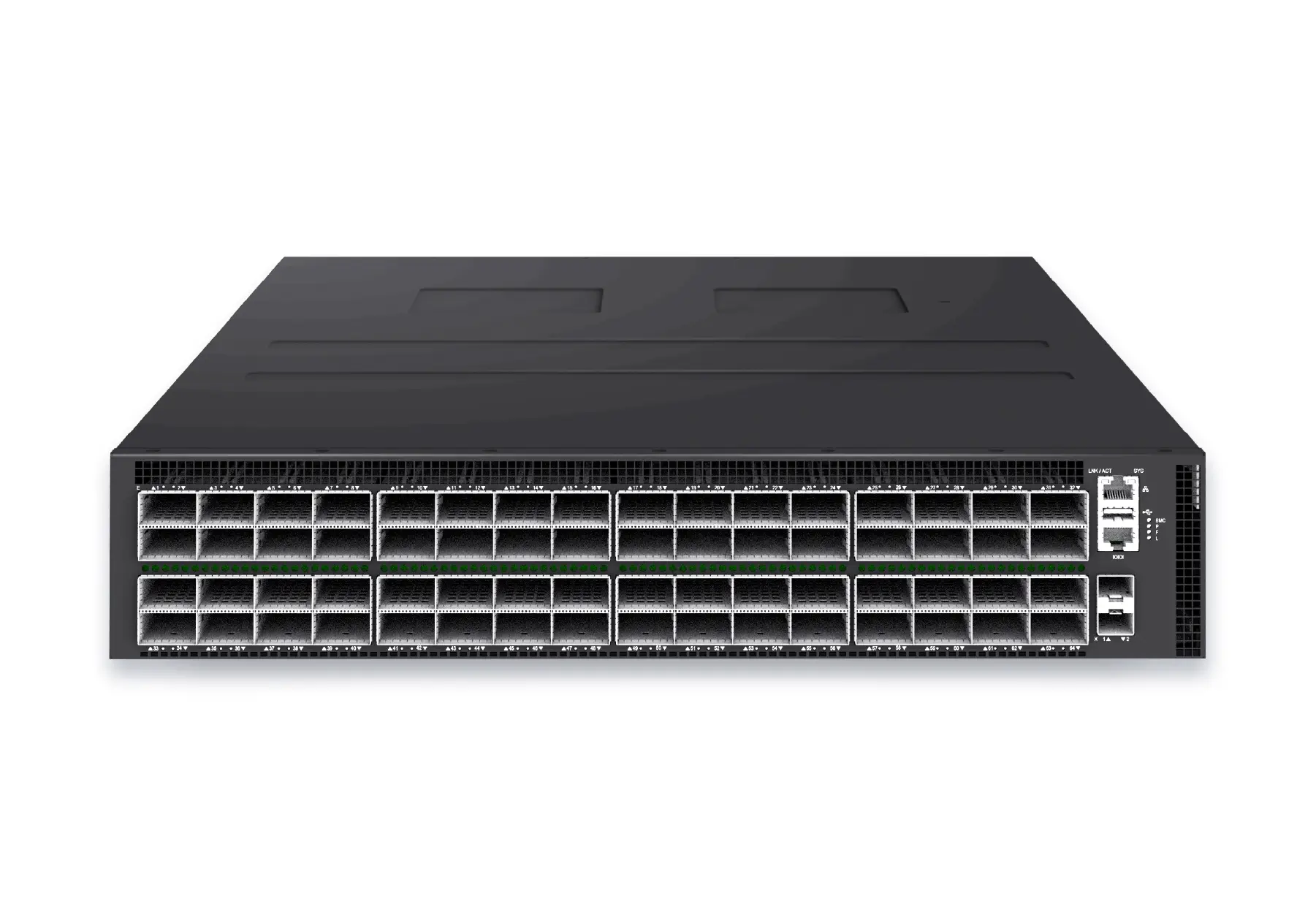 datacenter aiXS-DC-64X800-AI-G164-port 800G AI fabric switch for large-scale GPU clusters, HPC backbones, and ultra-high-throughput data center networks.View product
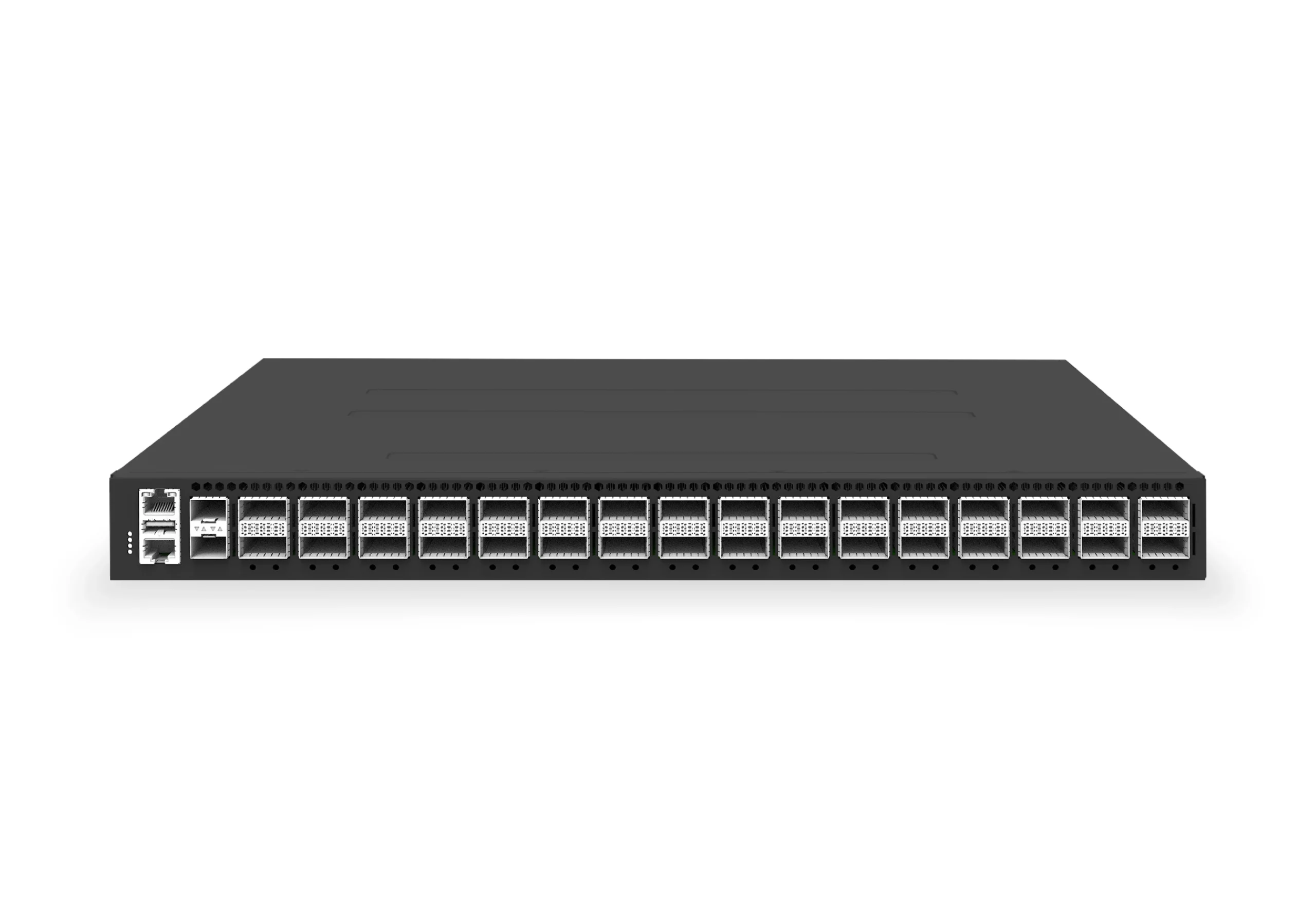 datacenter aiXS-DC-32X400-SP-G232-port 400G spine/core switch for high-capacity data center fabrics and AI-ready backbones.View product
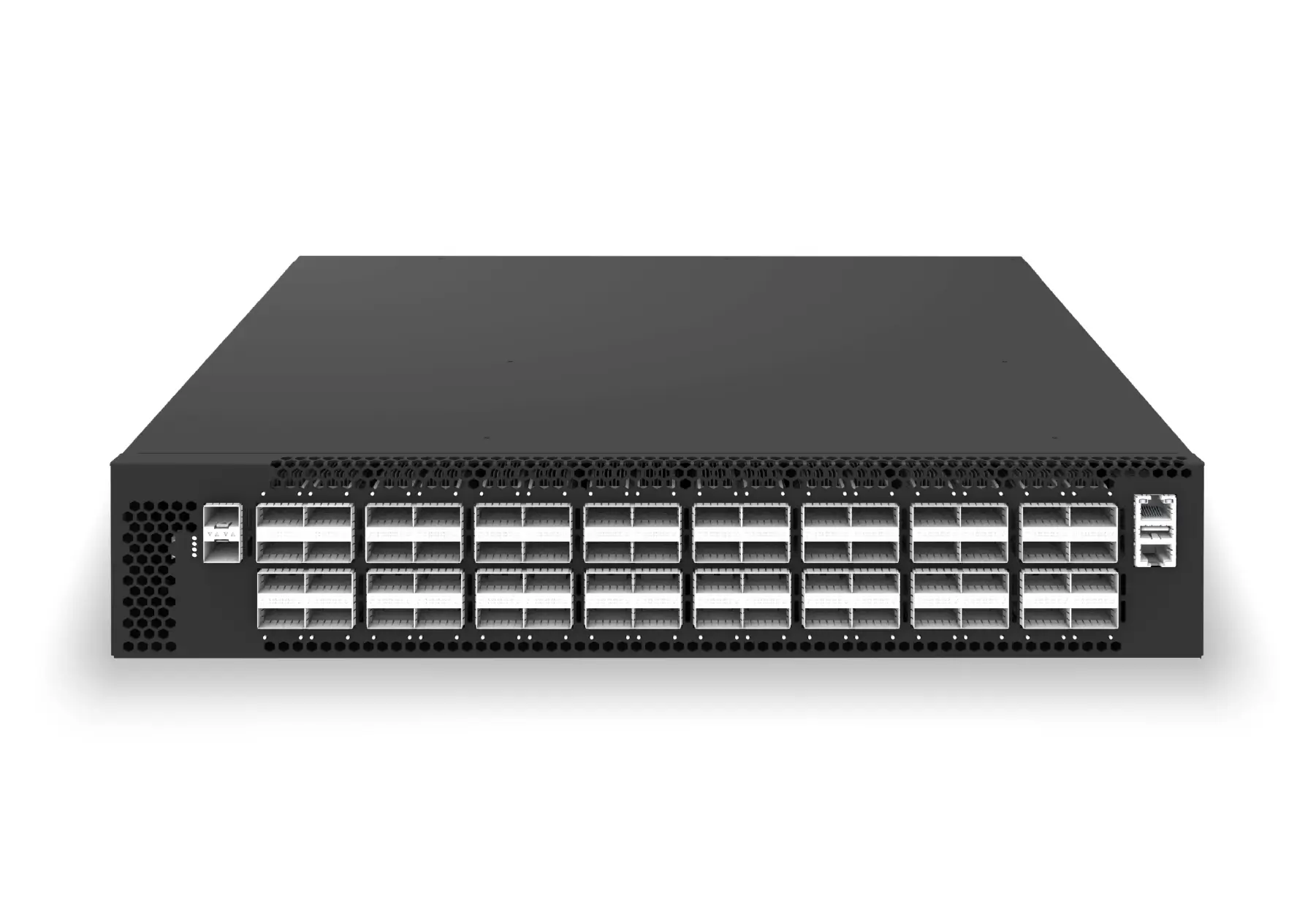 datacenter aiXS-DC-64X200-LS-G164-port 200G leaf/spine switch for high-bandwidth storage, compute, and scale-out data center fabrics.View product
Continue reading
Related articles
 Technical ArticleOpen Networking Support for Enterprise Buyers: How SONiC and Open NOS Models Actually WorkEngineering guidance on Open Networking Support for Enterprise Buyers for Australian campus teams, covering PoE budgets, access-layer resilience, migration risk.Read article
 Technical ArticleFrom Proprietary Lock-In to Open Networking: A Practical Enterprise SONiC Migration PlaybookA practical Enterprise SONiC migration playbook for Australian buyers moving from proprietary switch OS to open networking.Read article
 Technical ArticleWhy Centralized AI Fabric Management Is the Missing Layer in Open NetworkingEngineering guidance on Centralized AI Fabric Management Is the Missing Layer in Open Networking for Australian network teams, covering underlay design, EVPN-VXLAN.Read article