
In brief
A practical Enterprise SONiC migration playbook for Australian buyers moving from proprietary switch OS to open networking.
Key takeaways
- For decades, enterprise and data center networks in Australia have run on proprietary network operating systems bundled with switch hardware from a single vendor.
- When the NOS and the hardware are inseparable, every upgrade, every feature request, and every capacity expansion flows through one vendor's roadmap and one vendor's pricing model.
- This is not a theoretical problem. The SONiC Foundation, a Linux Foundation project, describes SONiC as an open-source network operating system built on Linux that "decouples hardware and software" and runs on switches from multiple vendors and ASICs.
Why Proprietary Switch OS Is Becoming a Strategic Liability
For decades, enterprise and data center networks in Australia have run on proprietary network operating systems bundled with switch hardware from a single vendor. That model delivered predictable support, but it also created a hidden cost structure that is now harder to ignore.
When the NOS and the hardware are inseparable, every upgrade, every feature request, and every capacity expansion flows through one vendor’s roadmap and one vendor’s pricing model. If a new ASIC generation ships from a different chipmaker, you wait. If your campus refresh timeline does not align with your vendor’s release cycle, you wait. If you need to integrate network telemetry into a new observability stack, you wait for a proprietary API or pay for a professional services engagement.
This is not a theoretical problem. The SONiC Foundation, a Linux Foundation project, describes SONiC as an open-source network operating system built on Linux that “decouples hardware and software” and runs on switches from multiple vendors and ASICs. That architectural separation is the foundation of a different procurement and operations model, one where the buyer controls the pace of change.
What Enterprise SONiC Actually Delivers
SONiC stands for Software for Open Networking in the Cloud. It originated in the hyperscale data center world, where cloud providers needed to run a consistent NOS across thousands of switches from different hardware suppliers. Today, it is a production-hardened platform with a container-based architecture where each network function runs in its own Docker container.
The practical benefits for enterprise buyers include:
Hardware and software independence. You can evaluate switch hardware from multiple vendors on merit, price, and port density without being locked into a single NOS ecosystem. If one supplier’s lead times stretch out, you have alternatives.
Standard Linux tooling. SONiC uses standard Linux interfaces, configuration via JSON files, and supports both CLI and programmatic access. Your operations team can apply existing Linux skills rather than learning a proprietary CLI dialect.
Modular upgrades. Because network functions are containerized, you can update individual components without a full switch reboot or monolithic firmware flash. This matters in environments where uptime is measured in nines.
Multi-vendor ASIC support. SONiC runs on switches powered by ASICs from multiple chip vendors, including Broadcom and others. This is a structural advantage that proprietary NOS vendors cannot replicate without opening their own platforms.
Community-driven development. With over 2,800 GitHub stars and active contributions from major networking companies, SONiC benefits from a development velocity that no single proprietary vendor matches independently.
The Migration Decision: When Does It Make Sense?
Migrating from a proprietary NOS to Enterprise SONiC is not a trivial decision. It makes the most sense in specific scenarios:
Data center refresh or expansion. If you are building a new spine-leaf fabric, upgrading to 400G or 800G, or deploying an AI/ML cluster backend, SONiC on open hardware gives you the flexibility to select the right ASIC and optics for each tier of the fabric. This aligns directly with xSONiC’s data center AI switch and bare-metal switch product families.
Campus network refresh. If you are refreshing access and aggregation layers, SONiC-based campus switches let you standardize on a single NOS across edge, distribution, and core without vendor-specific feature dependencies. xSONiC’s access and aggregation switches are designed for this transition.
Vendor contract renegotiation. When your existing vendor’s support contract or licensing model is up for renewal, a SONiC migration gives you credible alternatives at the negotiating table.
AI infrastructure buildout. If you are deploying private LLM inference, RAG pipelines, or GPU server clusters, you need a network fabric that supports RDMA over Converged Ethernet (RoCE), Data Center Bridging Capability Exchange (DCBX), and advanced telemetry. SONiC’s production-hardened support for BGP and RDMA makes it suitable for these demanding workloads.
Multi-site operations. If you manage network infrastructure across multiple Australian sites, a consistent open NOS simplifies operational tooling, training, and spare parts inventory.
The Migration Playbook: Six Practical Steps
Step 1: Inventory and Dependency Mapping
Before you touch a single switch, document your current environment. Map every proprietary NOS feature your network actually uses, not every feature your vendor’s data sheet lists. Identify:
- Active routing protocols and features (BGP, OSPF, VRRP, EVPN-VXLAN)
- Security features in use (ACLs, 802.1X, RADIUS/TACACS integration)
- Management and automation interfaces (SNMP, NETCONF, Ansible modules)
- Telemetry and monitoring integrations
- Any proprietary extensions you depend on
This inventory becomes your SONiC compatibility checklist. If a feature you rely on is not yet available in SONiC, you need to plan an alternative or a phased approach.
Step 2: Define Your Target Architecture
Decide where SONiC fits in your network. Most Australian enterprises start with one of these patterns:
Data center first. Replace the data center spine-leaf fabric with SONiC on bare-metal switches while leaving the campus on its existing NOS. This is the lowest-risk starting point because data center fabrics are typically more homogeneous and less dependent on legacy features.
Campus first. If your campus switches are end-of-life, replace them with SONiC-based access and aggregation switches. This works well when you are also refreshing PoE, Wi-Fi, or uplink capacity.
Greenfield. Deploy SONiC on a new site or a new segment of the network. This avoids the complexity of in-place migration and lets you validate operations before committing to existing infrastructure.
Step 3: Select Hardware and Optics
With SONiC, you have a real choice of hardware. Evaluate switches based on:
- ASIC compatibility with your target SONiC version
- Port density and speed (1G/10G/25G/100G/400G/800G)
- Form factor (1U fixed, modular chassis, campus edge)
- Power and cooling profile for your facility
- Optics compatibility (SFP, SFP28, QSFP28, QSFP-DD, OSFP)
For data center AI fabrics, you need switches that support the RDMA and congestion management features required for GPU cluster backend traffic. For campus deployments, PoE budget, stacking, and edge security features matter more.
xSONiC’s product families span these use cases: data center AI switches for spine-leaf and AI fabric, bare-metal switches for custom NOS and engineering-led programs, access and aggregation switches for campus and branch, and optical transceivers for multi-speed connectivity.
Step 4: Build a Validation Lab
Do not migrate production networks based on documentation alone. Set up a lab environment that mirrors your production topology as closely as possible. Validate:
- Routing convergence and failover behavior
- QoS and traffic prioritization under load
- Management plane responsiveness
- Telemetry data export to your monitoring stack
- Automation pipeline compatibility (Ansible, Terraform, NETCONF/YANG)
If you are deploying EVPN-VXLAN, test inter-VNI routing, MAC mobility, and multi-homing scenarios. If you are integrating with an AIDC controller or network orchestration platform, validate the API surface end-to-end.
Migration Acceptance Matrix
Do not treat migration as complete when the first SONiC switch forwards traffic. The acceptance evidence should cover feature parity, failure behaviour, and operational recovery.
| Migration stage | Evidence to collect | Minimum acceptance target | Rework trigger |
|---|---|---|---|
| Inventory | Current features, configs, optics, routing peers, ACLs, monitoring, and support contracts | 100% of production switch roles mapped to required SONiC features | A feature is discovered during cutover |
| Lab parity | BGP, EVPN-VXLAN, ACL, QoS, telemetry, optics, and management tests | 2 switch models, 3 optics types, and 1 rollback tested | Lab uses different optics or image than production |
| Pilot | One bounded fabric, pod, building, or aggregation pair | 30 days of operation with documented incidents and changes | Pilot success depends on vendor engineer intervention |
| Cutover | Change plan, rollback commands, config backup, maintenance window, and comms plan | Rollback tested before production and timed in minutes, not guessed | Rollback plan is “restore old switch if needed” |
| Operations | Runbook, alert mapping, image lifecycle, CVE process, and support escalation | NOC can collect logs, open ticket, and restore config without project team | Day-2 ownership remains undefined |
Step 5: Plan the Cutover
Migration cutover depends on your chosen approach:
Parallel deployment. Run SONiC switches alongside existing infrastructure, migrate segments one at a time, and decommission old hardware after validation. This is the safest approach for production environments.
Phased replacement. Replace one tier at a time (for example, leaf switches first, then spines, then management). This reduces blast radius while still making meaningful progress.
Big bang. Replace all switches in a maintenance window. Only viable for smaller networks or greenfield sites.
In all cases, have a rollback plan. Know exactly how to revert to the previous state if something goes wrong during the cutover window.
Step 6: Operationalize and Iterate
Migration is not finished when the last switch boots. You need to operationalize SONiC:
- Train your NOC and engineering teams on SONiC-specific operations
- Update your runbooks, monitoring dashboards, and escalation procedures
- Establish a process for SONiC image upgrades and security patches
- Integrate SONiC telemetry into your existing observability tools
- Document any workarounds or feature gaps for future resolution
Risk Mitigation: What to Watch For
Feature parity gaps. SONiC covers a broad range of networking features, but not every proprietary extension has a direct equivalent. Your inventory from Step 1 identifies these gaps early.
Support model differences. With a proprietary NOS, you have a single vendor support contract. With SONiC, support may come from your hardware vendor, a third-party SONiC distribution provider, or the open-source community. Understand your support model before you commit.
Operational skill gaps. If your team is trained on a specific proprietary CLI, SONiC’s Linux-based model will require training investment. Plan for this in your project timeline and budget.
Optics and cabling compatibility. Open networking gives you hardware choice, but you need to verify that your transceivers and cabling work with your chosen switches. This is especially important for high-speed interconnects in AI fabric deployments.
The Australian Context
Australian enterprise and data center operators face a specific set of pressures: long hardware lead times due to geographic distance from manufacturing, a growing demand for AI infrastructure capacity, and increasing scrutiny on vendor concentration risk in critical infrastructure. Open networking with Enterprise SONiC directly addresses each of these pressures by expanding the supplier base, enabling faster hardware sourcing from multiple vendors, and reducing dependency on any single vendor’s roadmap.
The Open Compute Project’s networking initiative and the SONiC Foundation’s growing ecosystem mean that the hardware and software supply chain for open networking in Australia is maturing rapidly. Enterprise buyers no longer need to accept proprietary lock-in as the default.
Next Steps
If you are evaluating a move from proprietary switch OS to Enterprise SONiC, start with the inventory exercise. Map what you actually use, then compare it against SONiC’s documented capabilities. From there, you can make a data-driven decision about scope, timeline, and risk.
Explore xSONiC’s data center AI switches, bare-metal switches, access and aggregation switches, and optical transceiver families to understand the hardware options available for your migration. For guidance on EVPN-VXLAN architecture, NETCONF-based automation, or AI fabric design, review xSONiC’s solution guides or contact the xSONiC team for a technical consultation.
Engineering FAQ
What is the safest first migration target? Choose a bounded fabric or site where dependencies are known, traffic can be rolled back, and the team can test BGP, telemetry, optics, image upgrade, and config restore without risking the whole estate.
What evidence should exist before production cutover? Keep a feature parity matrix, lab configs, optics test results, rollback timing, support escalation map, known caveats, and a NOC runbook for the exact SONiC image and switch SKU.
When should a migration pause? Pause if a required feature depends on an untested SAI path, if optics telemetry is missing, if rollback has not been timed, or if support ownership across hardware, NOS, ASIC, and optics is unclear.
Related xSONiC Resources
Sources Reviewed
- Ethernet Network Adapters - ConnectX NICs | NVIDIA
- NVIDIA BlueField Data Processing Unit
- NVIDIA Spectrum-X Ethernet Platform
- OpenConfig gNMI Specification
- OpenConfig
- RFC 7950 - The YANG 1.1 Data Modeling Language
- RFC 6241 - Network Configuration Protocol (NETCONF)
- SONiC Project Documentation
- Broadcom Ethernet Switching
- Marvell Switching
- NVIDIA Ethernet Switching
- Open Compute Networking
- SONiC GitHub
- SONiC Foundation
Product fit
Products referenced for evaluation
These products are referenced for evaluation context in the article. Confirm workload, port, optics, software, interoperability, and support requirements against the exact deployment before procurement.
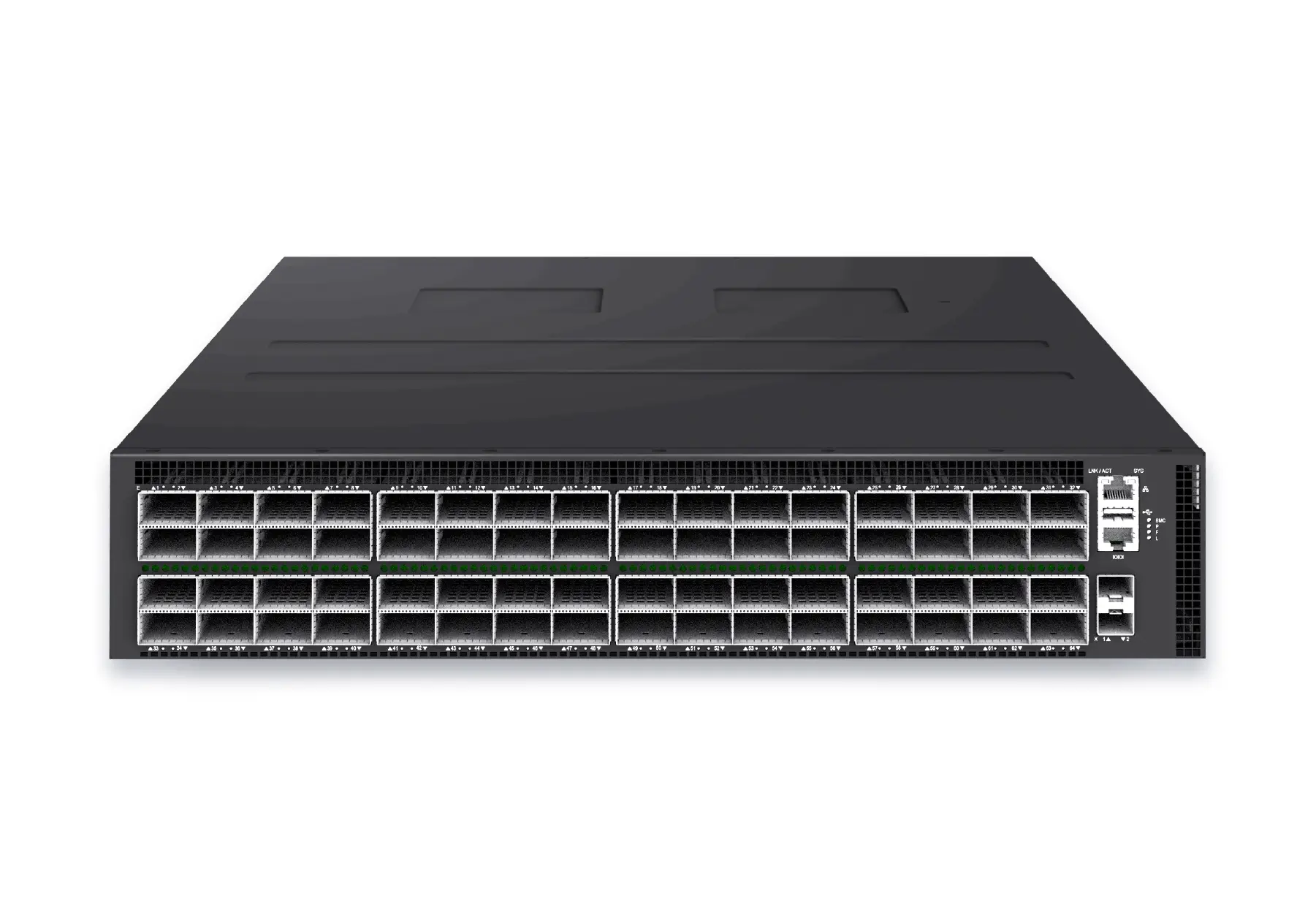 datacenter aiXS-DC-64X800-AI-G164-port 800G AI fabric switch for large-scale GPU clusters, HPC backbones, and ultra-high-throughput data center networks.View product
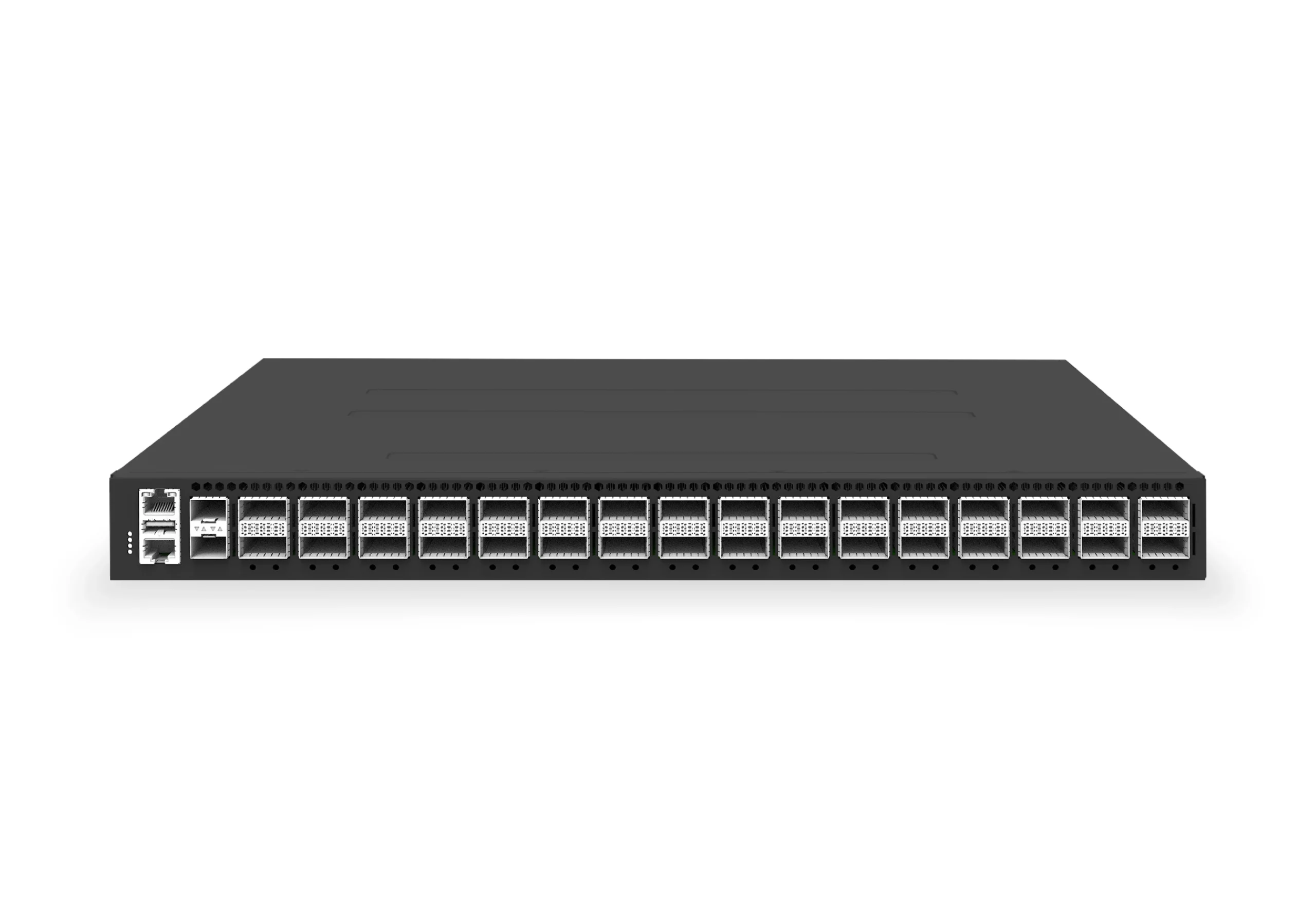 datacenter aiXS-DC-32X400-SP-G232-port 400G spine/core switch for high-capacity data center fabrics and AI-ready backbones.View product
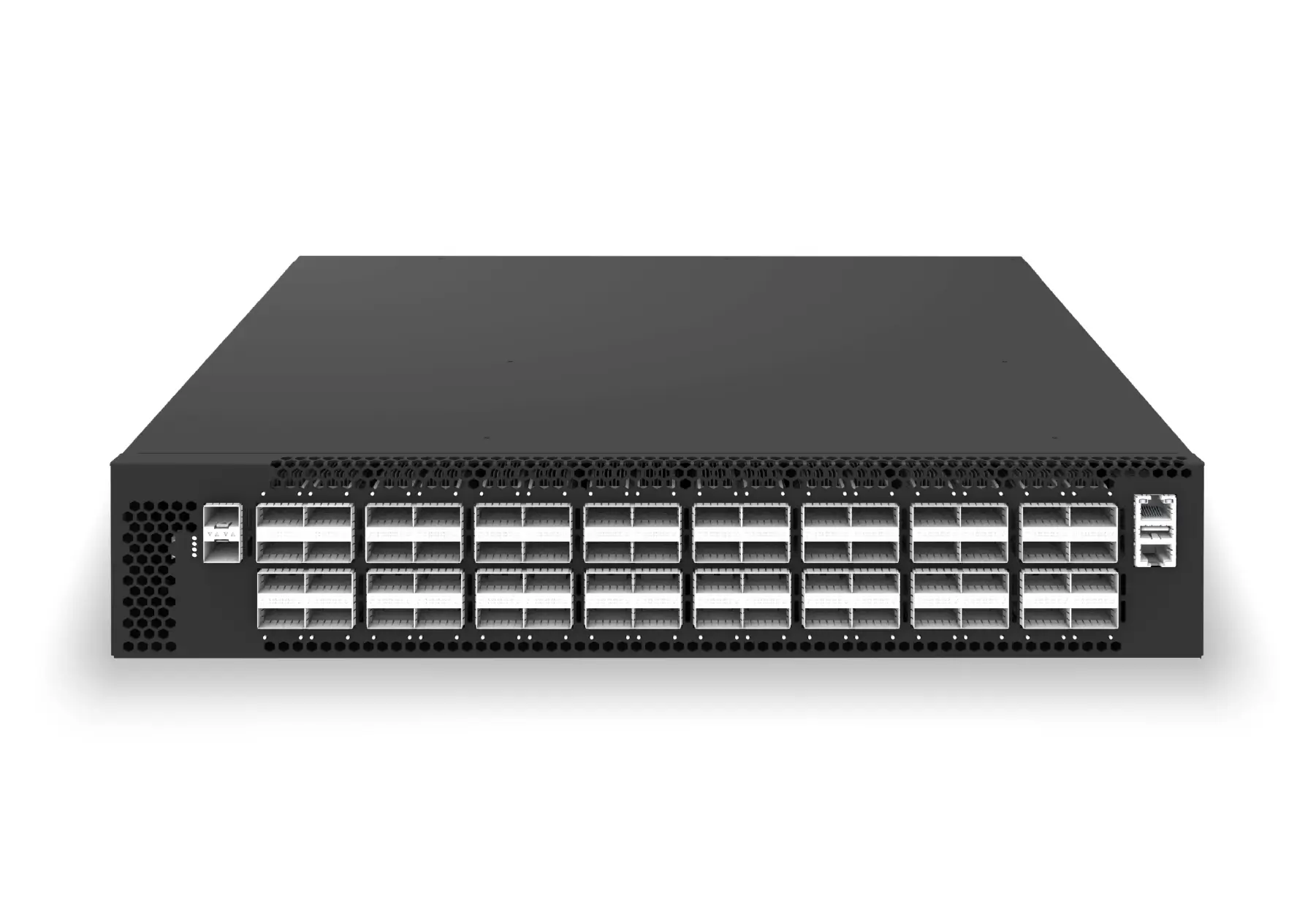 datacenter aiXS-DC-64X200-LS-G164-port 200G leaf/spine switch for high-bandwidth storage, compute, and scale-out data center fabrics.View product
Continue reading
Related articles
 Technical ArticleOpen Networking Support for Enterprise Buyers: How SONiC and Open NOS Models Actually WorkEngineering guidance on Open Networking Support for Enterprise Buyers for Australian campus teams, covering PoE budgets, access-layer resilience, migration risk.Read article
 Technical ArticleWhy Centralized AI Fabric Management Is the Missing Layer in Open NetworkingEngineering guidance on Centralized AI Fabric Management Is the Missing Layer in Open Networking for Australian network teams, covering underlay design, EVPN-VXLAN.Read article
 Technical ArticleWhy SONiC and Ethernet Switching Are Reshaping AI Data Center NetworkingEngineering guidance on SONiC and Ethernet Switching Are Reshaping AI Data Center Networking for Australian network teams, covering underlay design, EVPN-VXLAN.Read article