
In brief
Engineering guidance on Centralized AI Fabric Management Is the Missing Layer in Open Networking for Australian network teams, covering underlay design, EVPN-VXLAN.
Key takeaways
- Enterprises deploying GPU clusters for training, inference, and retrieval-augmented generation have learned a hard lesson: building the fabric is the easy part.
- SONiC -- Software for Open Networking in the Cloud -- has become the de facto open-source network operating system for large-scale data center fabrics.
- This multi-vendor, open-source foundation gives network teams hardware choice and avoids lock-in.
The operational gap hiding inside every AI fabric
Enterprises deploying GPU clusters for training, inference, and retrieval-augmented generation have learned a hard lesson: building the fabric is the easy part. Managing it after day one is where costs, risk, and operational friction live.
SONiC — Software for Open Networking in the Cloud — has become the de facto open-source network operating system for large-scale data center fabrics. The SONiC Foundation, a Linux Foundation project, describes SONiC as an open-source NOS based on Linux that runs on switches from multiple vendors and ASICs, offering a full suite of network functionality including BGP and RDMA (sonicfoundation.dev). NVIDIA’s Spectrum Ethernet switching portfolio explicitly supports Pure SONiC alongside Cumulus Linux, positioning SONiC as a first-class option for AI-grade Ethernet fabrics (nvidia.com).
This multi-vendor, open-source foundation gives network teams hardware choice and avoids lock-in. But it also creates a management challenge. When your AI fabric spans hundreds of leaf and spine switches carrying RoCE v2 traffic for distributed GPU training, every configuration inconsistency, missed firmware update, or undetected microburst becomes a potential job failure.
That is the gap the xSONiC AIDC Controller is designed to close.
Why AI fabrics are harder to manage than traditional data centers
A traditional three-tier data center network tolerates seconds of convergence time and operates on relatively predictable east-west traffic patterns. An AI fabric does not.
Latency sensitivity at RDMA scale
GPU-to-GPU communication over RoCE v2 requires near-zero packet loss and microsecond-level tail latency. A single misconfigured priority flow control (PFC) or ECN threshold on one leaf switch can stall an entire distributed training job. In a fabric with 128 or more leaf switches, manually verifying DCBX, PFC, and ECN settings switch by switch is not sustainable.
Telemetry volume and speed
AI clusters generate enormous east-west traffic bursts. In-band Network Telemetry (INT) and streaming telemetry provide the visibility needed to detect congestion and packet drops in real time. But collecting, correlating, and acting on telemetry from hundreds of switches requires more than a polling script. It requires a management plane designed for that data volume.
Configuration drift at scale
SONiC’s container-based, modular architecture — where each network function runs in its own Docker container — provides better fault isolation and simplified upgrades (sonic-net/SONiC GitHub). That modularity is an advantage for individual switch operations. But across a fabric of 200 or 500 switches, maintaining consistent BGP, EVPN-VXLAN, and QoS configurations without a centralized controller introduces significant drift risk.
Day-2 operations complexity
Deploying the fabric on day one is a project with a clear endpoint. Day-2 operations — firmware lifecycle management, topology changes, capacity expansion, incident response — never end. Without centralized orchestration, each of these tasks scales linearly with switch count.
What a centralized AI fabric controller needs to deliver
Before evaluating any specific controller, it is useful to define the requirements. For an enterprise SONiC-based AI fabric, the management layer must address at least five operational pillars.
1. Fabric-wide topology visibility. The controller must discover and map the entire spine-leaf topology, including switch roles, port assignments, and link health. Network operators should see the fabric as a single logical entity, not a collection of individual switches.
2. Unified policy enforcement. RoCE v2, DCBX, PFC, ECN, and QoS policies must be defined once and pushed consistently across all fabric switches. A single policy mismatch on one leaf switch can create a silent performance bottleneck.
3. Telemetry aggregation and analytics. INT, IPTPath, and streaming telemetry data from every switch should flow into a single analytics plane. Operators need real-time dashboards showing congestion points, packet drops, and flow-level latency across the entire GPU backend fabric.
4. Configuration and firmware lifecycle management. Switch configurations should be version-controlled, diffable, and rollback-capable. Firmware upgrades must be orchestrated in a non-disruptive manner across the fabric, with pre- and post-validation checks.
5. Integration with network automation frameworks. The controller should support NETCONF/YANG and standard APIs so that infrastructure-as-code pipelines, CI/CD workflows, and third-party orchestration tools can interact with the fabric programmatically.
How the xSONiC AIDC Controller addresses these requirements
The xSONiC AIDC Controller is positioned as xSONiC’s centralized management solution for AI data center fabrics built on SONiC-based switches. It is designed to provide the five operational pillars described above within a single management plane.
- Supported topology discovery methods and fabric scale limits
- RoCE v2 and DCBX policy enforcement workflow
- INT and IPTPath telemetry dashboard capabilities
- Configuration drift detection and remediation features
- NETCONF/YANG and REST API integration scope
- Firmware lifecycle management workflow
- Supported xSONiC switch models and any multi-vendor SONiC support
What makes this relevant for Australian enterprises evaluating open networking for AI is the operational model. Many Australian organizations are building private AI infrastructure — private LLM inference, RAG pipelines, and domain-specific model training — on premises or in colocation facilities. These deployments are often mid-scale: 8 to 64 GPU nodes with a 25G/100G leaf-spine fabric. At that scale, the overhead of manual fabric management is disproportionate to the team size.
A centralized controller that abstracts per-switch complexity into fabric-level policy and telemetry is not a luxury at that scale. It is the difference between a manageable AI network and an operational burden.
The SONiC ecosystem context: open does not mean unmanaged
A common concern with open-source NOS adoption is that open means unsupported or unmanaged. The SONiC ecosystem has matured significantly to address this.
NVIDIA’s support for Pure SONiC on its Spectrum Ethernet switch portfolio — from the SN2000 series at 100 Gb/s up to the SN6000 series with co-packaged optics at 800 Gb/s and beyond (nvidia.com) — demonstrates that major silicon and switch vendors treat SONiC as production-grade, not experimental. The SONiC Foundation’s growing membership and the container-based architecture’s suitability for incremental upgrades further reinforce SONiC’s readiness for enterprise AI workloads.
But production-grade NOS and production-grade management are different things. SONiC gives you the network operating system. A centralized controller gives you the operations layer. The xSONiC AIDC Controller is designed to be that operations layer specifically for AI fabric use cases.
Practical evaluation checklist for Australian buyers
If you are evaluating a centralized controller for a SONiC-based AI fabric, use this checklist during your technical review:
| Evaluation Criteria | Questions to Ask | Why It Matters |
|---|---|---|
| Fabric scale | How many switches and endpoints can the controller manage in a single domain? | Determines whether the solution fits your current and projected GPU cluster size |
| RoCE v2 policy management | Does the controller enforce PFC, ECN, and DCBX policies fabric-wide? | Misconfigured RoCE policies cause silent performance degradation in AI training |
| Telemetry integration | Does it ingest INT, IPTPath, and streaming telemetry natively? | Real-time visibility is critical for detecting microbursts and congestion in AI east-west traffic |
| Configuration lifecycle | Does it support version-controlled config push, diff, and rollback? | Prevents configuration drift and enables auditable change management |
| API and automation | Does it expose NETCONF/YANG or REST APIs for infrastructure-as-code? | Enables integration with Ansible, Terraform, or custom automation pipelines |
| Firmware management | Does it orchestrate non-disruptive firmware upgrades across the fabric? | Firmware updates are the most common cause of unplanned fabric disruptions |
| Multi-vendor scope | Does it manage only xSONiC switches or other SONiC-capable hardware? | Determines whether the controller fits a mixed-vendor or future-flexible environment |
| Australian support | Is there local technical support or partner support in Australia? | Timezone-aligned support reduces mean time to resolution for production incidents |
Where the AIDC Controller fits in the xSONiC solution stack
The AIDC Controller does not operate in isolation. It sits at the orchestration layer of xSONiC’s broader AI fabric solution stack:
- AI Fabric (the physical and logical spine-leaf topology built on xSONiC data center AI switches)
- GPU Backend Fabric (the high-bandwidth, low-latency interconnect between GPU nodes)
- RoCE v2 and DCBX (the transport and prioritization protocols that ensure lossless, low-latency RDMA traffic)
- INT and IPTPath Telemetry (the in-band and path-level visibility into fabric performance)
- EVPN-VXLAN (the overlay networking for multi-tenant segmentation and workload mobility)
- NETCONF/YANG (the programmatic management interface for switch configuration)
The AIDC Controller ties these layers together into a unified management plane. For an enterprise deploying its first private AI cluster, this means one interface to define fabric policy, monitor GPU backend traffic, and manage switch lifecycle — instead of six separate tooling domains.
The bottom line for AI fabric buyers
Open networking has won the hardware debate. SONiC on multi-vendor switch hardware gives enterprises the flexibility and cost efficiency that proprietary NOS lock-in does not. But open networking without centralized management is a half-built bridge.
The xSONiC AIDC Controller is designed to complete that bridge for AI fabric use cases. It addresses the operational challenges that emerge after day one: configuration consistency, RoCE policy enforcement, telemetry-driven troubleshooting, and firmware lifecycle management at fabric scale.
For Australian enterprises building private AI infrastructure — whether for LLM inference, RAG pipelines, or domain-specific model training — the evaluation question is not whether to centralize fabric management. It is how soon.
Engineering Evidence Floor
For this topic, treat the article as buyer-ready only when the fabric claim is tied to measurable acceptance data. The baseline evidence package should include the selected switch SKU, SONiC image, ASIC/SAI version, NIC firmware, optics list, RoCE policy, telemetry counters, support owner, and rollback method. In a small pilot, capture at least 30 minutes of traffic at the intended 100G/400G/800G speed, one link failure, one switch reboot, one optics fault, and one support handoff. That evidence separates a credible AI fabric plan from a bandwidth brochure.
| Evidence area | What to validate | Acceptance gate | Rework trigger |
|---|---|---|---|
| Transport | PFC, ECN, DCBX, MTU, queue mapping, and CNP counters | 30 minutes load test at 100G/400G/800G | RoCE is asserted but not measured |
| Platform | Switch SKU, ASIC, SAI, SONiC image, and optics list | 2 switch roles pass upgrade and rollback | Generic compatibility is used as proof |
| Failure | Link loss, switch reboot, route convergence, and workload impact | 3 failure cases captured with timestamps | Steady-state throughput is the only evidence |
| Telemetry | Queue depth, drops, optics DOM, gNMI, and packet visibility | Operators explain a slowdown within 15 minutes | GPU and network teams use different data |
| Support | APAC escalation, RMA, spares, and patch lifecycle | 12 months operating plan approved | Ownership splits across vendors |
Engineering FAQ
What should be proven before adopting EVPN-VXLAN on SONiC? Prove underlay routing, BGP sessions, VTEP behaviour, MAC/IP learning, route scale, multi-homing design, failure convergence, and observability. The overlay should be accepted as a system, not a feature checkbox.
Why does the underlay design still matter in an overlay network? EVPN-VXLAN depends on a stable routed underlay. MTU, ECMP, addressing, route policy, link failure behaviour, and telemetry determine whether the overlay remains predictable under load and during faults.
What should be included in an EVPN-VXLAN operations runbook? Include naming, IP plan, BGP policy, VNI mapping, change process, rollback commands, failure checks, telemetry fields, backup and restore steps, and escalation ownership for the selected SONiC image.
Related xSONiC Resources
Sources Reviewed
- Ethernet Network Adapters - ConnectX NICs | NVIDIA
- NVIDIA BlueField Data Processing Unit
- NVIDIA Spectrum-X Ethernet Platform
- OpenConfig gNMI Specification
- OpenConfig
- RFC 7950 - The YANG 1.1 Data Modeling Language
- RFC 6241 - Network Configuration Protocol (NETCONF)
- ACSC Essential Eight
- OAIC Notifiable Data Breaches
- APRA CPS 234 Information Security
- NETSCOUT Network Packet Definition
- Cloudflare Network Packet Definition
- SONiC Project Documentation
- Broadcom Ethernet Switching
- Marvell Switching
- NVIDIA Ethernet Switching
- Open Compute Networking
- SONiC GitHub
- SONiC Foundation
Product fit
Products referenced for evaluation
These products are referenced for evaluation context in the article. Confirm workload, port, optics, software, interoperability, and support requirements against the exact deployment before procurement.
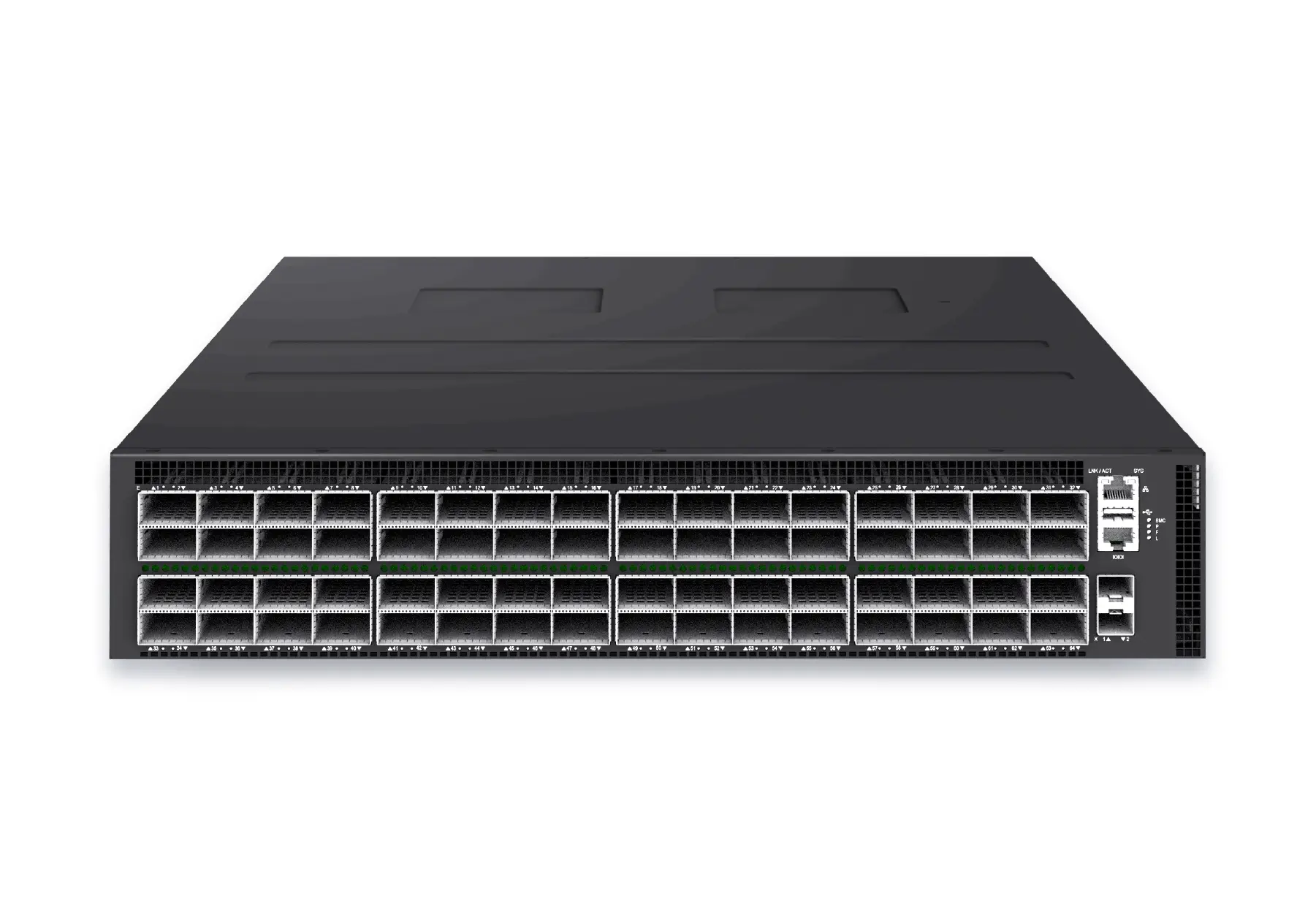 datacenter aiXS-DC-64X800-AI-G164-port 800G AI fabric switch for large-scale GPU clusters, HPC backbones, and ultra-high-throughput data center networks.View product
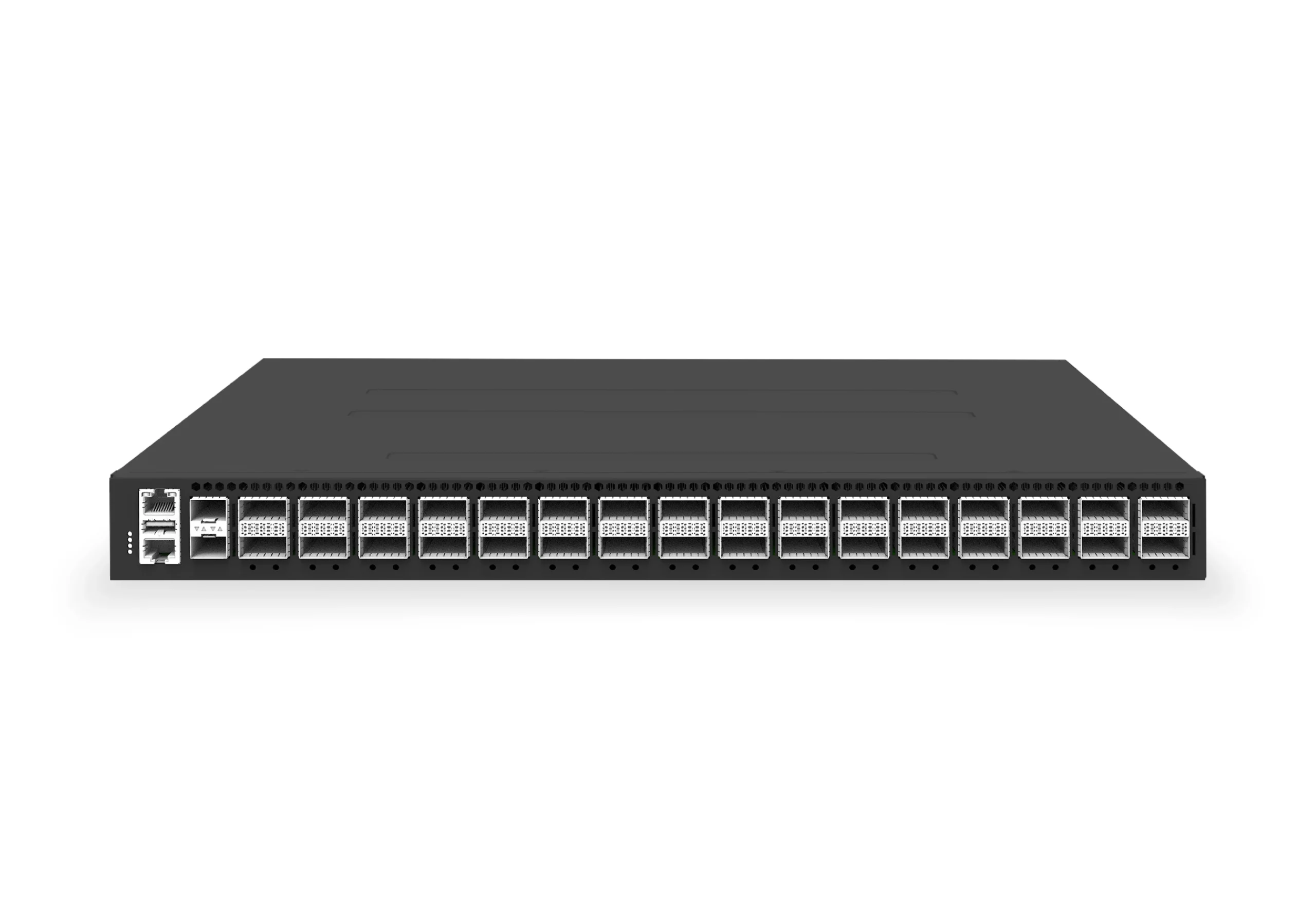 datacenter aiXS-DC-32X400-SP-G232-port 400G spine/core switch for high-capacity data center fabrics and AI-ready backbones.View product
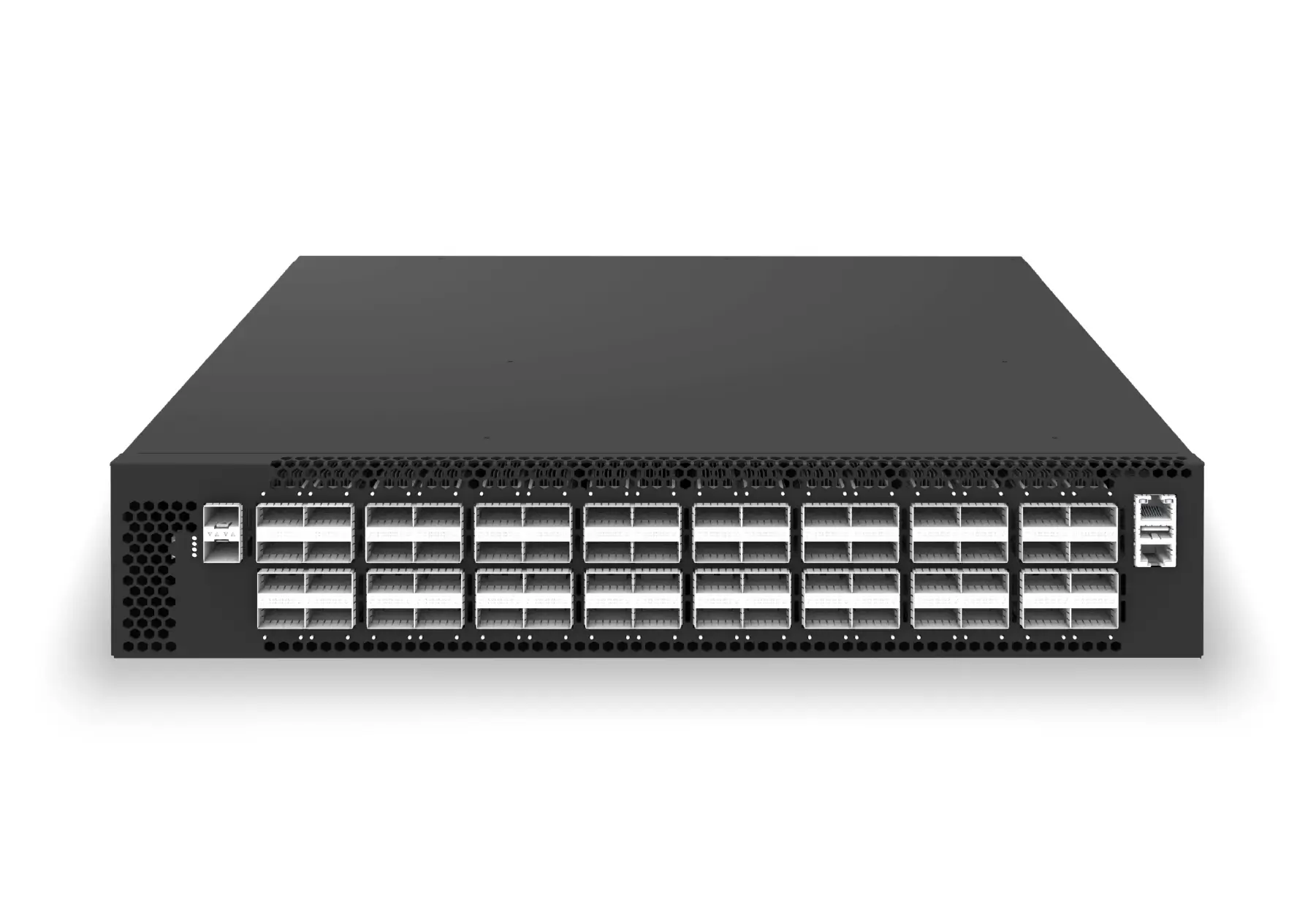 datacenter aiXS-DC-64X200-LS-G164-port 200G leaf/spine switch for high-bandwidth storage, compute, and scale-out data center fabrics.View product
Continue reading
Related articles
 Technical ArticleOpen Networking Support for Enterprise Buyers: How SONiC and Open NOS Models Actually WorkEngineering guidance on Open Networking Support for Enterprise Buyers for Australian campus teams, covering PoE budgets, access-layer resilience, migration risk.Read article
 Technical ArticleFrom Proprietary Lock-In to Open Networking: A Practical Enterprise SONiC Migration PlaybookA practical Enterprise SONiC migration playbook for Australian buyers moving from proprietary switch OS to open networking.Read article
 Technical ArticleWhy SONiC and Ethernet Switching Are Reshaping AI Data Center NetworkingEngineering guidance on SONiC and Ethernet Switching Are Reshaping AI Data Center Networking for Australian network teams, covering underlay design, EVPN-VXLAN.Read article