
In brief
Engineering guidance on Open Networking Support for Enterprise Buyers for Australian campus teams, covering PoE budgets, access-layer resilience, migration risk.
Key takeaways
- The most common objection enterprise teams raise about open networking is not about performance.
- For decades, the answer was simple. You bought Cisco, Arista, or Juniper, and the vendor stood behind the platform.
- This article breaks down the real support model behind SONiC-based open networking deployments.
The most common objection enterprise teams raise about open networking is not about performance. It is not about features. It is about support: who answers the phone at 2 a.m. when a spine switch drops BGP sessions during a production window?
For decades, the answer was simple. You bought Cisco, Arista, or Juniper, and the vendor stood behind the platform. With open networking, the answer is less obvious but far more flexible. The support model is layered, and enterprise buyers who understand those layers can negotiate better outcomes than any single-vendor deal offers.
This article breaks down the real support model behind SONiC-based open networking deployments. It is written for Australian enterprise teams evaluating open NOS options for data center, campus, or AI fabric environments.
Why the Support Question Matters More Than the Feature Question
SONiC (Software for Open Networking in the Cloud) is a free and open-source network operating system based on Linux that runs on switches from multiple vendors and ASICs. It offers a full suite of network functionality, including BGP and RDMA, that has been production-hardened in the data centers of some of the largest cloud service providers (sonicfoundation.dev).
Understanding the support layers available for SONiC and open NOS deployments helps enterprise teams close that gap without surrendering the benefits of open networking: hardware-software decoupling, multi-vendor flexibility, and avoidance of vendor lock-in.
The Four Layers of Open Networking Support
Enterprise SONiC support is not a single contract. It is a stack of four distinct layers, each with different providers, SLAs, and cost structures.
Layer 1: Community and Foundation Support
The SONiC Foundation, a Linux Foundation project, maintains the core codebase, documentation, wiki, and community channels. Contributors can access mailing lists, a community Slack workspace, weekly community meetings, and GitHub issue tracking (github.com/sonic-net/SONiC).
Community support is valuable for bug reports, feature requests, and architectural questions. It is not a production SLA. Response times depend on contributor availability, and there is no guaranteed escalation path for critical incidents.
For enterprise buyers, community support is the foundation layer, not the production layer. It is where you learn, evaluate, and contribute back. It is not where you call during an outage.
Layer 2: Hardware Vendor and OEM Support
SONiC runs on switches from multiple hardware vendors and ASICs, which means the switch hardware itself comes with its own support contract. This includes hardware replacement (typically next-business-day or 4-hour in major Australian metro areas), firmware updates for the switch platform, and ASIC-level diagnostics.
NVIDIA, for example, offers Pure SONiC as a community-developed, open source network operating system option alongside its Spectrum Ethernet switch portfolio. NVIDIA’s Spectrum switches support multiple NOS choices, including Pure SONiC, Cumulus Linux, and proprietary options. The hardware support comes through NVIDIA’s enterprise support portal and firmware download channels (nvidia.com/en-us/networking/ethernet-switching).
The key distinction for enterprise buyers: hardware vendor support covers the switch platform, not necessarily the NOS layer above it. If your BGP configuration causes a convergence issue, the hardware vendor may point you back to the SONiC community or your NOS support provider.
Layer 3: Distribution and Enterprise NOS Support
Several vendors offer commercially supported SONiC distributions. These are typically packaged versions of SONiC with additional testing, validation, enterprise features, and a support contract with defined SLAs. This is the layer most analogous to traditional vendor support: you get a phone number, a ticketing system, and a response-time commitment.
For enterprise buyers evaluating open networking, this is the critical layer to evaluate. Questions to ask any SONiC distribution or support provider include:
- What is your Level 1 to Level 3 escalation process?
- Do you provide configuration review and change-management support, or only break-fix?
- What is your patch cadence, and how quickly do you backport community CVE fixes?
- Can you support mixed-vendor fabrics, or only specific hardware platforms?
- What are your SLA response and resolution targets for P1 production incidents?
Layer 4: Managed Services and Integration Partners
The fourth layer is the integration partner or managed service provider that takes operational ownership of the network. This is common in Australian enterprise and mid-market deployments where in-house network engineering capacity is limited.
A managed service partner handles day-2 operations, monitoring, patching, and incident response under a contractual SLA. For open networking, this layer is especially important because it bridges the skills gap. Your team does not need to be SONiC experts on day one if a competent partner is running operations while your team ramps up.
How Enterprise Buyers Should Evaluate Open Networking Support
The traditional vendor support model is a single pane of glass: one vendor, one contract, one escalation path. Open networking support is a stack. That is a feature, not a bug, but it requires a different evaluation approach.
Here is a practical framework for Australian enterprise teams.
Map your support needs by operational layer. Separate hardware support (switch platform, optics, power supplies) from NOS support (configuration, protocol bugs, security patches) from operational support (monitoring, incident response, change management). Each layer can come from a different provider.
Demand SLAs at every layer, not just the bottom. Hardware replacement SLAs are table stakes. What matters more for production reliability is the NOS and operational layer SLA. If your SONiC distribution provider only offers email-based support with 24-hour response, that may not meet your data center uptime requirements.
Test the escalation path before you need it. Ask potential support providers for a trial or proof-of-concept support engagement. File a non-critical ticket and measure the actual response time, quality of troubleshooting, and resolution path. The support experience during evaluation is the best predictor of the support experience during an outage.
Evaluate multi-vendor fabric support explicitly. One of the primary benefits of SONiC is hardware-software decoupling. If your support provider only certifies one hardware vendor, you lose that flexibility. Ask whether the provider supports mixed-vendor SONiC fabrics and how they handle inter-vendor compatibility issues.
Plan for skills transfer, not just outsourcing. The best open networking support relationships include a knowledge-transfer component. Your internal team should be getting more capable over time, not more dependent on the support provider. Ask about training, documentation, and operational runbook delivery as part of the support engagement.
Where xSONiC Fits in the Enterprise Support Model
xSONiC positions open networking hardware across data center AI, campus access-aggregate, and bare-metal switching categories. For Australian enterprise buyers, this means access to SONiC-compatible switching platforms that can be matched with the support model that fits their operational maturity.
For teams with strong in-house network engineering, xSONiC bare-metal and data center switches paired with community SONiC plus hardware warranty may be the right fit. For teams that need a more traditional support experience, xSONiC hardware paired with a commercial SONiC distribution and managed services partner closes the gap.
The important point is that open networking does not mean unsupported networking. It means choosing your support model deliberately rather than inheriting it from your hardware vendor.
If you are evaluating open networking for a data center refresh, AI fabric deployment, or campus modernization project, the xSONiC team can help you map the right support stack to your operational requirements. Contact xSONiC to discuss your deployment.
Practical Checklist: Questions to Ask Before Committing to Open Networking Support
| Question | Why It Matters |
|---|---|
| What NOS support SLA do you offer for P1 incidents? | Production outages need guaranteed response times, not best-effort |
| Do you support mixed-vendor SONiC fabrics? | Preserves hardware flexibility and prevents re-lock-in |
| How quickly do you backport CVE patches from the SONiC community? | Security patch lag is a compliance and risk issue |
| Can you provide operational runbooks and monitoring templates? | Reduces day-2 operational risk for teams new to SONiC |
| What is your escalation path to the SONiC community or upstream maintainers? | Some bugs require upstream fixes; the provider needs a path there |
| Do you offer training or skills-transfer as part of the support contract? | Long-term independence beats long-term dependence |
| What hardware platforms do you certify and test against? | Certification gaps mean risk during firmware and NOS upgrades |
For production, convert support claims into operating targets. Require P1 acknowledgement inside 2 hours, a 24 hours escalation path, 30 days of patch-status visibility, a named RMA process, a tested log bundle, a supported SONiC image list, and an owner for ASIC, SAI, optics and NOS defects. Open networking support is credible only when the fault boundary is written down before the outage.
The Bottom Line
Open networking support is not a single contract. It is a layered model that gives enterprise buyers more control over how they receive support, at what cost, and from whom. The trade-off is that you need to evaluate and assemble those layers deliberately.
For Australian enterprise buyers, the open networking support model is maturing rapidly. Community SONiC is production-proven at hyperscale. Commercial distributions add enterprise SLAs. Hardware vendors like NVIDIA offer Pure SONiC alongside their switch platforms. And integration partners are building SONiC operational practices.
The question is no longer whether open networking can be supported. It is whether your team is ready to choose its support model on its own terms.
Engineering FAQ
Who owns a production incident in an open networking stack? The contract should name ownership for hardware, optics, ASIC/SAI, SONiC image, automation and upstream defects. If ownership is split, the escalation order and handoff evidence must be defined.
What should be checked before relying on community SONiC in production? Check release cadence, security patch process, known defects, support forum responsiveness, internal skills and rollback procedures. Community support is useful, but it is not a 24x7 SLA.
What support evidence should Australian buyers request? Request the supported hardware list, validated SONiC image, sample log bundle, P1/P2 SLA, RMA location, escalation hours, training plan and at least 1 example runbook for upgrade rollback.
Related xSONiC Resources
Sources Reviewed
- Ethernet Network Adapters - ConnectX NICs | NVIDIA
- NVIDIA BlueField Data Processing Unit
- NVIDIA Spectrum-X Ethernet Platform
- SONiC Project Documentation
- Broadcom Ethernet Switching
- Marvell Switching
- NVIDIA Ethernet Switching
- Open Compute Networking
- SONiC GitHub
- SONiC Foundation
Product fit
Products referenced for evaluation
These products are referenced for evaluation context in the article. Confirm workload, port, optics, software, interoperability, and support requirements against the exact deployment before procurement.
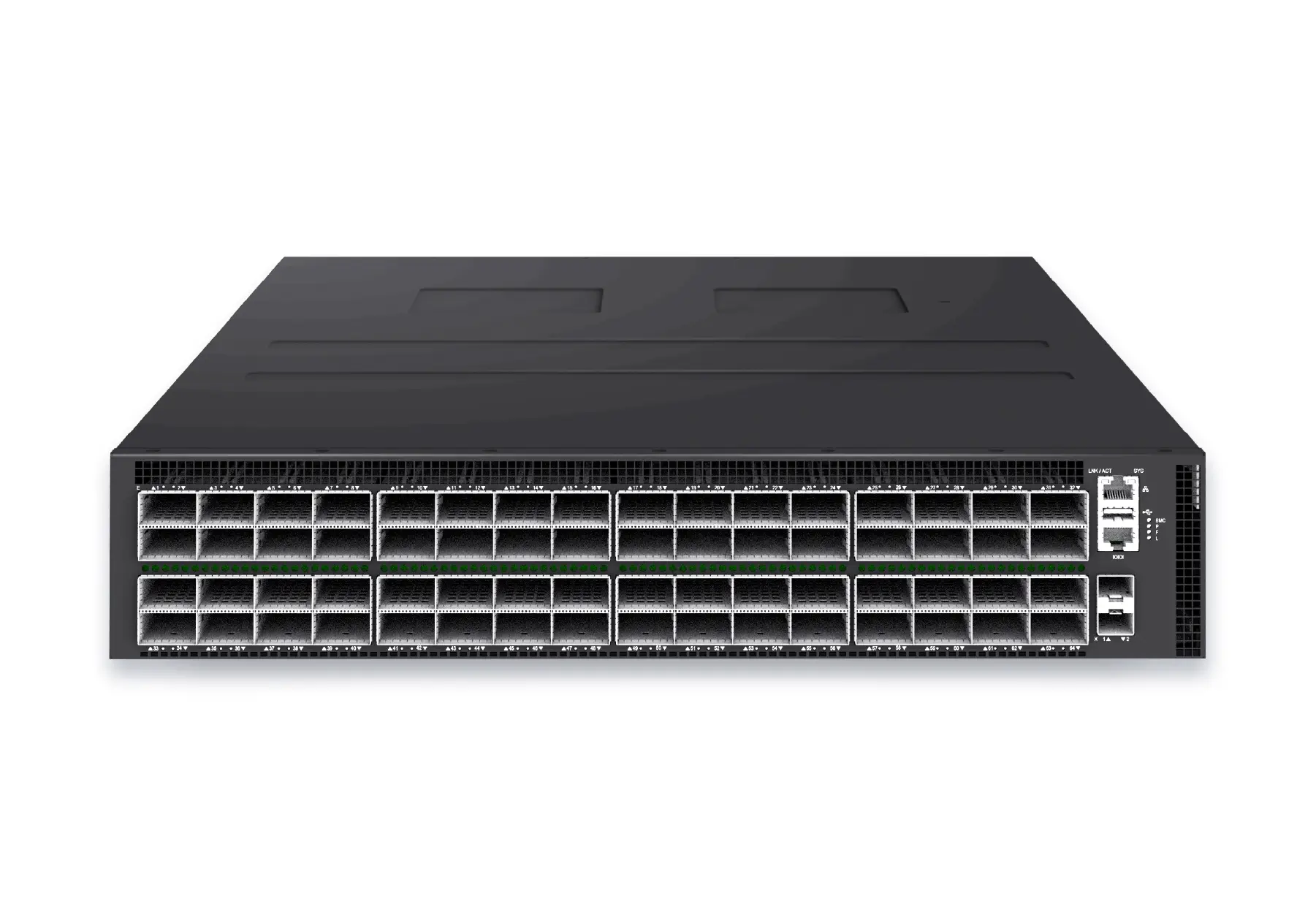 datacenter aiXS-DC-64X800-AI-G164-port 800G AI fabric switch for large-scale GPU clusters, HPC backbones, and ultra-high-throughput data center networks.View product
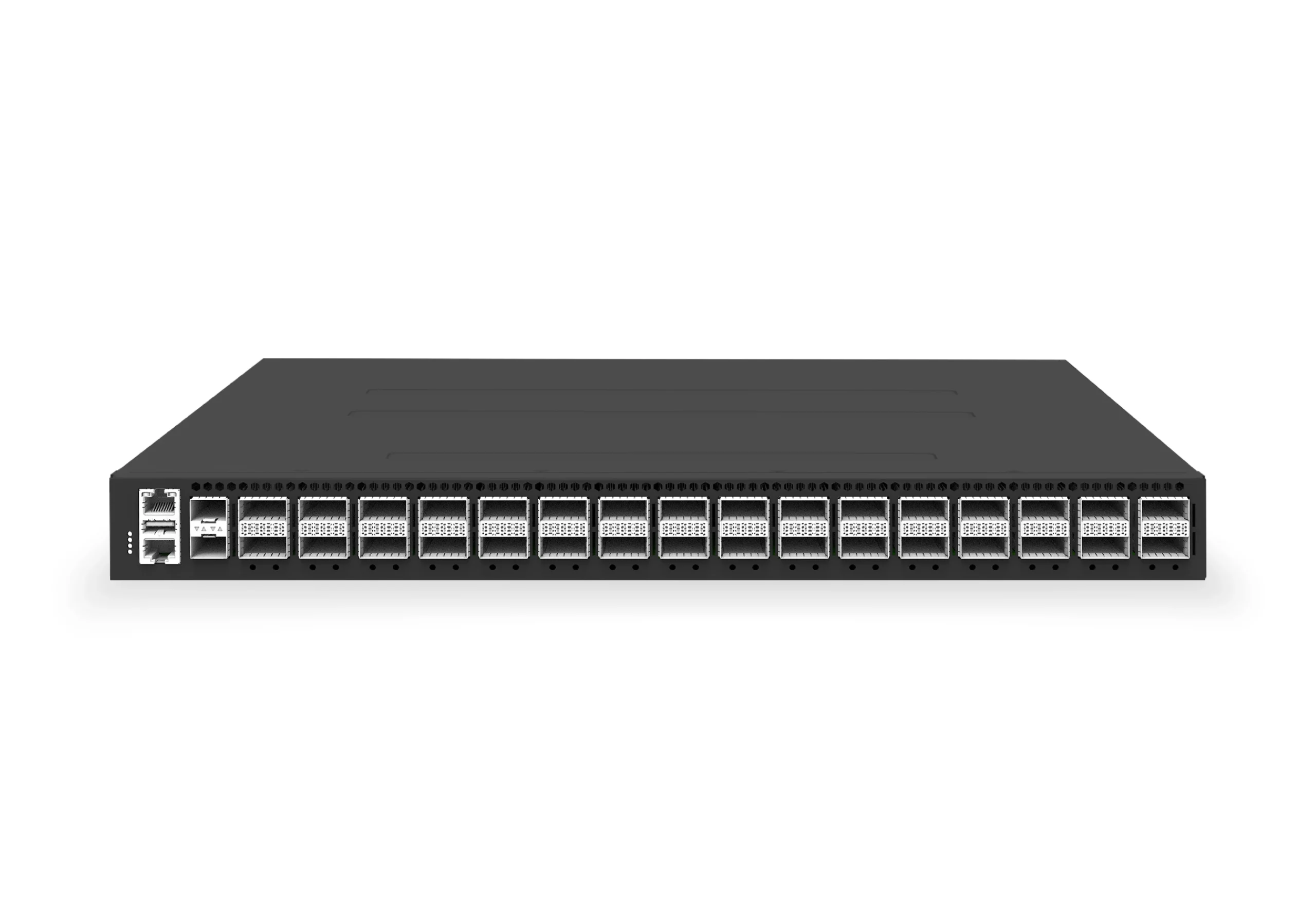 datacenter aiXS-DC-32X400-SP-G232-port 400G spine/core switch for high-capacity data center fabrics and AI-ready backbones.View product
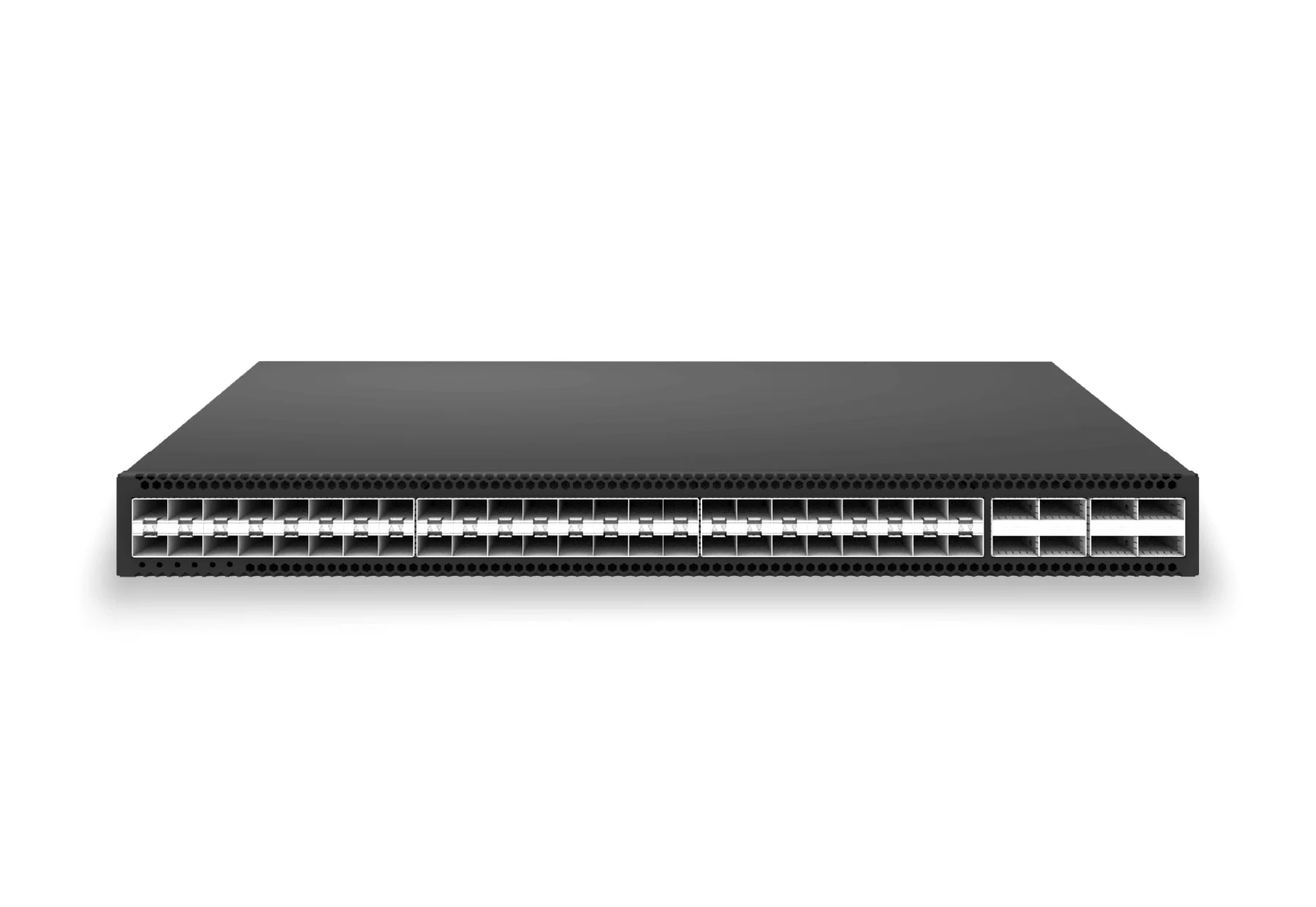 access aggregateXS-AA-48X25-8X100-AGG48x 25G SFP28 aggregation/core switch with 8x 100G QSFP28 for enterprise access and aggregation networks.View product
Continue reading
Related articles
 Technical ArticleFrom Proprietary Lock-In to Open Networking: A Practical Enterprise SONiC Migration PlaybookA practical Enterprise SONiC migration playbook for Australian buyers moving from proprietary switch OS to open networking.Read article
 Technical ArticleWhy Centralized AI Fabric Management Is the Missing Layer in Open NetworkingEngineering guidance on Centralized AI Fabric Management Is the Missing Layer in Open Networking for Australian network teams, covering underlay design, EVPN-VXLAN.Read article
 Technical ArticleWhy SONiC and Ethernet Switching Are Reshaping AI Data Center NetworkingEngineering guidance on SONiC and Ethernet Switching Are Reshaping AI Data Center Networking for Australian network teams, covering underlay design, EVPN-VXLAN.Read article