
In brief
What Australian buyers can learn from SONiC community signals, OCP networking, ASIC support, release cadence, and enterprise validation.
Key takeaways
- If you are evaluating networking platforms for a data centre refresh, an AI fabric build, or a campus upgrade, the SONiC community is where the evidence lives.
- For Australian buyers, that community momentum is especially relevant.
- This article synthesises the latest technical insights and user stories from the SONiC Foundation, the Open Compute Project (OCP) networking ecosystem, and Australian market signals -- then connects them to practical steps you can take with xSONiC products and data center and campus solutions.
Why the SONiC Community Matters to Enterprise Buyers in Australia
If you are evaluating networking platforms for a data centre refresh, an AI fabric build, or a campus upgrade, the SONiC community is where the evidence lives. Software for Open Networking in the Cloud (SONiC) is an open-source network operating system built on Linux that runs on switches from multiple vendors and ASICs. It has been production-hardened in the data centres of some of the world’s largest cloud service providers, and its community now extends well beyond hyperscale into enterprise, colocation, and service provider environments.
For Australian buyers, that community momentum is especially relevant. The Australian data centre market is expanding rapidly, driven by AI workload growth, sovereign data requirements, and colocation demand in dense urban markets such as Sydney and Melbourne. Staying current with SONiC community developments helps you make better procurement decisions, avoid vendor lock-in, and build networks that scale with your business rather than against it.
This article synthesises the latest technical insights and user stories from the SONiC Foundation, the Open Compute Project (OCP) networking ecosystem, and Australian market signals — then connects them to practical steps you can take with xSONiC products and data center and campus solutions.
What Is the SONiC Foundation, and Why Should You Care?
The SONiC Foundation operates as a Linux Foundation project dedicated to advancing SONiC as an open-source network operating system. Its mission includes governance, community coordination, documentation, and evangelism across the broader OCP networking ecosystem.
According to the SONiC Foundation website, the project delivers three headline benefits:
- Hardware-software decoupling — SONiC is built on the Switch Abstraction Interface (SAI), which allows the same NOS to run on switches from different hardware vendors and ASIC families.
- Container-based modularity — SONiC was the first solution to break monolithic switch software into multiple containerised components, enabling independent upgrades and faster feature evolution.
- Rapidly growing ecosystem — SONiC has gained wide industry support from major network chip vendors, switch hardware OEMs, and enterprise distribution partners.
The SONiC GitHub repository documents the project’s architecture, key features, and community contribution process. Key technical highlights include multi-vendor support, standard Linux interfaces and tools, BGP and RDMA functionality, and a modular Docker-container architecture that improves fault isolation, debugging, and scalability.
For enterprise buyers, this means SONiC is not an experiment. It is a production-grade NOS with a mature governance structure, active community development, and a growing base of real-world deployments beyond hyperscale cloud providers.
OCP Networking: The Ecosystem Around SONiC
SONiC does not exist in isolation. It is one of several sub-projects under the Open Compute Project (OCP) Networking initiative, alongside ONIE (Open Network Install Environment) and SAI (Switch Abstraction Interface).
The OCP Networking project page describes its scope as creating “a set of technologies that are disaggregated and fully open, allowing for rapid innovation in the network space.” The project’s initial goal was to develop open top-of-rack (leaf) switches, but its scope has expanded to cover spine switches, fully disaggregated hardware and software, automated configuration management, bare-metal provisioning, and energy-efficient designs.
OCP also maintains an active podcast and event programme that surfaces user stories and technical discussions relevant to open networking buyers. Several recent episodes provide insights worth noting:
- Episode 18 (January 2026) features David Hirst, CEO of Macquarie Data Centres, discussing why Australia’s sovereign approach to data centre infrastructure matters, how AI workloads are shifting design from “real estate” to “chip-out thinking,” and the rise of liquid cooling and megawatt-per-rack designs. This episode directly addresses the Australian market context that many xSONiC buyers operate in.
- Episode 16 (November 2025) with JP Buzzell of Eaton explores how rack density jumps from a few kilowatts to over 100 kW have changed everything from physical layouts to network physics — and why packet loss now dictates rack layout in GPU cluster environments.
- Episode 17 (November 2025) with Chris Suchoski of Texas Instruments covers the shift toward 800V power architectures and the grid-to-chip power challenges facing AI data centres.
These community discussions reinforce a central message: open networking is not just about saving on switch hardware. It is about building infrastructure that can adapt to workload changes, power constraints, and cooling innovations without being locked into a single vendor’s roadmap.
How to Evaluate SONiC for Your Australian Enterprise Network
If you are considering SONiC for a data centre or campus deployment, the community’s technical documentation and user stories point to several evaluation criteria:
1. ASIC and Hardware Compatibility
SONiC’s SAI abstraction layer means the NOS can run on switches from multiple vendors, but compatibility varies. Check the supported devices and platforms list on the SONiC GitHub repository to confirm that your target hardware is production-ready. For xSONiC data centre AI switches and data center AI switches, this is a core design consideration.
2. Feature Maturity for Your Workload
SONiC offers a full suite of network functionality including BGP, RDMA, and EVPN-VXLAN. However, feature maturity varies across releases. If you are building an AI fabric with RoCE v2 and lossless Ethernet, verify that the SONiC version you plan to deploy supports DCBX, Fast CNP, and INT telemetry at the level your workload requires.
| Feature | SONiC Community Maturity | xSONiC Solution Pillar |
|---|---|---|
| BGP | Production-proven | — |
| EVPN-VXLAN | Production-proven | EVPN-VXLAN Guide |
| RDMA / RoCE v2 | Production-proven in hyperscale | AI Fabric |
| INT Telemetry | Active development | INT Technology |
| NETCONF / YANG | Growing support | NETCONF Guide |
| Campus PoE | Emerging | Campus Refresh |
3. Operations Tooling and Community Support
SONiC uses JSON-based configuration files and supports both CLI and programme access methods. The community documentation covers getting started, installation, troubleshooting, and developer guides. Evaluate whether your team has the Linux and Docker skills to operate a container-based NOS, or whether you need a distribution partner with enterprise support and managed tooling.
4. Campus vs Data Centre Readiness
SONiC’s production heritage is in data centre leaf-spine fabrics. Enterprise campus use cases — including PoE edge switching, policy-based routing, and virtual chassis — are an emerging area. If you are evaluating SONiC for a campus refresh in Australia, confirm that the features your branch and access layers require are available and tested in the SONiC version you plan to deploy.
The Australian Data Centre Context
Australia presents a distinctive environment for open networking adoption. Several factors shape the decision landscape:
- Sovereign data requirements — Australian government and enterprise buyers increasingly require data sovereignty, which drives demand for local colocation and private cloud infrastructure rather than offshore hyperscale.
- AI workload growth — AI training and inference workloads are driving demand for high-bandwidth, low-latency spine-leaf fabrics. This aligns directly with SONiC’s strength in BGP, RDMA, and EVPN-VXLAN.
- Colocation and edge expansion — As noted in the OCP Podcast episode with Macquarie Data Centres, Australian data centre operators are designing for megawatt-per-rack densities, liquid cooling, and AI-optimised layouts. Open networking helps these operators avoid vendor lock-in as they scale.
- Supply chain diversity — SONiC’s multi-vendor hardware support gives Australian buyers more options for sourcing switching hardware, reducing dependency on any single vendor’s supply chain.
What the Community Signals for Your Next Network Decision
The SONiC community’s latest technical insights point to several trends that matter for enterprise buyers evaluating open networking in 2025:
-
AI fabric is the growth driver. Community development is heavily focused on lossless Ethernet, RDMA optimisation, and telemetry for AI/ML clusters. If you are building or refreshing a data centre to support GPU workloads, SONiC and SAI are at the centre of that ecosystem.
-
Campus SONiC is emerging. While data centre use cases are mature, enterprise campus features are an active area of development. Buyers evaluating campus SONiC should plan for a phased approach, starting with data centre or aggregation layers and expanding to access edges as feature maturity improves.
-
Operations matter as much as features. The community’s emphasis on container-based modularity, standard Linux tooling, and programme access reflects a broader shift toward infrastructure-as-code and automated operations. Evaluate not just feature lists, but how your team will operate, troubleshoot, and upgrade the network day-to-day.
-
The ecosystem is growing, not consolidating. The SONiC Foundation’s Linux Foundation governance, the OCP Networking project’s expanding scope, and the growing list of contributing organisations signal that open networking is not a niche experiment. It is an industry movement.
Next Steps for Australian Enterprise Buyers
If you are evaluating open networking for your next data centre or campus project, here is a practical starting point:
- Read the SONiC Foundation resources — The SONiC Foundation website links to blog posts, user stories, webinars, and wiki documentation that give you a current view of community activity.
- Review the supported hardware list — The SONiC GitHub repository documents supported devices and platforms. Confirm that your target hardware is on the list.
- Map your workload to SONiC features — Use the table above to identify which SONiC features your workload requires and whether they are production-ready or in active development.
- Talk to xSONiC — Our team can help you evaluate data centre AI switches, data center AI switches, campus switches, and optical transceivers that are designed for SONiC deployments in Australian enterprise environments. Contact us to discuss your requirements.
The SONiC community is where the next generation of open networking is being built. Staying connected to that community — and to a hardware partner who understands it — is the best investment you can make in your network’s future.
Community Signal Acceptance Matrix
| Signal area | What to verify | Rework trigger |
|---|---|---|
| Release cadence | SONiC release, vendor image, security patch process, and upgrade window tracked for 12 months | Community progress is assumed to equal production readiness |
| ASIC support | SAI version, SDK owner, feature caveats, and switch SKU validation documented | Feature maturity is inferred from a different ASIC family |
| OCP ecosystem | Hardware platform, ONIE, optics, power, airflow, and spare process mapped to the intended deployment | Procurement chooses hardware before operations and support are proven |
| Enterprise fit | 30-day pilot validates automation, telemetry, rollback, and escalation with the operations team | The evaluation stops at a vendor demo or lab screenshot |
Engineering Evidence Floor
For SONiC and open networking articles, the acceptance standard is operational proof, not community momentum. The evidence package should name the switch SKU, ASIC, SAI version, ONIE status, SONiC image, optics matrix, automation interface, support path, and rollback procedure. A practical pilot should run for 30 days, include 3 automated configuration changes, validate 100G/400G links where relevant, and prove that a P1 evidence bundle can be assembled within 2 hours.
| Evidence area | What to validate | Acceptance gate | Rework trigger |
|---|---|---|---|
| Platform | SKU, ASIC, ONIE, SAI, image, and optics | 2 platforms boot, upgrade, and rollback | Hardware support is assumed |
| Automation | Source of truth, API/gNMI/NETCONF, backup, and diff | 3 changes pass state readback | CLI drift becomes normal |
| Operations | Logs, telemetry, failure runbook, and escalation owner | P1 bundle ready within 2 hours | Fault isolation depends on one engineer |
| Lifecycle | Patch cadence, CVE process, spare plan, and support SLA | 12 months plan approved | Security and RMA ownership is unclear |
| Commercial | Hardware, support, optics, training, and migration labour | Risk-adjusted TCO is documented | Savings vanish after rework |
Engineering FAQ
What should be tested before moving campus switching to SONiC or open networking? Test PoE behaviour, NAC integration, VLAN and policy design, STP or MC-LAG interaction, multicast, monitoring, upgrade rollback, and help-desk workflows. Campus readiness is an operations test, not only a forwarding test.
Where do campus refresh projects usually carry hidden risk? The risk often sits in closets: power budget, old cabling, undocumented uplinks, mixed endpoint types, voice devices, cameras, badge systems, and change windows. Those details should be inventoried before selecting switch models.
How should Australian campus teams structure a pilot? Choose one representative site or building, document endpoint classes, run PoE and failover tests, verify monitoring, train operations staff, and define rollback steps before expanding to the broader estate.
Related xSONiC Resources
Sources Reviewed
- Ethernet Network Adapters - ConnectX NICs | NVIDIA
- NVIDIA BlueField Data Processing Unit
- NVIDIA Spectrum-X Ethernet Platform
- OpenConfig gNMI Specification
- OpenConfig
- RFC 7950 - The YANG 1.1 Data Modeling Language
- RFC 6241 - Network Configuration Protocol (NETCONF)
- IEEE 802.11be Wireless LAN Standard
- IEEE 802.3bt Power over Ethernet
- SONiC Project Documentation
- Broadcom Ethernet Switching
- Marvell Switching
- NVIDIA Ethernet Switching
- Open Compute Networking
- SONiC GitHub
- SONiC Foundation
Product fit
Products referenced for evaluation
These products are referenced for evaluation context in the article. Confirm workload, port, optics, software, interoperability, and support requirements against the exact deployment before procurement.
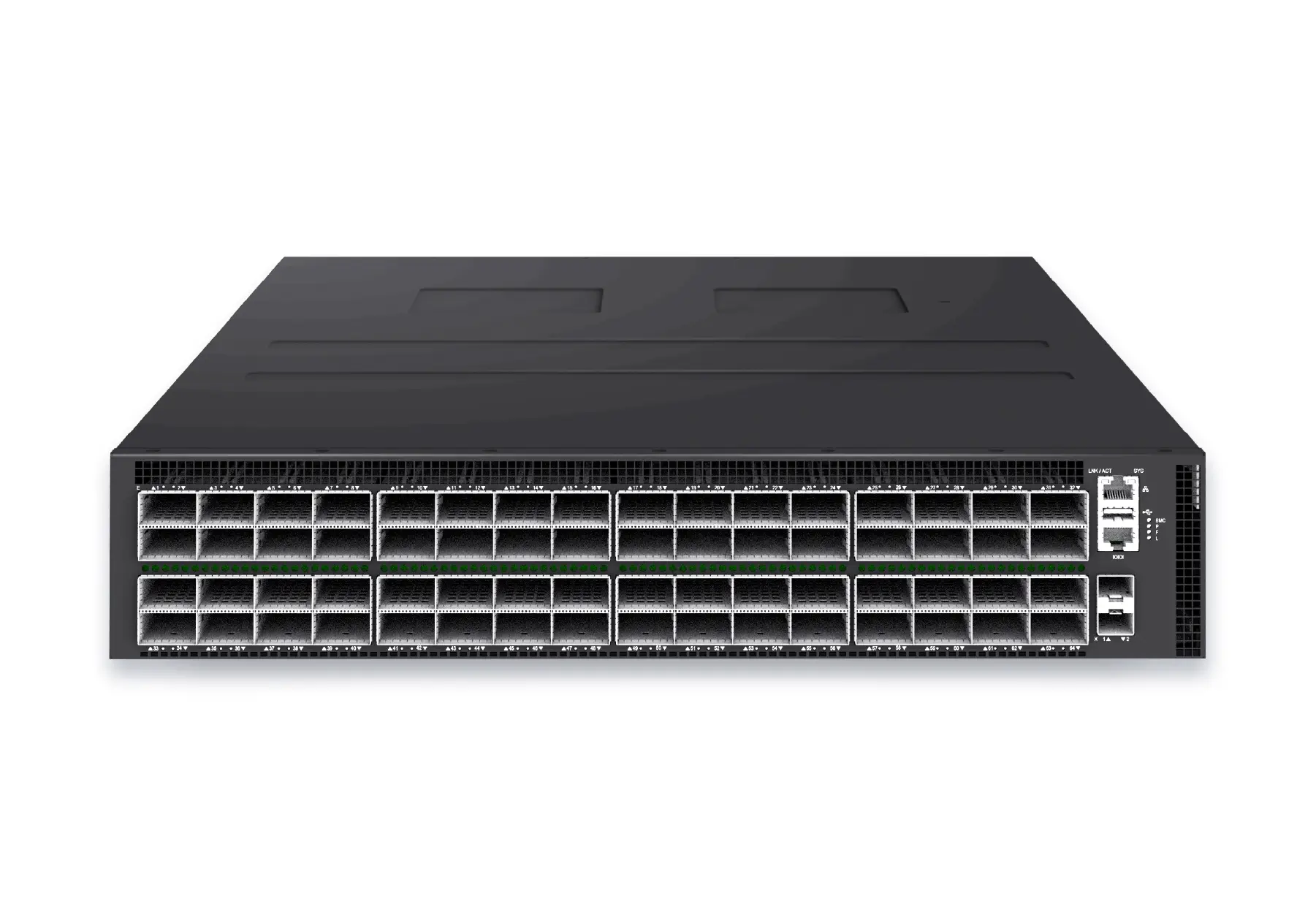 datacenter aiXS-DC-64X800-AI-G164-port 800G AI fabric switch for large-scale GPU clusters, HPC backbones, and ultra-high-throughput data center networks.View product
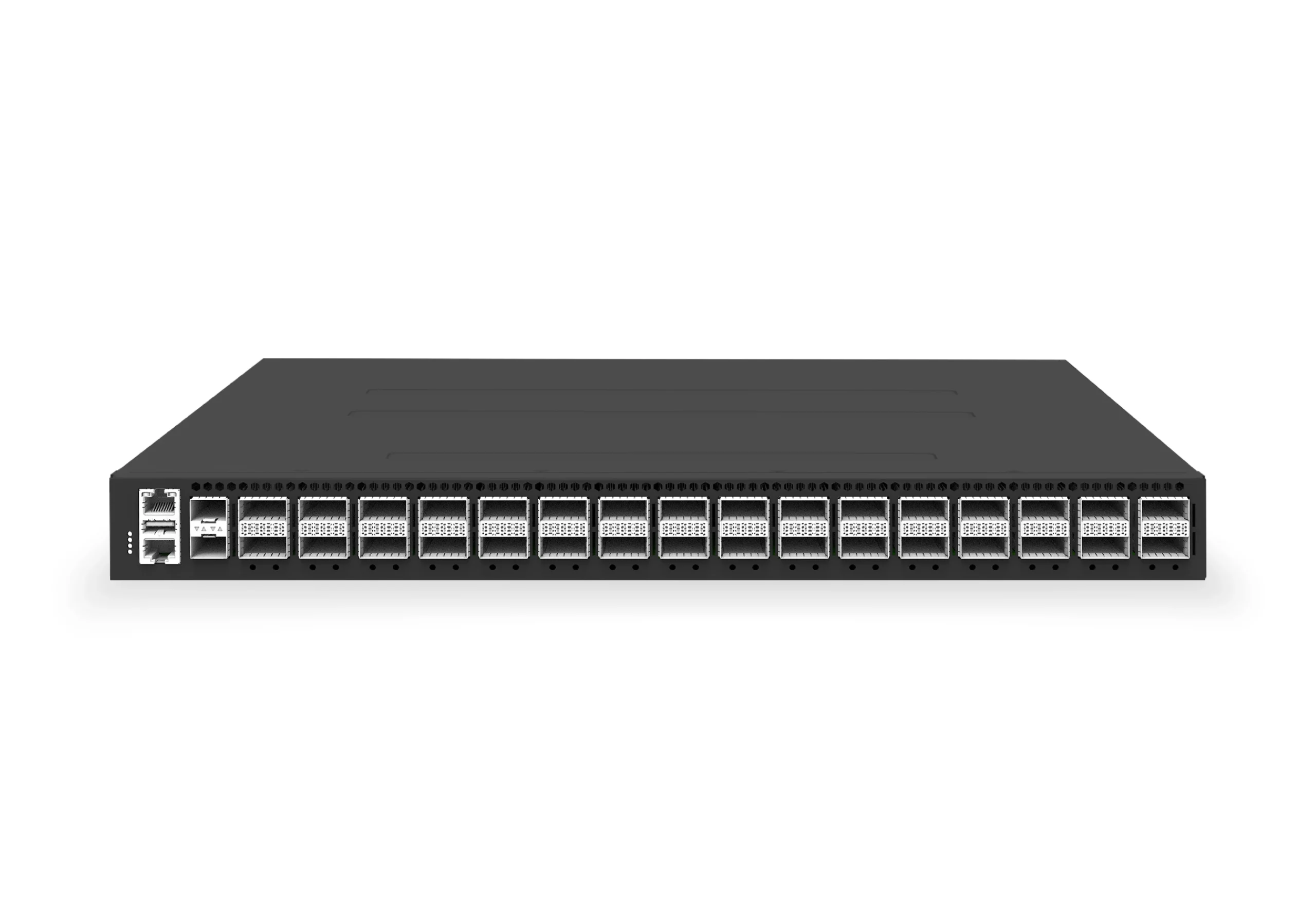 datacenter aiXS-DC-32X400-SP-G232-port 400G spine/core switch for high-capacity data center fabrics and AI-ready backbones.View product
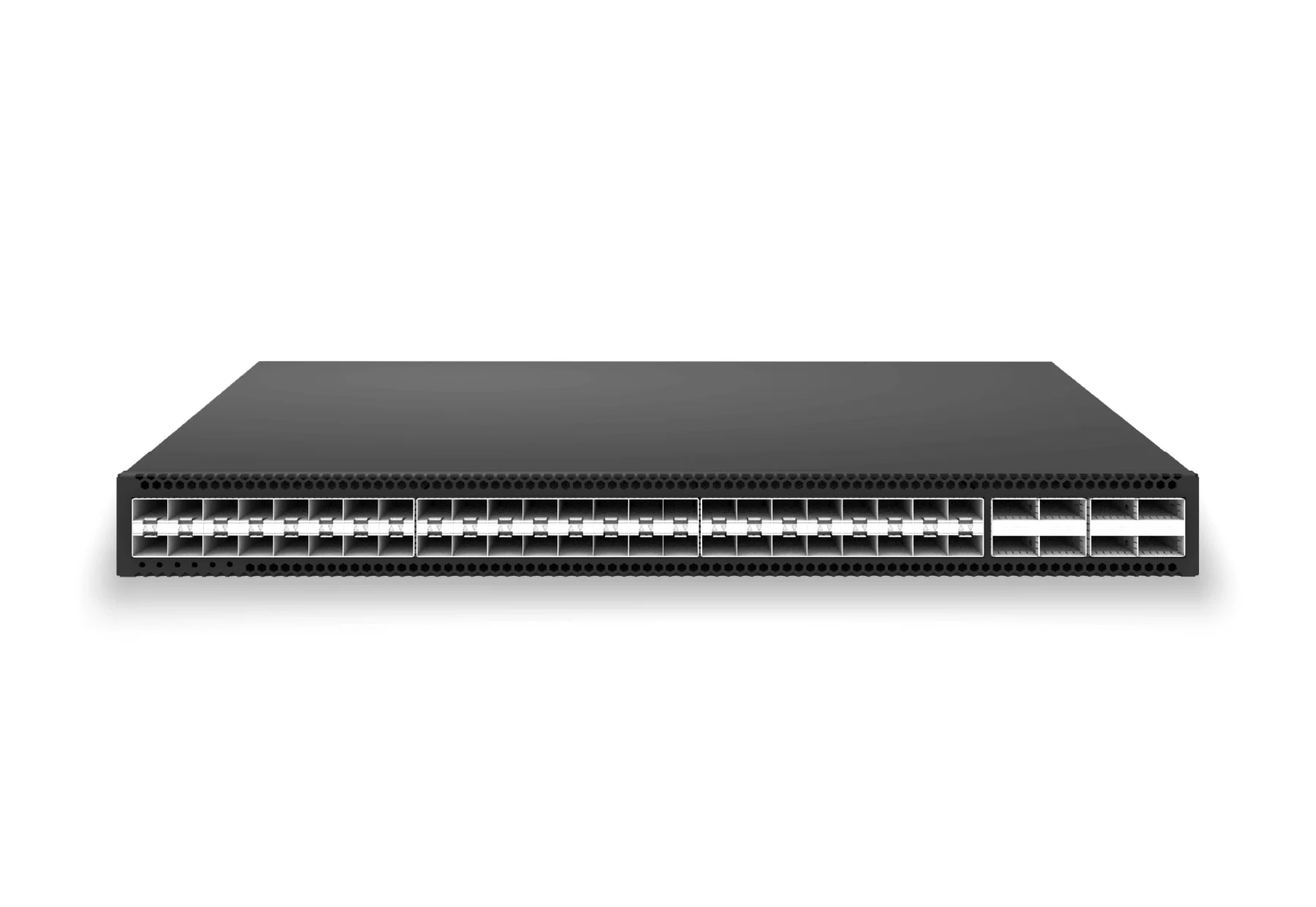 access aggregateXS-AA-48X25-8X100-AGG48x 25G SFP28 aggregation/core switch with 8x 100G QSFP28 for enterprise access and aggregation networks.View product
Continue reading
Related articles
 Technical ArticleNETCONF and YANG Models Are Reshaping How SONiC Networks Get Managed in 2025How NETCONF and YANG reshape SONiC network management for Australian teams, covering schemas, automation, rollback, drift, and validation.Read article
 Technical ArticleWhy SONiC Open Networking on Celestica Data Center Switches Matters for Australian EnterprisesHow SONiC on Celestica data center switches should be evaluated by Australian operators for ASIC fit, support, RoCE, automation, and TCO.Read article
 Technical ArticleWhy Enterprise Buyers Are Moving to SONiC on White Box Switches: A Practical Guide for Australian NetworksPractical guide for Australian enterprise buyers evaluating SONiC on white-box switches, covering hardware, ASICs, support, automation, and TCO.Read article