
In brief
An engineering review of SONiC for GPU backend Ethernet RoCE fabrics, covering PFC, ECN, SAI behavior, telemetry, optics validation, and Australian deployment risk.
Key takeaways
- Australian enterprise and data center operators are entering 2026 Q2 with a specific set of pressures that make Ethernet RoCE AI fabric design a live boardroom topic, not a future roadmap item.
- SONiC, the open source network operating system originally production-hardened in Microsoft Azure's data centers and now governed under the SONiC Foundation as a Linux Foundation project, has emerged as a credible NOS option for these teams.
- However, SONiC readiness for GPU backend Ethernet RoCE is not a binary question.
Why Australian Teams Are Looking at SONiC for GPU Backend Networks Right Now
Australian enterprise and data center operators are entering 2026 Q2 with a specific set of pressures that make Ethernet RoCE AI fabric design a live boardroom topic, not a future roadmap item. GPU cluster deployments for private LLM inference, RAG pipelines, and multimodal AI services are no longer limited to hyperscalers. Sovereign data requirements, combined with the concentration of AI-ready colocation capacity in Sydney and Melbourne, mean that mid-market and enterprise teams are now designing their own GPU backend fabrics rather than renting managed AI infrastructure from global providers.
SONiC, the open source network operating system originally production-hardened in Microsoft Azure’s data centers and now governed under the SONiC Foundation as a Linux Foundation project, has emerged as a credible NOS option for these teams. The SONiC Foundation describes it as a full-suite network operating system based on Linux that runs on switches from multiple vendors and ASICs, with production-hardened BGP and RDMA capabilities. That combination — multi-vendor hardware choice, container-based modularity, and RDMA support — is exactly what an AI fabric design team needs when the alternative is a single-vendor proprietary stack with limited Australian support coverage.
However, SONiC readiness for GPU backend Ethernet RoCE is not a binary question. The gap between SONiC’s proven capabilities in hyperscale cloud fabrics and the operational maturity required for an Australian enterprise deploying a 200-to-2000 GPU cluster is the risk zone this analysis addresses.
What SONiC Actually Delivers for AI Fabric and GPU Backend Ethernet Today
SONiC’s architecture is built on Docker containerized components with SAI (Switch Abstraction Interface) decoupling the network operating system from the underlying ASIC. For AI fabric teams, the relevant capabilities are:
- BGP and RDMA support: SONiC includes production-grade BGP for underlay routing and RDMA over Converged Ethernet (RoCE) for lossless or near-lossless GPU backend traffic. This is the core requirement for any Ethernet AI fabric.
- Multi-vendor ASIC and hardware support: SONiC runs on switches powered by multiple chip vendors and hardware platforms, which gives fabric designers the ability to select switching silicon based on port density, radix, and latency rather than being locked to a single vendor’s ASIC roadmap.
- Container-based modular architecture: Each network function runs in its own Docker container, which means fault isolation, independent upgrade paths, and the ability to test configuration changes without full fabric restarts.
- Standard Linux interfaces: SONiC uses standard Linux networking tools and interfaces, which lowers the barrier for teams with existing Linux and DevOps skills to operate the network layer.
NVIDIA’s Ethernet switching portfolio explicitly supports SONiC as a NOS option alongside Cumulus Linux, with the Spectrum-X Ethernet platform positioned for AI workloads. The Spectrum-4 SN5000 series, for example, is described as purpose-built for AI with speeds up to 800 Gb/s and zero-touch accelerated RoCE. NVIDIA also offers Pure SONiC as a community-developed, open source NOS. This vendor-level SONiC support on AI-optimized switching silicon is a meaningful maturity signal for teams evaluating whether SONiC on the GPU backend is production-ready or still experimental.
The Open Compute Project (OCP) Networking project lists SONiC as a key sub-project alongside SAI and ONIE, with the stated goal of creating fully disaggregated and open networking hardware and software. OCP’s scope includes operating systems, developer tools, REST APIs, automated configuration management, and bare metal provisioning — all of which are prerequisites for operating an AI fabric at scale.
The Australian Context: Sovereignty, Colocation Constraints, and Supply Chain Reality
The Australian market introduces friction points that do not exist in the US or European SONiC deployment narratives. David Hirst, CEO of Macquarie Data Centres, described these dynamics in a January 2026 OCP Podcast episode focused specifically on Australia’s data center landscape.
Hirst highlighted that Australia’s approach to AI infrastructure is shaped by data sovereignty requirements that push enterprise teams toward on-shore or near-shore GPU deployments rather than relying on hyperscaler regions in Singapore or the US West Coast. He also noted that AI workloads have shifted data center design thinking from a real estate model to a chip-out model, where the GPU cluster’s thermal and power profile drives facility decisions rather than the reverse. Macquarie’s IC3 Super West facility in Sydney, for example, is being designed for liquid cooling and megawatt-per-rack power densities that reflect the scale of modern GPU clusters.
For Australian enterprise teams evaluating SONiC on the GPU backend, the practical implications are:
- Colocation power and cooling availability: Not every Australian colo facility can support the power density and liquid cooling infrastructure required by high-performance GPU clusters. Teams need to verify that their target facility can deliver the rack-level power and cooling that a 400G or 800G Ethernet AI fabric demands.
- Operational skills availability: SONiC requires teams with Linux networking, container orchestration, and BGP/RDMA operations expertise. The Australian market has a smaller pool of SONiC-experienced network engineers compared to US or Chinese hyperscaler markets. Training and onboarding timelines should be included in any 2026 Q2 deployment plan.
Key Risk Factors: What to Pressure-Test Before Committing to SONiC RoCE AI Fabric
The following risk factors should be evaluated as part of any Australian enterprise SONiC AI fabric business case in 2026 Q2:
1. Lossless Ethernet Configuration Complexity RoCE v2 for GPU backend traffic requires lossless or near-lossless Ethernet behavior, which depends on Priority Flow Control (PFC), Data Center Bridging Capability Exchange (DCBX), and congestion notification mechanisms such as ECN and congestion notification packets (CNP). SONiC supports these protocols, but the configuration and tuning of PFC parameters, buffer allocation, and congestion thresholds is non-trivial. Misconfigured PFC can cause head-of-line blocking, PFC storms, or unfair bandwidth allocation across GPU-to-GPU traffic flows. Teams should budget significant lab validation time before production deployment. See xSONiC’s RoCE v2 Guide and DCBX Technology for detailed protocol-level guidance.
2. Telemetry and Observability Gaps In a proprietary AI fabric stack, the switch vendor typically provides integrated telemetry, real-time congestion visibility, and automated remediation. With SONiC on bare-metal hardware, teams need to build their own telemetry pipeline using INT (In-band Network Telemetry), gNMI, streaming telemetry, or third-party tools. This is achievable but requires engineering investment. Australian teams should evaluate whether their operational team can maintain fabric-level visibility without the vendor-managed dashboard that comes with a proprietary stack. See xSONiC’s INT Technology and IPTPath Telemetry resources for implementation guidance.
3. ASIC-Level Feature Parity Not all SONiC-compatible switching ASICs deliver identical RoCE, PFC, and congestion management behavior. The Switch Abstraction Interface (SAI) provides a common API, but ASIC-level implementations of buffer management, PFC deadlock detection, and fast congestion notification vary. Teams should verify that their chosen switch platform’s ASIC supports the specific RoCE features required by their GPU cluster interconnect, including buffer size, PFC queue count, and fast CNP response times. This is particularly important for 400G and 800G links where buffer pressure is higher.
4. Upgrade and Patch Management SONiC’s container-based architecture allows modular upgrades, but fabric-wide SONiC upgrades still require rolling restart planning, compatibility testing with the running SAI version, and validation that RoCE lossless behavior is preserved after the upgrade. For a production AI fabric running continuous training jobs, unplanned fabric disruptions during upgrade windows can waste significant GPU-hours.
5. Multi-Vendor Hardware Support Reality
SONiC’s multi-vendor model is strongest when every platform in the fabric has been validated against the same ASIC SDK, SAI version, optics matrix, and RoCE configuration profile. Mixing switch vendors can reduce supply-chain risk, but it also creates a larger test matrix: the same PFC, ECN, ACL, telemetry, and transceiver monitoring behavior must be proven on each hardware SKU before production. Australian teams should treat multi-vendor support as an engineering program, not a procurement shortcut. The minimum evidence set should include lab results for the selected NICs, cables, transceivers, switch ASICs, SONiC image, and failover procedures.
6. Optics and Cabling Validation AI fabric link performance at 400G and 800G is highly sensitive to transceiver quality, fiber type, and link distance. SONiC’s optics management and diagnostic capabilities vary by platform. Australian teams should validate that their chosen SONiC-compatible switch platform provides adequate transceiver monitoring, DOM (Digital Optical Monitoring) data, and link health visibility for the specific optical transceivers deployed. See xSONiC’s optical transceiver product family for compatible optics options.
SONiC vs. Proprietary AI Fabric Stacks: The Australian Buyer Decision Framework
The decision to deploy SONiC on the GPU backend versus a proprietary Ethernet AI fabric stack (such as NVIDIA Spectrum-X with Cumulus Linux, or a Cisco/Marvell/Broadcom proprietary NOS) is not purely a technical comparison. For Australian enterprise teams, the decision factors include:
- Total cost of ownership over 3-to-5 years: SONiC eliminates NOS license fees, which can be significant at fabric scale. However, the operational cost of maintaining SONiC in-house, including engineering time for configuration, troubleshooting, and upgrade management, must be factored in. Teams without existing SONiC expertise may find that the licensing savings are offset by higher operational costs in year one.
- Vendor flexibility and multi-vendor procurement: SONiC’s multi-vendor hardware support allows Australian teams to avoid single-vendor lock-in on switching hardware. This is a meaningful advantage in a market where supply chain disruptions and vendor-specific lead times can delay deployment timelines.
- Compliance and audit trail: Australian government and critical infrastructure operators may require documented security patches, CVE response timelines, and audit trails for network operating system changes. SONiC’s open source model provides full code transparency, but teams need to verify that their chosen distribution and support model meets the specific compliance framework requirements.
What to Watch in 2026 Q2: Signals That Matter for Australian AI Fabric Decisions
Several developments are worth tracking as Australian enterprise teams evaluate SONiC AI fabric deployments in 2026 Q2:
- OCP APAC Summit 2026: OCP has scheduled an APAC Summit for 2026, which may include SONiC AI fabric sessions, Australian case studies, or APAC-focused SONiC support ecosystem announcements. Attendance or review of summit proceedings should be part of any SONiC evaluation plan.
- Australian data center power and cooling capacity: Macquarie Data Centres’ IC3 Super West and similar sovereign AI facilities are being designed for liquid cooling and high rack power densities. The availability of AI-ready colocation with adequate power and cooling will constrain or enable SONiC GPU backend fabric deployments independent of the NOS choice.
- SONiC community release cadence and feature maturity: SONiC’s container-based architecture allows rapid feature iteration, but teams should track the specific SONiC release versions that include production-grade RoCE v2, PFC, DCBX, and INT telemetry support for their target ASIC platform.
Engineering Evidence Floor
For this topic, treat the article as buyer-ready only when the fabric claim is tied to measurable acceptance data. The baseline evidence package should include the selected switch SKU, SONiC image, ASIC/SAI version, NIC firmware, optics list, RoCE policy, telemetry counters, support owner, and rollback method. In a small pilot, capture at least 30 minutes of traffic at the intended 100G/400G/800G speed, one link failure, one switch reboot, one optics fault, and one support handoff. That evidence separates a credible AI fabric plan from a bandwidth brochure.
| Evidence area | What to validate | Acceptance gate | Rework trigger |
|---|---|---|---|
| Transport | PFC, ECN, DCBX, MTU, queue mapping, and CNP counters | 30 minutes load test at 100G/400G/800G | RoCE is asserted but not measured |
| Platform | Switch SKU, ASIC, SAI, SONiC image, and optics list | 2 switch roles pass upgrade and rollback | Generic compatibility is used as proof |
| Failure | Link loss, switch reboot, route convergence, and workload impact | 3 failure cases captured with timestamps | Steady-state throughput is the only evidence |
| Telemetry | Queue depth, drops, optics DOM, gNMI, and packet visibility | Operators explain a slowdown within 15 minutes | GPU and network teams use different data |
| Support | APAC escalation, RMA, spares, and patch lifecycle | 12 months operating plan approved | Ownership splits across vendors |
Engineering FAQ
Is SONiC ready for GPU backend RoCE fabrics? It can be, but only after platform-specific validation. The buyer should verify PFC, ECN, DCBX, buffer profiles, SAI behavior, optics diagnostics, and telemetry on the exact switch ASIC, NIC, cable, and SONiC distribution intended for production.
What breaks first in a poorly tuned RoCE fabric? Microbursts usually expose the first weakness. Symptoms include PFC storms, elevated tail latency, unfair flow completion time, NIC-side retransmission or CNP spikes, and training jobs that slow down without a clean link failure.
Can a proprietary AI fabric stack be safer than SONiC? A vendor-managed stack can reduce integration effort, but it can also increase lock-in. SONiC gives stronger hardware flexibility and configuration auditability; the tradeoff is that the operator must own more lab testing, release qualification, and Day-2 automation.
What should an Australian proof of concept include? Run an NCCL-style collective workload or equivalent synthetic traffic, capture queue depth and ECN marking behavior, test one-switch and one-tool failures, validate optics alarms, and repeat the test after a rolling NOS upgrade.
Related xSONiC Resources
Sources Reviewed
- Ethernet Network Adapters - ConnectX NICs | NVIDIA
- NVIDIA BlueField Data Processing Unit
- NVIDIA Spectrum-X Ethernet Platform
- OpenConfig gNMI Specification
- OpenConfig
- RFC 7950 - The YANG 1.1 Data Modeling Language
- RFC 6241 - Network Configuration Protocol (NETCONF)
- SONiC Project Documentation
- Broadcom Ethernet Switching
- Marvell Switching
- NVIDIA Ethernet Switching
- Open Compute Networking
- SONiC GitHub
- SONiC Foundation
Product fit
Products referenced for evaluation
These products are referenced for evaluation context in the article. Confirm workload, port, optics, software, interoperability, and support requirements against the exact deployment before procurement.
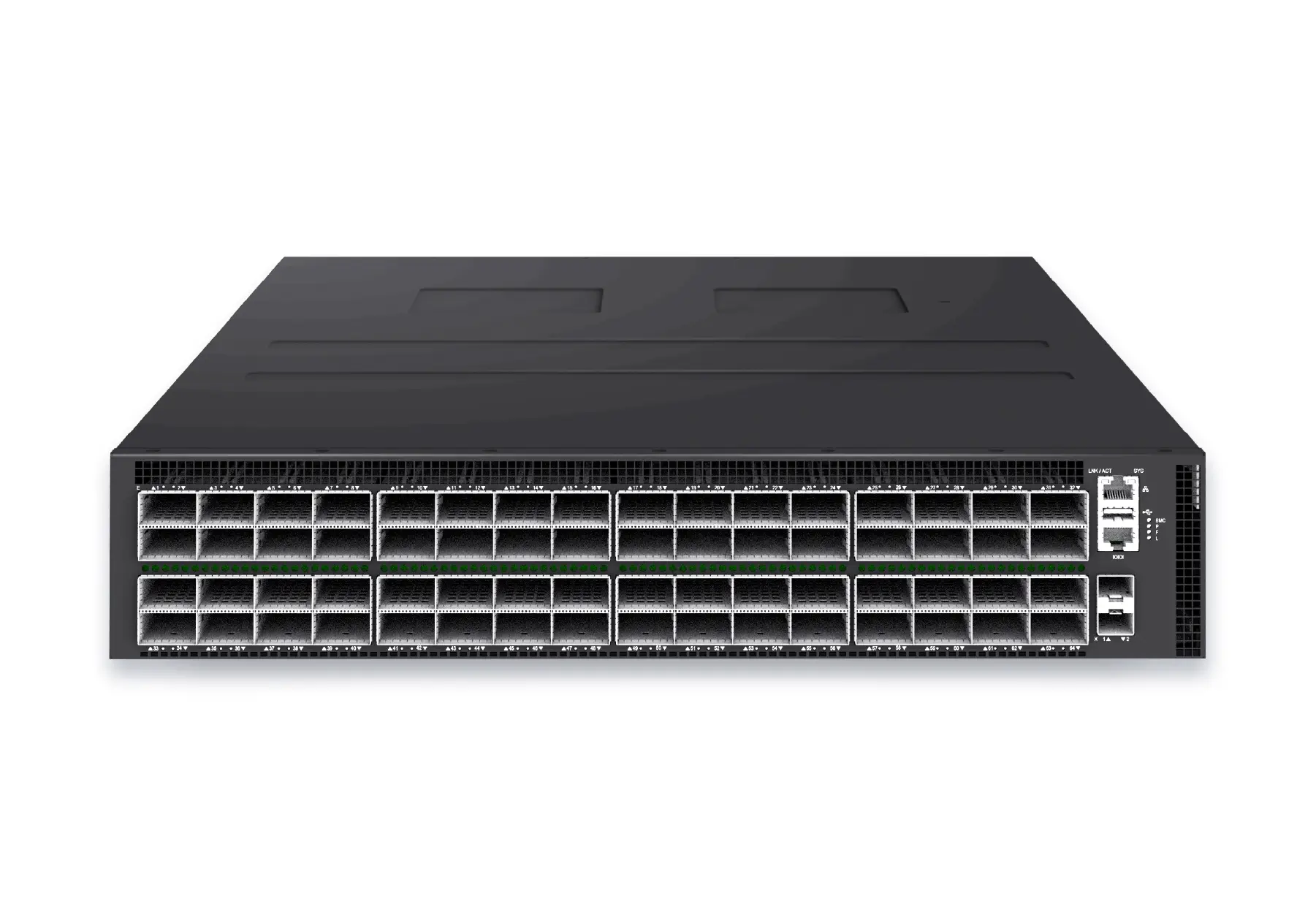 datacenter aiXS-DC-64X800-AI-G164-port 800G AI fabric switch for large-scale GPU clusters, HPC backbones, and ultra-high-throughput data center networks.View product
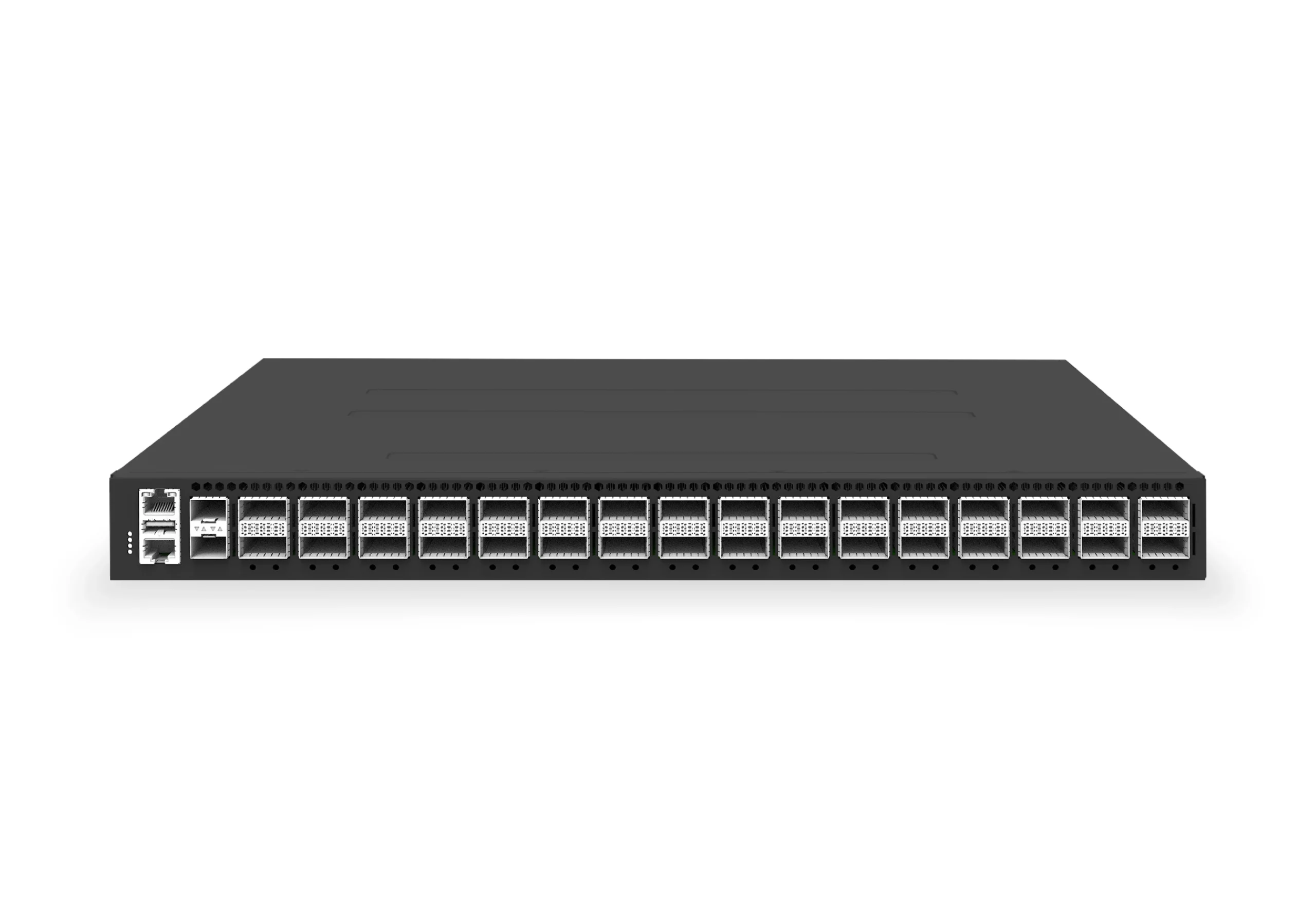 datacenter aiXS-DC-32X400-SP-G232-port 400G spine/core switch for high-capacity data center fabrics and AI-ready backbones.View product
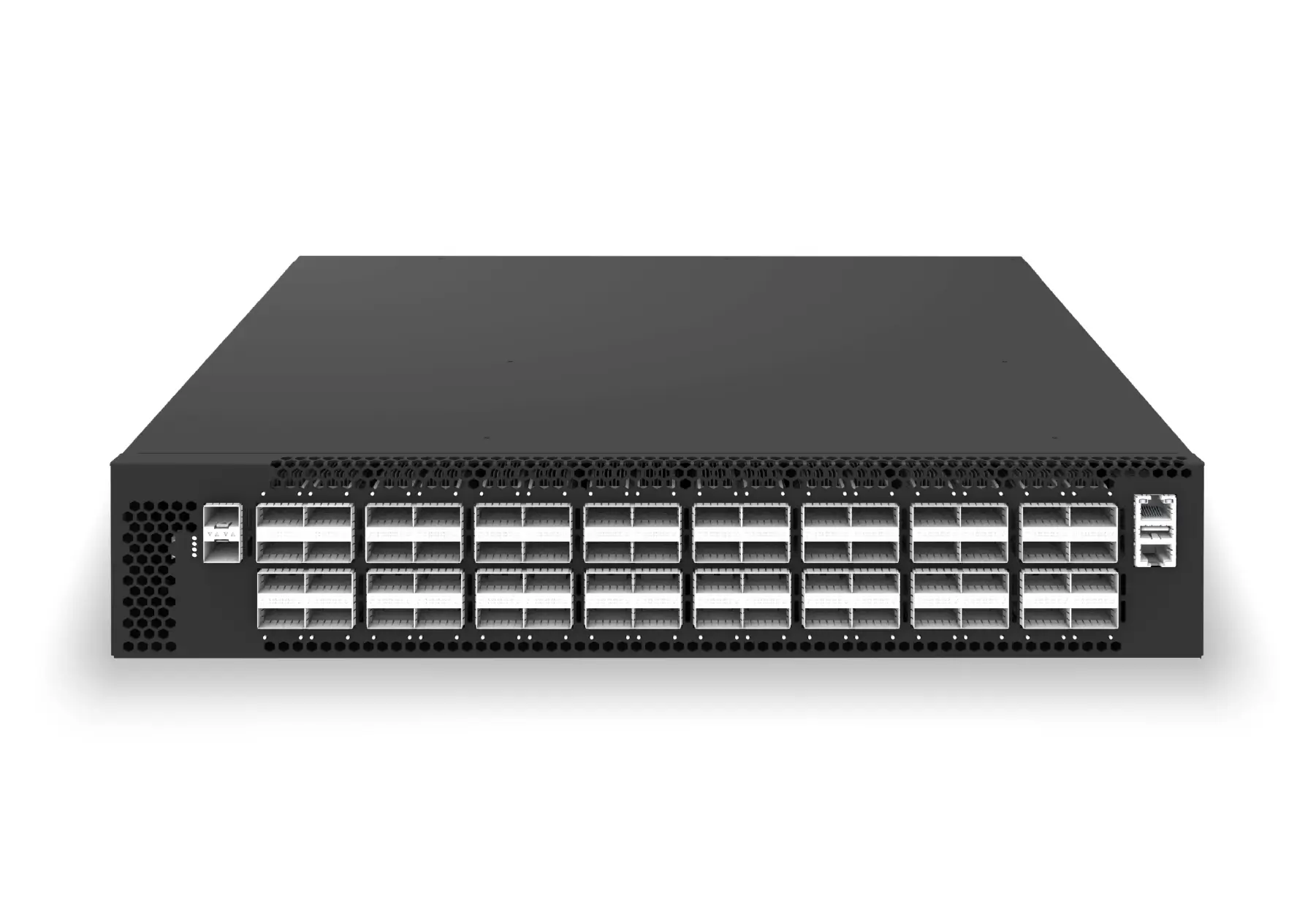 datacenter aiXS-DC-64X200-LS-G164-port 200G leaf/spine switch for high-bandwidth storage, compute, and scale-out data center fabrics.View product
Continue reading
Related articles
 Technical ArticleHow SONiC-Powered 400G and 800G Switches Change AI Data Center Fabric Design in AustraliaEngineering guide for 400G and 800G optics planning covering form factor, reach, telemetry, thermal limits, supply risk, and validation.Read article
 Technical ArticleRoCE v2 GPU Backend Fabrics at 400G and 800G: What Australian Data Center Operators Need to Know in 2026Engineering guide for AI fabric buyers covering RoCE, SONiC, telemetry, optics, support ownership, and deployment validation.Read article
 Technical ArticleWhat Australian Data Center Buyers Need to Know Before Choosing SONiC Switches for 400G and 800G UpgradesEngineering guide for 400G and 800G optics planning covering form factor, reach, telemetry, thermal limits, supply risk, and validation.Read article