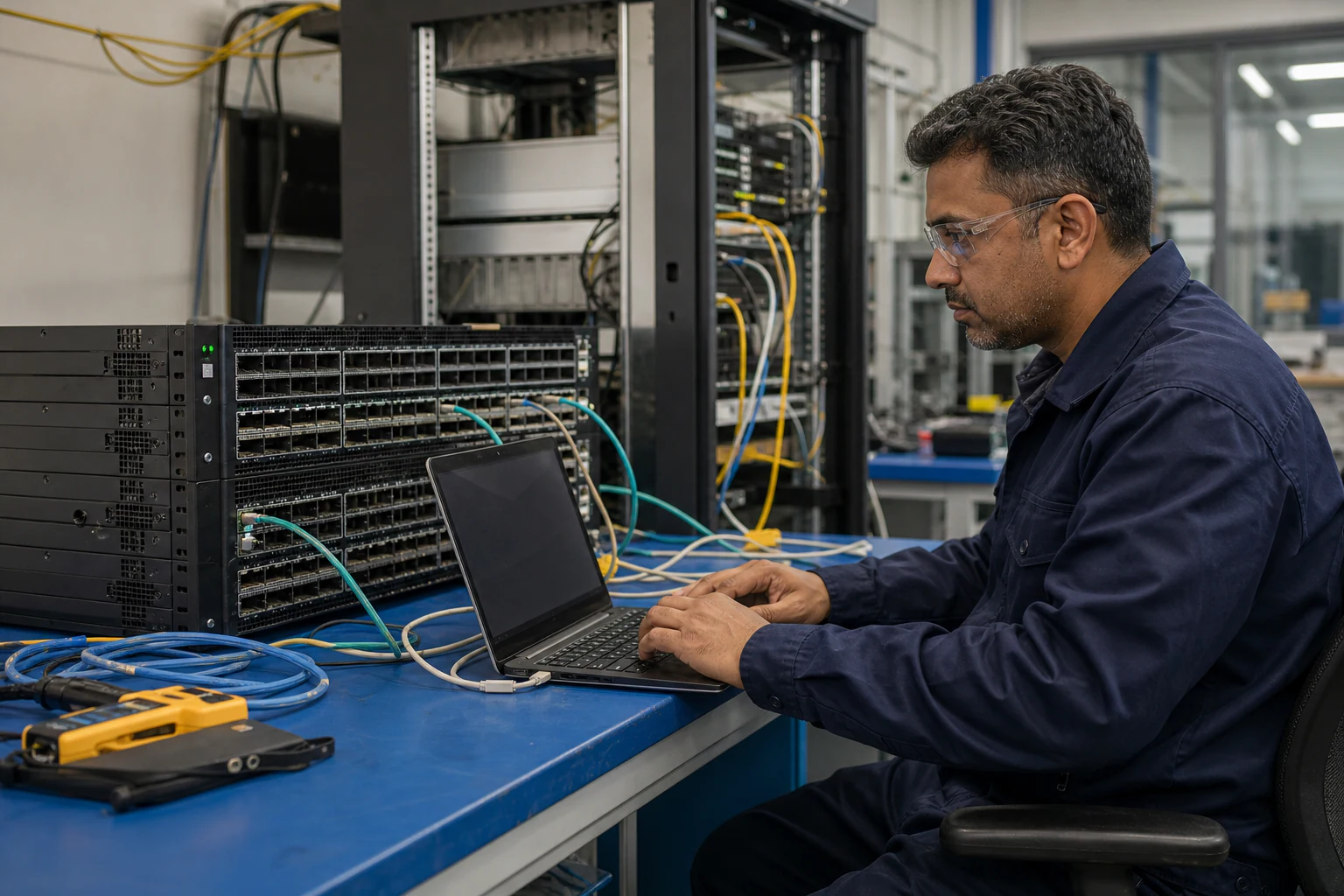
In brief
NVIDIA Ethernet switching guidance for Australian AI cluster buyers, covering Spectrum, SONiC, RoCE, 400G/800G, optics, and validation.
Key takeaways
- If you are building or refreshing an AI training or inference cluster in Australia, the network fabric is no longer a commodity afterthought.
- This article breaks down what NVIDIA offers in Ethernet switching, where SONiC-based open networking fits, and how to evaluate both for your next AI fabric deployment.
- NVIDIA markets five generations of Spectrum Ethernet switches, from the SN2000 series (up to 100 Gb/s) through to the new SN6000 family built on the Spectrum-6 ASIC.
Why AI Clusters Change the Ethernet Switching Decision
If you are building or refreshing an AI training or inference cluster in Australia, the network fabric is no longer a commodity afterthought. GPU-to-GPU communication in large language model training, RAG pipelines, and real-time inference demands lossless, low-latency, congestion-aware Ethernet. The wrong switching choice can leave expensive GPUs idle, waiting on the network.
This article breaks down what NVIDIA offers in Ethernet switching, where SONiC-based open networking fits, and how to evaluate both for your next AI fabric deployment.
NVIDIA Spectrum Ethernet: What Is Actually on the Table
NVIDIA markets five generations of Spectrum Ethernet switches, from the SN2000 series (up to 100 Gb/s) through to the new SN6000 family built on the Spectrum-6 ASIC. Here is a quick summary of what each generation targets:
| Series | ASIC | Max Port Speed | Typical Role |
|---|---|---|---|
| SN2000 | Spectrum | 100 Gb/s | Leaf, HCI, storage |
| SN3000 | Spectrum-2 | 200 Gb/s | Leaf and spine, full-rack connectivity |
| SN4000 | Spectrum-3 | 400 Gb/s | Cloud-scale distributed DC apps |
| SN5000 | Spectrum-4 | 800 Gb/s | AI-optimized, deep learning workloads |
| SN6000 | Spectrum-6 | 800 Gb/s | AI factory scale, co-packaged optics |
The SN5000 series (Spectrum-4) is positioned as the first Ethernet switch portfolio purpose-built for deep learning, connecting GPU compute at up to 800 Gb/s per port. The newer SN6000 series introduces co-packaged silicon photonics, which NVIDIA says improves power efficiency and uptime by 5x compared to pluggable optics approaches.
Key hardware capabilities across the Spectrum line include up to 512K flow counters, 512K ACL entries, and 512K IPv4 routes. These numbers matter when you are running large-scale AI training jobs with thousands of flows per GPU pair.
The NOS Question: Cumulus, Pure SONiC, or Something Else?
One of the most important details for Australian buyers is that NVIDIA Spectrum switches support multiple network operating systems. NVIDIA offers:
- Cumulus Linux — a full-featured, Linux-based data center NOS that NVIDIA acquired with Mellanox.
- Pure SONiC — NVIDIA’s supported distribution of the open-source SONiC (Software for Open Networking in the Cloud) NOS.
- Third-party NOS options — depending on the hardware platform.
This is where the conversation gets interesting for xSONiC customers. SONiC is a Linux-based, containerized, open-source NOS originally developed by Microsoft and now governed by the SONiC Foundation under the Linux Foundation. It runs on switches from multiple hardware vendors and multiple ASIC families, not just NVIDIA Spectrum silicon.
According to the SONiC Foundation and the project’s GitHub repository, SONiC provides a full suite of network functionality including BGP, RDMA, and production-hardened telemetry — capabilities that have been validated at scale in hyperscaler data centers. Its modular, container-based architecture means each network function runs in its own Docker container, which improves fault isolation, simplifies upgrades, and allows teams to swap components without rebuilding the entire NOS.
Why Open Networking Matters for AI Fabric Buyers
For Australian enterprises and service providers building AI infrastructure, the NOS choice has three practical consequences:
1. Hardware Flexibility
If you run SONiC as your NOS, you are not locked into a single switch vendor. You can evaluate bare-metal switches from multiple ODMs, compare price-performance, and choose the form factor and port density that fits your rack design. xSONiC data center AI switches and data center AI switch platforms are designed for exactly this use case — high-performance switching hardware that runs SONiC or other open NOS options.
2. RoCE and RDMA Readiness
AI training clusters depend on RDMA over Converged Ethernet (RoCE) for low-latency, zero-copy GPU-to-GPU transfers. Both NVIDIA Spectrum hardware and SONiC-based fabrics support RoCE, but the implementation details matter. Look for hardware and NOS combinations that support:
- DCBX (Data Center Bridging Capability Exchange) for automated PFC and ETS negotiation
- ECN-based congestion notification and fast CNP handling
- INT (In-band Network Telemetry) for real-time visibility into queue depths and latency
xSONiC’s RoCE v2 guide, DCBX technology page, and INT telemetry solution provide detailed buyer guidance on these topics.
3. Operational Consistency
SONiC’s containerized architecture and standard Linux tooling mean your network team can manage switches with the same automation stack (Ansible, Terraform, NETCONF/YANG, gNMI) used for the rest of your infrastructure. This is a significant operational advantage over proprietary CLIs that require vendor-specific training and tooling.
NVIDIA Spectrum-X: The Integrated AI Ethernet Stack
The trade-off is vendor dependency. If you build your AI fabric entirely on NVIDIA networking, your switching, NIC, DPU, and software tooling all come from one vendor. For some organizations, that is acceptable. For others — especially those pursuing multi-vendor strategies or negotiating better pricing through competition — it is a risk.
The xSONiC Approach: Open Hardware, Open NOS, Your Choice
xSONiC positions itself at the intersection of high-performance switching hardware and open networking software. For Australian buyers evaluating AI fabric options, the xSONiC value proposition includes:
- Data center AI switches (see products) with 100G, 400G, and 800G port options designed for spine-leaf AI fabrics
- Bare-metal switch platforms (see products) that run SONiC, Cumulus, or other NOS choices
- Optical transceivers (see products) for SFP28, QSFP28, QSFP-DD, and OSFP connectivity at the speeds AI clusters demand
- Solution guidance on AI fabric design, EVPN-VXLAN overlays, and RoCE v2 deployment
The open networking model gives you the freedom to mix and match. You can run SONiC on xSONiC bare-metal hardware for your GPU backend fabric while using the same NOS and automation stack for your leaf switches, storage network, and management plane. Or you can evaluate NVIDIA Spectrum hardware with SONiC as the NOS alongside xSONiC platforms, comparing performance and cost for your specific workload.
Decision Checklist for Australian AI Fabric Buyers
Before you commit to a switching platform, work through these questions:
- What port speeds do you need today and in 12-24 months? If you are deploying 400G today but plan 800G within two years, ensure the hardware roadmap supports it.
- Is RoCE a hard requirement? For LLM training at scale, almost certainly yes. Confirm DCBX, PFC, ECN, and CNP support in both hardware and NOS.
- What NOS will you standardize on? SONiC offers portability; Cumulus offers a broader feature set. Evaluate which aligns with your team’s skills.
- How important is vendor diversity? If you want to avoid single-vendor lock-in, open NOS on bare-metal hardware is the path.
- Do you need digital twin or pre-deployment simulation? NVIDIA DSX Air is a strong offering. For SONiC-based stacks, evaluate community and vendor-provided simulation tools.
- What is your optics and cabling plan? xSONiC optical transceivers cover SFP28 through OSFP for data center and campus links. Confirm compatibility with your switch platform.
Where xSONiC Fits
xSONiC is not trying to replace NVIDIA where NVIDIA excels. NVIDIA’s Spectrum ASICs are high-performance silicon, and the Spectrum-X integrated stack has clear advantages for buyers who want a turnkey AI networking solution.
But many Australian buyers — especially those with engineering-led network teams, multi-vendor procurement policies, or cost-sensitive scaling requirements — benefit from the flexibility of open networking. xSONiC’s data center switches and bare-metal platforms, running SONiC or other open NOS options, provide a credible path to high-performance AI fabric without full vendor dependency.
The right answer depends on your workload, team, and procurement strategy. We recommend contacting xSONiC for a fabric sizing consultation tailored to your AI cluster requirements.
NVIDIA Ethernet Evaluation Matrix
| Evaluation area | Acceptance evidence | Rework trigger |
|---|---|---|
| Fabric role | Leaf, spine, and GPU pod roles mapped to 100G, 400G, or 800G port requirements | Switch selection is made before GPU/NIC topology is known |
| RoCE behavior | PFC, ECN, DCBX, queue telemetry, and congestion recovery validated with target NIC firmware | A slow training job cannot be explained from switch telemetry |
| SONiC fit | Pure SONiC, Enterprise SONiC, or alternative NOS support boundary documented with image and SAI version | Support ownership is unclear between hardware, NOS, optics, and integrator |
| Optics | QSFP28, QSFP-DD, or OSFP optics validated for DOM, FEC, thermals, and spare availability | Link stability depends on undocumented transceiver exceptions |
Engineering FAQ
How should NVMe form factor selection be made? Start with workload profile, usable capacity, serviceability, thermal envelope, write endurance, PCIe generation, slot layout, and replacement process. U.2, E1.S, M.2, and AIC devices solve different mechanical and operational problems.
What matters more than peak sequential speed? Sustained performance, thermal throttling behaviour, write endurance, latency under load, firmware stability, power-loss protection, and fleet manageability usually matter more than a single benchmark number.
How should storage be validated for AI or cloud workloads? Test the selected form factor in the real chassis with expected airflow, queue depth, write mix, temperature range, and monitoring stack. Validation should include steady-state and recovery behaviour, not only fresh-drive performance.
Related xSONiC Resources
Sources Reviewed
- Ethernet Network Adapters - ConnectX NICs | NVIDIA
- NVIDIA BlueField Data Processing Unit
- NVIDIA Spectrum-X Ethernet Platform
- OpenConfig gNMI Specification
- OpenConfig
- RFC 7950 - The YANG 1.1 Data Modeling Language
- RFC 6241 - Network Configuration Protocol (NETCONF)
- SONiC Project Documentation
- Broadcom Ethernet Switching
- Marvell Switching
- NVIDIA Ethernet Switching
- Open Compute Networking
- SONiC GitHub
- SONiC Foundation
Product fit
Products referenced for evaluation
These products are referenced for evaluation context in the article. Confirm workload, port, optics, software, interoperability, and support requirements against the exact deployment before procurement.
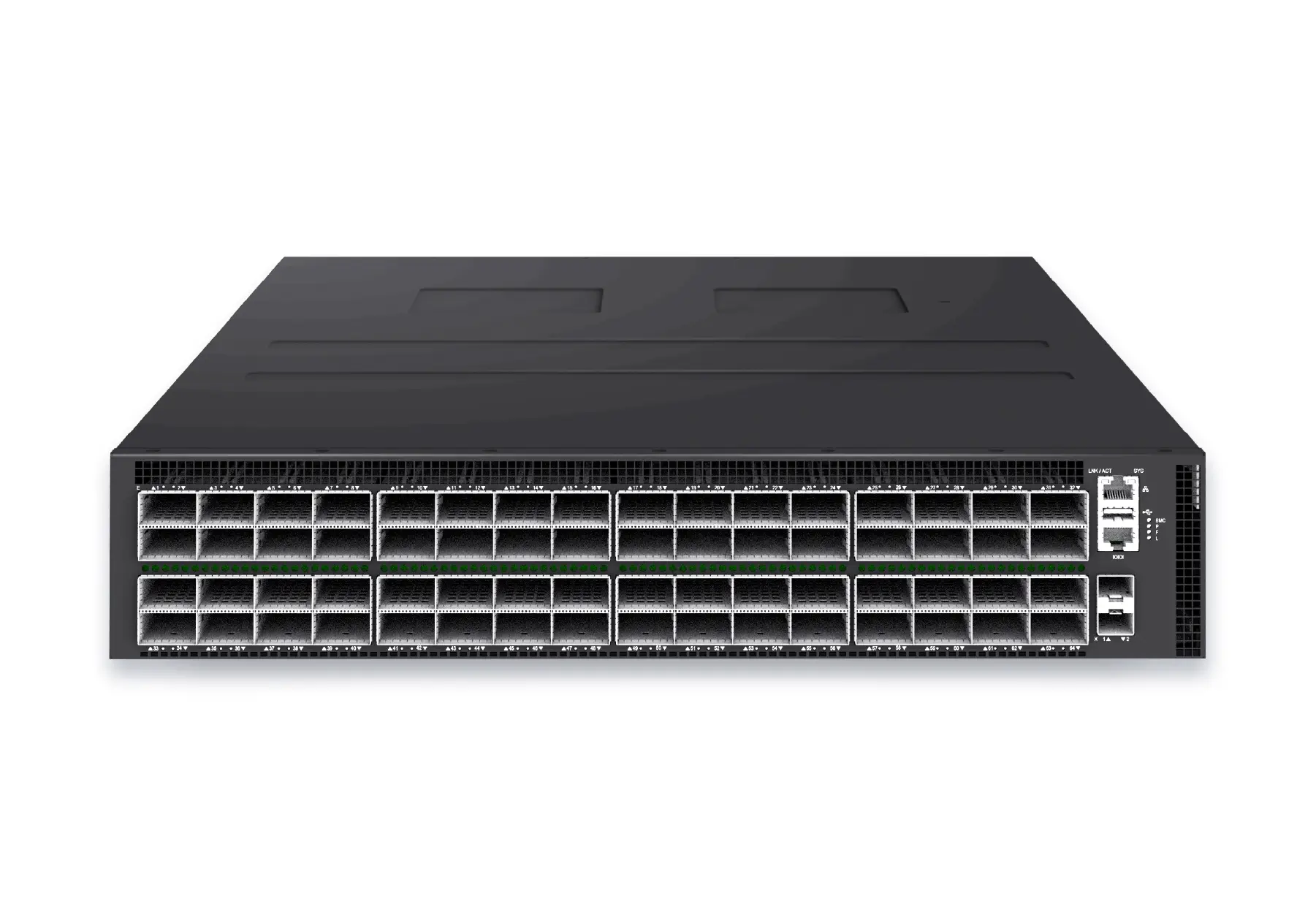 datacenter aiXS-DC-64X800-AI-G164-port 800G AI fabric switch for large-scale GPU clusters, HPC backbones, and ultra-high-throughput data center networks.View product
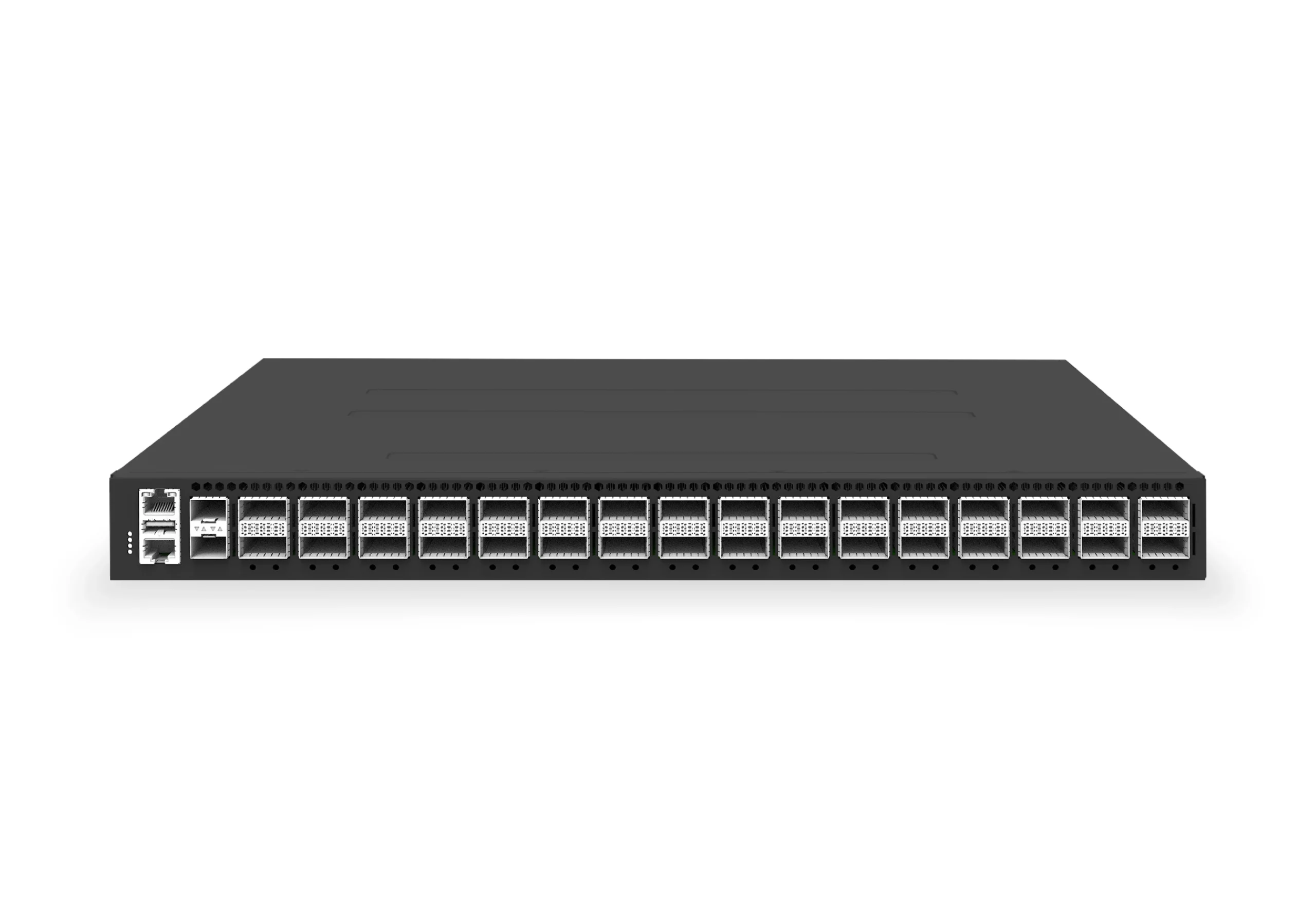 datacenter aiXS-DC-32X400-SP-G232-port 400G spine/core switch for high-capacity data center fabrics and AI-ready backbones.View product
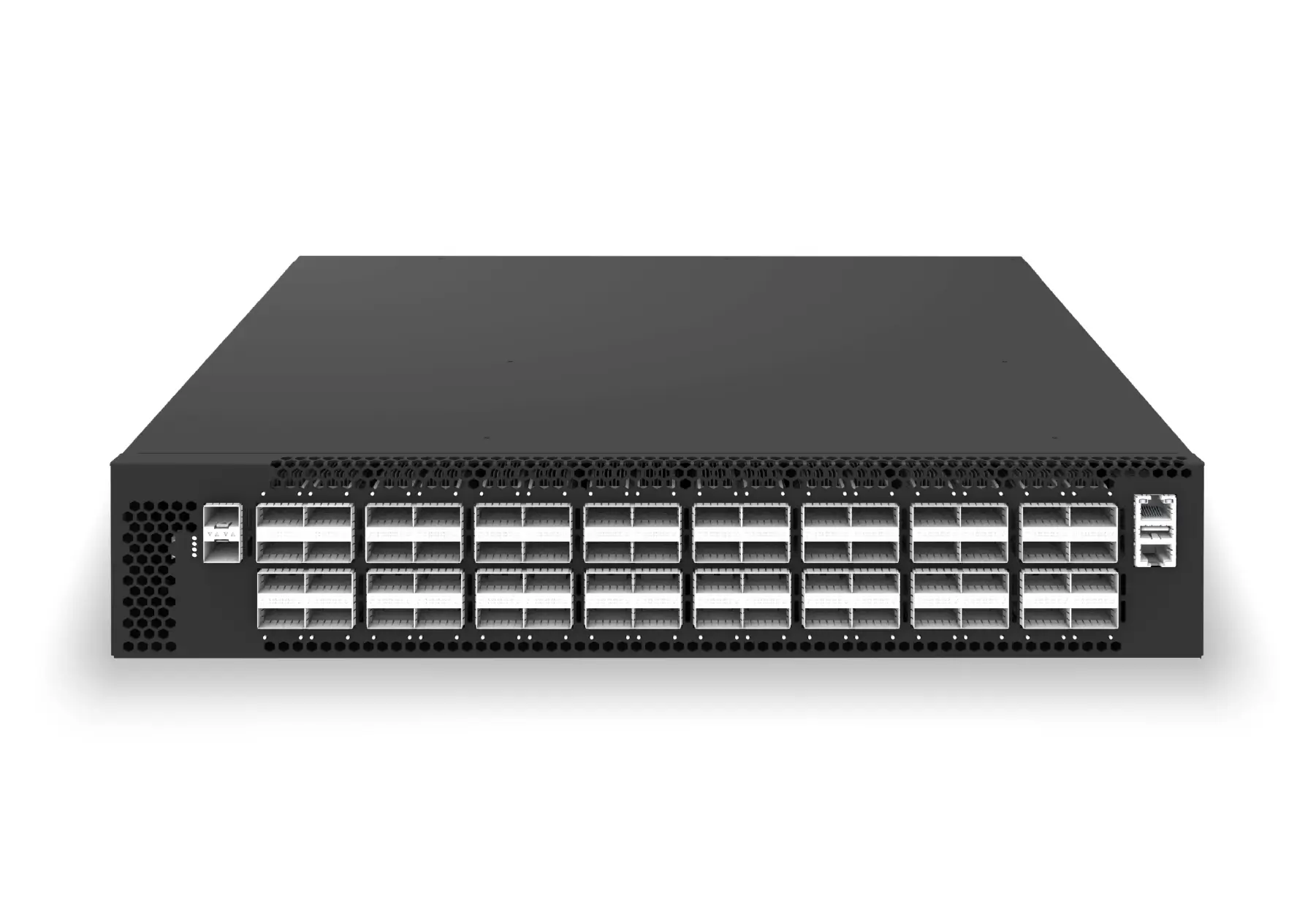 datacenter aiXS-DC-64X200-LS-G164-port 200G leaf/spine switch for high-bandwidth storage, compute, and scale-out data center fabrics.View product
Continue reading
Related articles
 Technical ArticleWhy Centralized AI Fabric Management Matters: The Case for an AIDC ControllerWhy centralized AI fabric management matters for Australian GPU clusters, with AIDC controller validation, telemetry, drift control, and runbooks.Read article
 Technical ArticleNVIDIA Spectrum Ethernet Switches: A Technical Guide for Australian Data Centres Embracing Open NetworkingTechnical guide to NVIDIA Spectrum Ethernet switches for Australian data centre buyers, covering SONiC, 400G/800G, optics, RoCE, and validation.Read article
 Technical ArticleWhat Australian Data Center Buyers Should Know Before Evaluating SONiC Switches in 2026A pre-purchase engineering checklist for Australian SONiC switch buyers, covering hardware support, SAI maturity, RoCE, automation, optics, upgrades, and local support.Read article