In brief
Why centralized AI fabric management matters for Australian GPU clusters, with AIDC controller validation, telemetry, drift control, and runbooks.
Key takeaways
- Enterprise teams building GPU clusters for training and inference face a coordination challenge that traditional per-switch management cannot solve.
- When each switch is managed independently through its own CLI or even its own automation script, configuration drift is almost inevitable.
- The problem compounds as clusters grow. A small AI pilot with a handful of GPU servers on a handful of leaf switches can be managed manually.
The AI Fabric Management Problem
Enterprise teams building GPU clusters for training and inference face a coordination challenge that traditional per-switch management cannot solve. A spine-leaf fabric supporting RDMA over Converged Ethernet (RoCE) for GPU-to-GPU traffic requires synchronized configuration of priority flow control, congestion notification, queue scheduling, and buffer allocation across every leaf and spine in the topology.
When each switch is managed independently through its own CLI or even its own automation script, configuration drift is almost inevitable. One leaf switch running a slightly different queue configuration than its peers can cause asymmetric congestion behavior, leading to GPU job slowdowns that are extremely difficult to diagnose. For teams operating AI fabrics at scale, this is not a theoretical risk. It is an operational reality that costs engineering hours and delays model training runs.
The problem compounds as clusters grow. A small AI pilot with a handful of GPU servers on a handful of leaf switches can be managed manually. A production AI fabric connecting dozens or hundreds of GPU nodes across multiple racks requires a centralized management plane that understands the fabric as a whole, not as a collection of individual devices.
What SONiC Brings to AI Fabric Operations
Software for Open Networking in the Cloud (SONiC) is a Linux-based, open-source network operating system that runs on switches from multiple vendors and multiple ASIC families. According to the SONiC Foundation, SONiC is built on the Switch Abstraction Interface (SAI), which decouples network software from the underlying hardware. This architecture means a single NOS image can run on switches from different silicon vendors, giving network teams hardware flexibility without sacrificing software consistency.
SONiC’s container-based architecture is particularly relevant for AI fabric management. Each network function - BGP, LLDP, DHCP relay, telemetry, and so on - runs in its own Docker container. This modularity allows teams to upgrade or troubleshoot individual services without restarting the entire switch. For AI fabrics where downtime directly translates to wasted GPU compute time, this isolation matters.
Critically, SONiC supports the protocols that AI fabrics depend on: BGP for underlay routing, RDMA and RoCE for lossless GPU communication, and programmable interfaces for automation. The SONiC project repository on GitHub confirms that SONiC supports JSON-based configuration files alongside CLI and programmatic configuration methods, which means a centralized controller can push consistent configuration to an entire fabric using standard APIs.
For Australian enterprise and research organizations evaluating open networking, SONiC’s multi-vendor support means the fabric can be built on the switch hardware that fits the deployment without locking the management stack to a single vendor’s proprietary NOS.
What an AIDC Controller Does
An AIDC (AI Data Center) controller is a centralized management platform designed specifically for AI fabric operations. Rather than managing switches one at a time, an AIDC controller provides a single point of control for fabric-wide configuration, monitoring, and policy enforcement.
The core capabilities that an AIDC controller addresses for SONiC-based AI fabric include:
Fabric-wide configuration management. Push consistent configurations for RDMA, DCBX, priority flow control, and congestion notification across all switches in the fabric from a single control plane. This eliminates configuration drift and ensures that every leaf and spine switch operates with identical quality-of-service policies.
Topology-aware provisioning. Understand the physical and logical topology of the AI fabric so that new GPU nodes or switch additions can be provisioned with correct underlay and overlay configurations automatically, without manual per-switch intervention.
Centralized telemetry and visibility. Aggregate streaming telemetry data from all switches into a unified view. For AI fabric operations, this means real-time visibility into buffer utilization, queue depths, RDMA queue pair status, and congestion events across the entire fabric. When a training job slows down, operators need to quickly determine whether the network is the bottleneck, and centralized telemetry makes that diagnosis possible.
Policy and intent management. Define fabric-wide policies in terms of intent - for example, ‘all traffic between GPU backend leaf switches must use lossless RoCE with PFC enabled on priority 3’ - and let the controller translate that intent into device-level configurations.
Why Centralized Beats Distributed for AI Fabric
Traditional data center networks can tolerate per-switch management because traffic patterns are relatively predictable and the cost of a misconfigured port is low. AI fabric traffic patterns are fundamentally different.
GPU collective operations (AllReduce, AllGather, ReduceScatter) generate synchronized, high-bandwidth bursts that traverse multiple switch hops simultaneously. A congestion event at one spine switch affects the completion time of the entire collective operation across all participating GPUs. This means that fabric-wide coordination of congestion control policies is not a nice-to-have. It is a requirement for predictable AI workload performance.
Consider the difference between managing DCBX (Data Center Bridging Capability Exchange) configuration switch by switch versus through a centralized controller. DCBX negotiates lossless Ethernet parameters between switch ports and connected endpoints. If one leaf switch advertises different PFC parameters than its peers, the connected GPU server may negotiate a different flow control behavior than the rest of the fabric, creating an asymmetric congestion path. A centralized AIDC controller that manages DCBX configuration across the entire fabric ensures consistent negotiation parameters everywhere.
Similarly, INT (In-band Network Telemetry) and IPTPath telemetry - technologies that embed metadata into packets as they traverse the fabric - are most useful when every switch in the path is configured to participate. A centralized controller can ensure that telemetry insertion and collection points are consistently deployed, giving operators hop-by-hop visibility into packet latency, queue occupancy, and path selection across the entire AI fabric.
For Australian organizations deploying AI infrastructure, whether for mining and resources optimization, financial services model training, or university research clusters, the centralized approach reduces the operational expertise required to run a production AI fabric. Instead of requiring deep per-vendor CLI knowledge on every switch platform, the operations team works with a single management interface that understands the fabric as a cohesive system.
Connecting the AIDC Controller to xSONiC AI Fabric Components
The AIDC Controller does not operate in isolation. It manages an underlying fabric of physical switches, optics, and cabling that must be correctly selected and deployed. For teams evaluating xSONiC’s AI fabric portfolio, the controller is the management layer that sits on top of the switching and optics infrastructure.
Data Center AI Switches. The xSONiC data center AI switch family provides the leaf and spine switching hardware for the AI fabric. These switches run Enterprise SONiC and support the port speeds (100G, 400G, 800G) and RDMA features required for GPU backend connectivity. The AIDC Controller manages these switches as a fabric rather than as individual devices.
Optical Transceivers. AI fabric interconnects require matching optics at every switch port. QSFP28, QSFP-DD, and OSFP transceivers must be selected based on reach, speed, and form factor requirements. While the AIDC Controller manages the switch-level configuration, correct optics selection is a deployment planning task that precedes controller configuration.
Packet Brokers. For organizations that need to mirror or analyze AI fabric traffic for security, compliance, or performance monitoring purposes, xSONiC packet brokers can be integrated into the fabric. The AIDC Controller’s telemetry and visibility capabilities complement packet broker deployments by providing the context needed to direct relevant traffic to monitoring tools.
The xSONiC solution pillars that map to AIDC Controller-managed fabric include:
- AI Fabric and GPU Backend Fabric for the overall architecture
- RoCE v2 and DCBX for lossless Ethernet transport
- Fast CNP for congestion notification acceleration
- INT and IPTPath Telemetry for fabric-wide visibility
- EVPN-VXLAN for overlay networking where needed
- NETCONF/YANG for programmatic device management that the controller leverages
Practical Deployment Considerations for Australian Operators
For Australian organizations planning AI fabric deployments, several practical factors influence how an AIDC Controller fits into the architecture.
Scale. AI fabric management complexity grows non-linearly with cluster size. A 32-GPU pilot cluster on four leaf switches can be managed with scripts. A 512-GPU production cluster across multiple racks and potentially multiple sites requires a controller that understands fabric topology, handles switch failures gracefully, and maintains configuration consistency during rolling upgrades.
Operational model. Many Australian enterprise IT teams have deep expertise in traditional campus and data center networking but limited experience with AI fabric operations. A centralized controller reduces the learning curve by abstracting per-switch complexity into fabric-level intent. This matters for organizations that need to bring AI infrastructure online quickly without building a dedicated network engineering team for every SONiC CLI command.
Open networking supply chain. SONiC’s multi-vendor hardware support is a practical advantage in the Australian market, where supply chain diversity can reduce procurement risk. An AIDC Controller that manages SONiC switches from multiple hardware vendors gives procurement teams flexibility to select switches based on availability, pricing, and support terms without changing the management stack.
Integration with existing tools. Australian enterprise environments typically run established monitoring and automation stacks (Prometheus, Grafana, Ansible, Terraform). The AIDC Controller’s value increases when it integrates with these tools through well-documented APIs rather than requiring operators to learn yet another proprietary management interface.
AIDC Controller Acceptance Matrix
Centralized management only matters if it reduces operational risk under pressure. An AIDC Controller evaluation should therefore prove fabric-wide consistency, not just device discovery. The controller should become the evidence system for the AI fabric: what changed, who changed it, which switches accepted it, and what telemetry proves the workload is healthy.
| Control-plane area | Acceptance evidence | Rework trigger |
|---|---|---|
| Golden baseline and drift | Controller deploys the same RoCE v2, PFC, ECN, DCBX, NTP, AAA, and telemetry baseline across at least 2 leaf and 2 spine switches | A switch can drift for more than 5 minutes without detection, ticket, or rollback recommendation |
| Topology-aware provisioning | Adding a GPU leaf or 400G/800G spine link creates the expected BGP, interface, and QoS intent without manual per-switch edits | Any device-level exception is required but not represented in the controller model |
| Telemetry correlation | Queue depth, packet drops, ECN marks, interface errors, and BGP state are correlated to a training job or fabric segment | Operators must open more than 3 separate systems to identify whether the network is the bottleneck |
| Change and rollback | Change plan, diff, approval, deployment, validation, and rollback are recorded for a 2-hour maintenance window | Rollback depends on a CLI paste from an engineer’s laptop rather than a versioned controller state |
| Multi-team access | Network, compute, and ML operations teams get role-based views without sharing privileged switch credentials | The controller weakens auditability by bypassing existing identity, logging, or compliance controls |
When Do You Need an AIDC Controller vs. Script-Based Automation?
Not every AI fabric deployment needs a dedicated controller on day one. The decision depends on scale, operational complexity, and team capability.
Script-based automation (Ansible playbooks, Python scripts using NETCONF or REST APIs) can effectively manage small AI fabrics where the topology is static, configuration templates are well-tested, and the operations team has strong SONiC expertise. This approach works for engineering-led teams that prefer full control over every configuration element.
An AIDC Controller becomes the right choice when the fabric scales beyond what manual template management can handle reliably, when multiple teams need to interact with the fabric (network, compute, ML engineering), when the organization needs centralized audit and compliance reporting, or when the operations team needs fabric-level visibility without per-switch CLI access.
For Australian organizations starting their AI infrastructure journey, a practical approach is to begin with script-based automation for a pilot cluster, then adopt an AIDC Controller as the fabric scales into production. This lets the team build SONiC expertise while keeping the path open to centralized management as operational demands grow.
Key Takeaways for AI Fabric Management
Centralized AI fabric management is not about replacing per-switch automation. It is about adding a coordination layer that understands the fabric as a system. For SONiC-based AI fabrics, an AIDC Controller provides:
- Consistent configuration of RDMA, DCBX, congestion control, and telemetry across all switches
- Topology-aware provisioning that reduces manual configuration effort as the fabric grows
- Fabric-wide visibility that enables faster troubleshooting of AI workload performance issues
- Intent-based policy management that lowers the operational expertise required to run production AI infrastructure
For Australian enterprise and research organizations evaluating open networking for AI workloads, the xSONiC AIDC Controller represents the management layer that makes SONiC-based AI fabric operationally viable at production scale. The underlying SONiC ecosystem provides the NOS flexibility, and the controller provides the operational simplicity.
The next step for evaluating teams is to assess their current and planned AI fabric scale, identify which AIDC Controller capabilities map to their operational pain points, and request a technical briefing or proof-of-concept deployment.
Engineering FAQ
When is an AIDC Controller justified over scripts? It is justified when the AI fabric needs fabric-wide drift detection, topology-aware provisioning, RBAC, change evidence, and telemetry correlation across dozens of switches or hundreds of GPU endpoints.
What should Australian teams validate before trusting centralized AI fabric management? Validate golden baseline deployment, rollback, queue telemetry, congestion alerts, failed-link remediation, and support escalation using the same 100G, 400G, or 800G switch models planned for production.
What is the main failure mode of controller-led operations? The main risk is false confidence: the controller shows inventory but does not prove that RoCE, DCBX, ECN, PFC, and telemetry policy are consistent. Acceptance evidence must include workload and failure tests.
Related xSONiC Resources
Sources Reviewed
- xSONiC AIDC Controller
- xSONiC AI Fabric Management Solution
- Ethernet Network Adapters - ConnectX NICs | NVIDIA
- NVIDIA BlueField Data Processing Unit
- NVIDIA Spectrum-X Ethernet Platform
- OpenConfig gNMI Specification
- OpenConfig
- RFC 7950 - The YANG 1.1 Data Modeling Language
- RFC 6241 - Network Configuration Protocol (NETCONF)
- ACSC Essential Eight
- OAIC Notifiable Data Breaches
- APRA CPS 234 Information Security
- NETSCOUT Network Packet Definition
- Cloudflare Network Packet Definition
- SONiC Project Documentation
- Broadcom Ethernet Switching
- Marvell Switching
- NVIDIA Ethernet Switching
- Open Compute Networking
- SONiC GitHub
- SONiC Foundation
Product fit
Products referenced for evaluation
These products are referenced for evaluation context in the article. Confirm workload, port, optics, software, interoperability, and support requirements against the exact deployment before procurement.
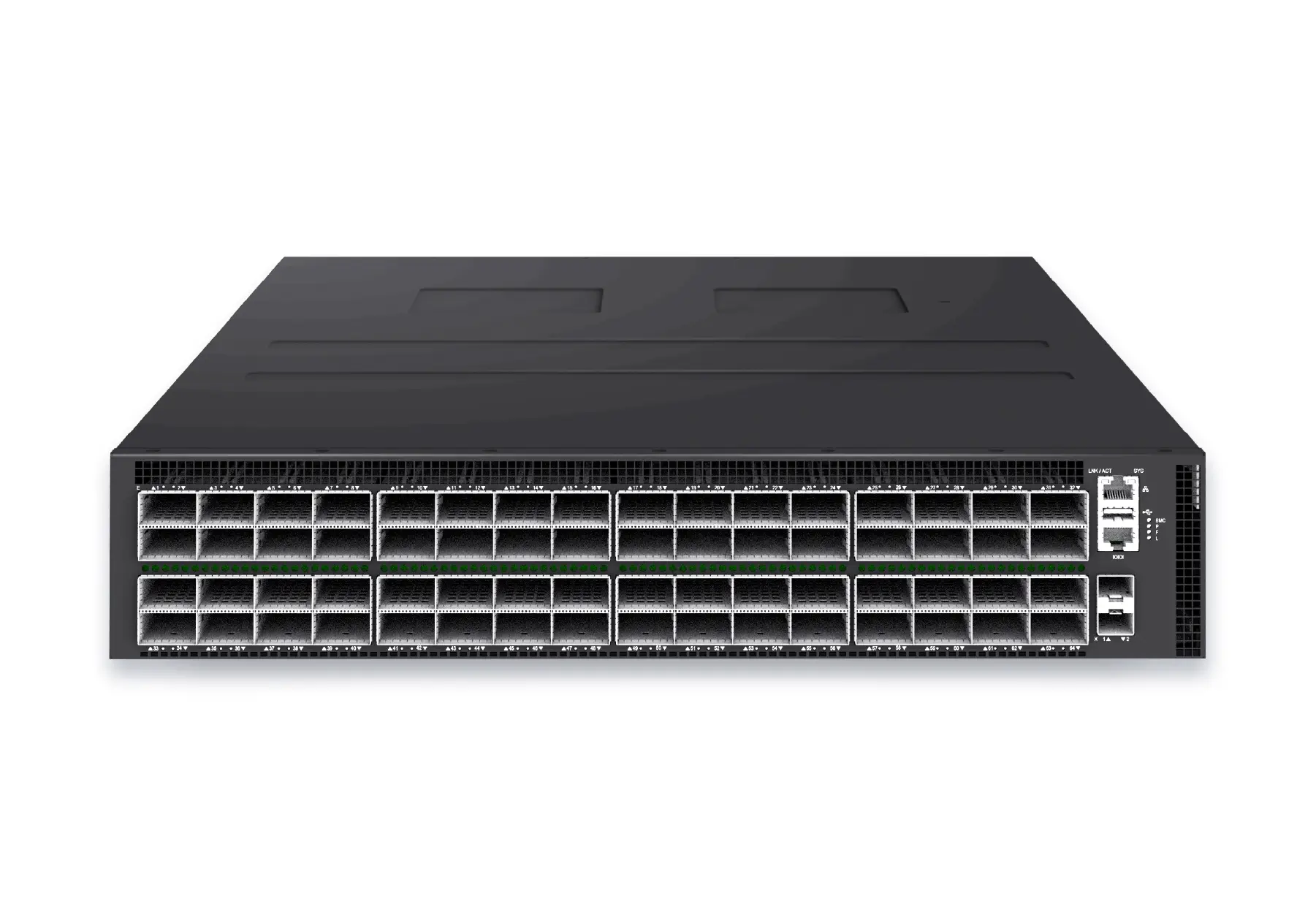 datacenter aiXS-DC-64X800-AI-G164-port 800G AI fabric switch for large-scale GPU clusters, HPC backbones, and ultra-high-throughput data center networks.View product
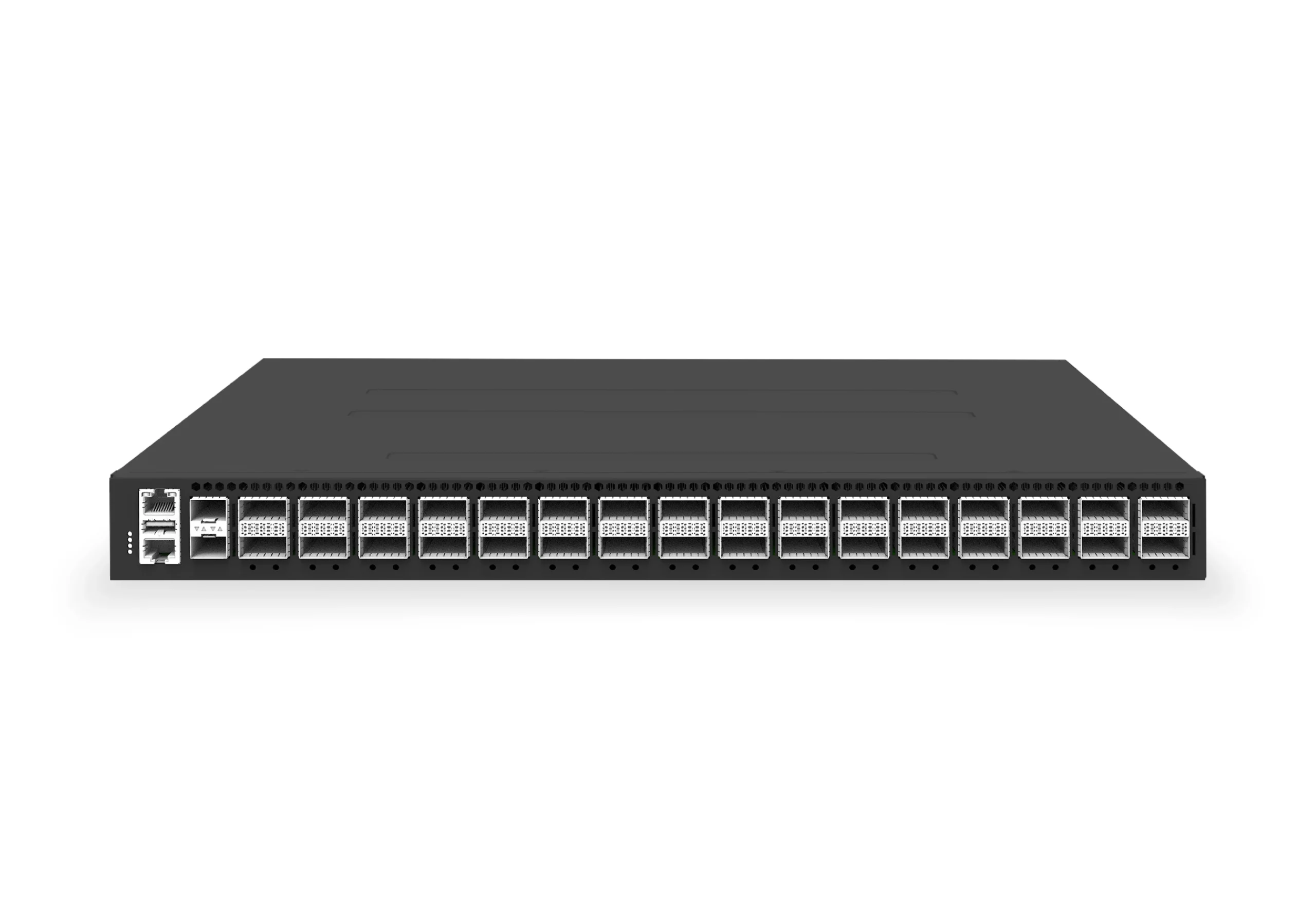 datacenter aiXS-DC-32X400-SP-G232-port 400G spine/core switch for high-capacity data center fabrics and AI-ready backbones.View product
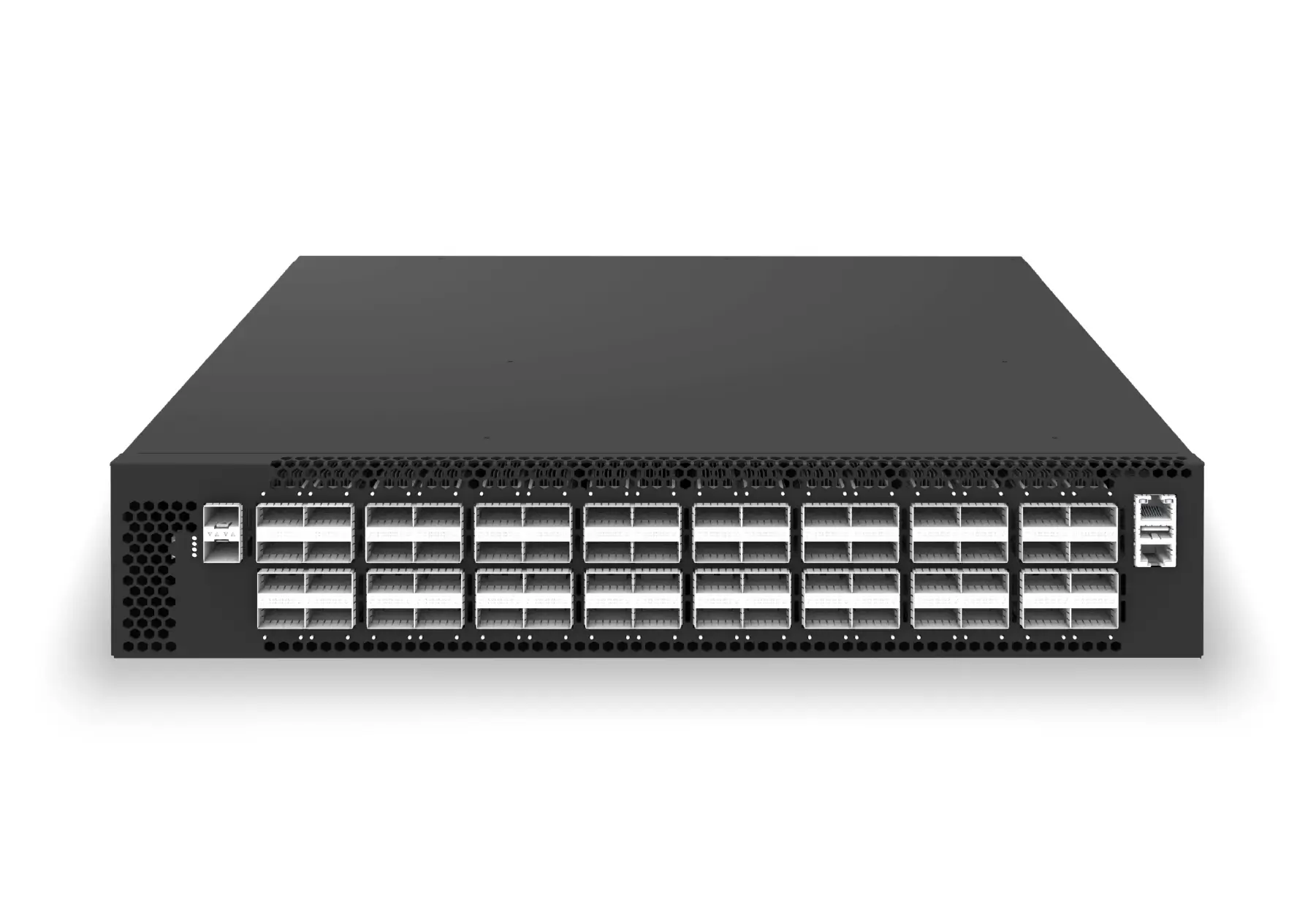 datacenter aiXS-DC-64X200-LS-G164-port 200G leaf/spine switch for high-bandwidth storage, compute, and scale-out data center fabrics.View product
Continue reading
Related articles
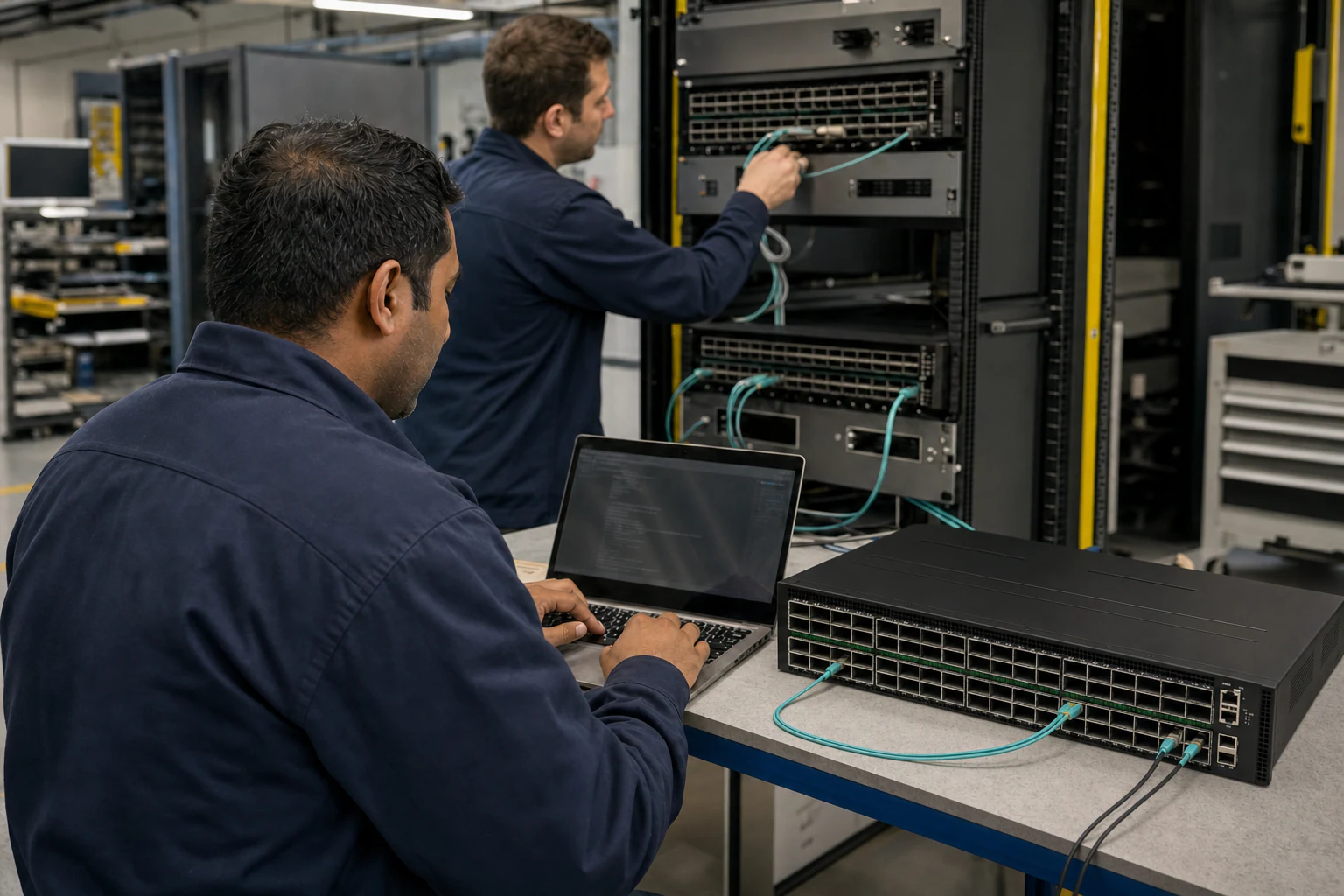 Technical ArticleNVIDIA Spectrum Ethernet Switches: A Technical Guide for Australian Data Centres Embracing Open NetworkingTechnical guide to NVIDIA Spectrum Ethernet switches for Australian data centre buyers, covering SONiC, 400G/800G, optics, RoCE, and validation.Read article
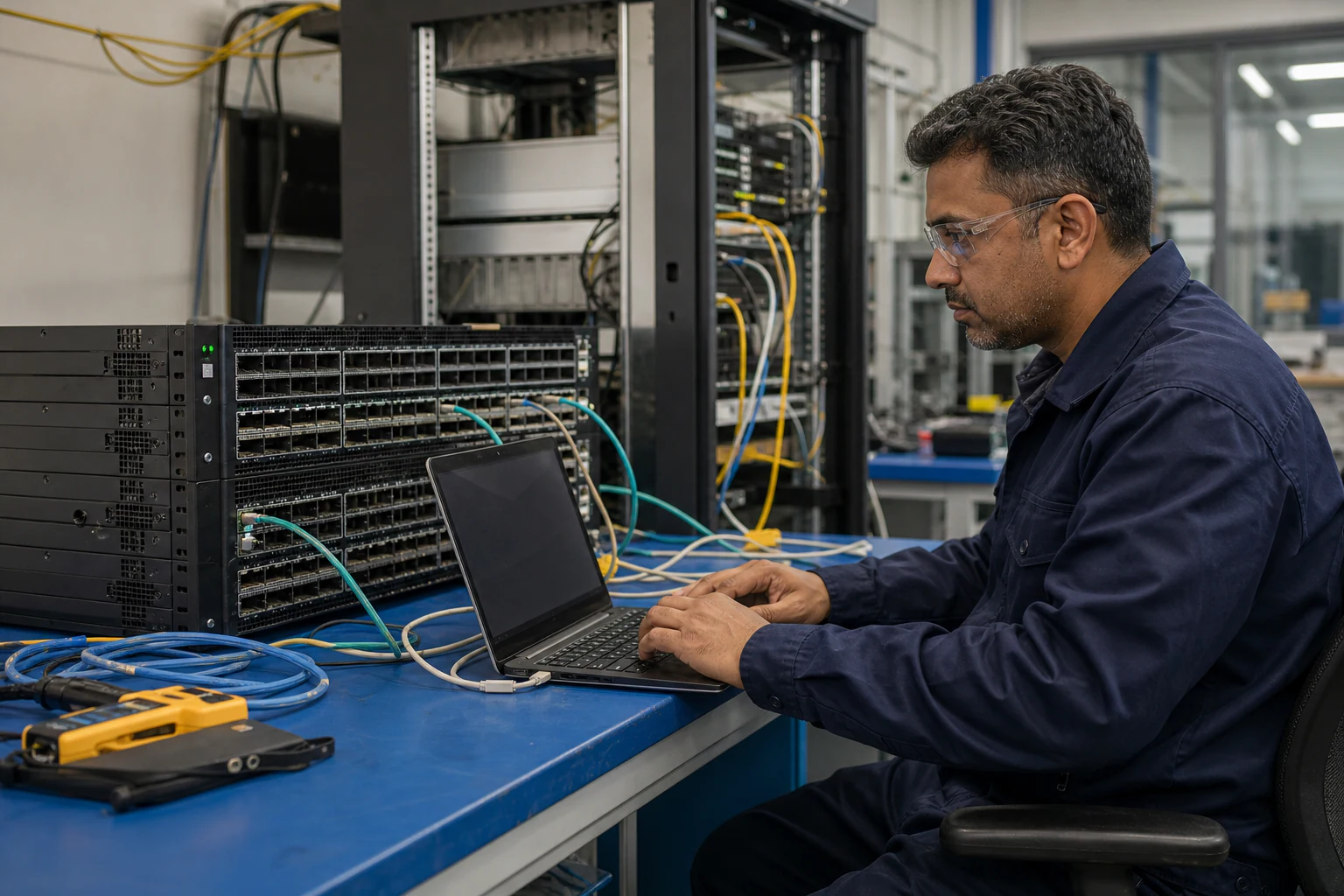 Technical ArticleNVIDIA Ethernet for AI Clusters: An Australian Buyer's GuideNVIDIA Ethernet switching guidance for Australian AI cluster buyers, covering Spectrum, SONiC, RoCE, 400G/800G, optics, and validation.Read article
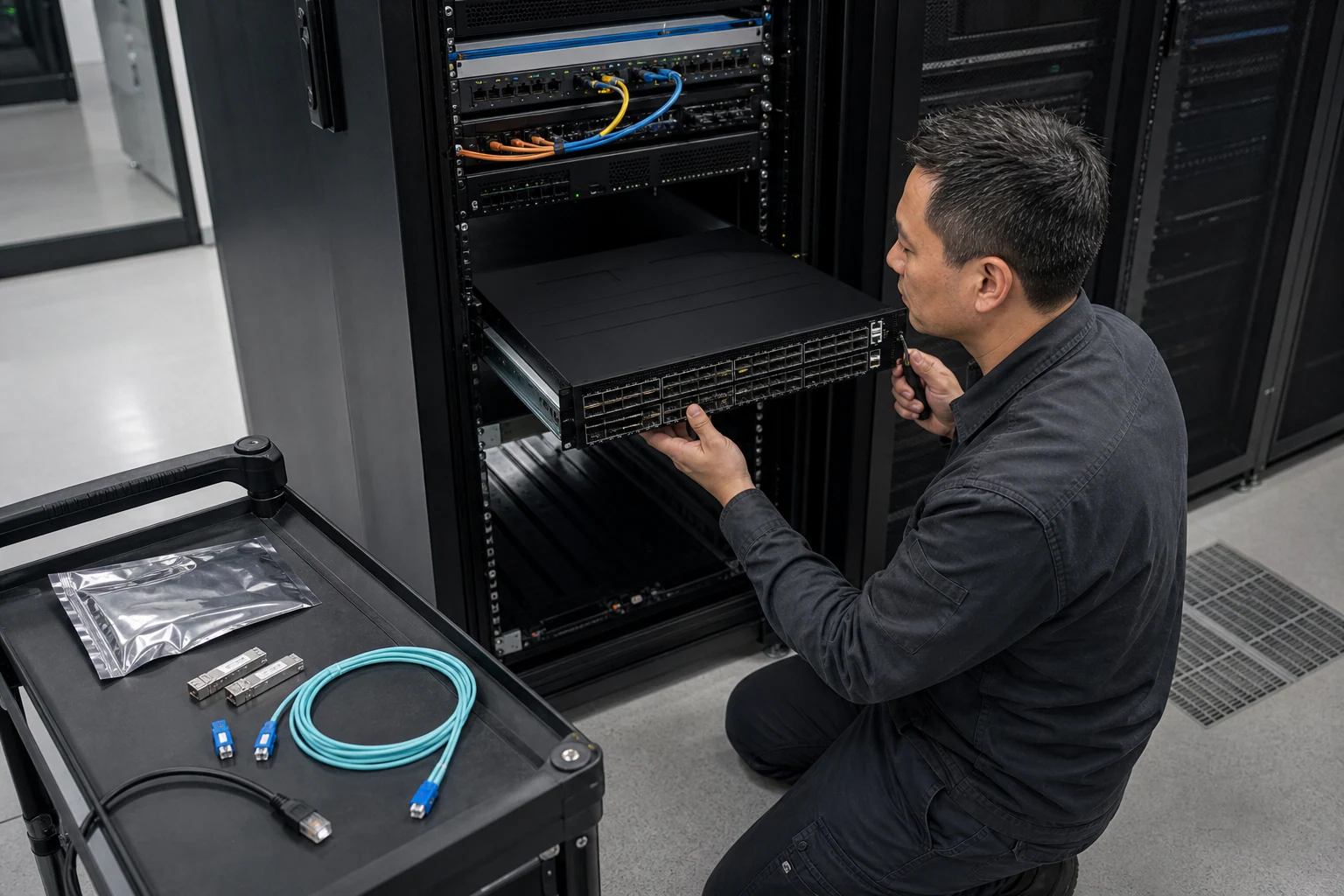 Technical ArticleWhat Australian Data Center Buyers Should Know Before Evaluating SONiC Switches in 2026A pre-purchase engineering checklist for Australian SONiC switch buyers, covering hardware support, SAI maturity, RoCE, automation, optics, upgrades, and local support.Read article