In brief
A pre-purchase engineering checklist for Australian SONiC switch buyers, covering hardware support, SAI maturity, RoCE, automation, optics, upgrades, and local support.
Key takeaways
- Software for Open Networking in the Cloud (SONiC) started as a Microsoft-driven project to disaggregate switch hardware from the network operating system.
- The SONiC Foundation, now a Linux Foundation project, describes SONiC as "an open source network operating system (NOS) based on Linux that runs on switches from multiple vendors and ASICs" that "offers a full suite of network functionality, like BGP and RDMA, that has been production-hardened in the data centers of some of the largest cloud service providers" (sonicfoundation.dev).
- For Australian data center buyers evaluating switching infrastructure in 2026, the question is no longer whether SONiC is real.
SONiC Is No Longer Just a Hyperscaler Play
Software for Open Networking in the Cloud (SONiC) started as a Microsoft-driven project to disaggregate switch hardware from the network operating system. For years, the assumption among enterprise buyers was that SONiC belonged exclusively to cloud giants with dedicated network engineering teams. That assumption is shifting.
The SONiC Foundation, now a Linux Foundation project, describes SONiC as “an open source network operating system (NOS) based on Linux that runs on switches from multiple vendors and ASICs” that “offers a full suite of network functionality, like BGP and RDMA, that has been production-hardened in the data centers of some of the largest cloud service providers” (sonicfoundation.dev). The GitHub repository for the project confirms this scope: SONiC provides “multi-vendor support” with a “container-based architecture” using Docker containers for each network function, delivering “better fault isolation, easier debugging and troubleshooting, simplified upgrades and maintenance, and enhanced scalability” (github.com/sonic-net/SONiC).
For Australian data center buyers evaluating switching infrastructure in 2026, the question is no longer whether SONiC is real. It is whether SONiC is ready for your specific deployment profile, and what the actual buying process looks like when you move beyond vendor slide decks.
What SONiC Actually Provides Today
Based on the SONiC Foundation and the project’s GitHub documentation, the platform delivers several capabilities that matter for data center buyers:
Multi-vendor and multi-ASIC support. SONiC runs on switches from different hardware vendors and across different switching ASICs. This is the core value proposition: you can choose hardware based on port density, power, and price without being locked to a single NOS vendor.
Containerized architecture. Each network function (BGP, LLDP, DHCP relay, and so on) runs in its own Docker container. This means individual services can be restarted, upgraded, or debugged independently. For operations teams, this reduces the blast radius of any single component failure.
Production-hardened networking features. The SONiC feature set includes BGP, RDMA over Converged Ethernet (RoCE), and standard Linux networking tooling. These are not lab features. They have been deployed at scale in hyperscaler environments.
Open source licensing. SONiC is licensed under the Apache License 2.0 (github.com/sonic-net/SONiC). There are no per-switch NOS license fees. This changes the economics of data center switching, particularly at scale.
Ecosystem breadth. Major switching silicon vendors including Broadcom and NVIDIA back SONiC. NVIDIA’s networking page explicitly lists “Pure SONiC” as a supported NOS option alongside Cumulus Linux for their Spectrum Ethernet switch families, spanning the SN2000 series (up to 100 Gb/s), SN3000 series (up to 200 Gb/s), SN4000 series (up to 400 Gb/s), SN5000 series (up to 800 Gb/s), and the new SN6000 series with co-packaged silicon photonics (nvidia.com/en-us/networking/ethernet-switching).
Where the Buying Decision Gets Complicated
Knowing what SONiC delivers in theory is not the same as knowing what your deployment will look like in practice. For Australian enterprise and colocation buyers, several factors deserve closer examination.
Support Models Vary Significantly
SONiC is open source, but open source does not mean unsupported. The ecosystem includes community support through the SONiC Foundation (mailing lists, Slack, weekly meetings), commercial SONiC distributions from switching hardware vendors, and third-party support providers. The right support model depends on your team’s Linux and networking expertise. If your operations team is comfortable with containerized Linux services and CLI-driven troubleshooting, community and vendor support may be sufficient. If your team expects a traditional TAC experience with guaranteed SLAs, you need to evaluate commercial SONiC distribution options carefully.
Hardware Compatibility Is Not Universal
SONiC supports a wide range of switches, but not every switch supports every SONiC feature. The Supported Devices and Platforms list (referenced in the SONiC GitHub repository) is the authoritative source, but even within supported platforms, feature coverage can vary by ASIC generation. For data center spine-leaf deployments running 100G, 400G, or 800G links, the hardware candidates are relatively mature. For niche use cases, the list narrows.
Operational Tooling Is Your Responsibility
SONiC provides the NOS. It does not provide a full network management platform out of the box. Configuration is JSON-based and supports both CLI and programmatic methods (github.com/sonic-net/SONiC). For Australian buyers coming from proprietary environments with integrated management stacks, the gap between a working SONiC deployment and a well-automated SONiC deployment can be significant. NETCONF and YANG support, telemetry pipelines, and controller-based management are areas where ecosystem tools and vendor-specific extensions fill the gaps.
AI Fabric and RoCE Readiness
AI fabric readiness should be proven with the actual GPU node profile, NIC firmware, RoCE v2 configuration, PFC/ECN policy, optics, cabling, and telemetry stack. The result should document congestion behaviour and recovery after realistic failure cases.
What Australian Buyers Should Ask Before Committing
The SONiC ecosystem is real and growing, but due diligence requires specific questions:
1. Which SONiC release ships on my target hardware? SONiC releases move quickly. The version bundled with your switch may not be the latest community release. Ask your vendor for the exact release tag and the delta from the current SONiC master branch.
2. What is the local support story? For buyers in Australia, time zone coverage and local engineering resources matter. Ask whether your vendor or their distribution partner has Australian-based support, or whether all escalation paths go through offshore teams.
3. What ASIC features are exposed through SONiC on this platform? SONiC abstracts the Switch Abstraction Interface (SAI), but not every ASIC feature is exposed through SAI. If you need specific ACL scale, flow counter depth, or telemetry capabilities, verify them on your target hardware.
4. What is the upgrade path? Container-based architecture makes upgrades easier in theory. In practice, upgrading a production spine-leaf fabric requires testing, rollback plans, and compatibility validation. Ask your vendor for their SONiC upgrade documentation and whether they support hitless or in-service upgrades.
5. How does this integrate with my existing automation stack? If your team uses Ansible, Terraform, or a custom NMS, verify that SONiC configuration management integrates cleanly. JSON-based configuration is flexible but may require adapter development if your tools expect vendor-specific CLIs.
Pre-Purchase Acceptance Matrix
Use this matrix before issuing a purchase order. It forces the vendor response to include platform evidence, not generic SONiC claims.
| Evaluation gate | What to ask for | Acceptance evidence | Failure signal |
|---|---|---|---|
| Hardware support | Exact switch SKU, ASIC, SAI version, SONiC image, supported devices status | Vendor supplies tested platform matrix for the target release | ”Supported” means a similar platform, not the ordered SKU |
| Fabric design | Port speed mix, buffer profile, ECMP scale, BGP/EVPN needs, MTU, optics plan | Lab design matches intended 100G/400G/800G topology and cabling | Datasheet speed is quoted without topology validation |
| RoCE readiness | PFC, ECN, DCBX, queue counters, NIC firmware, telemetry, failure tests | Lossless path is proven under congestion and link failure | RoCE is assumed because the switch supports RDMA keywords |
| Operations | Config backup, rollback, syslog, SNMP/gNMI, NETCONF/YANG, alerting | One full change is automated, verified, reverted, and audited | Operations depend on manual shell/CLI workflows only |
| Support | AEST/AEDT coverage, RMA logistics, P1 owner, upgrade ownership | Support boundary covers NOS, hardware, SAI, optics, and escalation | Buyer must self-triage between community, ODM, and ASIC vendor |
The xSONiC Angle for Australian Data Centers
xSONiC positions its data center AI switches and bare-metal hardware around the SONiC ecosystem. The value proposition for Australian buyers is straightforward: access to SONiC-compatible switching hardware that covers 100G, 400G, and 800G spine-leaf and AI fabric topologies, backed by a vendor that is invested in the open networking stack rather than treating it as an afterthought to a proprietary NOS business.
The buying decision for Australian data center buyers is not SONiC versus proprietary. It is which SONiC hardware and support model fits your deployment size, your team’s operational maturity, and your network architecture requirements. The sources confirm that the ecosystem is broad enough to support serious data center deployments. The verification work is in the details of your specific platform, your Australian support coverage, and your automation integration.
Engineering FAQ
What should be proven before buying SONiC switches for a data center? Prove the exact switch SKU, SONiC image, SAI version, optics list, BGP/EVPN design, RoCE requirements, telemetry, upgrade path, rollback path, and support boundary. A supported NOS is not the same as a supported production design.
Why does the underlay design still matter in an overlay network? EVPN-VXLAN depends on a stable routed underlay. MTU, ECMP, addressing, route policy, link failure behaviour, and telemetry determine whether the overlay remains predictable under load and during faults.
How should AI fabric readiness be tested? Use real GPU/NIC firmware, traffic class mapping, PFC/ECN/DCBX settings, intended optics, queue telemetry, and at least one congestion and link-failure test. The acceptance result should include p95/p99 latency and switch/NIC counter evidence.
Related xSONiC Resources
Sources Reviewed
- Ethernet Network Adapters - ConnectX NICs | NVIDIA
- NVIDIA BlueField Data Processing Unit
- NVIDIA Spectrum-X Ethernet Platform
- OpenConfig gNMI Specification
- OpenConfig
- RFC 7950 - The YANG 1.1 Data Modeling Language
- RFC 6241 - Network Configuration Protocol (NETCONF)
- ACSC Essential Eight
- OAIC Notifiable Data Breaches
- APRA CPS 234 Information Security
- NETSCOUT Network Packet Definition
- Cloudflare Network Packet Definition
- SONiC Project Documentation
- Broadcom Ethernet Switching
- Marvell Switching
- NVIDIA Ethernet Switching
- Open Compute Networking
- Open Compute SONiC
- SONiC GitHub
- SONiC Foundation
Product fit
Products referenced for evaluation
These products are referenced for evaluation context in the article. Confirm workload, port, optics, software, interoperability, and support requirements against the exact deployment before procurement.
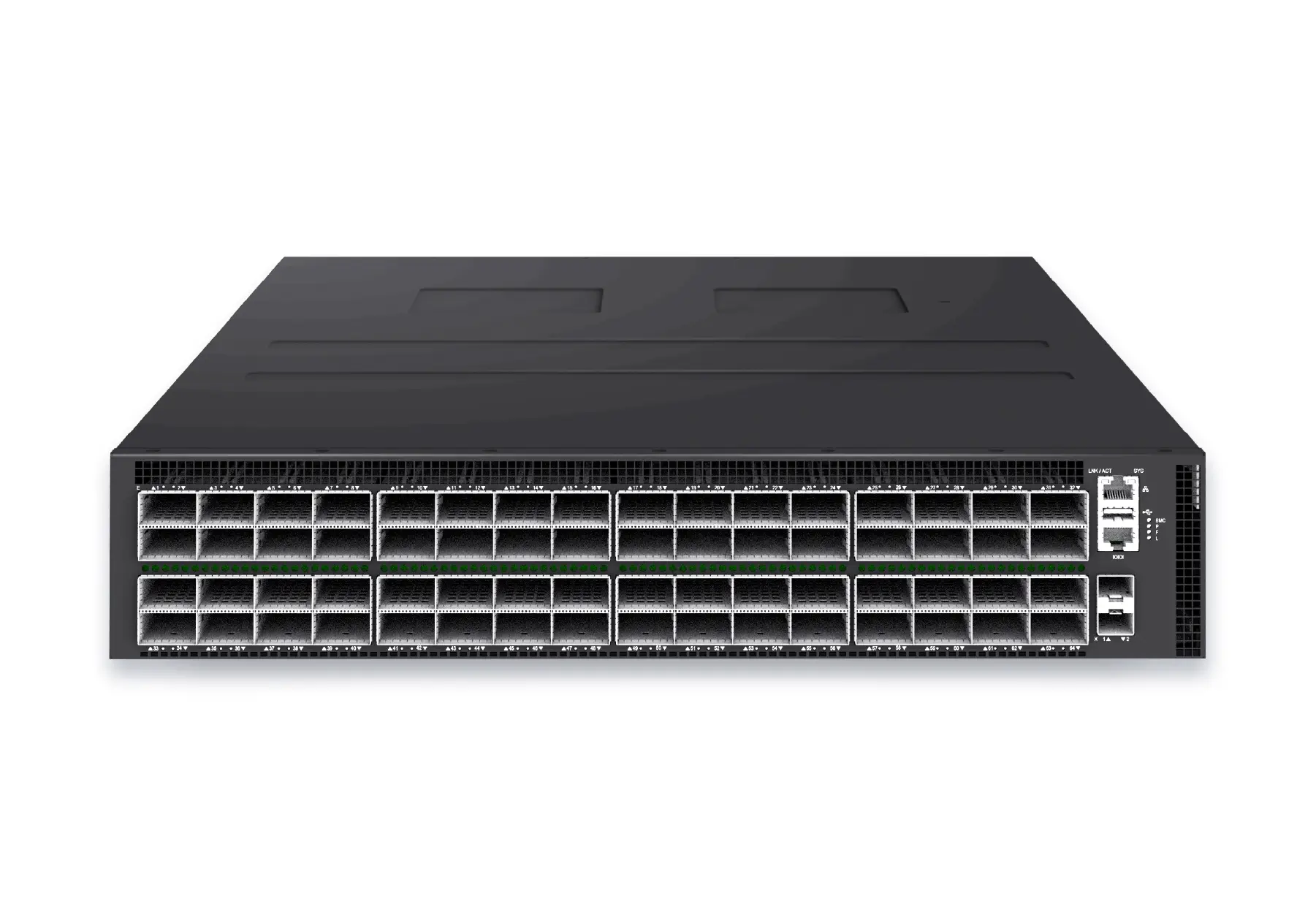 datacenter aiXS-DC-64X800-AI-G164-port 800G AI fabric switch for large-scale GPU clusters, HPC backbones, and ultra-high-throughput data center networks.View product
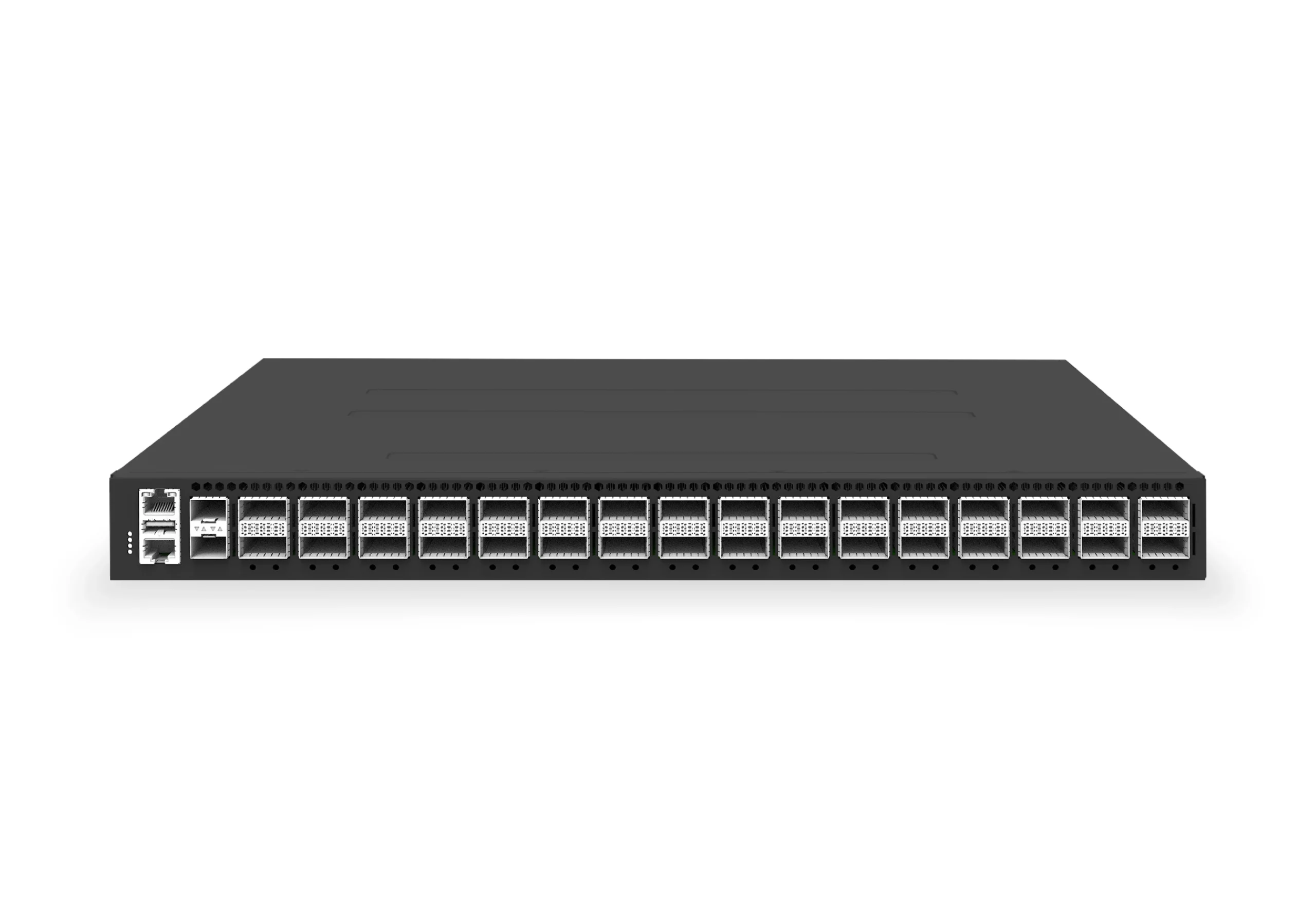 datacenter aiXS-DC-32X400-SP-G232-port 400G spine/core switch for high-capacity data center fabrics and AI-ready backbones.View product
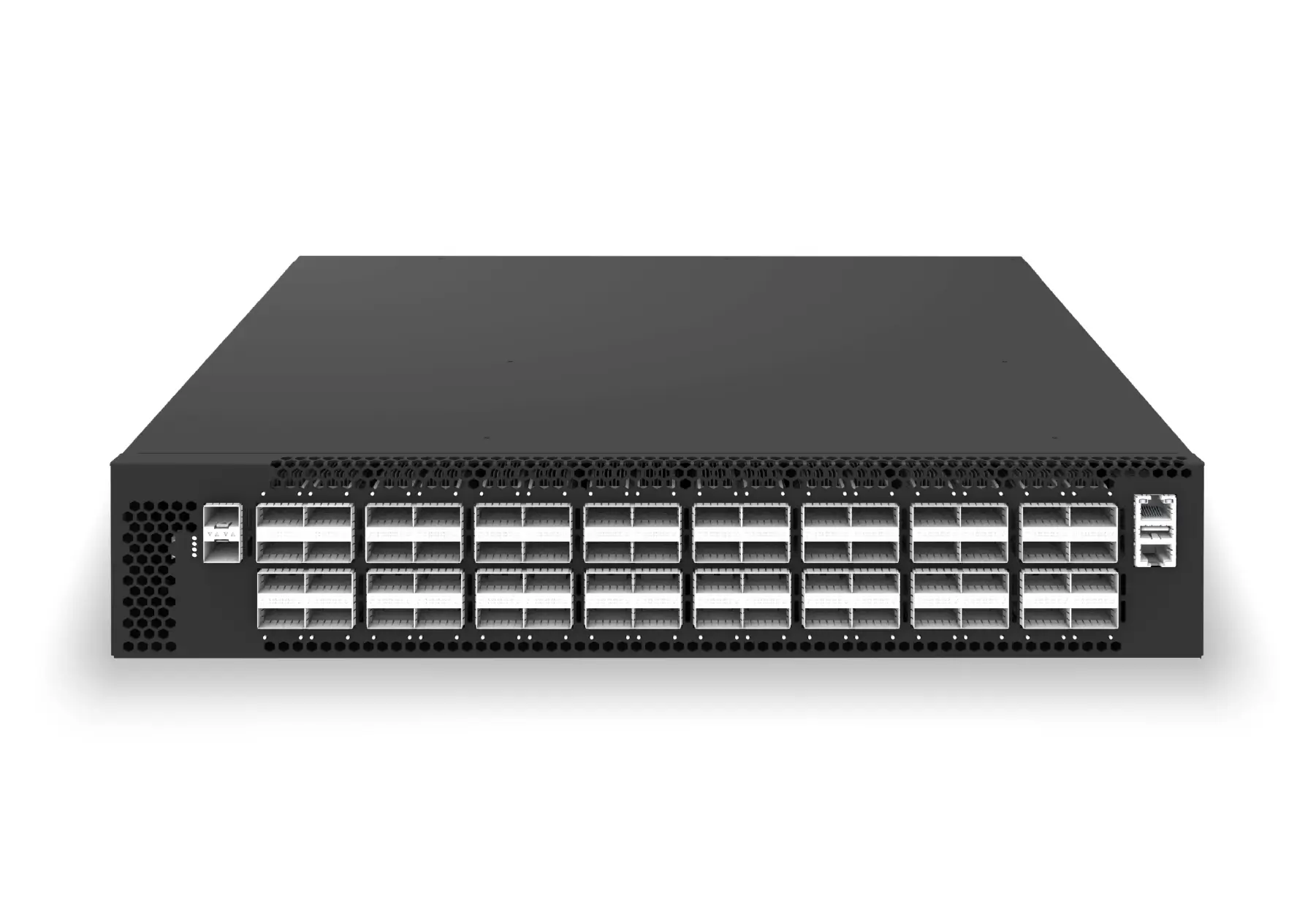 datacenter aiXS-DC-64X200-LS-G164-port 200G leaf/spine switch for high-bandwidth storage, compute, and scale-out data center fabrics.View product
Continue reading
Related articles
 Technical ArticleWhy Centralized AI Fabric Management Matters: The Case for an AIDC ControllerWhy centralized AI fabric management matters for Australian GPU clusters, with AIDC controller validation, telemetry, drift control, and runbooks.Read article
 Technical ArticleNVIDIA Spectrum Ethernet Switches: A Technical Guide for Australian Data Centres Embracing Open NetworkingTechnical guide to NVIDIA Spectrum Ethernet switches for Australian data centre buyers, covering SONiC, 400G/800G, optics, RoCE, and validation.Read article
 Technical ArticleNVIDIA Ethernet for AI Clusters: An Australian Buyer's GuideNVIDIA Ethernet switching guidance for Australian AI cluster buyers, covering Spectrum, SONiC, RoCE, 400G/800G, optics, and validation.Read article