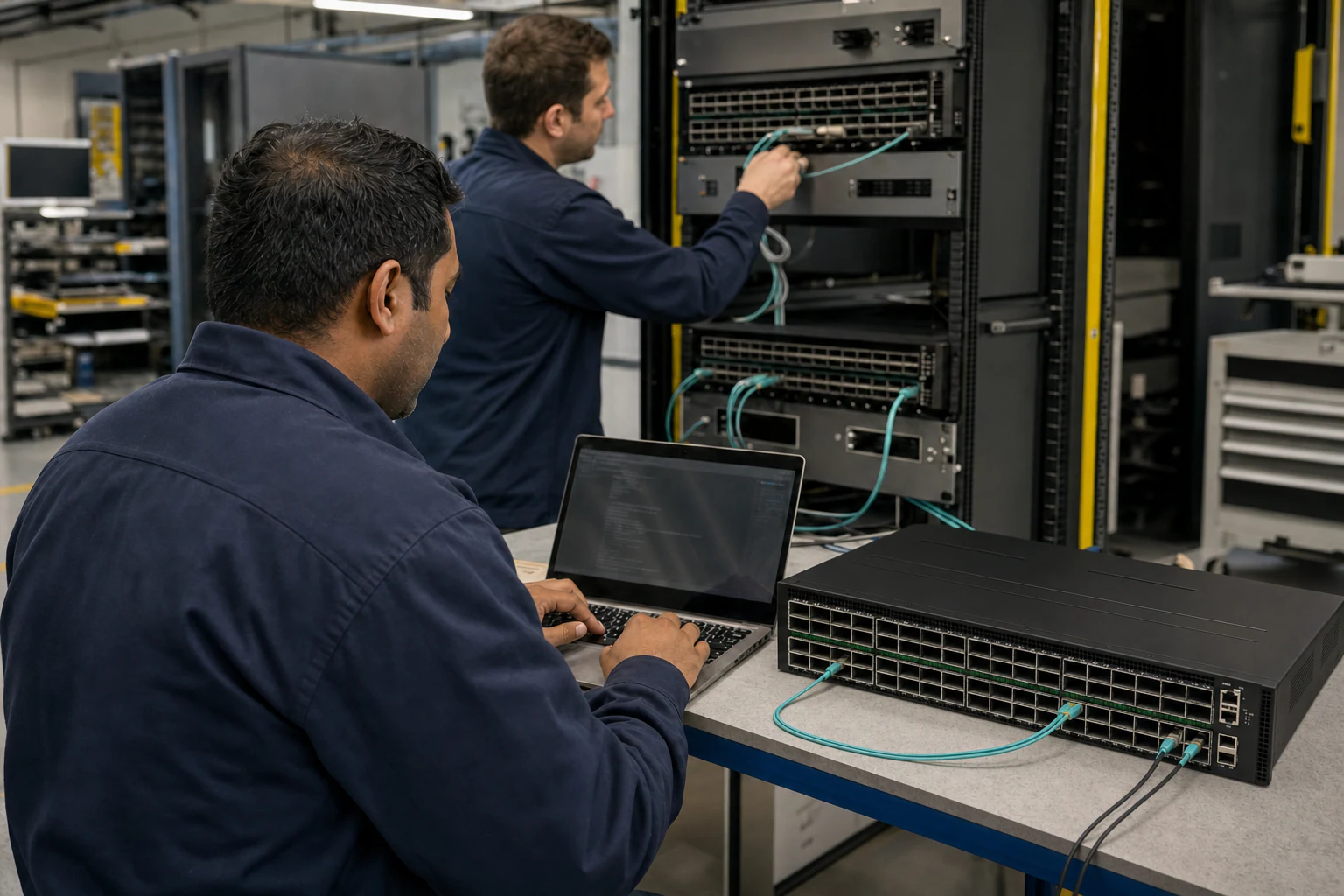
In brief
Technical guide to NVIDIA Spectrum Ethernet switches for Australian data centre buyers, covering SONiC, 400G/800G, optics, RoCE, and validation.
Key takeaways
- As Australian enterprises, research institutions, and service providers invest in artificial intelligence, high-performance computing, and cloud-native infrastructure, the network underpinning these workloads becomes a critical bottleneck-or accelerator.
- This guide breaks down the Spectrum portfolio, explains the SONiC ecosystem, and outlines considerations for Australian organisations evaluating next-generation data centre networking.
- SONiC (Software for Open Networking in the Cloud) is a free, open-source network operating system based on Linux, developed under the Linux Foundation.
Introduction: Why Ethernet Switching Matters for Australia’s AI Future
As Australian enterprises, research institutions, and service providers invest in artificial intelligence, high-performance computing, and cloud-native infrastructure, the network underpinning these workloads becomes a critical bottleneck-or accelerator. NVIDIA’s Spectrum Ethernet switch family, combined with the SONiC (Software for Open Networking in the Cloud) open-source network operating system, offers a compelling path forward: hardware flexibility, software choice, and production-proven performance at scale.
This guide breaks down the Spectrum portfolio, explains the SONiC ecosystem, and outlines considerations for Australian organisations evaluating next-generation data centre networking.
What Is SONiC? The Open NOS Powering the World’s Largest Networks
SONiC (Software for Open Networking in the Cloud) is a free, open-source network operating system based on Linux, developed under the Linux Foundation. It runs on switches from multiple vendors and across different ASIC families, offering organisations the flexibility to decouple hardware procurement from software decisions.
Key characteristics of SONiC (source-backed):
- Multi-vendor support: Runs on switches from various hardware vendors, giving organisations choice and avoiding single-vendor lock-in.
- Container-based architecture: Each network function operates in its own Docker container, providing better fault isolation, simplified upgrades, and easier troubleshooting.
- Production-hardened: SONiC has been deployed in the data centres of some of the world’s largest cloud service providers at massive scale.
- Full networking suite: Supports production-grade protocols including BGP and RDMA (Remote Direct Memory Access).
- Standards-based: Uses standard Linux interfaces and tools, making it accessible to teams with Linux expertise.
- Open source: Licensed under Apache License 2.0, with an active contributor community and regular development cycles.
For Australian organisations, SONiC’s open-source model means freedom from proprietary licensing constraints and the ability to customise, audit, and contribute to the platform.
NVIDIA Spectrum Ethernet Switch Portfolio Overview
NVIDIA offers five generations of Spectrum Ethernet switches, spanning from 100Gb/s to 800Gb/s per port. Each generation targets different deployment scenarios and scale requirements.
NVIDIA’s own positioning of the Spectrum family (source-backed):
- Designed to ‘accelerate networking for all layers of software and hardware’
- Powers the NVIDIA Spectrum-X Ethernet platform for AI workloads
- Supports both traditional pluggable/optical connectivity and co-packaged silicon photonics
- Offers NOS flexibility including NVIDIA Cumulus Linux and Pure SONiC
- Integrates with NVIDIA DSX Air (digital twin simulation) and NVIDIA NetQ (network observability)
Portfolio summary (from source):
| Generation | Series | Max Port Speed | Target Use Case |
|---|---|---|---|
| Spectrum-6 | SN6000 | 800 Gb/s | AI factories, co-packaged optics |
| Spectrum-4 | SN5000 | 800 Gb/s | Deep learning workloads, cloud-scale GPU compute |
| Spectrum-3 | SN4000 | 400 Gb/s | Cloud-scale networking, distributed data centres |
| Spectrum-2 | SN3000 | 200 Gb/s | Leaf/spine data centre fabrics |
| Spectrum | SN2000 | 100 Gb/s | Hyperconverged infrastructure, SDN storage |
Deep Dive: Spectrum-6 and Spectrum-4 for AI Workloads
For Australian organisations investing in GPU clusters for AI training and inference, the two newest Spectrum generations deserve close attention.
Technical highlight specifications (from NVIDIA source):
- Maximum flow counters: 512K entries
- Maximum ACLs: 512K entries
- Maximum IPv4 routes: 512K entries
- NAT support: 100K+ entries
The Software Layer: Cumulus Linux, Pure SONiC, and Operational Tools
NVIDIA positions Spectrum switches with multiple NOS options, giving organisations flexibility at the software layer.
NOS options (source-backed):
- NVIDIA Cumulus Linux: Described by NVIDIA as ‘the world’s most robust open networking operating system,’ featuring advanced modern networking features built for scale.
- NVIDIA Pure SONiC: NVIDIA’s supported distribution of the open-source SONiC operating system, described as ‘a community-developed, open source network operating system based on Linux that runs on switches from multiple vendors and powers some of the largest data centres in the world.’
Operational tools:
- NVIDIA DSX Air: Enables full-stack simulation of data centre infrastructure before hardware deployment-covering design, testing, validation, and ongoing operation of network provisioning, automation, and security policies.
- NVIDIA NetQ: Provides real-time visibility, troubleshooting, and lifecycle management for modern data centres.
For Australian organisations, the choice between Cumulus Linux and Pure SONiC may depend on factors such as in-house Linux expertise, existing automation tooling, vendor support requirements, and integration with broader NVIDIA AI infrastructure stacks.
SONiC’s architectural advantages for multi-vendor environments (from SONiC sources):
- Built on Switch Abstraction Interface (SAI), accelerating hardware innovation by decoupling software from specific ASIC implementations.
- First solution to break monolithic switch software into containerized components, accelerating software evolution.
- Growing ecosystem with wide industry support from major network chip vendors.
Spectrum for Cloud-Scale and Enterprise Data Centres
Not every Australian organisation is building million-GPU AI factories. The Spectrum-3 (SN4000) and Spectrum-2 (SN3000) families target more conventional data centre and cloud networking needs.
Spectrum-3 (SN4000 Series):
- SN4700: 32x QSFP-DD 400GbE ports, 12.8 Tb/s throughput, 8.4 billion packets per second in 1U.
- SN4600C: 64x QSFP28 100GbE ports, 6.4 Tb/s throughput in 2U.
- Designed for cloud-scale networking supporting ‘modern scale-out distributed data centre applications.’
Spectrum-2 (SN3000 Series):
- SN3420: 12x QSFP28 100GbE + 48x SFP28 25GbE ports, 2.4 Tb/s throughput in 1U.
- Positioned as ‘ideal for leaf and spine data centre network solutions’ with flexibility for full-rack connectivity at any speed up to 200Gb/s.
Spectrum (SN2000 Series):
- SN2201: 48x RJ45 + 4x QSFP28 100GbE, 448Gb/s throughput in 1U.
- Designed for hyperconverged infrastructure and software-defined storage integration.
These models may be more relevant for Australian enterprise, government, and mid-tier service provider deployments where 400Gb/s spine connectivity with 25Gb/s leaf access represents a practical and cost-effective architecture.
Considerations for Australian Organisations
When evaluating NVIDIA Spectrum switches and SONiC for Australian deployments, several factors deserve attention:
Sourcing and support considerations:
- NVIDIA maintains an Australian regional presence, and the company’s website lists Australia as a supported region for local content and partner access.
- Buyers should confirm switch SKU availability, optics supply, NOS support terms, and local escalation paths before committing to a rollout plan.
- AI fabric projects should validate design assumptions in a lab or digital twin before production deployment, especially where RoCE, PFC, ECN, and high-rate optics are involved.
Technical considerations:
- SONiC’s containerised architecture aligns well with DevOps practices increasingly adopted by Australian cloud and AI teams.
- The open-source model allows Australian organisations to audit network OS code for security compliance-a consideration for government and critical infrastructure sectors.
- DSX Air simulation capabilities can de-risk deployments in remote or edge locations where on-site engineering resources may be limited.
Ecosystem and community: SONiC’s value increases when the hardware, NOS distribution, optics, automation stack, and support model are evaluated together. Australian buyers should treat the switch as one component in a broader operating model that includes image management, configuration control, telemetry, failure-domain design, and spare logistics.
Summary and Next Steps
NVIDIA’s Spectrum Ethernet switch portfolio, combined with the SONiC open-source NOS ecosystem, provides Australian organisations with a flexible, high-performance foundation for AI, cloud, and enterprise networking. Key takeaways:
- Portfolio breadth: From 100Gb/s to 800Gb/s per port, Spectrum covers leaf-to-spine-to-AI-factory scale.
- Software openness: SONiC and Cumulus Linux offer genuine NOS choice, reducing vendor lock-in.
- AI-readiness: Spectrum-4 and Spectrum-6 are purpose-built for GPU cluster interconnect with accelerated RoCE.
- Operational tooling: DSX Air and NetQ provide simulation and observability across the lifecycle.
- Community-driven: SONiC’s Linux Foundation governance and active community provide long-term sustainability.
Organisations interested in exploring NVIDIA Spectrum switches and SONiC for their Australian deployments should:
- Review hardware compatibility with their target workloads and ASIC requirements
- Evaluate SONiC vs Cumulus Linux based on team skills and support needs
- Engage with Australian NVIDIA networking partners for local pricing and availability
- Consider DSX Air for pre-deployment validation and digital twin modelling
Spectrum Platform Acceptance Matrix
| Platform area | Acceptance evidence | Rework trigger |
|---|---|---|
| ASIC and NOS | Spectrum generation, NOS option, SONiC support, SAI version, and release notes documented | Feature depends on a different NOS or unvalidated image |
| AI fabric | RoCE v2, PFC, ECN, queue telemetry, and congestion recovery tested under workload | GPU job slowdown cannot be traced to fabric evidence |
| Optics | QSFP28, QSFP-DD, or OSFP modules validated for DOM, FEC, thermals, BER, and lead time | Approved optics list is narrower than the deployment or spare plan |
| Operations | Automation, backup, upgrade, rollback, and support escalation tested in a 30-day pilot | Production readiness depends on lab-only procedures |
Engineering FAQ
What should be checked before ordering 400G or 800G optics? Check port form factor, lane speed, reach, fibre type, breakout plan, DOM telemetry, firmware compatibility, thermal budget, and the switch vendor optics support matrix. The same speed can behave differently across QSFP-DD, OSFP, DAC, AOC, and fibre modules.
Why is optics validation part of a SONiC deployment? SONiC exposes the NOS layer, but optics behaviour still depends on the switch platform, transceiver EEPROM data, firmware, thermal design, and operational tooling. Buyers should test the exact module and cable combination before volume rollout.
What should be included in an optics procurement record? Record SKU, reach, connector, fibre type, temperature class, supported breakout modes, switch platform, SONiC image, DOM fields, link test result, and spare strategy. That record becomes the reference for future replacements.
Related xSONiC Resources
Sources Reviewed
- Ethernet Network Adapters - ConnectX NICs | NVIDIA
- NVIDIA BlueField Data Processing Unit
- NVIDIA Spectrum-X Ethernet Platform
- ACSC Essential Eight
- OAIC Notifiable Data Breaches
- APRA CPS 234 Information Security
- NETSCOUT Network Packet Definition
- Cloudflare Network Packet Definition
- SONiC Project Documentation
- Broadcom Ethernet Switching
- Marvell Switching
- NVIDIA Ethernet Switching
- Open Compute Networking
- SONiC GitHub
- SONiC Foundation
Product fit
Products referenced for evaluation
These products are referenced for evaluation context in the article. Confirm workload, port, optics, software, interoperability, and support requirements against the exact deployment before procurement.
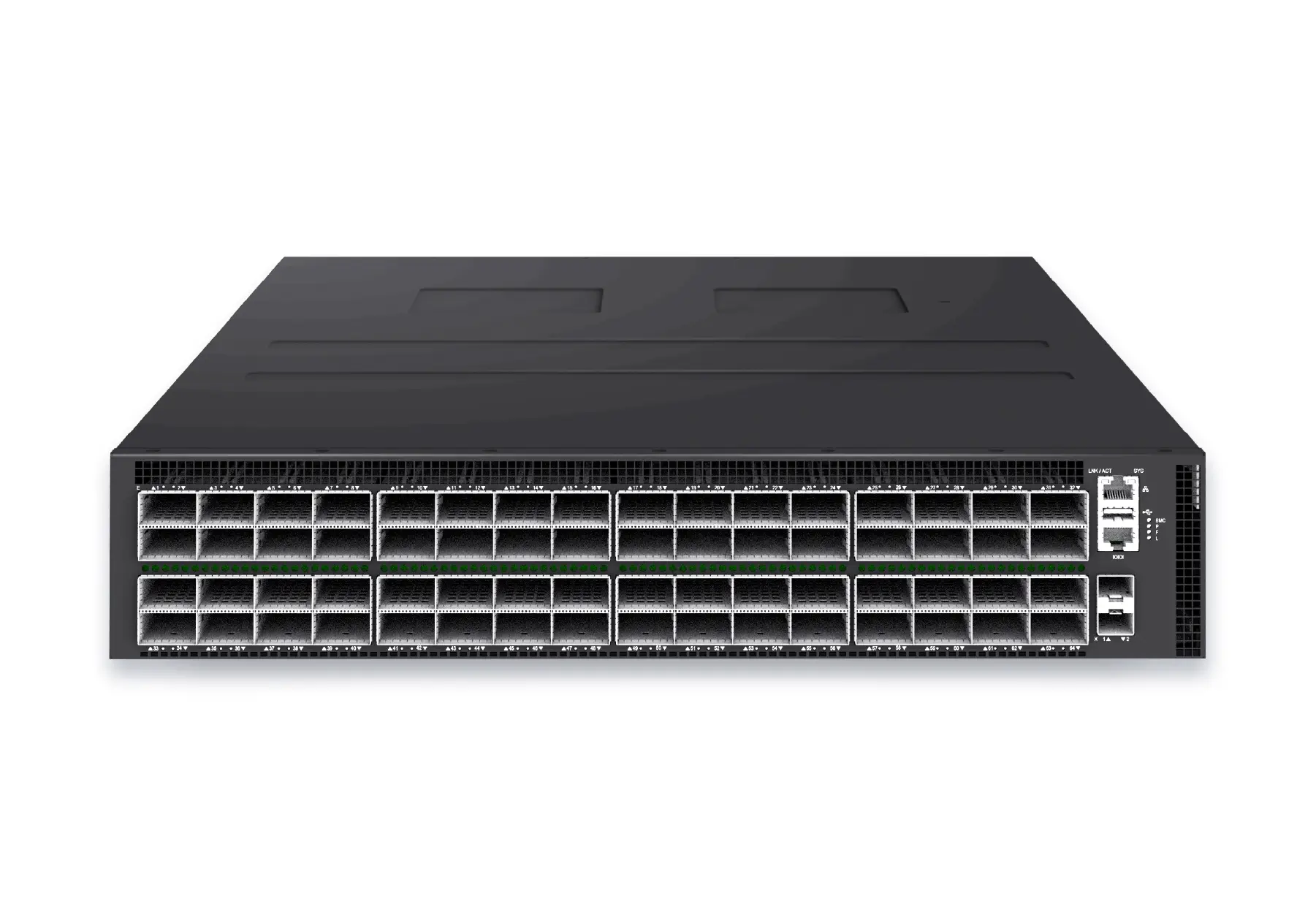 datacenter aiXS-DC-64X800-AI-G164-port 800G AI fabric switch for large-scale GPU clusters, HPC backbones, and ultra-high-throughput data center networks.View product
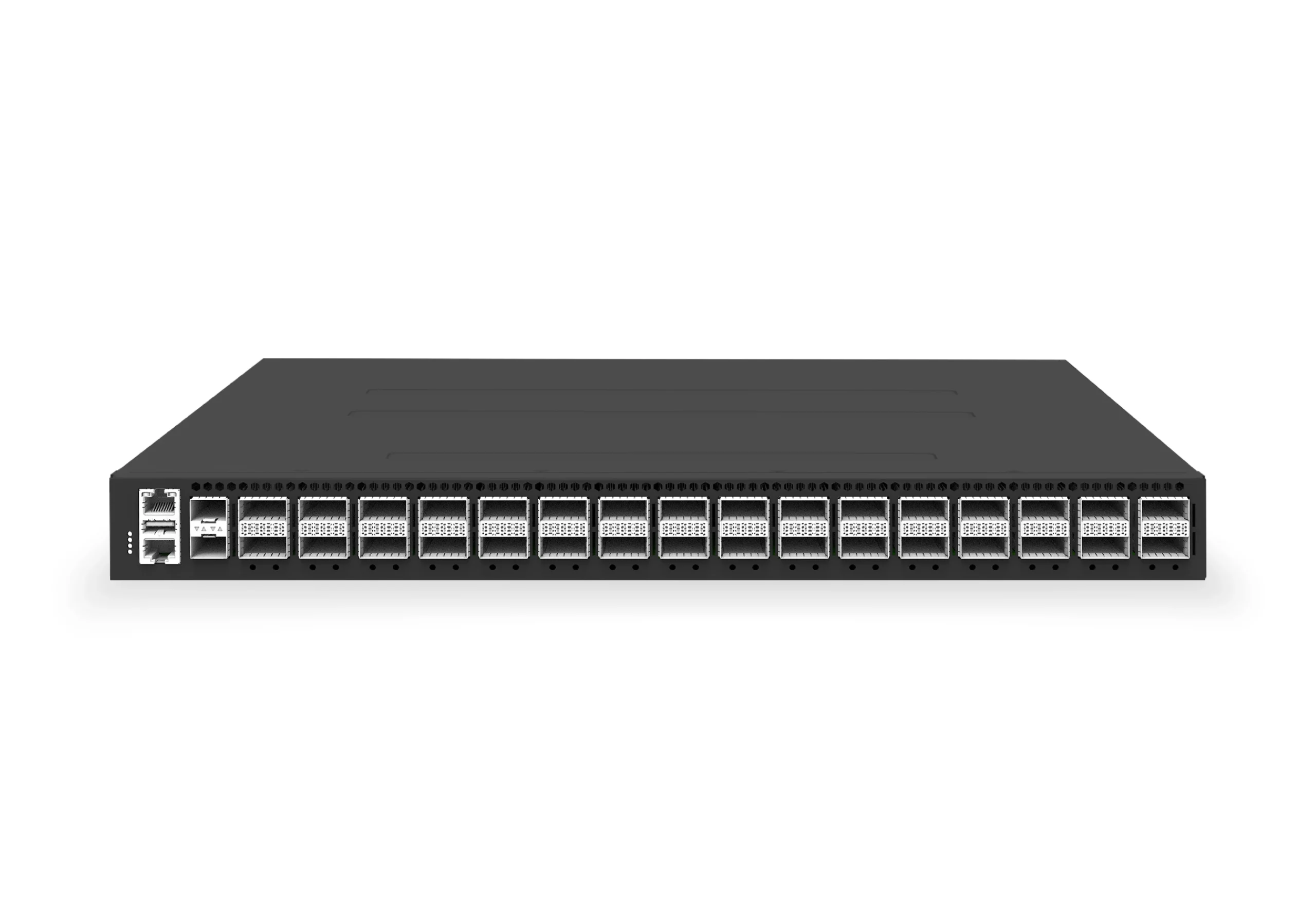 datacenter aiXS-DC-32X400-SP-G232-port 400G spine/core switch for high-capacity data center fabrics and AI-ready backbones.View product
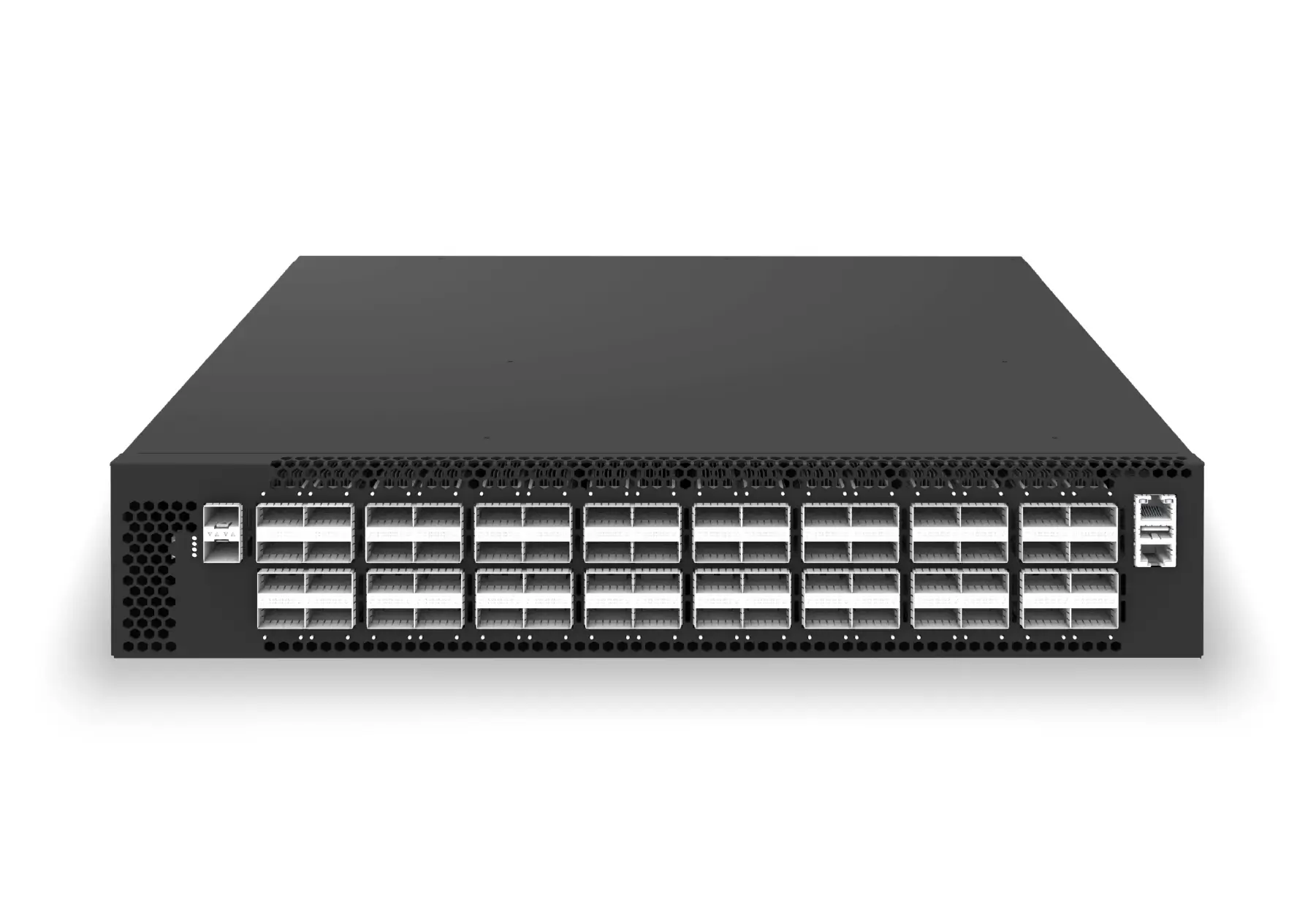 datacenter aiXS-DC-64X200-LS-G164-port 200G leaf/spine switch for high-bandwidth storage, compute, and scale-out data center fabrics.View product
Continue reading
Related articles
 Technical ArticleWhy Centralized AI Fabric Management Matters: The Case for an AIDC ControllerWhy centralized AI fabric management matters for Australian GPU clusters, with AIDC controller validation, telemetry, drift control, and runbooks.Read article
 Technical ArticleNVIDIA Ethernet for AI Clusters: An Australian Buyer's GuideNVIDIA Ethernet switching guidance for Australian AI cluster buyers, covering Spectrum, SONiC, RoCE, 400G/800G, optics, and validation.Read article
 Technical ArticleWhat Australian Data Center Buyers Should Know Before Evaluating SONiC Switches in 2026A pre-purchase engineering checklist for Australian SONiC switch buyers, covering hardware support, SAI maturity, RoCE, automation, optics, upgrades, and local support.Read article