
In brief
Engineering guidance on From Proprietary Lock-In to Enterprise SONiC for Australian campus teams, covering PoE budgets, access-layer resilience, migration risk.
Key takeaways
- For years, the default path for enterprise networking in Australia has been proprietary: buy the switch, accept the vendor's operating system, and lock your operations into their upgrade cycles, licensing models, and support structures.
- SONiC (Software for Open Networking in the Cloud) is the most visible of those alternatives.
- This is not a theoretical shift. SONiC has been production-hardened in the data centers of some of the largest cloud service providers globally, and the ecosystem now includes major switch silicon vendors and a growing base of enterprise adopters.
Why Australian Data Centers Are Rethinking Proprietary Networking
For years, the default path for enterprise networking in Australia has been proprietary: buy the switch, accept the vendor’s operating system, and lock your operations into their upgrade cycles, licensing models, and support structures. That model is under pressure. Rising infrastructure costs, the need for AI-ready fabrics, and a growing skills base around Linux-native tooling are pushing network teams to evaluate alternatives.
SONiC (Software for Open Networking in the Cloud) is the most visible of those alternatives. Built on Linux with a containerized, modular architecture, SONiC decouples the network operating system from the underlying hardware. It runs on switches from multiple vendors and multiple ASIC families, giving network teams the freedom to choose hardware based on port density, power efficiency, and price rather than software compatibility alone.
This is not a theoretical shift. SONiC has been production-hardened in the data centers of some of the largest cloud service providers globally, and the ecosystem now includes major switch silicon vendors and a growing base of enterprise adopters. For Australian organizations planning a campus refresh, a data center fabric upgrade, or an AI infrastructure build, Enterprise SONiC is a credible migration target. This playbook walks through the decision framework, the phased migration approach, and the operational realities of making the switch.
Understanding What You Are Leaving Behind
Proprietary networking stacks share common characteristics that become visible only when you try to leave them. The network operating system is tightly coupled to a single vendor’s hardware. Feature development follows the vendor’s roadmap, not your operational priorities. Licensing is often per-port, per-feature, or subscription-based, creating ongoing cost that scales with your fabric rather than with the value you extract from it.
Operational tooling is another friction point. Proprietary CLIs, vendor-specific management platforms, and closed APIs mean your automation scripts, monitoring integrations, and troubleshooting workflows are portable only within that vendor’s ecosystem. If you want to add a second vendor for competitive pricing or supply chain resilience, you double your operational overhead.
The migration question is not simply SONiC versus one vendor. It is whether your network operations should be built on an open, community-developed foundation that supports multi-vendor hardware, standard Linux interfaces, and programmatic configuration through JSON-based files and modern APIs — or whether they should remain dependent on a single vendor’s release cadence and commercial interests.
SONiC Architecture: What Makes It Different
SONiC is not a stripped-down Linux distribution with a networking veneer. It is a purpose-built network operating system with a modular, container-based architecture where each network function runs in its own Docker container. This design provides fault isolation, simplified upgrades, and the ability to update individual components without restarting the entire switch.
At the hardware abstraction layer, SONiC uses the Switch Abstraction Interface (SAI), a standardized API that decouples the NOS from the switch ASIC. SAI enables SONiC to run on hardware built with silicon from multiple vendors, which is the foundation of the multi-vendor hardware freedom that makes open networking viable.
SONiC supports a full suite of network functionality including BGP, RDMA over Converged Ethernet (RoCE), EVPN-VXLAN, and telemetry. It is licensed under Apache 2.0 and governed through the Linux Foundation, with an active community contributing to ongoing development. The combination of containerized modularity, SAI-based hardware abstraction, and community governance is what separates SONiC from both traditional proprietary NOS offerings and earlier attempts at open networking.
Migration Decision Framework: When SONiC Makes Sense
Not every network should migrate to SONiC today. The decision depends on workload type, operational maturity, and hardware lifecycle timing. The following criteria help frame the evaluation:
Strong fit for Enterprise SONiC migration:
- Data center spine-leaf fabrics being refreshed for 100G, 400G, or 800G capacity
- AI and ML clusters requiring low-latency RoCE v2 fabrics with congestion management
- Greenfield builds where hardware and NOS can be selected together
- Organizations with existing Linux and DevOps skills that can extend to network operations
- Environments where multi-vendor hardware sourcing is a procurement or resilience requirement
Evaluate carefully before migrating:
- Campus networks with deep investment in proprietary wireless controllers and management planes
- Environments with no internal Linux capability and no plan to develop it
- Networks where the proprietary vendor provides genuine operational value that outweighs lock-in costs
Not a near-term migration candidate:
- Networks with active proprietary support contracts that include critical bug fixes and regulatory compliance features not yet available in SONiC distributions
The Australian market adds specific considerations. Supply chain lead times, local support availability, and integration partner capability all matter. A SONiC migration is not just a software swap; it is an operational model change that requires planning.
Phase 1: Lab Validation and Proof of Concept
The first phase of any SONiC migration is a lab deployment. This is where you validate hardware compatibility, test the feature set against your actual workload requirements, and build operational familiarity before touching production traffic.
Lab phase checklist:
| Step | Objective | Success Criteria |
|---|---|---|
| Hardware selection | Identify switches with SAI-compatible ASICs on the SONiC supported devices list | Confirmed compatibility with target SONiC image |
| Image installation | Install Enterprise SONiC via ONIE or compatible method | Boot, basic connectivity, management plane access |
| Feature validation | Test BGP, EVPN-VXLAN, RoCE v2, telemetry, ACLs against workload requirements | All required features operational |
| Automation test | Validate NETCONF/YANG, REST API, or gNMI configuration workflows | Programmatic provisioning working |
| Failure simulation | Test link failure, switch failure, rolling upgrade scenarios | Convergence times and failover behavior acceptable |
| Monitoring integration | Confirm SNMP, streaming telemetry, or syslog integration with existing tools | Visibility parity with current platform |
This phase typically takes four to eight weeks depending on fabric complexity. The output is a documented feature compatibility matrix and an operational runbook for the target SONiC distribution.
Phase 2: Parallel Deployment and Traffic Migration
Once lab validation is complete, the next phase is deploying SONiC switches alongside existing proprietary infrastructure in a parallel or canary configuration. This allows you to validate real-world performance, test operational workflows under production conditions, and migrate traffic incrementally.
Parallel deployment approach:
- Deploy SONiC-based leaf switches alongside existing proprietary leaves in the same fabric
- Migrate a subset of workloads (for example, a single tenant, application tier, or VLAN) to the SONiC leaves
- Monitor performance, telemetry, and operational metrics for a defined soak period
- Expand traffic migration to additional workloads as confidence builds
- Decommission proprietary switches as traffic reaches zero on each unit
For AI fabric deployments, this approach is particularly effective. You can deploy a SONiC-based spine-leaf segment for your GPU training cluster while keeping proprietary infrastructure serving traditional enterprise workloads. The RoCE v2, DCBX, and congestion notification features required for AI traffic can be validated against real GPU-to-GPU communication patterns before committing the full fabric.
This phase requires careful routing design to ensure traffic flows correctly across the mixed-vendor boundary. EVPN-VXLAN is a common overlay choice because it is well-supported in SONiC and provides vendor-neutral L2/L3 extension across heterogeneous underlay hardware.
Phase 3: Full Fabric Cutover and Operational Maturity
The final phase is completing the migration and building operational maturity on the SONiC platform. This includes:
- Decommissioning all proprietary switches and closing vendor support contracts
- Finalizing automation playbooks for provisioning, upgrades, and day-2 operations
- Establishing monitoring baselines and alerting thresholds on the SONiC platform
- Training the operations team on SONiC CLI, debugging workflows, and community support channels
- Documenting the as-built architecture and operational runbooks
Operational maturity is where many migrations stall. The network is running SONiC, but the team is still thinking in proprietary paradigms. Investing in NETCONF/YANG-based configuration management, streaming telemetry pipelines, and Linux-native troubleshooting skills pays long-term dividends. SONiC’s standard Linux interfaces mean your team can leverage existing Linux operations knowledge rather than learning a proprietary CLI from scratch.
For Australian organizations, building a relationship with a local integration partner experienced in Enterprise SONiC deployments can accelerate this phase. The SONiC community is active and growing, but having local expertise for complex troubleshooting, hardware sourcing, and ongoing support reduces operational risk.
Mapping SONiC Migration to xSONiC Product Families
A SONiC migration is a software and operational decision, but it is enabled by hardware choices. xSONiC’s product families are designed to support Enterprise SONiC deployments across the full range of network roles:
-
Data Center AI Switches: Spine and leaf switches for AI/ML clusters running Enterprise SONiC with RoCE v2, BGP, and EVPN-VXLAN. Connect to the AI Fabric and GPU Backend Fabric solution pillars.
-
Bare Metal Switches: Open switching hardware for teams evaluating custom NOS deployments or building engineering-led network programs with SONiC as the foundation.
-
Access and Aggregation Switches: Enterprise SONiC campus switching for organizations extending the open networking model from the data center to the campus edge.
-
Optical Transceivers: SFP, SFP+, SFP28, QSFP28, QSFP-DD, and OSFP optics for data center and campus links supporting 100G through 800G SONiC-based fabrics.
-
Network Packet Brokers: Traffic aggregation, filtering, and replication for security and monitoring tool delivery alongside SONiC-managed fabrics.
The migration playbook connects to several xSONiC solution pillars beyond AI Fabric, including EVPN-VXLAN, RoCE v2, DCBX, INT Telemetry, and NETCONF for programmatic management.
Common Migration Pitfalls and How to Avoid Them
Every migration carries risk. The most common pitfalls in proprietary-to-SONiC transitions are:
Underestimating operational training time. SONiC is Linux-based, but it is still a full network operating system with its own configuration model, debugging workflows, and upgrade procedures. Budget time for hands-on training, not just documentation reading.
Ignoring ASIC feature parity. Not all SAI implementations support the same feature depth. A feature that works on your proprietary switch may have a different implementation or limitation on a different ASIC under SONiC. Validate specific features against specific hardware in the lab phase.
Skipping the automation investment. Deploying SONiC without building automation is like buying a programmable switch and configuring it by hand. The value of open networking compounds when you invest in NETCONF/YANG, streaming telemetry, and Infrastructure-as-Code workflows.
Migrating everything at once. A big-bang cutover maximizes risk. The parallel deployment model described above exists for a reason. Use it.
The Business Case for Open Networking in Australia
The migration to Enterprise SONiC is not purely a technical decision. It is a strategic procurement and operational model shift with tangible business implications:
-
Hardware freedom: Multi-vendor SAI-compatible hardware means competitive pricing and supply chain resilience. You are no longer dependent on a single vendor’s production schedule or pricing model.
-
Operational portability: Skills built on SONiC and Linux are transferable across hardware generations and vendors. Your team’s investment in automation, monitoring, and troubleshooting workflows survives hardware refreshes.
-
AI readiness: SONiC’s support for RoCE v2, congestion management, and telemetry makes it a credible foundation for AI fabric deployments without proprietary AI networking lock-in.
For Australian enterprises evaluating their next network refresh, the question is no longer whether open networking is viable. It is whether the timing is right for your organization. The sources, the ecosystem, and the operational tooling are mature enough for production deployment. The migration playbook above provides the framework to start that evaluation.
Engineering FAQ
What should be tested before moving campus switching to SONiC or open networking? Test PoE behaviour, NAC integration, VLAN and policy design, STP or MC-LAG interaction, multicast, monitoring, upgrade rollback, and help-desk workflows. Campus readiness is an operations test, not only a forwarding test.
Where do campus refresh projects usually carry hidden risk? The risk often sits in closets: power budget, old cabling, undocumented uplinks, mixed endpoint types, voice devices, cameras, badge systems, and change windows. Those details should be inventoried before selecting switch models.
How should Australian campus teams structure a pilot? Choose one representative site or building, document endpoint classes, run PoE and failover tests, verify monitoring, train operations staff, and define rollback steps before expanding to the broader estate.
Related xSONiC Resources
Sources Reviewed
- Ethernet Network Adapters - ConnectX NICs | NVIDIA
- NVIDIA BlueField Data Processing Unit
- NVIDIA Spectrum-X Ethernet Platform
- OpenConfig gNMI Specification
- OpenConfig
- RFC 7950 - The YANG 1.1 Data Modeling Language
- RFC 6241 - Network Configuration Protocol (NETCONF)
- ACSC Essential Eight
- OAIC Notifiable Data Breaches
- APRA CPS 234 Information Security
- NETSCOUT Network Packet Definition
- Cloudflare Network Packet Definition
- SONiC Project Documentation
- Broadcom Ethernet Switching
- Marvell Switching
- NVIDIA Ethernet Switching
- Open Compute Networking
- SONiC GitHub
- SONiC Foundation
Product fit
Products referenced for evaluation
These products are referenced for evaluation context in the article. Confirm workload, port, optics, software, interoperability, and support requirements against the exact deployment before procurement.
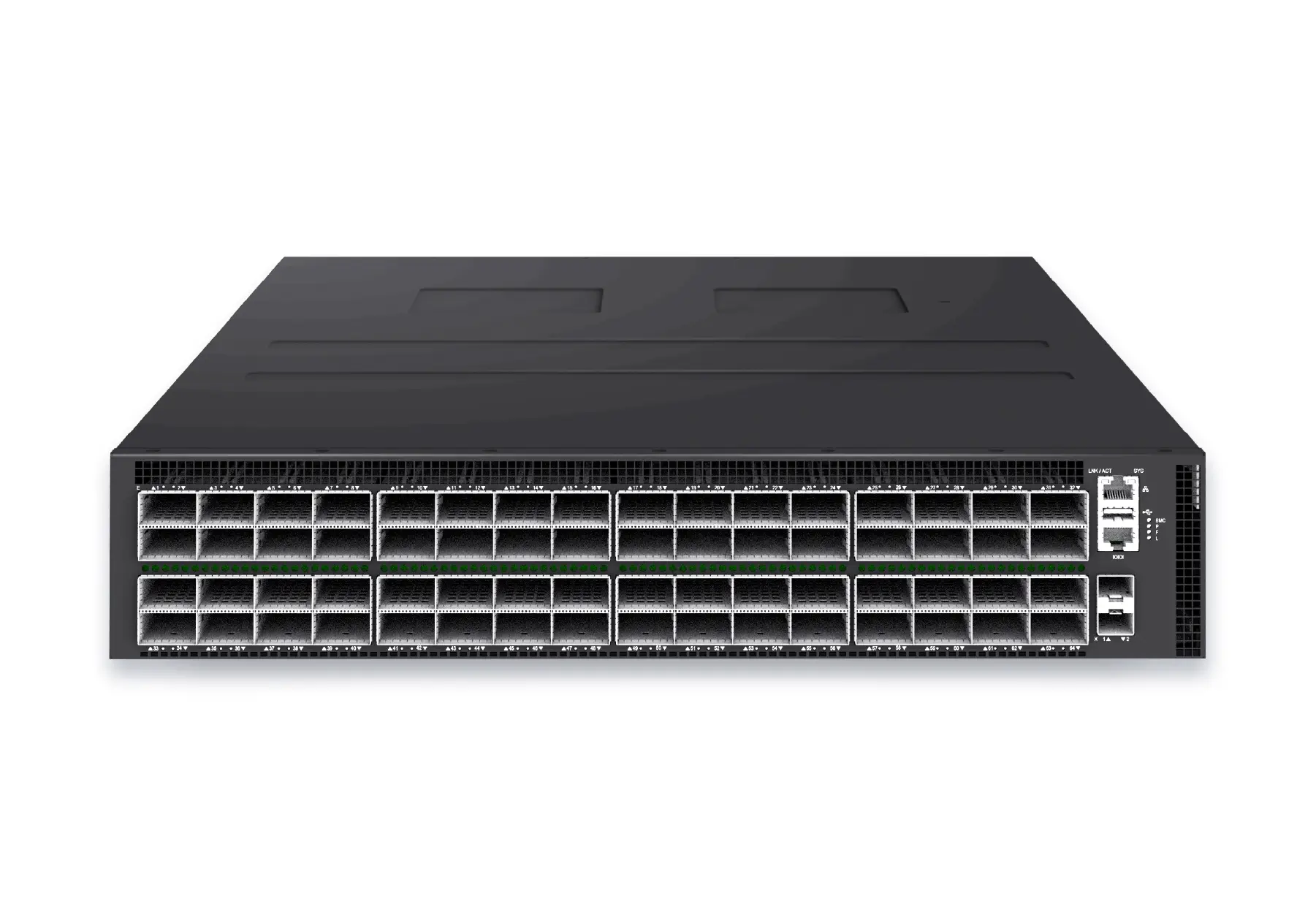 datacenter aiXS-DC-64X800-AI-G164-port 800G AI fabric switch for large-scale GPU clusters, HPC backbones, and ultra-high-throughput data center networks.View product
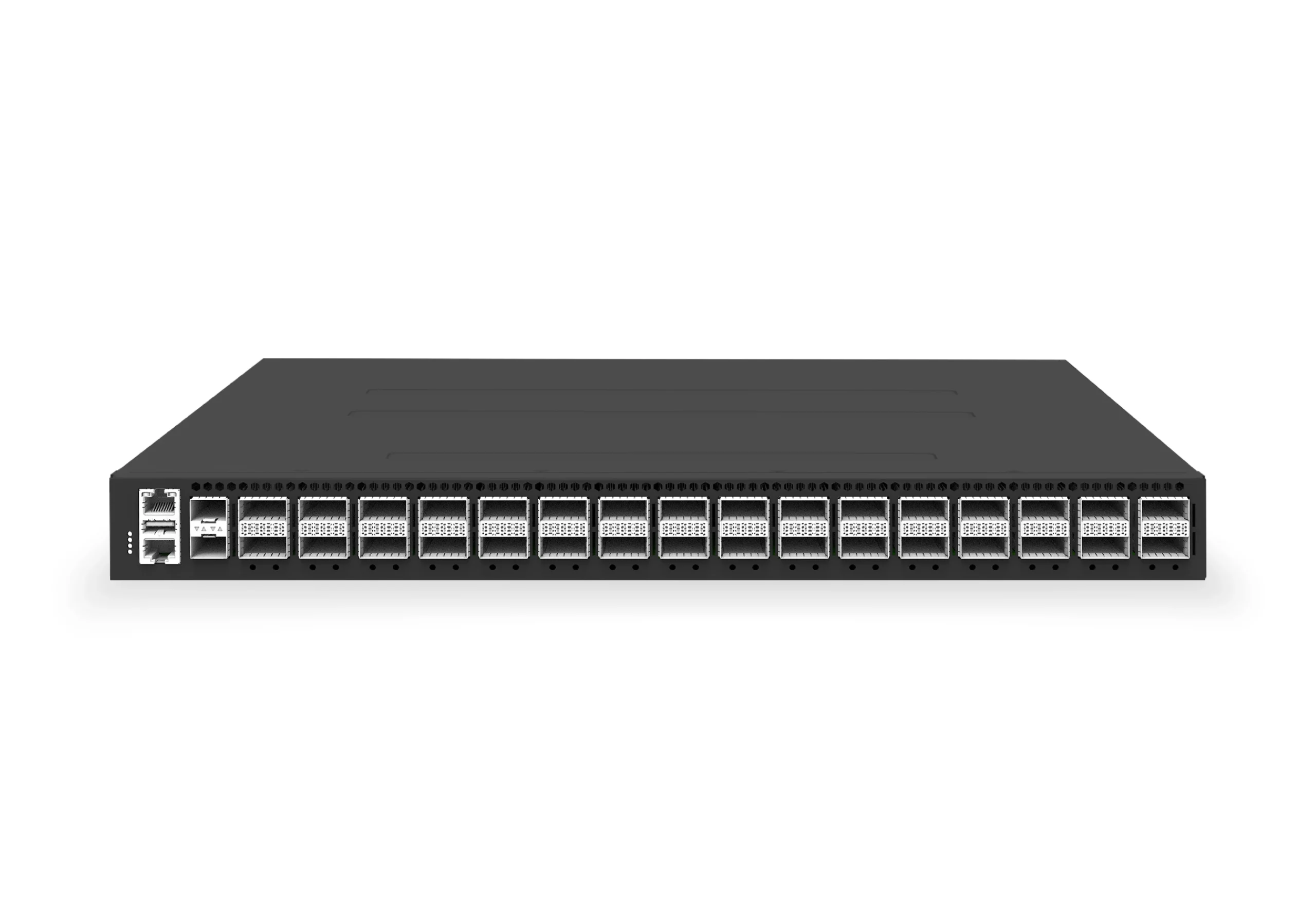 datacenter aiXS-DC-32X400-SP-G232-port 400G spine/core switch for high-capacity data center fabrics and AI-ready backbones.View product
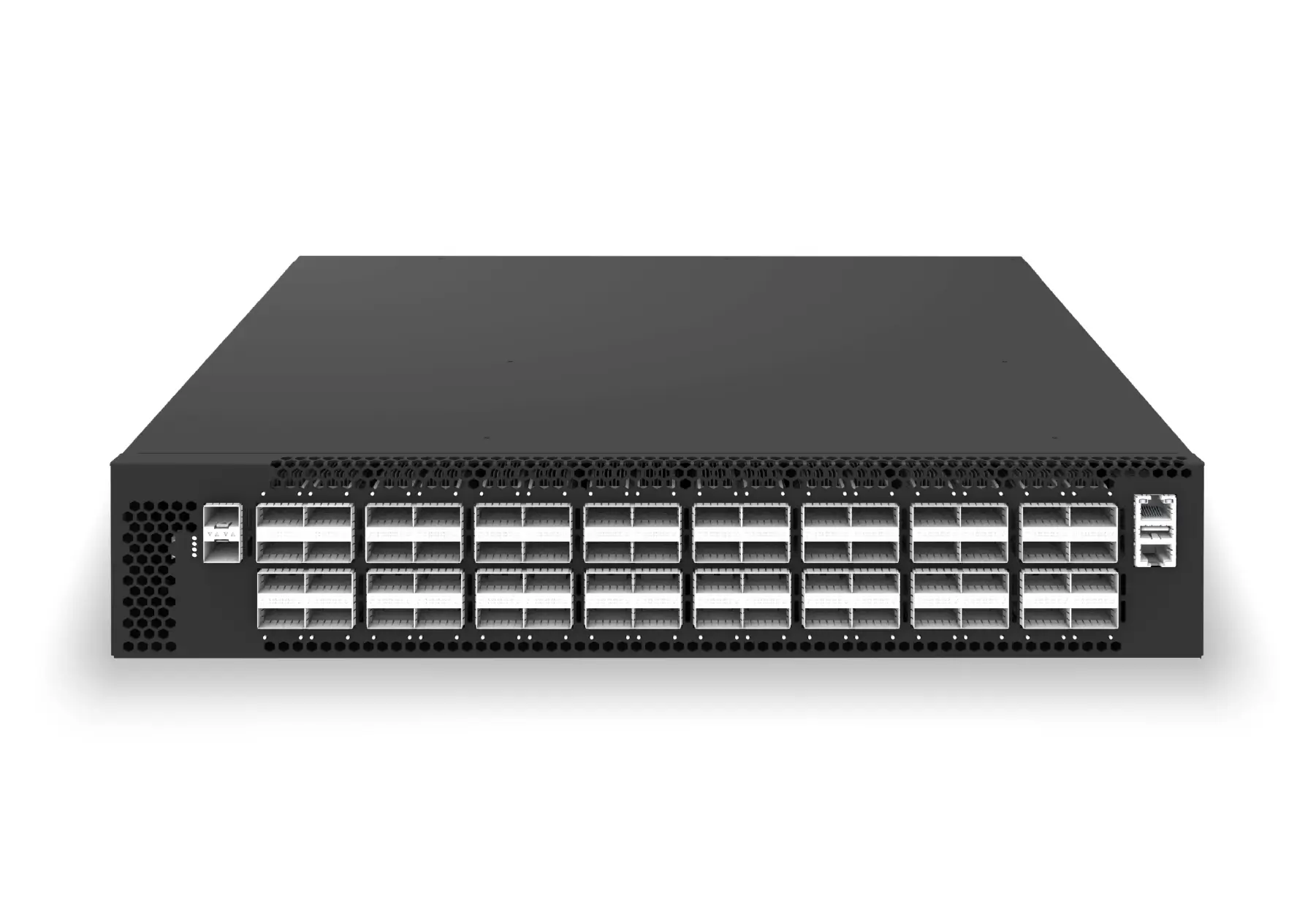 datacenter aiXS-DC-64X200-LS-G164-port 200G leaf/spine switch for high-bandwidth storage, compute, and scale-out data center fabrics.View product
Continue reading
Related articles
 Technical ArticleOpen Networking Support for Enterprise Buyers: How SONiC and Open NOS Models Actually WorkEngineering guidance on Open Networking Support for Enterprise Buyers for Australian campus teams, covering PoE budgets, access-layer resilience, migration risk.Read article
 Technical ArticleFrom Proprietary Lock-In to Open Networking: A Practical Enterprise SONiC Migration PlaybookA practical Enterprise SONiC migration playbook for Australian buyers moving from proprietary switch OS to open networking.Read article
 Technical ArticleWhy Centralized AI Fabric Management Is the Missing Layer in Open NetworkingEngineering guidance on Centralized AI Fabric Management Is the Missing Layer in Open Networking for Australian network teams, covering underlay design, EVPN-VXLAN.Read article