In brief
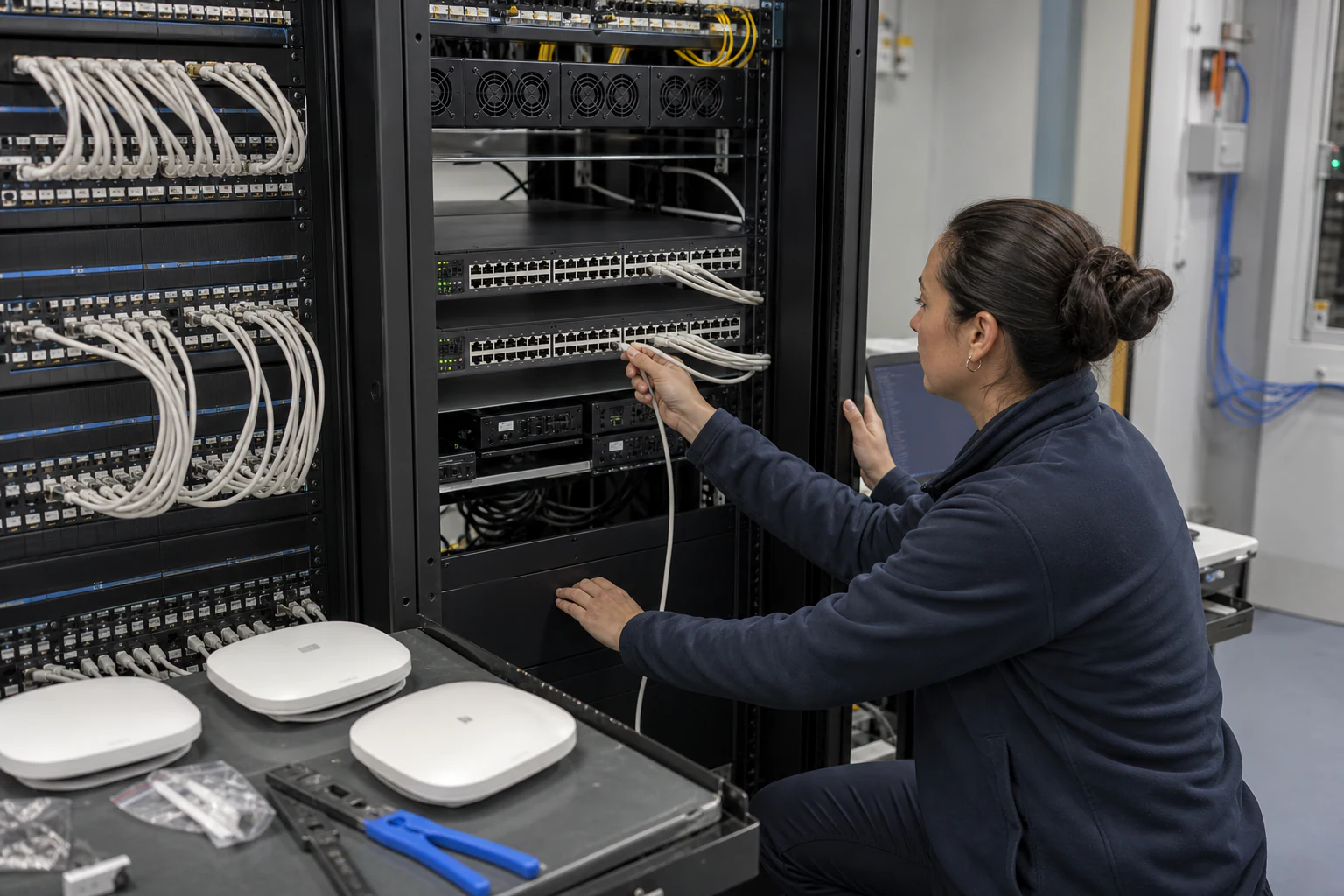
Engineering guide for campus switching teams covering PoE, access design, MC-LAG/STP risk, telemetry, support, and pilot validation.
Key takeaways
- Walk into any large Australian campus -- a university precinct spanning dozens of buildings, a hospital network with hundreds of connected medical devices, a council headquarters feeding branch offices across a municipality -- and you will find the same story.
- Australia's campus environments are not small. The sources examined for this article illustrate the scale: Victoria University operates campuses across Melbourne's CBD, Footscray, St Albans, Sunshine, and Werribee.
- Yet many of these networks still run on proprietary access switches that were designed a decade or more ago.
The Campus Network Problem No One Wants to Talk About
Walk into any large Australian campus — a university precinct spanning dozens of buildings, a hospital network with hundreds of connected medical devices, a council headquarters feeding branch offices across a municipality — and you will find the same story. The access and aggregation layers are ageing, the vendor relationship is entrenched, and every incremental port or feature upgrade comes with a licence fee, a support contract extension, or a hardware-forced forklift.
Australia’s campus environments are not small. The sources examined for this article illustrate the scale: Victoria University operates campuses across Melbourne’s CBD, Footscray, St Albans, Sunshine, and Werribee. RMIT’s Melbourne city campus alone hosts 45,000 students across buildings that have evolved over more than a century. The Australian Catholic University campus in Fitzroy sits in a precinct requiring robust connectivity across historic and modern structures alike. Multi-building, multi-site campus networks with hundreds to thousands of edge ports are the norm, not the exception.
Yet many of these networks still run on proprietary access switches that were designed a decade or more ago. The refresh cycle is overdue, and the question is no longer whether to upgrade — it is whether to stay locked into the same vendor or take a different path.
What Enterprise SONiC Brings to the Campus Edge
SONiC — Software for Open Networking in the Cloud — started as a data center NOS built by Microsoft and contributed to the open-source community. Its original deployment target was large-scale cloud fabrics. The campus use case is newer, and that is exactly where the opportunity lies for Australian buyers.
Enterprise SONiC distributions extend the open-source foundation with the features campus networks actually need:
- 802.1X and MAC-based authentication for wired endpoint access control
- PoE/PoE+ management for powering IP phones, wireless access points, security cameras, and IoT devices
- Layer 2 and Layer 3 switching at access and aggregation tiers
- MC-LAG and STP for resilient uplinks and loop prevention across distribution switches
- Policy-Based Routing (PBR) for traffic steering, segmentation, and compliance enforcement
- NETCONF/YANG programmability for automation and integration with campus management platforms
- CLI and SNMP compatibility so network operations teams can transition without retraining on an entirely new operational model
The core value proposition is straightforward: run a production-grade campus network on open switching hardware with a NOS that is not tied to a single vendor’s supply chain, pricing model, or roadmap.
Access Layer: PoE, Multi-Gig, and the Device Explosion
The modern Australian campus edge looks nothing like it did ten years ago. Consider what connects at the access layer today:
- Wi-Fi 6 and Wi-Fi 6E access points requiring 2.5G or 5G uplinks and PoE++ (802.3bt) power delivery
- IP telephony handsets and conference room systems
- Security cameras with increasing resolution and on-device analytics
- Building management systems, HVAC controllers, and environmental sensors
- Digital signage and wayfinding displays
- Point-of-sale terminals in campus retail and food service areas
- Lab equipment and IoT endpoints in education and healthcare settings
This device explosion creates two access-layer challenges: power budget and port speed. Legacy 1G PoE+ switches are hitting their limits. A campus refresh that sticks with 1G access ports is already outdated before the first device is connected.
Enterprise SONiC access switches aligned to xSONiC’s product direction support:
- Multi-Gigabit access ports (1G/2.5G/5G) to match modern endpoint capabilities
- PoE++ (802.3bt) power budgets sufficient for high-power wireless APs and PTZ cameras
- 25G and 100G uplinks to aggregation or distribution layers, using SFP28 and QSFP28 transceivers
- Fibre uplink options via SFP+, SFP28, and QSFP28 optical modules for longer campus runs between buildings
For Australian campuses with fibre plant between buildings — a common scenario in education and government precincts — the combination of open switching hardware and xSONiC optical transceivers for uplinks removes a common vendor bundling tactic: forcing customers to buy branded optics at a premium.
Aggregation and Distribution: Resilience Without Proprietary Tax
The aggregation layer is where campus network design decisions have the most operational impact. This is the tier that connects access switches to the campus core or data center, and it needs to handle:
- High port density to terminate dozens or hundreds of access switch uplinks
- Resilient link aggregation so that an access switch can survive a single uplink failure
- Layer 3 routing for inter-VLAN traffic, campus segmentation, and upstream connectivity
- Traffic policy enforcement for security zones, departmental isolation, and regulatory compliance
Proprietary vendor stacks typically offer these capabilities through closed protocols or licence-gated features. The alternatives available with Enterprise SONiC include:
MC-LAG and STP
Multi-Chassis Link Aggregation allows two aggregation switches to present as a single logical endpoint to downstream access switches. Combined with STP (Spanning Tree Protocol) for loop prevention, this provides the resilience campus networks demand without proprietary inter-switch link protocols. For Australian organisations running campus networks across multiple buildings or floors, MC-LAG means access switch uplinks can span two physical aggregation devices — eliminating the single point of failure that keeps network managers awake during storm season.
See the xSONiC MC-LAG and STP guide for technical detail.
Virtual Chassis
For campuses where management simplicity matters as much as resilience, virtual chassis architectures let multiple physical switches operate as a single managed entity. This reduces the number of management points, simplifies configuration, and can lower operational overhead for teams managing large campus environments.
See the xSONiC Virtual Chassis guide.
Policy-Based Routing
PBR gives campus network designers the ability to steer traffic based on source, destination, protocol, or application criteria — not just destination IP. This is increasingly relevant for Australian campuses that need to segment student, staff, guest, IoT, and operational traffic onto different paths for security and compliance purposes. PBR on open switching hardware means this capability is not locked behind a premium licence tier.
See the xSONiC PBR guide.
The Migration Playbook: From Proprietary to Open Campus
Switching from a proprietary campus stack to Enterprise SONiC is not a rip-and-replace exercise — or it should not be. The most practical approach for Australian organisations is a phased migration:
Phase 1: Audit and baseline. Document the existing campus topology, port counts, PoE requirements, uplink speeds, VLAN design, and management tooling. Identify which switches are end-of-life or end-of-support first.
Phase 2: Pilot deployment. Deploy Enterprise SONiC access and aggregation switches in a single building or floor. Validate PoE delivery, 802.1X authentication, VLAN trunking, and uplink performance against the existing design. This is where operational familiarity is built.
Phase 3: Expand by zone. Migrate building by building or floor by floor. Use the pilot deployment as a reference architecture. Maintain dual connectivity to the existing core during transition to avoid service disruption.
Phase 4: Aggregate and optimise. Once enough access switches are migrated, consolidate the aggregation layer onto open switching hardware with MC-LAG or virtual chassis configurations. Integrate with campus management and monitoring platforms via NETCONF/YANG or SNMP.
Phase 5: Decommission and document. Remove legacy proprietary switches. Update network documentation, runbooks, and monitoring dashboards. Close out support contracts that are no longer needed.
The key risk mitigation at every phase is ensuring that the Enterprise SONiC distribution running on xSONiC access-aggregate hardware has been validated for the specific feature set your campus requires. Not all SONiC distributions are equal — enterprise-grade distributions from established vendors include support, bug fixes, and feature development that community SONiC alone may not.
What to Look For in an Enterprise SONIc Campus Switch
For Australian buyers evaluating campus refresh options, the checklist below covers the key evaluation criteria:
| Criterion | What to Verify |
|---|---|
| Port density and speed | 24/48 x 1G/2.5G/5G access ports; 25G/100G uplinks |
| PoE budget | Sufficient wattage for Wi-Fi 6E APs, PTZ cameras, and IoT (check 802.3bt support) |
| Layer 2/3 features | VLAN, QinQ, MC-LAG, STP/RSTP/MSTP, OSPF, BGP, VRRP |
| Security | 802.1X, MAC-based auth, RADIUS/TACACS+, DHCP snooping, dynamic ARP inspection |
| Management | CLI, SNMP, NETCONF/YANG, REST API, web GUI |
| Uplink optics | SFP28/QSFP28 compatible; third-party optic support without vendor lock-in |
| Resilience | Redundant power supplies, hot-swappable fans, stacking or virtual chassis |
| Support and SLA | Enterprise-grade support with defined response times and software update cadence |
The Australian Market Context
Australia’s enterprise networking market has several characteristics that make campus SONiC adoption particularly relevant:
- Geographic spread. Organisations with campuses across multiple cities or states need standardised, manageable infrastructure. Open networking reduces the operational complexity of maintaining proprietary stacks across dispersed sites.
- Skills availability. Network engineers familiar with CLI-based switching, OSPF, BGP, and STP can transition to Enterprise SONiC with moderate retraining. The protocol fundamentals do not change.
- Procurement pressure. Public sector and education buyers in Australia face increasing scrutiny on vendor lock-in and total cost of ownership. Open networking aligns with government procurement principles that favour competitive supply chains.
- Sustainability. Extending the useful life of switching hardware by decoupling NOS from hardware reduces e-waste and aligns with sustainability reporting requirements that are growing in Australian enterprise procurement.
Next Steps
If your campus network is approaching end-of-life or you are evaluating alternatives to your current vendor stack, the starting point is understanding your current topology and requirements. xSONiC’s campus refresh solutions are designed for exactly this scenario — open switching hardware running Enterprise SONiC with the access and aggregation features campus networks demand.
- Explore xSONiC campus refresh solutions
- Review PoE campus guidance
- Browse xSONiC access and aggregation switches
- Contact xSONiC for a campus network assessment
Engineering FAQ
What should be validated before a Wi-Fi 6E or Wi-Fi 7 rollout? Validate channel plan, 6 GHz client readiness, PoE budget, uplink capacity, roaming, authentication, RF density, interference, and management tooling. The AP standard alone does not prove campus performance.
Why does backhaul planning matter for modern access points? Wi-Fi 6E and Wi-Fi 7 can expose bottlenecks in access switching, PoE, cabling, and uplink design. Buyers should confirm whether 2.5G, 5G, 10G, and PoE budgets match the real AP deployment plan.
What evidence should vendors provide for enterprise WLAN projects? Ask for supported security modes, firmware lifecycle, controller or cloud management model, RF planning assumptions, client compatibility notes, and a pilot report from a representative building or floor.
Related xSONiC Resources
Sources Reviewed
- IEEE 802.1Q Bridges and Bridged Networks
- IEEE 802.1AX Link Aggregation
- Ethernet Network Adapters - ConnectX NICs | NVIDIA
- NVIDIA BlueField Data Processing Unit
- NVIDIA Spectrum-X Ethernet Platform
- OpenConfig gNMI Specification
- OpenConfig
- RFC 7950 - The YANG 1.1 Data Modeling Language
- RFC 6241 - Network Configuration Protocol (NETCONF)
- ACSC Essential Eight
- OAIC Notifiable Data Breaches
- APRA CPS 234 Information Security
- NETSCOUT Network Packet Definition
- Cloudflare Network Packet Definition
- IEEE 802.11be Wireless LAN Standard
- IEEE 802.3bt Power over Ethernet
- SONiC Project Documentation
- Broadcom Ethernet Switching
- Marvell Switching
- NVIDIA Ethernet Switching
- Open Compute Networking
- SONiC GitHub
- SONiC Foundation
Product fit
Products referenced for evaluation
These products are referenced for evaluation context in the article. Confirm workload, port, optics, software, interoperability, and support requirements against the exact deployment before procurement.
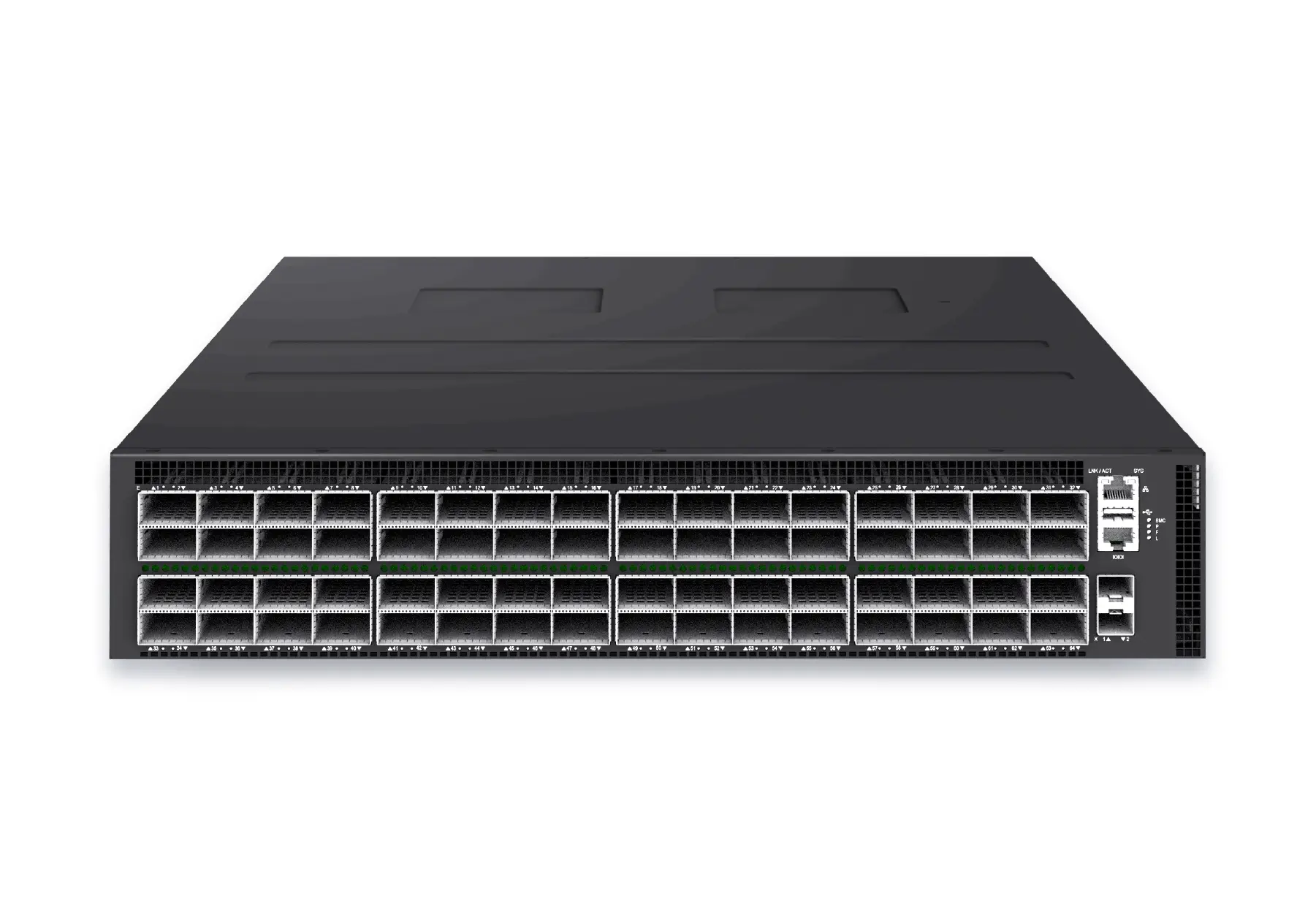 datacenter aiXS-DC-64X800-AI-G164-port 800G AI fabric switch for large-scale GPU clusters, HPC backbones, and ultra-high-throughput data center networks.View product
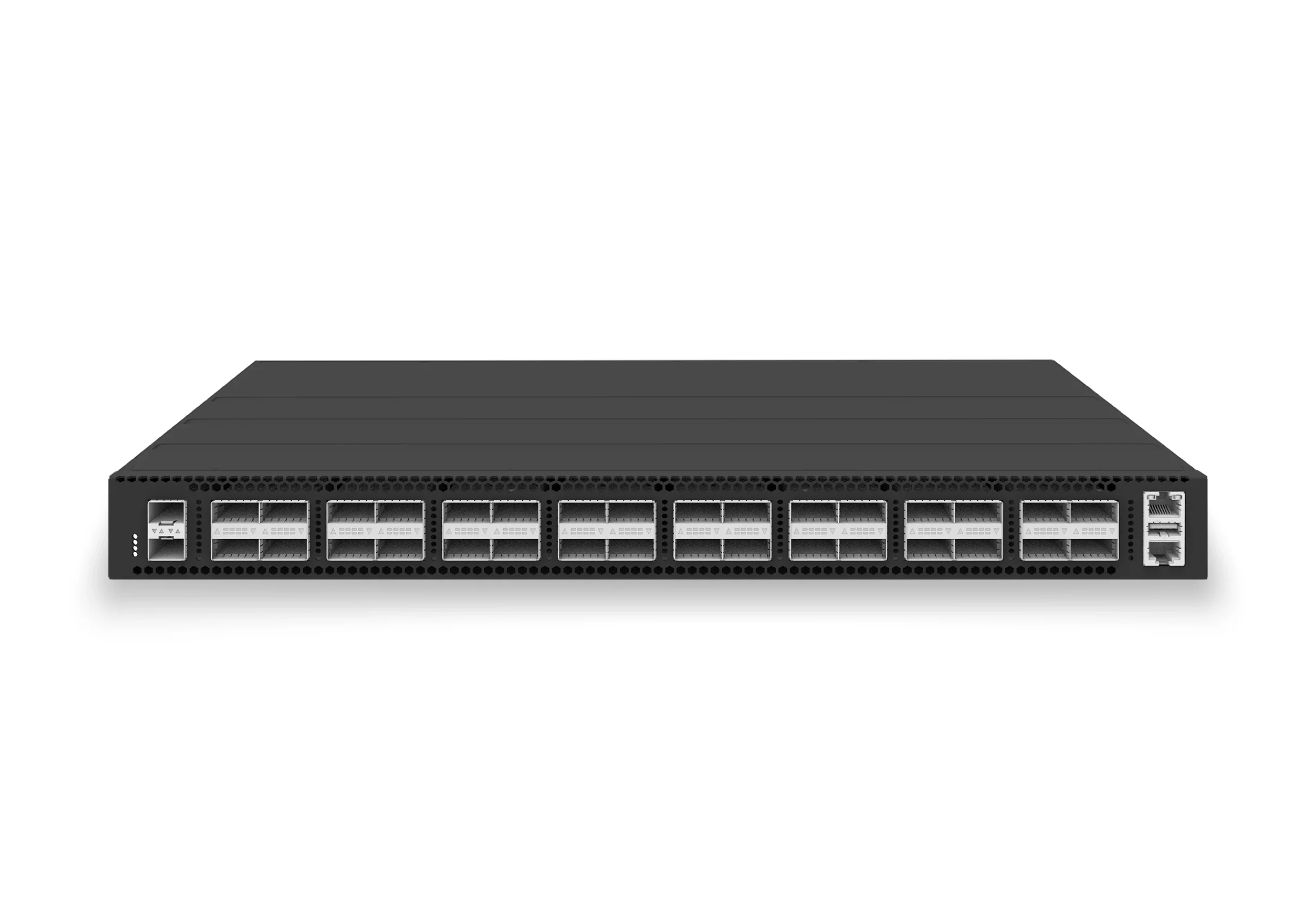 datacenter aiXS-DC-32X100-LS-G232-port 100G leaf/spine switch for VXLAN fabrics, RoCE-ready workloads, and tenant-scale routing.View product
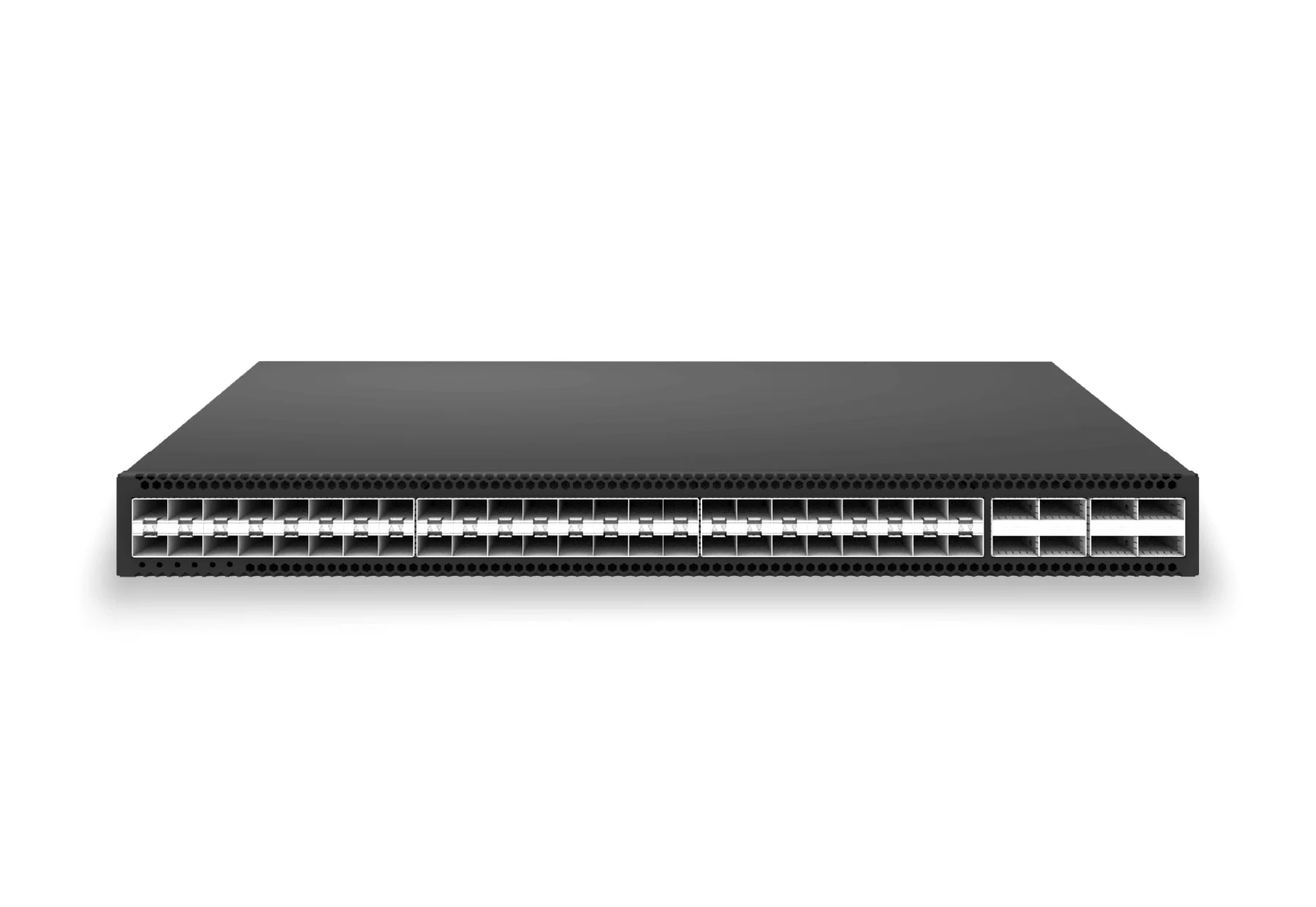 access aggregateXS-AA-48X25-8X100-AGG48x 25G SFP28 aggregation/core switch with 8x 100G QSFP28 for enterprise access and aggregation networks.View product
Continue reading
Related articles
 Technical ArticleWhy Enterprise SONiC Is Gaining Ground in Campus Access and Aggregation: An Australian PerspectiveEngineering guide for campus switching teams covering PoE, access design, MC-LAG/STP risk, telemetry, support, and pilot validation.Read article
 Technical ArticlePoE Campus Planning Checklist for Enterprise SONiC Access SwitchesEngineering guidance on PoE Campus Planning Checklist for Enterprise SONiC Access Switches for Australian campus networks, covering RF planning, security controls.Read article
 Technical ArticleEnterprise Campus PoE Refresh with SONiC Open NetworkingEngineering guide for campus switching teams covering PoE, access design, MC-LAG/STP risk, telemetry, support, and pilot validation.Read article