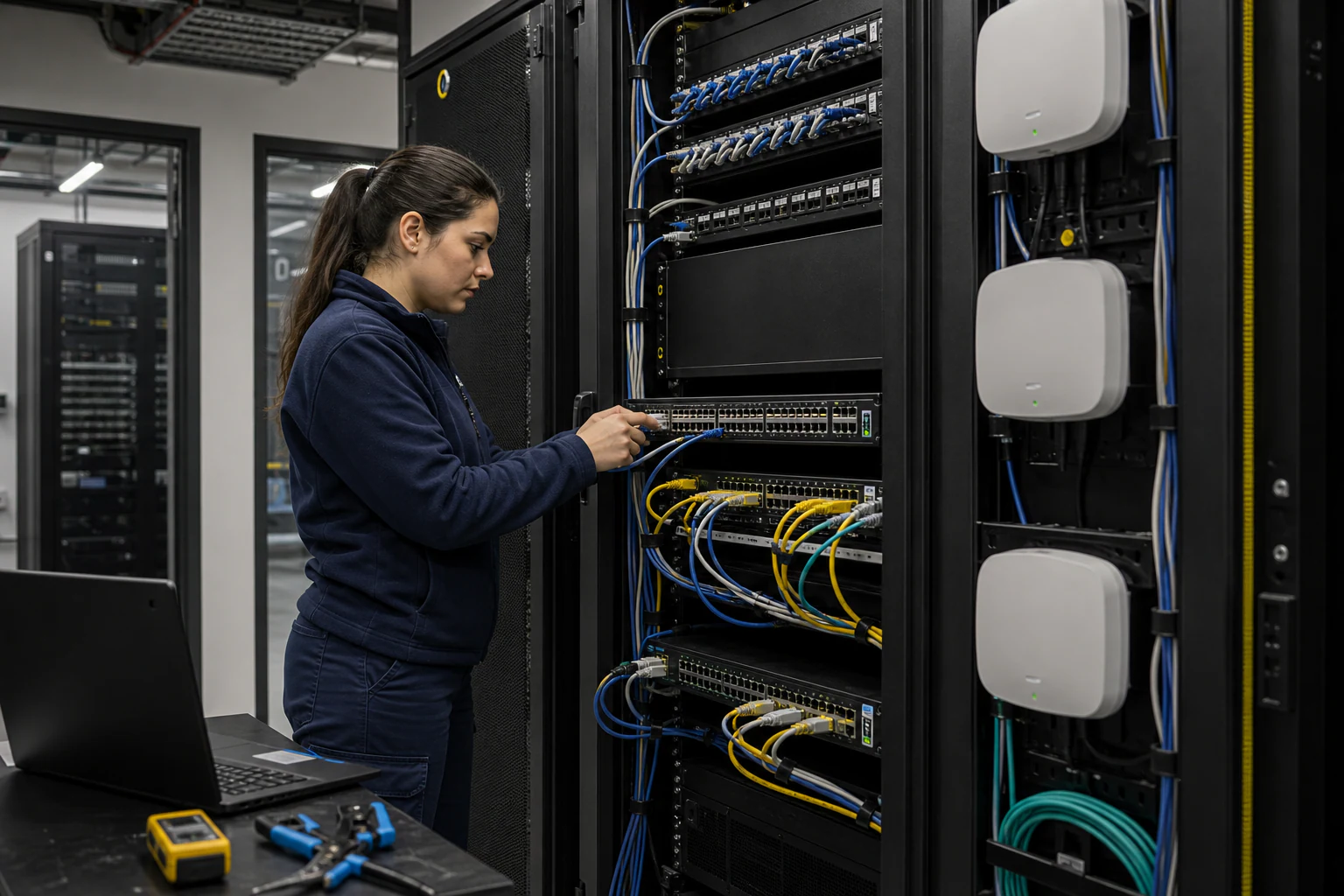
In brief
Engineering guide for campus switching teams covering PoE, access design, MC-LAG/STP risk, telemetry, support, and pilot validation.
Key takeaways
- Enterprise campus networks across Australia are entering a significant refresh cycle.
- For Australian network teams, this refresh is not just a hardware swap.
- The SONiC Foundation, a Linux Foundation project, describes SONiC (Software for Open Networking in the Cloud) as a free and open-source network operating system that runs on switches from multiple vendors and ASICs.
Why Campus PoE Switch Refresh Is on the Australian IT Agenda
Enterprise campus networks across Australia are entering a significant refresh cycle. Access-layer PoE switches deployed during the Wi-Fi 5 and early Wi-Fi 6 era are reaching end-of-support, while new device density from Wi-Fi 6E, IoT sensors, and building management systems demands higher per-port power budgets and faster uplinks.
For Australian network teams, this refresh is not just a hardware swap. It is a strategic inflection point: stay locked into the incumbent proprietary operating system, or explore open networking alternatives that decouple hardware from software.
What SONiC Brings to the Campus Conversation
The SONiC Foundation, a Linux Foundation project, describes SONiC (Software for Open Networking in the Cloud) as a free and open-source network operating system that runs on switches from multiple vendors and ASICs. Its architecture separates the NOS from the underlying hardware through the Switch Abstraction Interface (SAI), a standard that accelerates hardware innovation while keeping the software layer portable.
SONiC was originally production-hardened in hyperscale cloud data centers. Its container-based design isolates each network function into its own Docker container, providing fault isolation, simplified upgrades, and modular troubleshooting. These same principles apply to campus access and aggregation layers, where operational simplicity and vendor flexibility carry direct cost and staffing benefits.
Key SONiC characteristics relevant to campus PoE refresh:
- Multi-vendor hardware support: SONiC runs on switches from various hardware vendors, meaning campus buyers can evaluate multiple switch platforms without rewriting their operational tooling.
- Container-based modularity: Each network function runs in its own container, enabling targeted upgrades and reducing the blast radius of configuration changes.
- Standard Linux interfaces: SONiC uses standard Linux tools, lowering the learning curve for network teams already familiar with Linux server administration.
- Open-source ecosystem: The growing SONiC community includes major network chip vendors, expanding the pool of supported campus silicon.
The Australian Campus Refresh Context
Australian enterprise campus networks face specific pressures that shape refresh decisions:
PoE power budgets are rising. Wi-Fi 6E and Wi-Fi 7 access points require PoE++ (802.3bt) power delivery, often 60W or more per port. Legacy PoE switches limited to 802.3af (15.4W) or 802.3at (30W) cannot support these devices without infrastructure upgrades.
Uplink bandwidth expectations are shifting. Access switches that aggregate dozens of Wi-Fi 6E APs and IoT endpoints need multi-gigabit access ports and 25G or faster uplinks to prevent bottlenecks.
Operational costs matter. Australian IT teams, often smaller per-site than their US or European counterparts, need campus infrastructure that simplifies provisioning, monitoring, and fault isolation.
Supply chain diversification is a priority. Recent global supply disruptions have pushed Australian buyers to consider multi-vendor procurement strategies, which align with SONiC’s hardware-agnostic design.
How Open Networking Changes the Campus Buyer Equation
Traditional campus refresh cycles lock buyers into a single vendor’s access, aggregation, and management stack. SONiC’s architecture, as documented by the SONiC Foundation, breaks this pattern by standardizing the NOS layer across hardware platforms.
For campus PoE refresh specifically, this means:
| Decision Factor | Proprietary Stack | SONiC-Based Open Networking |
|---|---|---|
| Hardware selection | Tied to one vendor | Multi-vendor via SAI |
| Software upgrades | Vendor release cycle | Community-driven, containerized |
| Operational tooling | Vendor-specific CLI and NMS | Standard Linux, NETCONF/YANG |
| Vendor lock-in risk | High | Low |
PoE Refresh Acceptance Matrix
The refresh should be accepted per closet and per site, not as a blanket switch replacement. Buyers need evidence that power, uplinks, operations, and support will survive the next endpoint cycle.
| Refresh Area | Evidence to Capture | Acceptance Target | Rework Trigger |
|---|---|---|---|
| Endpoint power | AP, camera, phone, badge, sensor, signage inventory with class and expected draw | Each closet has a documented 15.4W/30W/60W/90W load model | More than 10% of PoE ports are undocumented |
| Aggregate budget | Switch PoE budget, PSU redundancy mode, UPS runtime, thermal headroom | Worst-case load leaves 20-30% spare capacity for growth | Design uses average draw only and ignores boot spikes |
| Wired capacity | 2.5G/5G/10G access needs, 25G/100G uplinks, oversubscription | Wi-Fi 6E/7 APs do not bottleneck on legacy 1G access ports | AP refresh forces unexpected access-switch replacement |
| SONiC readiness | PoE telemetry, LLDP-MED, 802.1X, MC-LAG/STP, rollback, config restore | One site pilot proves endpoint recovery after 3 switch reloads | Feature support is assumed from data center SONiC maturity |
| Support and lifecycle | APAC support, RMA, spares, 36-month and 60-month lifecycle | Supplier documents escalation, replacement path, and software cadence | Support boundary is unclear between switch, NOS, and AP vendor |
What This Means for xSONiC Campus Buyers
xSONiC’s access and aggregation switch portfolio is positioned within the open networking model that SONiC enables. For Australian enterprise campus teams evaluating a PoE refresh, the xSONiC value proposition centers on:
- Hardware flexibility: choosing campus switch platforms from a broader vendor pool
- Operational consistency: aligning campus and data center under a common NOS
- Total cost of ownership: reducing license fees and vendor-specific training costs
- Future-proofing: adopting an architecture that scales with campus growth
Migration Considerations for Australian Campus Networks
For teams moving from a proprietary campus stack to SONiC-based open networking, the migration path involves:
- Audit current switch fleet: Identify end-of-support dates, PoE class requirements, and uplink bandwidth needs.
- Validate campus feature requirements: Map required features (PoE scheduling, LLDP-MED, 802.1X, stacking) against SONiC capabilities on target hardware.
- Pilot on a single site: Deploy SONiC-based campus switches in a controlled environment before campus-wide rollout.
- Align operational tooling: Adopt NETCONF/YANG or standard Linux management interfaces to reduce vendor-specific dependencies.
Bottom Line
The enterprise campus PoE refresh cycle is a real and accelerating buying event for Australian network teams. SONiC’s open-source, multi-vendor architecture, as documented by the SONiC Foundation, offers a credible alternative to proprietary campus stacks, but campus feature parity requires verification. xSONiC’s position within the open networking ecosystem makes it a candidate worth evaluating, subject to confirmed Australian availability, specifications, and support.
For Australian buyers at the evaluate stage, the question is not whether open networking works at scale — SONiC’s cloud data center track record answers that. The question is whether the campus feature set meets enterprise requirements today, and whether xSONiC delivers the hardware and support needed for Australian deployments.
Engineering FAQ
Is SONiC automatically ready for every campus PoE feature? No. SONiC’s architecture is credible, but campus PoE readiness must be validated per platform. Ask for tested support for PoE power class reporting, LLDP-MED, 802.1X, voice VLANs, MSTP, MC-LAG, and upgrade rollback on the exact access switch model under consideration.
Why does IEEE 802.3bt matter in a refresh cycle? IEEE 802.3bt extends PoE to Type 3 and Type 4 power levels, which is what gives campus planners headroom for high-power Wi-Fi 6E/7 access points, cameras, signage, and building systems. Buying only to today’s average endpoint load can create another refresh pressure as soon as the endpoint mix changes.
What should be measured before selecting a PoE switch? Measure per-closet device count, actual endpoint power draw, expected Wi-Fi 7 AP load, cable category and bundle density, UPS capacity, switch thermal limits, and uplink oversubscription. The important number is not just maximum watts per port; it is sustained aggregate power under realistic endpoint mix.
Where does xSONiC fit in an Australian campus refresh? xSONiC should be treated as an open networking candidate for access and aggregation, especially where the buyer wants hardware choice and a common SONiC-based operating model. The deployment case is strongest after a pilot proves the campus features and support model, not just the data sheet.
Related xSONiC Resources
Sources Reviewed
- IEEE 802.1Q Bridges and Bridged Networks
- IEEE 802.1AX Link Aggregation
- Ethernet Network Adapters - ConnectX NICs | NVIDIA
- NVIDIA BlueField Data Processing Unit
- NVIDIA Spectrum-X Ethernet Platform
- OpenConfig gNMI Specification
- OpenConfig
- RFC 7950 - The YANG 1.1 Data Modeling Language
- RFC 6241 - Network Configuration Protocol (NETCONF)
- IEEE 802.11be Wireless LAN Standard
- IEEE 802.3bt Power over Ethernet
- SONiC Project Documentation
- Broadcom Ethernet Switching
- Marvell Switching
- NVIDIA Ethernet Switching
- Open Compute Networking
- SONiC GitHub
- SONiC Foundation
Product fit
Products referenced for evaluation
These products are referenced for evaluation context in the article. Confirm workload, port, optics, software, interoperability, and support requirements against the exact deployment before procurement.
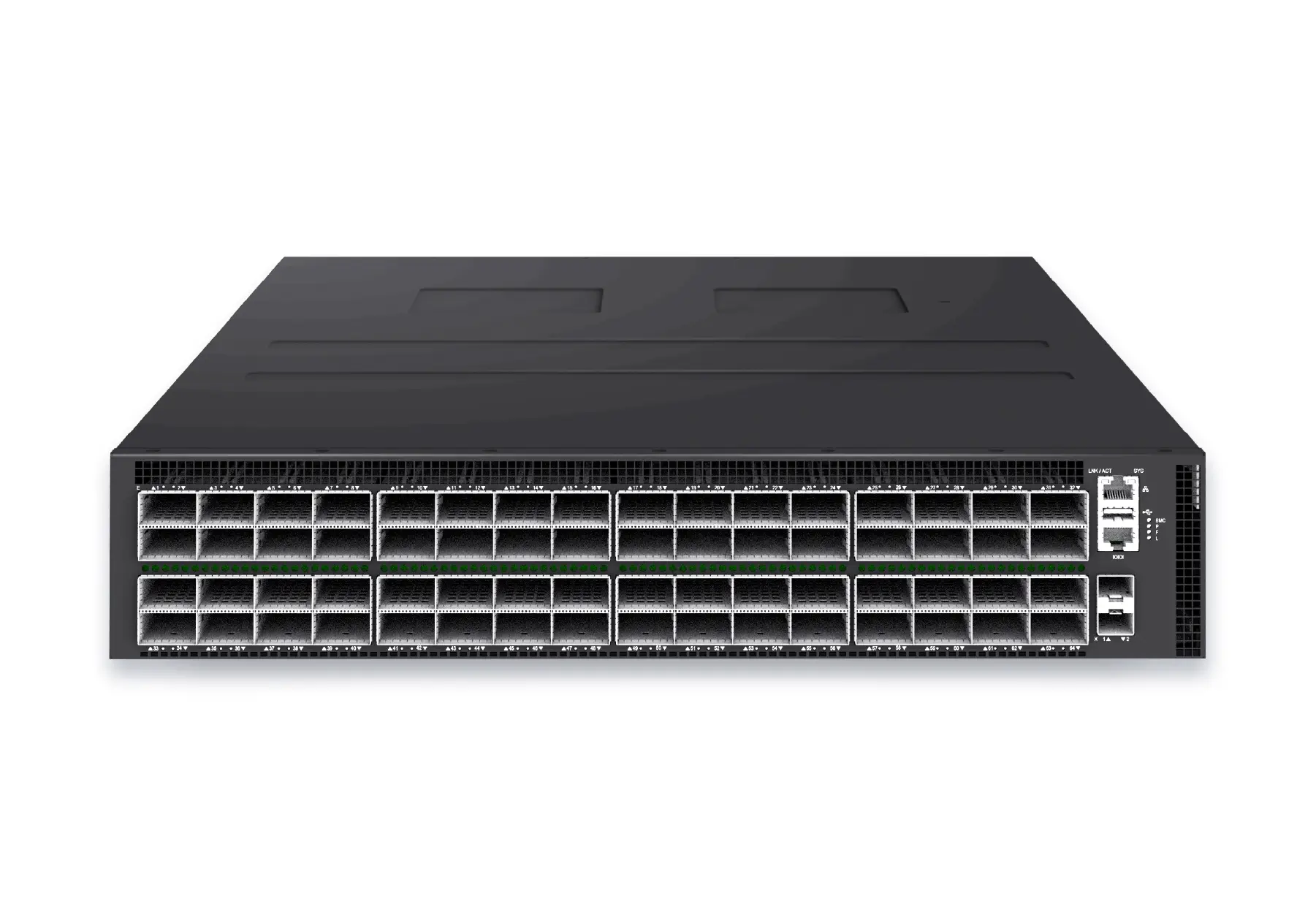 datacenter aiXS-DC-64X800-AI-G164-port 800G AI fabric switch for large-scale GPU clusters, HPC backbones, and ultra-high-throughput data center networks.View product
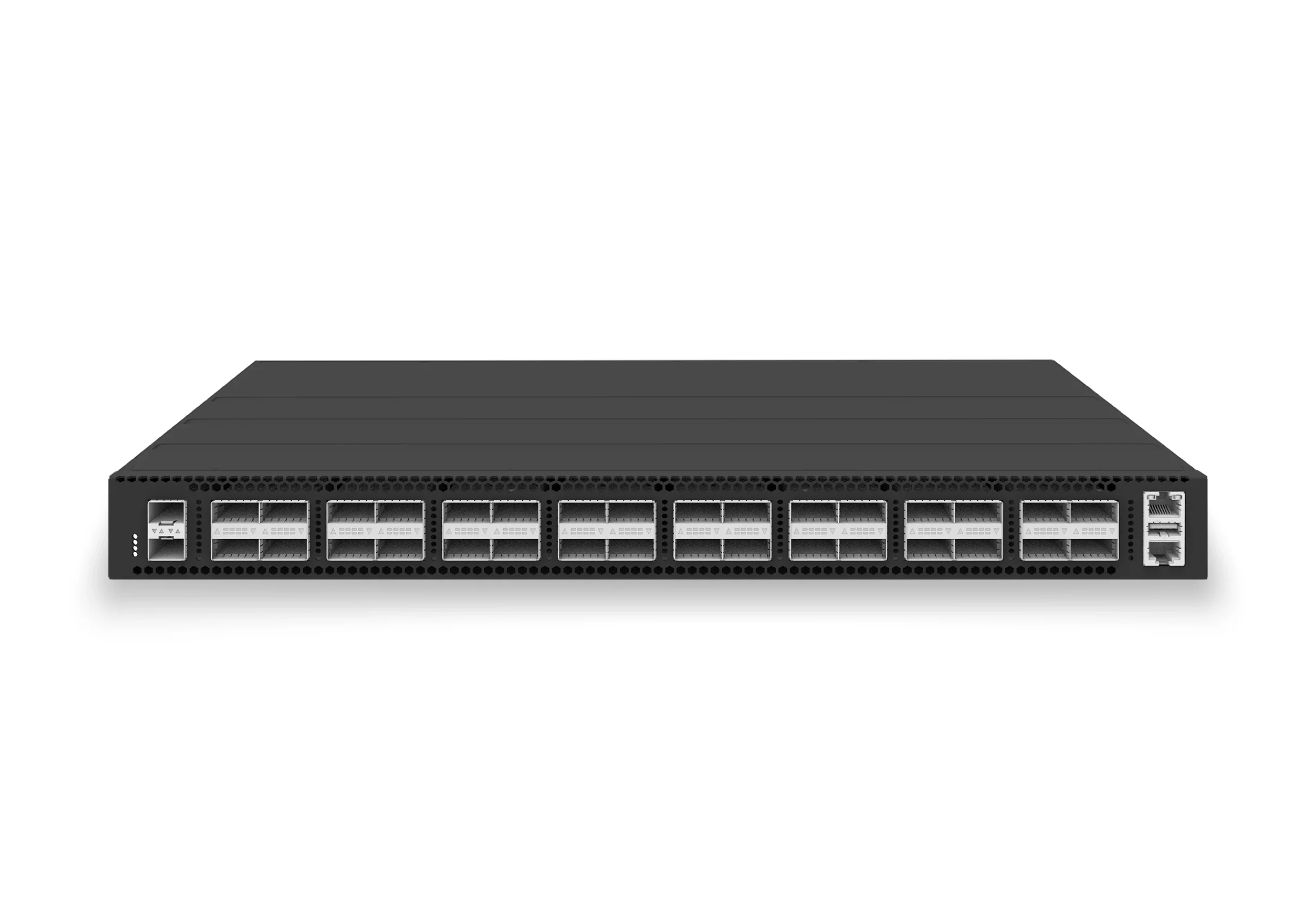 datacenter aiXS-DC-32X100-LS-G232-port 100G leaf/spine switch for VXLAN fabrics, RoCE-ready workloads, and tenant-scale routing.View product
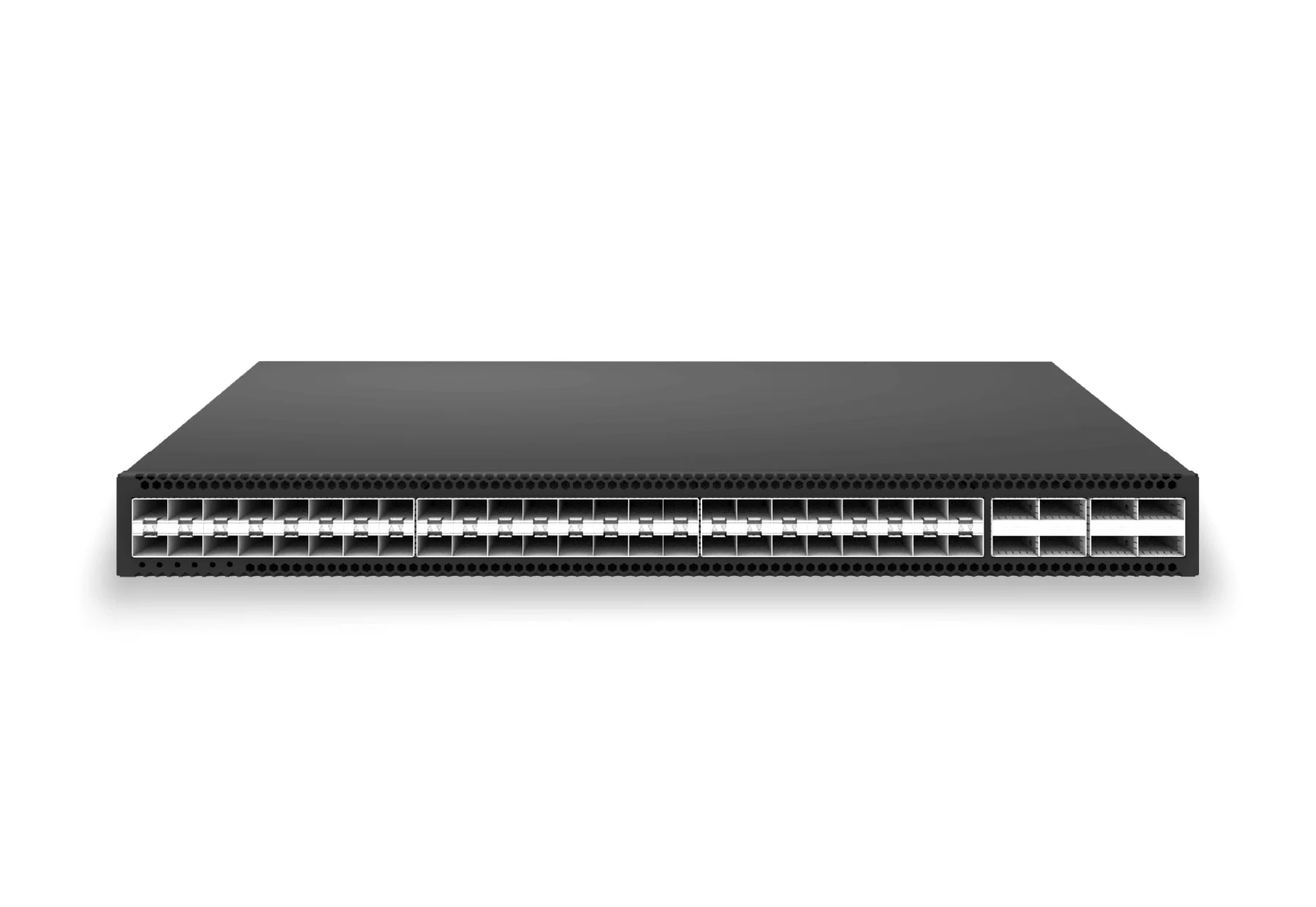 access aggregateXS-AA-48X25-8X100-AGG48x 25G SFP28 aggregation/core switch with 8x 100G QSFP28 for enterprise access and aggregation networks.View product
Continue reading
Related articles
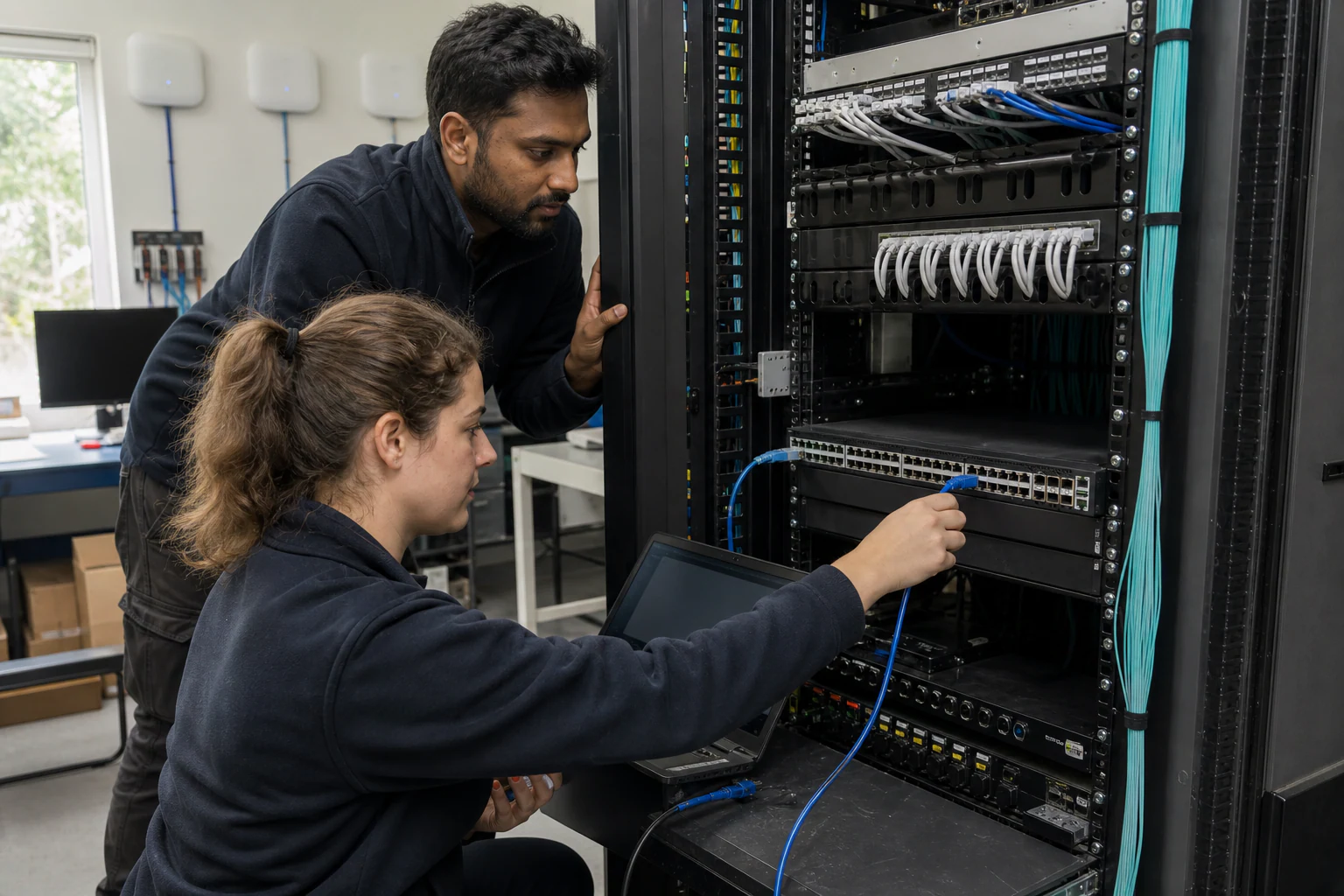 Technical ArticleWhy Enterprise SONiC Is Gaining Ground in Campus Access and Aggregation: An Australian PerspectiveEngineering guide for campus switching teams covering PoE, access design, MC-LAG/STP risk, telemetry, support, and pilot validation.Read article
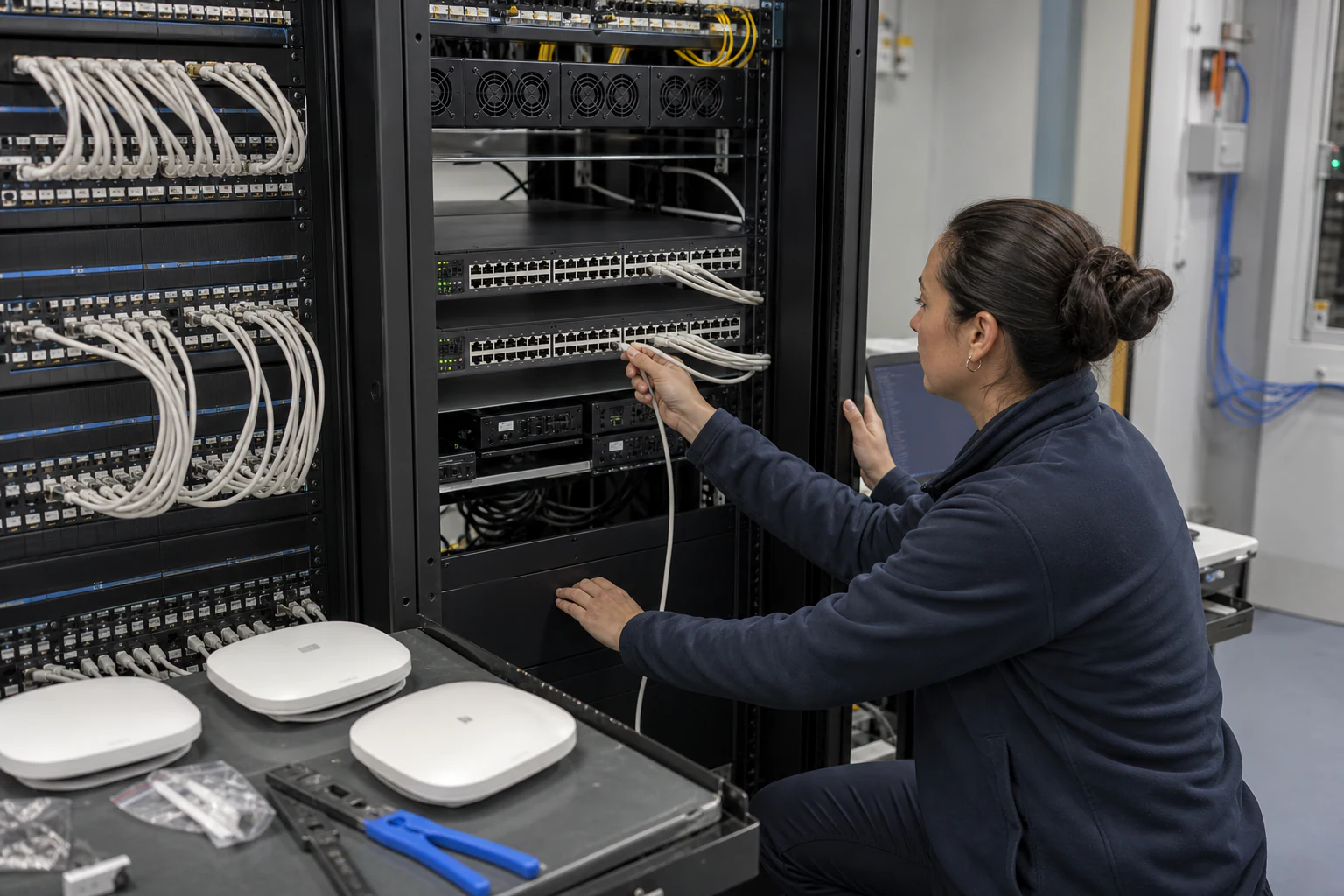 Technical ArticleCampus Access and Aggregation Refresh with Enterprise SONiCEngineering guide for campus switching teams covering PoE, access design, MC-LAG/STP risk, telemetry, support, and pilot validation.Read article
 Technical ArticlePoE Campus Planning Checklist for Enterprise SONiC Access SwitchesEngineering guidance on PoE Campus Planning Checklist for Enterprise SONiC Access Switches for Australian campus networks, covering RF planning, security controls.Read article