In brief
Engineering guidance on Open SONiC Ethernet Is Becoming the Default AI Fabric for GPU Backend Clusters for Australian network teams, covering underlay design.
Key takeaways
- When your GPU cluster reaches 64, 128, or 512 accelerators, the network stops being plumbing and starts being the bottleneck.
- For years, the default answer in Australian enterprise was to inherit whatever the GPU vendor recommended.
- This article breaks down why that shift is happening, what the technical foundations look like, and what Australian buyers should evaluate when planning an AI fabric.
The AI Fabric Problem Every GPU Cluster Builder Faces
When your GPU cluster reaches 64, 128, or 512 accelerators, the network stops being plumbing and starts being the bottleneck. Training runs stall. Inference latency spikes. GPU utilization drops below the threshold that justified the investment. The question is not whether you need a purpose-built AI fabric. The question is what kind.
For years, the default answer in Australian enterprise was to inherit whatever the GPU vendor recommended. That often meant proprietary interconnects with closed management stacks, single-vendor ASIC roadmaps, and limited operational flexibility. But the market is shifting. Open SONiC-based Ethernet, combined with RoCE v2 and modern congestion management, is now a credible, production-proven alternative for GPU backend networking.
This article breaks down why that shift is happening, what the technical foundations look like, and what Australian buyers should evaluate when planning an AI fabric.
What SONiC Actually Is (and Why It Matters for AI)
SONiC — Software for Open Networking in the Cloud — is an open-source network operating system built on Linux and maintained under the Linux Foundation. It runs on switches from multiple hardware vendors and across multiple ASIC families. According to the SONiC Foundation, the platform offers a full suite of network functionality including BGP and RDMA, and has been production-hardened in the data centers of some of the largest cloud service providers.
Two architectural decisions make SONiC particularly relevant for AI fabric builds:
-
Container-based modularity. Each network function runs in its own Docker container. This means you can update, debug, or replace a single component without taking down the entire switch. For AI clusters where uptime during training jobs is expensive, this isolation matters.
-
Hardware-software decoupling via SAI. The Switch Abstraction Interface separates the NOS from the underlying ASIC. This gives you hardware choice across vendors — you are not locked into a single switch platform as your AI cluster scales.
For Australian enterprises evaluating AI infrastructure, this decoupling is a practical advantage. You can source switches from multiple suppliers, avoid single-vendor procurement risk, and still run a consistent NOS across your entire fabric.
RoCE v2: The Protocol That Makes Ethernet Viable for GPU Traffic
Remote Direct Memory Access over Converged Ethernet version 2 (RoCE v2) is the transport protocol that lets GPUs move data directly between their memory across an IP-routed Ethernet network — without involving the CPU. For AI training workloads that require frequent, large collective operations (AllReduce, AllGather), this direct memory access pattern is critical.
The challenge with RoCE v2 is that Ethernet was not originally designed to be lossless. When a switch buffer overflows, packets drop. For TCP-based traffic, that is manageable. For RDMA traffic, a dropped packet typically means the operation fails and must restart. In a multi-GPU training run, that can waste hours of compute time.
This is where three SONiC-aligned technologies become essential:
- DCBX (Data Center Bridging Capability Exchange): Negotiates priority flow control and traffic classification between switches and endpoints so that RoCE traffic gets lossless treatment.
- Fast CNP (Congestion Notification Packet): Provides rapid congestion feedback to senders, reducing the window during which buffers can overflow.
- INT (In-band Network Telemetry) and IPTPath Telemetry: Gives real-time visibility into per-hop latency, queue depth, and congestion events across the fabric — essential for diagnosing GPU communication bottlenecks.
Together, these technologies transform a standard Ethernet fabric into one that can reliably carry GPU-to-GPU RDMA traffic at scale.
NVIDIA’s Own Signal: Spectrum-X Supports SONiC
One of the strongest market signals for open SONiC on Ethernet AI fabrics comes from NVIDIA itself. NVIDIA’s Spectrum Ethernet switch portfolio — including the Spectrum-4 SN5000 series designed for speeds up to 800 Gb/s — explicitly supports Pure SONiC as a network operating system alongside Cumulus Linux.
The significance for buyers is this: the same company that sells GPUs, InfiniBand switches, and proprietary AI networking stacks is also investing in open Ethernet with SONiC as a supported NOS for AI workloads. This is not a fringe community experiment. It is a vendor-backed platform choice.
For Australian data center operators, this means you can pair NVIDIA Spectrum switches running SONiC with multi-vendor optics and bare-metal hardware, without being forced into a single-vendor procurement model.
Spine-Leaf Architecture for AI Fabric
The standard topology for AI fabric is a two-tier spine-leaf design. Every leaf switch connects to every spine switch. Every GPU server connects to one or more leaf switches. This design provides predictable latency (every GPU-to-GPU path crosses the same number of hops) and non-blocking bandwidth when properly sized.
SONiC supports this architecture natively. Key protocols include:
- BGP for underlay routing: SONiC’s BGP implementation is production-hardened from hyperscaler deployments.
- EVPN-VXLAN for overlay networking: Enables multi-tenant isolation and workload mobility within the fabric.
- ECMP (Equal-Cost Multi-Path): Distributes traffic across all available spine paths for maximum utilization.
For GPU backend fabrics specifically, the leaf switches often need to support 100G or 400G server-facing ports (matching the GPU NIC speed) and 400G or 800G uplinks to spines. This is where xSONiC data center AI switches, paired with 400G/800G optical transceivers, fit into the architecture.
What Australian Buyers Should Evaluate
If you are planning an AI fabric for a private GPU cluster in Australia, here is a practical evaluation checklist:
| Evaluation Area | Key Questions |
|---|---|
| NOS choice | Does the switch platform support SONiC? Is there an enterprise distribution with support SLAs? |
| RoCE v2 readiness | Does the ASIC and NOS support DCBX, PFC, ECN, and Fast CNP out of the box? |
| Telemetry | Is INT or equivalent per-hop telemetry available for fabric diagnostics? |
| Optics compatibility | Are 400G and 800G transceivers available and tested with the switch platform? |
| Scale | What is the maximum number of ports, routes, and flow counters the platform supports? |
| Multi-vendor portability | Can you run the same NOS on different switch hardware from different suppliers? |
| Support and operations | Is there local Australian support? What is the firmware upgrade process? |
This checklist is not exhaustive, but it covers the areas where AI fabric projects most commonly encounter friction.
The Vendor Lock-in Counter-argument
The traditional argument against open networking for AI is that proprietary InfiniBand delivers lower latency and better congestion management out of the box. That argument had strong technical merit five years ago. It still holds for the largest hyperscaler AI clusters running thousands of GPUs.
But for enterprise AI clusters in the 64-to-1024 GPU range — which is where most Australian organizations are deploying — the gap has narrowed significantly. RoCE v2 with DCBX, Fast CNP, and INT telemetry on SONiC-based Ethernet can deliver the lossless, low-latency fabric that GPU training workloads require.
The counter-argument to the counter-argument is operational. InfiniBand requires specialized skills, separate management tools, and a separate supply chain. Ethernet with SONiC uses the same operational model, CLI familiarity, and hardware ecosystem as your existing data center network. For Australian organizations with lean network teams, this operational commonality is a real cost advantage.
xSONiC Product Mapping for AI Fabric Builds
An AI fabric deployment typically involves:
- Data Center AI Switches as spine and leaf switches in the GPU backend fabric.
- AI Infrastructure Systems for GPU inference servers and private LLM deployment.
- Optical Transceivers for 400G and 800G links between switches and server NICs.
- Data Center AI Switches for organizations that want to run custom or community SONiC builds on white-box hardware.
Each of these categories plays a distinct role in the fabric architecture. The switches form the backbone. The optics connect them. The AI infrastructure systems sit on top.
Related Solution Guides
For deeper technical guidance on the building blocks discussed in this article, explore these xSONiC solution pillars:
- AI Fabric — overall architecture and design principles.
- GPU Backend Fabric — specific design patterns for GPU-to-GPU communication.
- RoCE v2 Guide — protocol details, configuration, and troubleshooting.
- DCBX Technology — priority flow control and traffic classification.
- Fast CNP — congestion notification for RDMA traffic.
- INT Technology — in-band network telemetry for fabric visibility.
- IPTPath Telemetry — end-to-end path diagnostics.
Summary
Open SONiC Ethernet with RoCE v2 is no longer a speculative alternative to proprietary AI interconnects. It is a production-proven, vendor-supported platform for GPU backend fabrics at enterprise scale. For Australian organizations building private AI infrastructure, the combination of hardware choice, operational commonality, and protocol maturity makes it a strong foundation for AI fabric networking.
The key is to evaluate the complete stack — NOS, RoCE readiness, congestion management, telemetry, and optics — rather than comparing switch ASICs in isolation. xSONiC’s product families and solution guides are designed to help you make that evaluation.
Engineering FAQ
What should be proven before adopting EVPN-VXLAN on SONiC? Prove underlay routing, BGP sessions, VTEP behaviour, MAC/IP learning, route scale, multi-homing design, failure convergence, and observability. The overlay should be accepted as a system, not a feature checkbox.
Why does the underlay design still matter in an overlay network? EVPN-VXLAN depends on a stable routed underlay. MTU, ECMP, addressing, route policy, link failure behaviour, and telemetry determine whether the overlay remains predictable under load and during faults.
What should be included in an EVPN-VXLAN operations runbook? Include naming, IP plan, BGP policy, VNI mapping, change process, rollback commands, failure checks, telemetry fields, backup and restore steps, and escalation ownership for the selected SONiC image.
Related xSONiC Resources
Sources Reviewed
- Ethernet Network Adapters - ConnectX NICs | NVIDIA
- NVIDIA BlueField Data Processing Unit
- NVIDIA Spectrum-X Ethernet Platform
- SONiC Project Documentation
- Broadcom Ethernet Switching
- Marvell Switching
- NVIDIA Ethernet Switching
- Open Compute Networking
- SONiC GitHub
- SONiC Foundation
Product fit
Products referenced for evaluation
These products are referenced for evaluation context in the article. Confirm workload, port, optics, software, interoperability, and support requirements against the exact deployment before procurement.
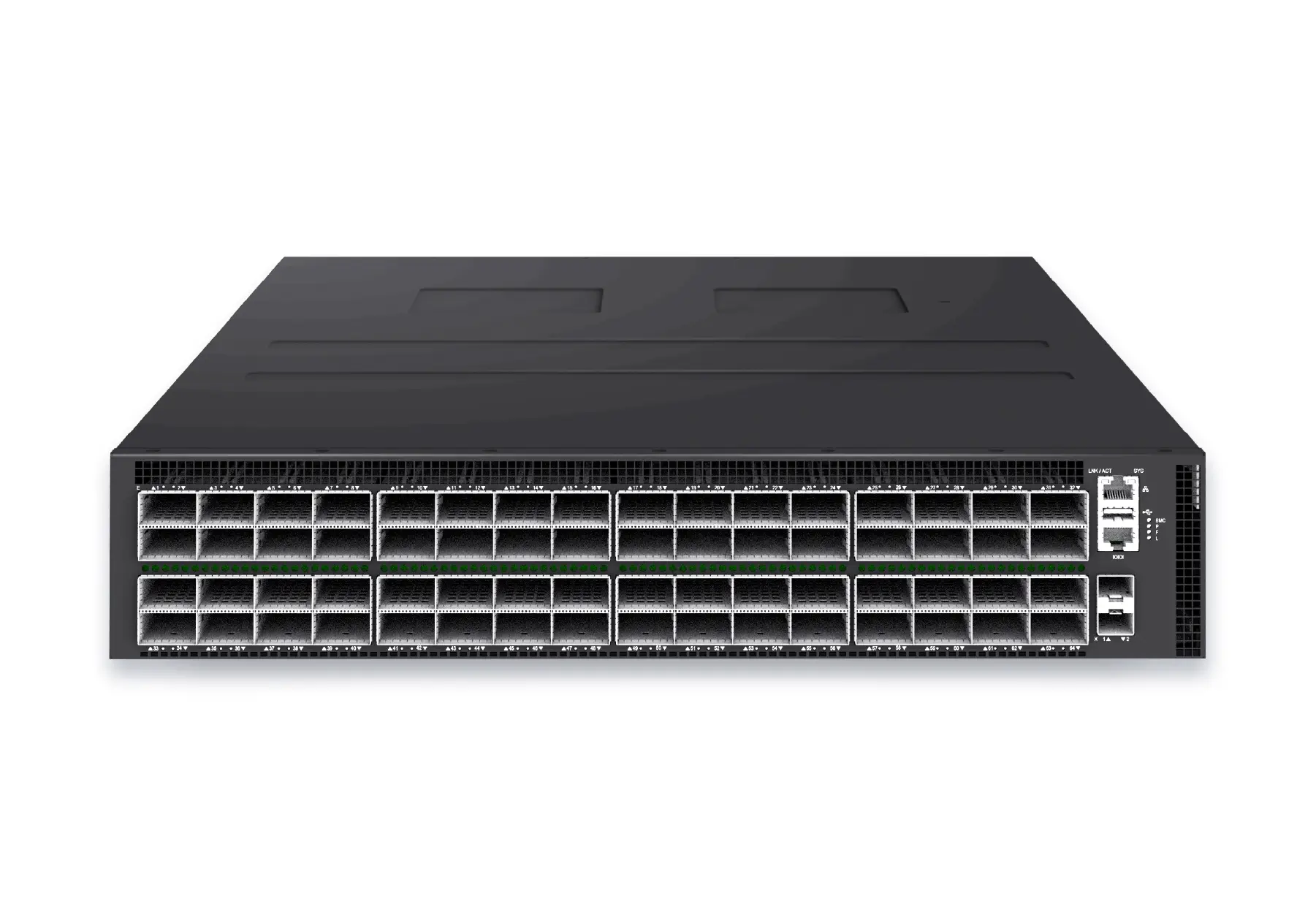 datacenter aiXS-DC-64X800-AI-G164-port 800G AI fabric switch for large-scale GPU clusters, HPC backbones, and ultra-high-throughput data center networks.View product
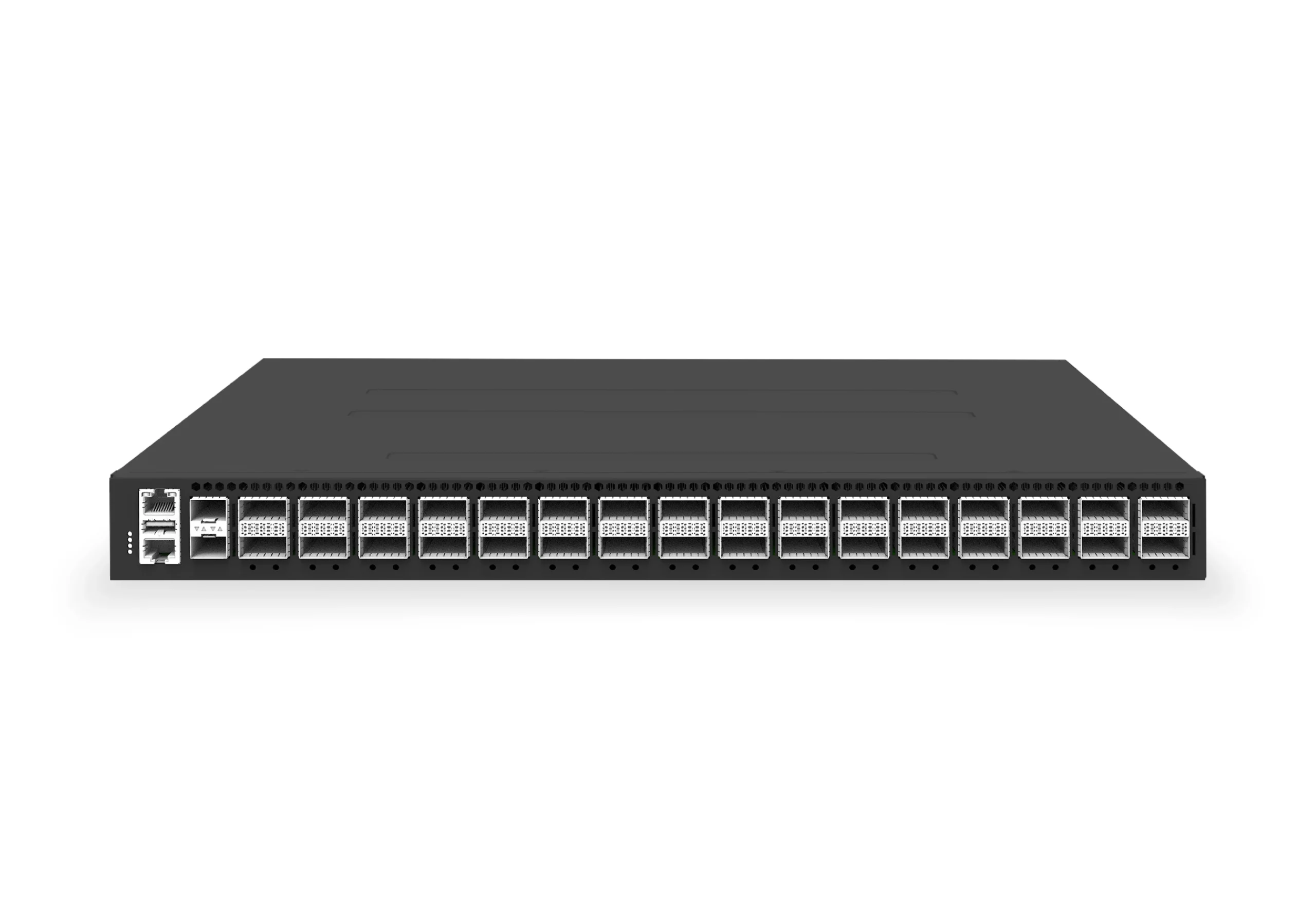 datacenter aiXS-DC-32X400-SP-G232-port 400G spine/core switch for high-capacity data center fabrics and AI-ready backbones.View product
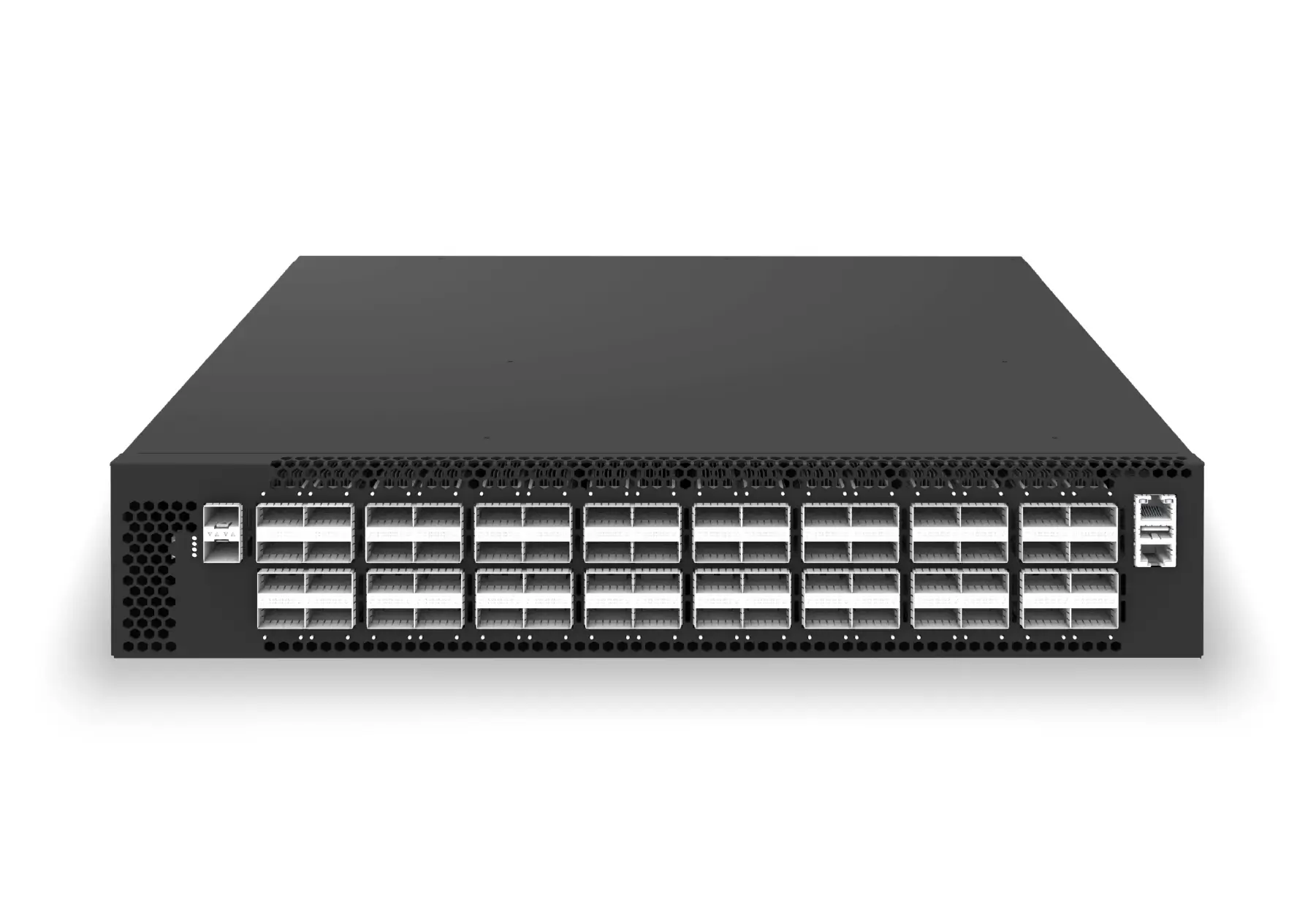 datacenter aiXS-DC-64X200-LS-G164-port 200G leaf/spine switch for high-bandwidth storage, compute, and scale-out data center fabrics.View product
Continue reading
Related articles
 Technical ArticleDesigning GPU Backend Fabrics with RoCE v2: How SONiC 400G/800G Switches Transform AI Data CentersEngineering guide for AI fabric buyers covering RoCE, SONiC, telemetry, optics, support ownership, and deployment validation.Read article
 Technical ArticleGPU Cluster Fabric Design: Why AI Workloads Need Purpose-Built EthernetArchitecture guide to GPU cluster fabrics covering RoCE v2, PFC, ECN, DCBX, SONiC, 400G/800G, telemetry, InfiniBand trade-offs, and acceptance evidence.Read article
 Technical ArticleNVIDIA Ethernet Switching vs InfiniBand for AI Clusters: An Australian Buyer's Deployment PlaybookEngineering guidance on NVIDIA Ethernet Switching vs InfiniBand for AI Clusters for Australian SONiC buyers, covering ASIC capability, SAI maturity, feature fit, optics.Read article