In brief
Engineering guidance on NVIDIA Ethernet Switching vs InfiniBand for AI Clusters for Australian SONiC buyers, covering ASIC capability, SAI maturity, feature fit, optics.
Key takeaways
- Australian enterprises, research institutions, and service providers investing in AI infrastructure face a foundational networking choice that will shape their total cost of ownership, operational flexibility, and scaling ceiling for the next five to seven years.
- NVIDIA dominates the AI compute conversation with its GPU platforms, but the networking layer beneath those GPUs determines whether a cluster trains models at 90 percent fabric efficiency or stalls at 60 percent.
- This playbook breaks down the two primary NVIDIA networking paths (Ethernet via Spectrum-X and InfiniBand via Quantum) and introduces the open SONiC-based Ethernet alternative that xSONiC enables.
Why AI Cluster Networking Is the Critical Infrastructure Decision for Australian Buyers in 2025-2026
Australian enterprises, research institutions, and service providers investing in AI infrastructure face a foundational networking choice that will shape their total cost of ownership, operational flexibility, and scaling ceiling for the next five to seven years. The question is no longer whether to build GPU clusters, but how to interconnect them.
NVIDIA dominates the AI compute conversation with its GPU platforms, but the networking layer beneath those GPUs determines whether a cluster trains models at 90 percent fabric efficiency or stalls at 60 percent. For Australian buyers, this decision carries additional weight: limited local supply chains, higher import costs for proprietary hardware, and a growing preference for open, auditable infrastructure that aligns with sovereign data strategies.
This playbook breaks down the two primary NVIDIA networking paths (Ethernet via Spectrum-X and InfiniBand via Quantum) and introduces the open SONiC-based Ethernet alternative that xSONiC enables. The goal is to give Australian network architects, infrastructure leads, and procurement teams a decision framework they can act on, not another vendor pitch deck.
NVIDIA Spectrum-X Ethernet: What It Is and Where It Fits
Key Spectrum-X capabilities relevant to AI clusters include:
- Zero-touch accelerated RoCE (RDMA over Converged Ethernet) for GPU-to-GPU communication
- Adaptive routing and congestion control optimized for collective operations
- Silicon photonics integration for improved resiliency and power efficiency
- Integration with NVIDIA’s BlueField DPUs and ConnectX NICs for end-to-end acceleration
Spectrum-X switches support multiple NOS options, including NVIDIA Cumulus Linux (proprietary, Linux-based) and Pure SONiC (open-source community edition). This NOS flexibility is important for buyers evaluating vendor lock-in.
For Australian buyers, the Spectrum-X path means committing to NVIDIA’s full-stack Ethernet vision. The hardware is high-performance and well-documented, but the ecosystem around Cumulus Linux and NetQ creates a dependency on NVIDIA’s software roadmap and licensing terms.
NVIDIA Quantum InfiniBand: The High-Performance Alternative
NVIDIA’s InfiniBand portfolio, led by the Quantum-X800 and Quantum-2 platforms, remains the default interconnect for many large-scale AI training clusters. InfiniBand provides native RDMA, sub-microsecond latency, and a proven track record in supercomputing environments.
The key differentiators of InfiniBand for AI workloads:
- Native RDMA without the protocol translation overhead that Ethernet requires
- In-network computing capabilities that can offload collective operations (MPI reductions, all-reduce) directly into the switch fabric
- Predictable, low-jitter latency at scale, which matters for synchronous training workloads
- UFM (Unified Fabric Manager) for centralized fabric management
However, InfiniBand comes with significant trade-offs for Australian buyers:
- Vendor concentration: InfiniBand is an NVIDIA-proprietary technology. There is no multi-vendor ecosystem for switches. Buyers are locked into NVIDIA for the entire fabric lifecycle.
- Operational skills: InfiniBand is a separate networking discipline from Ethernet. Australian teams with deep Ethernet expertise will need training or external support.
- Ecosystem breadth: Ethernet has a vastly larger installed base, more tooling, more certified optics, and more operational precedent in enterprise environments.
- Cost transparency: InfiniBand pricing is not publicly listed and requires direct engagement with NVIDIA or authorized partners, limiting procurement competition.
For Australian research institutions (universities, CSIRO, national labs), InfiniBand may be justified for dedicated HPC and large-scale training clusters where every microsecond of collective operation latency matters. For enterprise AI inference, fine-tuning, and mixed workloads, the calculus shifts toward Ethernet.
Decision Framework: Ethernet vs InfiniBand for AI Clusters
The following decision criteria help Australian buyers evaluate which fabric technology aligns with their AI infrastructure goals. This is not a one-size-fits-all recommendation; the right answer depends on workload profile, scale, team skills, and procurement strategy.
| Decision Criterion | Ethernet (Spectrum-X / Open SONiC) | InfiniBand (Quantum) |
|---|---|---|
| Primary workload | Inference, fine-tuning, mixed AI + general DC | Large-scale synchronous training, HPC |
| Typical cluster size | 8 to 512 GPUs (Ethernet practical ceiling increasing) | 512 to 100,000+ GPUs |
| RDMA support | RoCE v2 (requires DCBX, PFC, ECN tuning) | Native RDMA, no protocol translation |
| Latency profile | 1-5 microseconds (tuned RoCE) | Sub-microsecond |
| Multi-vendor switch options | Yes (Broadcom, Marvell, Edgecore, Celestica, others) | No (NVIDIA only) |
| NOS flexibility | SONiC, Cumulus, proprietary NOS options | NVIDIA UFM + proprietary firmware |
| Operational skills required | Ethernet + RDMA tuning expertise | InfiniBand fabric expertise |
| Optics ecosystem | Broad (SFP+, SFP28, QSFP28, QSFP-DD, OSFP) | NVIDIA-specified |
| Cost predictability | Higher (competitive supply chain) | Lower (single-vendor pricing) |
| Australian supply chain | Multiple distributors and integrators | NVIDIA-authorized channel only |
When Ethernet wins: Mixed AI and general data center workloads, teams with existing Ethernet skills, desire for multi-vendor procurement, inference-dominant clusters, organizations prioritizing operational simplicity and supply chain resilience.
When InfiniBand wins: Dedicated large-scale training (thousands of GPUs), supercomputing workloads, organizations already invested in InfiniBand operations, latency-critical collective operations at extreme scale.
When open SONiC-based Ethernet wins (the xSONiC path): Organizations that want Spectrum-class Ethernet performance without Cumulus Linux lock-in, teams that value open-source auditable NOS, buyers building sovereign or multi-site AI infrastructure that needs operational consistency across heterogeneous hardware.
The SONiC Alternative: Open Networking for AI Fabric
SONiC (Software for Open Networking in the Cloud) is an open-source network operating system hosted under the Linux Foundation. According to the SONiC Foundation and the project’s GitHub repository, SONiC runs on switches from multiple vendors and ASICs, offers a full suite of network functionality including BGP and RDMA, and has been production-hardened in the data centers of the largest cloud service providers.
Key architectural properties of SONiC relevant to AI fabric deployment:
- Container-based modular architecture: Each network function runs in its own Docker container, providing fault isolation, simplified upgrades, and independent component scaling.
- Multi-vendor hardware support: SONiC is built on the Switch Abstraction Interface (SAI), which decouples the NOS from the underlying ASIC. This means the same SONiC image can run on switches using Broadcom switch silicon, Marvell, or other supported silicon.
- Standard Linux tooling: SONiC uses standard Linux interfaces and tools, making it accessible to teams with existing Linux operations skills.
- RDMA and RoCE support: SONiC includes RDMA capabilities essential for AI cluster backend fabrics, though the maturity and tuning options vary by ASIC and release.
- Production proven: SONiC powers some of the world’s largest data center networks, providing confidence in its stability and scale.
For Australian buyers evaluating AI fabric options, SONiC represents the open-source path that avoids vendor lock-in at the NOS layer. Combined with open switching hardware (bare-metal switches from vendors like Edgecore, Celestica, or Delta), SONiC enables a procurement model where hardware and software are sourced independently.
This is the foundation of xSONiC’s data center AI switch proposition: enterprise-grade SONiC on validated bare-metal hardware, with the AI fabric solution pillars (RoCE v2, DCBX, Fast CNP, INT telemetry) integrated and supported.
AI Fabric Deployment Checklist for Australian Data Centers
The following checklist covers the key planning and deployment steps for organizations building an AI cluster fabric using Ethernet (whether NVIDIA Spectrum-X or open SONiC-based). Each item should be completed and signed off before moving to the next phase.
Phase 1: Requirements and Sizing
- Define GPU count and type (current and 2-year growth target)
- Determine per-GPU network bandwidth requirement (typically 100GbE or 400GbE per GPU server NIC)
- Calculate spine-leaf fabric scale: number of leaf switches, spine switches, and inter-switch links
- Identify collective operation bandwidth requirements (all-reduce, all-to-all patterns)
- Confirm rack power and cooling budget for network equipment
- Assess existing cabling infrastructure (single-mode fiber, multi-mode fiber, DAC/AOC inventory)
Phase 2: Technology Selection
- Select fabric technology: Ethernet RoCE v2 or InfiniBand (use decision framework above)
- Select switch hardware platform and ASIC generation
- Select NOS: SONiC, Cumulus Linux, or proprietary
- Select NICs: ConnectX-7/ConnectX-8 for NVIDIA path, or validated third-party RDMA NICs
- Select optics: OSFP or QSFP-DD for 400G/800G, SFP28 for management
- Validate end-to-end compatibility matrix (switch + NOS + NIC + optics + GPU server)
Phase 3: Network Design
- Design spine-leaf topology with appropriate oversubscription ratio (1:1 for training, 3:1 acceptable for inference)
- Configure RDMA parameters: PFC (Priority Flow Control), ECN (Explicit Congestion Notification), DCBX
- Design VLAN/VRF segmentation for AI backend, management, and storage networks
- Plan for RoCE v2 congestion management: Fast CNP, adaptive routing, or INT-based feedback
- Design telemetry and monitoring: INT, IPTPath, streaming telemetry, or SNMP-based approaches
- Document failover and redundancy: dual-homed servers, multi-path fabric, link failure behavior
Phase 4: Procurement and Staging
- Issue RFP/RFQ with validated compatibility matrix (do not allow vendors to substitute untested combinations)
- Confirm Australian delivery timelines and local stock availability
- Stage hardware in lab environment before production deployment
- Validate firmware and NOS versions against compatibility matrix
- Pre-configure switch configurations and test automation playbooks
Phase 6: Operations Handover
- Train operations team on day-2 procedures: firmware upgrades, configuration changes, fault diagnosis
- Establish change management process for network modifications
- Deploy automated health checks and alerting
- Document escalation paths for hardware RMA and software issues
- Schedule periodic fabric health reviews (quarterly recommended)
Engineering Evidence Floor
For this topic, treat the article as buyer-ready only when the fabric claim is tied to measurable acceptance data. The baseline evidence package should include the selected switch SKU, SONiC image, ASIC/SAI version, NIC firmware, optics list, RoCE policy, telemetry counters, support owner, and rollback method. In a small pilot, capture at least 30 minutes of traffic at the intended 100G/400G/800G speed, one link failure, one switch reboot, one optics fault, and one support handoff. That evidence separates a credible AI fabric plan from a bandwidth brochure.
| Evidence area | What to validate | Acceptance gate | Rework trigger |
|---|---|---|---|
| Transport | PFC, ECN, DCBX, MTU, queue mapping, and CNP counters | 30 minutes load test at 100G/400G/800G | RoCE is asserted but not measured |
| Platform | Switch SKU, ASIC, SAI, SONiC image, and optics list | 2 switch roles pass upgrade and rollback | Generic compatibility is used as proof |
| Failure | Link loss, switch reboot, route convergence, and workload impact | 3 failure cases captured with timestamps | Steady-state throughput is the only evidence |
| Telemetry | Queue depth, drops, optics DOM, gNMI, and packet visibility | Operators explain a slowdown within 15 minutes | GPU and network teams use different data |
| Support | APAC escalation, RMA, spares, and patch lifecycle | 12 months operating plan approved | Ownership splits across vendors |
Engineering FAQ
What should buyers compare when evaluating switch silicon for SONiC? Compare feature support, buffer profile, port speed, optics compatibility, telemetry counters, SAI maturity, SDK release cadence, power and cooling, and vendor image validation. ASIC choice affects operations as much as throughput.
Why is SAI maturity important? SAI is the abstraction layer between SONiC and the ASIC. If a required feature is incomplete or behaves differently on a platform, the open NOS does not remove that limitation. Buyers should ask for tested feature matrices.
What evidence should an Australian buyer request from a switch vendor? Request the exact switch SKU, ASIC family, SONiC distribution, SAI version, optics matrix, known caveats, release notes, support process, and proof that the intended design has been tested.
Related xSONiC Resources
Sources Reviewed
- Ethernet Network Adapters - ConnectX NICs | NVIDIA
- NVIDIA BlueField Data Processing Unit
- NVIDIA Spectrum-X Ethernet Platform
- SONiC Project Documentation
- Broadcom Ethernet Switching
- Marvell Switching
- NVIDIA Ethernet Switching
- Open Compute Networking
- SONiC GitHub
- SONiC Foundation
Product fit
Products referenced for evaluation
These products are referenced for evaluation context in the article. Confirm workload, port, optics, software, interoperability, and support requirements against the exact deployment before procurement.
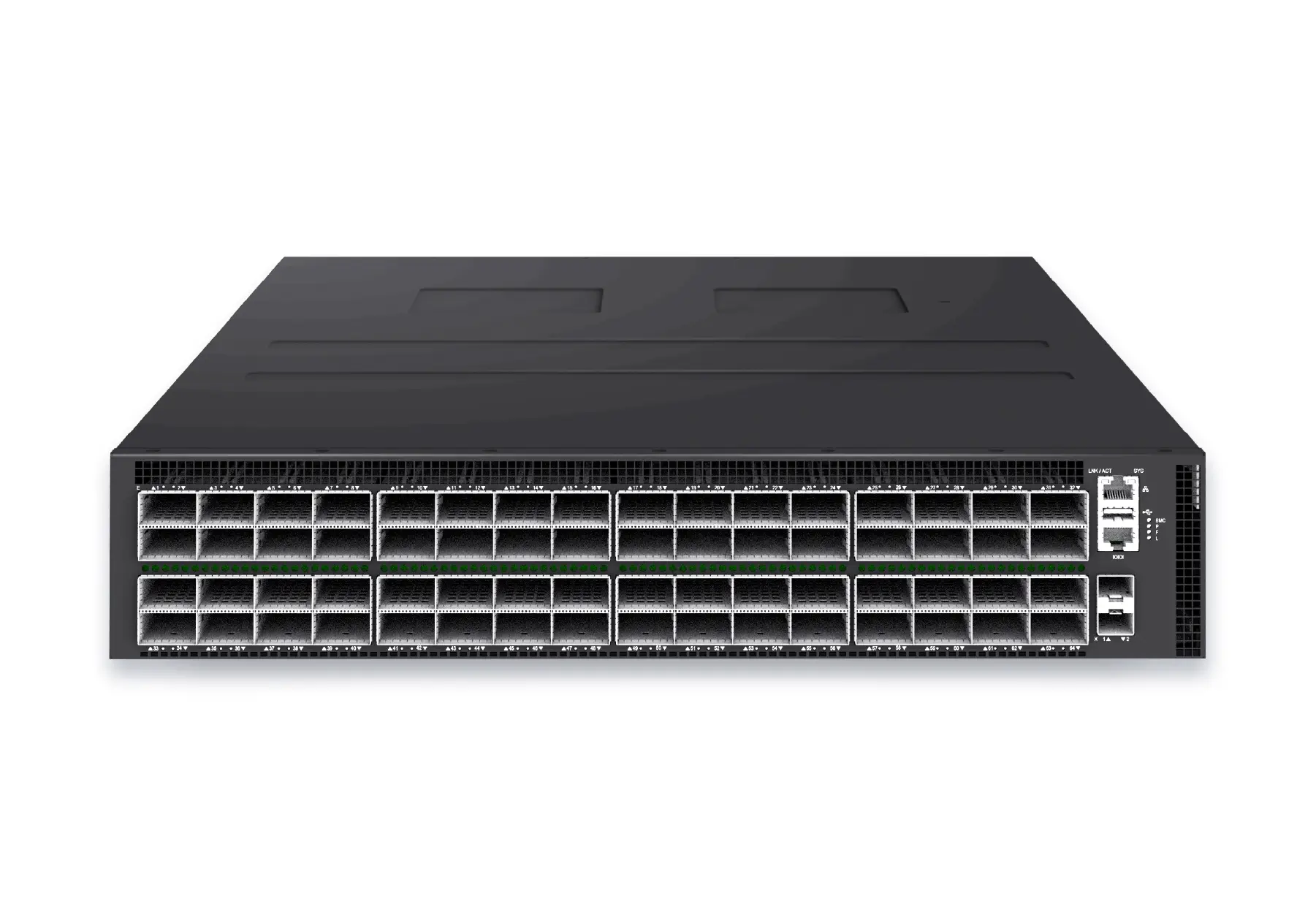 datacenter aiXS-DC-64X800-AI-G164-port 800G AI fabric switch for large-scale GPU clusters, HPC backbones, and ultra-high-throughput data center networks.View product
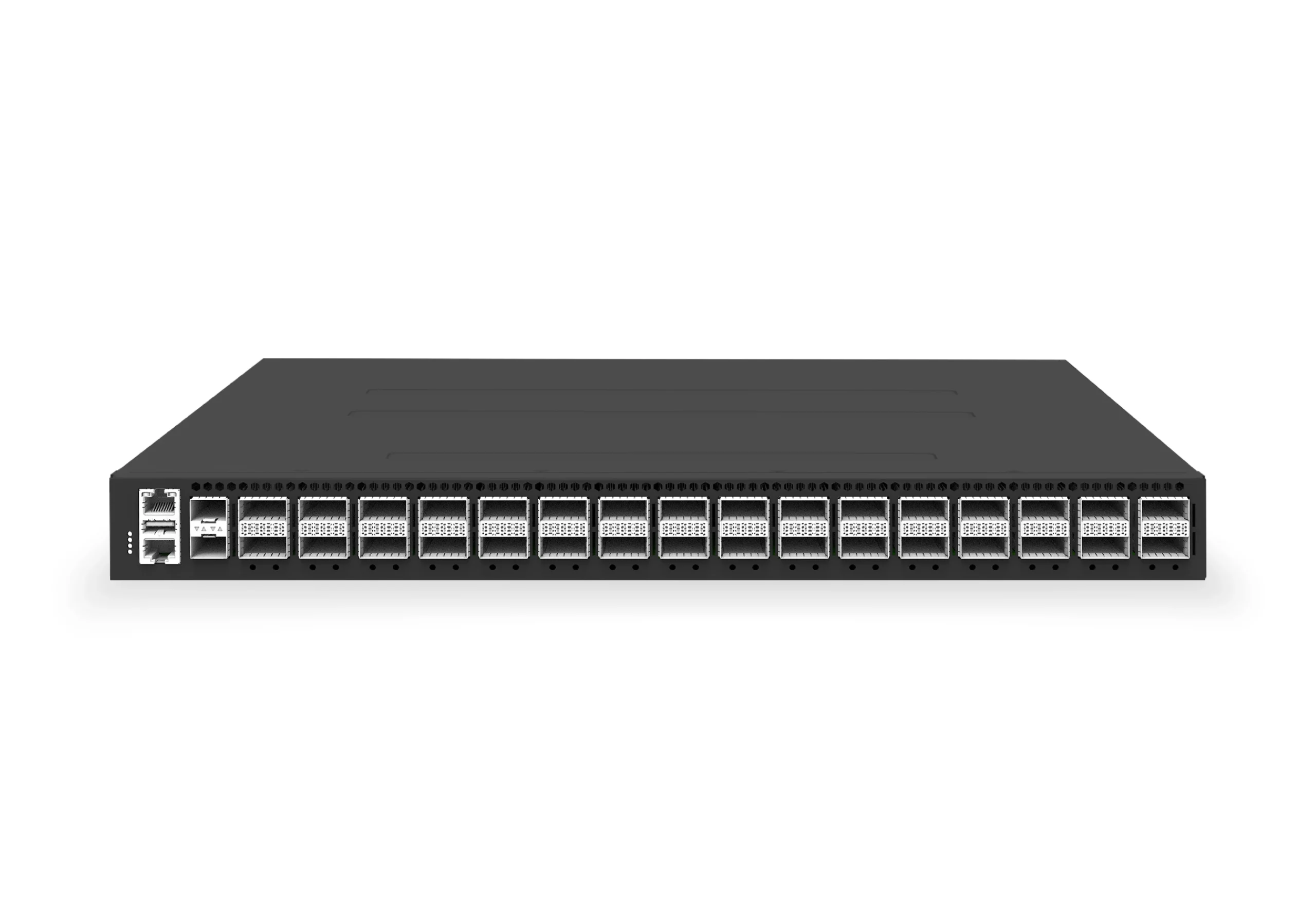 datacenter aiXS-DC-32X400-SP-G232-port 400G spine/core switch for high-capacity data center fabrics and AI-ready backbones.View product
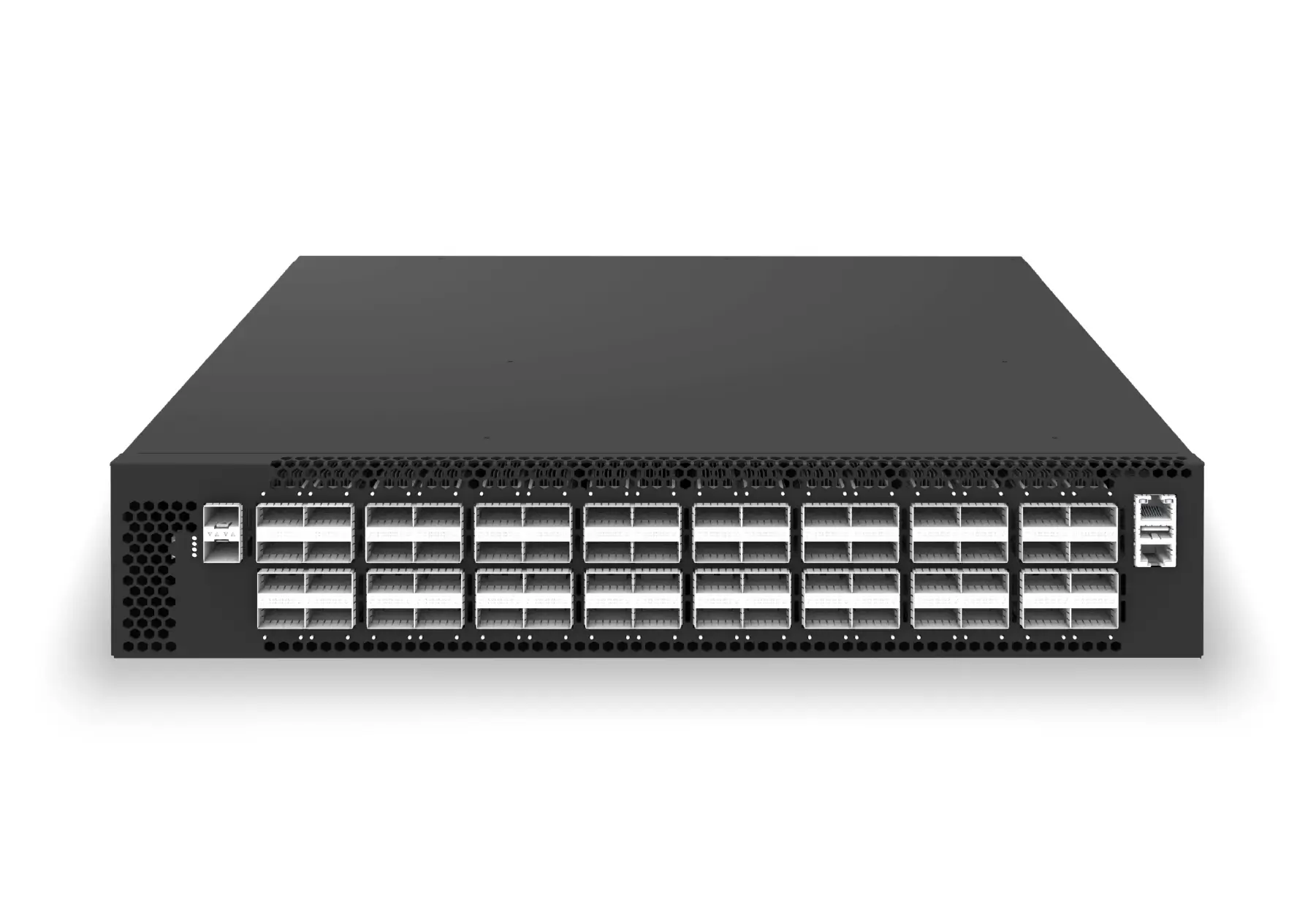 datacenter aiXS-DC-64X200-LS-G164-port 200G leaf/spine switch for high-bandwidth storage, compute, and scale-out data center fabrics.View product
Continue reading
Related articles
 Technical ArticleDesigning GPU Backend Fabrics with RoCE v2: How SONiC 400G/800G Switches Transform AI Data CentersEngineering guide for AI fabric buyers covering RoCE, SONiC, telemetry, optics, support ownership, and deployment validation.Read article
 Technical ArticleWhy Open SONiC Ethernet Is Becoming the Default AI Fabric for GPU Backend ClustersEngineering guidance on Open SONiC Ethernet Is Becoming the Default AI Fabric for GPU Backend Clusters for Australian network teams, covering underlay design.Read article
 Technical ArticleGPU Cluster Fabric Design: Why AI Workloads Need Purpose-Built EthernetArchitecture guide to GPU cluster fabrics covering RoCE v2, PFC, ECN, DCBX, SONiC, 400G/800G, telemetry, InfiniBand trade-offs, and acceptance evidence.Read article