
In brief
Engineering guide for AI fabric buyers covering RoCE, SONiC, telemetry, optics, support ownership, and deployment validation.
Key takeaways
- As Australian enterprises and cloud providers scale their AI infrastructure, the network fabric connecting GPU clusters has become a critical bottleneck.
- This guide walks through the architectural decisions, protocol requirements, and operational practices that network teams need when designing GPU backend fabrics for AI data centers.
- Traditional data center networks tolerate packet loss. TCP retransmissions handle dropped frames, and applications absorb the latency penalty.
As Australian enterprises and cloud providers scale their AI infrastructure, the network fabric connecting GPU clusters has become a critical bottleneck. Training large language models and running inference workloads demand lossless, low-latency connectivity between hundreds or thousands of GPUs. RoCE v2 (RDMA over Converged Ethernet version 2) on SONiC-based 400G and 800G switches offers a standards-based, vendor-neutral path to building these GPU backend fabrics.
This guide walks through the architectural decisions, protocol requirements, and operational practices that network teams need when designing GPU backend fabrics for AI data centers.
Why GPU Backend Fabrics Need Special Network Design
Traditional data center networks tolerate packet loss. TCP retransmissions handle dropped frames, and applications absorb the latency penalty. GPU backend fabrics cannot afford this trade-off.
RDMA (Remote Direct Memory Access) enables GPUs to read and write memory on remote nodes without involving the CPU. This delivers the microsecond-level latency that collective operations like AllReduce require during distributed training. However, RDMA over standard Ethernet (RoCE v2) is sensitive to packet loss. A single dropped frame can stall an entire training job, wasting expensive GPU cycles.
The network fabric must therefore provide:
- Lossless or near-lossless packet delivery
- Predictable, low latency across the full fabric
- Sufficient bisection bandwidth for all-to-all GPU communication
- Congestion management that prevents head-of-line blocking
These requirements drive specific design choices in topology, protocol configuration, and switch selection.
Spine-Leaf Topology for GPU Clusters
The spine-leaf (Clos) architecture has become the standard topology for GPU backend fabrics. Every leaf switch connects to every spine switch, creating a predictable, non-blocking fabric with consistent hop counts.
For a GPU backend fabric serving an AI cluster, the design typically follows this pattern:
Leaf Layer: Each leaf switch connects to 8-32 GPU servers using 400G or 200G ports. The leaf handles first-hop routing and applies QoS policies for RoCE v2 traffic.
Spine Layer: Spine switches aggregate traffic from all leaf switches. With 400G or 800G spine-leaf links, the fabric provides full bisection bandwidth. A non-blocking fabric means any GPU can communicate with any other GPU at line rate without oversubscription.
For clusters beyond 1,000 GPUs, a three-stage or five-stage Clos topology with super-spine switches becomes necessary. SONiC’s BGP-based routing scales naturally to these larger topologies.
RoCE v2 Configuration Essentials
RoCE v2 encapsulates RDMA traffic in UDP datagrams, allowing it to traverse standard Layer 3 Ethernet networks. Proper configuration of several protocol features is essential for GPU backend fabric performance.
Priority Flow Control (PFC)
PFC (IEEE 802.1Qbb) provides per-priority pause frames that prevent buffer overflow and packet loss. When a switch port’s receive buffer fills to a threshold, it sends a pause frame to the upstream device for a specific traffic priority. This creates the lossless behavior that RoCE v2 requires.
Key PFC configuration points:
- Enable PFC only on the priority used for RoCE v2 traffic (typically Priority 3 or Priority 4)
- Set PFC thresholds carefully to avoid deadlock scenarios
- Monitor PFC pause frame counters for signs of persistent congestion
Data Center Bridging Capability Exchange (DCBX)
DCBX automates the negotiation of PFC, ETS (Enhanced Transmission Selection), and application priority settings between directly connected switches and NICs. On SONiC switches, DCBX ensures consistent QoS configuration across the fabric without manual per-link configuration.
Explicit Congestion Notification (ECN) and Congestion Notification Packets (CNP)
ECN marks packets during congestion instead of dropping them. The receiving RDMA NIC detects the ECN mark and sends a Congestion Notification Packet (CNP) back to the sender, which then reduces its injection rate.
Enhanced Transmission Selection (ETS)
ETS (IEEE 802.1Qaz) allocates guaranteed bandwidth percentages to different traffic classes. For GPU backend fabrics, RoCE v2 traffic typically receives 50-80% of link bandwidth, with management and storage traffic sharing the remainder.
400G and 800G Switch Selection for AI Fabrics
The switch ASIC and port speed directly impact GPU backend fabric performance. Modern SONiC-compatible switches support 400G and 800G port speeds, but the right choice depends on cluster size, GPU interconnect speed, and growth trajectory.
| Factor | 400G Switches | 800G Switches |
|---|---|---|
| Port Speed | 400 Gbps per port | 800 Gbps per port |
| Typical ASIC | Broadcom, Marvell, NVIDIA Spectrum, or other supported 400G switch silicon | Broadcom Tomahawk-class, NVIDIA Spectrum-4/6, Marvell Teralynx, or other validated 800G switch silicon |
| Common Form Factor | 32x QSFP-DD, 64x QSFP-DD | 64x OSFP |
| Max Throughput (per switch) | 12.8-25.6 Tbps | 51.2-102.4 Tbps |
| Recommended For | Clusters up to 512-1024 GPUs | Clusters above 1024 GPUs, future-proofing |
| Typical Use | Leaf or spine for medium clusters | Spine for large clusters, super-spine tier |
Why SONiC Matters for AI Fabric Switches
SONiC (Software for Open Networking in the Cloud) is a Linux-based, open-source network operating system that runs on switches from multiple vendors and ASICs. Originally developed for hyperscale cloud data centers, SONiC now powers some of the largest production networks globally.
For GPU backend fabric builders, SONiC offers several advantages:
-
Hardware decoupling: SONiC uses the Switch Abstraction Interface (SAI) to separate the NOS from the underlying ASIC. This means network teams can choose switches based on price, port density, and power efficiency without being locked into a single vendor’s software stack.
-
Containerized architecture: Each network function (BGP, LLDP, DHCP relay, and so on) runs in its own Docker container. This modular design simplifies troubleshooting, enables independent service upgrades, and improves fault isolation.
-
Production-hardened: SONiC has been battle-tested in hyperscale environments running RDMA workloads at massive scale. The community-driven development model means features and bug fixes benefit from contributions across the ecosystem.
-
Standards-based automation: SONiC supports standard Linux tooling, NETCONF/YANG, and gNMI for network automation. This aligns with modern infrastructure-as-code practices that AI platform teams prefer.
Designing for Australian AI Infrastructure
Australian enterprises building GPU backend fabrics face specific considerations:
Latency budgets: For distributed training across multiple racks, the round-trip latency budget is typically 5-10 microseconds per hop. Spine-leaf topologies with 400G/800G switches keep hop counts predictable (typically 2-3 hops for two-tier fabrics).
Growth path: AI infrastructure is scaling rapidly. A fabric designed for 512 GPUs today should accommodate 1,024 or 2,048 GPUs within 12-18 months. SONiC’s BGP EVPN-VXLAN overlay capabilities support this incremental scaling.
Operational Practices for GPU Backend Fabrics
Building the fabric is only the beginning. Ongoing operations require:
Telemetry and monitoring: INT (In-band Network Telemetry) provides per-hop latency and queue depth visibility across the fabric. This data helps operations teams identify congestion hotspots before they impact training jobs. IPTPath telemetry offers end-to-end path visibility for troubleshooting.
Congestion management tuning: PFC and ECN thresholds must be tuned to the specific traffic patterns of the AI framework in use. PyTorch, TensorFlow, and JAX each generate different collective communication patterns. Regular threshold tuning prevents both under-protection (packet loss) and over-protection (reduced throughput).
Firmware and NOS updates: SONiC’s containerized architecture allows targeted updates to individual services without full switch reloads. However, firmware updates to switch ASICs and optics modules typically require planned maintenance windows.
Security: As AI models and training data become valuable assets, fabric security matters. Segmenting GPU backend traffic from management and storage networks using VRFs and ACLs reduces the attack surface.
Getting Started with SONiC-Based GPU Backend Fabrics
For network teams evaluating SONiC-based GPU backend fabric designs, the path typically follows these steps:
-
Define the workload: Identify the AI framework, GPU count, and collective communication patterns. This determines bandwidth, latency, and oversubscription requirements.
-
Size the fabric: Calculate the number of leaf and spine switches based on GPU server count and port density. Include growth capacity for the next 12-18 months.
-
Select SONiC-compatible hardware: Choose switches with the required port speeds (400G or 800G) and ASIC features (PFC, ECN, INT support). Verify SONiC compatibility through the supported devices list.
-
Design QoS policies: Define traffic classes, PFC priorities, ETS bandwidth allocations, and ECN thresholds for RoCE v2 traffic.
-
Deploy and validate: Use fabric simulation tools to validate the design before hardware deployment. Test with representative AI workloads to confirm latency, throughput, and congestion behavior.
-
Operate and iterate: Deploy telemetry, establish baselines, and tune thresholds based on observed traffic patterns.
Summary
GPU backend fabric design with RoCE v2 on SONiC-based 400G/800G switches gives Australian AI infrastructure builders a standards-based, vendor-neutral path to high-performance networking. The combination of SONiC’s production-hardened NOS, modern switch ASICs with 400G/800G port speeds, and well-understood RoCE v2 protocol features (PFC, ECN, DCBX, ETS) delivers the lossless, low-latency connectivity that distributed AI training requires.
By starting with clear workload requirements, selecting the right switch platform, and investing in operational practices like telemetry and threshold tuning, network teams can build GPU backend fabrics that scale with their AI ambitions.
For guidance on xSONiC Data Center AI Switches and optical transceiver options for 400G/800G GPU backend fabrics, contact our team or explore our GPU Backend Fabric solution.
Engineering FAQ
What should be proven before adopting EVPN-VXLAN on SONiC? Prove underlay routing, BGP sessions, VTEP behaviour, MAC/IP learning, route scale, multi-homing design, failure convergence, and observability. The overlay should be accepted as a system, not a feature checkbox.
Why does the underlay design still matter in an overlay network? EVPN-VXLAN depends on a stable routed underlay. MTU, ECMP, addressing, route policy, link failure behaviour, and telemetry determine whether the overlay remains predictable under load and during faults.
What should be included in an EVPN-VXLAN operations runbook? Include naming, IP plan, BGP policy, VNI mapping, change process, rollback commands, failure checks, telemetry fields, backup and restore steps, and escalation ownership for the selected SONiC image.
Related xSONiC Resources
Sources Reviewed
- Ethernet Network Adapters - ConnectX NICs | NVIDIA
- NVIDIA BlueField Data Processing Unit
- NVIDIA Spectrum-X Ethernet Platform
- OpenConfig gNMI Specification
- OpenConfig
- RFC 7950 - The YANG 1.1 Data Modeling Language
- RFC 6241 - Network Configuration Protocol (NETCONF)
- SONiC Project Documentation
- Broadcom Ethernet Switching
- Marvell Switching
- NVIDIA Ethernet Switching
- Open Compute Networking
- SONiC GitHub
- SONiC Foundation
Product fit
Products referenced for evaluation
These products are referenced for evaluation context in the article. Confirm workload, port, optics, software, interoperability, and support requirements against the exact deployment before procurement.
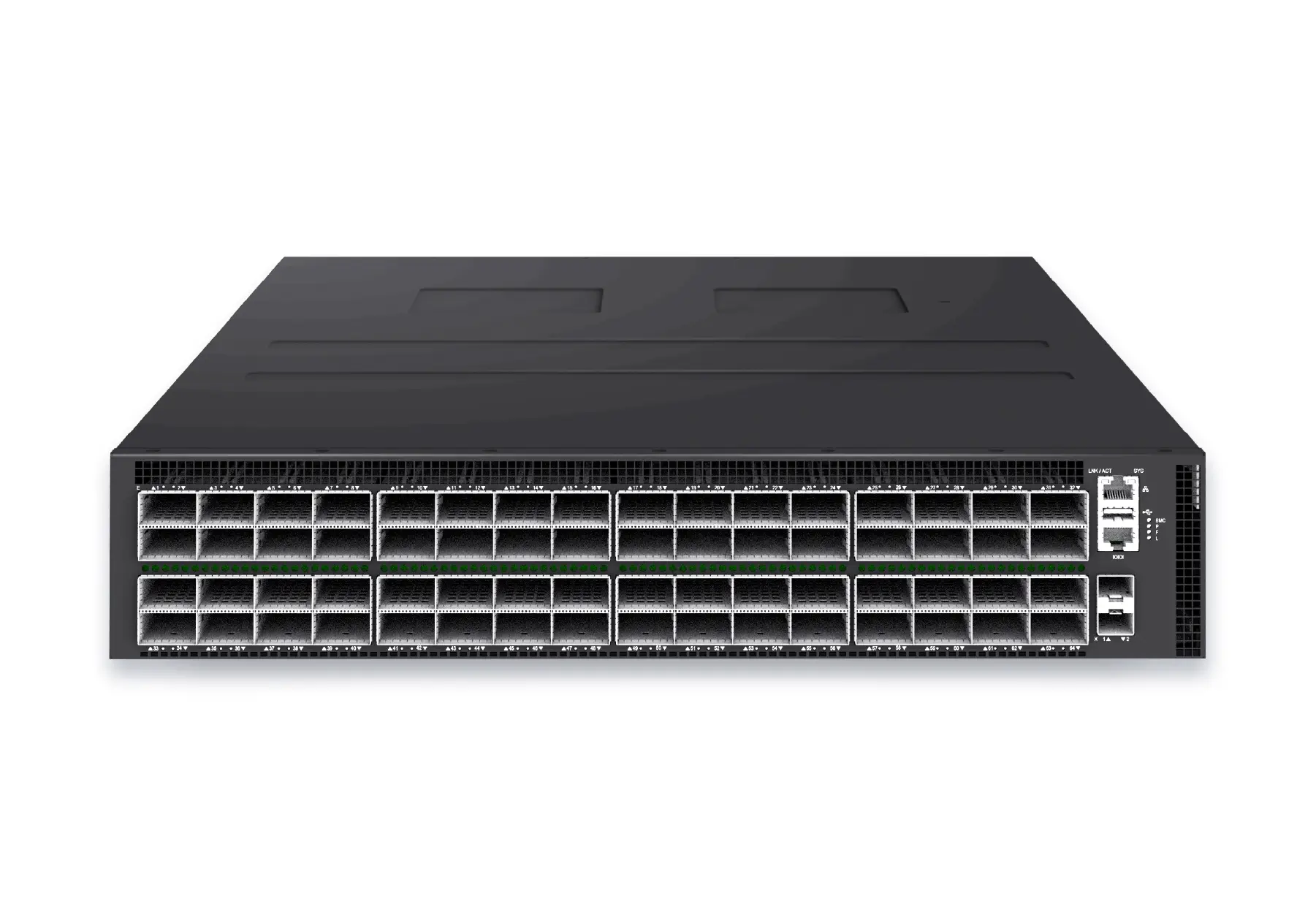 datacenter aiXS-DC-64X800-AI-G164-port 800G AI fabric switch for large-scale GPU clusters, HPC backbones, and ultra-high-throughput data center networks.View product
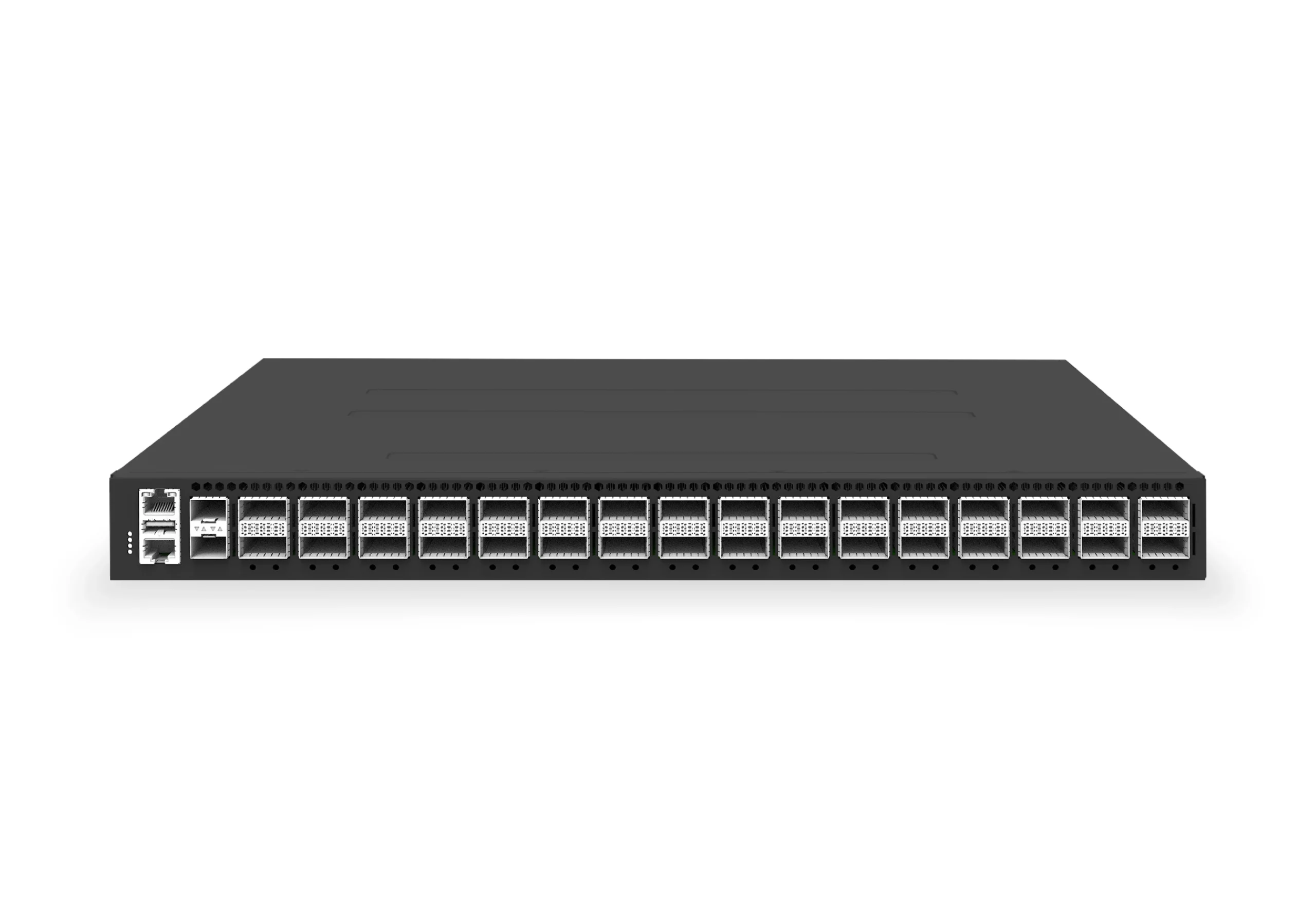 datacenter aiXS-DC-32X400-SP-G232-port 400G spine/core switch for high-capacity data center fabrics and AI-ready backbones.View product
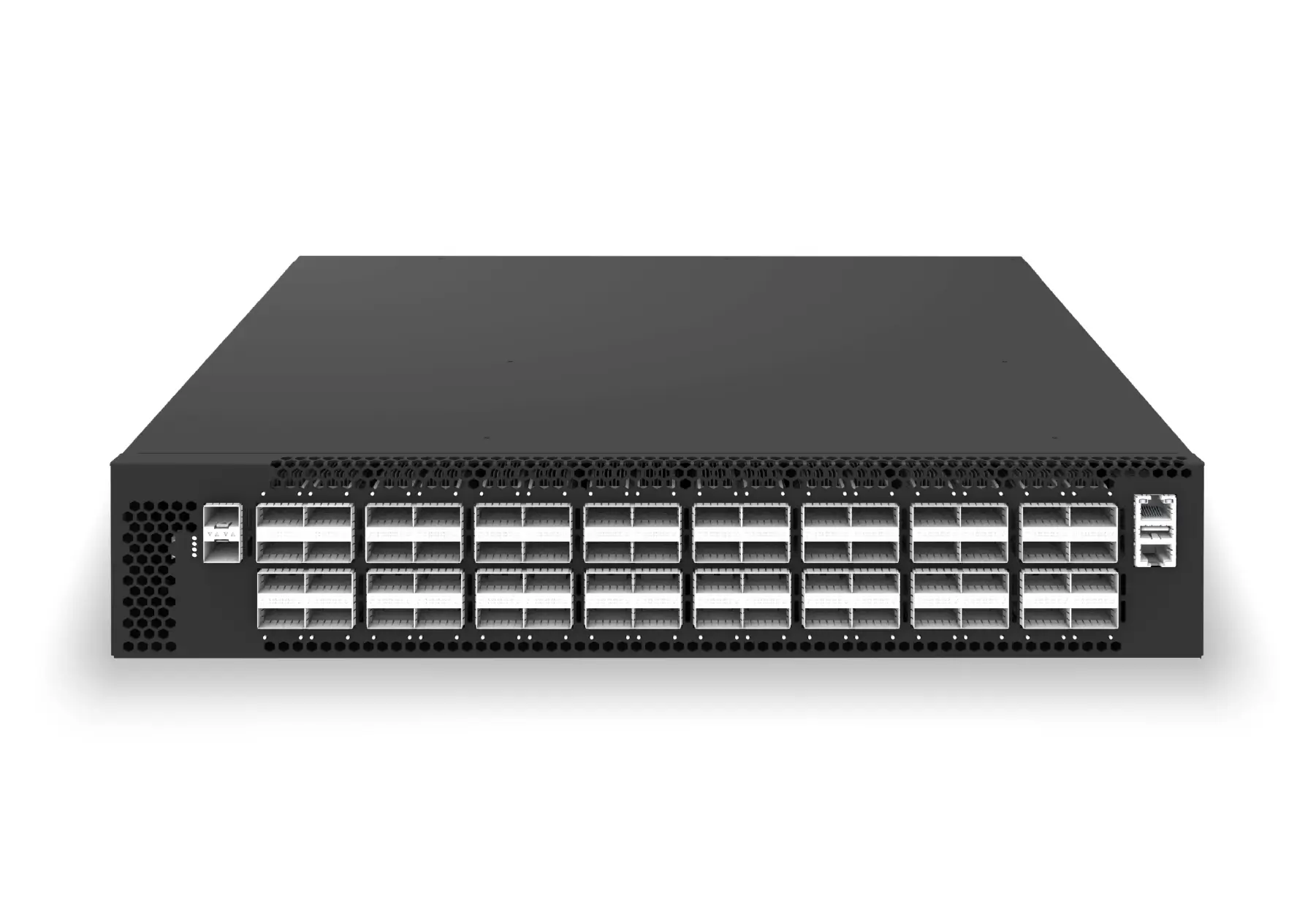 datacenter aiXS-DC-64X200-LS-G164-port 200G leaf/spine switch for high-bandwidth storage, compute, and scale-out data center fabrics.View product
Continue reading
Related articles
 Technical ArticleWhy Open SONiC Ethernet Is Becoming the Default AI Fabric for GPU Backend ClustersEngineering guidance on Open SONiC Ethernet Is Becoming the Default AI Fabric for GPU Backend Clusters for Australian network teams, covering underlay design.Read article
 Technical ArticleGPU Cluster Fabric Design: Why AI Workloads Need Purpose-Built EthernetArchitecture guide to GPU cluster fabrics covering RoCE v2, PFC, ECN, DCBX, SONiC, 400G/800G, telemetry, InfiniBand trade-offs, and acceptance evidence.Read article
 Technical ArticleNVIDIA Ethernet Switching vs InfiniBand for AI Clusters: An Australian Buyer's Deployment PlaybookEngineering guidance on NVIDIA Ethernet Switching vs InfiniBand for AI Clusters for Australian SONiC buyers, covering ASIC capability, SAI maturity, feature fit, optics.Read article