In brief
Engineering guidance on GPU Backend Fabrics Need More Than Bandwidth for Australian network operators, covering gNMI, NETCONF/YANG, OpenConfig, telemetry pipelines, and.
Key takeaways
- When engineering teams plan a GPU backend fabric for a training or inference cluster, the first instinct is usually to solve the problem with bandwidth: more 400G or 800G links, fatter uplinks, and deeper buffers.
- RDMA over Converged Ethernet version 2, or RoCE v2, carries GPU-to-GPU memory transfers directly over UDP.
- This is why congestion control is not a nice-to-have feature in a GPU backend fabric.
The Hidden Bottleneck in AI Cluster Networking
When engineering teams plan a GPU backend fabric for a training or inference cluster, the first instinct is usually to solve the problem with bandwidth: more 400G or 800G links, fatter uplinks, and deeper buffers. Bandwidth matters, but RoCE v2 fabrics fail most painfully when congestion control is wrong. The symptoms are not always obvious packet loss; they are stalled collectives, PFC storms, tail-latency spikes, and GPU utilization that drops while the switch ports still look “up.”
RDMA over Converged Ethernet version 2, or RoCE v2, carries GPU-to-GPU memory transfers directly over UDP. Unlike TCP, which handles packet loss with retransmission and sliding windows, RoCE v2 assumes a near-lossless network. When a RoCE packet is dropped due to congestion, the NIC does not simply resend it the way TCP would. The impact cascades into stalled GPU computations, wasted training cycles, and unpredictable job completion times. For a multi-million-dollar AI training cluster, that translates directly into money lost.
This is why congestion control is not a nice-to-have feature in a GPU backend fabric. It is a core architectural requirement. The buyer evaluation should cover DCBX negotiation, Priority Flow Control (PFC), Enhanced Transmission Selection (ETS), Explicit Congestion Notification (ECN), queue telemetry, and vendor-specific congestion feedback mechanisms such as fast CNP-style RoCE rate control.
How Data Center Switching Carries RDMA Traffic
Before diving into congestion control mechanisms, ground the design in the traffic pattern. AI training generates synchronized many-to-one and many-to-many bursts. Incast can form at a leaf egress port, spine egress port, NIC receive path, or shared buffer. A normal web or VM workload may tolerate queueing and retransmission; a GPU collective can amplify a small congested path into a cluster-wide slowdown.
In a GPU backend fabric, the switching layer is typically a spine-leaf topology. Every leaf switch connects to every spine switch, creating a non-blocking, predictable path structure. GPU servers attach to leaf switches, and east-west traffic (GPU-to-GPU) flows up through the spine and back down to the destination leaf. With hundreds or thousands of GPUs generating bursty, high-bandwidth flows simultaneously, congestion points can appear at spine uplinks, at egress ports on leaf switches, or at the NIC itself.
The congestion control toolkit has to match those characteristics. PFC protects a priority class from drops, ETS prevents one class from starving another, ECN/CNP-style feedback tells senders to reduce injection rate, and telemetry shows whether queues and pause frames are behaving as designed.
DCBX: Negotiating a Lossless Foundation
Data Center Bridging Capability Exchange, or DCBX, allows adjacent switches and NICs to discover and negotiate Data Center Bridging parameters. Rather than relying only on manual matching of PFC, ETS, and QoS settings on every port, DCBX exchanges capability information using LLDP as the transport.
DCBX negotiation covers several critical parameters that directly affect RoCE v2 traffic:
-
Priority Flow Control (PFC): DCBX negotiates which traffic classes receive PFC protection. IEEE 802.1Qbb defines flow control per traffic class on full-duplex links, which lets a switch pause a congested priority without stopping every class on the port. For RoCE v2, the priority carrying RDMA traffic is usually configured for PFC so the fabric avoids drops during short congestion events.
-
Enhanced Transmission Selection (ETS): ETS allocates guaranteed bandwidth percentages to different traffic classes. This prevents a burst of storage or management traffic from starving the RDMA class, or vice versa.
-
Congestion Notification: DCBX advertises whether endpoints and switches support ECN marking and related congestion signaling mechanisms.
The key insight for buyers is that DCBX is not just a convenience feature. It is the mechanism that ensures consistent, lossless behavior across the entire fabric. A mismatch in PFC or ETS configuration between a NIC and a leaf switch can lead to silent packet drops, PFC storms, or unfair bandwidth allocation. DCBX automates the handshake that prevents these failures.
The Problem with PFC Alone
PFC, negotiated through DCBX, is effective at preventing packet drops. But PFC alone creates its own set of problems in large-scale GPU fabrics.
When a congested switch sends PFC pause frames upstream, the congestion signal propagates backward through the fabric. If multiple flows converge on the same egress port, PFC can pause traffic across wide swaths of the network, creating what is known as head-of-line blocking. The result is that GPUs that are not even involved in the congested flow experience increased latency and reduced throughput. In a large AI training cluster with synchronized gradient exchange, this can cause all GPUs to slow down to the speed of the most congested path.
This is where congestion notification and feedback protocols become essential. PFC handles the immediate drop-prevention problem, but the fabric needs a mechanism to signal congestion proactively, before queues fill up and PFC pause frames are triggered.
Fast CNP-Style Feedback: Closing the Congestion Loop
Fast CNP-style feedback is a class of vendor-specific RoCE congestion-control behavior designed to address the limitations of PFC-only operation. It provides rapid congestion information to the sending NIC or DPU so the endpoint can reduce its transmission rate before queues build to the point where PFC pause frames dominate.
The mechanism works as follows:
- A switch monitors queue depth or congestion indicators at egress ports.
- When thresholds are crossed, the switch marks traffic or provides congestion telemetry used to create or accelerate congestion notification.
- The RoCE v2 NIC, SuperNIC, or DPU receives the feedback and applies rate limiting for the affected flow.
- As congestion clears, the NIC gradually ramps back up toward its target rate.
The engineering value is reaction time. NVIDIA, for example, describes Spectrum-X RoCE congestion control as using switch telemetry and BlueField SuperNIC behavior to manage the sender’s data injection rate, with microsecond-scale reaction latency. The general design goal is the same across implementations: reduce the time between congestion detection and sender rate reduction.
For GPU backend fabrics running collective operations like AllReduce across hundreds of GPUs, even small reductions in congestion response time can meaningfully improve job completion time. The difference between a congestion signal arriving in microseconds versus milliseconds can determine whether a training job stays on schedule or slips.
Putting It Together: DCBX, Fast CNP, and the GPU Backend Fabric
The three mechanisms work together as a layered congestion management strategy:
- DCBX ensures that all ports in the fabric agree on PFC, ETS, and QoS parameters, creating the lossless foundation that RoCE v2 requires.
- PFC provides the last-resort packet-drop prevention, pausing upstream transmitters when queues are at risk of overflow.
- Fast CNP provides proactive congestion feedback, allowing sending NICs to throttle before PFC pauses are triggered, reducing the cascading impact of congestion across the fabric.
Together, these mechanisms protect RDMA throughput in bursty, multi-tenant GPU fabrics where dozens or hundreds of flows may converge on the same spine or leaf port simultaneously.
For buyers evaluating data center AI switches for a GPU backend fabric, the evaluation checklist should include:
| Criterion | What to Verify |
|---|---|
| DCBX support | Does the switch advertise and negotiate PFC, ETS, and ECN parameters automatically via LLDP? |
| PFC priority mapping | Can the switch map RoCE v2 traffic to the correct priority class for PFC protection? |
| Fast CNP / congestion notification | Does the switch support rapid congestion signaling to RoCE v2 NICs? What are the queue depth thresholds and response times? |
| ETS bandwidth allocation | Can the switch guarantee minimum bandwidth to the RDMA traffic class? |
| Buffer depth and management | Are switch buffers sized appropriately for the burst characteristics of GPU cluster traffic? |
| SONiC integration | Can DCBX and congestion control features be managed through Enterprise SONiC configuration and automation? |
| Evidence under load | Can the vendor show pause counters, ECN/CNP events, queue depth, flow completion time, and GPU throughput under representative incast and all-reduce traffic? |
This checklist is especially relevant for Australian enterprise and data center buyers planning AI infrastructure deployments, where the combination of limited local supply chains and high GPU cluster costs makes fabric reliability a critical investment protection concern.
Why Open Networking Matters for RoCE Fabric Operations
A final consideration for buyers is the operational model of the switch itself. In many incumbent networking stacks, DCBX and congestion control features are tightly coupled to proprietary firmware. Configuration is done through vendor-specific CLIs, telemetry is limited to vendor tools, and firmware updates require vendor approval cycles.
Open networking platforms running Enterprise SONiC offer a different model. The same DCBX negotiation, PFC configuration, ETS allocation, and congestion notification features are managed through a standardized, automatable operating system. NETCONF and YANG models allow fabric-wide congestion control policies to be deployed programmatically. Streaming telemetry exposes queue depth, PFC pause counters, and CNP rates to external monitoring platforms.
For GPU backend fabrics that may span dozens of switches and hundreds of ports, the ability to manage congestion control policies as code, rather than through per-switch CLI configuration, is a meaningful operational advantage. It reduces configuration drift, accelerates troubleshooting, and allows congestion control tuning to be integrated into the CI/CD pipeline that manages the broader AI infrastructure.
If you are planning a GPU backend fabric, ask for a congestion-control test plan before selecting the switch. The minimum test should include baseline line-rate traffic, incast, all-to-all, background best-effort traffic, link failure during load, PFC pause counter review, queue telemetry, and a rollback case where the fabric is returned to a known-good QoS profile.
Engineering Evidence Floor
For this topic, treat the article as buyer-ready only when the fabric claim is tied to measurable acceptance data. The baseline evidence package should include the selected switch SKU, SONiC image, ASIC/SAI version, NIC firmware, optics list, RoCE policy, telemetry counters, support owner, and rollback method. In a small pilot, capture at least 30 minutes of traffic at the intended 100G/400G/800G speed, one link failure, one switch reboot, one optics fault, and one support handoff. That evidence separates a credible AI fabric plan from a bandwidth brochure.
| Evidence area | What to validate | Acceptance gate | Rework trigger |
|---|---|---|---|
| Transport | PFC, ECN, DCBX, MTU, queue mapping, and CNP counters | 30 minutes load test at 100G/400G/800G | RoCE is asserted but not measured |
| Platform | Switch SKU, ASIC, SAI, SONiC image, and optics list | 2 switch roles pass upgrade and rollback | Generic compatibility is used as proof |
| Failure | Link loss, switch reboot, route convergence, and workload impact | 3 failure cases captured with timestamps | Steady-state throughput is the only evidence |
| Telemetry | Queue depth, drops, optics DOM, gNMI, and packet visibility | Operators explain a slowdown within 15 minutes | GPU and network teams use different data |
| Support | APAC escalation, RMA, spares, and patch lifecycle | 12 months operating plan approved | Ownership splits across vendors |
Engineering FAQ
What should telemetry prove beyond SNMP polling? Telemetry should prove queue behaviour, interface errors, optics health, route state, congestion signals, drops, and config drift at a useful interval. AI and high-speed fabrics often need streaming data rather than periodic polling.
How should gNMI, NETCONF, and YANG be evaluated? Evaluate model coverage, authentication, collector compatibility, update frequency, failure behaviour, and how data maps into the NOC, SIEM, or automation system. Protocol support alone does not prove operational value.
What makes telemetry useful for incident response? Useful telemetry is timestamped, correlated across devices, retained long enough for investigation, and tied to known topology and change events. It should help answer what changed, where congestion occurred, and which tool owns the next action.
Related xSONiC Resources
Sources Reviewed
- Ethernet Network Adapters - ConnectX NICs | NVIDIA
- NVIDIA BlueField Data Processing Unit
- NVIDIA Spectrum-X Ethernet Platform
- OpenConfig gNMI Specification
- OpenConfig
- RFC 7950 - The YANG 1.1 Data Modeling Language
- RFC 6241 - Network Configuration Protocol (NETCONF)
- ACSC Essential Eight
- OAIC Notifiable Data Breaches
- APRA CPS 234 Information Security
- NETSCOUT Network Packet Definition
- Cloudflare Network Packet Definition
- SONiC Project Documentation
- Broadcom Ethernet Switching
- Marvell Switching
- NVIDIA Ethernet Switching
- Open Compute Networking
- SONiC GitHub
- SONiC Foundation
- Supports: PFC as flow control per traffic class and the 2025 PFC enhancement work around DCBX/headroom calculation.
- Supports: AI Ethernet congestion behavior, Spectrum-X telemetry, RoCE congestion control, and microsecond-scale endpoint rate-control discussion.
- Supports: PFC use for RoCE traffic and separation from best-effort Ethernet traffic.
- Supports: current open work on lossless, efficient, resilient Ethernet for AI scale-up networking.
- Supports: SONiC architecture and operational model for managing network services through containerized components.
Product fit
Products referenced for evaluation
These products are referenced for evaluation context in the article. Confirm workload, port, optics, software, interoperability, and support requirements against the exact deployment before procurement.
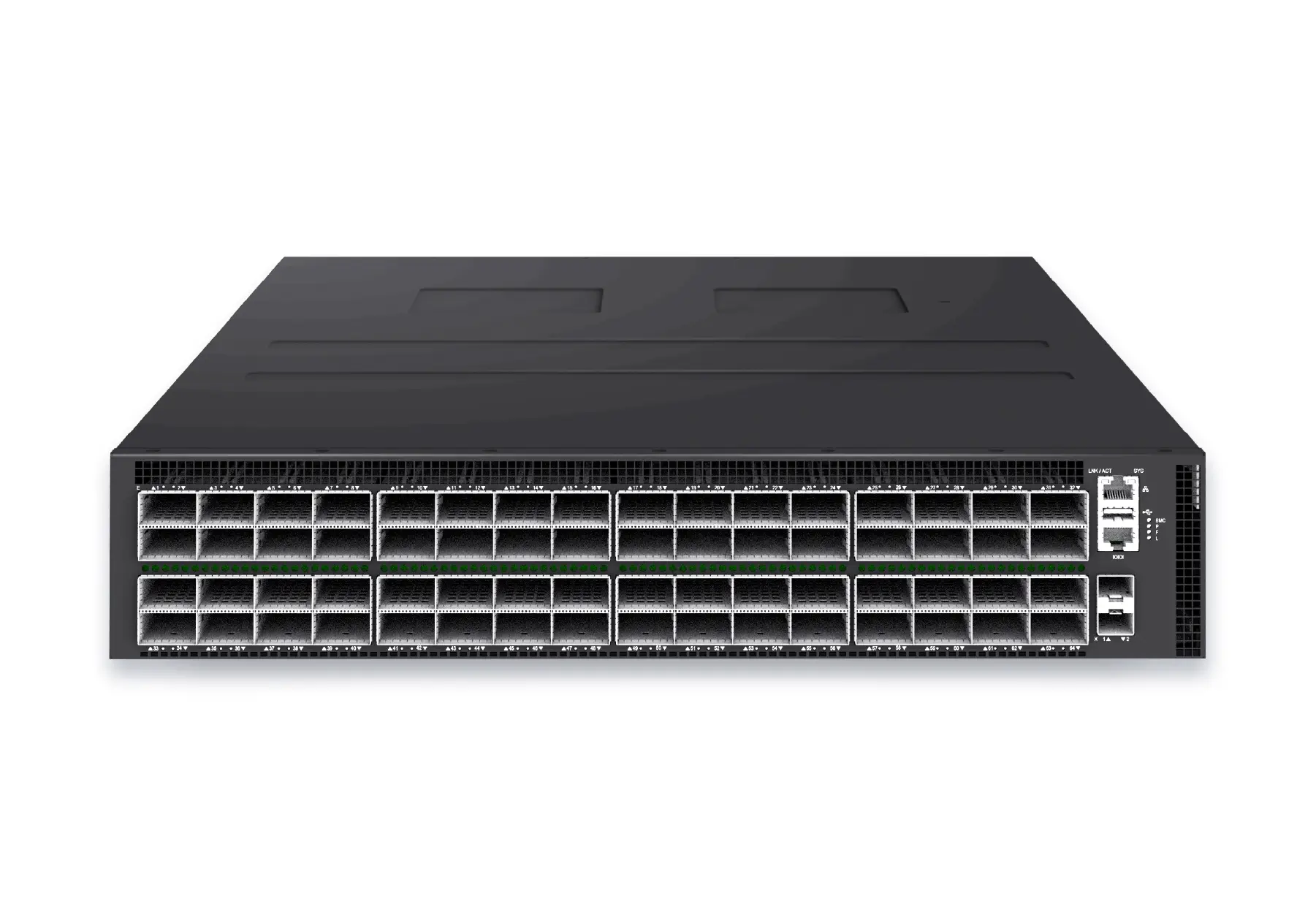 datacenter aiXS-DC-64X800-AI-G164-port 800G AI fabric switch for large-scale GPU clusters, HPC backbones, and ultra-high-throughput data center networks.View product
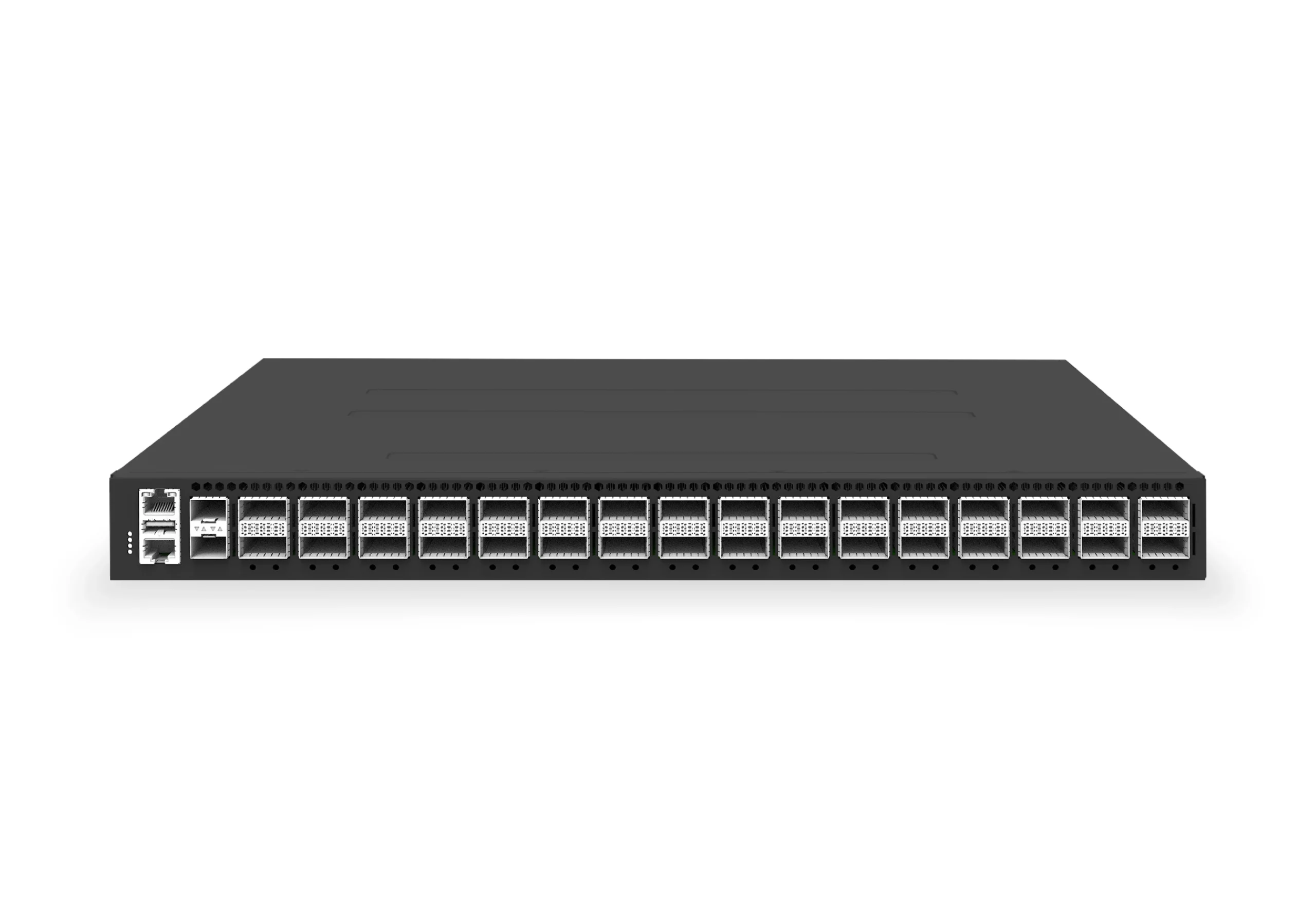 datacenter aiXS-DC-32X400-SP-G232-port 400G spine/core switch for high-capacity data center fabrics and AI-ready backbones.View product
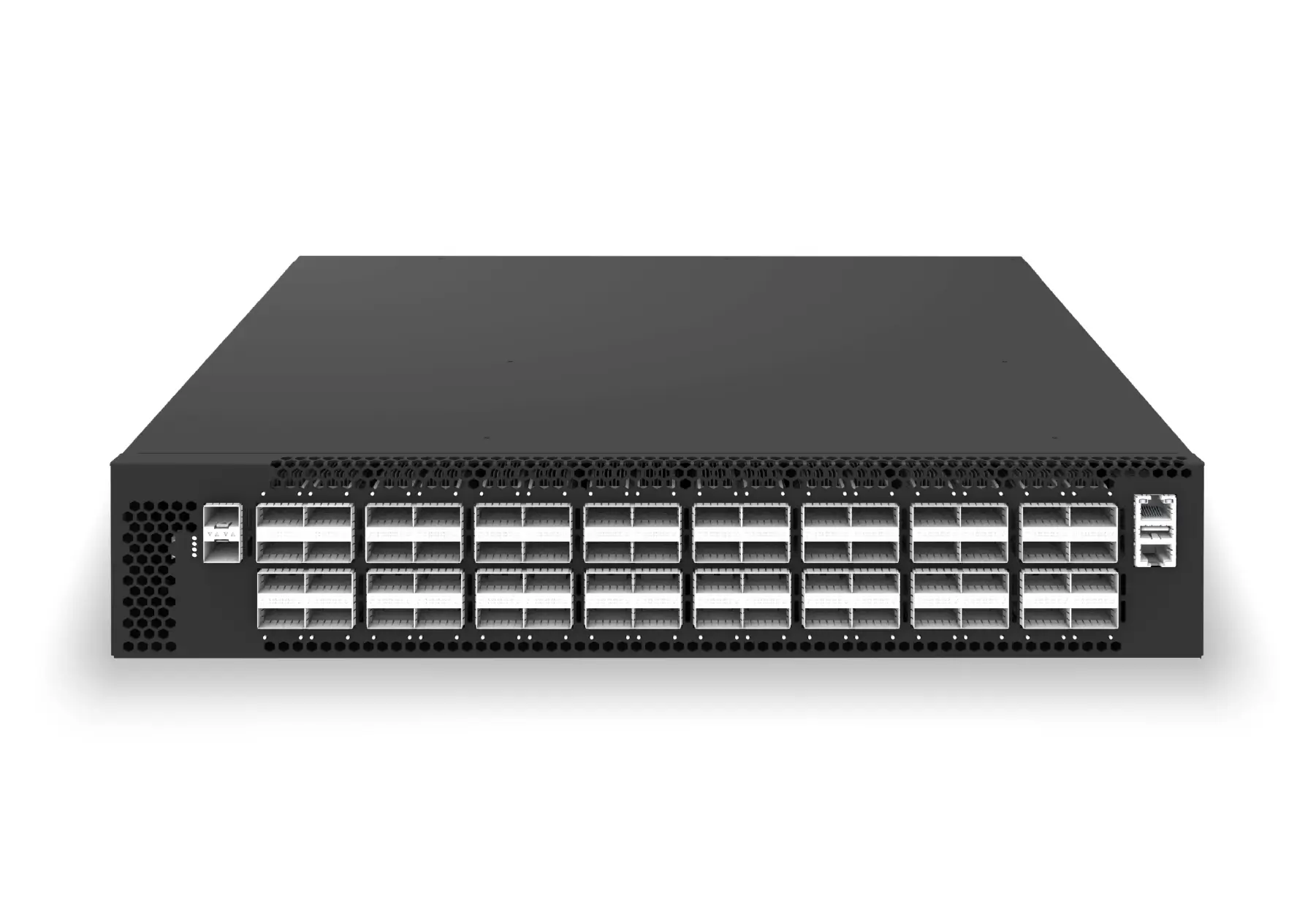 datacenter aiXS-DC-64X200-LS-G164-port 200G leaf/spine switch for high-bandwidth storage, compute, and scale-out data center fabrics.View product
Topic path
RoCEv2 fabric design and operations
This page focuses on:congestion-control failure modes and the distinct jobs performed by DCBX, PFC, ECN, and CNP.
RoCEv2 is the routable RDMA transport. DCBX exchanges link-local DCB settings, PFC pauses selected priorities, ECN marks congestion, and CNP feeds congestion back to a RoCE sender. Validate each mechanism independently and then under workload.
Continue reading
Related articles
 Technical ArticleDCBX, PFC, ECN, and Fast CNP: Building Lossless Ethernet for AI Training FabricsEngineering guidance on DCBX, PFC, ECN, and Fast CNP for Australian AI fabric teams building lossless Ethernet for RoCE v2 training clusters.Read article
 Technical ArticleWhat AI Data Center Ethernet Demands Mean for SONiC Network Operators in AustraliaEngineering guide for Australian SONiC operators running AI Ethernet fabrics, covering RoCE, 400G/800G links, telemetry, failures, optics, and support.Read article
 Technical ArticleWhat AI Fabric Ethernet Switching Actually Requires -- and Where SONiC Fits in the StackA practical engineering guide to AI fabric Ethernet switching requirements, explaining where SONiC fits across RoCE v2, PFC, ECN, DCBX, telemetry, and 400G/800G operations.Read article