In brief
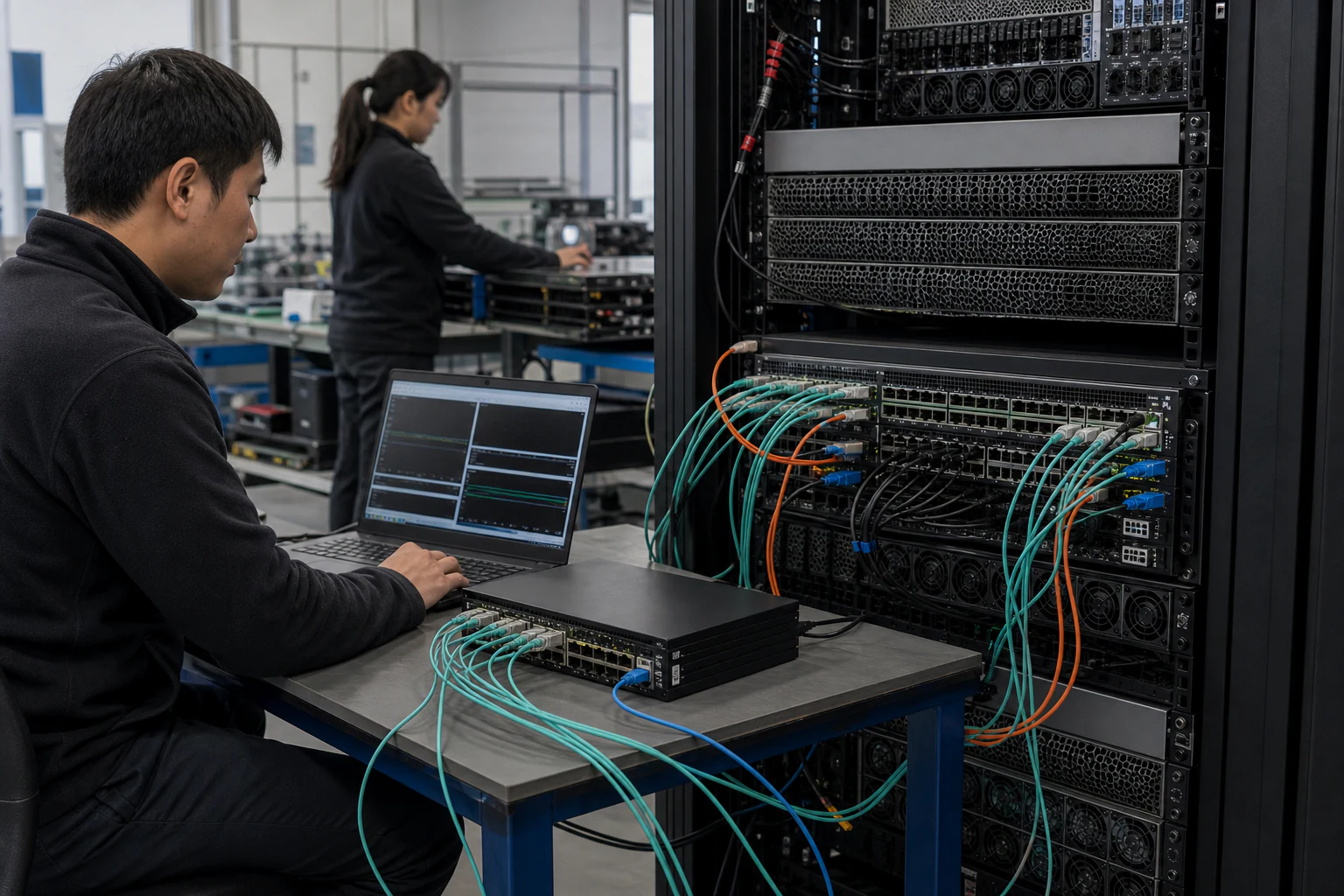
A practical engineering guide to AI fabric Ethernet switching requirements, explaining where SONiC fits across RoCE v2, PFC, ECN, DCBX, telemetry, and 400G/800G operations.
Key takeaways
- The networking industry is in the middle of a structural shift. AI training and inference clusters -- the kind that underpin large language models, RAG pipelines, and multimodal AI services -- need backend fabrics that move massive volumes of GPU-to-GPU traffic with minimal tail latency.
- NVIDIA's Ethernet switching portfolio now explicitly markets SONiC as a supported NOS alongside Cumulus Linux.
- For xSONiC buyers in Australia -- particularly operators building GPU clusters for private AI inference or multi-tenant AI services -- the signal is clear: the market is standardizing around open, programmable Ethernet as the AI fabric transport.
What Happened: Ethernet Is Now the AI Fabric Transport Layer
The networking industry is in the middle of a structural shift. AI training and inference clusters — the kind that underpin large language models, RAG pipelines, and multimodal AI services — need backend fabrics that move massive volumes of GPU-to-GPU traffic with minimal tail latency. Traditionally, that role fell to InfiniBand. But Ethernet is closing the gap fast, and the open-source SONiC (Software for Open Networking in the Cloud) network operating system is increasingly part of the conversation.
NVIDIA’s Ethernet switching portfolio now explicitly markets SONiC as a supported NOS alongside Cumulus Linux. The SONiC Foundation, a Linux Foundation project, describes SONiC as a ‘free and open-source network operating system based on Linux that runs on switches from multiple vendors and ASICs,’ offering ‘a full suite of network functionality, like BGP and RDMA, that has been production-hardened in the data centers of some of the largest cloud service providers.’ The project’s GitHub repository confirms the same architecture: container-based, modular, and licensed under Apache 2.0.
For xSONiC buyers in Australia — particularly operators building GPU clusters for private AI inference or multi-tenant AI services — the signal is clear: the market is standardizing around open, programmable Ethernet as the AI fabric transport. The question is no longer whether Ethernet can serve AI workloads, but which switch platforms and NOS stacks deliver the right combination of throughput, congestion management, and operational tooling.
Why It Matters: AI Traffic Patterns Break Traditional Spine-Leaf Assumptions
Standard data center spine-leaf fabrics were designed for request-response traffic: a web request goes out, a response comes back. AI training workloads behave differently. During distributed training, GPUs exchange gradient updates in dense, many-to-many traffic patterns called all-reduce operations. These flows are long-lived, bandwidth-hungry, and extremely sensitive to congestion-induced packet loss. A single dropped packet in an RDMA flow can stall a training job across an entire GPU cluster.
This is why the AI fabric conversation is not just about raw port speed. It demands:
- Lossless or near-lossless forwarding for RoCE v2 (RDMA over Converged Ethernet) traffic
- Congestion notification mechanisms like ECN (Explicit Congestion Notification) and PFC (Priority Flow Control) at the switch ASIC level
- Real-time telemetry — including in-band network telemetry (INT) — so that fabric operators can see microbursts and congestion points as they happen, not minutes later in a dashboard
- A programmable NOS that can enforce QoS policies, DCBX (Data Center Bridging Capability Exchange) configuration, and traffic isolation without requiring a proprietary management stack
The SONiC Angle: Open-Source NOS as the AI Fabric Foundation
SONiC’s relevance to the AI fabric discussion is architectural, not hype-driven. According to the SONiC Foundation, the platform ‘decouples hardware and software’ through the Switch Abstraction Interface (SAI), and it ‘broke monolithic switch software into multiple containerized components that accelerate software evolution.’ The GitHub repository confirms the same design: ‘SONiC is built on a modular architecture where each network function runs in its own Docker container,’ providing ‘better fault isolation, easier debugging and troubleshooting, simplified upgrades and maintenance, and enhanced scalability.’
For AI fabric builders, this matters in three ways:
-
Hardware independence. Because SONiC runs on switches from multiple vendors and ASICs, operators can choose switch hardware based on port density, power budget, and ASIC feature set — not based on which proprietary NOS is bundled. This is particularly relevant for Australian operators evaluating total cost of ownership for GPU backend fabrics.
-
Operational programmability. SONiC uses JSON-based configuration and supports both CLI and programmatic methods. For AI fabric operations — where topology changes, traffic engineering updates, and QoS policy adjustments happen frequently as cluster workloads shift — a programmable NOS reduces operational friction compared to closed-box alternatives.
-
Community-driven feature velocity. The SONiC project has nearly 3,000 commits on its main repository and an active contributor ecosystem spanning chip vendors and cloud operators. Features like RDMA support, BGP-based fabric routing, and containerized service isolation are not bolt-on additions; they are core architectural choices.
NVIDIA’s endorsement of SONiC as a supported NOS on its Spectrum switches — including the Spectrum-X platform marketed specifically for AI — reinforces the market signal. When the company that sells both InfiniBand and Ethernet for AI puts SONiC on its Ethernet switch datasheet, it is acknowledging that buyers want NOS optionality.
The Australian Buyer Question: What Does This Mean for Local AI Fabric Builds?
Australia’s data center market is in a growth phase, driven by AI inference demand, cloud region expansion, and sovereign data requirements. For Australian operators building GPU clusters — whether for internal LLM inference, RAG-based services, or multi-tenant AI hosting — the AI fabric switching decision has three practical dimensions:
Speed and density. AI back-end fabrics need 400G and 800G leaf-to-spine links to keep up with GPU-to-GPU traffic. Both SONiC and the switch platforms that support it (including NVIDIA’s Spectrum line and open networking alternatives) now offer 400G and 800G port options. xSONiC’s data center AI switch family targets this exact speed tier.
NOS flexibility. Proprietary NOS lock-in is a real cost concern for Australian operators scaling AI infrastructure. SONiC’s multi-vendor, containerized architecture gives operators the ability to switch hardware vendors without retraining their operations team on a new management stack. This is the core value proposition of xSONiC’s open networking positioning.
Operational tooling. AI fabric operations require real-time telemetry — not just interface counters, but per-flow congestion visibility and intent-based path analysis. SONiC’s programmable architecture, combined with INT (In-Band Network Telemetry) support, provides the foundation. However, the out-of-box telemetry experience varies significantly between SONiC distributions and hardware platforms. Australian buyers should evaluate telemetry depth, not just NOS compatibility.
What the Ethernet Fabric Must Prove
An AI Ethernet fabric is not accepted because every link comes up at 400G or 800G. It is accepted when the fabric can absorb synchronized GPU traffic without hidden loss, excessive pause propagation, or unobservable congestion. That proof has to cover switch silicon, NIC behaviour, NOS configuration, optics, cabling, and operations tooling as one system.
| Requirement | Engineering Evidence | Acceptance Target | Rework Trigger |
|---|---|---|---|
| Lossless transport for RoCE v2 | PFC enabled only on the RoCE priority, ECN thresholds below PFC XOFF, DCBX agreement between NICs and switches | During 24-48 hours of test traffic, record ECN marking, CNP response, PFC pause counters, and zero unexpected frame drops on lossless queues | PFC is enabled globally, ECN is not visible, or pause frames spread beyond the congested class |
| Deterministic 400G/800G forwarding | ASIC buffer profile, ECMP path count, optics diagnostics, link flap recovery, fan and thermal telemetry | Prove line-rate forwarding at the required port speed with failure injection and no unexplained route or link instability | Vendor can demo bandwidth but cannot provide counters, logs, or thermal evidence |
| Open NOS control | SONiC release, SAI support, container status, config backup, rollback procedure, automation API | Rebuild a switch from baseline config, reload it 3 times, and confirm BGP, QoS, optics, telemetry, and management services return predictably | Recovery depends on undocumented CLI steps or vendor-only tooling |
| Congestion visibility | gNMI/OpenConfig, queue counters, ECN marks, PFC deadlock detection, CNP visibility where available | Operators can identify the congested queue, port, priority, and time window during a microburst test | Dashboard shows interface throughput only and cannot explain RDMA slowdown |
| Operational support | 24x7 incident path, APAC escalation, firmware and image cadence, tested optics list | Supplier can reproduce a pilot issue, state ownership across switch/NIC/optics/NOS, and provide a remediation plan | Support boundary becomes unclear once the problem crosses hardware and SONiC layers |
This is where SONiC matters. Its value is not that it magically makes Ethernet lossless. Its value is that it exposes enough of the switching stack — configuration, containers, telemetry, hardware abstraction, and automation interfaces — for an engineering team to validate and operate the fabric deliberately.
Where SONiC Sits in the AI Fabric Stack
The AI fabric stack has at least six layers. Treating SONiC as a single checkbox hides the work that actually determines reliability.
| Stack Layer | What Must Be Decided | SONiC Relevance |
|---|---|---|
| Physical layer | OSFP/QSFP-DD optics, DAC/AOC choice, 100G/400G/800G link plan, thermal envelope | SONiC must expose optics DOM, link state, error counters, and alarms consistently |
| Switch silicon | Buffer architecture, ECMP scale, queue model, telemetry capability, power and airflow | SAI abstracts the ASIC, but each ASIC still has concrete scale and congestion behaviour |
| Lossless transport | RoCE v2 priority, PFC, ECN, DCBX, QoS maps, CNP response | SONiC provides the configuration surface; the buyer must validate thresholds under real traffic |
| Routing fabric | BGP underlay, ECMP, route policy, failure convergence, MTU | SONiC is proven in BGP-based data center fabrics, but the accepted design still needs test evidence |
| Operations | Config backup, upgrade, rollback, monitoring, incident workflow | Containerized services and Linux tooling help, provided the vendor documents the production runbook |
| Support model | Hardware, NOS, optics, NIC, and automation ownership | Open networking needs written escalation boundaries before production, not after an outage |
Australian buyers should treat “Ethernet for AI” as a validation program, not a product category. The useful acceptance question is: can the supplier show the exact behaviour of the proposed fabric under congestion, link failure, reload, and rollback?
Engineering FAQ
Does SONiC make Ethernet equivalent to InfiniBand for AI by itself? No. SONiC is the NOS layer. The result depends on switch ASICs, NICs, optics, cabling, congestion control, telemetry, and support. SONiC helps because the fabric can be configured and inspected through open mechanisms.
Which features should appear in an AI Ethernet acceptance test? Include RoCE v2, PFC, ECN, DCBX, QoS maps, BGP underlay, ECMP, optics diagnostics, queue counters, telemetry export, link failure, switch reload, and rollback. A bandwidth-only test is not sufficient.
How should Australian teams size the first pilot? Use at least 2 leaf switches, 2 uplink paths, representative 100G/400G/800G optics, the real monitoring stack, and traffic that resembles the intended GPU or storage workload. The pilot should create logs and counters that can be reviewed by both engineering and procurement.
Where does xSONiC fit in the stack? xSONiC should be evaluated as an open networking switch and optics supplier for buyers who want SONiC-aligned operations. The decision should be based on measured fabric behaviour, validated optics, support workflow, and acceptance evidence.
Related xSONiC Resources
Sources Reviewed
- Ethernet Network Adapters - ConnectX NICs | NVIDIA
- NVIDIA Spectrum-X Ethernet Platform
- NVIDIA SN5000 Hardware Introduction
- NVIDIA SN5000 Specifications
- IEEE 802.1Qbb Priority Flow Control
- IEEE 802.1Qaz Enhanced Transmission Selection and DCBX
- RFC 3168 Explicit Congestion Notification
- IETF Fast CNP Draft
- Ultra Ethernet Consortium
- SONiC Project Documentation
- OpenConfig gNMI Specification
- NVIDIA Ethernet Switching
- Open Compute Networking
- SONiC GitHub
- SONiC Foundation
Product fit
Products referenced for evaluation
These products are referenced for evaluation context in the article. Confirm workload, port, optics, software, interoperability, and support requirements against the exact deployment before procurement.
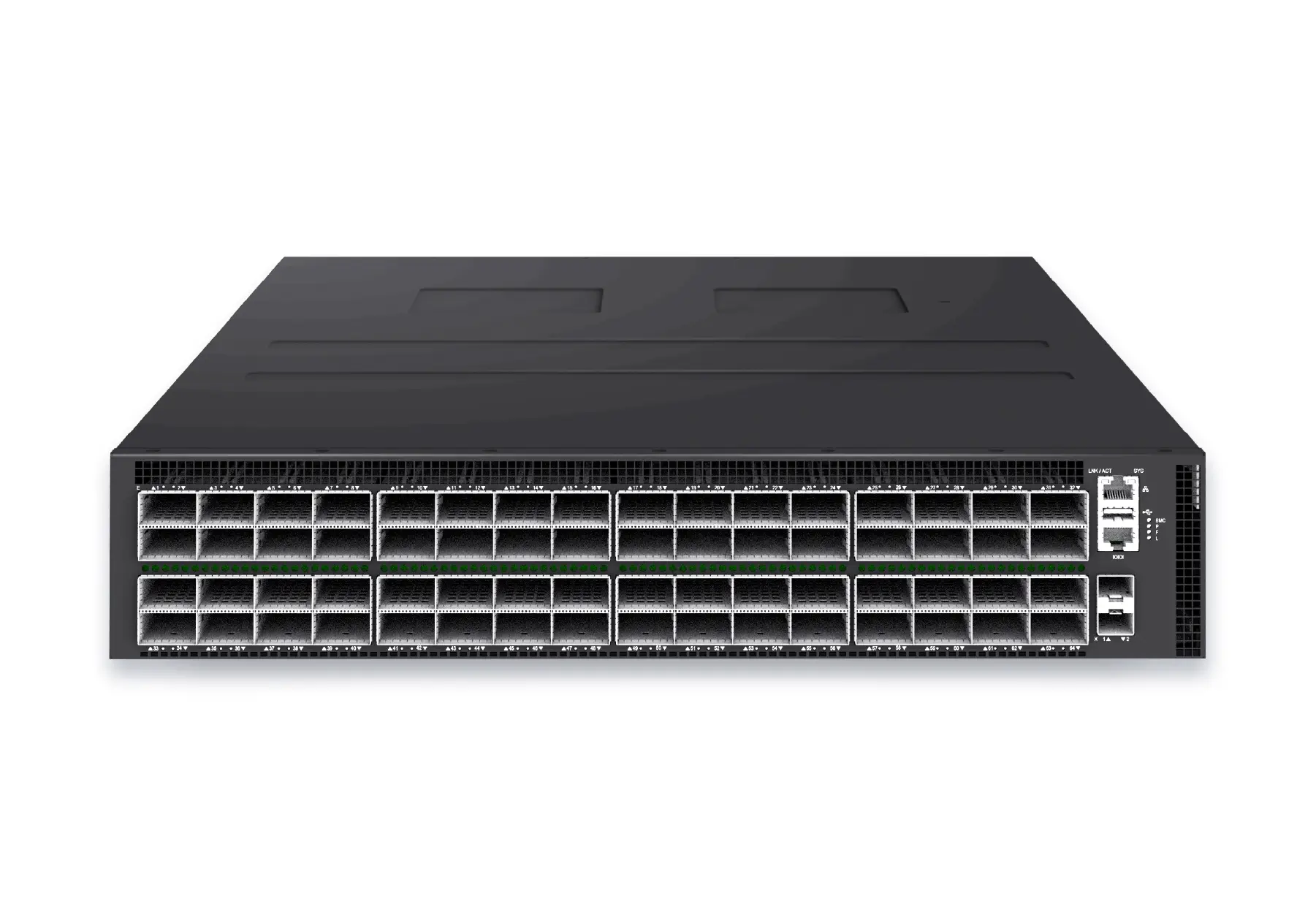 datacenter aiXS-DC-64X800-AI-G164-port 800G AI fabric switch for large-scale GPU clusters, HPC backbones, and ultra-high-throughput data center networks.View product
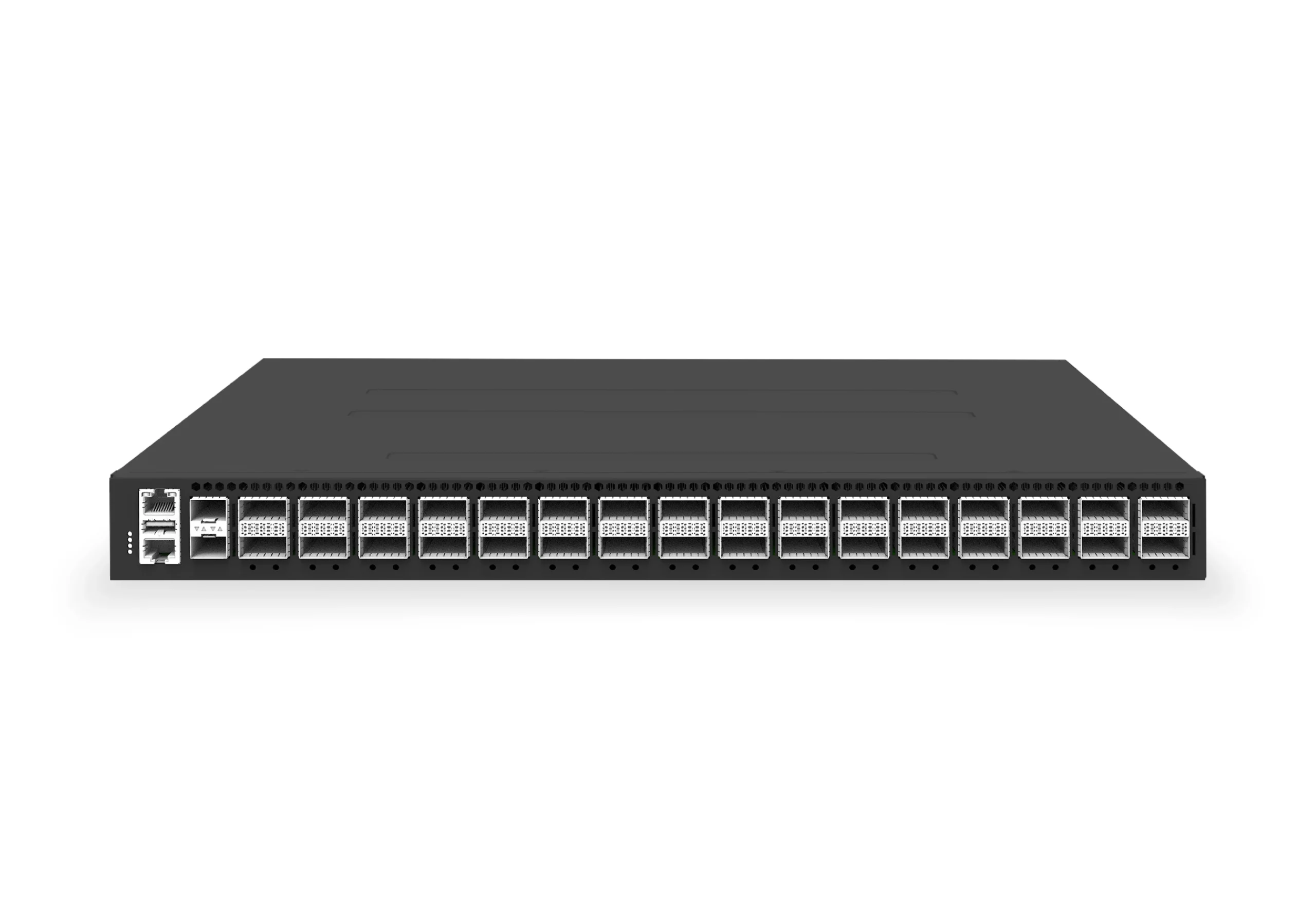 datacenter aiXS-DC-32X400-SP-G232-port 400G spine/core switch for high-capacity data center fabrics and AI-ready backbones.View product
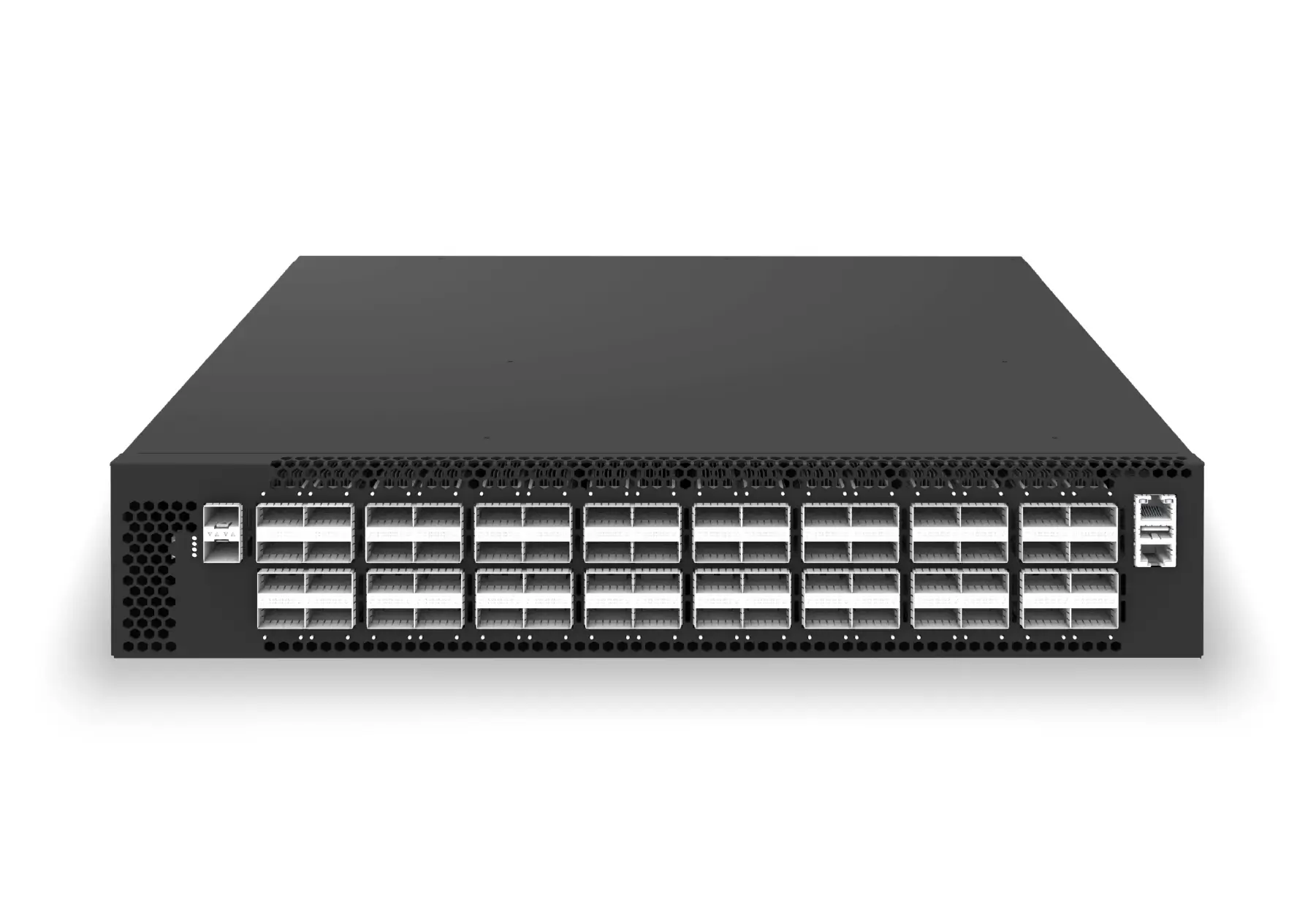 datacenter aiXS-DC-64X200-LS-G164-port 200G leaf/spine switch for high-bandwidth storage, compute, and scale-out data center fabrics.View product
Continue reading
Related articles
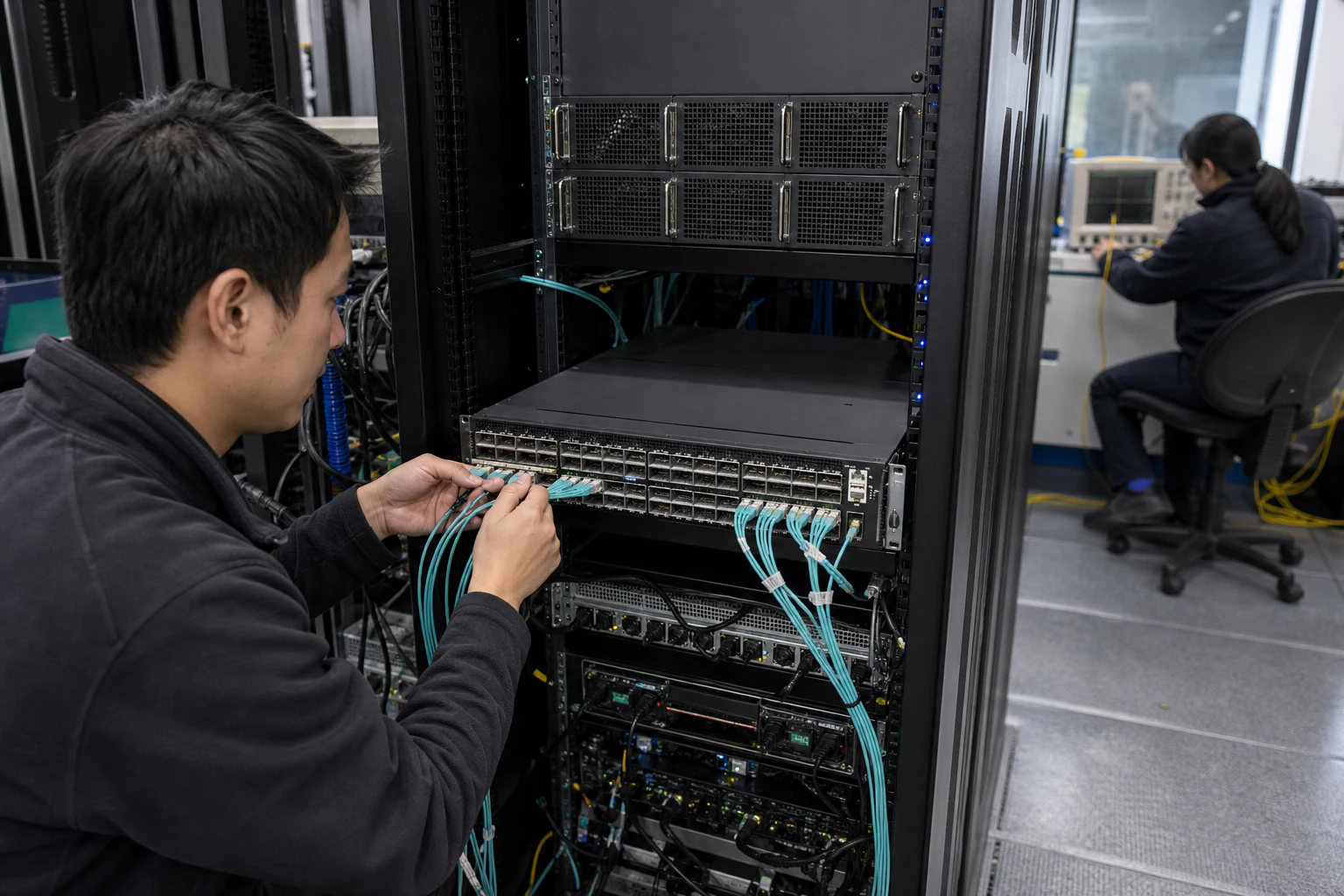 Technical ArticleDCBX, PFC, ECN, and Fast CNP: Building Lossless Ethernet for AI Training FabricsEngineering guidance on DCBX, PFC, ECN, and Fast CNP for Australian AI fabric teams building lossless Ethernet for RoCE v2 training clusters.Read article
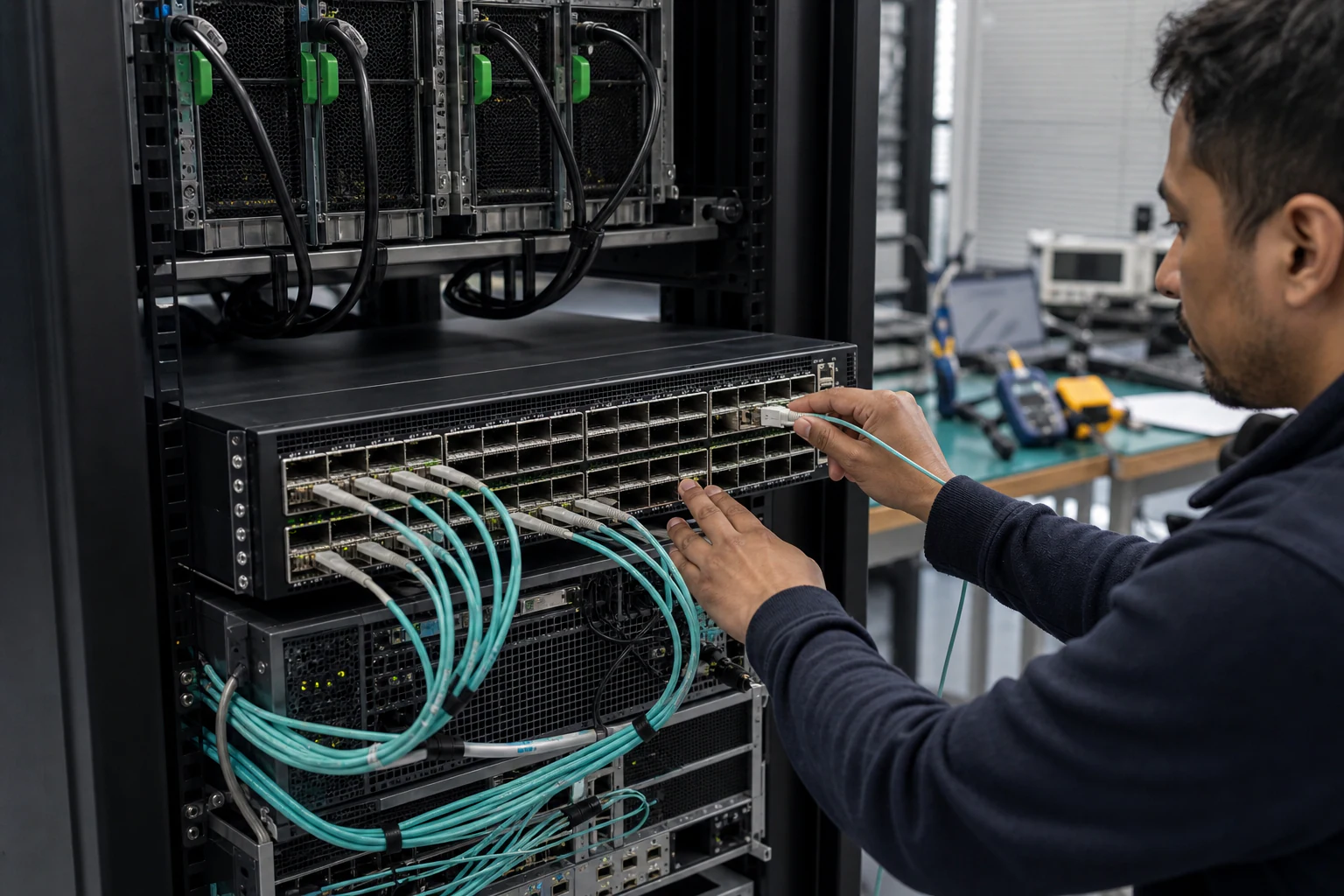 Technical ArticleWhat AI Data Center Ethernet Demands Mean for SONiC Network Operators in AustraliaEngineering guide for Australian SONiC operators running AI Ethernet fabrics, covering RoCE, 400G/800G links, telemetry, failures, optics, and support.Read article
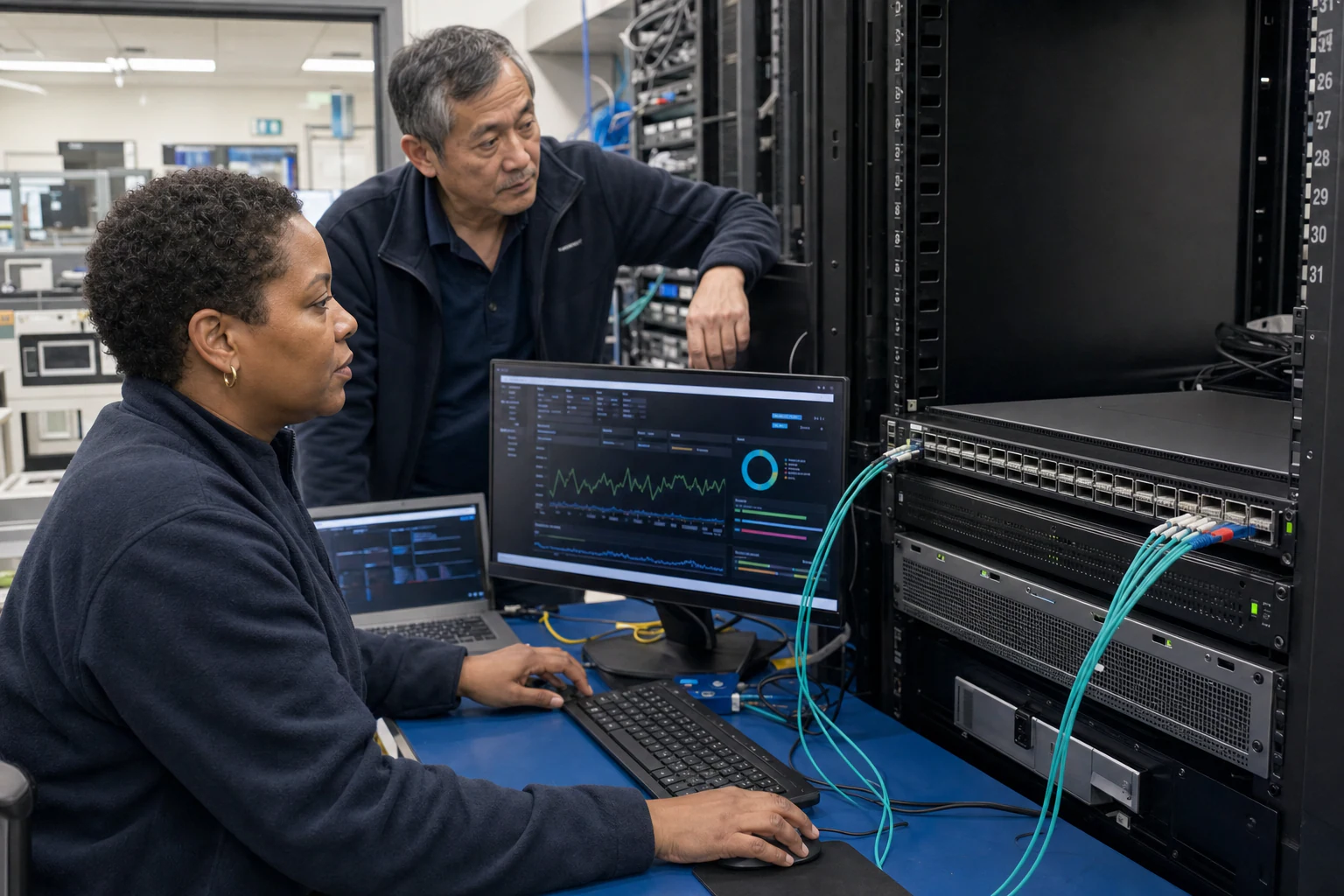 Technical ArticleWhy Your AI Fabric Needs a Centralized Controller, Not CLI-Based Hop ManagementGuide to centralized AI fabric control for SONiC environments, covering RoCE consistency, telemetry, automation, and operational risk.Read article