In brief
Engineering guide for Australian SONiC operators running AI Ethernet fabrics, covering RoCE, 400G/800G links, telemetry, failures, optics, and support.
Key takeaways
- The shift from traditional data center workloads to AI training and inference is placing new demands on Ethernet switching fabrics.
- For Australian enterprises and service providers evaluating AI infrastructure, these requirements represent a meaningful departure from how many existing campus and data center networks are architected.
- Software for Open Networking in the Cloud (SONiC) is a Linux Foundation project that provides an open-source network operating system capable of running on switches from multiple hardware vendors and ASIC platforms.
AI Clusters Are Rewriting Ethernet Switching Requirements
The shift from traditional data center workloads to AI training and inference is placing new demands on Ethernet switching fabrics. Large language model training runs require sustained, synchronized traffic flows across hundreds or thousands of GPUs, pushing the network far beyond the bursty, north-south traffic patterns that most enterprise data centers were originally designed for.
For Australian enterprises and service providers evaluating AI infrastructure, these requirements represent a meaningful departure from how many existing campus and data center networks are architected.
SONiC’s Position in the AI Networking Stack
Software for Open Networking in the Cloud (SONiC) is a Linux Foundation project that provides an open-source network operating system capable of running on switches from multiple hardware vendors and ASIC platforms. The SONiC Foundation describes it as offering a full suite of network functionality including BGP and RDMA, production-hardened in some of the largest cloud service provider data centers globally.
The GitHub repository for SONiC confirms several architectural characteristics relevant to AI fabric deployments:
- Container-based architecture: Each network function runs in its own Docker container, providing fault isolation and simplified upgrades.
- Multi-vendor hardware support: SONiC uses the Switch Abstraction Interface (SAI) to decouple the NOS from underlying switch ASICs.
- BGP and RDMA support: Both are critical for AI backend fabrics that use RoCE v2 for GPU-to-GPU communication.
- Standard Linux interfaces: Teams with Linux operations experience can leverage familiar tooling.
NVIDIA’s product pages confirm that their Spectrum Ethernet switches support SONiC (marketed as ‘Pure SONiC’) alongside Cumulus Linux, indicating that SONiC is positioned as a viable NOS option for AI-grade switching hardware.
However, it is important to note that SONiC’s AI fabric readiness depends on the specific switch platform, ASIC capabilities, and the maturity of SONiC features on that hardware. Not all SONiC-compatible switches will deliver the same AI workload performance.
Key Technical Requirements for AI-Ready SONiC Fabrics
Based on the available industry documentation, the following technical requirements define what SONiC-based networks need to support AI workloads effectively:
1. Lossless Ethernet with RoCE v2 Support AI training clusters rely on RDMA for low-latency GPU-to-GPU memory access. This requires Data Center Bridging Capability Exchange Protocol (DCBX) configuration, Priority Flow Control (PFC), and Explicit Congestion Notification (ECN) to achieve near-lossless fabric behavior.
2. High Port Speeds: 400G and 800G NVIDIA’s Spectrum switch portfolio demonstrates the progression from 100Gb/s (SN2000 series) through 200Gb/s (SN3000), 400Gb/s (SN4000), to 800Gb/s (SN5000 and SN6000 series). The SN6000 series with co-packaged optics targets what NVIDIA calls ‘AI factories’ with up to 102.4 Tb/s throughput per switch. For Australian data centers, the practical question is which speed tier aligns with current and planned GPU cluster sizes.
3. Deep Buffers and Large Forwarding Tables AI workloads generate synchronized traffic patterns that can cause microburst congestion. Deep buffer switching and large ACL/flow counter tables (NVIDIA highlights up to 512K ACL entries and 512K flow counters on Spectrum switches) help absorb burst traffic without packet drops.
4. Network Telemetry and Observability In-band Network Telemetry (INT) provides real-time visibility into per-hop latency, queue depth, and congestion points across the fabric. For AI clusters where a single slow path can stall an entire training run, this visibility is operationally critical.
5. Scalable Fabric Architecture AI clusters typically require spine-leaf topologies that can scale from tens to hundreds of switches. SONiC’s BGP EVPN-VXLAN support and multi-vendor ASIC flexibility are relevant here, though real-world scale testing on specific Australian deployments would need verification.
The Australian Market Context
Australia presents a distinct set of considerations for AI data center networking:
- Geographic latency: Australian AI clusters may need to serve workloads distributed across Sydney, Melbourne, and Brisbane data center hubs, making fabric efficiency and east-west traffic optimization more important than in single-site hyperscaler deployments.
- Supply chain and support: Enterprise buyers in Australia typically require local channel support, pre-sales engineering, and supply chain visibility. Open networking solutions like SONiC need a viable local support model.
- Skills availability: SONiC’s Linux-based architecture aligns well with the DevOps and SRE skill sets common in Australian enterprise IT teams, but the networking-specific knowledge for RoCE fabric configuration and troubleshooting is still concentrated in a smaller talent pool.
- Regulatory and data sovereignty: For government and financial services buyers, the ability to run an open-source NOS with auditable code may offer advantages over proprietary alternatives.
What This Signals for xSONiC Buyers
The convergence of SONiC maturity, AI workload demands, and 400G/800G Ethernet availability creates a window for enterprise buyers who want AI-ready networking without proprietary vendor lock-in. The key signals are:
- SONiC is no longer a hyperscaler-only NOS. The Linux Foundation governance, multi-vendor ASIC support through SAI, and growing ecosystem of supported hardware make it increasingly viable for enterprise AI fabric deployments.
- AI networking requires purpose-built configurations. Simply deploying SONiC on a commodity switch is not sufficient. The switch ASIC must support lossless Ethernet features, the optics must match the speed tier, and the fabric design must account for AI traffic patterns.
- The vendor landscape is consolidating around Ethernet for AI. While InfiniBand remains relevant for the largest training clusters, Ethernet-based AI fabrics using RoCE v2 are becoming the mainstream choice for enterprise and mid-scale AI deployments. This is the space where SONiC-based open networking has the strongest value proposition.
For xSONiC data center AI switch buyers, the practical path forward is to evaluate switch platforms that combine SONiC compatibility with ASIC-level support for RoCE v2, DCBX, PFC, ECN, and INT telemetry, backed by 400G or 800G port density appropriate to the target GPU cluster scale.
Recommended Next Steps for Evaluators
Organizations in Australia evaluating SONiC-based AI data center networking should consider the following steps:
- Build a lab with the exact SONiC image, switch SKU, NIC firmware, and optics intended for production.
- Run representative training or inference traffic, not just iperf-style bandwidth tests.
- Validate PFC, ECN, DCBX, queue counters, packet drops, and CNP behaviour during incast and link failure.
- Confirm that telemetry reaches the NOC, SIEM, or automation stack with topology context and useful retention.
- Document Australian spares, RMA, support ownership, and escalation hours before volume procurement.
AI Ethernet operations acceptance matrix
For SONiC operators, AI Ethernet changes the day-2 operating model. The fabric must be managed as a performance-critical system where a single bad optic, queue policy, or firmware mismatch can waste GPU capacity.
| Operations area | Evidence to capture | Reject or rework if |
|---|---|---|
| Platform readiness | Switch SKU, ASIC, SONiC image, SAI/platform support, 400G/800G ports, and optics matrix | The team assumes any SONiC-compatible switch can run AI fabric traffic |
| RoCE operations | PFC/ECN/DCBX policy, queue mapping, MTU, CNP counters, pause counters, and failure test | Operators cannot distinguish normal congestion from a misconfigured lossless class |
| Telemetry pipeline | gNMI/OpenConfig or equivalent, INT/IPTPath, drop counters, queue depth, optic/FEC errors, and alert routing | Telemetry exists on the switch but is not correlated with topology or workload events |
| Change and rollback | Config diff, image upgrade, firmware upgrade, rollback procedure, maintenance window, and canary switch | Fabric-wide changes are made without proving recovery under AI load |
| Local support | Integrator owner, vendor owner, spare optics, spare switch, Australian business-hours path, and escalation timeline | A GPU-impacting incident has no named owner across NOS, ASIC, optics, and server teams |
Engineering FAQ
What changes for SONiC operators when the workload is AI? AI fabrics make queue behaviour, congestion marking, optics health, and firmware drift first-order operational risks. The NOC needs path and queue evidence, not only interface up/down status.
Which counters should be visible during an AI fabric incident? Operators should see ECN marks, CNP counters, PFC pause frames, queue depth, interface drops, FEC errors, optic DOM values, route changes, and host/NIC firmware versions.
How should a first production rollout be staged? Start with a limited fabric slice or pilot cluster, run workload and failure tests, freeze known-good versions, document rollback, and expand only after telemetry and support paths are proven.
Related xSONiC Resources
Sources Reviewed
- Ethernet Network Adapters - ConnectX NICs | NVIDIA
- NVIDIA Spectrum-X Ethernet Platform
- NVIDIA Ethernet Platform Products
- IEEE 802.1Qbb Priority-based Flow Control
- RFC 3168 - Explicit Congestion Notification
- OpenConfig gNMI Specification
- OpenConfig
- SONiC Project Documentation
- NVIDIA Ethernet Switching
- Open Compute Networking
- SONiC GitHub
- SONiC Foundation
Product fit
Products referenced for evaluation
These products are referenced for evaluation context in the article. Confirm workload, port, optics, software, interoperability, and support requirements against the exact deployment before procurement.
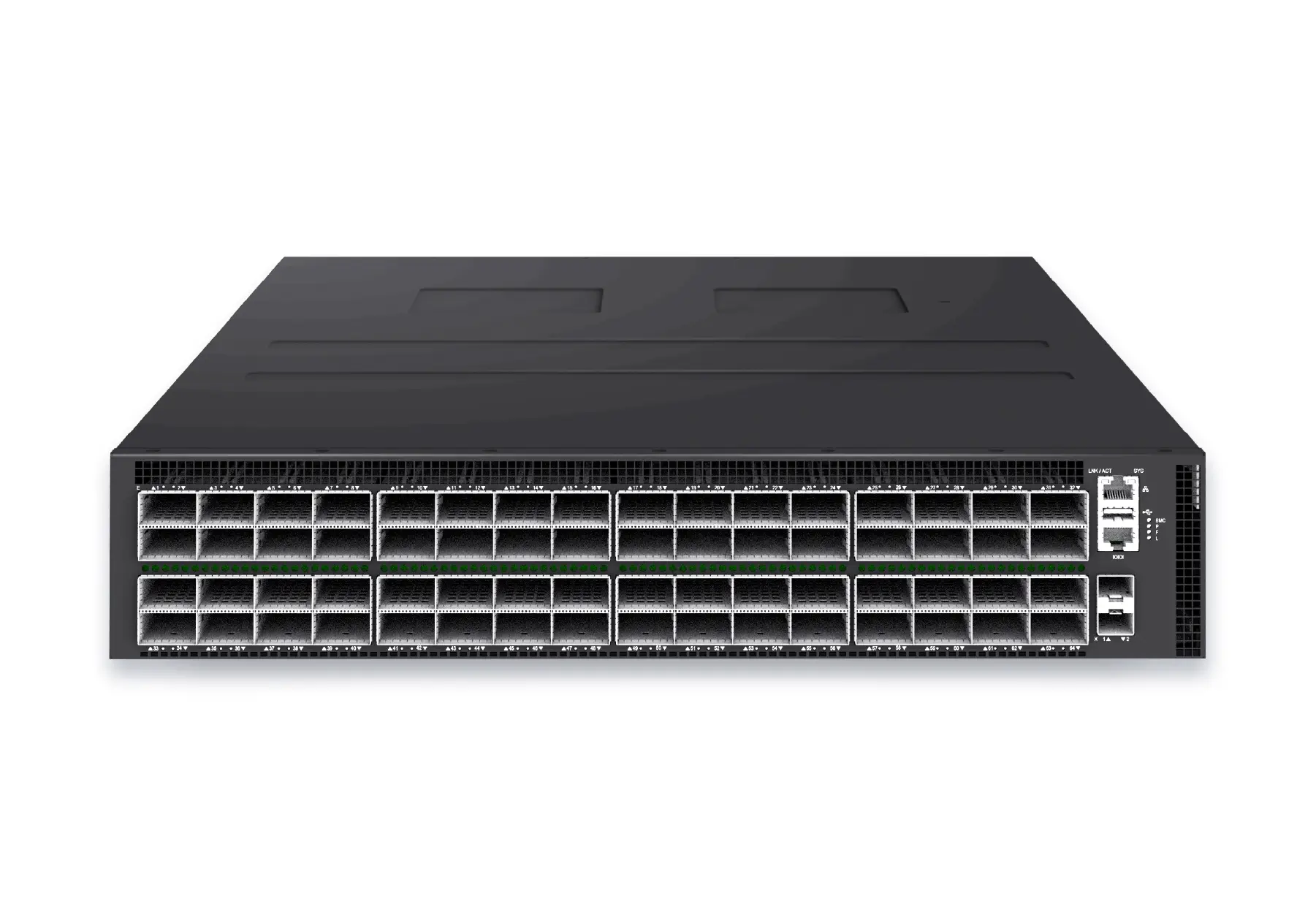 datacenter aiXS-DC-64X800-AI-G164-port 800G AI fabric switch for large-scale GPU clusters, HPC backbones, and ultra-high-throughput data center networks.View product
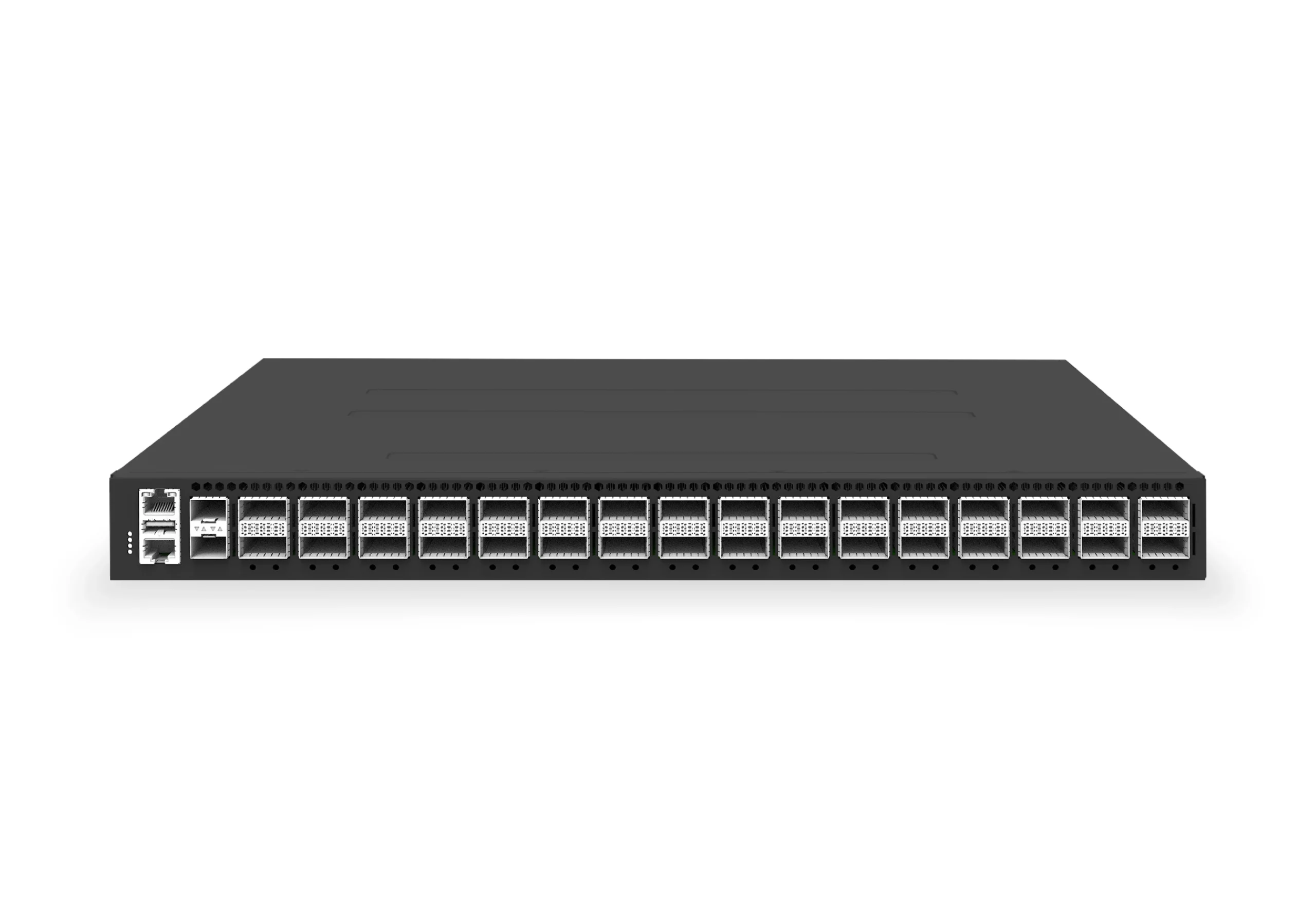 datacenter aiXS-DC-32X400-SP-G232-port 400G spine/core switch for high-capacity data center fabrics and AI-ready backbones.View product
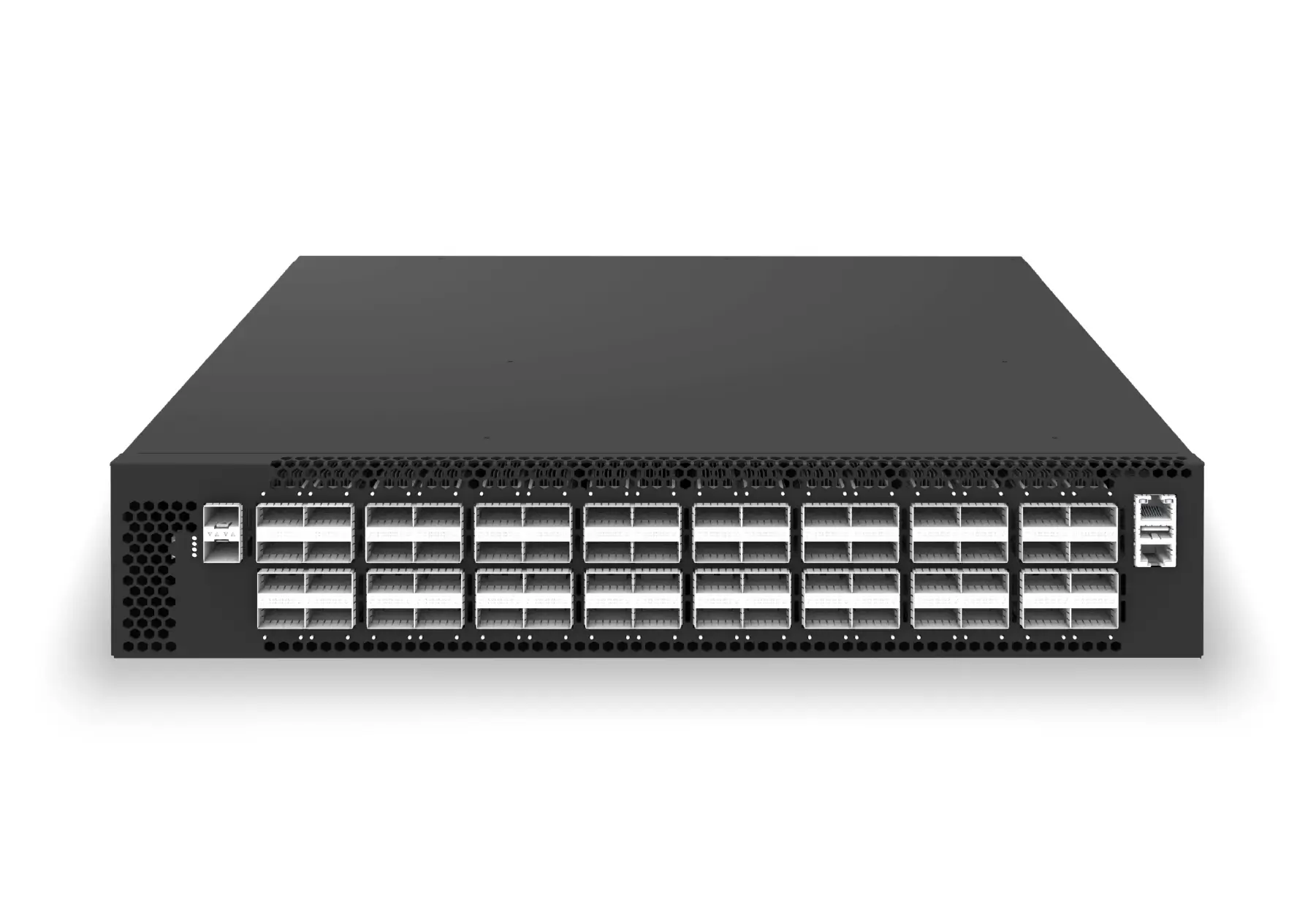 datacenter aiXS-DC-64X200-LS-G164-port 200G leaf/spine switch for high-bandwidth storage, compute, and scale-out data center fabrics.View product
Continue reading
Related articles
 Technical ArticleDCBX, PFC, ECN, and Fast CNP: Building Lossless Ethernet for AI Training FabricsEngineering guidance on DCBX, PFC, ECN, and Fast CNP for Australian AI fabric teams building lossless Ethernet for RoCE v2 training clusters.Read article
 Technical ArticleWhat AI Fabric Ethernet Switching Actually Requires -- and Where SONiC Fits in the StackA practical engineering guide to AI fabric Ethernet switching requirements, explaining where SONiC fits across RoCE v2, PFC, ECN, DCBX, telemetry, and 400G/800G operations.Read article
 Technical ArticleWhy Your AI Fabric Needs a Centralized Controller, Not CLI-Based Hop ManagementGuide to centralized AI fabric control for SONiC environments, covering RoCE consistency, telemetry, automation, and operational risk.Read article