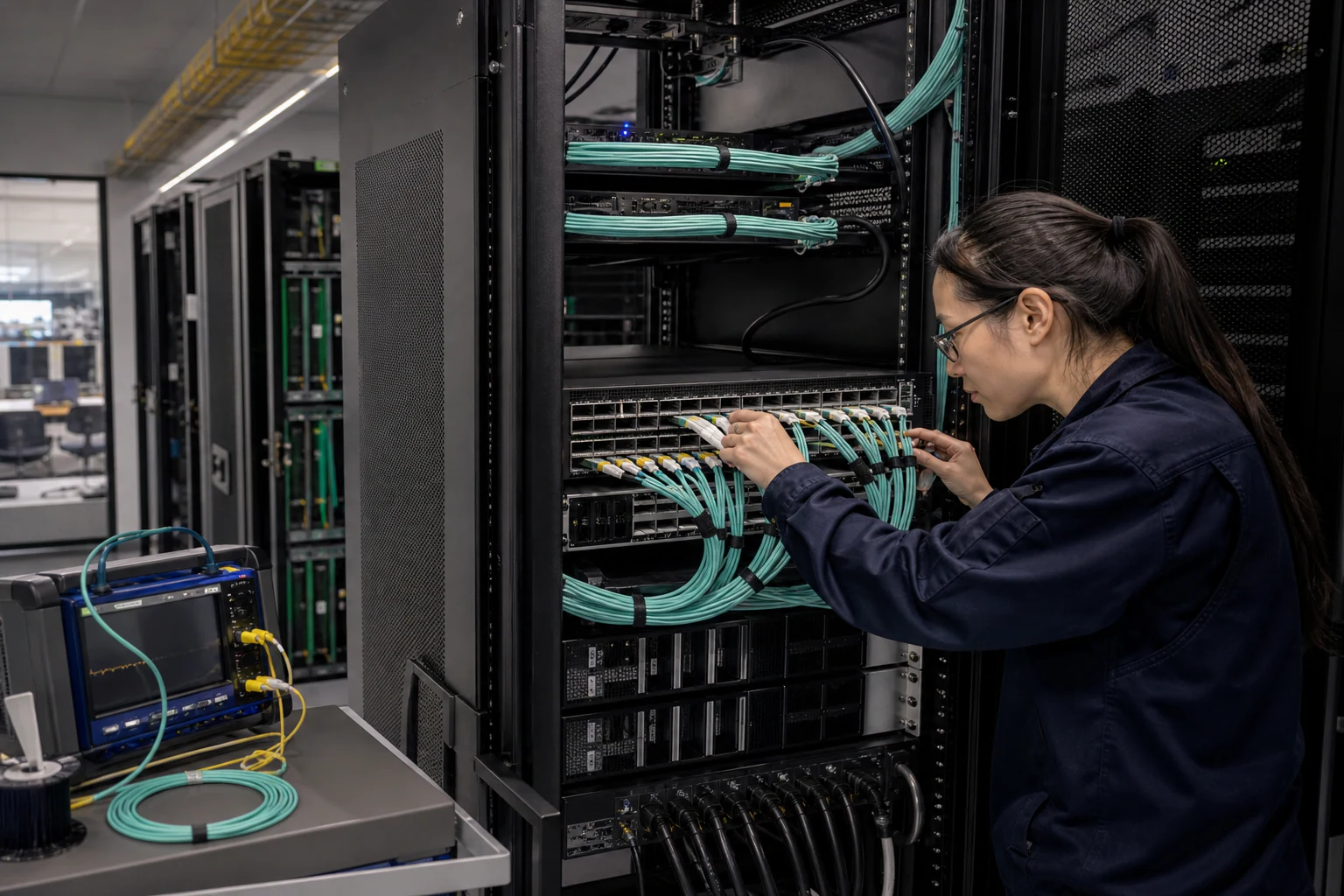
In brief
Practical RoCE v2 RDMA fabric guide for AI training clusters covering lossless Ethernet, telemetry, SONiC validation, and buyer risk.
Key takeaways
- For years, InfiniBand was the default network for high-performance computing and GPU-based AI training.
- The shift matters for Australian data center operators and enterprise AI teams.
- This guide explains how RoCE v2 works inside an Ethernet leaf-spine topology, what fabric design decisions affect AI training throughput, and how to evaluate open networking switches for GPU cluster backends.
Why Ethernet Is Competing With InfiniBand for AI Training Fabrics
For years, InfiniBand was the default network for high-performance computing and GPU-based AI training. That assumption is now under pressure. Advances in Ethernet switch silicon, the maturity of RDMA over Converged Ethernet (RoCE), and the production readiness of open-source network operating systems like SONiC have made Ethernet a credible fabric technology for large-scale AI clusters.
The shift matters for Australian data center operators and enterprise AI teams. InfiniBand fabrics often come with proprietary software stacks, limited vendor choice, and higher per-port costs at scale. Ethernet, by contrast, offers multi-vendor switch options, open NOS flexibility, and a well-understood operational model. The tradeoff is that achieving InfiniBand-class performance on Ethernet requires careful fabric design.
This guide explains how RoCE v2 works inside an Ethernet leaf-spine topology, what fabric design decisions affect AI training throughput, and how to evaluate open networking switches for GPU cluster backends.
What RoCE v2 Actually Does
RoCE v2 (RDMA over Converged Ethernet version 2) allows applications to read and write remote server memory without involving the operating system kernel. For AI training, this means GPUs in different servers can exchange model gradients and tensor data with minimal CPU overhead and low latency.
RoCE v2 runs over standard UDP/IP on Ethernet. Unlike InfiniBand, which uses its own transport layer, RoCE v2 leverages the existing Ethernet and IP infrastructure. This is both its strength and its challenge: it works on commodity Ethernet, but it demands that the Ethernet fabric handle congestion and packet loss correctly, because RDMA traffic is far less tolerant of dropped packets than conventional TCP traffic.
Key RoCE v2 behaviors buyers should understand:
- Zero-copy data transfer. The NIC (RNIC) reads data directly from application memory and places it into remote application memory. There is no kernel involvement in the data path.
- Lossless or nearly-lossless requirements. Dropped packets on an RoCE v2 flow can cause severe performance degradation. The fabric must provide congestion management, typically through Priority Flow Control (PFC) and Data Center Bridging Capability Exchange (DCBX).
- UDP encapsulation. RoCE v2 packets are standard UDP datagrams. This means standard Ethernet switches can forward them, but QoS policies must treat this traffic class correctly.
Leaf-Spine Architecture for GPU Cluster Backends
The standard topology for an AI training fabric is a two-tier or three-tier leaf-spine design. Each GPU server connects to a top-of-rack (ToR) leaf switch. Every leaf switch uplinks to every spine switch, creating a non-blocking or near-non-blocking mesh.
Design considerations for RoCE fabrics in this topology include:
Port Speed and Oversubscription
GPU servers with multiple high-bandwidth GPUs (for example, 8 GPUs per node, each capable of 400 Gbps via NVLink internally, with external RDMA traffic concentrated on 2-4 NICs) generate substantial east-west traffic. The leaf-to-spine uplinks must not create a bottleneck.
Common configurations:
| Role | Typical Port Speed | Notes |
|---|---|---|
| Server to Leaf | 100G or 200G per NIC | Depends on NIC and GPU count per server |
| Leaf to Spine | 400G or 800G uplinks | Non-blocking ratio preferred for training fabrics |
| Spine (if 3-tier) | 400G or 800G | For clusters beyond a single pod scale |
A 1:1 non-blocking ratio between leaf downlinks and leaf-to-spine uplinks is the standard recommendation for AI training clusters. Oversubscription is acceptable for inference workloads or mixed-use clusters, but training jobs are highly sensitive to fabric contention.
Congestion Management: PFC and ECN
RoCE v2 fabrics require two complementary congestion mechanisms:
Priority Flow Control (PFC) is an IEEE 802.1Qbb standard that allows a switch or NIC to send a PAUSE frame on a per-priority basis. When a switch port’s egress buffer fills up for a specific traffic class, it tells the upstream device to stop sending frames on that priority class. This prevents packet loss for RDMA traffic.
Explicit Congestion Notification (ECN) works at the IP layer. When a switch detects congestion (typically via queue depth thresholds), it marks packets with a Congestion Experienced (CE) bit. The receiving endpoint generates a Congestion Notification Packet (CNP) back to the sender, which then reduces its sending rate.
Together, PFC provides the safety net (preventing drops when buffers fill), and ECN provides the proactive signal (slowing senders before buffers overflow). Poorly configured PFC can lead to PFC storm propagation, where pause frames ripple backward through the fabric and stall unrelated traffic. This is why ECN-based rate control matters.
DCBX: The Configuration Backbone
Data Center Bridging Capability Exchange (DCBX) is a protocol that allows switches and NICs to auto-negotiate QoS parameters including PFC settings, ETS (Enhanced Transmission Selection) bandwidth allocation, and ECN thresholds. Without DCBX, every switch port and NIC must be manually configured with matching QoS policies, which is error-prone at scale.
SONiC supports DCBX as part of its QoS framework. For buyers deploying open networking switches running SONiC, DCBX simplifies the operational burden of keeping PFC and ETS configurations consistent across hundreds of ports.
Buffer Architecture and Its Impact on Training Throughput
Switch buffer depth directly affects how well a RoCE fabric handles microbursts. AI training workloads generate synchronized all-to-all communication patterns (for example, during gradient synchronization in distributed training). These patterns can cause momentary congestion even on non-blocking fabrics.
Deep buffers absorb these microbursts without triggering PFC pauses or packet loss. Shallow buffers reduce switch cost and power but require more careful tuning of ECN thresholds and PFC headroom values.
When evaluating switches for a RoCE fabric, ask:
- What is the per-port and shared buffer depth?
- Does the switch support configurable ECN marking thresholds per queue?
- Can PFC headroom be tuned independently per port?
- Does the switch support dynamic buffer allocation?
These questions apply whether the switch runs a proprietary NOS or an open NOS like SONiC. The difference with SONiC is that QoS configuration is done via standard Linux interfaces and JSON configuration files, giving operations teams programmatic control over buffer policies.
Telemetry and Visibility: Knowing What Your Fabric Is Doing
Training performance problems often manifest as intermittent slowdowns rather than outright failures. Without fabric-level telemetry, diagnosing whether the network is the bottleneck requires guesswork.
Two visibility mechanisms are relevant for RoCE fabrics:
In-band Network Telemetry (INT) allows switches to insert metadata into packet headers as they traverse the fabric. This metadata includes switch ID, ingress/egress port, queue depth, and timestamp. Collectors can reconstruct the exact path and latency profile of every flow.
INT-based path telemetry extends this by building a hop-by-hop latency map of the fabric in real time. For AI clusters, this lets operators identify which switch ports or links are introducing latency or congestion during training runs.
SONiC supports INT capabilities on supported hardware. Combined with a controller or analytics platform, this provides the kind of fabric observability that was previously only available on proprietary InfiniBand management tools.
Open Networking and SONiC: What It Means for AI Fabric Buyers
SONiC (Software for Open Networking in the Cloud) is an open-source network operating system maintained under the Linux Foundation. It runs on switches from multiple hardware vendors and supports a full suite of networking functionality including BGP, RDMA, and QoS features required for RoCE v2 fabrics.
For Australian buyers evaluating AI infrastructure, SONiC-based open networking offers several structural advantages:
- Hardware and software decoupling. You can choose switch hardware independently from the NOS. If a hardware vendor raises prices or discontinues a product line, you can migrate to another vendor without retraining your team on a new software stack.
- Production-proven at scale. SONiC originated from cloud service provider environments and has been production-hardened in data centers operating at significant scale. The open-source community continues to expand its feature set.
- Containerized architecture. SONiC runs each network function in its own Docker container, which improves fault isolation, simplifies upgrades, and allows independent component updates.
- Standard Linux tooling. Network configuration uses JSON files and standard Linux interfaces. Automation with Ansible, Terraform, or custom scripts is straightforward.
The tradeoff is that SONiC deployments require engineering capability. Unlike turnkey vendor solutions where the NOS and hardware are tightly integrated, open networking teams need to manage image compatibility, feature validation, and QoS tuning themselves. For organizations with existing Linux and network engineering expertise, this is manageable. For teams new to open networking, starting with a pilot fabric or engaging a solution partner is a practical first step.
Buyer Checklist: Evaluating an Ethernet RoCE Fabric for AI Workloads
Before committing to a fabric design, work through these questions:
- Cluster scale. How many GPU nodes, and what NIC bandwidth per node? This determines leaf and spine port density and uplink speed requirements.
- Non-blocking ratio. Is the east-west traffic pattern (all-to-all, all-reduce) latency-sensitive enough to require a non-blocking fabric, or is some oversubscription acceptable?
- Buffer depth. Does the switch silicon provide sufficient shared buffer for microburst absorption in synchronized training traffic?
- QoS automation. Does the NOS support DCBX for PFC and ETS auto-negotiation, reducing manual configuration?
- Congestion visibility. Can the fabric provide INT or equivalent telemetry for hop-by-hop latency monitoring?
- NOS flexibility. Is the team comfortable operating an open NOS like SONiC, or do they require a vendor-supported turnkey stack?
- Optics planning. What transceiver types (SFP28, QSFP28, QSFP-DD, OSFP) are needed for the planned cable distances and speeds? Are AOC or DAC cables sufficient for intra-pod links, or is fiber required?
- Future scalability. Does the fabric design accommodate 800G uplinks or spine migration when the cluster grows?
Where This Fits in the xSONiC Portfolio
xSONiC data center AI switches are designed for exactly this class of workload: low-latency Ethernet switching for AI/ML clusters running SONiC, with support for RoCE v2, DCBX, PFC, ECN, and INT telemetry. Whether you are building a new GPU training cluster or migrating from a proprietary fabric, the starting point is the same: understand your traffic patterns, size your fabric correctly, and ensure your NOS gives you the QoS control and visibility you need.
For Australian organizations evaluating open networking for AI infrastructure, the combination of SONiC-based switching and purpose-built 400G/800G Ethernet silicon represents a credible alternative to proprietary stacks, with the added benefit of multi-vendor hardware flexibility.
If you are planning an AI fabric deployment or want to discuss RoCE fabric design for a specific cluster topology, contact the xSONiC team to review your requirements.
Engineering FAQ
What should buyers compare when evaluating switch silicon for SONiC? Compare feature support, buffer profile, port speed, optics compatibility, telemetry counters, SAI maturity, SDK release cadence, power and cooling, and vendor image validation. ASIC choice affects operations as much as throughput.
Why is SAI maturity important? SAI is the abstraction layer between SONiC and the ASIC. If a required feature is incomplete or behaves differently on a platform, the open NOS does not remove that limitation. Buyers should ask for tested feature matrices.
What evidence should an Australian buyer request from a switch vendor? Request the exact switch SKU, ASIC family, SONiC distribution, SAI version, optics matrix, known caveats, release notes, support process, and proof that the intended design has been tested.
Related xSONiC Resources
Sources Reviewed
- Ethernet Network Adapters - ConnectX NICs | NVIDIA
- NVIDIA BlueField Data Processing Unit
- NVIDIA Spectrum-X Ethernet Platform
- SONiC Project Documentation
- Broadcom Ethernet Switching
- Marvell Switching
- NVIDIA Ethernet Switching
- Open Compute Networking
- SONiC GitHub
- SONiC Foundation
Product fit
Products referenced for evaluation
These products are referenced for evaluation context in the article. Confirm workload, port, optics, software, interoperability, and support requirements against the exact deployment before procurement.
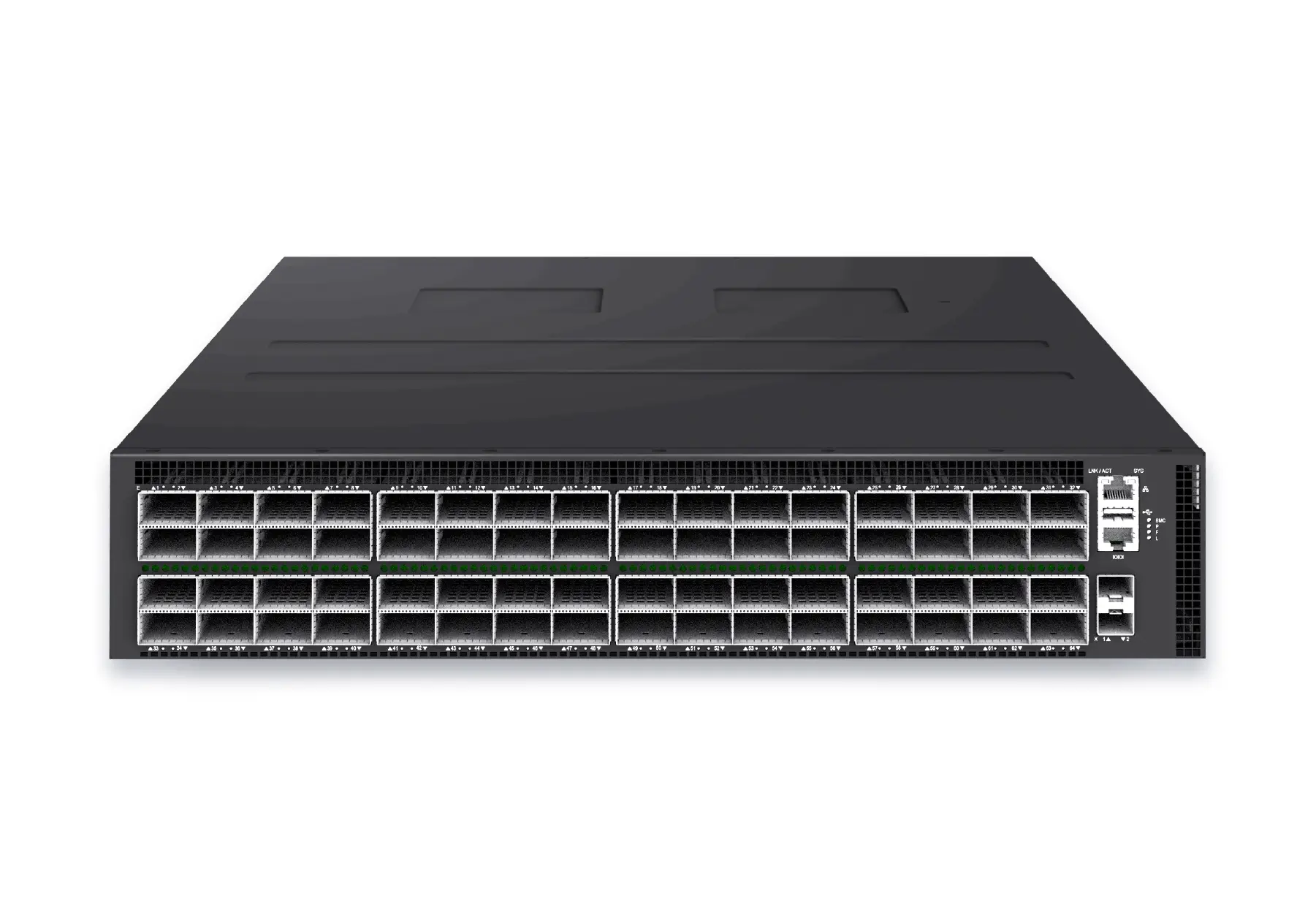 datacenter aiXS-DC-64X800-AI-G164-port 800G AI fabric switch for large-scale GPU clusters, HPC backbones, and ultra-high-throughput data center networks.View product
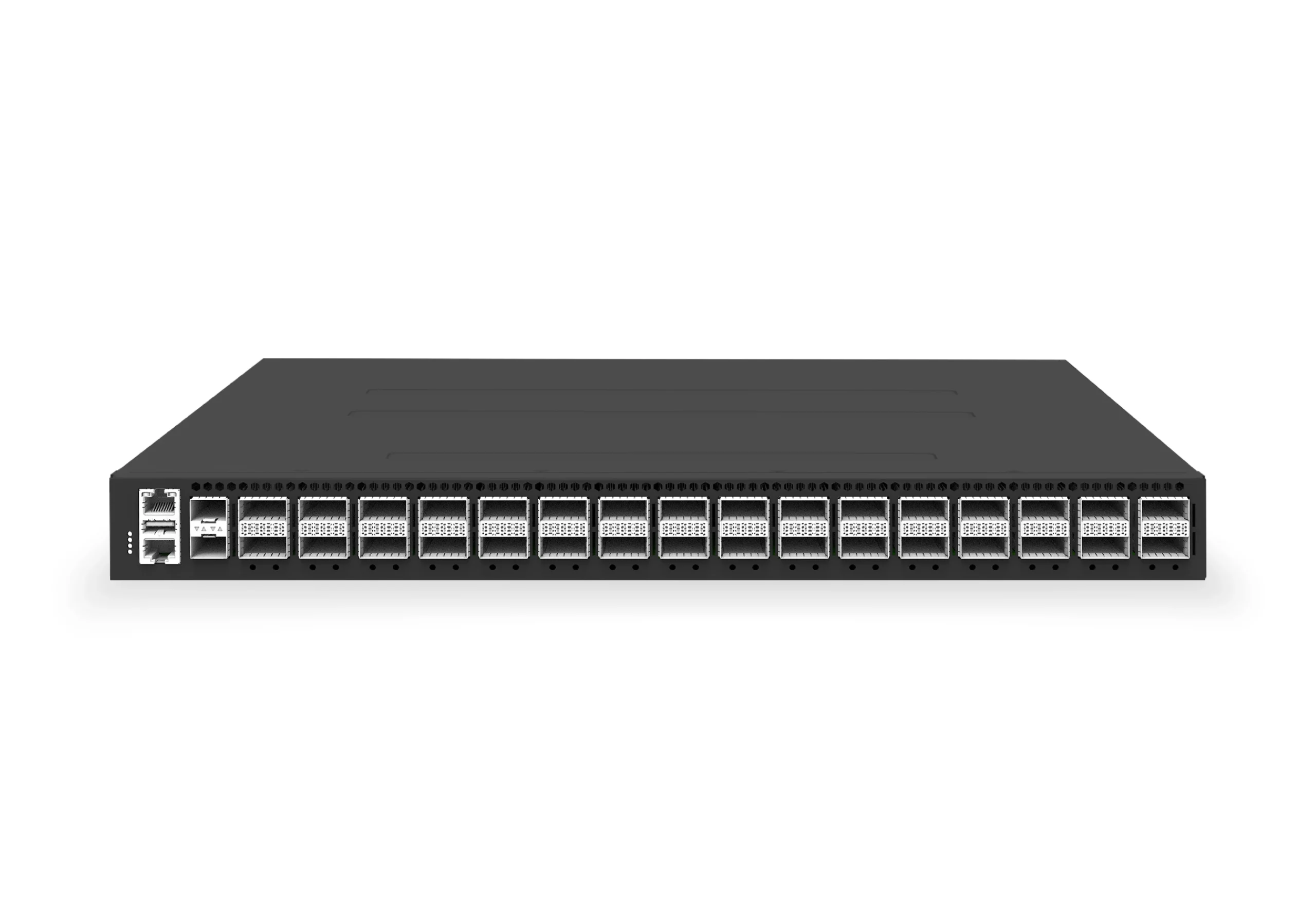 datacenter aiXS-DC-32X400-SP-G232-port 400G spine/core switch for high-capacity data center fabrics and AI-ready backbones.View product
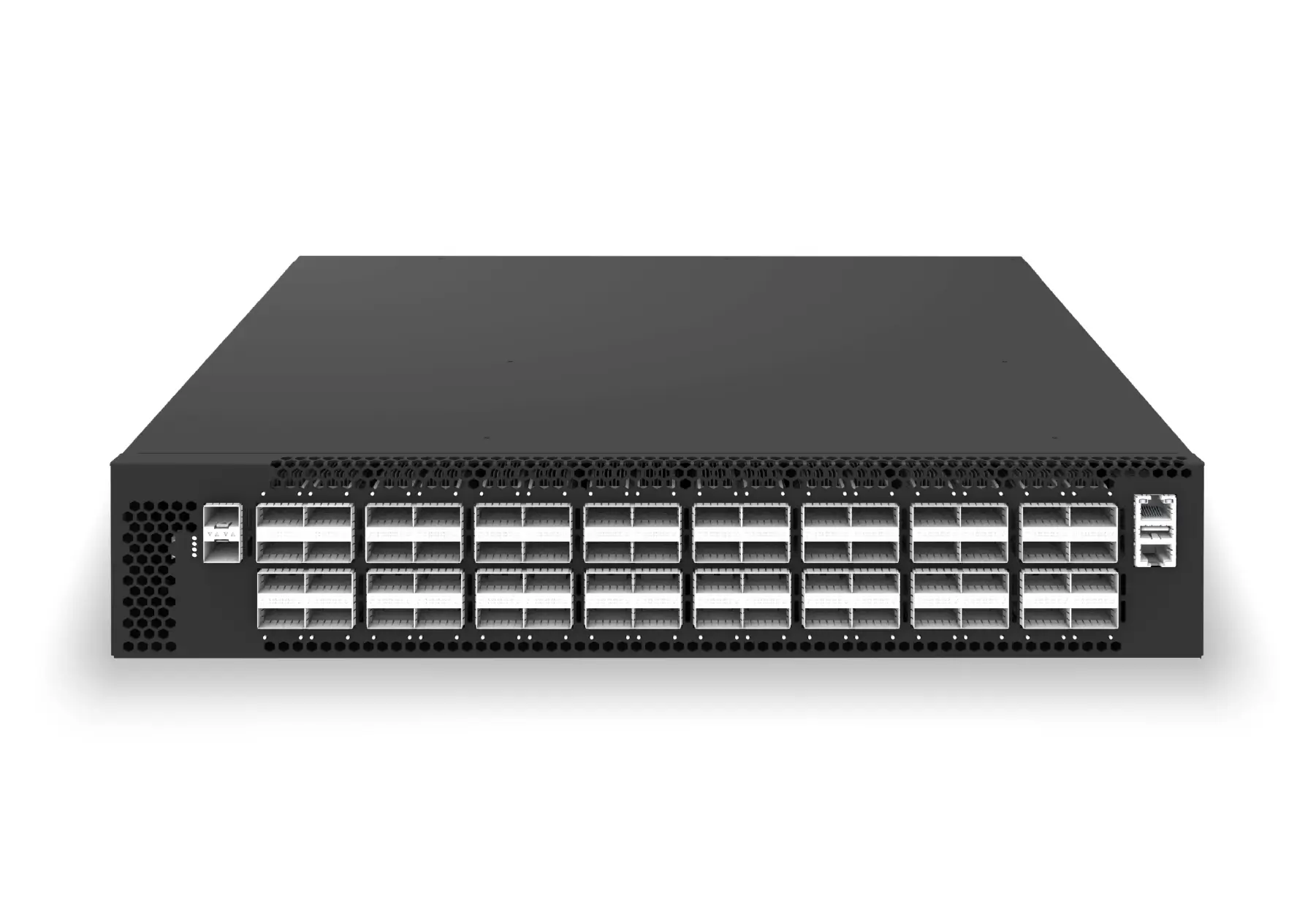 datacenter aiXS-DC-64X200-LS-G164-port 200G leaf/spine switch for high-bandwidth storage, compute, and scale-out data center fabrics.View product
Topic path
RoCEv2 fabric design and operations
This page focuses on:the core architecture and buyer requirements for an Ethernet GPU training fabric.
RoCEv2 is the routable RDMA transport. DCBX exchanges link-local DCB settings, PFC pauses selected priorities, ECN marks congestion, and CNP feeds congestion back to a RoCE sender. Validate each mechanism independently and then under workload.
Continue reading
Related articles
 Technical ArticleHow SONiC-Powered 400G and 800G Switches Change AI Data Center Fabric Design in AustraliaEngineering guide for 400G and 800G optics planning covering form factor, reach, telemetry, thermal limits, supply risk, and validation.Read article
 Technical ArticleRoCE v2 GPU Backend Fabrics at 400G and 800G: What Australian Data Center Operators Need to Know in 2026Engineering guide for AI fabric buyers covering RoCE, SONiC, telemetry, optics, support ownership, and deployment validation.Read article
 Technical ArticleWhat Australian Data Center Buyers Need to Know Before Choosing SONiC Switches for 400G and 800G UpgradesEngineering guide for 400G and 800G optics planning covering form factor, reach, telemetry, thermal limits, supply risk, and validation.Read article