In brief
Engineering guide for SONiC and open networking buyers covering platform fit, automation, support, telemetry, and validation evidence.
Key takeaways
- When your network team starts discussing a Cisco, Arista, or Juniper refresh, the conversation usually begins with a quote and ends with a multi-year license commitment.
- The Australian networking market has a deep Cisco footprint. Job market data shows hundreds of Cisco-related positions across Sydney, Melbourne, Brisbane, and Canberra, reflecting the scale of installed infrastructure and certified talent pools.
- This dominance is not inherently wrong, but it creates a specific cost structure: vendor-locked hardware, recurring software subscriptions, and a talent market that prices Cisco skills at a premium.
When your network team starts discussing a Cisco, Arista, or Juniper refresh, the conversation usually begins with a quote and ends with a multi-year license commitment. For Australian enterprise and data center buyers, the question worth asking first is whether the incumbent vendor still serves your operational and financial goals — or whether open networking deserves a serious look on the shortlist.
Why Australian Network Buyers Are Looking Beyond Incumbents
The Australian networking market has a deep Cisco footprint. Job market data shows hundreds of Cisco-related positions across Sydney, Melbourne, Brisbane, and Canberra, reflecting the scale of installed infrastructure and certified talent pools. Cisco’s certification ecosystem — spanning CCNA through CCIE and delivered through Pearson VUE testing centers nationwide — reinforces a skills pipeline that favors Cisco gear.
This dominance is not inherently wrong, but it creates a specific cost structure: vendor-locked hardware, recurring software subscriptions, and a talent market that prices Cisco skills at a premium. When your next refresh cycle arrives, evaluating whether that cost structure still makes sense is a responsible engineering and procurement exercise.
Arista and Juniper (now part of HPE) carry similar dynamics. Arista’s EOS is proprietary. Juniper’s Junos, while respected, is vendor-controlled. Each platform offers strong capabilities, but each also ties your operations to a single vendor’s pricing roadmap, feature priorities, and end-of-life decisions.
Open networking — where you select hardware and network operating systems independently — offers an alternative model. The key question is not whether open networking is theoretically better, but whether it is practically viable for your specific environment.
The Evaluation Checklist: 10 Criteria for Comparing Open Networking vs Incumbent Stacks
Use the following checklist during your next RFP, refresh planning, or architecture review. Each criterion includes what to evaluate and what evidence to request from any vendor, including open networking providers.
1. Hardware and NOS Decoupling
| Question | Incumbent (Cisco/Arista/Juniper) | Open Networking |
|---|---|---|
| Can I source hardware and software separately? | No. Bundled by design. | Yes. Hardware from one vendor, NOS from another. |
| Can I switch NOS without replacing hardware? | No, or extremely limited. | Yes, if hardware supports ONIE or equivalent. |
| Am I locked into a single vendor’s roadmap? | Yes. | No. You can change NOS or hardware independently. |
Ask any open networking vendor to confirm which NOS options are validated on their hardware. Not all bare-metal switches run every NOS equally well.
2. Total Cost of Ownership Over 5 Years
Cisco, Arista, and Juniper quotes typically include hardware, software subscriptions (Cisco DNA, Arista CloudVision, Juniper Mist), support contracts, and mandatory licensing. Open networking quotes should itemize hardware cost, NOS licensing (if any), and support separately.
Request a 5-year TCO comparison that includes:
- Hardware acquisition cost
- Software or NOS licensing (annual and perpetual options)
- Support and maintenance contracts
- Renewal pricing at year 3 and year 5
- Cost of adding ports or capacity mid-cycle
Open networking often shows savings on hardware acquisition, but the real value is in renewal flexibility. When your Cisco DNA license expires, you must renew or lose features. When an open NOS license expires, your traffic keeps flowing — you choose whether to renew support.
3. Network Operating System Maturity
Enterprise SONiC (the open-source NOS originally from Microsoft) has matured significantly. For data center spine-leaf fabrics, EVPN-VXLAN overlays, and RoCE v2 for AI/ML clusters, SONiC-based platforms now offer feature parity with many incumbent capabilities.
For campus and access networks, evaluate whether the NOS supports:
- MC-LAG and STP for resiliency
- Policy-Based Routing (PBR) for traffic steering
- PoE management for access points and IP phones
- Virtual chassis or stacking for simplified management
- SNMP, NETCONF/YANG, and gNMI for automation
Not every open NOS covers campus use cases well. This is a real evaluation gap, and you should test before committing.
4. Data Center Fabric Capabilities
If you are building or refreshing a data center fabric, evaluate:
- EVPN-VXLAN support (control plane and data plane)
- BGP and OSPF scale (route table size, convergence time)
- RoCE v2 and DCBX for lossless Ethernet (AI/ML workloads)
- INT (In-band Network Telemetry) and path telemetry for visibility
- 100G, 400G, and 800G port availability
- ASIC forwarding capacity and buffer depth
5. Support and Escalation Models
Open networking vendors vary widely on support quality. Some offer 24x7 follow-the-sun models. Others rely on community forums. For production environments, community-only support is not acceptable.
6. Automation and Programmability
Modern network operations require API-driven management. Evaluate:
- NETCONF/YANG model coverage
- gNMI streaming telemetry
- Ansible, Terraform, and Nornir module availability
- REST API completeness and documentation quality
- Compatibility with existing automation toolchains (e.g., Stackstorm, AWX)
Open networking platforms often have stronger API-first designs than legacy incumbent CLIs. SONiC, for example, exposes configuration through a Redis-based state DB and supports OpenConfig models.
7. Optics and Transceiver Flexibility
Cisco, Arista, and Juniper all support vendor-coded optics that carry premium pricing. Open networking hardware typically accepts multi-source optics (MSA-compliant), allowing you to source SFP, SFP+, SFP28, QSFP28, QSFP-DD, and OSFP transceivers from competitive suppliers.
Ask:
- Does the switch enforce vendor-coded optics lock-in?
- What is the price difference for a 400G QSFP-DD transceiver vs the incumbent equivalent?
- Can I mix optics vendors without triggering TAC or support issues?
8. Ecosystem and Integration
Evaluate how the platform integrates with:
- Monitoring tools (Prometheus, Grafana, Zabbix, PRTG)
- Security tools (packet brokers, firewalls, IDS/IPS)
- Cloud and hybrid environments (AWS, Azure, private cloud)
- Existing management platforms (Cisco ACI, Arista CloudVision, Juniper Mist)
If you are running a network packet broker for security tool delivery, confirm that open networking switches support ERSPAN, port mirroring, and flow export at the required scale.
9. Migration Risk and Parallel Run
The biggest fear in any vendor switch is downtime. Your evaluation should include:
- Can I run the new platform in parallel with the existing network?
- Is there a phased migration path (e.g., leaf switches first, then spines)?
- What is the rollback plan if the new platform underperforms?
- How long does a realistic pilot or proof-of-concept take?
For campus networks, a campus refresh migration might start at the access layer and work up. For data centers, an EVPN-VXLAN overlay migration allows new and old fabrics to coexist during transition.
10. Skills and Team Readiness
The LinkedIn job market data for Australia shows a strong Cisco-certified talent pool, but this also means your team may need training on new platforms. Evaluate:
- What training resources are available for the new NOS?
- Is the CLI familiar enough for Cisco-trained engineers?
- Are there Australian training partners or hands-on labs?
- How steep is the learning curve for day-2 operations?
SONiC-based platforms often use familiar Linux and FRRouting constructs, which many network engineers already know from adjacent skills. The transition is less dramatic than switching from IOS-XE to EOS or Junos.
Putting the Checklist Together
Here is a summary table you can copy into your RFP evaluation spreadsheet:
| Criterion | Incumbent Stack | Open Networking | Your Weighting |
|---|---|---|---|
| Hardware/NOS decoupling | Bundled | Decoupled | |
| 5-year TCO | High (subscriptions) | Lower (flexible licensing) | |
| NOS maturity (DC) | Strong | Strong (SONiC) | |
| NOS maturity (Campus) | Strong | Developing | |
| Data center fabric | Strong | Strong | |
| Support model | Established (TAC) | Varies by vendor | |
| Automation/API | Good (improving) | Strong (API-first) | |
| Optics flexibility | Vendor-locked | MSA-open | |
| Ecosystem integration | Broad | Growing | |
| Migration risk | Low (same vendor) | Moderate (needs planning) | |
| Skills availability | Abundant (Cisco certs) | Growing (Linux/SONiC) |
When Open Networking Is the Right Call
Open networking is not the right answer for every environment. It is the strongest fit when:
- You are building a new data center fabric (greenfield or major refresh)
- Your AI/ML clusters need RoCE v2 with flexible optics sourcing
- You want to break the software subscription renewal cycle
- Your team has or can develop Linux and automation skills
- You need hardware procurement flexibility across multiple suppliers
It requires more due diligence than buying a Cisco Catalyst bundle, but the operational and financial flexibility can be significant over a 5-year cycle.
Next Steps for Australian Buyers
- Run this checklist against your current and planned network.
- Request a proof-of-concept from any open networking vendor before committing.
- Validate support SLAs in Australian time zones.
- Compare 5-year TCO, not just upfront pricing.
Open networking is no longer a niche experiment. For the right environment, it is a credible, cost-effective alternative to Cisco, Arista, and Juniper — and it deserves a place on your evaluation shortlist.
Engineering FAQ
What should be validated before buying SONiC-based switching? Validate the exact hardware SKU, SONiC image, ASIC/SAI version, optics, management interface, automation workflow, security patch process, and support owner. A successful boot test is not the same as production readiness.
How should buyers compare open networking with incumbent vendors? Compare lifecycle cost, feature fit, support ownership, tooling integration, staff readiness, migration risk, and rollback path. Open networking can reduce lock-in, but it still needs disciplined engineering acceptance.
What should be in a proof-of-concept report? The report should include topology, software versions, test cases, pass/fail evidence, known caveats, operational runbook, support contacts, security update plan, and the decision criteria for moving to production.
Related xSONiC Resources
Sources Reviewed
- IEEE 802.1Q Bridges and Bridged Networks
- IEEE 802.1AX Link Aggregation
- Ethernet Network Adapters - ConnectX NICs | NVIDIA
- NVIDIA BlueField Data Processing Unit
- NVIDIA Spectrum-X Ethernet Platform
- OpenConfig gNMI Specification
- OpenConfig
- RFC 7950 - The YANG 1.1 Data Modeling Language
- RFC 6241 - Network Configuration Protocol (NETCONF)
- ACSC Essential Eight
- OAIC Notifiable Data Breaches
- APRA CPS 234 Information Security
- NETSCOUT Network Packet Definition
- Cloudflare Network Packet Definition
- IEEE 802.11be Wireless LAN Standard
- IEEE 802.3bt Power over Ethernet
- SONiC Project Documentation
- Broadcom Ethernet Switching
- Marvell Switching
- NVIDIA Ethernet Switching
- Open Compute Networking
- SONiC GitHub
- SONiC Foundation
Product fit
Products referenced for evaluation
These products are referenced for evaluation context in the article. Confirm workload, port, optics, software, interoperability, and support requirements against the exact deployment before procurement.
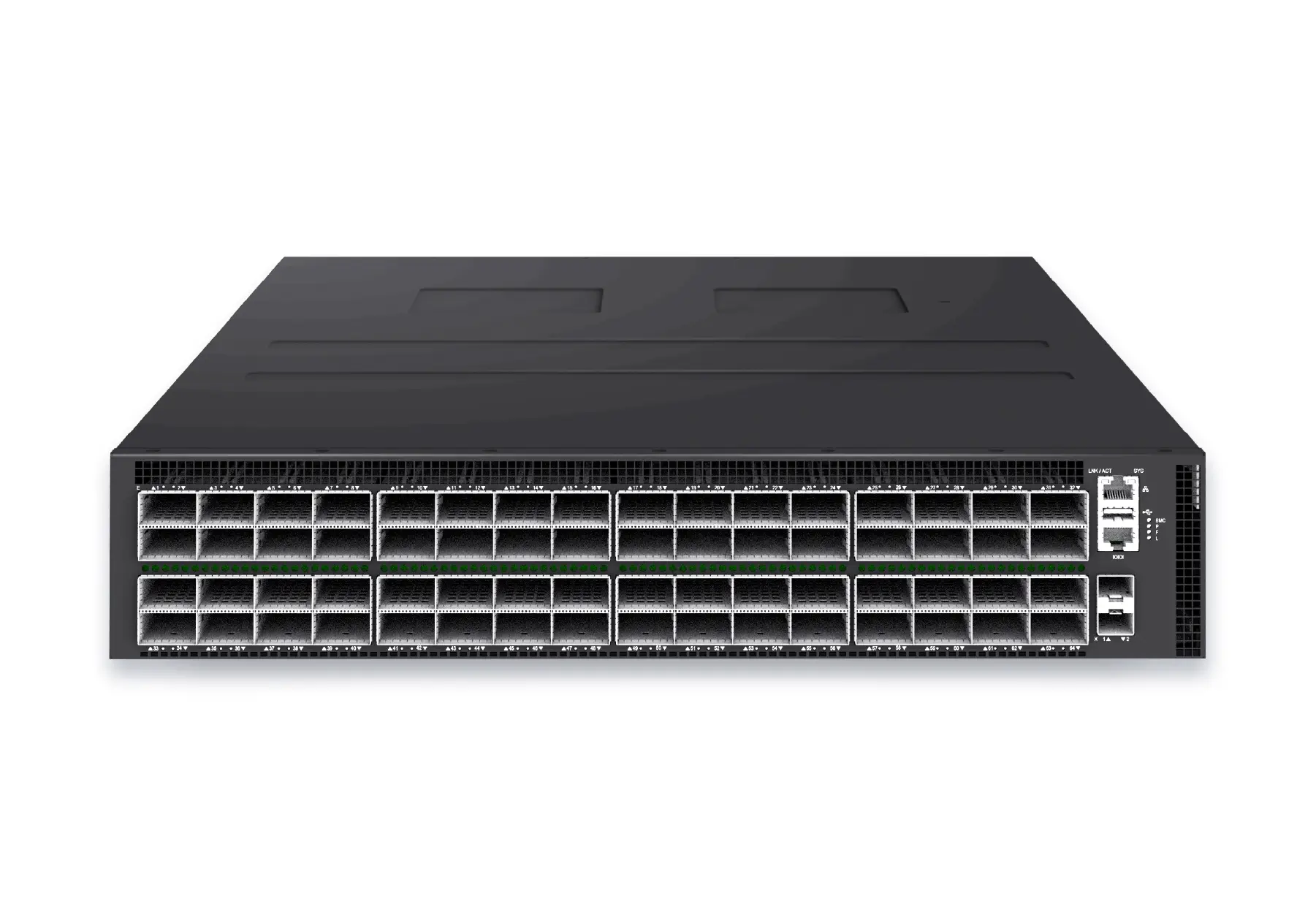 datacenter aiXS-DC-64X800-AI-G164-port 800G AI fabric switch for large-scale GPU clusters, HPC backbones, and ultra-high-throughput data center networks.View product
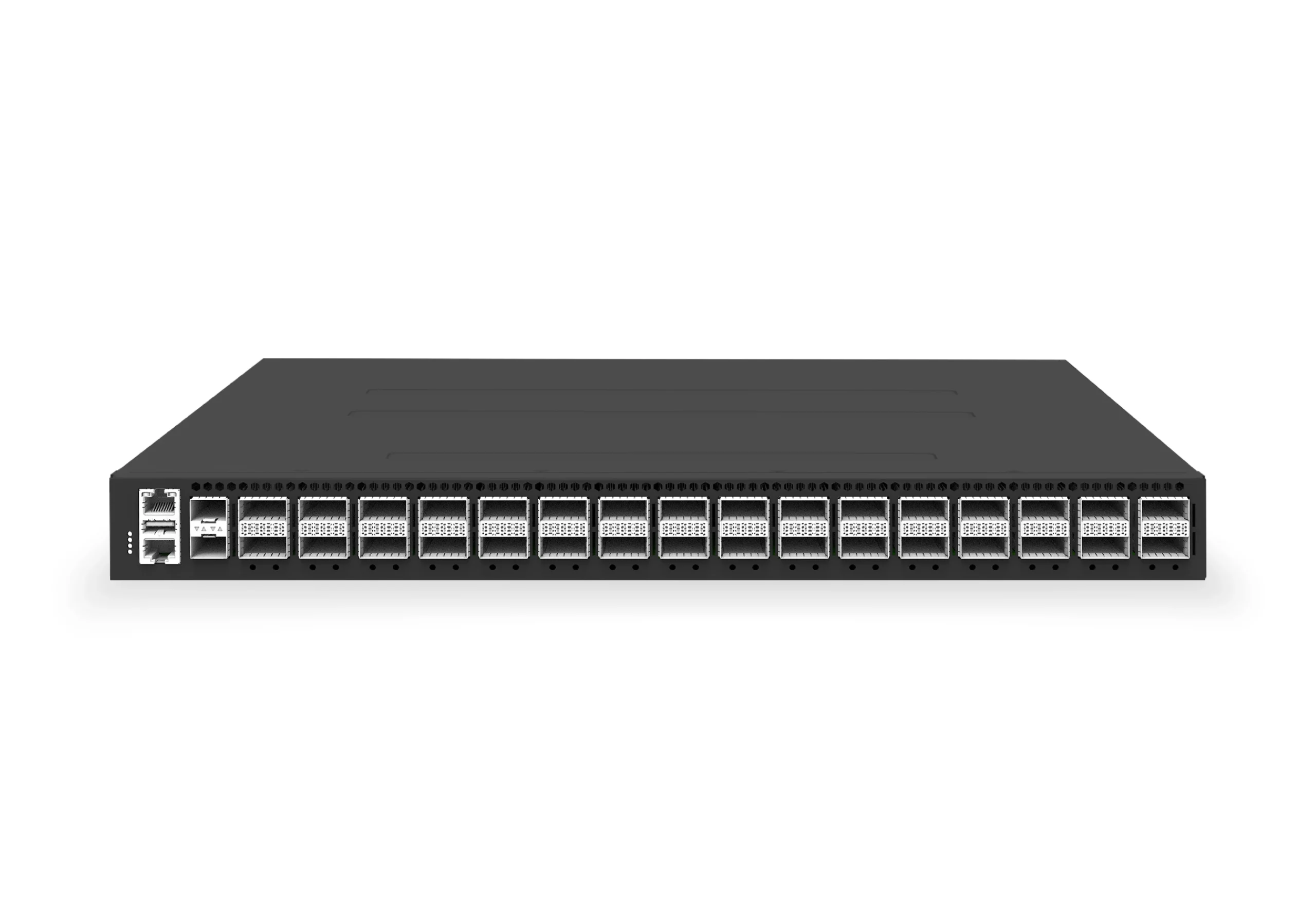 datacenter aiXS-DC-32X400-SP-G232-port 400G spine/core switch for high-capacity data center fabrics and AI-ready backbones.View product
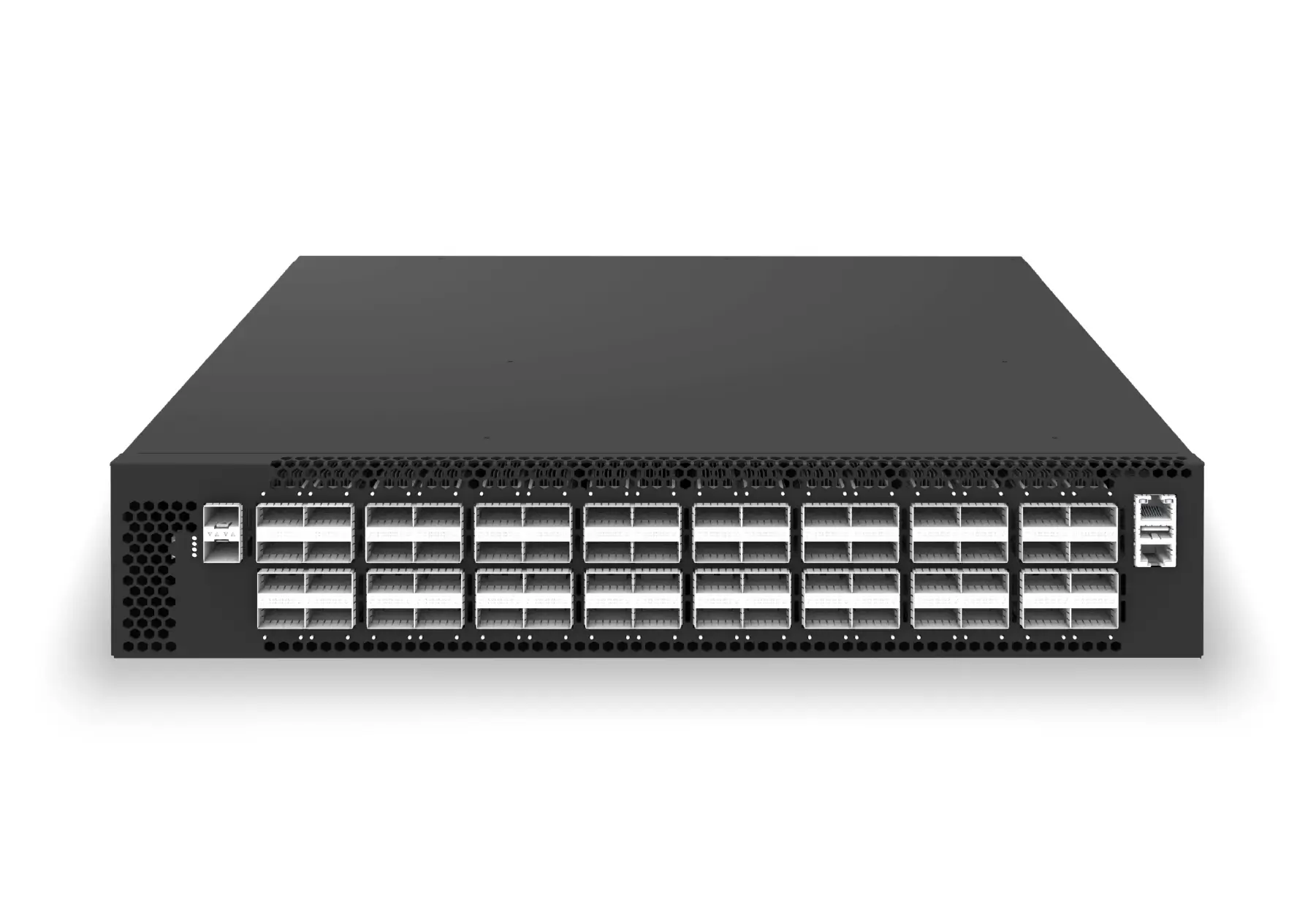 datacenter aiXS-DC-64X200-LS-G164-port 200G leaf/spine switch for high-bandwidth storage, compute, and scale-out data center fabrics.View product
Continue reading
Related articles
 Technical ArticleSONiC Switch Pre-Production Validation Checklist: A 12-Point Testing Playbook for Open Networking TeamsEngineering guidance on SONiC Switch Pre-Production Validation Checklist for Australian data centre buyers, covering form factor choice, link budgets, cabling.Read article
 Technical ArticleWhy Australian Data Centers Are Re-evaluating Open Networking for AI InfrastructureEngineering guide for AI fabric buyers covering RoCE, SONiC, telemetry, optics, support ownership, and deployment validation.Read article
 Technical ArticleSONiC Switch Validation Before Production: What Australian Network Teams Need on Their ChecklistEngineering guide for SONiC and open networking buyers covering platform fit, automation, support, telemetry, and validation evidence.Read article