In brief
Engineering guide for AI fabric buyers covering RoCE, SONiC, telemetry, optics, support ownership, and deployment validation.
Key takeaways
- Australia's data center sector is expanding rapidly. Hyperscalers are commissioning new facilities in Sydney and Melbourne, sovereign cloud requirements are driving local builds, and enterprise AI workloads are placing unprecedented demand on east-west traffic patterns inside the rack and across the spine-leaf fabric.
- At the center of this expansion sits a question that network architects in North America and Europe have been debating for years but that is now arriving on Australian shores with real urgency: should the next generation of data center switching be built on a proprietary network operating system, or on an open platform like SONiC?
- For xSONiC buyers evaluating their next data center refresh, this article maps the open networking landscape to the practical decisions Australian teams face when building AI-ready infrastructure.
The Australian Data Center Market Faces a Network Decision
Australia’s data center sector is expanding rapidly. Hyperscalers are commissioning new facilities in Sydney and Melbourne, sovereign cloud requirements are driving local builds, and enterprise AI workloads are placing unprecedented demand on east-west traffic patterns inside the rack and across the spine-leaf fabric.
At the center of this expansion sits a question that network architects in North America and Europe have been debating for years but that is now arriving on Australian shores with real urgency: should the next generation of data center switching be built on a proprietary network operating system, or on an open platform like SONiC?
For xSONiC buyers evaluating their next data center refresh, this article maps the open networking landscape to the practical decisions Australian teams face when building AI-ready infrastructure.
What SONiC Actually Offers
SONiC - Software for Open Networking in the Cloud - is an open-source network operating system built on Linux and maintained as a Linux Foundation project. According to the SONiC Foundation, SONiC decouples hardware from software by running on the Switch Abstraction Interface (SAI), which allows the same NOS image to operate across switches from multiple vendors and multiple ASIC families.
The project’s architecture is container-based: each network function runs in its own Docker container, providing fault isolation, independent upgrade paths, and simplified troubleshooting compared to monolithic switch software. SONiC offers a full suite of production networking features including BGP and RDMA, and it has been hardened in the data centers of major cloud service providers at global scale.
Key capabilities relevant to AI data center builds include:
- Multi-vendor hardware support through the SAI abstraction layer
- BGP and EVPN-VXLAN for scalable overlay and underlay routing
- RDMA over Converged Ethernet (RoCE) for lossless, low-latency GPU backend traffic
- Standard Linux interfaces and tools for automation, monitoring, and integration with existing operational workflows
- Container-based modularity that allows individual service upgrades without full-image replacement
This is not a lab curiosity. SONiC has an active community on GitHub with over 2,800 stars and nearly 3,000 commits, and it is supported by major switching silicon vendors including Broadcom and, through platforms like Spectrum-X, NVIDIA. The question for Australian buyers is not whether SONiC works, but whether it works for their specific operational model.
Why Australia Is Different (And Why It Is Not)
Australia’s data center market has characteristics that make open networking both more attractive and more nuanced than in hyperscaler-dominated regions.
Factors favoring open networking in Australia:
-
Cost sensitivity in a geographically isolated market. Shipping proprietary switching hardware to Australia carries a cost premium. When buyers can source bare-metal switches and pair them with SONiC or an Enterprise SONiC distribution, they gain negotiating leverage across multiple hardware suppliers rather than being locked to a single vendor’s pricing and availability.
-
Sovereign cloud and data residency requirements. Australian government frameworks including the Hosting Certification Framework and various state-level mandates are pushing operators to build local capacity. Open networking allows these operators to avoid depending on a single NOS vendor’s roadmap or support structure.
-
AI cluster growth outpacing traditional refresh cycles. Australian enterprises deploying private LLM inference, RAG pipelines, and GPU-accelerated analytics need 400G and 800G spine-leaf fabrics today, not in the next three-year capital planning cycle. Open switching platforms can compress procurement timelines.
-
Multi-site colocation complexity. Operators running facilities across Sydney, Melbourne, Brisbane, and Perth benefit from a consistent NOS image that runs on hardware from different suppliers at each site.
Factors requiring careful evaluation:
- Integration testing with existing tooling. Australian enterprises running service desk, monitoring, and compliance tools need to verify that SONiC’s NETCONF/YANG, gNMI, and streaming telemetry interfaces integrate with their operational stack before committing.
The AI Fabric Use Case: What Australian Builders Need
The strongest driver for open networking adoption in Australian data centers is the AI fabric. GPU clusters for training and inference require a network that delivers:
- Lossless Ethernet with RoCE v2, Priority Flow Control (PFC), and Data Center Bridging Capability Exchange (DCBX)
- Consistent low latency at the 400G/800G leaf and spine tier
- Scalable east-west bandwidth to avoid GPU idle time during distributed training
- Telemetry visibility into per-flow performance, congestion, and path selection
SONiC supports these capabilities natively. The combination of SONiC on bare-metal switches with enterprise-grade optics and structured RoCE v2 configuration is a proven pattern in hyperscaler GPU backends and is now being evaluated by Australian colocation operators and enterprise AI builders.
For xSONiC buyers, the practical question is how to assemble the full fabric stack:
| Layer | Component | xSONiC Product Direction |
|---|---|---|
| Leaf/Spine Switches | Bare-metal or pre-loaded SONiC switches, 400G/800G | Data Center AI Switches |
| Switch Hardware (custom NOS) | Open switching hardware for Enterprise SONiC or custom NOS | Data Center AI Switches |
| Optical Connectivity | SFP28, QSFP28, QSFP-DD, OSFP transceivers and DAC/AOC | Optical Transceivers |
| Network Visibility | Traffic aggregation, filtering, and replication for security and monitoring tools | Packet Brokers |
| GPU Compute | Inference server platforms for private LLM, RAG, and multimodal AI | AI Infrastructure Systems |
This layered approach lets Australian builders mix components from multiple suppliers while maintaining a consistent SONiC-based management and automation surface across the fabric.
Vendor Lock-In vs. Operational Maturity: The Honest Trade-Off
Open networking is not a universal win. It is a strategic trade-off that depends on the buyer’s operational maturity.
Proprietary NOS advantages include integrated support stacks, single-vendor accountability, pre-validated firmware and ASIC combinations, and established Australian channel and reseller networks.
Open networking advantages include hardware flexibility, multi-vendor sourcing, community-driven feature velocity, avoidance of forced upgrade timelines, and the ability to standardize a NOS layer across heterogeneous switch hardware.
For Australian buyers in the evaluate stage, the decision framework looks like this:
-
If you run a small team with limited Linux skills and need a single support number: A proprietary NOS may be the lower-risk choice today, but you should still evaluate whether an Enterprise SONiC distribution with vendor support closes that gap.
-
If you run a platform or SRE team with automation skills and you are building AI infrastructure at scale: Open networking with SONiC on bare-metal switches is likely the better long-term architecture. You gain the ability to source hardware competitively and operate a consistent NOS across sites.
-
If you are a colocation operator building multi-tenant AI capacity: Open networking gives you the flexibility to offer tenants different hardware tiers while maintaining a single operational platform. This is a meaningful competitive advantage in Australia’s growing colo market.
What to Watch: Australian Open Networking Trends in 2025 and Beyond
Several developments are worth tracking:
- 400G and 800G optics availability in the Australian market. The performance ceiling for AI fabrics depends on optics availability and pricing. Consistent supply of QSFP-DD and OSFP transceivers at competitive pricing is a material factor for Australian builds.
- Sovereign AI infrastructure mandates. As Australian government and defense agencies formalize requirements for onshore AI processing, the ability to build and operate local infrastructure with full control over the network stack becomes strategically relevant.
Key Takeaway for xSONiC Buyers
The Australian data center market is at an inflection point. AI workloads are forcing network upgrades at speeds and scales that exceed traditional refresh cycles. Open networking with SONiC-based switching offers Australian buyers a credible path to:
- Break vendor lock-in on switching hardware
- Build 400G/800G AI fabrics with RoCE v2 and lossless Ethernet
- Maintain operational control over the NOS layer across multi-site deployments
- Source hardware and optics from multiple suppliers with negotiating leverage
The trade-off is real: open networking demands Linux skills, automation maturity, and clear support model selection. But for Australian teams building AI infrastructure at scale, the cost of lock-in is growing faster than the cost of learning.
If you are evaluating open networking for your next data center build, explore xSONiC’s Data Center AI Switches, Data Center AI Switches, and AI Fabric solution to understand how SONiC-based switching maps to your infrastructure requirements.
Source References and Evidence Map
| Source URL | What It Supports |
|---|---|
| SONiC Foundation | SONiC description as open-source NOS based on Linux; decoupling hardware and software via SAI; container-based architecture; BGP and RDMA features; production-hardened in large cloud provider data centers; Linux Foundation project governance; multi-vendor ASIC support |
| SONiC GitHub repository | Multi-vendor support; container-based modular architecture with Docker; standard Linux interfaces; production-ready for large-scale cloud; open source with active community (2.8k stars, ~3k commits); BGP, RDMA, EVPN-VXLAN, NETCONF/YANG support; JSON-based configuration; Apache 2.0 license |
| NVIDIA Ethernet Switching | Spectrum Ethernet switches support Pure SONiC and Cumulus Linux as NOS options; Spectrum-X platform for AI networking; 800G/400G/200G port speeds; RoCE support; silicon photonics for AI fabric scaling; OEM partner ecosystem |
| Broadcom Ethernet Switching | Broadcom is a major switching silicon vendor supporting SONiC through SAI (Switch Abstraction Interface); page confirms Broadcom Ethernet switch product family existence |
Engineering FAQ
What should be proven before adopting EVPN-VXLAN on SONiC? Prove underlay routing, BGP sessions, VTEP behaviour, MAC/IP learning, route scale, multi-homing design, failure convergence, and observability. The overlay should be accepted as a system, not a feature checkbox.
Why does the underlay design still matter in an overlay network? EVPN-VXLAN depends on a stable routed underlay. MTU, ECMP, addressing, route policy, link failure behaviour, and telemetry determine whether the overlay remains predictable under load and during faults.
What should be included in an EVPN-VXLAN operations runbook? Include naming, IP plan, BGP policy, VNI mapping, change process, rollback commands, failure checks, telemetry fields, backup and restore steps, and escalation ownership for the selected SONiC image.
Related xSONiC Resources
Sources Reviewed
- Ethernet Network Adapters - ConnectX NICs | NVIDIA
- NVIDIA BlueField Data Processing Unit
- NVIDIA Spectrum-X Ethernet Platform
- OpenConfig gNMI Specification
- OpenConfig
- RFC 7950 - The YANG 1.1 Data Modeling Language
- RFC 6241 - Network Configuration Protocol (NETCONF)
- ACSC Essential Eight
- OAIC Notifiable Data Breaches
- APRA CPS 234 Information Security
- NETSCOUT Network Packet Definition
- Cloudflare Network Packet Definition
- SONiC Project Documentation
- Broadcom Ethernet Switching
- Marvell Switching
- NVIDIA Ethernet Switching
- Open Compute Networking
- SONiC GitHub
- SONiC Foundation
Product fit
Products referenced for evaluation
These products are referenced for evaluation context in the article. Confirm workload, port, optics, software, interoperability, and support requirements against the exact deployment before procurement.
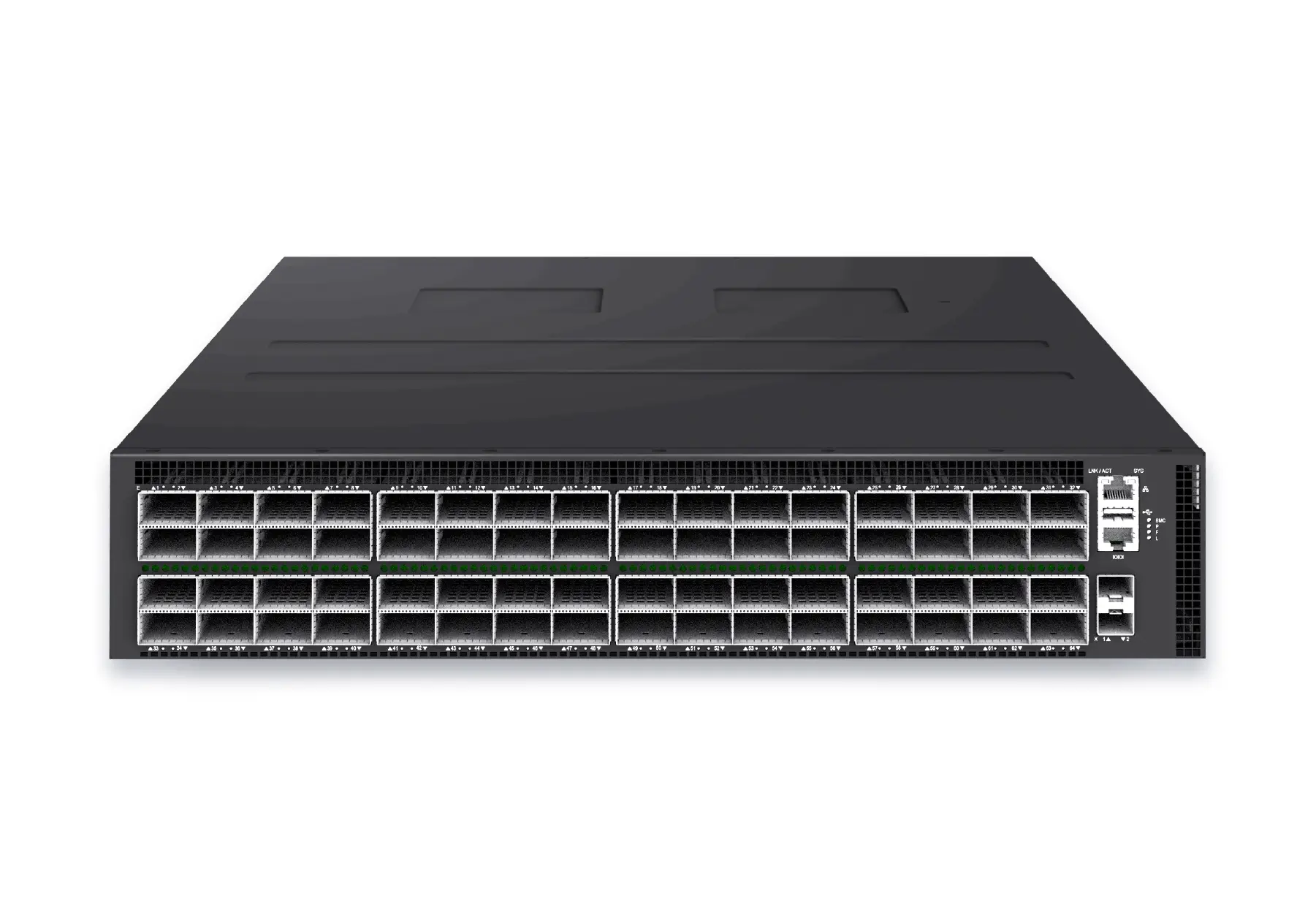 datacenter aiXS-DC-64X800-AI-G164-port 800G AI fabric switch for large-scale GPU clusters, HPC backbones, and ultra-high-throughput data center networks.View product
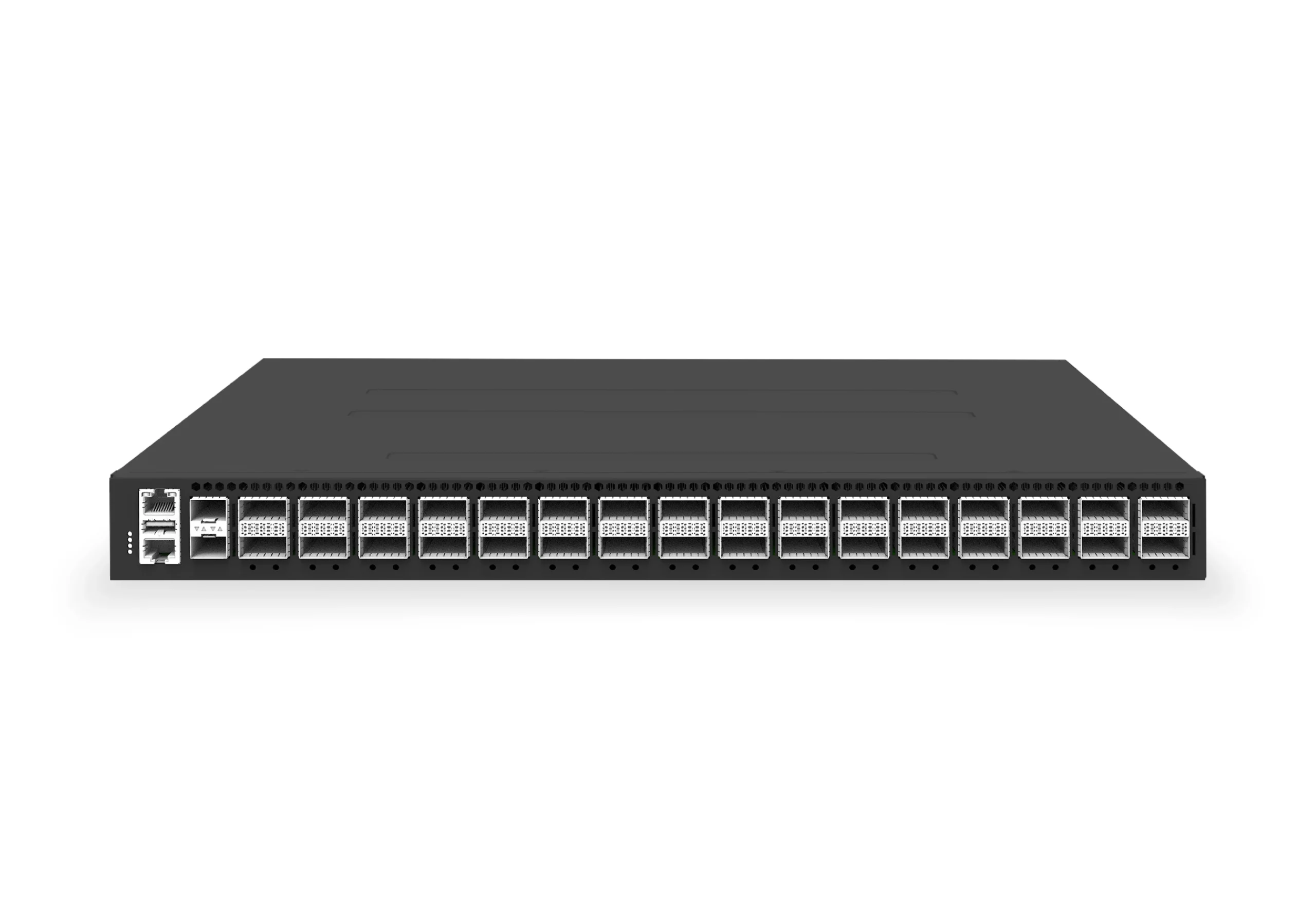 datacenter aiXS-DC-32X400-SP-G232-port 400G spine/core switch for high-capacity data center fabrics and AI-ready backbones.View product
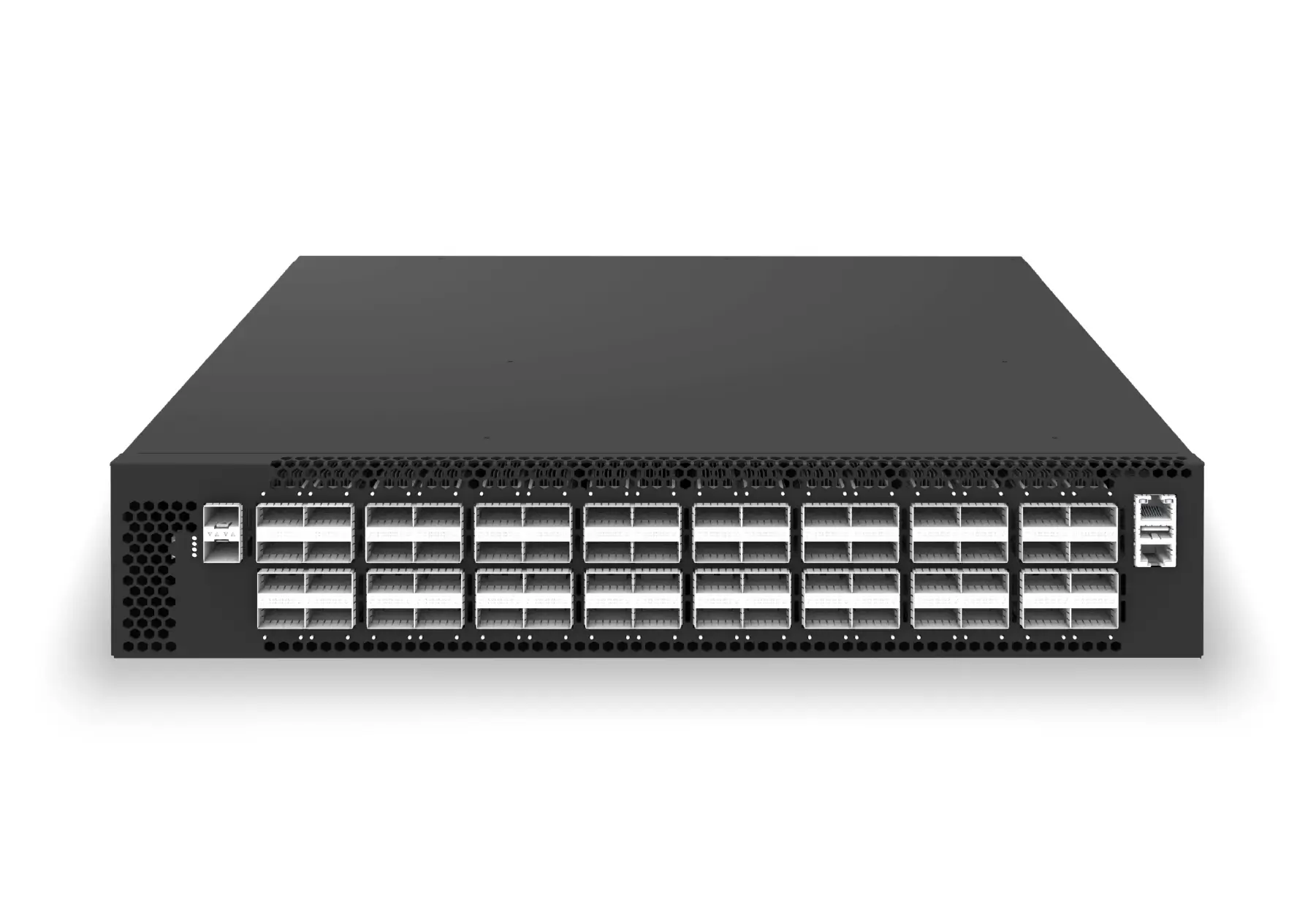 datacenter aiXS-DC-64X200-LS-G164-port 200G leaf/spine switch for high-bandwidth storage, compute, and scale-out data center fabrics.View product
Continue reading
Related articles
 Technical ArticleSONiC Switch Pre-Production Validation Checklist: A 12-Point Testing Playbook for Open Networking TeamsEngineering guidance on SONiC Switch Pre-Production Validation Checklist for Australian data centre buyers, covering form factor choice, link budgets, cabling.Read article
 Technical ArticleSONiC Switch Validation Before Production: What Australian Network Teams Need on Their ChecklistEngineering guide for SONiC and open networking buyers covering platform fit, automation, support, telemetry, and validation evidence.Read article
 Technical ArticleThe SONiC Ecosystem in 2025: How Open Networking Moved from Hyperscale Cloud to Every Enterprise Data CenterAn engineering view of the SONiC ecosystem in 2025, covering OCP, SAI, ONIE, cloud operators, AI fabrics, campus adoption, support, and Australian buyer validation.Read article