In brief
Engineering guide for SONiC and open networking buyers covering platform fit, automation, support, telemetry, and validation evidence.
Key takeaways
- Software for Open Networking in the Cloud (SONiC) has moved beyond hyperscaler-only deployments.
- NVIDIA now offers Pure SONiC alongside Cumulus Linux as a supported NOS on its Spectrum Ethernet switch portfolio, and the vendor highlights SONiC's role in AI data center networking (nvidia.com).
- This brief outlines a validation framework for Australian teams planning SONiC switch deployments.
Why SONiC Pre-Production Validation Matters in Australia Now
Software for Open Networking in the Cloud (SONiC) has moved beyond hyperscaler-only deployments. The SONiC Foundation, a Linux Foundation project, describes SONiC as ‘an open source network operating system based on Linux that runs on switches from multiple vendors and ASICs’ that ‘offers a full suite of network functionality, like BGP and RDMA, that has been production-hardened in the data centers of some of the largest cloud service providers’ (sonicfoundation.dev). For Australian network teams evaluating SONiC-based infrastructure, the gap between lab testing and production readiness is where costly mistakes hide.
NVIDIA now offers Pure SONiC alongside Cumulus Linux as a supported NOS on its Spectrum Ethernet switch portfolio, and the vendor highlights SONiC’s role in AI data center networking (nvidia.com). But open-source NOS adoption introduces a different risk profile than proprietary alternatives. Support responsibility depends on whether the buyer uses community SONiC, a commercial SONiC distribution, or an integration partner. Pre-production validation becomes the safety net that proves the selected model works before the switch enters a production fabric.
This brief outlines a validation framework for Australian teams planning SONiC switch deployments. It is not a certification program or a substitute for vendor acceptance testing. Each checklist area requires verification against the specific SONiC version, hardware platform, optics, ASIC, and operational requirements in the deployment.
The SONiC Architecture: What You Are Actually Testing
Understanding what sits inside a SONiC switch helps frame what needs validation. The SONiC GitHub repository describes a container-based architecture ‘where each network function runs in its own Docker container,’ providing ‘better fault isolation, easier debugging and troubleshooting, simplified upgrades and maintenance, and enhanced scalability’ (github.com/sonic-net/SONiC).
SONiC uses JSON-based configuration files and supports both CLI and programmatic configuration methods. It relies on the Switch Abstraction Interface (SAI) to decouple network software from the underlying ASIC, which means the same SONiC image can run on switches from different hardware vendors. This multi-vendor promise is the value proposition, but it also means your validation matrix grows with every combination of platform, ASIC, and feature set.
Key architecture components that need individual validation:
- Docker container health and inter-container dependencies
- SAI API compatibility between SONiC version and switch ASIC
- JSON configuration schema version alignment
- Database (Redis) synchronization across containers
- Kernel module loading and hardware driver binding
- Management framework integration (SNMP, gNMI, NETCONF)
Each of these layers can fail independently, which is both the strength and the complexity of SONiC’s design.
Validation Area 1: Platform and ASIC Compatibility
The first validation gate confirms that your SONiC image actually supports your target hardware. The SONiC project maintains a supported devices and platforms list (referenced at sonicfoundation.dev and github.com/sonic-net/SONiC), but platform support is version-dependent.
Recommended validation steps:
| Check | What to Verify | Source of Truth |
|---|---|---|
| Hardware platform ID | Switch model and revision match SONiC build target | SONiC supported devices list, hardware vendor datasheet |
| ASIC compatibility | SAI version on SONiC image matches ASIC SDK requirements | SONiC release notes, ASIC vendor SAI documentation |
| ONIE installer | SONiC image installs via ONIE without errors on target platform | Lab test on actual hardware |
| Port mapping | Front panel port numbers, speeds, and breakout modes match expectations | SONiC port configuration file, hardware platform JSON |
| Transceiver compatibility | Pluggable optics (SFP+, SFP28, QSFP28, QSFP-DD) are detected and link up | Lab test with target transceiver SKUs |
For Australian teams, transceiver validation is particularly important because local supply chains may include optics from vendors not in the primary SONiC test matrix.
Validation Area 2: L2 and L3 Protocol Correctness
SONiC supports a full routing and switching stack, but protocol behavior needs to be validated against your specific network design, not assumed from documentation.
L2 validation checklist:
- VLAN creation, trunking, and access port assignment
- STP/RSTP/MSTP convergence and loop prevention
- LAG (static and LACP) formation and failover timing
- LLDP neighbor discovery and management address advertisement
- IGMP snooping for multicast VLANs
- EVPN-VXLAN Layer 2 gateway behavior (if deploying overlay)
L3 validation checklist:
- BGP session establishment, route advertisement, and withdrawal
- OSPF adjacency and SPF convergence (if used)
- ECMP hash distribution and next-hop failover
- VRF isolation and inter-VRF route leaking
- Static route persistence across container restarts
- Route scale testing to expected production prefix count
The SONiC GitHub repository notes that SONiC uses JSON-based configuration, which means configuration drift and syntax errors can propagate silently across containers. A single malformed JSON entry can cause a container to enter a crash loop without clear CLI-level error reporting. Build configuration validation into your test pipeline, not just your change management process.
Validation Area 3: Data Plane Performance and AI Fabric Readiness
SONiC’s architecture includes RDMA support as a core feature. For AI fabric validation, consider:
Validation Area 4: Management, Monitoring, and Automation
SONiC offers both CLI and programmatic configuration methods. The GitHub documentation describes JSON-based configuration files as the primary management interface, but production environments typically layer additional automation on top.
Management validation checklist:
- SSH access and role-based authentication
- SNMP v3 polling for interface counters, CPU, and memory
- gNMI telemetry streaming to monitoring platform
- NETCONF/YANG model compliance for configuration management
- Syslog forwarding and severity level configuration
- NTP synchronization and time zone accuracy
- Configuration backup and restore procedures
- Image upgrade and rollback testing
For Australian enterprise campus deployments, NETCONF and YANG-based automation is increasingly important. SONiC’s containerized architecture means that management plane failures in one container should not affect data plane forwarding in another, but this isolation needs to be tested, not assumed.
Recommended approach: Deploy a representative monitoring stack (Prometheus, Grafana, or equivalent) against SONiC switches in a pre-production environment and run it for a minimum observation period before cutover. Validate that container restarts, configuration changes, and failover events generate the expected telemetry signals.
Validation Area 5: Security Hardening and Compliance
Open-source NOS deployments require explicit security validation because there is no vendor-managed security patch lifecycle to rely on.
Security validation checklist:
- Default credential removal and SSH key-based authentication
- Firewall (iptables/nftables) configuration on management plane
- Disabling unused services and management interfaces
- TLS certificate management for management protocols
- SONiC security advisory monitoring and patch process (referenced at sonicfoundation.dev community resources)
- RBAC (Role-Based Access Control) implementation and testing
- Configuration encryption at rest
- Audit logging completeness and forwarding
For Australian organizations, additional compliance considerations include:
- Data sovereignty requirements for telemetry and logging destinations
The SONiC Foundation’s security process is documented in the project repository (github.com/sonic-net/SONiC, SECURITY.md), but the speed of security patch delivery depends on community responsiveness, not vendor SLAs. Build a patch management cadence into your operational model before production deployment.
Building Your Validation Timeline
A structured pre-production validation cycle for SONiC switches typically spans 4 to 8 weeks depending on deployment complexity. The timeline should be adjusted for the number of switch SKUs, ASIC generations, optics types, routing features, automation integrations, and compliance controls in scope.
Shorten this timeline at your own risk. The most common post-deployment failures in open networking environments trace back to skipped validation steps, not software defects.
What to Verify Before You Commit
SONiC’s open-source model gives network teams hardware flexibility and eliminates vendor lock-in, but it transfers validation responsibility from the vendor to the deploying team. The SONiC Foundation describes a ‘rapidly growing ecosystem’ with ‘wide industry support’ including ‘major network chip vendors’ (sonicfoundation.dev), and NVIDIA’s endorsement through Pure SONiC on Spectrum switches adds commercial credibility (nvidia.com).
For Australian network teams, the decision framework comes down to three questions:
- Does your team have the operational capability to own NOS validation, patching, and troubleshooting without vendor TAC support?
- Does your hardware and feature requirement matrix align with the current SONiC supported platforms list?
- Does your compliance and security posture allow for open-source NOS in production?
If the answer to any of these is uncertain, start with a limited production pilot, not a full fleet rollout. Use the validation checklist above as a gate review framework: no production deployment until each area has documented pass/fail results.
The final gate is evidence, not confidence. Keep the test results, failure notes, rollback logs, and validated configuration templates with the project record so operations teams can reproduce the build months later.
Engineering Evidence Floor
For SONiC and open networking articles, the acceptance standard is operational proof, not community momentum. The evidence package should name the switch SKU, ASIC, SAI version, ONIE status, SONiC image, optics matrix, automation interface, support path, and rollback procedure. A practical pilot should run for 30 days, include 3 automated configuration changes, validate 100G/400G links where relevant, and prove that a P1 evidence bundle can be assembled within 2 hours.
| Evidence area | What to validate | Acceptance gate | Rework trigger |
|---|---|---|---|
| Platform | SKU, ASIC, ONIE, SAI, image, and optics | 2 platforms boot, upgrade, and rollback | Hardware support is assumed |
| Automation | Source of truth, API/gNMI/NETCONF, backup, and diff | 3 changes pass state readback | CLI drift becomes normal |
| Operations | Logs, telemetry, failure runbook, and escalation owner | P1 bundle ready within 2 hours | Fault isolation depends on one engineer |
| Lifecycle | Patch cadence, CVE process, spare plan, and support SLA | 12 months plan approved | Security and RMA ownership is unclear |
| Commercial | Hardware, support, optics, training, and migration labour | Risk-adjusted TCO is documented | Savings vanish after rework |
Engineering FAQ
What should be proven before adopting EVPN-VXLAN on SONiC? Prove underlay routing, BGP sessions, VTEP behaviour, MAC/IP learning, route scale, multi-homing design, failure convergence, and observability. The overlay should be accepted as a system, not a feature checkbox.
Why does the underlay design still matter in an overlay network? EVPN-VXLAN depends on a stable routed underlay. MTU, ECMP, addressing, route policy, link failure behaviour, and telemetry determine whether the overlay remains predictable under load and during faults.
What should be included in an EVPN-VXLAN operations runbook? Include naming, IP plan, BGP policy, VNI mapping, change process, rollback commands, failure checks, telemetry fields, backup and restore steps, and escalation ownership for the selected SONiC image.
Related xSONiC Resources
Sources Reviewed
- IEEE 802.1Q Bridges and Bridged Networks
- IEEE 802.1AX Link Aggregation
- Ethernet Network Adapters - ConnectX NICs | NVIDIA
- NVIDIA BlueField Data Processing Unit
- NVIDIA Spectrum-X Ethernet Platform
- OpenConfig gNMI Specification
- OpenConfig
- RFC 7950 - The YANG 1.1 Data Modeling Language
- RFC 6241 - Network Configuration Protocol (NETCONF)
- ACSC Essential Eight
- OAIC Notifiable Data Breaches
- APRA CPS 234 Information Security
- NETSCOUT Network Packet Definition
- Cloudflare Network Packet Definition
- SONiC Project Documentation
- Broadcom Ethernet Switching
- Marvell Switching
- NVIDIA Ethernet Switching
- Open Compute Networking
- SONiC GitHub
- SONiC Foundation
Product fit
Products referenced for evaluation
These products are referenced for evaluation context in the article. Confirm workload, port, optics, software, interoperability, and support requirements against the exact deployment before procurement.
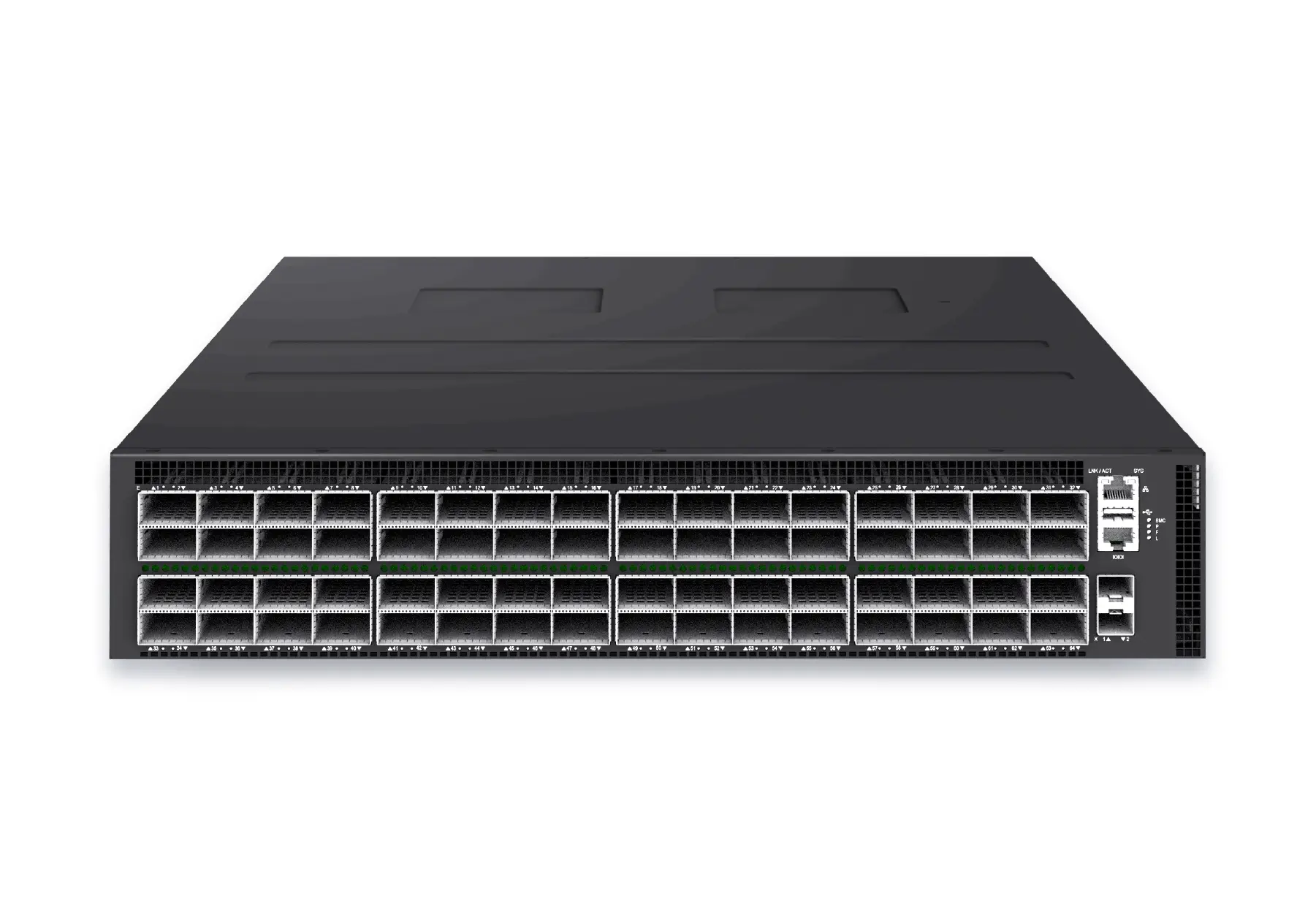 datacenter aiXS-DC-64X800-AI-G164-port 800G AI fabric switch for large-scale GPU clusters, HPC backbones, and ultra-high-throughput data center networks.View product
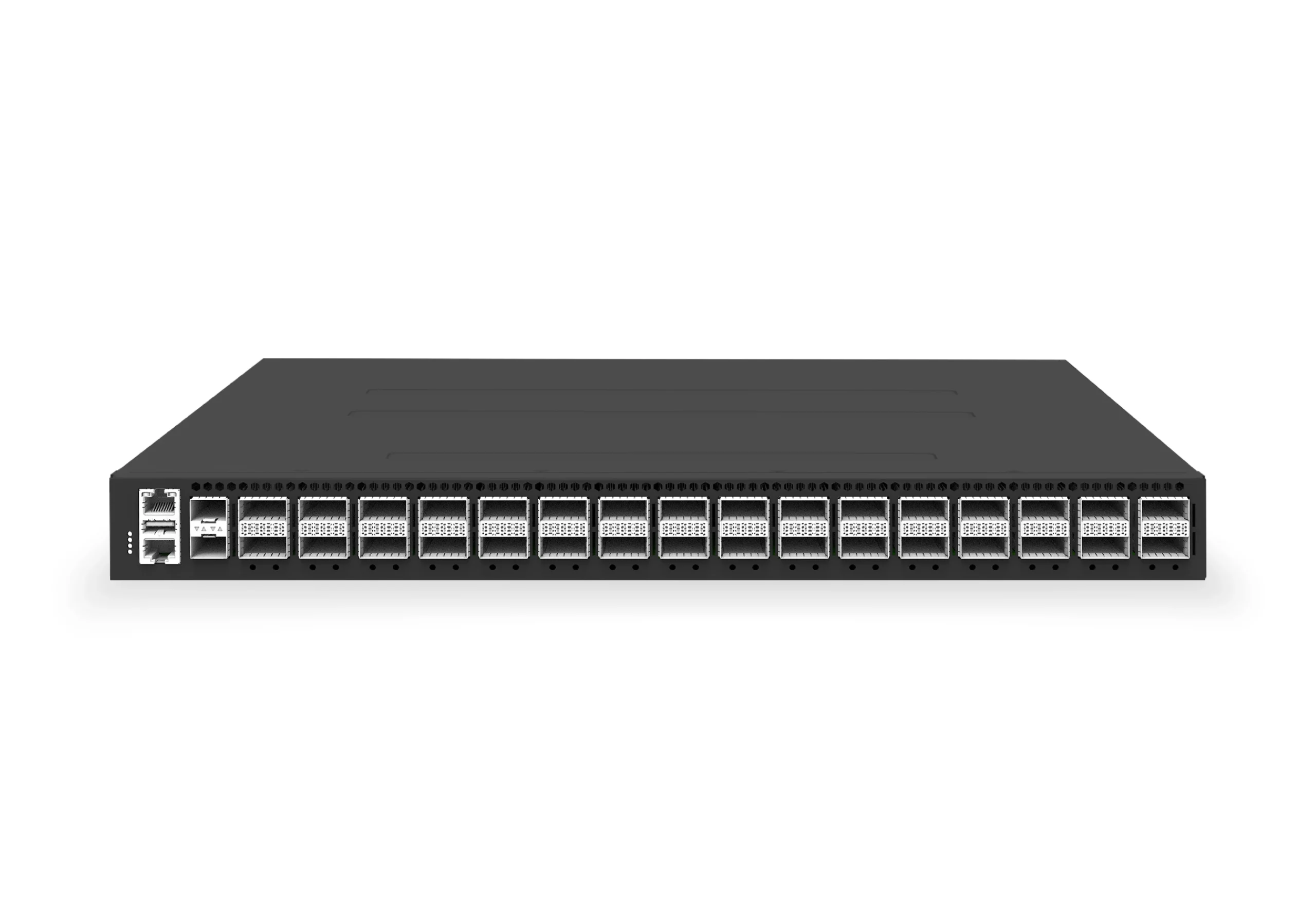 datacenter aiXS-DC-32X400-SP-G232-port 400G spine/core switch for high-capacity data center fabrics and AI-ready backbones.View product
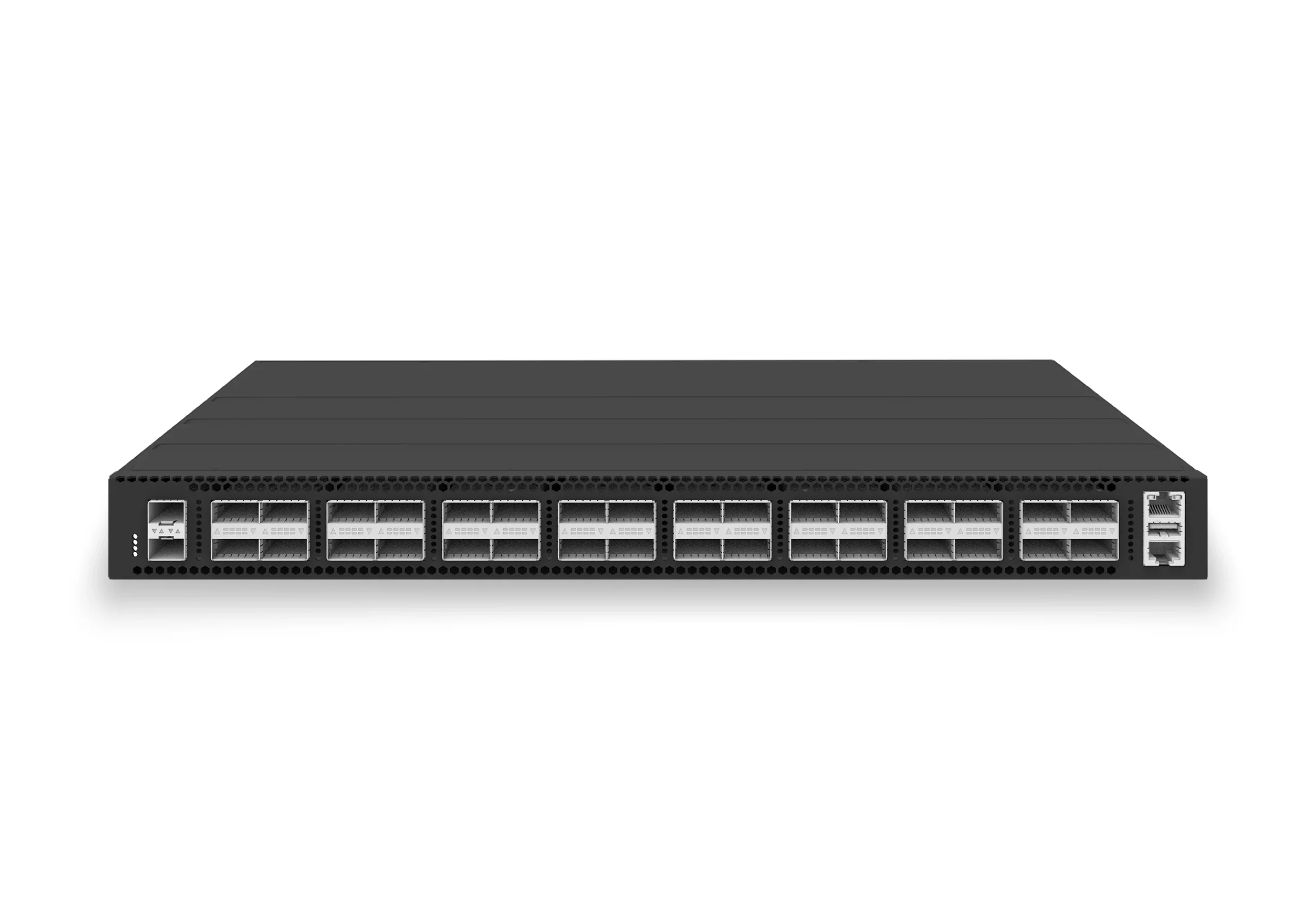 datacenter aiXS-DC-32X100-LS-G232-port 100G leaf/spine switch for VXLAN fabrics, RoCE-ready workloads, and tenant-scale routing.View product
Continue reading
Related articles
 Technical ArticleSONiC Switch Pre-Production Validation Checklist: A 12-Point Testing Playbook for Open Networking TeamsEngineering guidance on SONiC Switch Pre-Production Validation Checklist for Australian data centre buyers, covering form factor choice, link budgets, cabling.Read article
 Technical ArticleWhy Australian Data Centers Are Re-evaluating Open Networking for AI InfrastructureEngineering guide for AI fabric buyers covering RoCE, SONiC, telemetry, optics, support ownership, and deployment validation.Read article
 Technical ArticleThe SONiC Ecosystem in 2025: How Open Networking Moved from Hyperscale Cloud to Every Enterprise Data CenterAn engineering view of the SONiC ecosystem in 2025, covering OCP, SAI, ONIE, cloud operators, AI fabrics, campus adoption, support, and Australian buyer validation.Read article