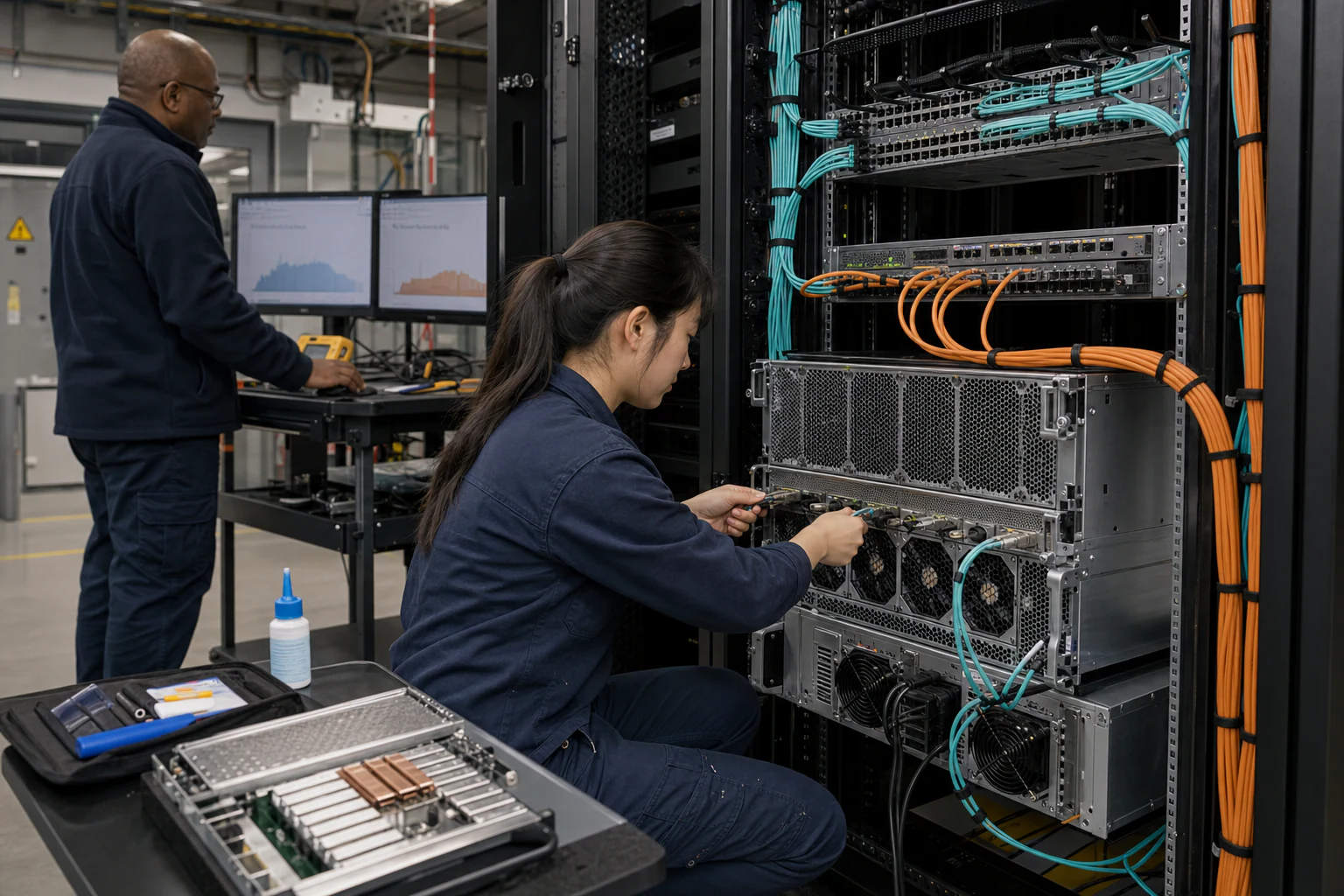
In brief
Engineering guidance on AI Fabric Buyer Checklist for Australian network teams, covering underlay design, EVPN-VXLAN operations, interoperability, telemetry, and.
Key takeaways
- AI infrastructure teams in Australia face a foundational network decision early in every GPU cluster build: should the backend fabric use InfiniBand or Ethernet?
- This guide is not a vendor pitch. It is a practical buyer checklist designed to help data center architects, network engineers, and infrastructure leaders evaluate both options against their specific workload profiles, operational constraints, and growth plans.
- InfiniBand and Ethernet both support Remote Direct Memory Access (RDMA), which allows GPUs and servers to transfer data directly into each other's memory without CPU involvement.
Why This Guide Exists
AI infrastructure teams in Australia face a foundational network decision early in every GPU cluster build: should the backend fabric use InfiniBand or Ethernet? Both technologies can deliver the low-latency, high-bandwidth interconnect that distributed training and large-scale inference demand. But they arrive at that performance through different operational models, vendor ecosystems, and cost structures.
This guide is not a vendor pitch. It is a practical buyer checklist designed to help data center architects, network engineers, and infrastructure leaders evaluate both options against their specific workload profiles, operational constraints, and growth plans. The focus is on Ethernet AI fabrics built on open networking principles, using SONiC-based switches with RoCE v2, as a credible alternative to proprietary InfiniBand stacks.
The Two Paths: InfiniBand and Ethernet at a Glance
InfiniBand and Ethernet both support Remote Direct Memory Access (RDMA), which allows GPUs and servers to transfer data directly into each other’s memory without CPU involvement. This is critical for distributed AI training workloads where collective operations like AllReduce dominate network traffic.
InfiniBand is a purpose-built interconnect technology originally designed for high-performance computing. It delivers deterministic low latency through cut-through switching and credit-based flow control at the hardware level. InfiniBand fabrics traditionally use a subnet manager for topology discovery and path computation, and the technology has a long track record in supercomputing and hyperscale AI clusters.
Ethernet is the dominant LAN and data center networking technology. For AI workloads, Ethernet has evolved significantly through the addition of RDMA over Converged Ethernet (RoCE v2), Data Center Bridging (DCBX), Priority Flow Control (PFC), and Explicit Congestion Notification (ECN). Modern Ethernet switch ASICs from vendors like Broadcom and NVIDIA Spectrum now support wire-speed RDMA at 400 Gb/s and 800 Gb/s per port, with purpose-built features for AI traffic patterns.
The SONiC (Software for Open Networking in the Cloud) network operating system, developed under the Linux Foundation, provides a multi-vendor, containerized, open-source platform that supports BGP, RDMA, and production-grade data center networking on switches from multiple hardware vendors and ASIC families. SONiC is production-hardened in the data centers of some of the largest cloud service providers, as documented by the SONiC Foundation.
For Australian buyers evaluating AI fabrics, the question is no longer whether Ethernet can handle AI workloads. It is whether the operational model of open Ethernet with SONiC and RoCE v2 fits your team’s skills, vendor preferences, and scale requirements better than a proprietary InfiniBand stack.
Decision Criteria Checklist: Ethernet AI Fabric (SONiC + RoCE v2)
Use the following checklist to evaluate whether an Ethernet-based AI fabric built on SONiC and RoCE v2 is the right fit for your AI cluster. Each criterion is a practical question, not a technical absolute.
Infrastructure and Operations
- Your team already operates Ethernet data center fabrics and has BGP/EVPN-VXLAN skills
- You want a single network operating system across AI backend, frontend, and management networks
- You prefer multi-vendor hardware choice and want to avoid single-vendor lock-in at the switch level
- You need to integrate AI cluster networking with existing campus, WAN, or cloud connectivity
- Your operations team is comfortable with Linux-based network OS administration and troubleshooting
Performance and Scale
- You need 400 Gb/s or 800 Gb/s per port bandwidth, which modern Ethernet switch ASICs support
- Your workload patterns benefit from congestion management features like DCBX, PFC, ECN, and Fast CNP
Cost and Ecosystem
- You want competitive pricing from multiple switch and transceiver vendors rather than a single-source procurement model
- You prefer open-source NOS licensing without per-switch software subscription fees
- You need optics compatibility across SFP28, QSFP28, QSFP-DD, and OSFP form factors from multiple suppliers
- Your Australian data center has existing Ethernet cabling infrastructure (fibre or DAC) that can support 400G/800G links
Observability and Automation\n- [ ] You want programmable network telemetry for AI traffic visibility (INT, IPTPath)
- You need NETCONF/YANG or gNMI-based automation integrated with your existing toolchain
- You want real-time congestion and flow visibility to diagnose GPU communication bottlenecks
If you answered yes to most of these criteria, an Ethernet AI fabric with SONiC and RoCE v2 is a strong candidate for your AI cluster.
Decision Criteria Checklist: InfiniBand Fabric
Use the following checklist to evaluate whether InfiniBand is the right fit for your AI cluster. InfiniBand remains a proven and operationally mature choice for certain deployment profiles.
Infrastructure and Operations
- Your team has dedicated HPC or InfiniBand fabric management expertise (subnet manager, UFM)
- You are building a purpose-built AI cluster where the backend fabric is isolated from general data center networking
- You accept single-vendor or limited-vendor hardware sourcing for switches, HCAs, and cables
- Your deployment model is turnkey: the entire GPU cluster, network, and software stack is procured as an integrated system
Performance and Scale
- Your training workloads are extremely latency-sensitive and every microsecond of fabric latency impacts training time
- You need Adaptive Routing or SHARP (Scalable Hierarchical Aggregation and Reduction Protocol) for in-network computing
- Your workload requires the deterministic latency guarantees that InfiniBand’s credit-based flow control provides at hardware level
Cost and Ecosystem
- You have budget allocated for premium InfiniBand switch and HCA pricing (typically higher per-port cost than Ethernet)
- You are comfortable with a smaller vendor ecosystem for switches, optics, and support
- Your procurement model accepts vendor-specific cable and transceiver qualification requirements
Observability and Automation
- You plan to use NVIDIA UFM or similar InfiniBand-specific fabric management tools
- Your monitoring stack is compatible with InfiniBand telemetry and performance counters
If you answered yes to most of these criteria, InfiniBand is likely the appropriate choice for your AI cluster backend fabric.
Feature Comparison Table: Ethernet RoCE vs InfiniBand for AI Fabrics
| Criterion | Ethernet AI Fabric (SONiC + RoCE v2) | InfiniBand |
|---|---|---|
| RDMA Support | RoCE v2 (standard Ethernet) | Native RDMA (built into protocol) |
| Typical Port Speeds | 100G, 200G, 400G, 800G | 200G (HDR), 400G (NDR), 800G (XDR) |
| Congestion Management | DCBX + PFC + ECN + Fast CNP | Credit-based flow control (hardware) |
| Flow Control | Priority Flow Control (PFC, IEEE 802.1Qbb) | Credit-based (hardware level) |
| Topology | Leaf-spine (Clos), standard Ethernet | Fat-tree, dragonfly+, torus |
| Routing | BGP, ECMP, Adaptive Routing (vendor-specific) | Subnet Manager, Adaptive Routing, SHARP |
| NOS Options | SONiC (open source), Cumulus, vendor NOS | Proprietary (NVIDIA UFM-managed) |
| Hardware Vendor Choice | Multiple (Broadcom, Marvell, NVIDIA ASICs) | Limited (primarily NVIDIA) |
| Optics Ecosystem | Multi-vendor SFP28/QSFP28/QSFP-DD/OSFP | Vendor-qualified cables and transceivers |
| Network Operating System Cost | Open source (SONiC) or subscription-based | Included with switch or UFM license |
| Observability | INT telemetry, IPTPath, gNMI, NetFlow | UFM, InfiniBand performance counters |
| In-Network Computing | Not native (GPU-side AllReduce) | SHARP (in-network reduction) |
| Multi-Purpose Network | Yes (AI backend, frontend, management) | Typically dedicated backend fabric |
This table is a starting framework. Specific latency numbers, pricing, and Australian supplier availability must be verified before use in any customer-facing document.
The Case for Ethernet: Why Open Networking Changes the Equation
For many enterprise AI clusters in Australia, the historical default for GPU backend fabrics was InfiniBand. That default is now being challenged by three converging trends.
First, Ethernet switch ASIC performance has caught up. Modern Ethernet switch silicon from Broadcom (Memory-Memory-Memory architecture) and NVIDIA Spectrum-6 delivers 800 Gb/s per port with hardware-accelerated RoCE, large shared packet buffers, and cut-through forwarding. The NVIDIA Spectrum-X platform is explicitly positioned as an Ethernet platform for AI networking, with features like zero-touch RoCE acceleration and congestion-aware routing.
Second, SONiC has matured into a production-grade NOS for AI fabrics. SONiC is a Linux Foundation project that runs on switches from multiple vendors and multiple ASIC families. It supports BGP, RDMA, containerized microservices architecture, and standard Linux management interfaces. The SONiC community includes major chip vendors, cloud providers, and enterprise networking companies. For Australian buyers, this means the NOS layer is decoupled from the hardware layer, enabling multi-vendor sourcing and reducing single-vendor dependency.
Third, the operational model matters. Most enterprise data center teams in Australia already manage Ethernet networks. The skills, tooling, monitoring, and troubleshooting workflows are Ethernet-native. Introducing InfiniBand for an AI cluster means adding a parallel operational domain with different management tools, different failure modes, and different skill requirements. An Ethernet AI fabric allows teams to leverage existing operational knowledge while adding RoCE-specific features like DCBX, PFC, ECN, and INT telemetry incrementally.
This does not mean Ethernet is always the right choice. It means the decision should be based on a structured evaluation of workload requirements, operational capacity, and total cost of ownership, not on historical assumptions about which technology is faster.
Key Ethernet AI Fabric Technologies to Evaluate
When evaluating an Ethernet AI fabric, your team should understand the following technologies and their role in delivering reliable, low-latency RDMA performance.
RoCE v2 (RDMA over Converged Ethernet v2): RoCE v2 encapsulates RDMA operations in UDP/IP packets, allowing them to traverse standard Ethernet routed networks. It is the foundation of Ethernet-based AI fabrics. RoCE v2 requires proper congestion management to avoid packet drops, which would trigger costly RDMA retransmissions.
DCBX (Data Center Bridging Capability Exchange): DCBX is a protocol that allows Ethernet switches and endpoints to negotiate QoS parameters, including Priority Flow Control settings, bandwidth allocation, and application priorities. In an AI fabric, DCBX ensures that RDMA traffic receives lossless treatment on the links where it matters.
PFC (Priority Flow Control): PFC (IEEE 802.1Qbb) enables per-priority pause on Ethernet links. When a switch’s buffer fills for a given traffic class, it sends a PFC pause frame to the upstream device, preventing packet loss for that class. PFC is essential for RoCE v2 but must be carefully configured to avoid head-of-line blocking and pause frame storms.
ECN (Explicit Congestion Notification) and Fast CNP: ECN marks packets when congestion is building, before buffers overflow. The receiving endpoint sends a Congestion Notification Packet (CNP) back to the sender, which then reduces its injection rate. Fast CNP implementations accelerate this feedback loop to reduce the time spent in congestion.
INT (In-band Network Telemetry): INT allows switches to embed telemetry metadata (queue depth, latency, congestion status) directly into data packets as they traverse the fabric. This provides real-time, hop-by-hop visibility into AI traffic patterns without requiring separate probe infrastructure.
IPTPath Telemetry: IPTPath extends visibility by tracking the actual path and performance of individual flows through the fabric, enabling precise diagnosis of congestion hotspots and tail latency issues in GPU communication.
For detailed guidance on each technology, see the xSONiC solution pillars for RoCE v2, DCBX, Fast CNP, and INT Telemetry.
Engineering FAQ
What should be proven before adopting EVPN-VXLAN on SONiC? Prove underlay routing, BGP sessions, VTEP behaviour, MAC/IP learning, route scale, multi-homing design, failure convergence, and observability. The overlay should be accepted as a system, not a feature checkbox.
Why does the underlay design still matter in an overlay network? EVPN-VXLAN depends on a stable routed underlay. MTU, ECMP, addressing, route policy, link failure behaviour, and telemetry determine whether the overlay remains predictable under load and during faults.
What should be included in an EVPN-VXLAN operations runbook? Include naming, IP plan, BGP policy, VNI mapping, change process, rollback commands, failure checks, telemetry fields, backup and restore steps, and escalation ownership for the selected SONiC image.
Related xSONiC Resources
Sources Reviewed
- Ethernet Network Adapters - ConnectX NICs | NVIDIA
- NVIDIA BlueField Data Processing Unit
- NVIDIA Spectrum-X Ethernet Platform
- OpenConfig gNMI Specification
- OpenConfig
- RFC 7950 - The YANG 1.1 Data Modeling Language
- RFC 6241 - Network Configuration Protocol (NETCONF)
- ACSC Essential Eight
- OAIC Notifiable Data Breaches
- APRA CPS 234 Information Security
- NETSCOUT Network Packet Definition
- Cloudflare Network Packet Definition
- SONiC Project Documentation
- Broadcom Ethernet Switching
- Marvell Switching
- NVIDIA Ethernet Switching
- Open Compute Networking
- SONiC GitHub
- SONiC Foundation
Product fit
Products referenced for evaluation
These products are referenced for evaluation context in the article. Confirm workload, port, optics, software, interoperability, and support requirements against the exact deployment before procurement.
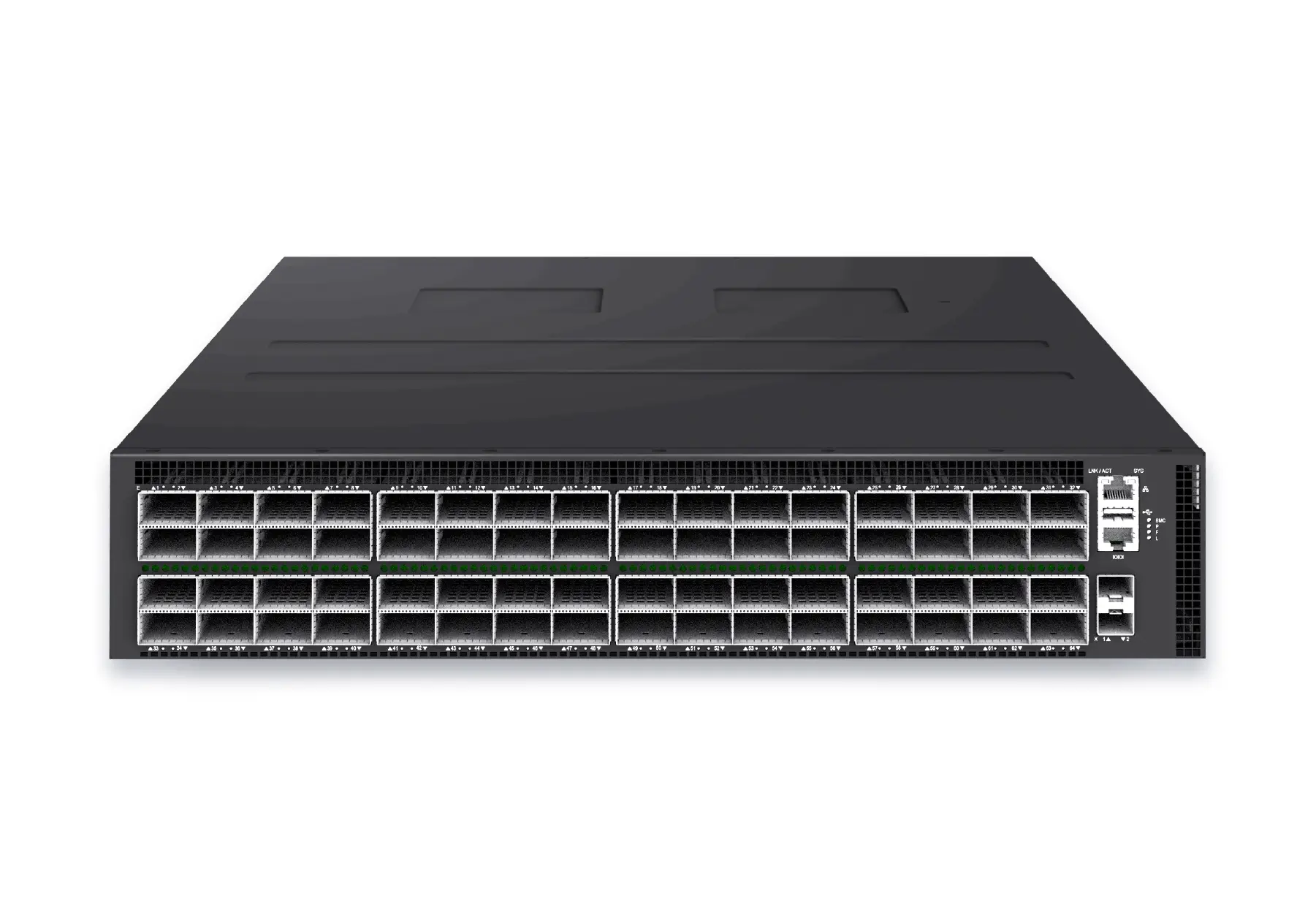 datacenter aiXS-DC-64X800-AI-G164-port 800G AI fabric switch for large-scale GPU clusters, HPC backbones, and ultra-high-throughput data center networks.View product
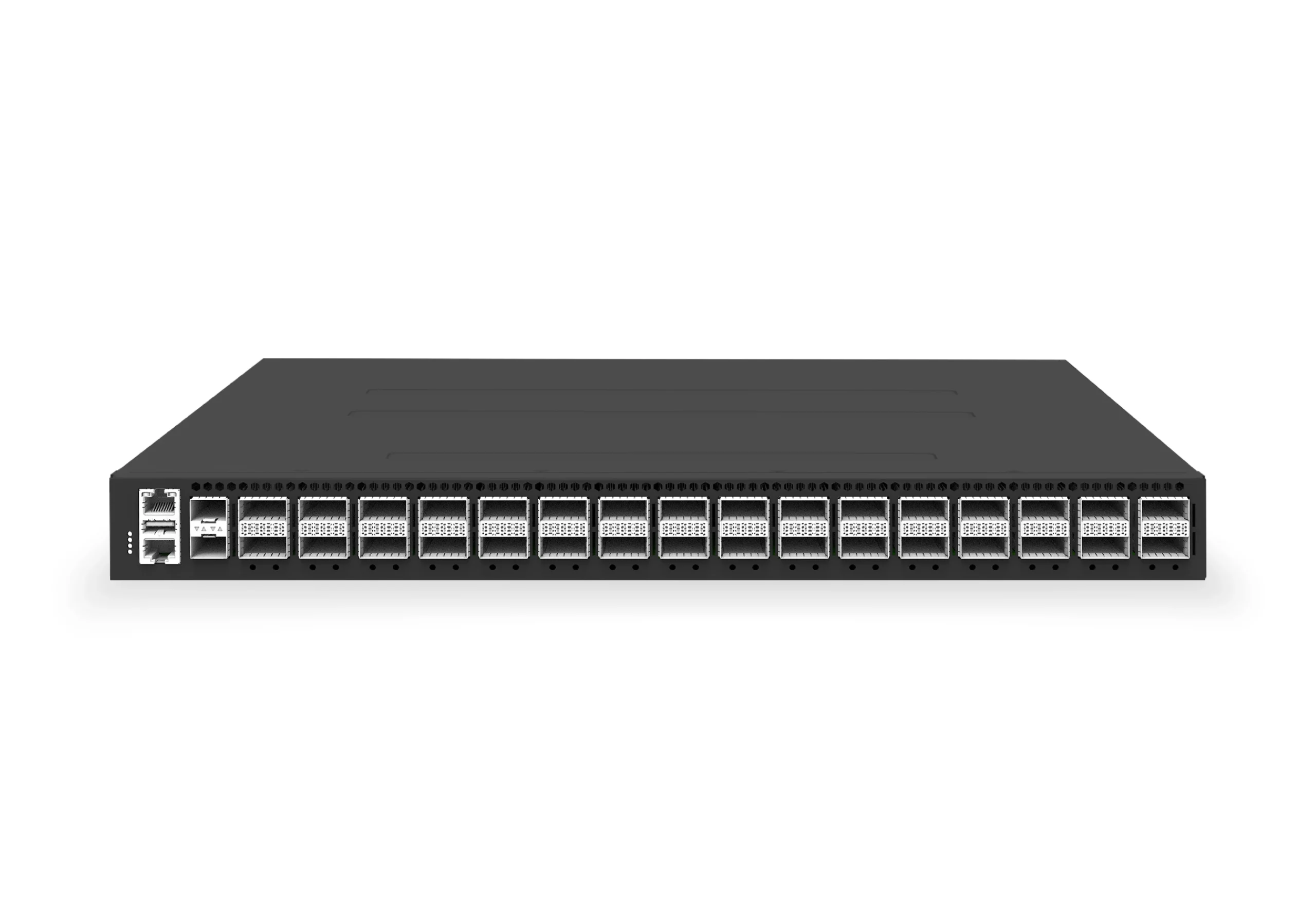 datacenter aiXS-DC-32X400-SP-G232-port 400G spine/core switch for high-capacity data center fabrics and AI-ready backbones.View product
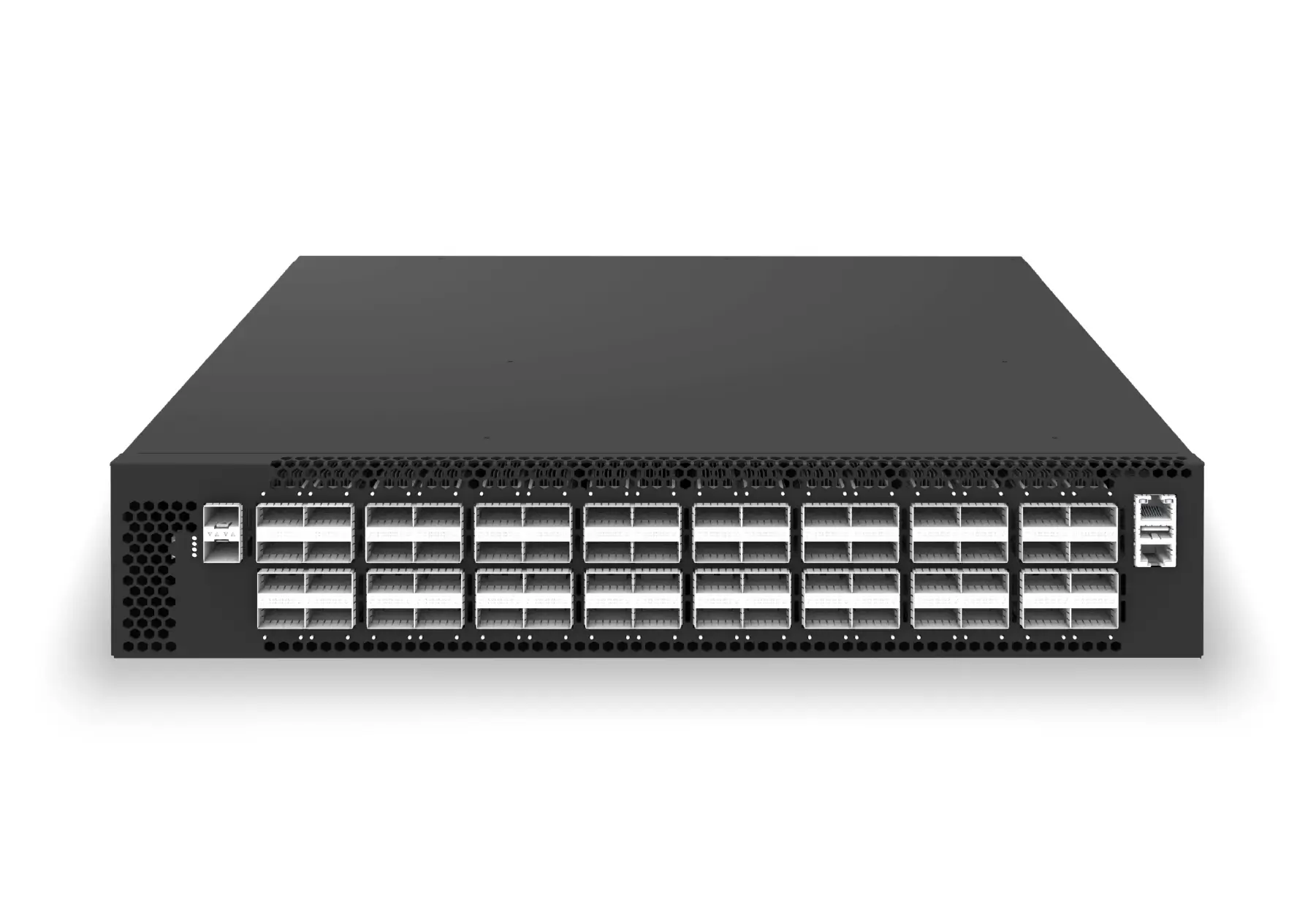 datacenter aiXS-DC-64X200-LS-G164-port 200G leaf/spine switch for high-bandwidth storage, compute, and scale-out data center fabrics.View product
Continue reading
Related articles
 Technical ArticleHow SONiC-Powered 400G and 800G Switches Change AI Data Center Fabric Design in AustraliaEngineering guide for 400G and 800G optics planning covering form factor, reach, telemetry, thermal limits, supply risk, and validation.Read article
 Technical ArticleRoCE v2 GPU Backend Fabrics at 400G and 800G: What Australian Data Center Operators Need to Know in 2026Engineering guide for AI fabric buyers covering RoCE, SONiC, telemetry, optics, support ownership, and deployment validation.Read article
 Technical ArticleWhat Australian Data Center Buyers Need to Know Before Choosing SONiC Switches for 400G and 800G UpgradesEngineering guide for 400G and 800G optics planning covering form factor, reach, telemetry, thermal limits, supply risk, and validation.Read article