In brief
Guide to centralized AI fabric control for SONiC environments, covering RoCE consistency, telemetry, automation, and operational risk.
Key takeaways
- If you are running a GPU training cluster with more than a handful of racks, you have already felt the pain.
- For a 16-node leaf-spine fabric with 400G uplinks, that might mean touching 20 or more switches.
- This is the operational breakpoint where a centralized controller shifts from a nice-to-have to an engineering necessity.
The Scaling Problem Every AI Fabric Operator Hits
If you are running a GPU training cluster with more than a handful of racks, you have already felt the pain. A single topology change — adding a leaf switch, reassigning a GPU server port, or tuning PFC thresholds — means logging into each switch individually, typing CLI commands, and hoping you did not miss one.
For a 16-node leaf-spine fabric with 400G uplinks, that might mean touching 20 or more switches. For a 256-GPU cluster spread across eight leaf pairs, the per-switch CLI model does not just slow you down. It becomes an active risk to training job uptime.
This is the operational breakpoint where a centralized controller shifts from a nice-to-have to an engineering necessity.
What an AIDC Controller Actually Does
An AIDC Controller is a management and orchestration layer that sits above your SONiC-based spine-leaf fabric and provides centralized control over:
-
Topology discovery and awareness. The controller builds and maintains a real-time model of the fabric — every switch, every port, every link, every connected GPU server. When a new leaf switch boots, the controller discovers it, applies the correct baseline configuration, and integrates it into the fabric without manual CLI intervention.
-
Policy enforcement at fabric scale. Instead of configuring DCBX, PFC, ECN, and RoCE v2 parameters switch by switch, you define intent-based policies once and push them across the entire fabric. A policy change for a new GPU workload tier propagates to all relevant leaf and spine switches in a single operation.
-
Telemetry aggregation and visualization. In-band Network Telemetry (INT) and IPTPath telemetry streams from every switch are collected, correlated, and displayed in a unified dashboard. When a training job slows down, you can trace the exact hop where congestion or packet drops occurred — without SSH-ing into five different switches.
-
Configuration drift detection and remediation. If an operator makes an ad-hoc CLI change on a leaf switch, the controller detects the drift from the intended state and can alert or automatically remediate. For AI training workloads that are sensitive to microbursts and queue depth changes, this is not a luxury.
Why SONiC Makes This Possible
The SONiC (Software for Open Networking in the Cloud) project provides the open-source foundation that makes controller-driven management practical. SONiC’s containerized architecture decouples network services into discrete Docker containers, each communicating through a Redis-based database layer. This design means a controller can interact with the switch state through well-defined APIs rather than screen-scraping CLI output.
Key architectural properties that enable centralized control:
-
JSON-based configuration model. SONiC uses a structured configuration format that a controller can read, validate, and write programmatically. This replaces the fragile approach of generating CLI scripts and hoping the parser does not reject them.
-
Standard Linux interfaces and tools. Because SONiC is Linux-based, standard monitoring protocols (gRPC, streaming telemetry, SNMP, syslog) work natively. A controller does not need proprietary agent software on each switch.
-
Multi-vendor hardware abstraction through SAI. The Switch Abstraction Interface (SAI) standardizes how SONiC interacts with different ASIC vendors. This means your AIDC Controller manages a consistent interface regardless of whether your spine switches use supported merchant-silicon ASICs or other silicon. A controller can operate across a heterogeneous fleet.
-
Production proven in hyperscale environments. SONiC has been production-hardened in the data centers of some of the largest cloud service providers, running BGP, RDMA, and other critical protocols at scale. The same open-source NOS that runs hyperscale AI clouds is available to enterprise and colocation operators.
The AI Fabric Specifics: RoCE v2, PFC, and Telemetry
AI training traffic is fundamentally different from typical east-west data center traffic. GPU-to-GPU collective operations (AllReduce, AllGather) generate synchronized, high-bandwidth, latency-sensitive flows. A single packet drop or misconfigured PFC threshold can stall an entire training epoch.
An AIDC Controller addresses three critical areas for AI fabric reliability:
RoCE v2 Configuration Consistency
RDMA over Converged Ethernet version 2 (RoCE v2) requires precise, consistent configuration across the entire fabric path: PFC priority, ECN marking thresholds, DCBX negotiation, and traffic class mapping. If one spine switch has different PFC settings than the others, you get intermittent training stalls that are extremely difficult to diagnose.
A centralized controller ensures that RoCE v2 policies are applied consistently across every switch in the fabric. When you add a new GPU workload tier with different QoS requirements, the controller propagates the changes to all relevant switches atomically.
Fast Congestion Notification (Fast CNP)
In large GPU clusters, congestion can propagate faster than a human operator — or even a slow automation script — can respond. Fast CNP mechanisms allow switches to signal congestion back to GPU NICs in microseconds. The AIDC Controller configures and monitors these fast-path mechanisms across the fabric, ensuring they activate correctly and reporting on congestion events in real time.
INT and IPTPath Telemetry
In-band Network Telemetry (INT) embeds metadata directly into packet headers as they traverse each switch hop. IPTPath telemetry extends this with path-specific visibility. The AIDC Controller collects these telemetry streams from all switches and correlates them into a fabric-wide view.
For an AI fabric operator, this means:
- You can identify which specific switch port is causing microburst congestion affecting a training job.
- You can see the actual forwarding path for GPU backend traffic and verify it matches the intended topology.
- You can set alerts when telemetry data indicates a link is approaching saturation, before it impacts training performance.
When Do You Need a Controller? A Practical Checklist
Not every deployment needs a centralized controller on day one. Use this checklist to evaluate whether your AI fabric has reached the operational complexity threshold:
| Criterion | CLI-Managed | Controller-Managed |
|---|---|---|
| Fabric size | Under 8 switches | 8 or more switches |
| GPU cluster size | Single rack (up to ~64 GPUs) | Multi-rack (128+ GPUs) |
| Configuration frequency | Weekly or less | Daily or continuous |
| Telemetry requirements | Basic interface counters | INT, IPTPath, per-flow visibility |
| Staff model | Dedicated network engineer per shift | Shared NetOps or platform team |
| Compliance and audit | Manual documentation | Automated config audit trail |
| Change risk tolerance | Acceptable | Low (training jobs cost money when they stall) |
If three or more of your answers fall in the right column, a centralized controller will likely reduce operational risk and free engineering time.
The Australian Context
Australian data center operators face specific considerations when deploying AI fabric infrastructure:
-
Colocation density and power costs. Australian colocation facilities, particularly in Sydney and Melbourne, have power and cooling constraints that make efficient fabric design critical. A controller-driven approach helps optimize fabric utilization and avoid over-provisioning.
-
Skilled labor availability. Network engineering talent with deep SONiC and RoCE v2 expertise is limited in the Australian market. A centralized controller reduces the per-switch expertise required, making it practical for smaller platform teams to operate production AI fabrics.
-
Latency to cloud AI services. For organizations that need private AI infrastructure due to data sovereignty, latency, or cost requirements, building on-premises GPU clusters with controller-managed SONiC fabrics is a viable alternative to hyperscaler GPU instances.
What to Ask Your Vendor
When evaluating an AIDC Controller for your AI fabric, ask these questions:
-
Does the controller support NETCONF/YANG or gNMI for switch interaction? Standard-based APIs ensure you are not locked into proprietary management protocols.
-
How does the controller handle switch failures and failover? If the controller itself goes down, does your fabric continue forwarding? It should — the controller should manage the control plane, not become a single point of failure in the data plane.
-
Can the controller enforce configuration consistency across mixed ASIC hardware? If your spine and leaf switches use different ASIC generations, the controller must abstract these differences.
-
What telemetry visualization and alerting is built in? Ask for a live demo of INT and IPTPath data flowing from a real fabric, not just a slide deck.
-
How does the controller integrate with your existing monitoring stack? Look for gRPC streaming telemetry export, syslog forwarding, and API endpoints that your existing Grafana, Prometheus, or custom dashboards can consume.
Next Steps
If you are building or scaling an AI training fabric and want to understand how xSONiC’s AIDC Controller, Enterprise SONiC switches, and integrated telemetry stack fit together, reach out to the xSONiC team for a technical discussion.
- Explore the AIDC Controller solution overview
- Learn about AI Fabric architecture
- Review RoCE v2 deployment guidance
- Understand INT telemetry for AI fabrics
- Browse xSONiC data center AI switches
- Contact xSONiC for a fabric sizing discussion
Controller Acceptance Matrix
| Control area | Evidence to capture | Acceptance gate | Rework trigger |
|---|---|---|---|
| Configuration consistency | Golden templates, desired state, gNMI/NETCONF readback, and drift reports | 3 fabric-wide changes complete with validation and rollback | Controller pushes config but cannot prove state |
| RoCE policy | PFC, ECN, DCBX, MTU, queue profile, and NIC/switch compatibility | 30 minutes congestion test keeps policy consistent across leaves | CLI exceptions create rack-by-rack behaviour |
| Telemetry | INT/IPTPath, queue counters, optics DOM, alerting, and dashboard correlation | Operators identify a fabric issue within 15 minutes | Controller provides inventory but not diagnosis |
| Resilience | Controller outage, switch reboot, link loss, backup, restore, and audit trail | Forwarding survives controller failure and evidence is retained for 24 hours | Controller becomes a new single point of operational failure |
| Support model | APAC escalation, software lifecycle, role ownership, and incident workflow | P1 simulation produces evidence bundle within 2 hours | Vendor and operations teams disagree who owns automation faults |
Engineering FAQ
When does an AI fabric need a controller? It becomes necessary when the fabric has enough switches, GPUs, RoCE policy, and telemetry that manual CLI changes cannot keep state consistent or auditable.
What should a controller never become? It should not become a forwarding dependency or a black-box change tool. The fabric must keep forwarding if the controller fails, and every change should leave an auditable state record.
How should Australian buyers validate controller claims? Ask for live desired-state validation, rollback, telemetry correlation, controller outage testing, and an APAC support path before adopting it as the operating layer.
Related xSONiC Resources
Sources Reviewed
- AI Fabric Ethernet Reference
- Ethernet Network Adapters - ConnectX NICs | NVIDIA
- NVIDIA BlueField Data Processing Unit
- NVIDIA Spectrum-X Ethernet Platform
- OpenConfig gNMI Specification
- OpenConfig
- RFC 7950 - The YANG 1.1 Data Modeling Language
- RFC 6241 - Network Configuration Protocol (NETCONF)
- SONiC Project Documentation
- Broadcom Ethernet Switching
- Marvell Switching
- NVIDIA Ethernet Switching
- Open Compute Networking
- SONiC GitHub
- SONiC Foundation
Product fit
Products referenced for evaluation
These products are referenced for evaluation context in the article. Confirm workload, port, optics, software, interoperability, and support requirements against the exact deployment before procurement.
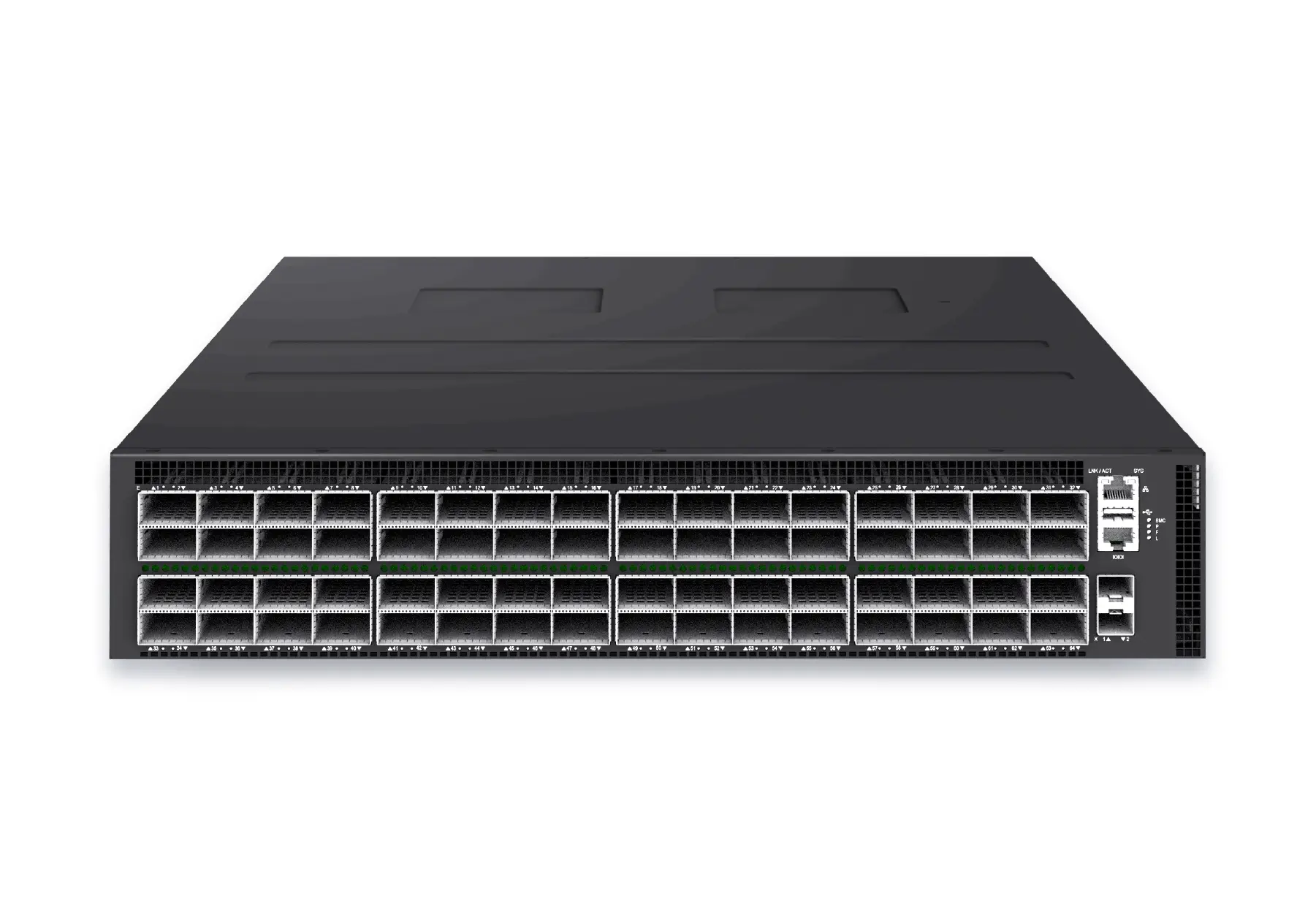 datacenter aiXS-DC-64X800-AI-G164-port 800G AI fabric switch for large-scale GPU clusters, HPC backbones, and ultra-high-throughput data center networks.View product
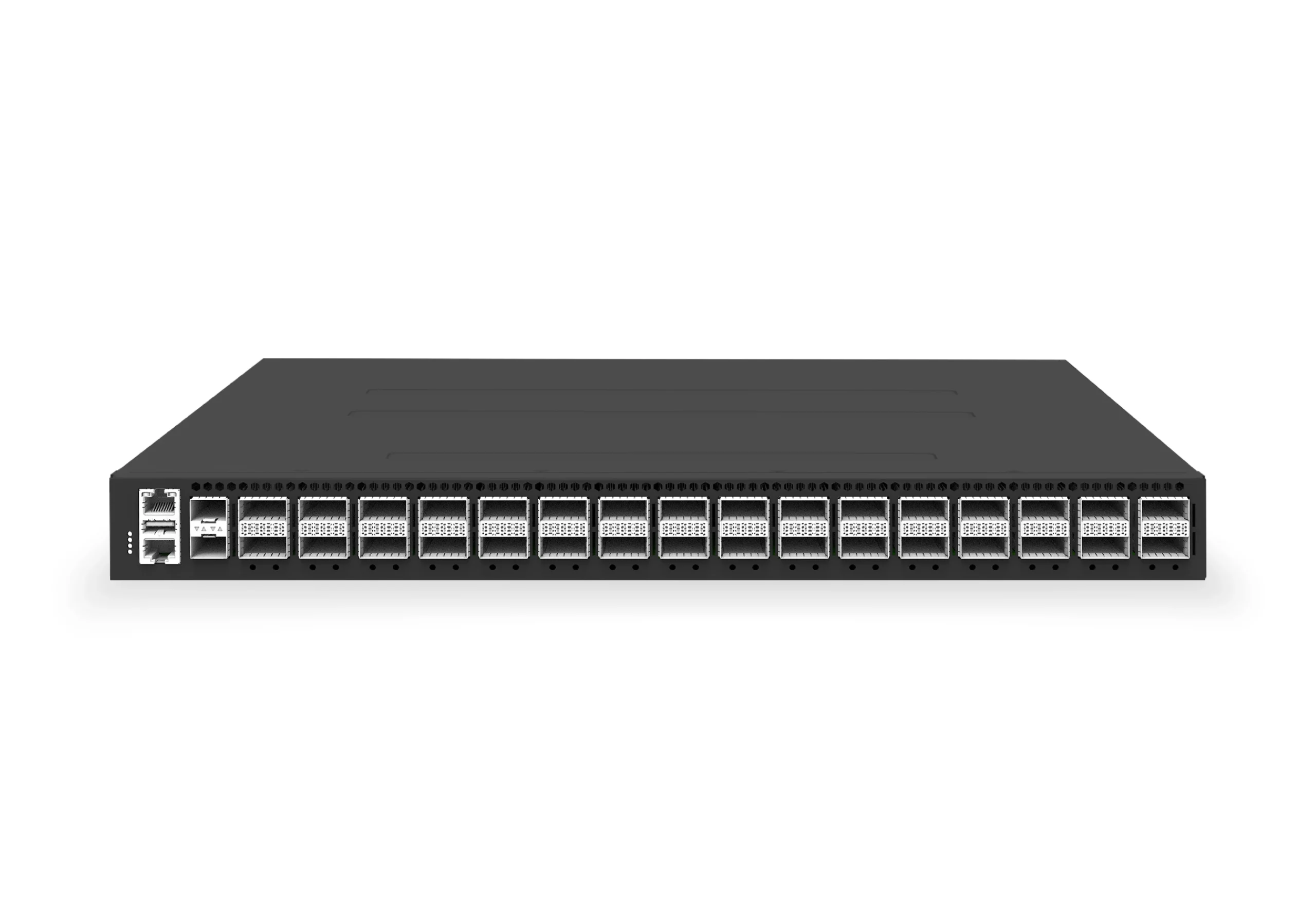 datacenter aiXS-DC-32X400-SP-G232-port 400G spine/core switch for high-capacity data center fabrics and AI-ready backbones.View product
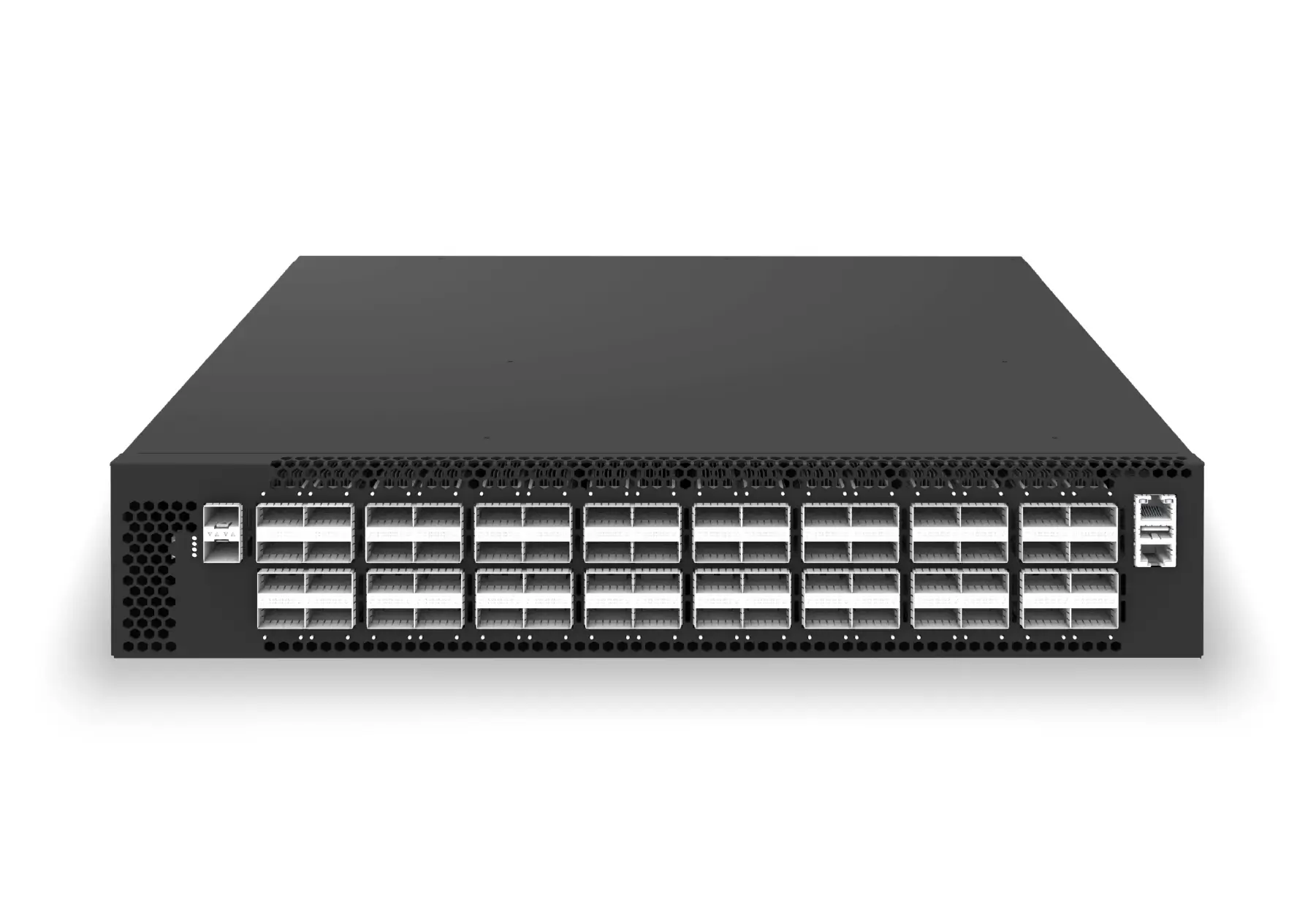 datacenter aiXS-DC-64X200-LS-G164-port 200G leaf/spine switch for high-bandwidth storage, compute, and scale-out data center fabrics.View product
Continue reading
Related articles
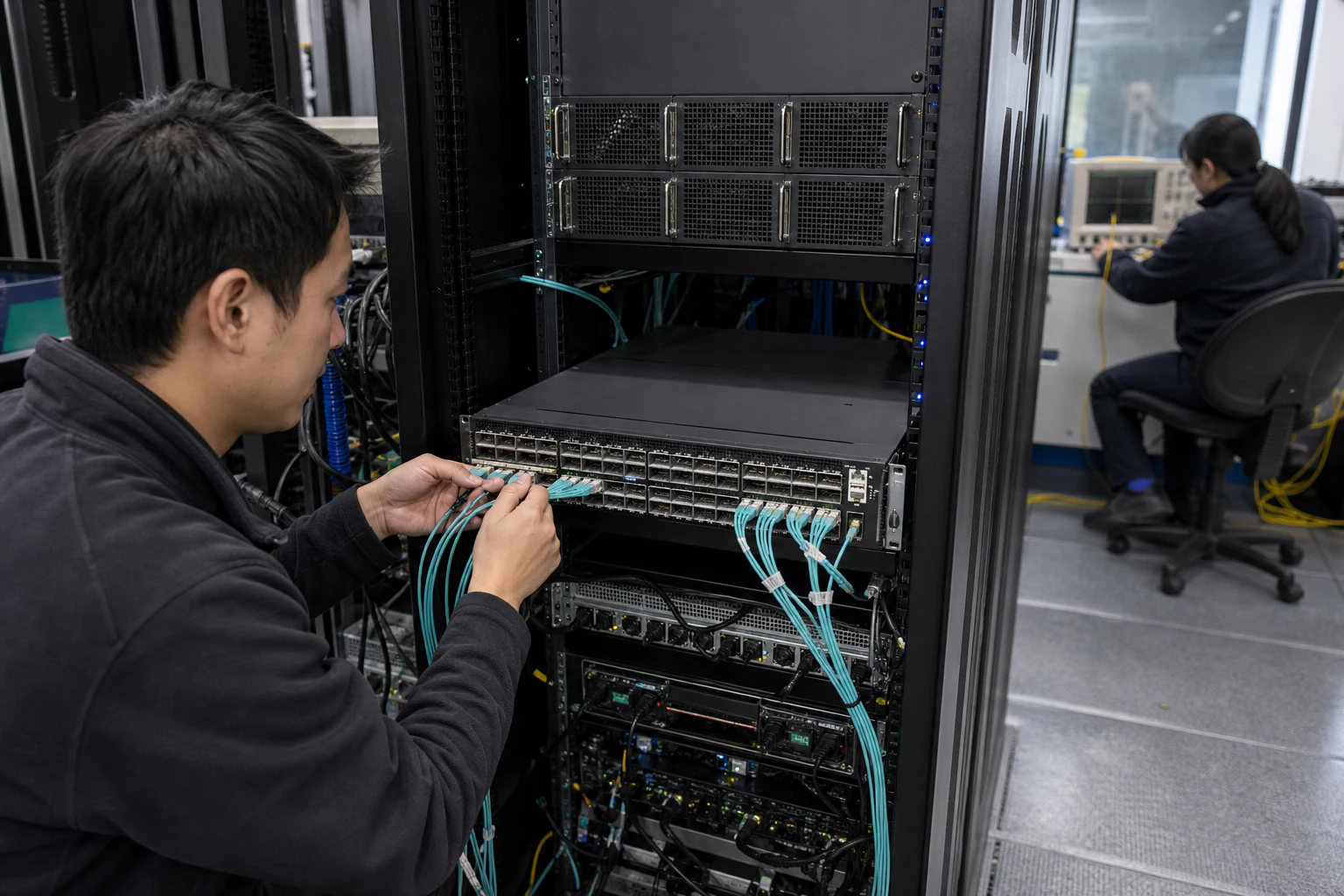 Technical ArticleDCBX, PFC, ECN, and Fast CNP: Building Lossless Ethernet for AI Training FabricsEngineering guidance on DCBX, PFC, ECN, and Fast CNP for Australian AI fabric teams building lossless Ethernet for RoCE v2 training clusters.Read article
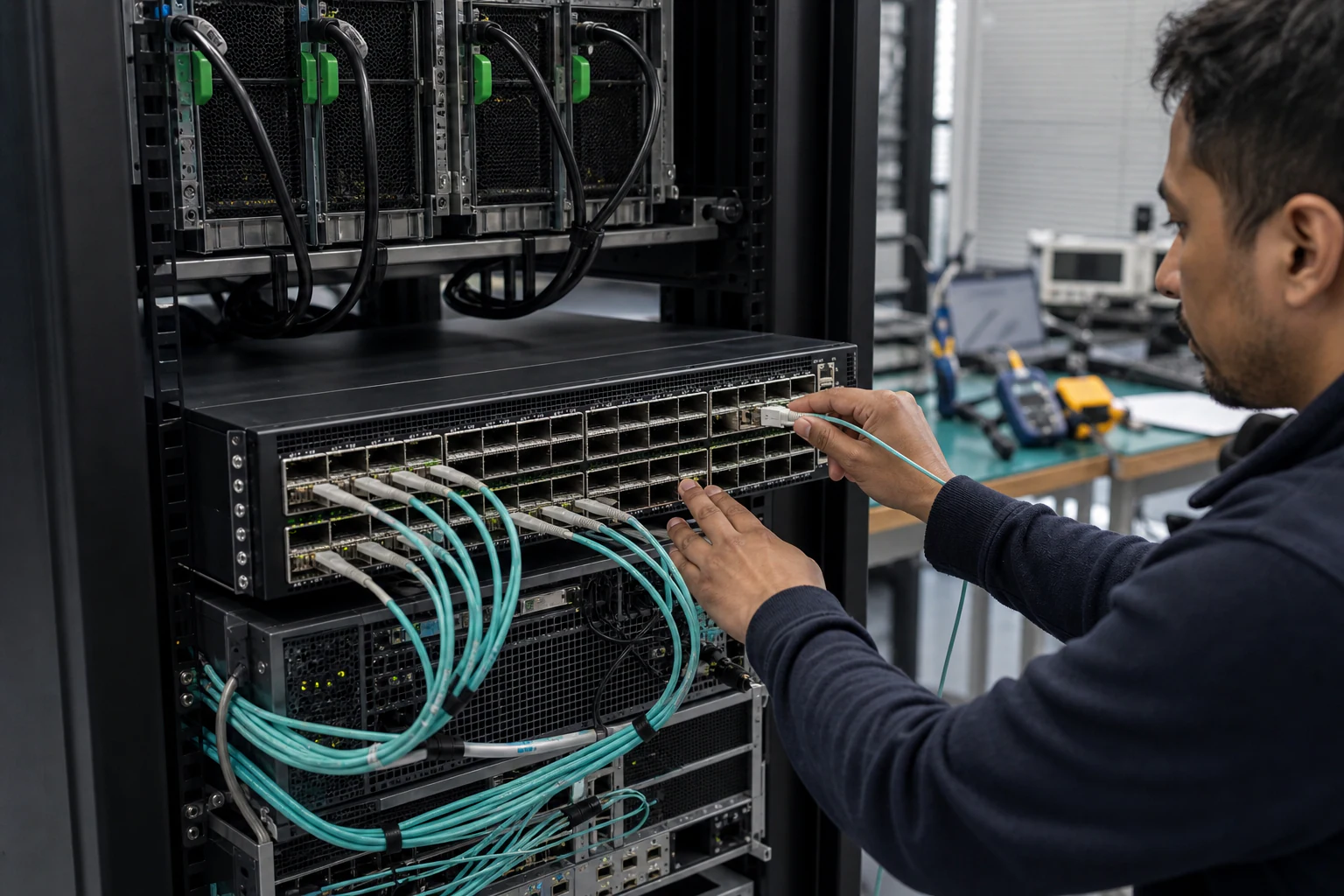 Technical ArticleWhat AI Data Center Ethernet Demands Mean for SONiC Network Operators in AustraliaEngineering guide for Australian SONiC operators running AI Ethernet fabrics, covering RoCE, 400G/800G links, telemetry, failures, optics, and support.Read article
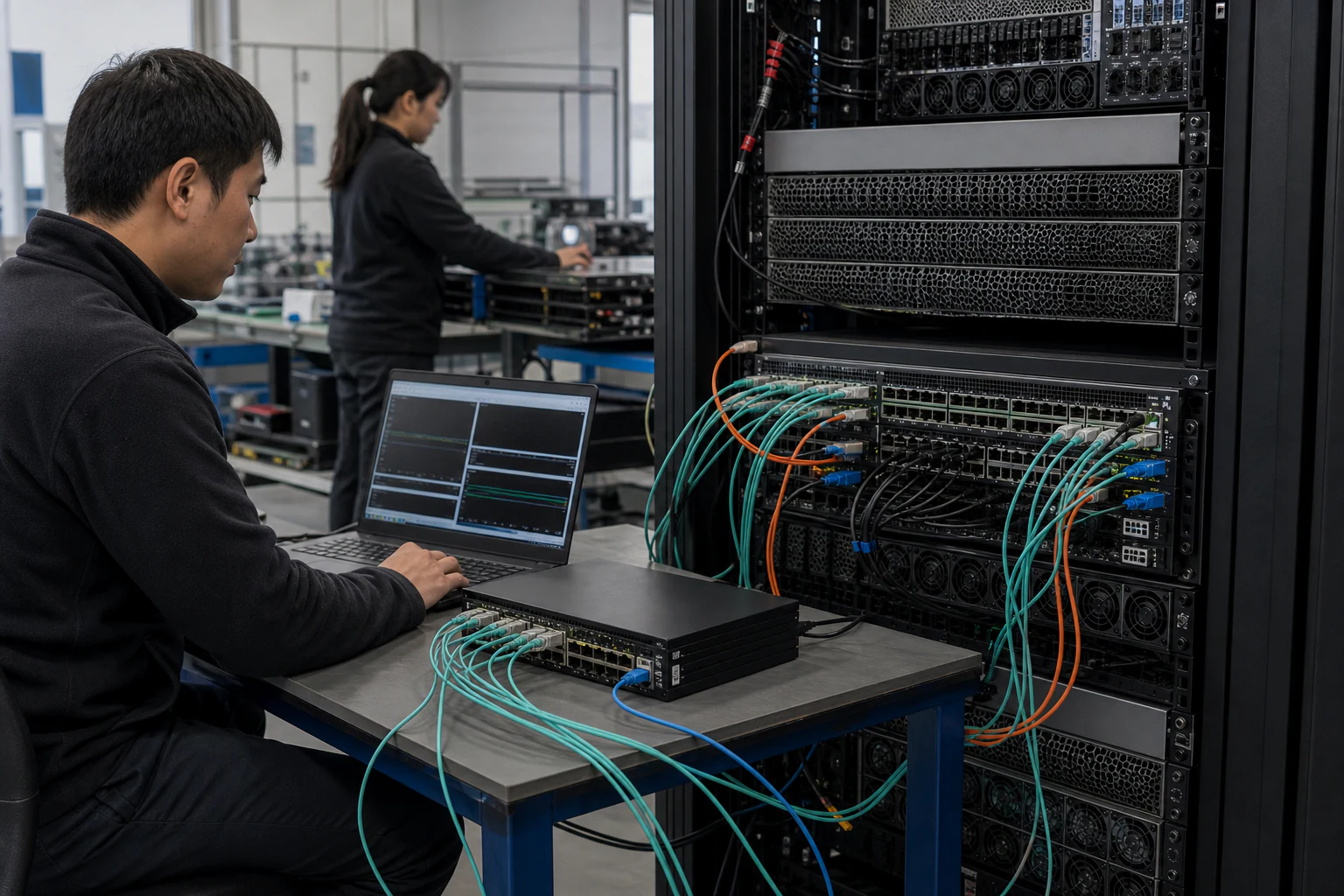 Technical ArticleWhat AI Fabric Ethernet Switching Actually Requires -- and Where SONiC Fits in the StackA practical engineering guide to AI fabric Ethernet switching requirements, explaining where SONiC fits across RoCE v2, PFC, ECN, DCBX, telemetry, and 400G/800G operations.Read article