In brief
Engineering guide to NVMe SSD form factor choices for Australian AI infrastructure, covering U.2, M.2, E1.S, AIC, thermals, endurance, and validation.
Key takeaways
- The rapid scaling of AI training and inference clusters across Australian data centres is creating storage architecture pressure that enterprise teams have not faced at this pace before.
- First, AI workloads demand fundamentally different storage profiles than traditional cloud or enterprise applications.
- Second, the physical infrastructure that houses these workloads is being redesigned from the ground up.
What Happened: AI Infrastructure Is Forcing a Storage Form Factor Reckoning
The rapid scaling of AI training and inference clusters across Australian data centres is creating storage architecture pressure that enterprise teams have not faced at this pace before. Two converging forces are driving the change.
First, AI workloads demand fundamentally different storage profiles than traditional cloud or enterprise applications. GPU inference servers and large language model (LLM) training pipelines generate bursty, high-bandwidth read patterns for model weights and datasets, while also requiring low-latency write paths for checkpointing and intermediate results. This is not the steady-state I/O profile that most enterprise storage tiers were sized for.
Second, the physical infrastructure that houses these workloads is being redesigned from the ground up. As David Hirst, CEO of Macquarie Data Centres, explained in a January 2026 interview on the OCP Podcast, AI has shifted Australian data centre design from a ‘real estate’ model to a ‘chip-out thinking’ model. Rack power densities have jumped from a few kilowatts to megawatt-class designs. Liquid cooling is no longer optional. The entire thermal and spatial envelope that storage devices must fit into is changing.
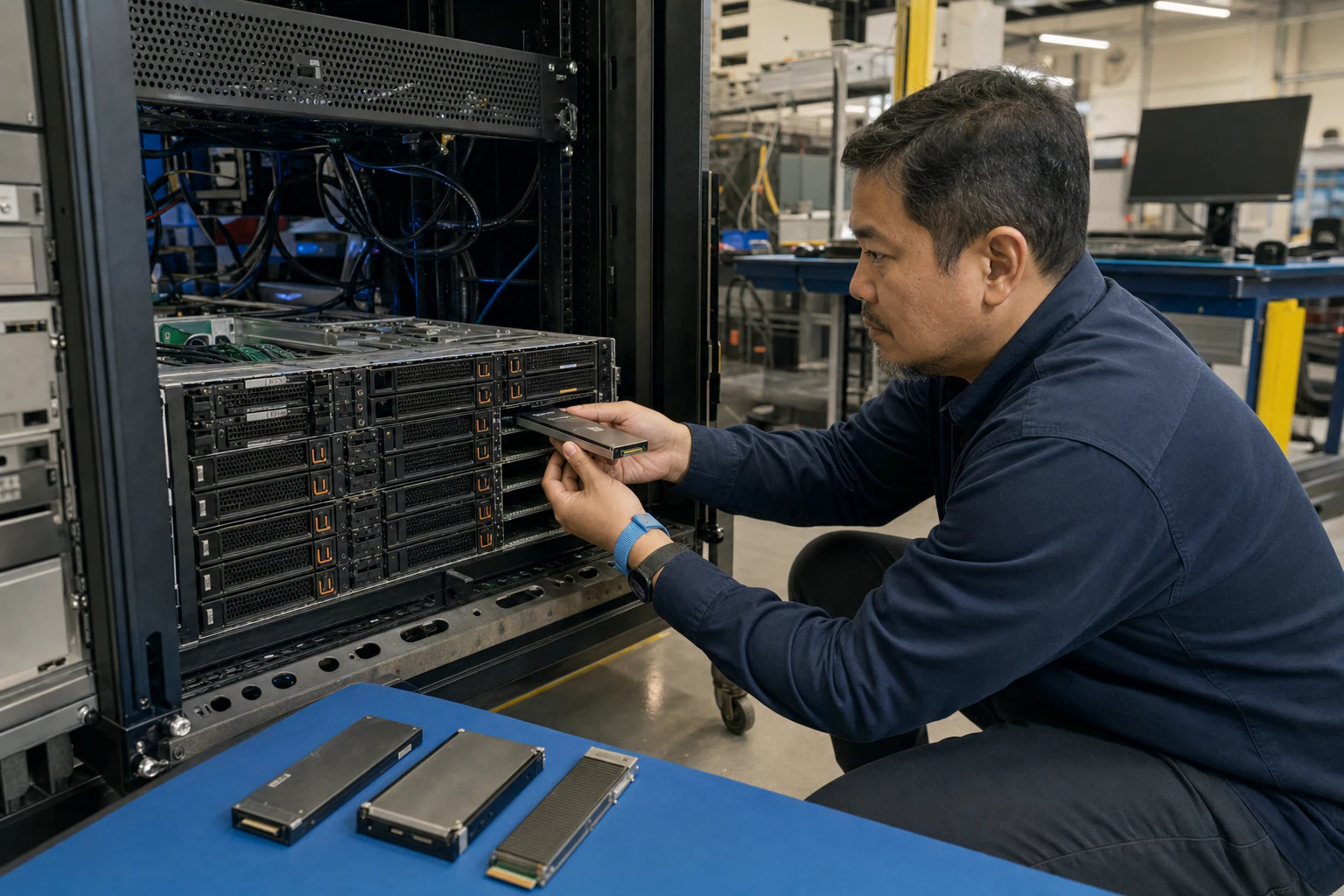
For enterprise NVMe SSD buyers, this means the form factor question — U.2, M.2, E1.S, or AIC (add-in card) — is no longer a spec-sheet exercise. It is an infrastructure design decision with direct implications for airflow, serviceability, drive density per rack unit, and compatibility with GPU server chassis that were designed for compute first and storage second.
Why It Matters: Form Factor Choice Now Drives Thermal, Density, and Serviceability Outcomes
Enterprise NVMe SSDs ship in four primary form factors, and the differences between them matter more in AI-era rack designs than they did in conventional cloud storage deployments.
U.2 (2.5-inch): The legacy enterprise standard. Hot-swappable, well-understood by data centre operations teams, and supported by the broadest range of enterprise SSD vendors. U.2 remains the default for general-purpose enterprise storage and is widely deployed in Australian colocation facilities. Its 2.5-inch envelope, however, consumes more rack depth and generates thermal load patterns that conflict with dense GPU server designs where airflow is constrained.
M.2: Compact form factor originally designed for client and boot drive use. In AI infrastructure, M.2 SSDs serve as OS boot drives and local cache on GPU inference servers. M.2 is not hot-swappable and has limited thermal dissipation capacity, which constrains its use in high-duty-cycle enterprise workloads. It remains relevant for its space efficiency in server chassis but is not a primary storage tier for AI datasets.
E1.S (EDSFF): The Enterprise and Data Center SSD Form Factor standard developed under the SNIA EDSFF specification. E1.S is purpose-built for data centre density, offering a shorter, wider form factor than U.2 with improved thermal coupling to server chassis airflow. E1.S supports hot-swap and is designed for front-access servicing in 1U and 2U sleds. For AI infrastructure, E1.S offers the most promising path to high-density NVMe storage within the thermal and spatial constraints of liquid-cooled GPU racks.
AIC (Add-in Card): PCIe card form factor that slots directly into server expansion slots. AIC SSDs deliver the highest per-drive bandwidth by eliminating the cable and backplane bottleneck, but they are not hot-swappable and consume PCIe slots that GPU servers may need for networking or accelerator cards. AIC is relevant for specialised high-performance storage tiers but is not a general-purpose enterprise deployment form factor.
The form factor decision is no longer driven solely by capacity-per-drive economics. In AI-era Australian data centres where power, cooling, and physical density are the binding constraints, the thermal profile, serviceability model, and chassis compatibility of each form factor are primary selection criteria.
The Australian Buyer Angle: Sovereign AI Infrastructure Changes the Storage Calculus
Australian enterprises face a distinct set of constraints that make the NVMe SSD form factor decision more consequential than in other markets.
Sovereign compliance: Australian government and critical infrastructure buyers increasingly require data sovereignty guarantees. This means storage must be specifiable, traceable, and manageable through open interfaces rather than locked into vendor-specific firmware and management stacks. The open infrastructure philosophy that underpins SONiC-based networking — where the network operating system is decoupled from hardware — extends logically to storage. Enterprise NVMe SSDs that support standard NVMe-MI (Management Interface) and OCP NVMe Cloud SSD specifications allow Australian operators to manage storage through the same open automation frameworks they use for networking.
Climate and cooling: Australian data centres, particularly in Sydney and Melbourne, face cooling challenges that are amplified by AI density requirements. Macquarie Data Centres’ David Hirst noted in the OCP Podcast interview that AI workloads have pushed Australian operators toward liquid cooling and megawatt-per-rack designs. In this thermal environment, the E1.S form factor’s improved heat dissipation profile is not a marginal advantage — it is a design requirement for drives that will sit in proximity to liquid-cooled GPU trays.
Supply chain and procurement: Australian enterprises typically face longer lead times and higher logistics costs for enterprise IT hardware compared to North American or European buyers. Specifying a form factor with broad vendor support and second-source availability is a practical procurement strategy. U.2 has the broadest current supply base, but E1.S is gaining multi-vendor traction as EDSFF adoption grows.
AI infrastructure scale-out: The Australian AI market is scaling rapidly, with hyperscaler and sovereign cloud builds underway in New South Wales and Victoria. Storage tier design for these facilities must account for the full lifecycle of AI workloads — from initial dataset staging through training, checkpointing, and inference serving. Each stage has different I/O profiles, and the right form factor mix depends on the workload architecture.
The xSONiC Buyer Angle: Open Infrastructure Principles Apply to Storage, Not Just Networking
xSONiC’s NVMe SSD product line sits at the intersection of two industry shifts that matter for Australian AI infrastructure buyers.
First, the open infrastructure movement that drove SONiC adoption in networking is extending to storage. The same principles — hardware-software disaggregation, standard management interfaces, multi-vendor interoperability, and freedom from proprietary lock-in — apply to enterprise NVMe SSDs. Australian operators who have already adopted open networking with Enterprise SONiC are natural candidates for open, standards-compliant NVMe storage that fits the same operational model.
Second, the AI infrastructure build-out in Australia creates a near-term demand signal for NVMe SSDs in multiple form factors. GPU inference servers need M.2 boot drives and U.2 or E1.S data drives. AI training clusters need high-endurance E1.S or AIC SSDs for checkpoint storage. Cloud platforms need U.2 SSDs for general-purpose NVMe tiers. The form factor mix depends on the workload architecture, and xSONiC’s multi-form-factor NVMe SSD portfolio — spanning U.2, M.2, E1.S, and AIC PCIe Gen4 — is positioned to address this range.
For Australian enterprise buyers evaluating NVMe storage for AI and cloud workloads, the evaluation criteria should include:
- Form factor compatibility with the target server chassis and cooling design
- Endurance class appropriate for the workload write pattern (DWPD rating)
- NVMe-MI and OCP Cloud SSD compliance for open management integration
- Multi-vendor availability to mitigate supply chain risk in the Australian market
- PCIe generation matching the server platform (Gen4 today, Gen5 readiness for future platforms)
NVMe form factor acceptance matrix
Treat NVMe form factor selection as a chassis-level engineering decision. A drive can meet a capacity or sequential-speed target and still be wrong if it cannot be cooled, serviced, monitored, or second-sourced in the real AI server platform.
| Decision area | Evidence to request | Reject or rework if |
|---|---|---|
| Workload fit | Read/write mix, queue depth, checkpoint cadence, inference cache profile, endurance target, and latency tail requirement | The form factor is chosen from peak sequential bandwidth or capacity per drive without workload evidence |
| Thermal envelope | Server SKU, drive location, airflow path, inlet temperature assumption, sustained workload test, and throttling data | The drive passes a fresh benchmark but throttles during sustained AI cache, checkpoint, or dataset staging loads |
| Serviceability | Hot-swap requirement, carrier/backplane design, replacement procedure, label scheme, and maintenance window | The selected form factor requires server removal or GPU-tray disruption for ordinary drive replacement |
| Management and telemetry | NVMe-MI support, SMART fields, firmware update method, BMC integration, and alert routing into the operations stack | Health and firmware state cannot be collected without proprietary manual tools or out-of-band spreadsheet tracking |
| Supply and lifecycle | Qualified vendor list, alternate SKU, warranty jurisdiction, firmware provenance, and roadmap for Gen4/Gen5 platforms | The procurement path depends on one supplier, one firmware branch, or a chassis option that cannot be sourced locally |
xSONiC’s positioning as an open infrastructure brand means these SSDs are intended to operate in heterogeneous environments without proprietary management dependencies. For Australian operators building AI infrastructure with open networking (SONiC), the storage layer should follow the same open principles.
AI Storage Form Factor Acceptance Matrix
| Storage area | Acceptance evidence | Rework trigger |
|---|---|---|
| Dataset staging | Sequential and random read tests match expected GPU feed rate for the training or inference workload | GPU utilisation drops because storage cannot sustain the agreed GB/s target |
| Checkpoint writes | Sustained write, endurance, and thermal counters recorded for at least 24 hours | Drive throttling or write cliff appears during checkpoint bursts |
| Form factor fit | U.2, E1.S, M.2, and AIC compared by PCIe lanes, hot-swap, TB/RU, and chassis airflow | A drive cannot be replaced without disturbing GPU or NIC service |
| Fleet telemetry | SMART, NVMe health, media errors, firmware state, and rollback process visible in monitoring | Operators cannot prove whether a failure is media, firmware, or thermal |
Engineering FAQ
How should NVMe form factor selection be made? Start with workload profile, usable capacity, serviceability, thermal envelope, write endurance, PCIe generation, slot layout, and replacement process. U.2, E1.S, M.2, and AIC devices solve different mechanical and operational problems.
What matters more than peak sequential speed? Sustained performance, thermal throttling behaviour, write endurance, latency under load, firmware stability, power-loss protection, and fleet manageability usually matter more than a single benchmark number.
How should storage be validated for AI or cloud workloads? Test the selected form factor in the real chassis with expected airflow, queue depth, write mix, temperature range, and monitoring stack. Validation should include steady-state and recovery behaviour, not only fresh-drive performance.
Related xSONiC Resources
Sources Reviewed
- NVM Express Specifications
- NVM Express Management Interface Specification
- SNIA SSD Form Factors
- Open Compute Project Storage
- OCP NVMe Cloud SSD Specification
- Open Compute Project Podcast - Australia’s Macquarie and OCP
- SONiC Foundation
Product fit
Products referenced for evaluation
These products are referenced for evaluation context in the article. Confirm workload, port, optics, software, interoperability, and support requirements against the exact deployment before procurement.
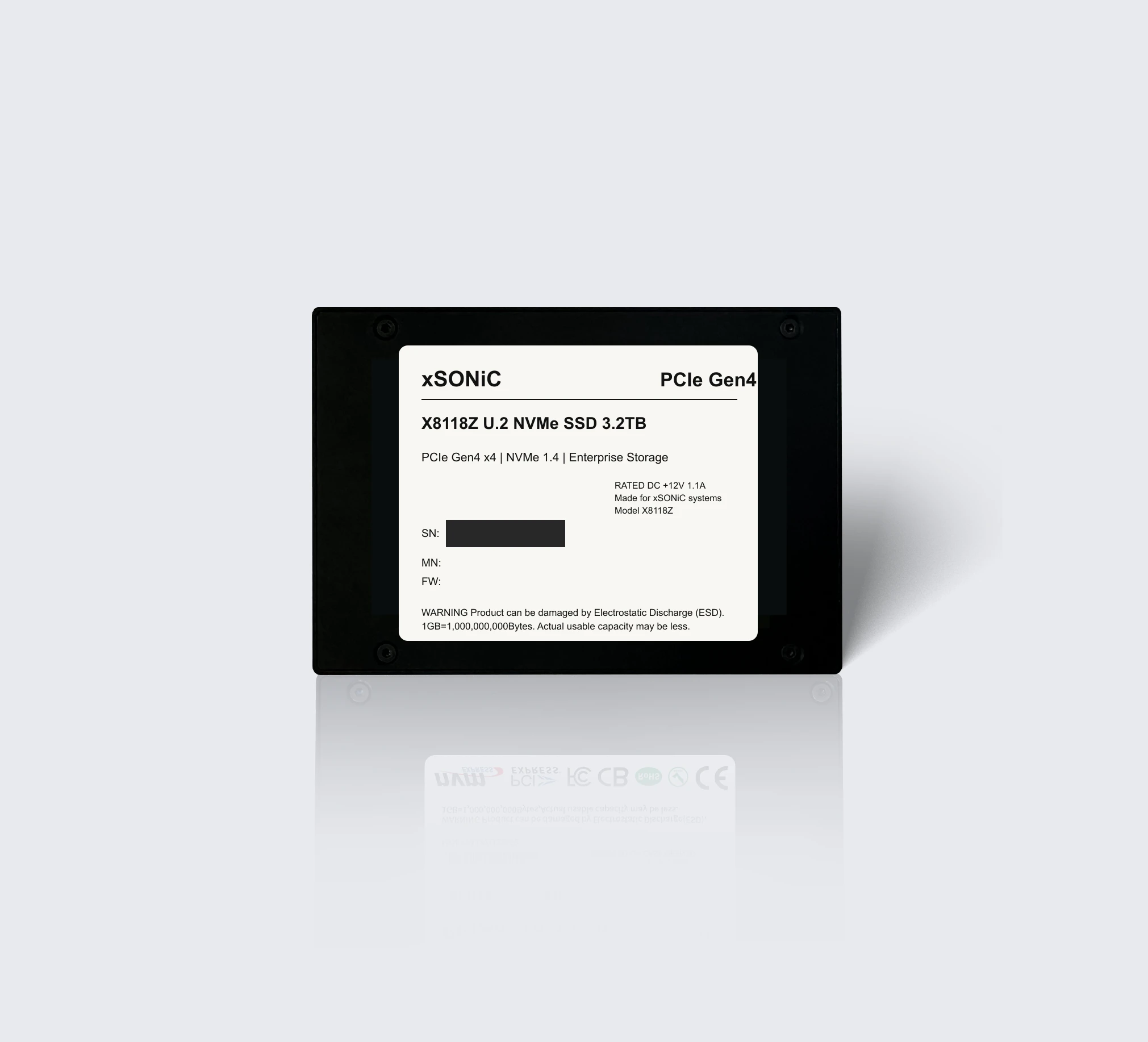 nvme ssdXS-SSD-8118Z-U2Enterprise U.2 NVMe SSD with PCIe Gen4 x4, NVMe 1.4, up to 7.1 GB/s sequential read, and 1,000K IOPS for data center storage workloads.View product
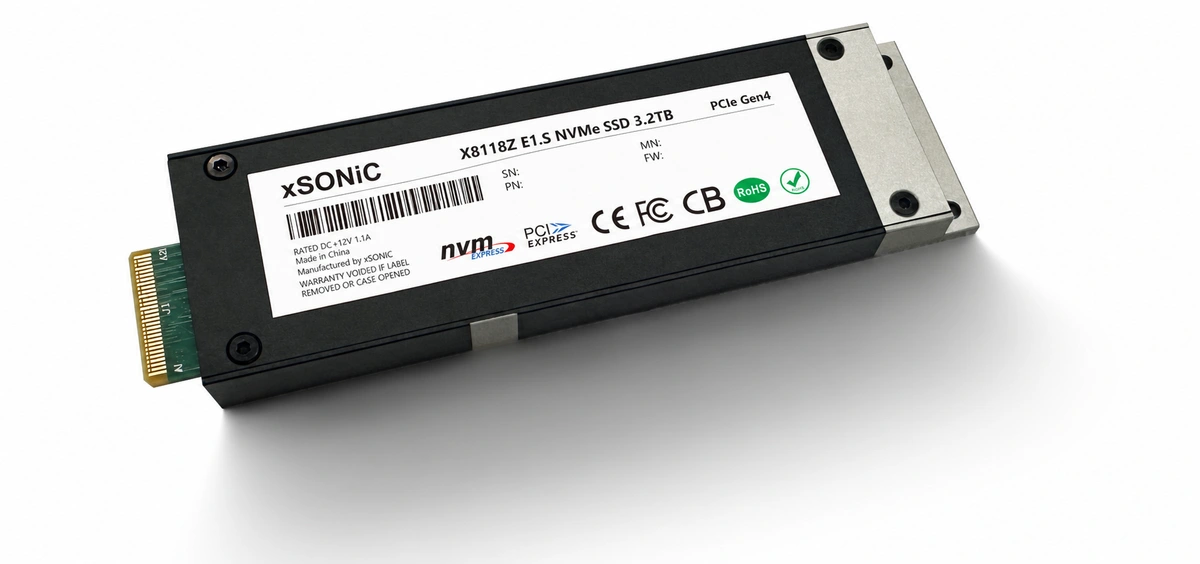 nvme ssdXS-SSD-8118Z-E1SEnterprise E1.S NVMe SSD with PCIe Gen4 x4, up to 7.1 GB/s sequential read, 1,000K IOPS, and compact data center storage density.View product
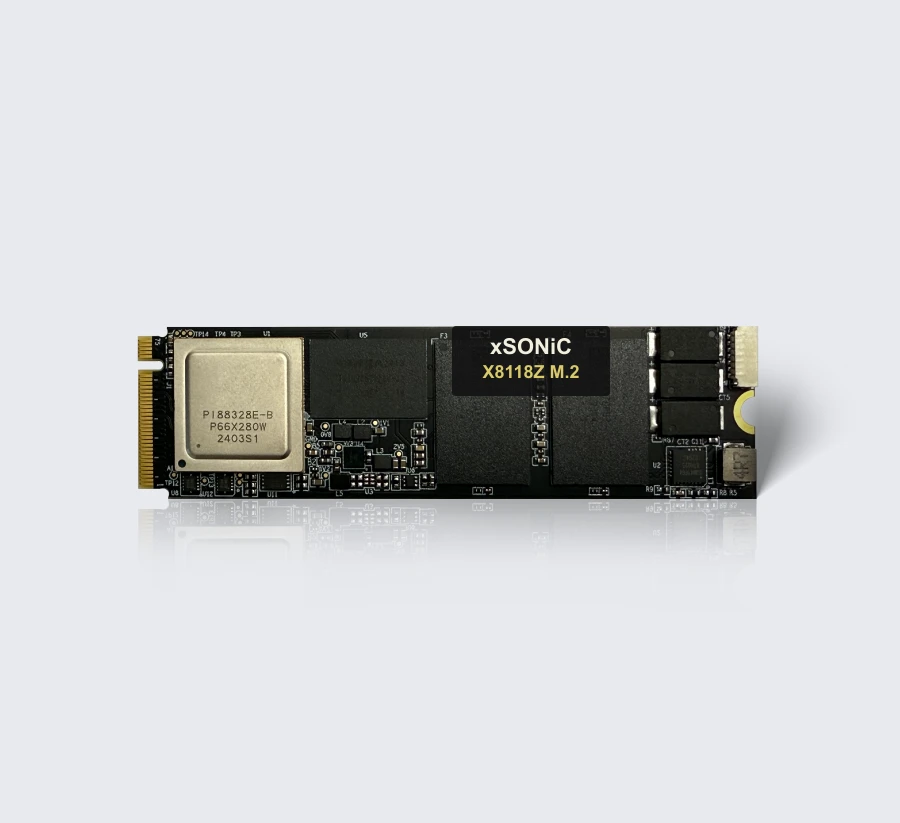 nvme ssdXS-SSD-8118Z-M2Enterprise M.2-2280 NVMe SSD with PCIe Gen4 x4, up to 7.1 GB/s sequential read, 1,000K IOPS, and compact storage deployment flexibility.View product
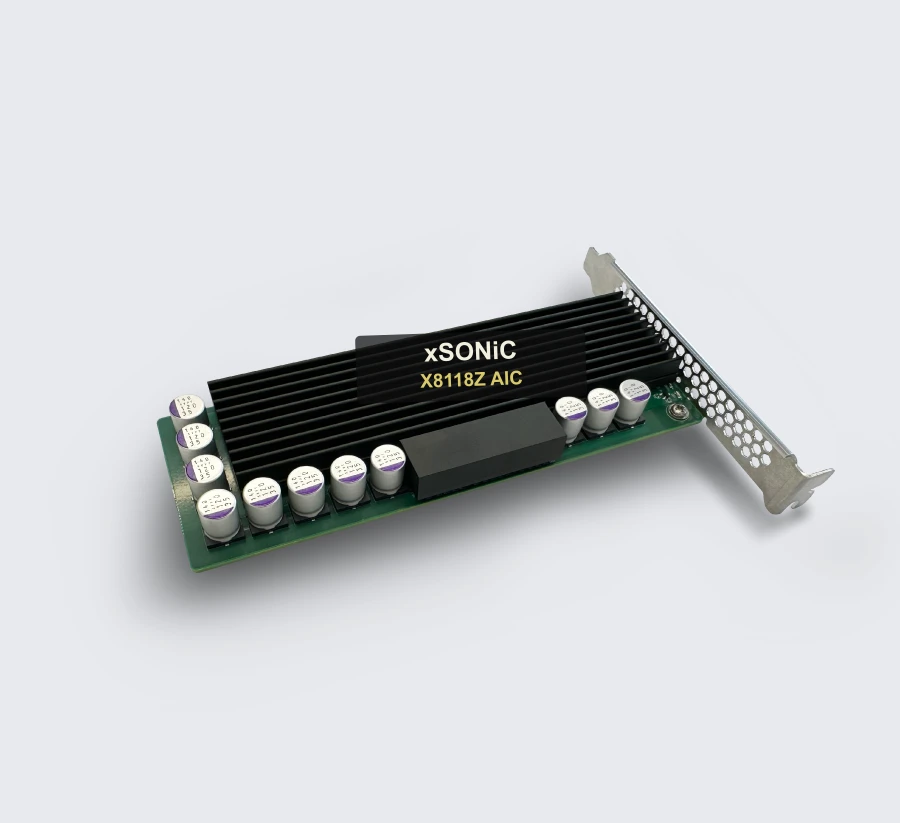 nvme ssdXS-SSD-8118Z-AICEnterprise AIC NVMe SSD with PCIe Gen4 x4, up to 7.0 GB/s sequential read, 1,000K IOPS, and add-in-card deployment flexibility.View product
Continue reading
Related articles
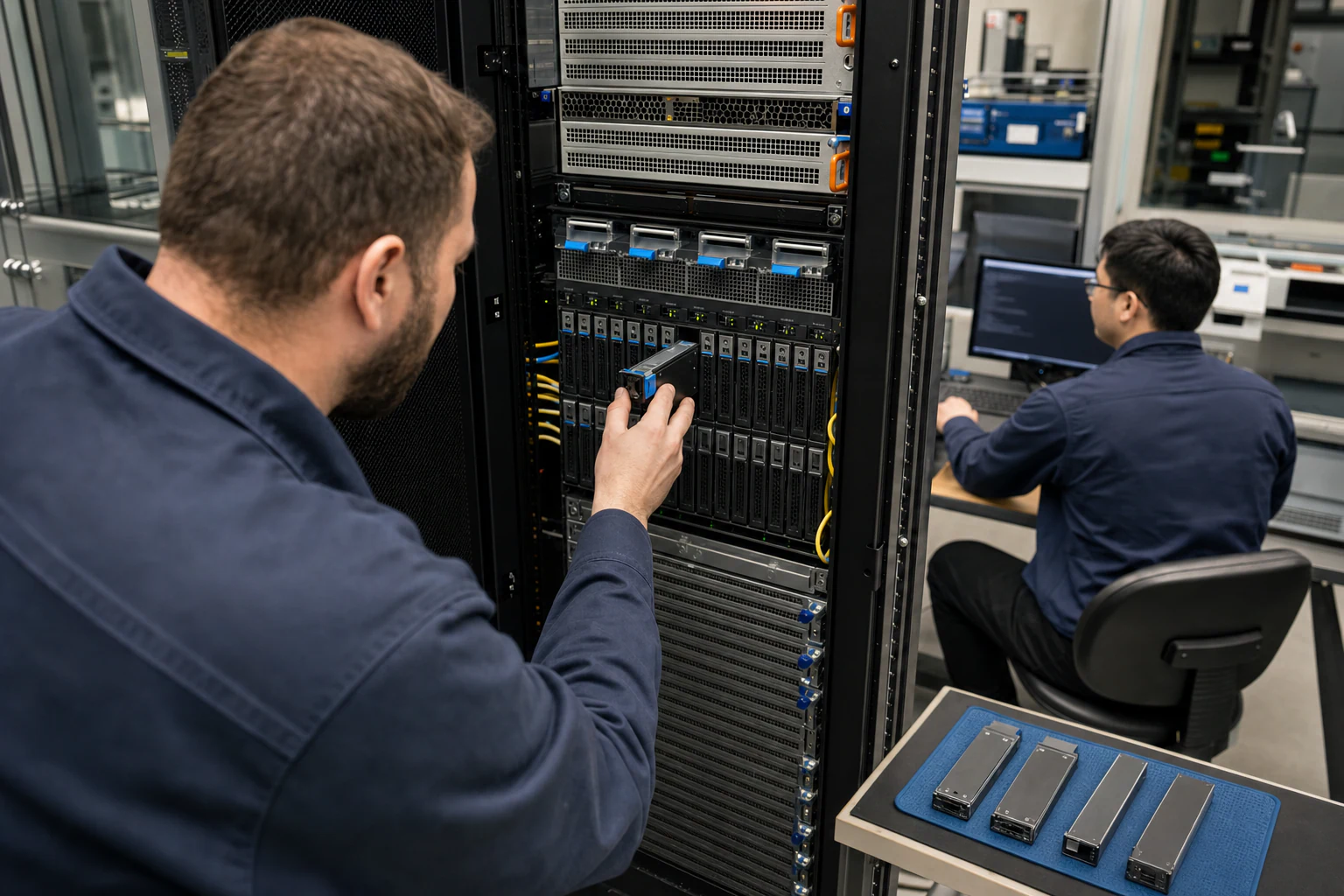 Technical ArticleNVMe SSD Form Factor Comparison: U.2 vs E1.S vs M.2 vs AIC for Enterprise and AI WorkloadsAn engineering comparison of U.2, E1.S, M.2, and AIC NVMe SSD form factors for enterprise storage, AI workloads, thermals, and serviceability.Read article
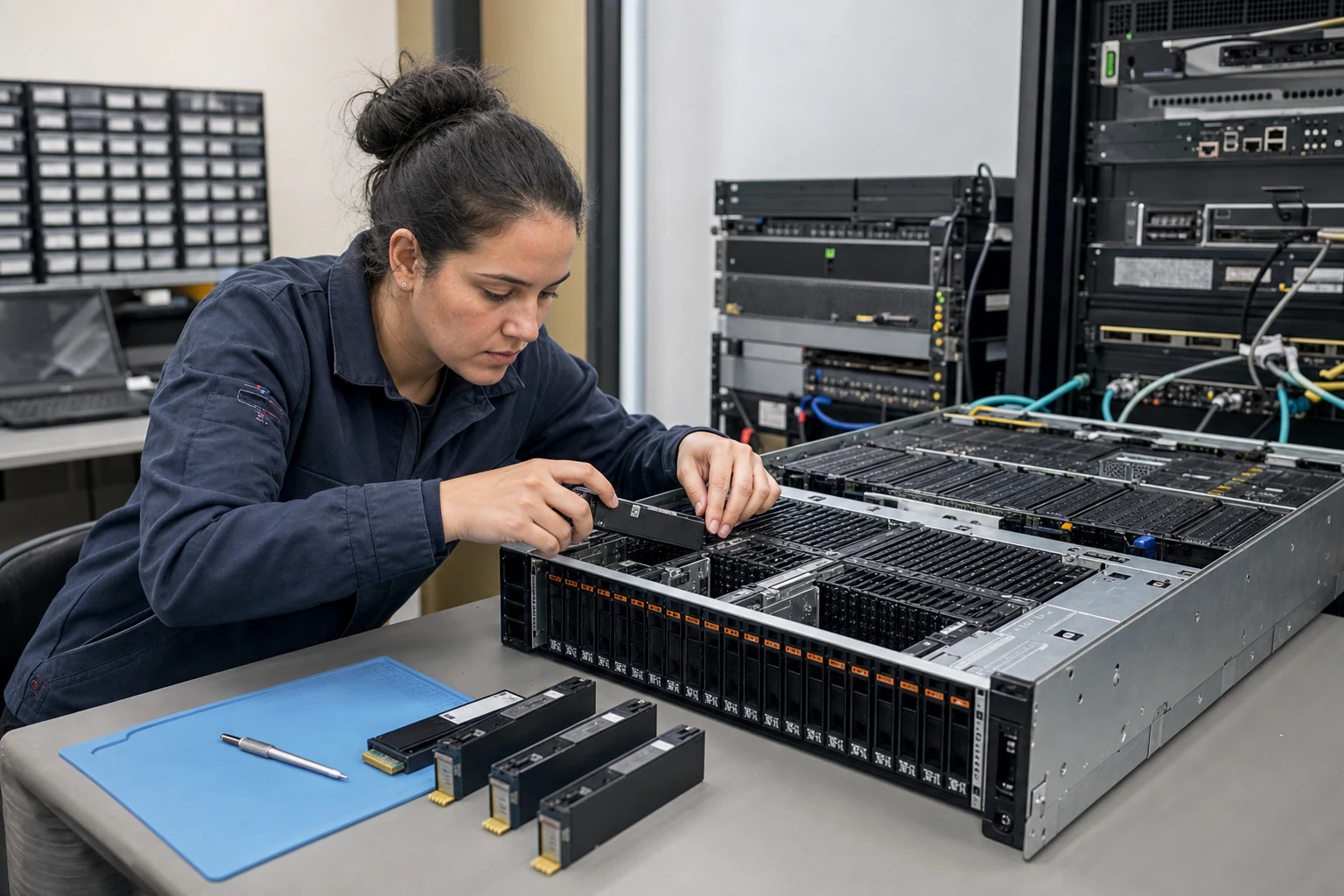 Technical ArticleEnterprise NVMe SSD Form Factors for AI Storage and Cloud Workloads: A Buyer's GuideCompare U.2, M.2, E1.S, and AIC NVMe SSD form factors for enterprise AI storage, cloud databases, HPC, thermals, and serviceability.Read article
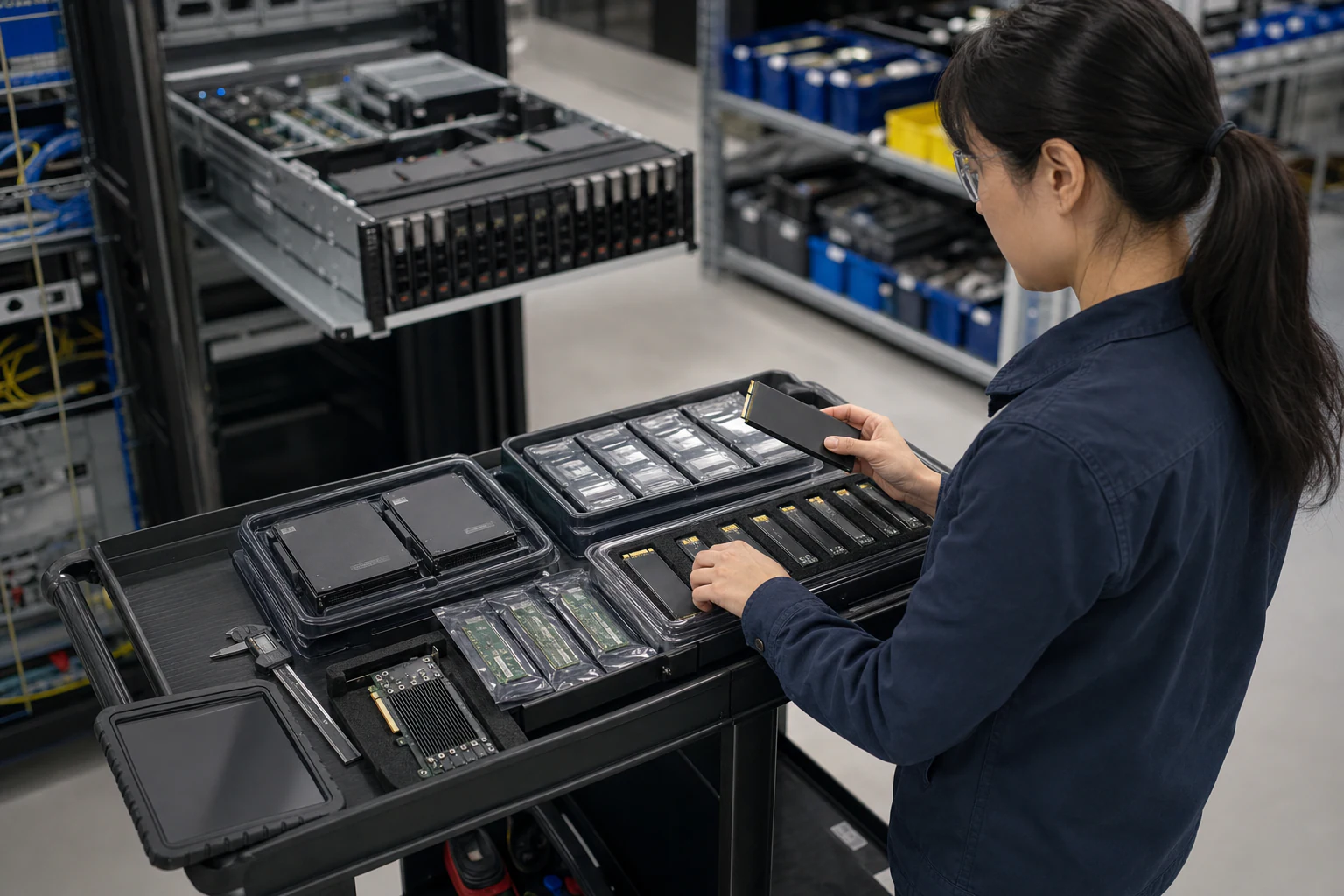 Technical ArticleU.2 vs E1.S vs M.2 vs AIC: NVMe SSD Form Factor Capacity Planning Guide for Australian Enterprise ProcurementCapacity planning guidance for U.2, E1.S, M.2, and AIC NVMe SSD procurement across enterprise storage, AI, thermal, and serviceability needs.Read article