In brief
Engineering comparison of white-box and traditional switches for Australian enterprise buyers, covering SONiC, support, optics, risk, and TCO.
Key takeaways
- For years, the default answer to "which switch do we buy?" was simple: pick a major vendor, accept the bundled network operating system (NOS), and plan around their upgrade cycle.
- Enterprise network teams in Australia now face a genuinely different landscape.
- This guide breaks down the practical differences between white-box (bare-metal) switches and traditional proprietary switches from the perspective of an enterprise buyer.
The Enterprise Switching Decision Is Changing
For years, the default answer to “which switch do we buy?” was simple: pick a major vendor, accept the bundled network operating system (NOS), and plan around their upgrade cycle. That formula is breaking down.
Enterprise network teams in Australia now face a genuinely different landscape. Open-source network operating systems like SONiC (Software for Open Networking in the Cloud) run on switches from multiple hardware vendors and ASIC families. Hardware disaggregation has moved beyond hyperscaler labs into a real procurement option for mid-size data centers, campus networks, and AI infrastructure builds.
This guide breaks down the practical differences between white-box (bare-metal) switches and traditional proprietary switches from the perspective of an enterprise buyer. It is not a pitch for one side. It is a decision framework to help you evaluate which approach fits your next refresh cycle.
What Is a White-Box Switch?
A white-box switch, sometimes called a bare-metal switch, is networking hardware sold without a pre-installed network operating system. The hardware is manufactured by an ODM (original design manufacturer) using merchant silicon from vendors like Broadcom or Marvell. The buyer selects and installs the NOS separately.
This model mirrors what happened in the server industry decades ago. Instead of buying a locked-in server-and-OS bundle, enterprises moved to commodity x86 hardware running Linux or Windows. White-box switching applies the same principle to the network.
The key enabler for white-box switching is the SONiC project. SONiC is an open-source NOS hosted by the Linux Foundation and the SONiC Foundation. It is based on Linux and uses a containerized architecture where each network function runs in its own Docker container. According to the SONiC Foundation, this design provides better fault isolation, easier debugging, and simplified upgrades compared to monolithic switch software. SONiC supports standard network protocols including BGP and RDMA, and has been production-hardened in the data centers of some of the world’s largest cloud service providers.
For enterprise buyers, the practical appeal is choice. You select the hardware that fits your port density and speed requirements, then layer on SONiC or another open NOS. If the hardware vendor disappoints, you can switch platforms without retraining your team on a completely new operating system.
Learn more about xSONiC bare-metal switches built for open NOS deployments.
What Is a Traditional Proprietary Switch?
A traditional switch ships as a bundled hardware-and-software package from a single vendor. The NOS is proprietary: it is developed, tested, and sold exclusively with that vendor’s hardware. Think Cisco IOS/NX-OS, Arista EOS, Juniper Junos, or Huawei VRP.
The traditional model has clear strengths. The vendor owns the full stack, so support is a single phone number. Hardware and software are tested together. Feature roadmaps are coordinated. For many enterprise teams, this simplifies accountability.
The trade-offs are equally clear. Vendor lock-in limits your negotiation leverage and hardware options. Software licensing models can create unpredictable costs as your network grows. Upgrading to a new platform generation may require re-certification and retraining, even when the underlying protocols have not changed.
Key Differences at a Glance
| Factor | White-Box / Bare-Metal Switch | Traditional Proprietary Switch |
|---|---|---|
| Hardware sourcing | ODM or multi-vendor merchant silicon | Single vendor, often custom ASIC |
| NOS selection | Buyer chooses: SONiC, Cumulus, or other | Vendor-bundled proprietary NOS |
| Software cost | Open-source (SONiC) or per-switch license | Per-switch license, often with recurring fees |
| Vendor lock-in | Low: swap hardware or NOS independently | High: hardware and software tightly coupled |
| Support model | Separate hardware and software support channels, or integrated through a partner | Single-vendor TAC support |
| Feature velocity | Community-driven, container-based rapid updates | Vendor release cycle, coordinated QA |
| Automation | Native Linux tooling, NETCONF/YANG, standard APIs | Vendor-specific APIs, some Linux integration |
| Maturity for enterprise | Rapidly growing; proven at hyperscale, expanding into enterprise | Decades of enterprise deployment history |
Why Enterprises Are Re-Evaluating Open Networking
Three shifts are driving enterprise interest in white-box switching.
1. AI and high-performance data center builds demand flexibility. AI/ML clusters require low-latency, lossless Ethernet fabrics with RDMA over Converged Ethernet (RoCE) support. SONiC offers full RDMA support and has been proven at scale in cloud provider networks. NVIDIA’s Spectrum Ethernet switch portfolio explicitly supports both Cumulus Linux and Pure SONiC as NOS options, signaling that the open networking ecosystem is now a first-class path for AI infrastructure. For enterprises building GPU backend fabrics or AI training clusters, the ability to select hardware and tune the NOS to workload requirements is a meaningful advantage.
2. Campus network refresh cycles create a migration window. When campus access and aggregation switches reach end-of-life, the refresh is a natural point to re-evaluate the entire switching stack. Open networking options for campus environments, including SONiC-based solutions with PoE support, MC-LAG, and policy-based routing, are maturing. Enterprise teams that adopt open networking at the campus edge can align their operational model across campus and data center.
3. Total cost of ownership math is shifting. Proprietary switch vendors often bundle software subscriptions, support contracts, and license tiers that compound over a five-to-seven-year lifecycle. White-box hardware paired with an open-source NOS like SONiC can reduce software licensing costs to zero for the NOS layer. The savings are reinvested in operational tooling, training, or support partnerships. This does not mean white-box is always cheaper; it means the cost structure is different and worth modeling for your specific environment.
SONiC: The Enterprise Bridge
A common misconception is that SONiC is only for hyperscalers. The project’s origins are in the largest cloud data centers, but the ecosystem has broadened significantly. The SONiC Foundation, a Linux Foundation project, reports growing multi-vendor support including major network chip vendors. SONiC’s architecture, which decouples hardware from software through the Switch Abstraction Interface (SAI), allows the same NOS to run across different ASIC platforms.
For enterprise buyers evaluating white-box switching, SONiC offers several practical advantages:
- Containerized modularity. Each network service runs in its own container, so you can update or troubleshoot one component without affecting others.
- Standard Linux tooling. SONiC uses standard Linux interfaces, making it accessible to teams with existing Linux operations skills.
- Protocol breadth. BGP, RDMA, EVPN-VXLAN, and growing campus protocol support cover both data center and campus use cases.
- Active community. With thousands of GitHub commits and a structured governance model under the Linux Foundation, SONiC is not a single-vendor project at risk of abandonment.
Explore xSONiC data center AI switches designed for SONiC-based spine-leaf fabrics.
A Decision Framework for Australian Enterprise Buyers
There is no universal right answer. The best choice depends on your team, your timeline, and your infrastructure goals. Use this framework to structure your evaluation.
Choose white-box / open networking when:
- Your team has Linux and network automation skills, or you are willing to invest in training.
- You want to break vendor lock-in and negotiate hardware on merit.
- You are building or refreshing an AI/ML fabric where RDMA, EVPN-VXLAN, and low-latency performance are critical.
- You want a consistent NOS across data center and campus environments.
- Your procurement team values multi-source hardware options.
Choose traditional proprietary when:
- Your team is deeply certified in a single vendor ecosystem and retraining is not practical in your timeline.
- You require a single-vendor support model with guaranteed SLAs across hardware and software.
- Your network is stable, with no near-term refresh cycle, and the operational risk of switching models outweighs the cost benefit.
- Specific proprietary features or integrations (vendor-specific wireless, security, or SD-WAN stacks) are requirements.
Consider a hybrid approach when:
- You want to pilot open networking in a new data center pod or greenfield site before committing campus-wide.
- Your data center team is ready for SONiC but your campus team needs more time.
See how xSONiC campus refresh solutions can align your access and aggregation layer with open networking.
What to Ask Vendors During Evaluation
Whether you are evaluating white-box or traditional options, these questions sharpen the conversation:
- What NOS options are supported on this hardware, and what is the testing and certification process?
- How is software support handled, and what are the SLAs for security patches and bug fixes?
- What automation interfaces are available: NETCONF/YANG, gNMI, REST API, or CLI-only?
- What is the total cost over a five-year lifecycle, including licensing, support, and training?
- Can this platform support my current and planned port speeds (10G, 25G, 100G, 400G, 800G)?
- What is the migration path if I want to change NOS or hardware vendor in the future?
White-Box vs Traditional Acceptance Matrix
| Evaluation area | White-box evidence | Traditional switch evidence | Decision trigger |
|---|---|---|---|
| Support | Hardware/NOS/ASIC/optics owner map, P1 response, and RMA path | Single-vendor TAC SLA and escalation path | Choose the model with clearer incident ownership |
| Software lifecycle | SONiC release, SAI version, CVE process, and rollback test | Vendor release train, support window, and bug fix SLA | Reject either option if rollback is untested |
| Optics | Third-party optics matrix across 3 classes and DOM telemetry | Vendor optics list and pricing | Compare total link cost, not only switch cost |
| Automation | NETCONF/gNMI/API support, config backup, and drift detection | Vendor API support and tooling lock-in | Prefer the model that fits existing operations |
| Migration risk | 1 pilot fabric, 30-day observation, and feature parity matrix | Upgrade path from incumbent platform | Expand only after failure evidence is documented |
| TCO | 5-year hardware, optics, support, training, and spares model | 5-year license, support, optics, and refresh model | Compare per usable 100G, not per box |
Where xSONiC Fits
xSONiC is an open networking infrastructure brand built around the SONiC ecosystem. The product range spans bare-metal switches for custom NOS deployments, data center AI switches for low-latency spine-leaf fabrics, and access and aggregation switches for enterprise campus networks. All xSONiC products are designed for open NOS operation, giving enterprise buyers the hardware choice and software flexibility that the white-box model promises.
For Australian enterprises evaluating the white-box vs traditional decision, xSONiC provides a practical path to start. You can begin with a data center fabric refresh, deploy SONiC on xSONiC hardware, and expand to campus environments as your team builds operational confidence.
Contact xSONiC to discuss your network refresh requirements and get guidance on the right hardware and NOS combination for your environment.
Engineering FAQ
Is white-box switching always cheaper? No. It often reduces NOS licensing and optics lock-in, but buyers must include support, training, automation, spares, and validation effort. The right comparison is 5-year TCO per usable 100G.
When is a traditional switch still the better choice? It is often better when the organisation values one support owner, has deep vendor-specific skills, depends on proprietary integrations, or lacks the time to validate an open networking operations model.
What makes a fair comparison? Test both options against the same port speeds, optics, routing features, failure cases, automation workflow, support simulation, and 5-year commercial model. A datasheet comparison is not enough.
Related xSONiC Resources
Sources Reviewed
- IEEE 802.1Q Bridges and Bridged Networks
- IEEE 802.1AX Link Aggregation
- Ethernet Network Adapters - ConnectX NICs | NVIDIA
- NVIDIA BlueField Data Processing Unit
- NVIDIA Spectrum-X Ethernet Platform
- OpenConfig gNMI Specification
- OpenConfig
- RFC 7950 - The YANG 1.1 Data Modeling Language
- RFC 6241 - Network Configuration Protocol (NETCONF)
- ACSC Essential Eight
- OAIC Notifiable Data Breaches
- APRA CPS 234 Information Security
- NETSCOUT Network Packet Definition
- Cloudflare Network Packet Definition
- IEEE 802.11be Wireless LAN Standard
- IEEE 802.3bt Power over Ethernet
- SONiC Project Documentation
- Broadcom Ethernet Switching
- Marvell Switching
- NVIDIA Ethernet Switching
- Open Compute Networking
- SONiC GitHub
- SONiC Foundation
Product fit
Products referenced for evaluation
These products are referenced for evaluation context in the article. Confirm workload, port, optics, software, interoperability, and support requirements against the exact deployment before procurement.
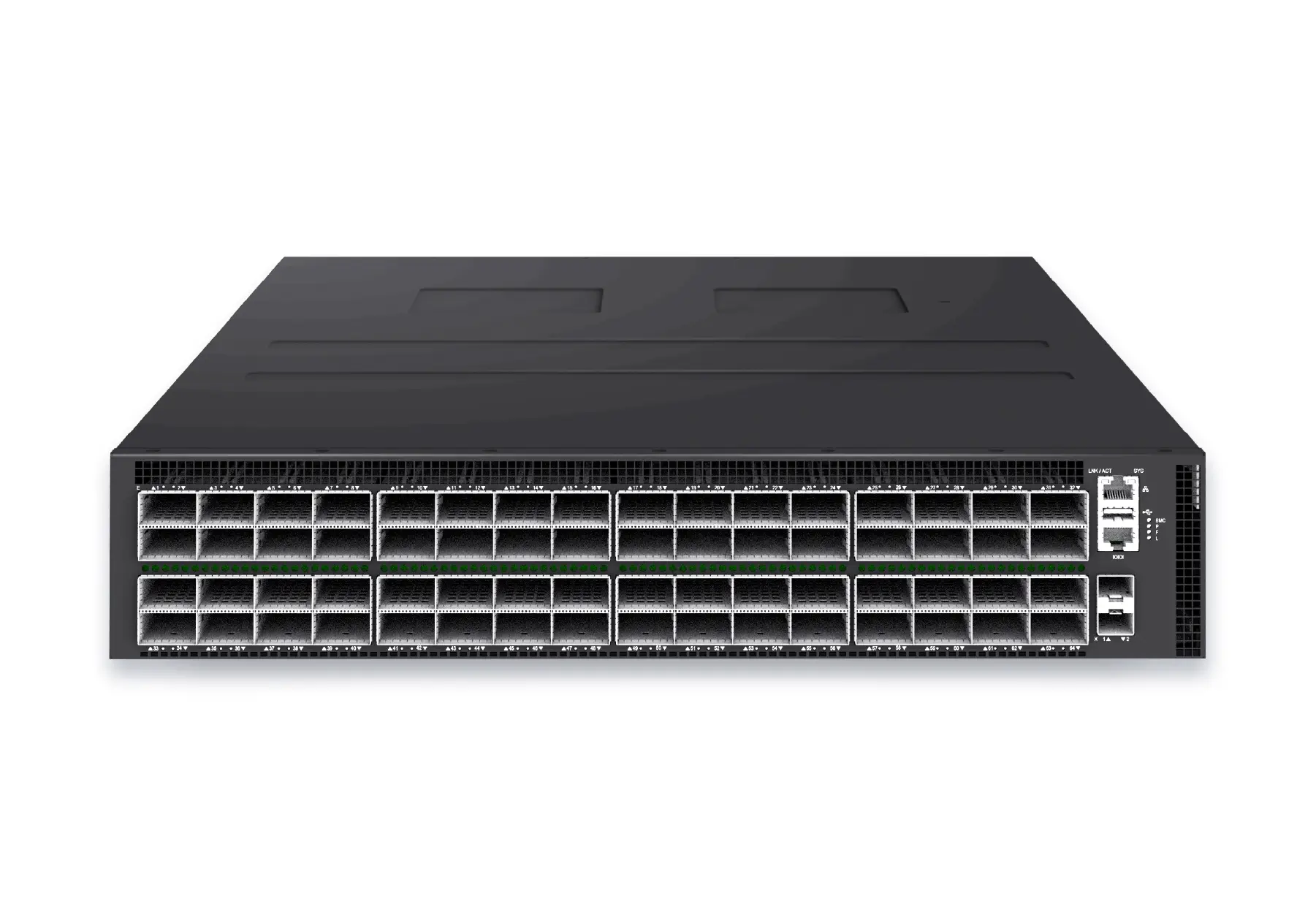 datacenter aiXS-DC-64X800-AI-G164-port 800G AI fabric switch for large-scale GPU clusters, HPC backbones, and ultra-high-throughput data center networks.View product
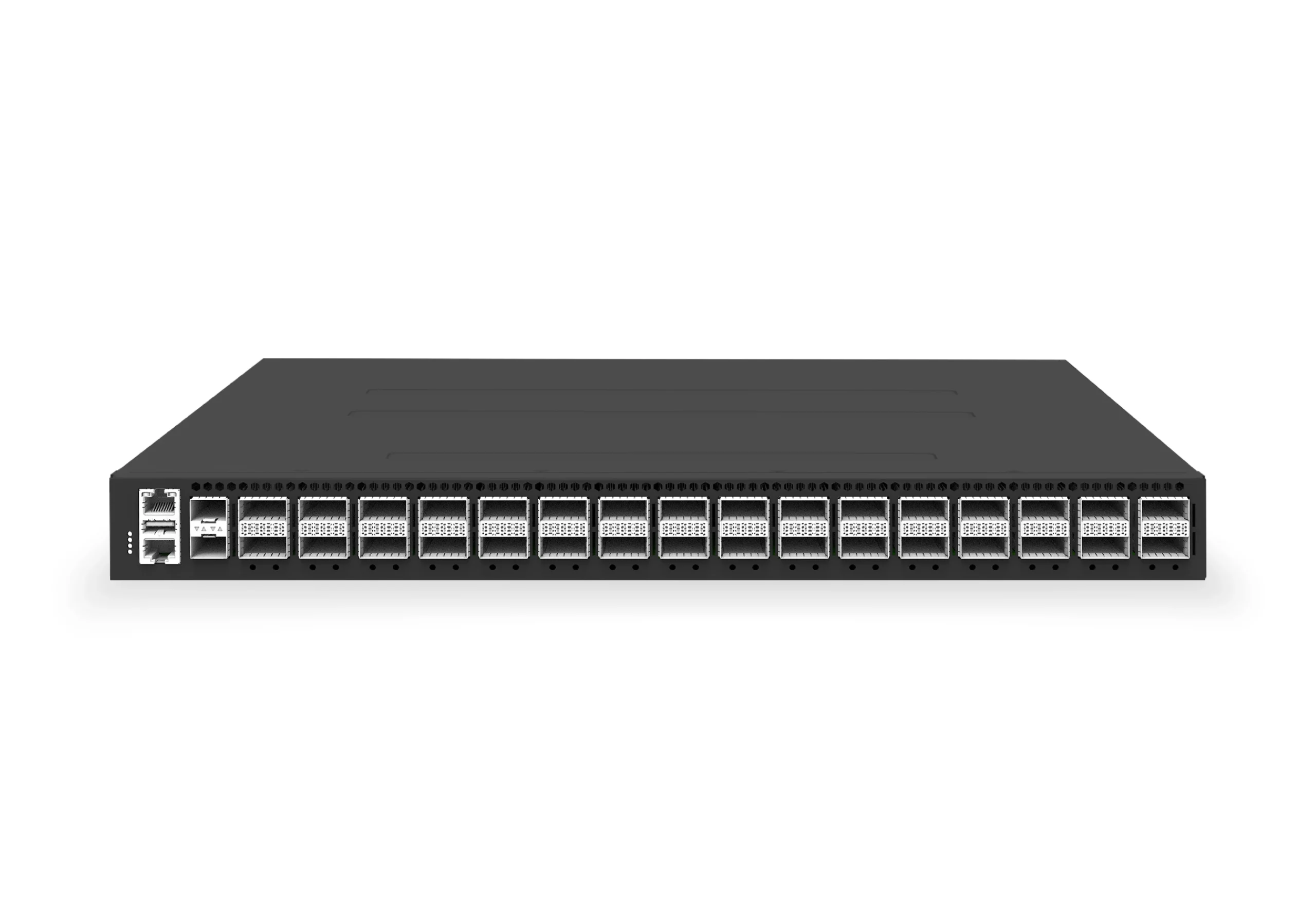 datacenter aiXS-DC-32X400-SP-G232-port 400G spine/core switch for high-capacity data center fabrics and AI-ready backbones.View product
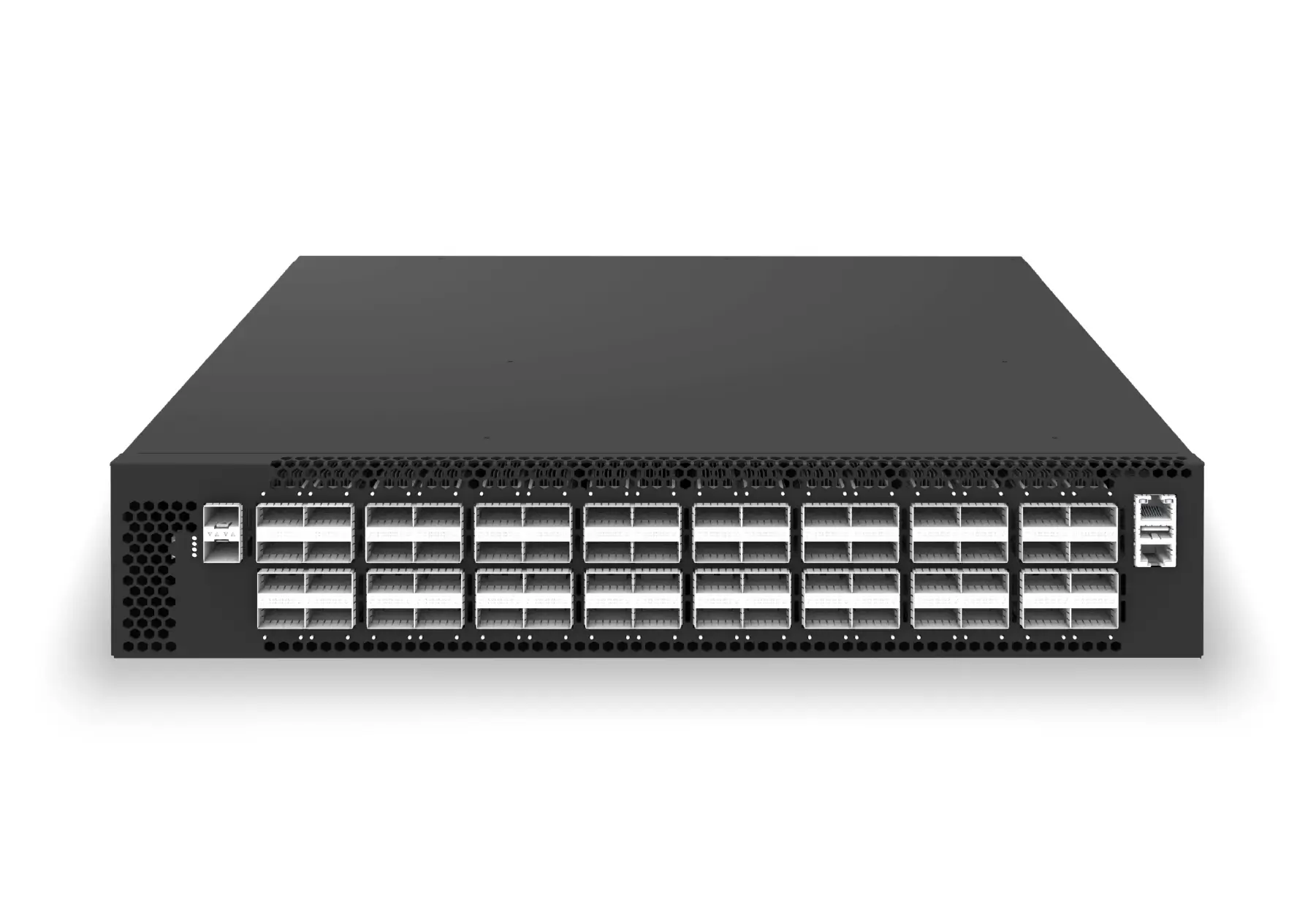 datacenter aiXS-DC-64X200-LS-G164-port 200G leaf/spine switch for high-bandwidth storage, compute, and scale-out data center fabrics.View product
Continue reading
Related articles
 Technical ArticleWhat AI Fabric Ethernet Switching Requires: A Buyer Guide for SONiC-Based Data CentersEngineering guidance on AI Fabric Ethernet Switching Requires for Australian network and security teams, covering traffic visibility, capacity modelling, tool feeds.Read article
 Technical ArticleProprietary Switch OS Lock-in vs Enterprise SONiC: An Australian Buyer Migration AnalysisMigration analysis for Australian buyers comparing proprietary switch OS lock-in with Enterprise SONiC pilot, support, automation, and TCO evidence.Read article
 Technical ArticleSONiC Network Operating System Architecture: A Buyer Guide for Enterprise and Data Center TeamsEngineering guidance on SONiC Network Operating System Architecture for Australian campus teams, covering PoE budgets, access-layer resilience, migration risk.Read article