
In brief
Engineering guidance on SONiC Network Operating System Architecture for Australian campus teams, covering PoE budgets, access-layer resilience, migration risk.
Key takeaways
- SONiC (Software for Open Networking in the Cloud) is a free, open-source network operating system built on Linux that runs on switches from multiple hardware vendors and across multiple ASIC families.
- For Australian enterprise and data center buyers evaluating their next campus refresh, AI fabric build-out, or data center spine-leaf upgrade, understanding SONiC architecture is not an academic exercise.
- According to the SONiC Foundation, SONiC decouples hardware and software through the Switch Abstraction Interface (SAI), which accelerates hardware innovation by allowing network silicon vendors to expose a common programming interface to the NOS layer.
Why SONiC Architecture Matters to Enterprise and Data Center Buyers
SONiC (Software for Open Networking in the Cloud) is a free, open-source network operating system built on Linux that runs on switches from multiple hardware vendors and across multiple ASIC families. Originally developed and production-hardened by hyperscale cloud operators, SONiC has moved into the enterprise and mid-market conversation because it solves a structural problem that proprietary NOS platforms cannot: the tight coupling of hardware and software.
For Australian enterprise and data center buyers evaluating their next campus refresh, AI fabric build-out, or data center spine-leaf upgrade, understanding SONiC architecture is not an academic exercise. It is a procurement decision that affects vendor lock-in, operational tooling, hardware sourcing flexibility, and total cost of ownership over a 5-7 year infrastructure lifecycle.
According to the SONiC Foundation, SONiC decouples hardware and software through the Switch Abstraction Interface (SAI), which accelerates hardware innovation by allowing network silicon vendors to expose a common programming interface to the NOS layer. This means buyers are not locked into a single switch vendor for every refresh cycle. The same SONiC image and configuration model can target switches built on Broadcom-based switches, Marvell Teralynx silicon, or NVIDIA Spectrum ASICs, among others.
This guide explains the architecture in buyer-relevant terms, provides decision criteria for evaluating SONiC readiness, and offers deployment checklists for teams planning SONiC-based network infrastructure. It maps each section to xSONiC product families so you can move from architecture understanding to product evaluation with minimal friction.
For xSONiC data center AI switches purpose-built for SONiC, see xSONiC Data Center AI Switches. For bare-metal switch hardware designed for open NOS evaluation, explore xSONiC Data Center AI Switches.
SONiC Architecture Overview: How the Containerized NOS Design Works
SONiC uses a modular, container-based architecture where each major network function runs in its own Docker container on top of a Debian Linux base. This is a fundamental departure from the monolithic NOS design used by most proprietary switch platforms, where routing, switching, management, and telemetry are compiled into a single process or tightly coupled binary.
The key architectural components are:
SyncD and the Switch Abstraction Interface (SAI) SyncD is the daemon that bridges SONiC’s software modules to the underlying network ASIC through SAI. SAI is an open API maintained under the Open Compute Project (OCP) that defines a standard set of C-language function calls for programming forwarding tables, ACLs, QoS, and other ASIC features. Hardware vendors implement SAI for their specific silicon, which means the SONiC application layer does not need to know which ASIC is in the switch.
For buyers, this matters because it means your NOS investment is not tied to a specific chip vendor. A switch built on Broadcom-based silicon and a switch built on Marvell Teralynx can both run the same SONiC release, subject to SAI implementation maturity and platform support.
Redis Database (RedisDB) SONiC centralizes all state information in a Redis database. Each container reads from and writes to Redis, which acts as the inter-process communication (IPC) backbone. This design means that if one container fails or is restarted (for example, during a software upgrade), other containers continue operating because the state is preserved in Redis. For operations teams, this provides better fault isolation than monolithic NOS platforms where a single process crash can take down the entire switch.
Core Containers and Their Functions SONiC deploys the following key containers:
- bgpd / zebra (FRRouting): BGP, OSPF, and other routing protocol implementations based on the open-source FRRouting project.
- swss (Switch State Service): Translates configuration and state changes between the application layer and SyncD/SAI.
- syncd: Manages the ASIC through the SAI API.
- teamd: Link aggregation (LACP) and port channel management.
- lldpd: Link Layer Discovery Protocol for neighbor discovery.
- snmpd: SNMP agent for monitoring and management integration.
- database: The Redis server that holds all switch state.
- pmon (Platform Monitor): Monitors hardware health including fans, power supplies, temperature sensors, and transceiver status.
Configuration Model
SONiC uses JSON-based configuration files (config_db.json) as the primary configuration input. Changes are applied through the config CLI utility or programmatically via the SONiC Management Framework, which supports RESTCONF and NETCONF/YANG-based configuration. This is a significant difference from proprietary CLIs and means SONiC integrates naturally with modern automation tools like Ansible, Terraform, and Python-based NAPALM libraries.
For a deeper look at NETCONF and YANG-based configuration with SONiC, see the xSONiC NETCONF Guide.
| Architectural Layer | Component | Buyer Relevance |
|---|---|---|
| Linux Base | Debian Linux | Standard Linux tooling; familiar to server and DevOps teams |
| State Management | Redis Database | Fault isolation; state survives container restarts |
| ASIC Abstraction | SAI via SyncD | Hardware independence; multi-vendor switch sourcing |
| Routing | FRRouting (bgpd/zebra) | Production-hardened BGP; no proprietary routing stack lock-in |
| Switch Services | swss | Configuration and state translation to ASIC |
| Link Aggregation | teamd | Standard LACP and port channel management |
| Platform Monitoring | pmon | Hardware health visibility for operations |
| Configuration | JSON / RESTCONF / NETCONF | Automation-friendly; no proprietary CLI dependency |
SAI: The Switch Abstraction Interface That Enables Hardware Choice
The Switch Abstraction Interface (SAI) is arguably the most important architectural decision in SONiC for buyers. SAI defines a standardized C-language API that network silicon vendors implement to expose their ASIC’s forwarding, QoS, ACL, and telemetry capabilities to SONiC’s SyncD daemon.
Why SAI matters for procurement: Without SAI, every NOS must have a dedicated driver or SDK for each ASIC family. This is the model used by traditional NOS vendors: you buy their software, you buy their hardware, and if you want to switch silicon, you rewrite your driver layer. SAI breaks this dependency. When a silicon vendor ships a SAI implementation for their new ASIC, SONiC can target that silicon with minimal changes to the application layer.
Current SAI implementations include:
- Broadcom: SAI implementations for Memory-centric (Memory-centric) switch families including Memory-centric 7, Memory-centric 8, and Memory-centric 9 series silicon.
- Marvell: SAI for Teralynx switching silicon.
- NVIDIA: SAI for Spectrum-series ASICs (Spectrum, Spectrum-2, Spectrum-3, Spectrum-4, Spectrum-6).
- Barefoot (Intel): SAI for Tofino programmable switching silicon.
Buyer due diligence on SAI maturity: Not all SAI implementations are equal. A SAI implementation may support basic L2/L3 forwarding but lack mature support for advanced features like RDMA/RoCE v2, EVPN-VXLAN, INT telemetry, or hardware-based packet replication. Before committing to a SONiC-based deployment, buyers should verify which SAI features are production-ready on their target hardware platform.
For buyers evaluating SONiC for AI fabric and RoCE v2 workloads, see the xSONiC RoCE v2 Guide and xSONiC AI Fabric Solutions.
| SAI Vendor | Target Silicon | SONiC Maturity (Indicative) | Known Strengths |
|---|---|---|---|
| Broadcom | Memory-centric 7/8/9 | Production-grade at scale | Broad feature set; largest deployed base |
| NVIDIA | Spectrum-2/3/4/6 | Production-grade | RoCE acceleration; Spectrum-X AI optimization |
| Marvell | Teralynx | Maturing | Cloud-scale switching; competitive port density |
| Intel (Barefoot) | Tofino/Tofino 2/Tofino 3 | Production for P4 programmable use cases | Programmable pipeline; INT native support |
SONiC vs. Proprietary NOS: Decision Criteria for Australian Buyers
Australian enterprise and data center teams face a specific set of considerations when evaluating SONiC against proprietary NOS platforms such as Cisco IOS-XE/NX-OS, Aruba OS-CX, Juniper Junos, or Arista EOS. The comparison is not simply open vs. closed. It involves weighing operational readiness, hardware sourcing in the ANZ market, support models, and feature maturity against the benefits of hardware independence and automation-first design.
Decision criteria checklist:
-
Team Linux and automation skills. SONiC runs on Debian Linux and uses JSON/YANG configuration. Teams need Linux CLI competence, familiarity with Docker container operations, and at least one automation framework (Ansible, SaltStack, or Python scripting). If your team manages only proprietary CLI environments, plan a training investment or consider a managed SONiC distribution.
-
Feature parity for your use case. SONiC’s feature set has grown substantially. Core BGP, VXLAN, EVPN, QoS, and telemetry capabilities are production-hardened. However, specific advanced features (for example, multicast PIM-SM, MPLS L3VPN, or certain campus-specific features like voice VLAN auto-provisioning) may lag behind proprietary platforms. Build a feature matrix for your specific deployment.
-
Operational tooling and monitoring. SONiC supports standard Linux tools (tcpdump, ethtool, systemctl), SNMP, gNMI streaming telemetry, and Syslog. It does not come with a proprietary NMS or dashboard. Plan to integrate SONiC with your existing monitoring stack (Prometheus, Grafana, Zabbix, Nagios, or similar). For visibility and telemetry, consider xSONiC Packet Brokers and xSONiC AIDC Controller for centralized management.
-
Upgrade and lifecycle management. SONiC supports image-based upgrades and fast/warm reboot for hitless upgrades. Containerized architecture means individual components can be patched or restarted without full switch reboots. However, upgrade testing and validation are your responsibility. There is no vendor TAC to validate your upgrade path. This is a trade-off: more control, more responsibility.
-
Community and commercial support. SONiC is a Linux Foundation project with active community contribution. Commercial support is available through distribution vendors, silicon partners, and infrastructure providers. For enterprise buyers who need SLA-backed support, evaluate the commercial SONiC distribution and support model available from your infrastructure supplier.
| Decision Factor | SONiC / Open Networking | Proprietary NOS (e.g., Cisco NX-OS, Arista EOS) |
|---|---|---|
| Hardware sourcing | Multi-vendor via SAI | Single vendor (or limited ecosystem) |
| Configuration model | JSON, RESTCONF, NETCONF/YANG | Vendor CLI, some REST APIs |
| Automation integration | Native Linux tooling; Ansible/Terraform-ready | Vendor-specific controllers and APIs |
| Support model | Community + commercial distribution | Vendor TAC with SLA-backed contracts |
| Feature breadth | Strong for data center; maturing for campus | Mature across campus, DC, and WAN |
| Lock-in risk | Low | Moderate to high |
| Learning curve for proprietary-only teams | Higher initial investment | Lower if already trained |
| Cost model | Open-source NOS; hardware cost is primary | Software license + hardware bundled |
For campus refresh use cases in Australia, see xSONiC Campus Refresh Solutions and xSONiC Access and Aggregation Switches.
Engineering Evidence Floor
For SONiC and open networking articles, the acceptance standard is operational proof, not community momentum. The evidence package should name the switch SKU, ASIC, SAI version, ONIE status, SONiC image, optics matrix, automation interface, support path, and rollback procedure. A practical pilot should run for 30 days, include 3 automated configuration changes, validate 100G/400G links where relevant, and prove that a P1 evidence bundle can be assembled within 2 hours.
| Evidence area | What to validate | Acceptance gate | Rework trigger |
|---|---|---|---|
| Platform | SKU, ASIC, ONIE, SAI, image, and optics | 2 platforms boot, upgrade, and rollback | Hardware support is assumed |
| Automation | Source of truth, API/gNMI/NETCONF, backup, and diff | 3 changes pass state readback | CLI drift becomes normal |
| Operations | Logs, telemetry, failure runbook, and escalation owner | P1 bundle ready within 2 hours | Fault isolation depends on one engineer |
| Lifecycle | Patch cadence, CVE process, spare plan, and support SLA | 12 months plan approved | Security and RMA ownership is unclear |
| Commercial | Hardware, support, optics, training, and migration labour | Risk-adjusted TCO is documented | Savings vanish after rework |
Engineering FAQ
What should be tested before moving campus switching to SONiC or open networking? Test PoE behaviour, NAC integration, VLAN and policy design, STP or MC-LAG interaction, multicast, monitoring, upgrade rollback, and help-desk workflows. Campus readiness is an operations test, not only a forwarding test.
Where do campus refresh projects usually carry hidden risk? The risk often sits in closets: power budget, old cabling, undocumented uplinks, mixed endpoint types, voice devices, cameras, badge systems, and change windows. Those details should be inventoried before selecting switch models.
How should Australian campus teams structure a pilot? Choose one representative site or building, document endpoint classes, run PoE and failover tests, verify monitoring, train operations staff, and define rollback steps before expanding to the broader estate.
Related xSONiC Resources
Sources Reviewed
- IEEE 802.1Q Bridges and Bridged Networks
- IEEE 802.1AX Link Aggregation
- Ethernet Network Adapters - ConnectX NICs | NVIDIA
- NVIDIA BlueField Data Processing Unit
- NVIDIA Spectrum-X Ethernet Platform
- OpenConfig gNMI Specification
- OpenConfig
- RFC 7950 - The YANG 1.1 Data Modeling Language
- RFC 6241 - Network Configuration Protocol (NETCONF)
- ACSC Essential Eight
- OAIC Notifiable Data Breaches
- APRA CPS 234 Information Security
- NETSCOUT Network Packet Definition
- Cloudflare Network Packet Definition
- SONiC Project Documentation
- Broadcom Ethernet Switching
- Marvell Switching
- NVIDIA Ethernet Switching
- Open Compute Networking
- SONiC GitHub
- SONiC Foundation
Product fit
Products referenced for evaluation
These products are referenced for evaluation context in the article. Confirm workload, port, optics, software, interoperability, and support requirements against the exact deployment before procurement.
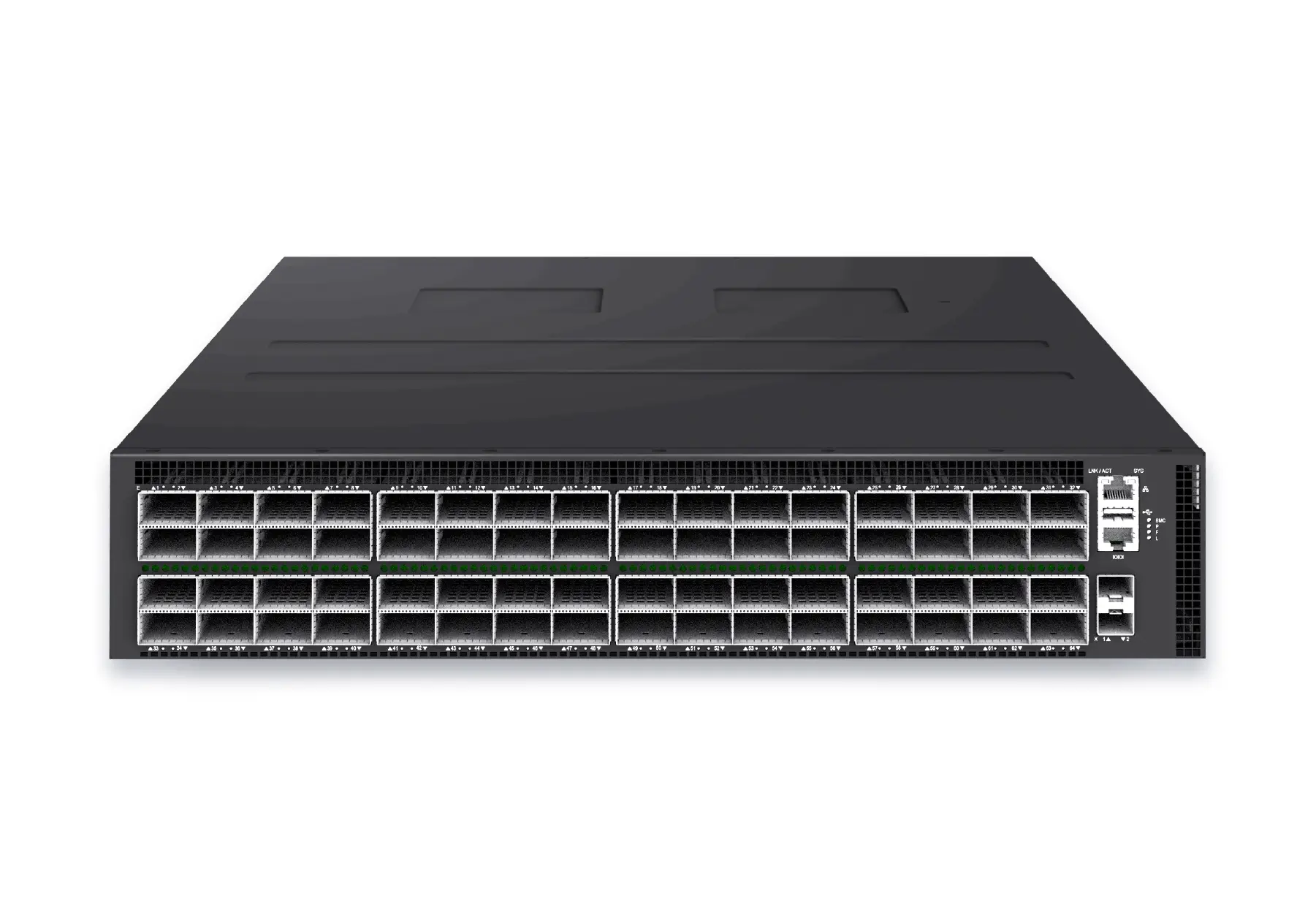 datacenter aiXS-DC-64X800-AI-G164-port 800G AI fabric switch for large-scale GPU clusters, HPC backbones, and ultra-high-throughput data center networks.View product
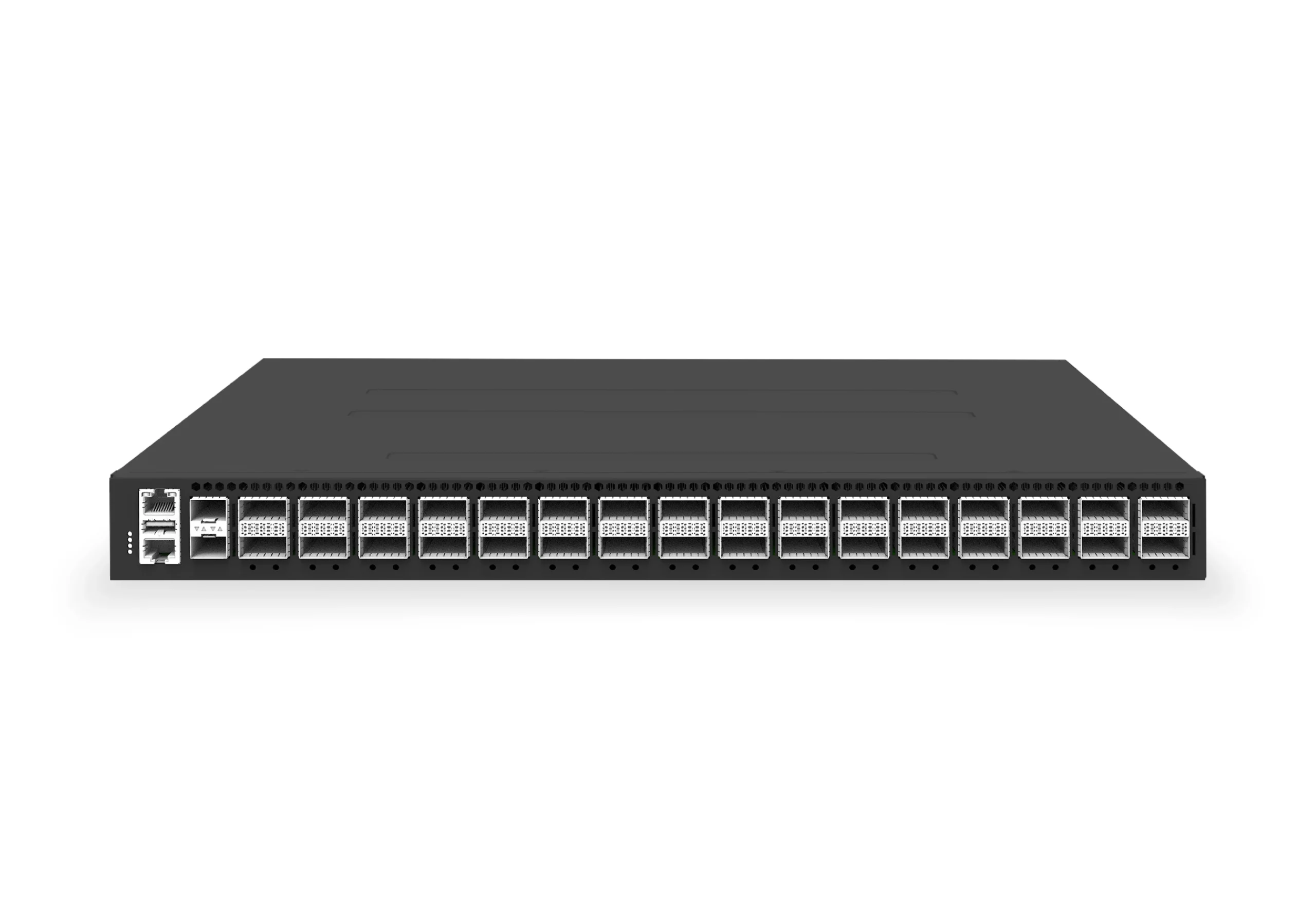 datacenter aiXS-DC-32X400-SP-G232-port 400G spine/core switch for high-capacity data center fabrics and AI-ready backbones.View product
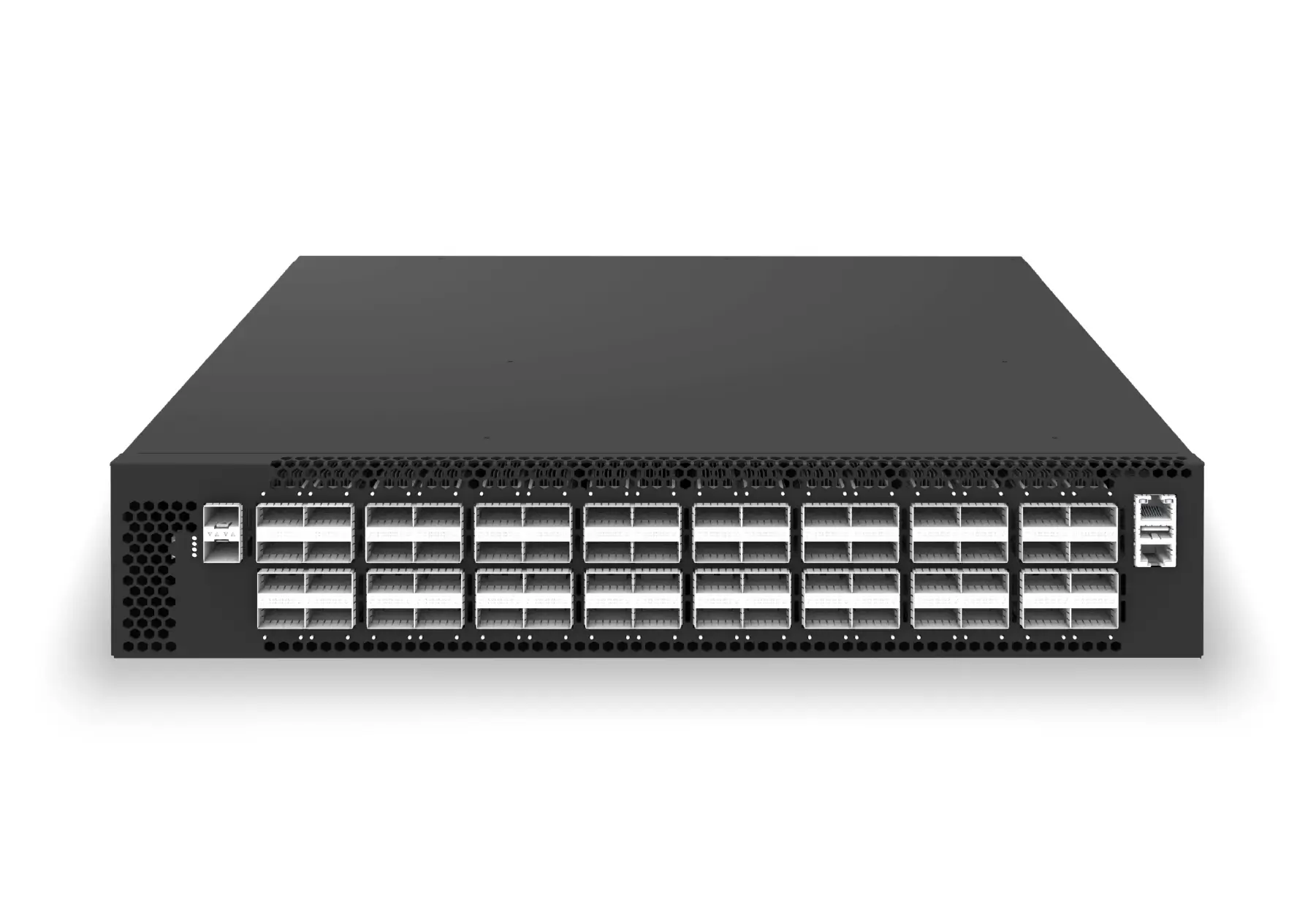 datacenter aiXS-DC-64X200-LS-G164-port 200G leaf/spine switch for high-bandwidth storage, compute, and scale-out data center fabrics.View product
Continue reading
Related articles
 Technical ArticleWhat AI Fabric Ethernet Switching Requires: A Buyer Guide for SONiC-Based Data CentersEngineering guidance on AI Fabric Ethernet Switching Requires for Australian network and security teams, covering traffic visibility, capacity modelling, tool feeds.Read article
 Technical ArticleProprietary Switch OS Lock-in vs Enterprise SONiC: An Australian Buyer Migration AnalysisMigration analysis for Australian buyers comparing proprietary switch OS lock-in with Enterprise SONiC pilot, support, automation, and TCO evidence.Read article
 Technical ArticleWhite Box Switch vs Traditional Switch: What Enterprise Buyers in Australia Need to KnowEngineering comparison of white-box and traditional switches for Australian enterprise buyers, covering SONiC, support, optics, risk, and TCO.Read article