In brief
Engineering guidance on AI Fabric Ethernet Switching Requires for Australian network and security teams, covering traffic visibility, capacity modelling, tool feeds.
Key takeaways
- Traditional data center networks were designed around request-response traffic patterns: a web server asks a database for a record, a client fetches a page, a microservice calls an API.
- In an AI fabric, hundreds or thousands of GPUs exchange massive all-to-all data flows simultaneously during collective operations like AllReduce and AllGather.
- This shift demands Ethernet switches purpose-built for AI workloads, not general-purpose data center boxes retrofitted with marketing labels.
Why AI Clusters Redefine Ethernet Switching Requirements
Traditional data center networks were designed around request-response traffic patterns: a web server asks a database for a record, a client fetches a page, a microservice calls an API. AI training and inference clusters break every assumption that model relied on.
In an AI fabric, hundreds or thousands of GPUs exchange massive all-to-all data flows simultaneously during collective operations like AllReduce and AllGather. These are not small, bursty packets. They are sustained, synchronized, multi-gigabyte transfers that must complete within tight time windows or the entire training step stalls. A single tail-latency spike on one leaf switch can idle thousands of GPU-hours.
This shift demands Ethernet switches purpose-built for AI workloads, not general-purpose data center boxes retrofitted with marketing labels. The requirements span five dimensions: raw bandwidth per port, RDMA-aware congestion handling, lossless or near-lossless fabric behavior, deep telemetry visibility, and predictable microsecond-scale latency. Every one of these requirements is now addressable on SONiC-based open networking hardware, which is why hyperscalers running some of the world’s largest AI clusters have standardized on SONiC as their network operating system.
The Five Core Requirements for AI Fabric Ethernet Switches
When evaluating Ethernet switches for an AI fabric, buyers should assess five technical capabilities:
1. Port Bandwidth at 400G and 800G. AI training clusters scale out across spine-leaf topologies where each leaf switch connects to GPU servers and each spine switch interconnects leaves. Modern GPU servers with eight or more accelerators need 400GbE uplinks per host, and spine fabrics are moving to 800GbE to avoid oversubscription. The industry’s highest-performance switching silicon now supports up to 800 Gb/s per port with aggregate switch throughput reaching 102.4 Tb/s in a single chassis, enabling fabric designs that connect thousands of GPUs without creating bandwidth bottlenecks.
2. RDMA over Converged Ethernet (RoCE v2) Support. GPU-to-GPU communication in training clusters uses RDMA to bypass CPU overhead and achieve memory-to-memory transfers at wire speed. RoCE v2 requires switches that understand RDMA queue pairs, handle congestion notifications (ECN marking), and support Priority Flow Control (PFC) to prevent packet drops that would force expensive TCP retransmissions. Zero-touch RoCE configuration, where the switch automatically optimizes buffer and scheduling behavior for RDMA traffic, reduces deployment complexity significantly.
3. Data Center Bridging Capability Exchange (DCBX). DCBX is the protocol that lets switches and endpoints negotiate PFC, ETS (Enhanced Transmission Selection), and application priority settings automatically. In an AI fabric where GPU servers, storage arrays, and management traffic share the same physical links, DCBX ensures that RDMA traffic receives lossless service while other traffic classes get appropriate scheduling without manual per-port configuration.
4. Congestion Management with Fast CNP and ECN. RoCE v2 relies on Explicit Congestion Notification (ECN) to signal congestion to senders. Fast Congestion Notification Processing (CNP) ensures that congestion signals propagate and are acted upon within microseconds, preventing buffer overflows that cause packet drops. Combined with intelligent buffer allocation and dynamic load balancing across equal-cost paths, these mechanisms keep AI traffic flowing predictably even under full bisection load.
5. In-Band Telemetry (INT) and Path Visibility. When a training job runs slowly, network operators need to know exactly where latency is accumulating. In-band telemetry (INT) embeds timestamp and queue depth metadata directly into packet headers as they traverse each switch hop, giving operators hop-by-hop visibility into latency, congestion, and path selection without relying on external probe infrastructure.
Why SONiC Is the Production NOS for AI Fabric Deployments
SONiC (Software for Open Networking in the Cloud) is an open-source network operating system maintained under the Linux Foundation. Originally developed and battle-hardened in the data centers of the largest cloud service providers, SONiC has become the de facto NOS for AI fabric deployments at scale.
Three architectural decisions make SONiC uniquely suited to AI fabrics:
Containerized modular architecture. Each network function in SONiC runs in its own Docker container: BGP in one, LLDP in another, the switch database service in another. This means a bug in one component does not crash the entire switch, upgrades can target individual services, and teams can troubleshoot specific functions in isolation. For AI fabrics where switch uptime during long training runs is critical, this fault isolation is a production advantage.
Hardware abstraction through SAI. The Switch Abstraction Interface (SAI) decouples SONiC from any specific switching ASIC. Whether the switch uses a Broadcom switch ASIC (Memory Cloud) silicon, a Marvell Teralynx, or another forwarding engine, SONiC presents the same management interface, configuration model, and feature set to the operator. This means buyers can select switching hardware based on port density, power, and price without being locked into a single vendor’s NOS ecosystem.
Multi-vendor ecosystem. SONiC runs on switches from multiple hardware vendors and has gained wide industry support including major network chip vendors. This ecosystem gives AI fabric builders the freedom to mix leaf and spine hardware from different suppliers, negotiate competitive pricing, and avoid the supply chain risk of single-vendor dependence.
Spine-Leaf Architecture for AI Training Clusters
The standard topology for AI fabric Ethernet networks is a Clos or spine-leaf architecture. Every leaf switch connects to every spine switch, creating a non-blocking fabric where any two endpoints are exactly two switch hops apart.
For a cluster connecting GPU servers, the design typically works as follows:
- Leaf tier: Each leaf switch connects to 32 or 64 GPU servers via 100GbE or 400GbE ports. The leaf handles local traffic within a rack and forwards cross-rack traffic up to the spine.
- Spine tier: Spine switches aggregate traffic from all leaf switches. Spine-to-leaf links operate at 400GbE or 800GbE to provide full bisection bandwidth.
- Superspine tier (optional): For clusters exceeding a few thousand GPUs, a third tier of switches provides east-west aggregation across spine blocks.
The key design principle is non-oversubscription: the total bandwidth from leaf to spine must equal or exceed the total server-facing bandwidth on the leaf tier. Oversubscription creates congestion hotspots during collective communication patterns, which directly translates to longer training times.
SONiC supports BGP-based ECMP (Equal-Cost Multi-Path) routing across all spine uplinks, distributing traffic evenly and re-routing around failures in sub-second convergence times. For AI workloads that cannot tolerate asymmetric path delays, SONiC’s support for RoCE-aware adaptive routing ensures that RDMA flows avoid congested paths proactively.
Open Networking Advantages for AI Infrastructure Buyers
Proprietary AI networking stacks from incumbent vendors bundle hardware, NOS, and management software into a single procurement. This simplifies the buying decision but introduces three risks that matter at AI scale:
Vendor lock-in on pricing. When a single vendor controls the NOS, the buyer has no competitive leverage on refresh cycles. Open networking with SONiC lets buyers source switching hardware from multiple vendors while running the same NOS across all of them.
Feature velocity. Open-source SONiC benefits from contributions by hyperscalers, chip vendors, and the broader community. New features like advanced telemetry, containerized upgrades, and RDMA optimizations ship on a regular cadence driven by production operators, not a single vendor’s product roadmap.
Operational consistency. AI infrastructure teams often manage hundreds or thousands of switches. A single NOS across leaf, spine, and superspine tiers means one set of automation scripts, one monitoring pipeline, and one troubleshooting methodology regardless of which hardware vendor supplied each switch.
For Australian enterprises and service providers building AI infrastructure, the open networking model also mitigates supply chain risk. With multiple SONiC-compatible switch hardware vendors available, procurement is not dependent on a single manufacturer’s stock availability or lead times.
Mapping AI Fabric Requirements to xSONiC Data Center Switches
xSONiC data center AI switches are built on Enterprise SONiC, combining the production-proven SONiC NOS with purpose-optimized switching hardware for AI fabric workloads. Here is how the five core AI fabric requirements map to xSONiC capabilities:
| Requirement | xSONiC Approach |
|---|---|
| 400G/800G port bandwidth | 100G/400G/800G switching platforms for spine-leaf AI fabrics |
| RoCE v2 for GPU RDMA | Optimized buffer and scheduling profiles for lossless RDMA traffic |
| DCBX auto-negotiation | Automated PFC and ETS configuration for mixed AI traffic classes |
| Fast CNP and ECN | Low-latency congestion notification processing to prevent GPU stalls |
| INT telemetry | Hop-by-hop latency and queue depth visibility for AI fabric troubleshooting |
xSONiC also integrates with the AIDC Controller for centralized fabric management, giving AI infrastructure teams a single control plane for provisioning, monitoring, and lifecycle management across the entire switching estate.
For optics, xSONiC optical transceivers cover the full range from SFP28 for management interfaces through QSFP28, QSFP-DD, and OSFP modules at 100G, 400G, and 800G, enabling right-sized fiber and DAC/AOC planning for every fabric tier.
Buyer Checklist: Evaluating AI Fabric Ethernet Switches
Before shortlisting vendors for an AI fabric deployment, work through this checklist:
- Port speed headroom. Does the switch support 400GbE or 800GbE per port to match GPU server NIC capabilities and spine uplink requirements?
- RoCE v2 certification. Has the switch been tested with your GPU server NICs for end-to-end RoCE v2 interoperability, including PFC and ECN behavior under load?
- DCBX and PFC configuration. Does the NOS support automatic DCBX negotiation, or must PFC priorities be configured manually on every port?
- Congestion management. Does the switch support Fast CNP, dynamic load balancing, and intelligent buffer allocation to handle all-to-all AI traffic patterns?
- Telemetry. Can the switch export INT metadata, streaming telemetry, or flow-level latency data to your monitoring stack?
- NOS flexibility. Is the NOS open-source or at minimum supports SONiC to avoid single-vendor lock-in?
- Automation. Does the NOS support NETCONF/YANG or standard Linux tooling for configuration automation at scale?
- Optical ecosystem. Are compatible 400G and 800G transceivers available, and does the vendor offer a validated optics compatibility matrix?
Key Takeaways
AI training and inference clusters impose fundamentally different Ethernet switching requirements than traditional data center workloads. Sustained all-to-all GPU communication patterns demand non-blocking bandwidth at 400G and 800G, lossless RDMA transport via RoCE v2, automated DCBX negotiation, fast congestion notification, and deep in-band telemetry.
SONiC has emerged as the production NOS of choice for AI fabric deployments because its containerized architecture, SAI-based hardware abstraction, and multi-vendor ecosystem give infrastructure teams the reliability, flexibility, and operational consistency that AI-scale networks require.
xSONiC data center AI switches combine Enterprise SONiC with purpose-optimized switching hardware, integrated AIDC Controller management, and a complementary optical transceiver portfolio to deliver a complete AI fabric solution on open networking principles.
If you are evaluating Ethernet switches for an AI fabric deployment, start with the buyer checklist above and contact xSONiC to discuss your specific cluster size, GPU NIC requirements, and fabric topology.
Engineering FAQ
What should be measured before sizing a packet broker? Measure source link speed, 95th-percentile utilisation, burst peaks, replication factor, filter complexity, tunnel handling needs, and tool-port capacity. Packet broker sizing fails when it is based on average traffic rather than copied and filtered traffic.
What proves that a visibility design is production ready? The design should prove aggregation, filtering, replication, load balancing, packet slicing or deduplication if required, and tool failover under realistic traffic. Security teams should also verify that drops are reported rather than hidden.
Where do Australian buyers most often under-scope visibility projects? The common gaps are east-west data centre traffic, encrypted or tunneled flows, AI cluster bursts, retention requirements, and tool oversubscription. A procurement brief should model those before asking vendors for a bill of materials.
Related xSONiC Resources
Sources Reviewed
- Ethernet Network Adapters - ConnectX NICs | NVIDIA
- NVIDIA BlueField Data Processing Unit
- NVIDIA Spectrum-X Ethernet Platform
- OpenConfig gNMI Specification
- OpenConfig
- RFC 7950 - The YANG 1.1 Data Modeling Language
- RFC 6241 - Network Configuration Protocol (NETCONF)
- ACSC Essential Eight
- OAIC Notifiable Data Breaches
- APRA CPS 234 Information Security
- NETSCOUT Network Packet Definition
- Cloudflare Network Packet Definition
- SONiC Project Documentation
- Broadcom Ethernet Switching
- Marvell Switching
- NVIDIA Ethernet Switching
- Open Compute Networking
- SONiC GitHub
- SONiC Foundation
Product fit
Products referenced for evaluation
These products are referenced for evaluation context in the article. Confirm workload, port, optics, software, interoperability, and support requirements against the exact deployment before procurement.
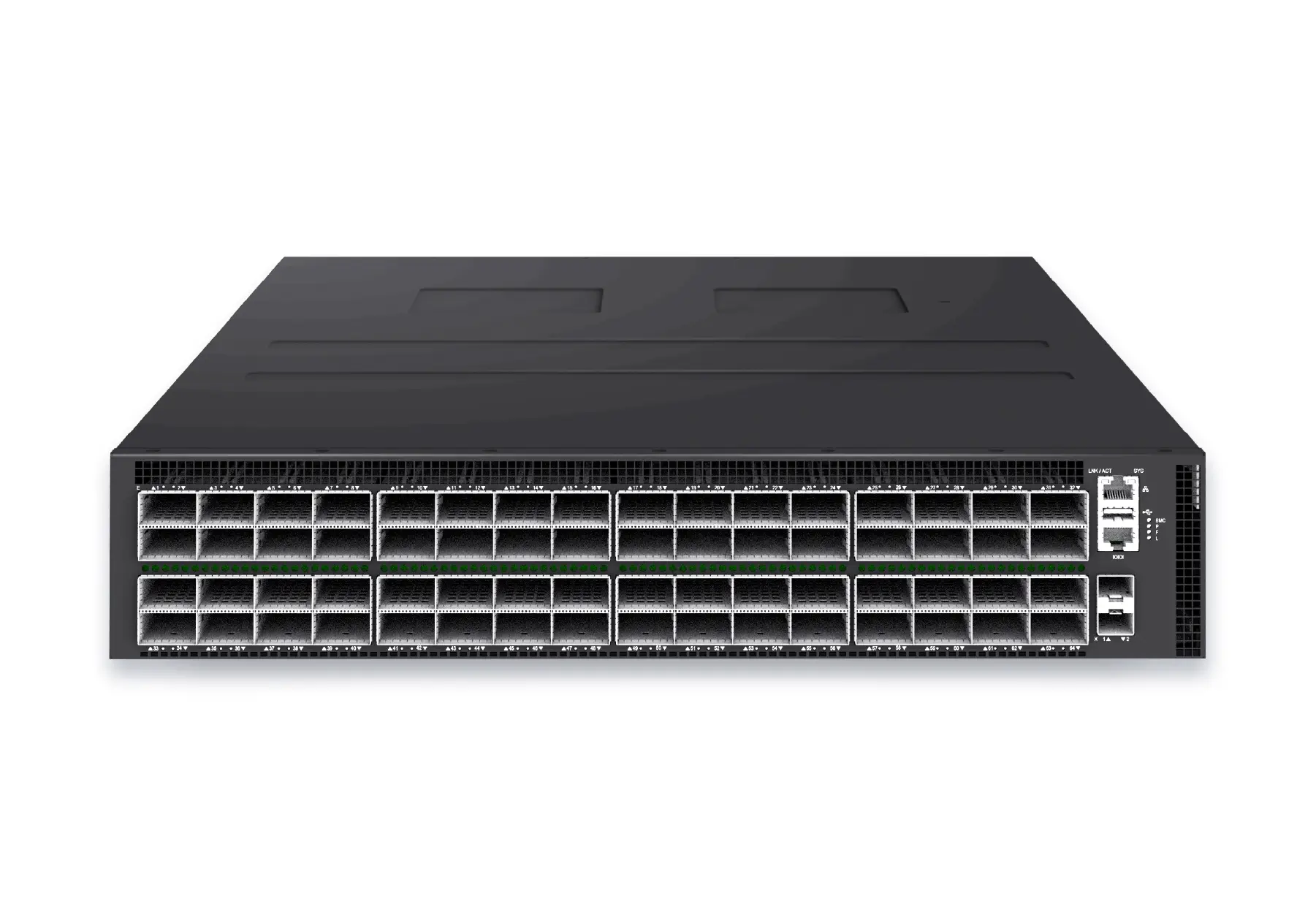 datacenter aiXS-DC-64X800-AI-G164-port 800G AI fabric switch for large-scale GPU clusters, HPC backbones, and ultra-high-throughput data center networks.View product
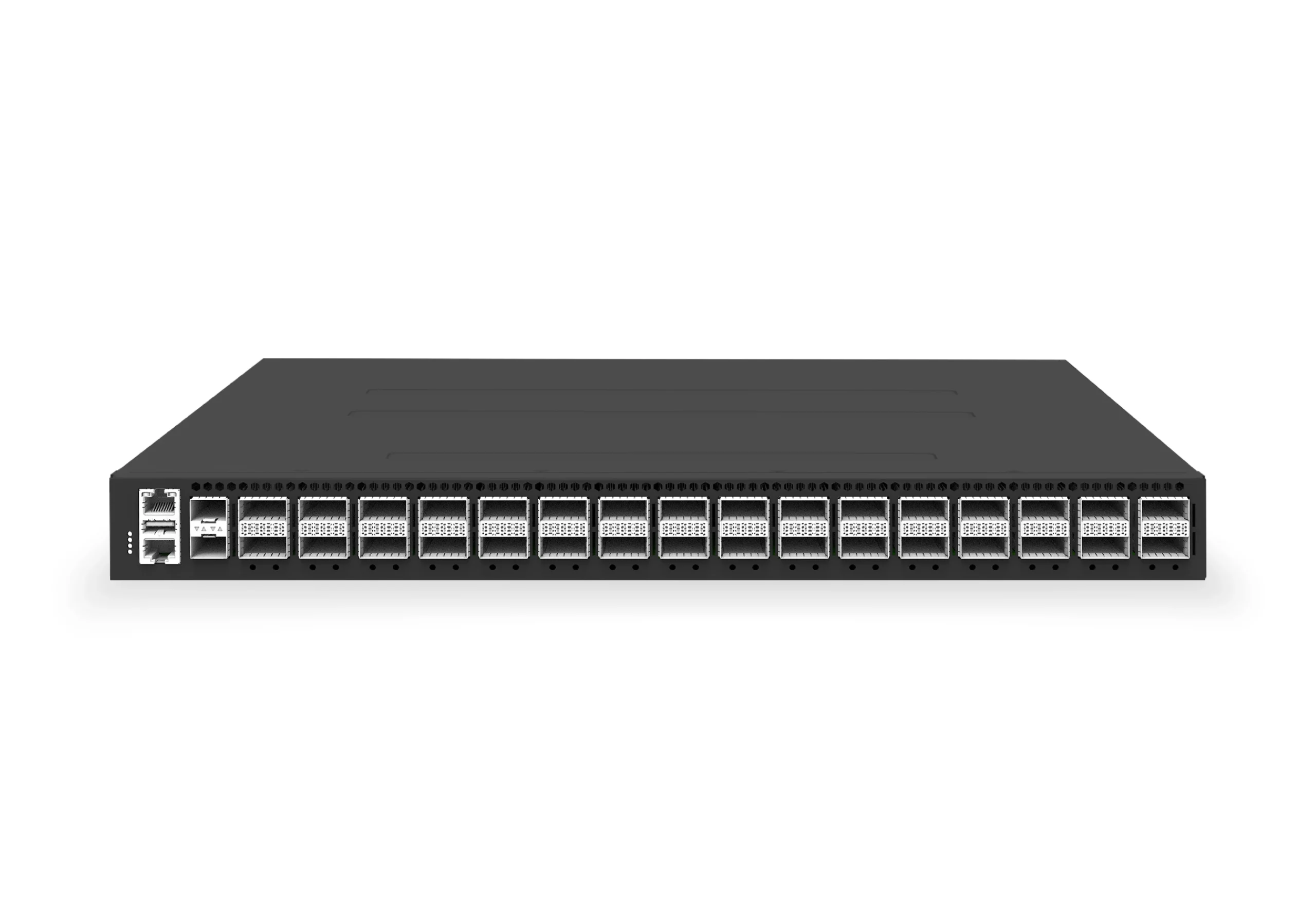 datacenter aiXS-DC-32X400-SP-G232-port 400G spine/core switch for high-capacity data center fabrics and AI-ready backbones.View product
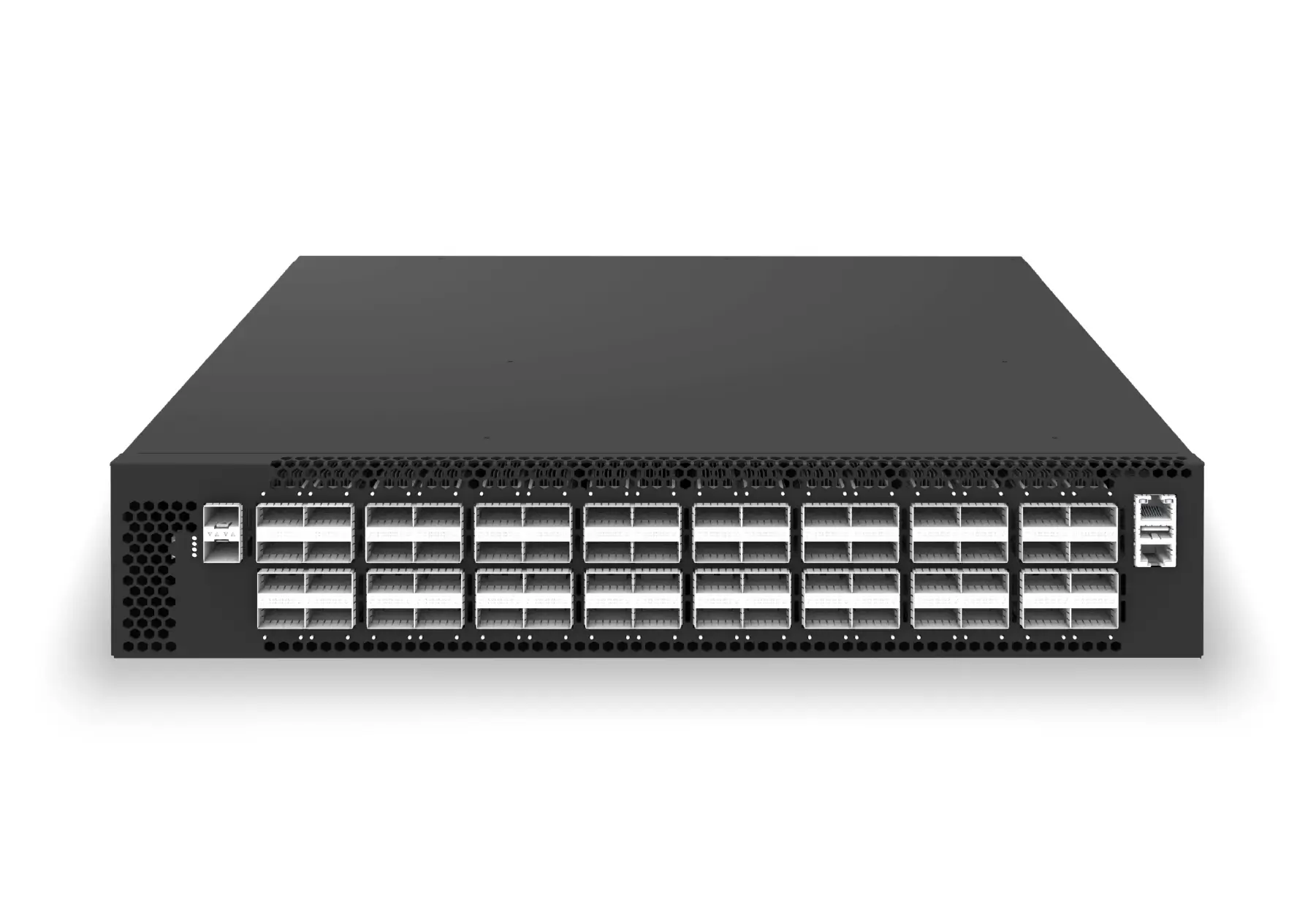 datacenter aiXS-DC-64X200-LS-G164-port 200G leaf/spine switch for high-bandwidth storage, compute, and scale-out data center fabrics.View product
Continue reading
Related articles
 Technical ArticleProprietary Switch OS Lock-in vs Enterprise SONiC: An Australian Buyer Migration AnalysisMigration analysis for Australian buyers comparing proprietary switch OS lock-in with Enterprise SONiC pilot, support, automation, and TCO evidence.Read article
 Technical ArticleWhite Box Switch vs Traditional Switch: What Enterprise Buyers in Australia Need to KnowEngineering comparison of white-box and traditional switches for Australian enterprise buyers, covering SONiC, support, optics, risk, and TCO.Read article
 Technical ArticleSONiC Network Operating System Architecture: A Buyer Guide for Enterprise and Data Center TeamsEngineering guidance on SONiC Network Operating System Architecture for Australian campus teams, covering PoE budgets, access-layer resilience, migration risk.Read article