In brief
Australian universities should evaluate Enterprise SONiC as a staged campus access and aggregation option, validating PoE, NAC, uplink resilience, telemetry, rollback, and local support before committing to a broad refresh.
Key takeaways
- Treat the refresh as an operational migration, not a bulk hardware replacement.
- Validate the exact endpoint mix, PoE budget, NAC policy, uplink design, failure behaviour, and rollback path in a representative building.
- Keep access and aggregation product selection tied to evidence from the same hardware revision and Enterprise SONiC image intended for production.
The Campus Network Refresh Problem Australian Universities Cannot Ignore
The University of Western Australia alone serves more than 25,000 students across its Crawley campus, health campus at Queen Elizabeth II Medical Centre, and regional sites. That documented mix of metropolitan, health, and regional locations illustrates why a campus-network plan must account for different buildings and operating environments rather than assume one uniform site.
Depending on radio configuration and traffic, Wi-Fi 6 and Wi-Fi 6E access points may exceed a 1GbE uplink. Some wired access points, cameras, sensors, and access-control endpoints use Power-over-Ethernet (PoE), while others have separate power or lower bandwidth requirements. Lecture capture, research data transfer, and dense accommodation can add further demand, but the actual port speed, power budget, and concurrency should come from a site survey and endpoint inventory.
For an institution already planning a refresh, the useful question is how to meet those measured requirements without assuming another long proprietary switching cycle is the only option.
What Enterprise SONiC Brings to the Campus Access and Aggregation Layer
SONiC (Software for Open Networking in the Cloud) started as a data center NOS. Enterprise-edge work is expanding through the SONiC Foundation’s PoE Edge Networks with SONiC workgroup and individual distribution roadmaps, but that does not make every campus feature universal. Treat Layer 2 and Layer 3 access, PoE management, 802.1X or MAB, VLAN segmentation, spanning-tree mode, and management workflows as image-and-platform-specific capabilities that must be confirmed in the exact release and hardware matrix.
For the campus access layer, a candidate Enterprise SONiC platform may provide the following, subject to vendor documentation and lab validation:
- PoE access switches with the required 802.3at (PoE+) or 802.3bt (PoE++) budget for Wi-Fi 6E and Wi-Fi 7 APs, IP cameras, and IoT endpoints
- Multi-gigabit ports (1G/2.5G/5G/10G mGbE) for high-density wireless backhaul
- Uplink flexibility with SFP28 (25G) or QSFP28 (100G) to aggregation or distribution switches
- VLAN, ACL, and QoS policies with the required scale and licensing terms documented for the selected distribution
At the aggregation layer, validate whether the exact distribution and platform support:
- MC-LAG for active-active uplinks without spanning-tree blocked ports
- EVPN-VXLAN for campus-wide overlay segmentation (relevant for larger multi-building sites)
- Policy-Based Routing (PBR) for traffic steering and per-application path selection
- Multi-switch operations through the vendor’s documented MC-LAG, automation, or management design; do not infer fixed-switch stacking or a single logical chassis from SONiC’s distributed-VOQ chassis architecture
The open NOS model can let network teams standardise on a related SONiC-based operating model across access and aggregation tiers, but only where every hardware revision appears in the same supported distribution, release, feature, and upgrade matrix. A common SONiC name alone does not prove cross-vendor image portability or identical CLI behaviour.
Why Australian Campuses May Be Worth Evaluating
Several factors can make Enterprise SONiC worth evaluating for an Australian campus, subject to the platform and operational checks below:
Geographic distribution. UWA, for example, documents an Albany campus around five hours from Perth. For a remote site, procurement can evaluate whether consistent management and multiple qualified hardware sources would improve support and replacement logistics; neither benefit should be assumed before the platform and supply chain are verified.
IoT and smart-campus requirements. Where a campus uses building-management systems, environmental sensors, cameras, or access control, procurement should identify which endpoints need PoE and segmentation, then verify those capabilities, their scale, and their failure behaviour on the exact Enterprise SONiC image and switch.
A Practical Campus Refresh Checklist for Enterprise SONiC Evaluation
If your team is evaluating Enterprise SONiC for a campus access and aggregation refresh, consider this decision framework:
Access Layer Requirements
| Criterion | What to Verify |
|---|---|
| PoE budget per switch | 370W+ for Wi-Fi 6E/7 AP deployment, 740W+ for high-density PoE++ |
| Port density | 24 or 48 x 1GbE/mGbE with PoE+ per access switch |
| Uplinks | At minimum 4x 10G SFP+; preferred 2x 25G SFP28 for AP backhaul headroom |
| Authentication | 802.1X, RADIUS integration, MAC-based fallback |
| Management | NETCONF/YANG or CLI; integration with existing NMS platform |
Aggregation Layer Requirements
| Criterion | What to Verify |
|---|---|
| Redundancy | MC-LAG or VRRP between aggregation pair |
| Uplink capacity | 40G QSFP+ or 100G QSFP28 to campus core or distribution |
| Segmentation | VLAN-based or EVPN-VXLAN overlay, depending on campus size |
| Routing | OSPF, BGP, PBR for traffic engineering across buildings |
| Multi-switch operations | Vendor-documented MC-LAG, automation, monitoring, and failure handling; require explicit evidence before accepting any stacking or single-management-plane claim |
Operational Readiness
| Criterion | What to Verify |
|---|---|
| Team SONiC experience | Existing Linux/network CLI skills accelerate adoption; plan for training if needed |
| Support model | Confirm vendor or community support SLA for Enterprise SONiC builds |
| Migration plan | Phased building-by-building rollout; parallel-run with existing stack during transition |
Campus Refresh Architecture: A Reference Design
A mid-size Australian university evaluating a multi-building deployment can use the following as a pilot hypothesis, not a pre-approved design. Each role depends on the selected hardware revision and Enterprise SONiC image passing the stated feature and interoperability tests:
- Access layer: Candidate 24/48-port PoE switches deployed per floor, after validating endpoint authentication, power budget, and the intended 25G SFP28 uplinks to the building aggregation pair.
- Aggregation layer: Candidate switches in an MC-LAG pair per building, after validating the exact MC-LAG implementation and intended 100G QSFP28 links to the campus core.
- Overlay (optional for larger campuses): EVPN-VXLAN for building-to-building Layer 2 extension and micro-segmentation of research, administrative, and student traffic domains.
- Management: NETCONF/YANG-based automation for configuration consistency, integrated with the institution’s existing monitoring stack.
This architecture separates concerns cleanly: access switches handle PoE delivery and endpoint authentication; aggregation switches handle traffic engineering, redundancy, and uplink scaling; the core (which may or may not run SONiC depending on the institution’s data center strategy) handles inter-building and internet-bound routing.
The Vendor Lock-In Argument: Why It Matters More on Campus Than in the Data Center
In the data center, open-networking programs have offered an alternative to tightly coupled hardware, software, licensing, and release lifecycles. Campus teams can evaluate the same kinds of dependency without assuming every open platform removes them:
- Proprietary management platforms that bundle switch hardware with controller software and can couple software lifecycle decisions to hardware refresh timing.
- Feature-gated licensing for management, security, or advanced networking functions that can change the usable feature set and lifecycle cost.
- Single-vendor support dependency where firmware patches, bug fixes, and feature updates are gated behind a single vendor’s release schedule.
Enterprise SONiC on open switching hardware can reduce parts of this dependency, but it does not remove qualification work or support ownership. A university may be able to compare more hardware suppliers and align operating practices, while each switch still needs an approved platform image, feature matrix, upgrade path, and support contract. Updates should follow the validated vendor or distribution lifecycle rather than an untested local schedule. For an institution planning a capital refresh, that evidence can improve procurement leverage without turning openness into an unsupported portability claim.
Getting Started: Evaluation Path for Australian Campus Teams
If your institution is planning a campus access and aggregation refresh, a practical next step is to run a building-level proof of concept. Select one building with a representative mix of access points, IoT endpoints, and user density. Deploy Enterprise SONiC on open hardware for that building’s access and aggregation layers, integrate with your existing authentication and monitoring infrastructure, and operate for a full semester.
This approach gives your operations team hands-on experience, surfaces any integration gaps early, and produces real-world performance data for your procurement committee.
For Australian institutions exploring this path, the xSONiC team can provide access-aggregate switch recommendations, optical transceiver compatibility guidance, and architecture review support.
Contact the xSONiC team to discuss your campus refresh requirements.
Engineering Evidence Floor
For campus and access switching topics, acceptance should be based on endpoint behaviour under real operating constraints. The evidence package should include endpoint classes, PoE budget, NAC/802.1X, LLDP-MED, voice VLANs, multicast, STP or MC-LAG behaviour, uplink capacity, monitoring, rollback, and help-desk workflow. A representative pilot should run at least 48 ports for 30 days, include one planned rollback inside 24 hours, and document support ownership before scale-out.
| Evidence area | What to validate | Acceptance gate | Rework trigger |
|---|---|---|---|
| Endpoint mix | APs, phones, cameras, laptops, IoT, and printers | 48 ports run mixed load for 24 hours | Only laptop traffic is tested |
| Power and uplinks | PoE budget, 1G/2.5G/5G/10G access, and 100G uplinks | No power or uplink bottleneck in pilot | Refresh ignores closet constraints |
| Resilience | STP, MC-LAG, link loss, member loss, and rollback | 3 failure cases captured | Campus works only in steady state |
| Operations | Monitoring, logs, backup, restore, and help-desk runbook | Incident evidence ready within 2 hours | Support depends on informal notes |
| Rollout | Site selection, training, spares, and change windows | 30 days pilot approved before estate rollout | Procurement scales before validation |
Engineering FAQ
What should a university test before replacing an access closet with Enterprise SONiC? Test the actual mix of access points, phones, cameras, printers, IoT devices, and laptops. Record 802.1X and fallback authentication, voice VLAN and LLDP-MED behaviour, PoE draw and reboot behaviour, spanning-tree or MC-LAG failover, monitoring visibility, and a timed rollback.
Does Enterprise SONiC automatically remove campus vendor lock-in? No. A common NOS can widen hardware choice, but only if the selected hardware revision, ASIC support, image lifecycle, campus features, management integrations, spares, and support ownership are independently validated and documented.
How should access and aggregation uplinks be sized? Start with measured busy-hour traffic and failure-state load, then include AP upgrades and endpoint growth. Validate the intended 10G, 25G, or 100G uplink and aggregation pair under member loss instead of relying only on a theoretical oversubscription ratio.
Related xSONiC Resources
- campus refresh solution
- PoE campus planning guide
- MC-LAG and STP guide
- access and aggregation switches
Sources Reviewed
- IEEE 802.1Q Bridges and Bridged Networks
- IEEE 802.1AX Link Aggregation
- OpenConfig gNMI Specification
- RFC 7950 - The YANG 1.1 Data Modeling Language
- RFC 6241 - Network Configuration Protocol (NETCONF)
- IEEE 802.11be Wireless LAN Standard
- IEEE 802.3bt Power over Ethernet
- SONiC Project Documentation
- SONiC Roadmap Planning
- SONiC Foundation PoE Edge Networks Workgroup
- SONiC Distributed VOQ High-Level Design
- University of Western Australia Locations and Campuses
- Open Compute Networking
Product fit
Campus access and aggregation products for pilot evaluation
Use these access, PoE, and aggregation candidates to structure a pilot. Confirm the exact hardware revision, Enterprise SONiC image, port and power profile, interoperability, and support requirements before procurement.
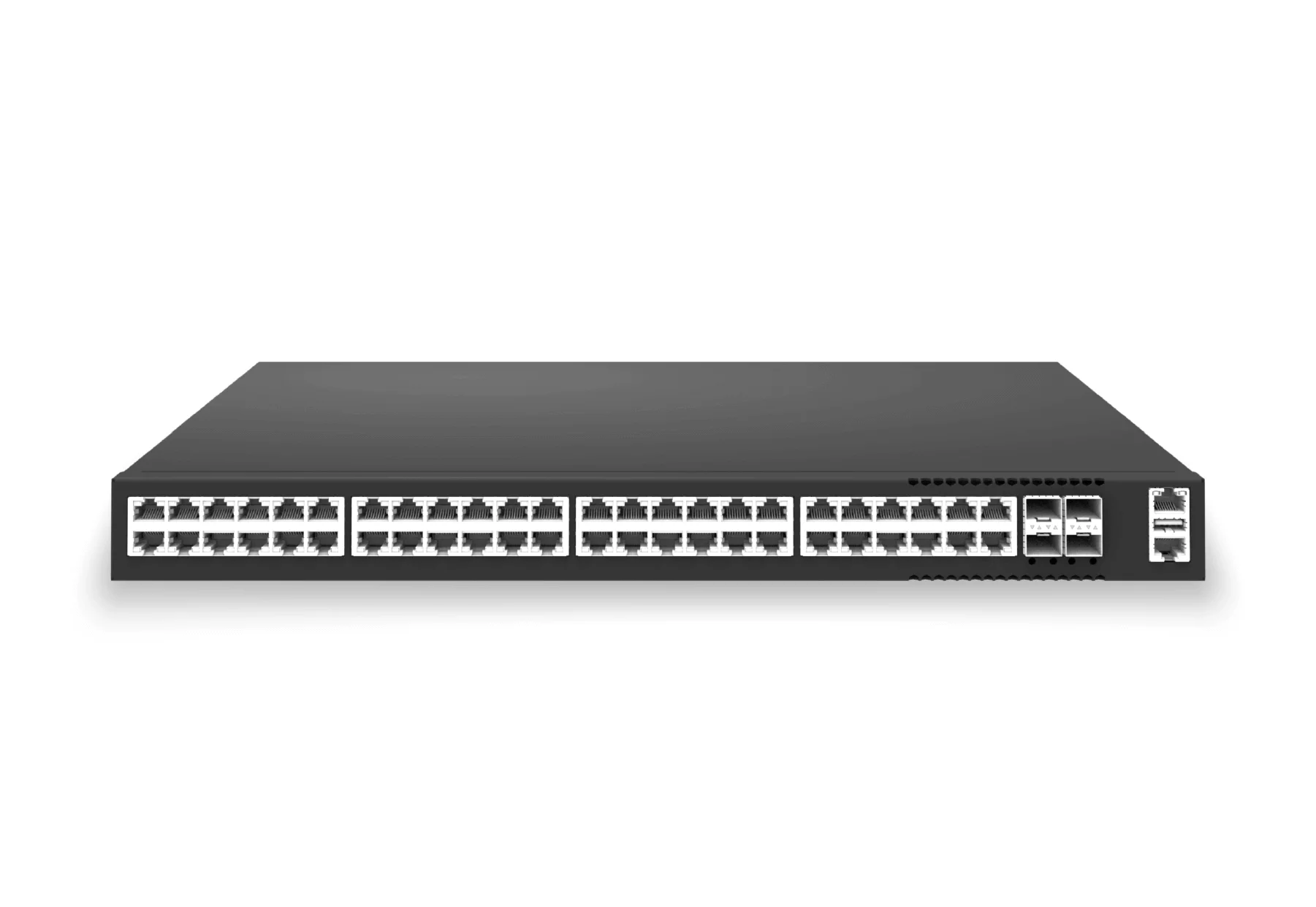 access aggregateXS-AA-48X1-4X25-ACC48x1G RJ45 access switch with 4x25G uplinks for campus edge, SMB, and enterprise access deployments.View product
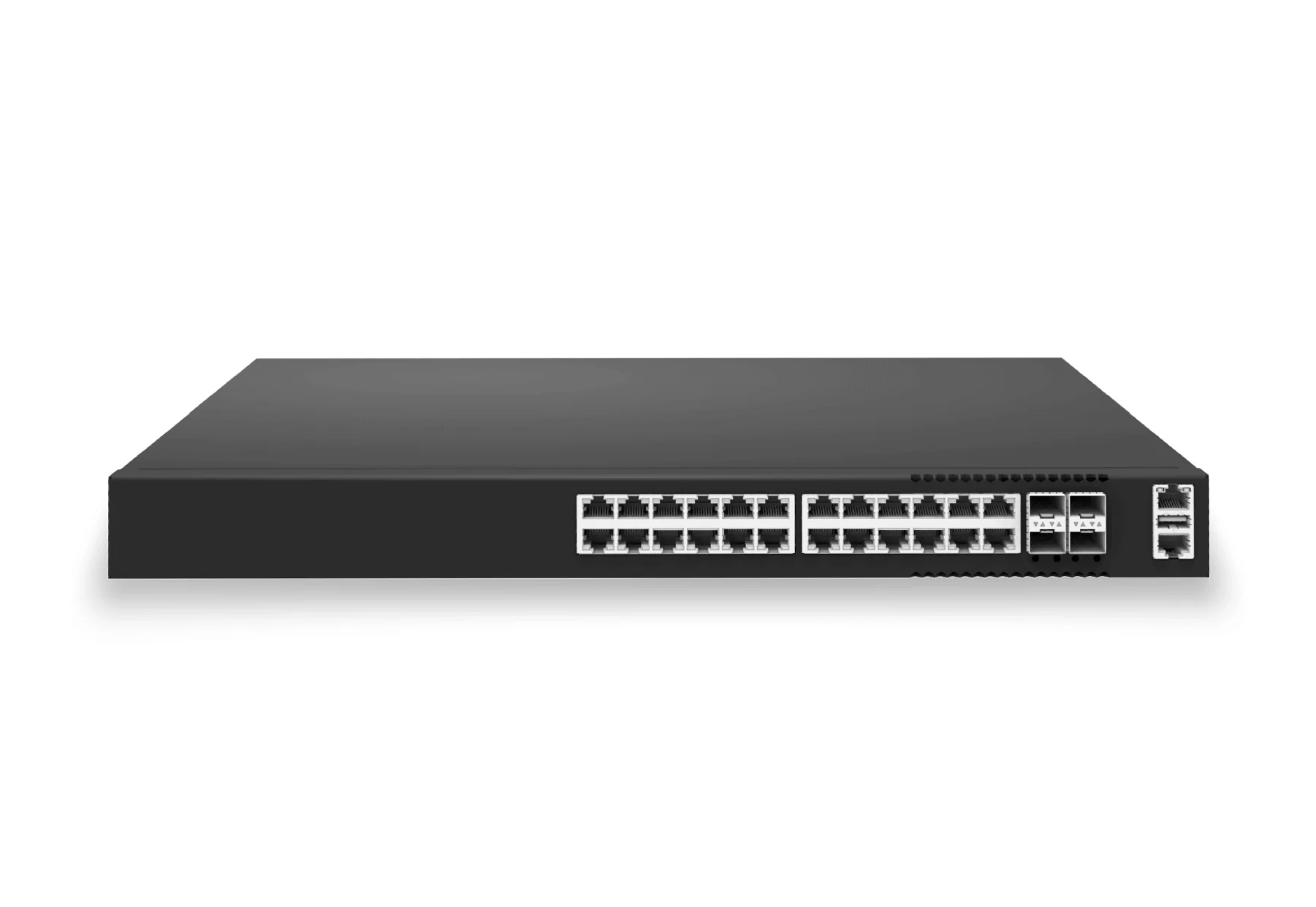 access aggregateXS-AA-24X1-4X25-POE37024x 1G RJ45 PoE campus access switch with 4x 25G SFP28 for PoE edge, access and aggregation networks.View product
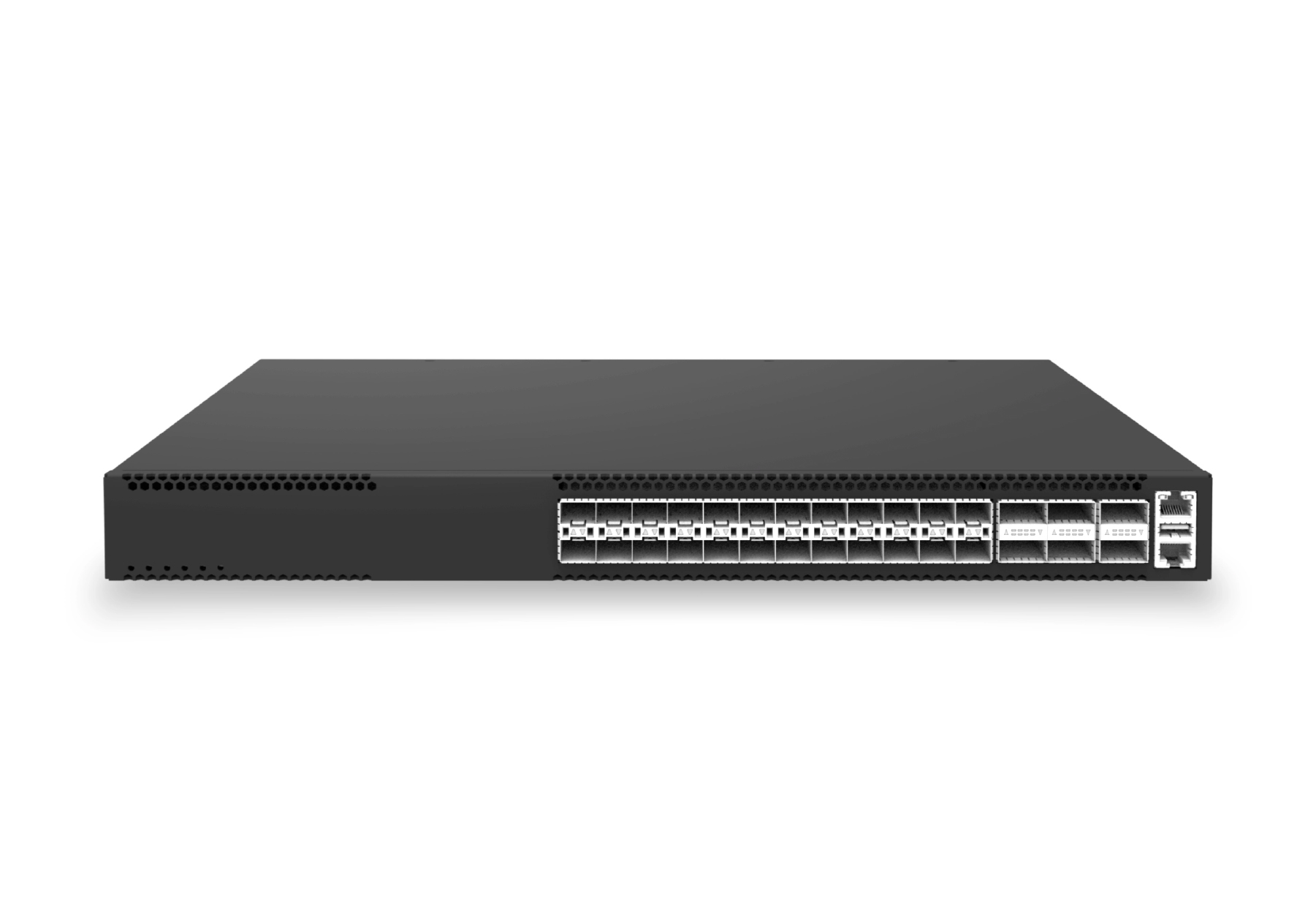 access aggregateXS-AA-24X10-6X100-AGG24x10G aggregation switch with 6x100G uplinks for campus distribution, private cloud leaf, and enterprise core roles.View product
Continue reading
Related articles
 Technical ArticleWhy Australian Enterprise Campus Networks Are Looking Beyond Proprietary SwitchingWhy Australian campus teams are evaluating Enterprise SONiC for aggregation, automation, telemetry and reduced switching lock-in.Read article
 Technical ArticleSONiC Moves Beyond the Data Center: What the Enterprise Campus Push Means for Australian Network BuyersWhat Australian buyers should validate as SONiC moves from data center fabrics into campus access and aggregation.Read article
 Technical ArticleSONiC Telemetry Automation Matures: What Australian Data Center and Campus Operators Should WatchAn engineering analysis of SONiC telemetry automation, covering gNMI, INT, streaming telemetry, observability operations, and Australian data center and campus requirements.Read article