
In brief
Why Australian campus teams are evaluating Enterprise SONiC for aggregation, automation, telemetry and reduced switching lock-in.
Key takeaways
- The practical shift is that open networking is no longer only a hyperscale experiment.
- Campus SONiC should still be treated carefully. Access networks carry users, phones, cameras, badge readers, wireless APs and building systems, so a campus refresh needs more operational evidence than a data center leaf-spine pilot.
- Enterprise SONiC on open switching hardware addresses each of these points in principle: the NOS is open-source and community-maintained, the hardware is disaggregated and multi-vendor, and NETCONF/YANG and gNMI telemetry are native capabilities.
What Happened
The practical shift is that open networking is no longer only a hyperscale experiment. Australian buyers are now evaluating SONiC, merchant-silicon switching, open telemetry, and disaggregated support models as part of ordinary refresh and AI infrastructure planning. The driver is not fashion; it is fatigue with licensing bundles, limited automation coverage, long refresh cycles, and support models that make every network decision depend on one incumbent vendor.
Campus SONiC should still be treated carefully. Access networks carry users, phones, cameras, badge readers, wireless APs and building systems, so a campus refresh needs more operational evidence than a data center leaf-spine pilot. The sensible starting point is aggregation and distribution, where MC-LAG, Layer 3 routing, telemetry, PBR and automation carry more weight than endpoint PoE behaviour.
Why It Matters for Australian Enterprise Buyers
1. Vendor lock-in at the access layer. Proprietary stacks tie the access switch, the management platform, and often the wireless controller into a single vendor. When refresh cycles arrive, buyers face a full-stack replacement decision rather than component-level upgrades.
3. Limited automation flexibility. Proprietary campus NOS environments often restrict NETCONF/YANG model coverage, API access, or integration with third-party automation tools. Australian enterprises investing in network automation (Ansible, Terraform, custom orchestration) find these constraints increasingly costly.
Enterprise SONiC on open switching hardware addresses each of these points in principle: the NOS is open-source and community-maintained, the hardware is disaggregated and multi-vendor, and NETCONF/YANG and gNMI telemetry are native capabilities. However, the campus use case — with its PoE requirements, client-facing protocols, and user mobility demands — introduces complexity that data center SONiC deployments do not face.
The SONiC Campus Readiness Assessment
For Australian network teams evaluating Enterprise SONiC for campus access and aggregation, the following capability areas need verification before any deployment commitment:
| Capability Area | Data Center SONiC Status | Campus Requirement | Gap Status |
|---|---|---|---|
| MC-LAG / active-active uplinks | Supported | Required for resilient access-to-aggregation uplinks | Supported — verify vendor-specific implementation quality |
| STP / RSTP / MSTP | Supported | Needed for legacy integration and loop prevention | Supported |
| Policy-Based Routing (PBR) | Supported | Campus traffic steering, guest isolation, IoT segmentation | Supported |
| VLAN and inter-VLAN routing | Supported | Core campus function | Supported |
| IGMP snooping / multicast | Supported | IPTV, AV-over-IP, surveillance streaming | Supported — verify campus scale |
| NETCONF / YANG / gNMI telemetry | Native | Automation and monitoring at scale | Strong advantage over many proprietary NOS options |
| Wi-Fi controller integration | Not typical in SONiC | Campus wireless management | Depends on OpenWiFi or third-party controller alignment |
The table above shows that SONiC’s campus readiness is not binary. Core switching, routing, and telemetry capabilities are mature. The gaps cluster around PoE hardware support, 802.1X edge authentication depth, and wireless controller integration — all of which require vendor-specific verification on the actual access/aggregation switch platforms being evaluated.
The Australian Market Angle
Australia presents a specific set of conditions that make the campus SONiC conversation worth having:
For xSONiC, this means the Australian campus market is not just a product fit — it is a strategic entry point where supply chain, skills, and cost pressures align with the open networking value proposition.
What xSONiC Campus Refresh Buyers Should Ask
Before committing to a campus access and aggregation refresh with Enterprise SONiC, Australian network teams should demand clear answers to these questions from any vendor:
-
What PoE budgets are supported per port and per switch? Wi-Fi 7 APs can demand 30-60W per port. Verify 802.3bt support on the target platform.
-
Is 802.1X authentication validated end-to-end with your RADIUS/NAC solution? Campus endpoint security depends on this.
-
What NETCONF/YANG models are available for campus-specific features? PBR, VLAN, IGMP snooping, and MC-LAG should all be manageable via programmable interfaces.
-
What is the upgrade and patch path? SONiC community releases, enterprise distributions, and vendor-forked versions have different support implications. Understand which you are buying.
-
Is there a wireless integration story? If your refresh includes Wi-Fi 6E or Wi-Fi 7 access points, does the SONiC campus stack integrate with your wireless controller or OpenWiFi deployment?
-
What is the Australian support model? Verify whether the vendor offers local TAC, RMA, and professional services in Australia, or whether support is remote-only.
These questions separate a viable campus SONiC deployment from a proof-of-concept that stalls at the pilot stage.
The Competitive Landscape at the Campus Edge
Enterprise SONiC does not enter the campus market in a vacuum. Australian buyers weighing a campus refresh are typically comparing:
- Incumbent proprietary stacks (Cisco Catalyst, Aruba CX, Juniper EX, Extreme, HPE) with mature campus feature sets, Australian TAC presence, and established procurement channels.
- Disaggregated SONiC or similar open NOS options on white-box or branded open hardware, offering cost and automation advantages but requiring more buyer-side engineering capability.
- Hybrid approaches where SONiC handles aggregation and spine roles while proprietary switches remain at the access layer for PoE and 802.1X maturity.
The honest assessment is that Enterprise SONiC is most compelling today in the aggregation and distribution layers of a campus network, where PoE is not required and L3 routing, telemetry, and automation capabilities are the primary decision criteria. At the pure access layer, PoE and 802.1X maturity on SONiC-compatible hardware need to be validated per-vendor and per-ASIC before an enterprise should commit. This hybrid reality is not a weakness — it is the realistic starting point for campus SONiC adoption that delivers value without overpromising.
Bottom Line for Australian Network Teams
The campus refresh cycle is a once-every-7-to-10-year decision for most Australian enterprises. Making that decision on a proprietary stack today means living with that vendor’s licensing model, automation constraints, and supply chain dependencies for the next decade. Enterprise SONiC on open hardware offers a credible alternative path — not as a drop-in replacement for every campus port, but as a strategic tool that can reduce lock-in, improve automation coverage, and diversify the supply chain.
The path forward for Australian campus buyers interested in SONiC is to start with the aggregation layer, validate PoE and 802.1X at the access layer on specific hardware, and build internal SONiC operations capability before scaling. This is not a rip-and-replace play. It is an incremental modernization strategy that aligns with how mature network teams actually manage risk.
Before scaling beyond a pilot, the buyer should have 2 weeks of stable telemetry, tested failover on both aggregation peers, documented PoE and 802.1X behaviour for the target access switch, a rollback plan, and an Australian support path for the switch, NOS, optics and automation stack. Without that evidence, the project is still an evaluation, not a refresh program.
xSONiC’s access and aggregation switch portfolio, combined with the campus refresh solution pillar and supporting guides for PoE campus, MC-LAG/STP, policy-based routing, and virtual chassis, positions the brand to serve Australian buyers at each stage of this evaluation. The key differentiator is not just the hardware — it is the combination of open NOS, programmable interfaces, and solution-level guidance that helps a buyer move from proprietary dependence to open networking confidence.
Engineering FAQ
What should be validated before a Wi-Fi 6E or Wi-Fi 7 rollout? Validate channel plan, 6 GHz client readiness, PoE budget, uplink capacity, roaming, authentication, RF density, interference, and management tooling. The AP standard alone does not prove campus performance.
Why does backhaul planning matter for modern access points? Wi-Fi 6E and Wi-Fi 7 can expose bottlenecks in access switching, PoE, cabling, and uplink design. Buyers should confirm whether 2.5G, 5G, 10G, and PoE budgets match the real AP deployment plan.
What evidence should vendors provide for enterprise WLAN projects? Ask for supported security modes, firmware lifecycle, controller or cloud management model, RF planning assumptions, client compatibility notes, and a pilot report from a representative building or floor.
Related xSONiC Resources
Sources Reviewed
- IEEE 802.1Q Bridges and Bridged Networks
- IEEE 802.1AX Link Aggregation
- Ethernet Network Adapters - ConnectX NICs | NVIDIA
- NVIDIA BlueField Data Processing Unit
- NVIDIA Spectrum-X Ethernet Platform
- OpenConfig gNMI Specification
- OpenConfig
- RFC 7950 - The YANG 1.1 Data Modeling Language
- RFC 6241 - Network Configuration Protocol (NETCONF)
- IEEE 802.11be Wireless LAN Standard
- IEEE 802.3bt Power over Ethernet
- SONiC Project Documentation
- Broadcom Ethernet Switching
- Marvell Switching
- NVIDIA Ethernet Switching
- Open Compute Networking
- SONiC GitHub
- SONiC Foundation
Product fit
Products referenced for evaluation
These products are referenced for evaluation context in the article. Confirm workload, port, optics, software, interoperability, and support requirements against the exact deployment before procurement.
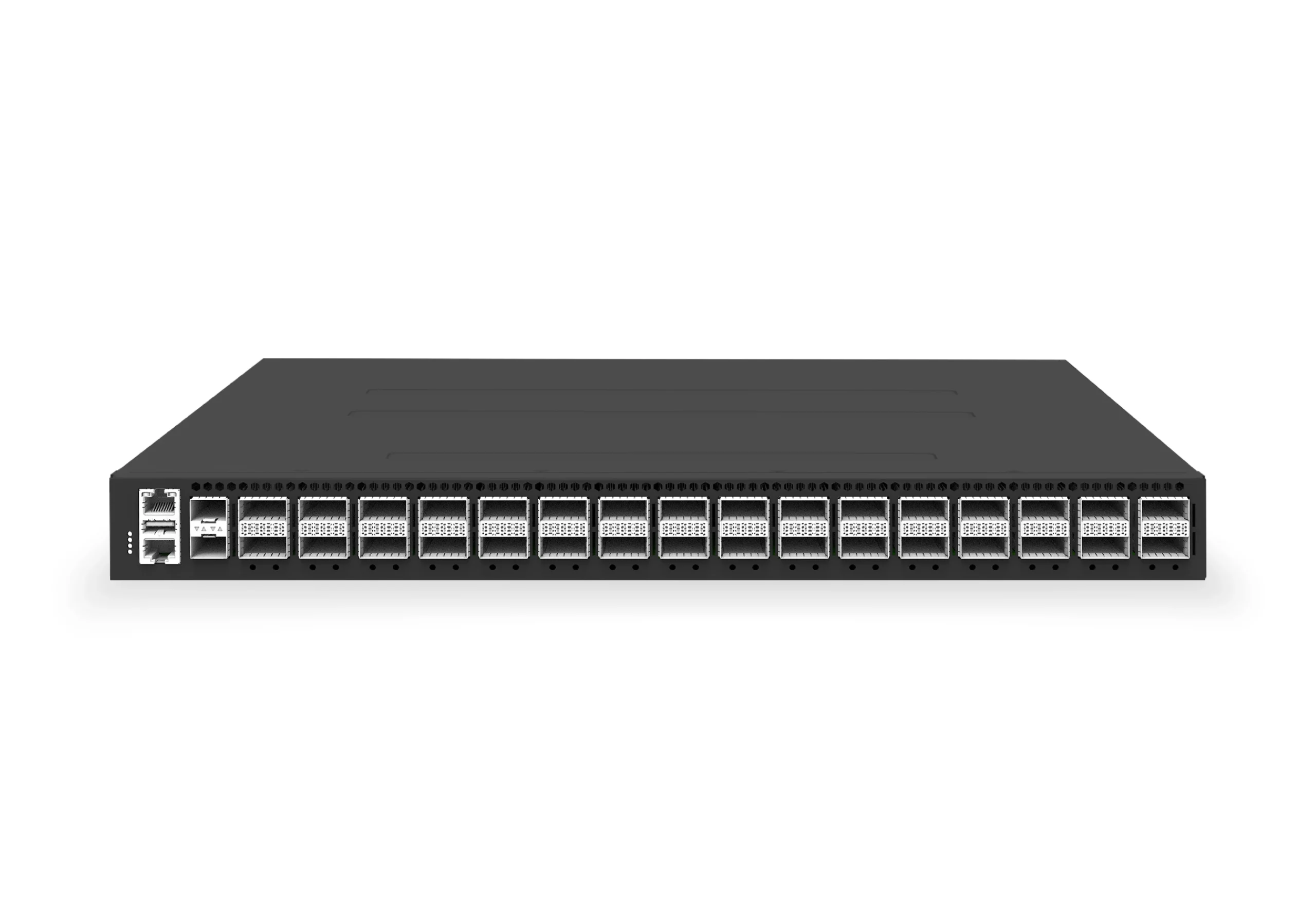 datacenter aiXS-DC-32X400-SP-G232-port 400G spine/core switch for high-capacity data center fabrics and AI-ready backbones.View product
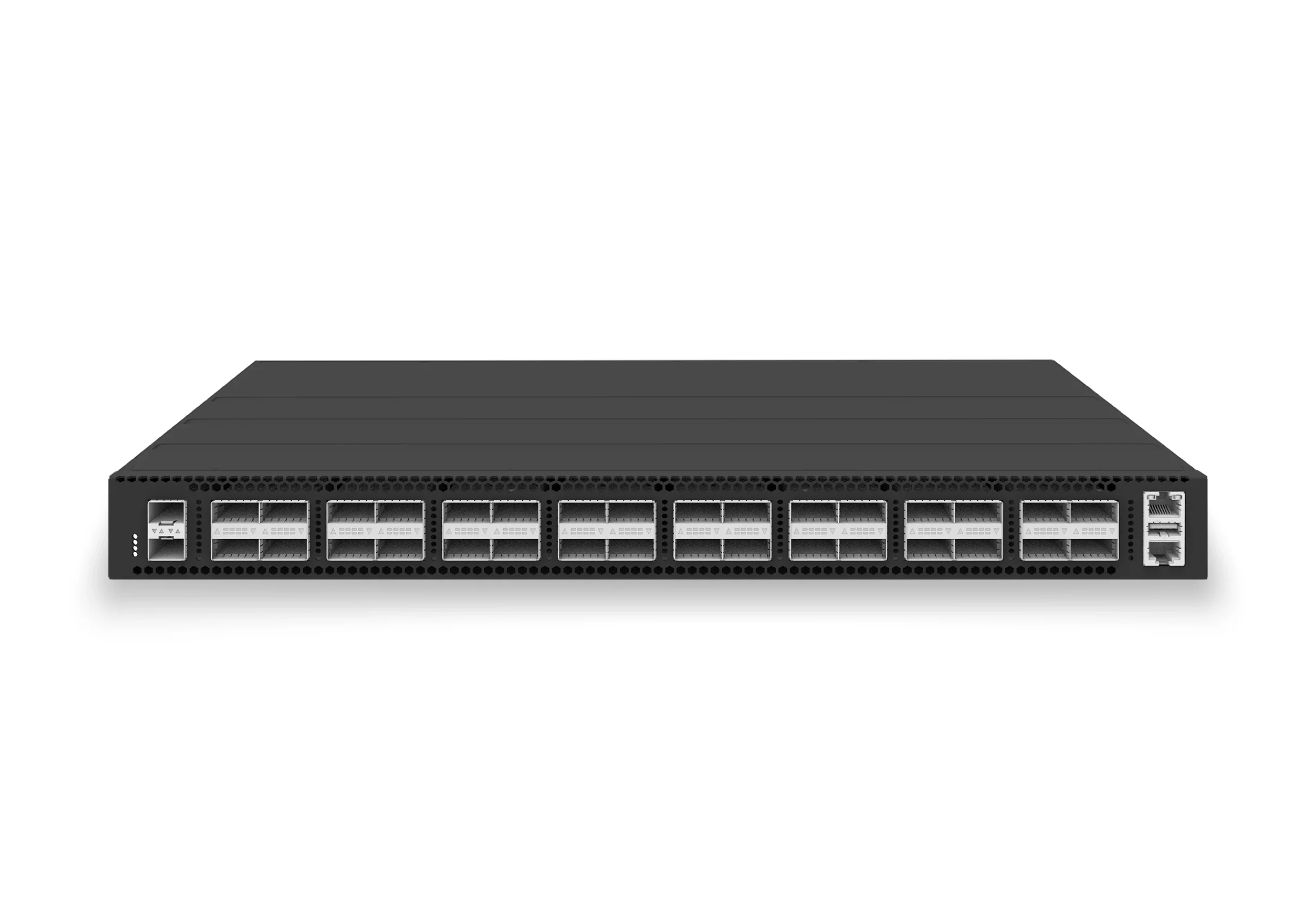 datacenter aiXS-DC-32X100-LS-G232-port 100G leaf/spine switch for VXLAN fabrics, RoCE-ready workloads, and tenant-scale routing.View product
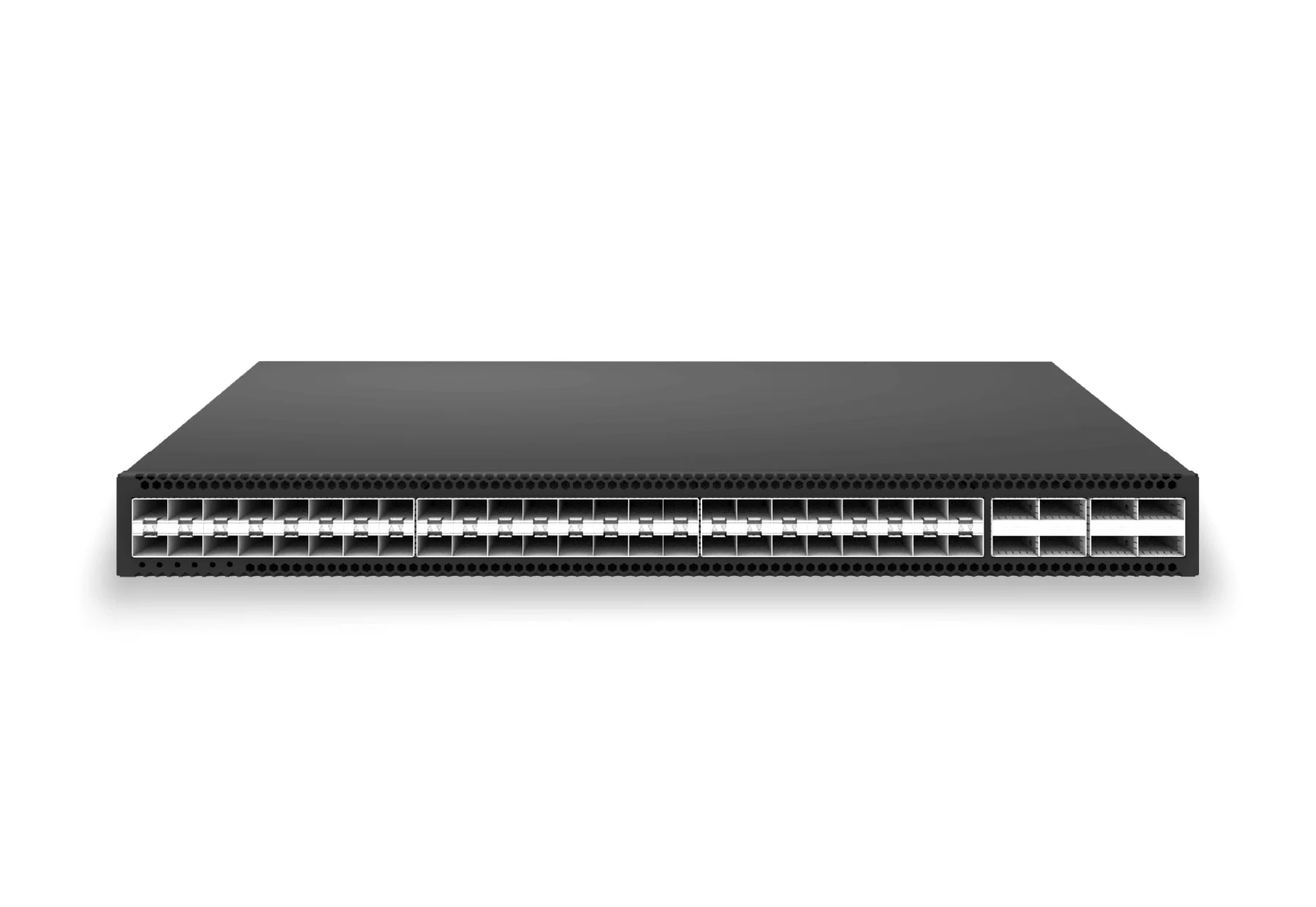 access aggregateXS-AA-48X25-8X100-AGG48x 25G SFP28 aggregation/core switch with 8x 100G QSFP28 for enterprise access and aggregation networks.View product
Continue reading
Related articles
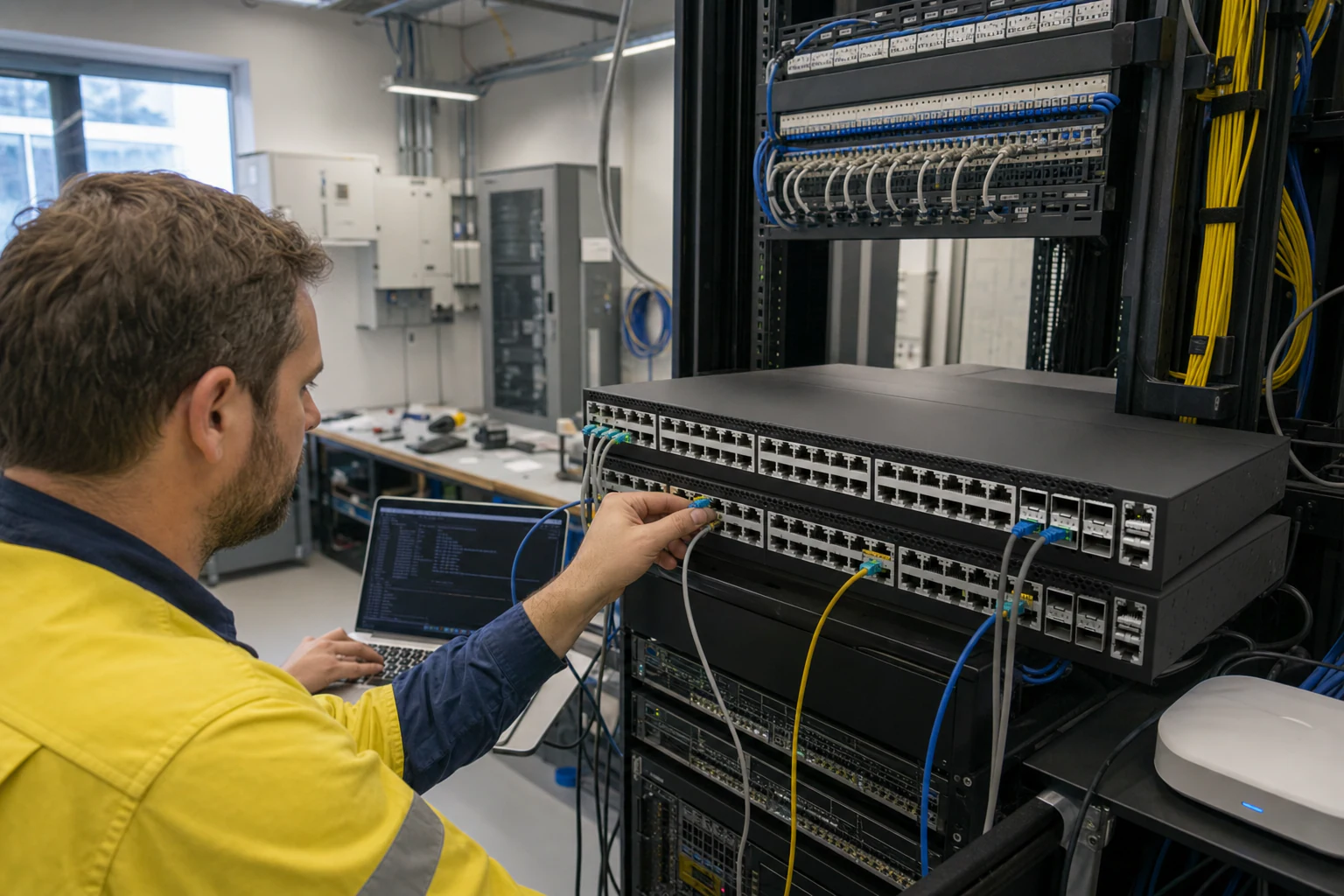 Technical ArticleMC-LAG, STP, and Policy-Based Routing: Building Resilient Enterprise Campus Networks on Open SwitchingEngineering guidance on MC-LAG, STP, and policy-based routing for Australian campus teams building resilient open switching designs with SONiC.Read article
 Technical ArticleUniversity Campus Access and Aggregation with Enterprise SONiC: An Australian Evaluation GuideA practical Australian university campus guide to evaluating Enterprise SONiC for PoE access, resilient aggregation, migration, and operations.Read article
 Technical ArticlePolicy-Based Routing for Enterprise Campus Networks: When Destination-Only Routing Is Not EnoughHow Australian campus teams can use PBR for traffic steering, segmentation and application-aware forwarding without proprietary lock-in.Read article