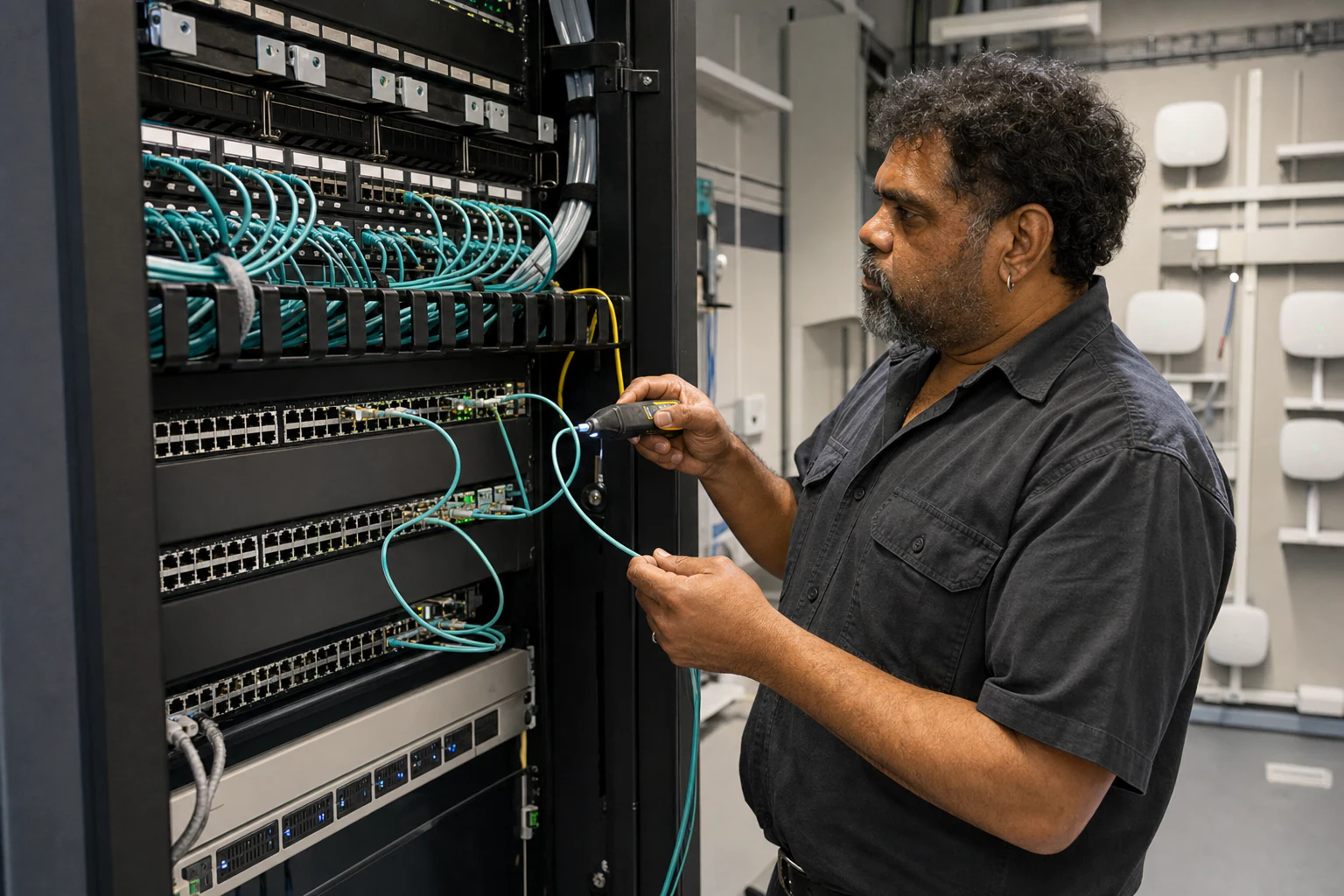
In brief
An engineering analysis of SONiC telemetry automation, covering gNMI, INT, streaming telemetry, observability operations, and Australian data center and campus requirements.
Key takeaways
- On the vendor side, NVIDIA has positioned its 'Pure SONiC' distribution alongside Cumulus Linux as a supported NOS on Spectrum Ethernet switches, while also marketing NVIDIA NetQ as a 'modern operations tool designed to provide holistic, real-time visibility, troubleshooting, and lifecycle management of your modern data center' (nvidia.com/en-us/networking/ethernet-switching).
- No single product launch or version milestone triggered this analysis.
- Australia's data center market is expanding rapidly, driven by hyperscale cloud region build-outs in Sydney and Melbourne and growing demand for private AI inference and GPU-backed infrastructure.
What Happened
On the vendor side, NVIDIA has positioned its ‘Pure SONiC’ distribution alongside Cumulus Linux as a supported NOS on Spectrum Ethernet switches, while also marketing NVIDIA NetQ as a ‘modern operations tool designed to provide holistic, real-time visibility, troubleshooting, and lifecycle management of your modern data center’ (nvidia.com/en-us/networking/ethernet-switching). This convergence of open-source NOS telemetry with vendor-agnostic observability tooling is the backdrop against which Australian operators are starting to evaluate SONiC for production campus and data center roles.
No single product launch or version milestone triggered this analysis. Rather, the editorial point is that SONiC’s telemetry story — built on gNMI streaming telemetry, sFlow, In-band Network Telemetry (INT), and Prometheus-compatible export — has reached a maturity threshold that makes it worth serious evaluation for organisations that have historically relied on proprietary NOS monitoring stacks.
Why It Matters for Australian Network Operators
Australia’s data center market is expanding rapidly, driven by hyperscale cloud region build-outs in Sydney and Melbourne and growing demand for private AI inference and GPU-backed infrastructure. At the same time, Australian enterprises face a dual pressure: tighter compliance obligations around network observability (including the Security of Critical Infrastructure Act and APRA CPS 234 for financial services) and a persistent shortage of skilled network engineers who can maintain proprietary NOS-specific monitoring toolchains.
SONiC’s telemetry architecture addresses both pressures in principle. Its containerized design means that telemetry collection agents (such as the gNMI-based OpenConfig streaming telemetry stack) can be independently upgraded or swapped without touching the forwarding plane. Its JSON-based configuration and programmatic interfaces (confirmed in the SONiC GitHub documentation) enable automation pipelines that can feed network state data into existing SIEM, Grafana, or Prometheus observability stacks that Australian security and operations teams already run.
For campus operators evaluating open networking refreshes, the combination of SONiC on access and aggregation switches with centralized telemetry dashboards could reduce the operational overhead of maintaining per-vendor monitoring silos. For data center operators running AI fabric or GPU backend networks at 100G/400G/800G, SONiC’s support for INT and RDMA-aware telemetry provides visibility into congestion, packet drops, and microburst behavior that traditional SNMP polling cannot match.
The key question for Australian buyers is not whether SONiC supports telemetry — it does — but whether the operational tooling around SONiC telemetry has matured enough to replace or supplement the proprietary stacks they currently run.
The SONiC Telemetry Stack: What the Sources Confirm
Based on the available sources, the following can be confirmed about SONiC’s telemetry and monitoring architecture:
- SONiC is a free and open-source network operating system based on Linux that runs on switches from multiple vendors and ASICs (sonicfoundation.dev, github.com/sonic-net/SONiC).
- It uses a container-based architecture where each network function runs in its own Docker container, providing modularity for telemetry and management services (github.com/sonic-net/SONiC).
- SONiC supports JSON-based configuration and both CLI and programmatic configuration methods (github.com/sonic-net/SONiC).
- NVIDIA offers ‘Pure SONiC’ as a supported NOS option on its Spectrum Ethernet switches and markets NVIDIA NetQ for ‘holistic, real-time visibility, troubleshooting, and lifecycle management’ (nvidia.com/en-us/networking/ethernet-switching).
- The SONiC project is licensed under Apache License 2.0 and has an active community with 2,800+ GitHub stars and 1,300+ forks (github.com/sonic-net/SONiC).
xSONiC Buyer Angle: Open Telemetry as a Migration Trigger
For xSONiC buyers evaluating open networking infrastructure in Australia, the telemetry maturity of SONiC is not an abstract technical detail — it is a procurement criterion. When an Australian data center operator considers replacing a proprietary spine-leaf fabric with SONiC-based switches, the first operational question from the NOC team is: ‘Can we monitor this as well as what we have today?’
The SONiC ecosystem’s answers to that question are increasingly credible:
- Streaming telemetry via gNMI replaces SNMP polling with push-based, model-driven data export. This aligns with modern observability stacks (Prometheus, Grafana, Elastic) that Australian DevOps and NetOps teams already operate.
- In-band Network Telemetry (INT) provides hop-by-hop latency and congestion visibility for AI fabric and RoCE v2 workloads, which is critical for GPU backend networks where tail latency directly impacts model training throughput.
- The containerized architecture means that telemetry collection can be scaled or replaced without firmware-level risk to the switch, a significant operational advantage over monolithic NOS telemetry modules.
For xSONiC’s product direction, this matters across multiple families:
- Data center AI switches running SONiC can offer INT and gNMI telemetry out of the box, giving Australian AI fabric operators the visibility they need for RoCE v2 congestion management.
- Packet brokers can integrate SONiC-based telemetry to provide traffic visibility alongside aggregation and filtering, reducing the need for separate monitoring taps.
- Bare-metal switches running SONiC allow engineering-led teams to build custom telemetry pipelines that feed into their existing toolchains, avoiding vendor lock-in to proprietary dashboards.
- Access and aggregation switches on SONiC can stream PoE power, port status, and VLAN state data into centralized campus monitoring, simplifying multi-site Australian campus operations.
Competitor Gap: Proprietary NOS Telemetry vs. SONiC Open Telemetry
The editorial case for SONiC telemetry automation is sharpened by the limitations of proprietary alternatives:
- Proprietary NOS telemetry (Cisco Model-Driven Telemetry, Arista CloudVision, Juniper JTI) ties operational visibility to the same vendor that supplies the hardware. If an Australian operator wants to switch switch vendors, they lose their monitoring investment.
- Vendor-specific telemetry dashboards often require additional licensing (e.g., Cisco DNA Center, Arista CloudVision as-a-service), adding recurring cost on top of hardware spend.
- Proprietary telemetry formats may not integrate cleanly with open-source SIEM and observability stacks that Australian enterprises have already deployed for cloud and application monitoring.
SONiC’s open telemetry approach inverts this dynamic:
- gNMI and OpenConfig models are vendor-neutral. The same telemetry pipeline that monitors a Broadcom-based leaf switch can monitor a Marvell-based or Mellanox-based switch, as long as both run SONiC.
- Telemetry data exported via gNMI or sFlow feeds directly into Prometheus, Grafana, or Elastic without proprietary middleware.
- The Apache 2.0 license means no telemetry feature gating based on subscription tier.
What Australian Operators Should Evaluate Next
For Australian network teams considering SONiC-based open networking with a focus on telemetry automation, the following evaluation steps are recommended:
- Audit current monitoring stack: Identify which proprietary telemetry formats and dashboards are in use. Assess whether gNMI/OpenConfig export can replace or supplement them.
- Test streaming telemetry on a lab SONiC switch: The SONiC project’s GitHub repository provides installation guides and supported device lists. Deploy a lab switch, enable gNMI streaming, and feed data into a Prometheus/Grafana instance.
- Evaluate INT for AI fabric use cases: If the organisation is building or expanding a GPU backend network, test INT telemetry for hop-by-hop latency visibility on a 100G or 400G spine-leaf topology.
- Assess campus telemetry: For campus refresh projects, evaluate whether SONiC on access and aggregation switches can stream PoE, port, and VLAN data to a central NOC dashboard.
- Engage commercial support: Determine whether xSONiC or another SONiC distribution vendor offers Australian-based telemetry support and SLAs.
Engineering Evidence Floor
For campus and access switching topics, acceptance should be based on endpoint behaviour under real operating constraints. The evidence package should include endpoint classes, PoE budget, NAC/802.1X, LLDP-MED, voice VLANs, multicast, STP or MC-LAG behaviour, uplink capacity, monitoring, rollback, and help-desk workflow. A representative pilot should run at least 48 ports for 30 days, include one planned rollback inside 24 hours, and document support ownership before scale-out.
| Evidence area | What to validate | Acceptance gate | Rework trigger |
|---|---|---|---|
| Endpoint mix | APs, phones, cameras, laptops, IoT, and printers | 48 ports run mixed load for 24 hours | Only laptop traffic is tested |
| Power and uplinks | PoE budget, 1G/2.5G/5G/10G access, and 100G uplinks | No power or uplink bottleneck in pilot | Refresh ignores closet constraints |
| Resilience | STP, MC-LAG, link loss, member loss, and rollback | 3 failure cases captured | Campus works only in steady state |
| Operations | Monitoring, logs, backup, restore, and help-desk runbook | Incident evidence ready within 2 hours | Support depends on informal notes |
| Rollout | Site selection, training, spares, and change windows | 30 days pilot approved before estate rollout | Procurement scales before validation |
Engineering FAQ
What should be tested before moving campus switching to SONiC or open networking? Test PoE behaviour, NAC integration, VLAN and policy design, STP or MC-LAG interaction, multicast, monitoring, upgrade rollback, and help-desk workflows. Campus readiness is an operations test, not only a forwarding test.
Where do campus refresh projects usually carry hidden risk? The risk often sits in closets: power budget, old cabling, undocumented uplinks, mixed endpoint types, voice devices, cameras, badge systems, and change windows. Those details should be inventoried before selecting switch models.
How should Australian campus teams structure a pilot? Choose one representative site or building, document endpoint classes, run PoE and failover tests, verify monitoring, train operations staff, and define rollback steps before expanding to the broader estate.
Related xSONiC Resources
Sources Reviewed
- Ethernet Network Adapters - ConnectX NICs | NVIDIA
- NVIDIA BlueField Data Processing Unit
- NVIDIA Spectrum-X Ethernet Platform
- OpenConfig gNMI Specification
- OpenConfig
- RFC 7950 - The YANG 1.1 Data Modeling Language
- RFC 6241 - Network Configuration Protocol (NETCONF)
- ACSC Essential Eight
- OAIC Notifiable Data Breaches
- APRA CPS 234 Information Security
- NETSCOUT Network Packet Definition
- Cloudflare Network Packet Definition
- IEEE 802.11be Wireless LAN Standard
- IEEE 802.3bt Power over Ethernet
- SONiC Project Documentation
- Broadcom Ethernet Switching
- Marvell Switching
- NVIDIA Ethernet Switching
- Open Compute Networking
- SONiC GitHub
- SONiC Foundation
Product fit
Products referenced for evaluation
These products are referenced for evaluation context in the article. Confirm workload, port, optics, software, interoperability, and support requirements against the exact deployment before procurement.
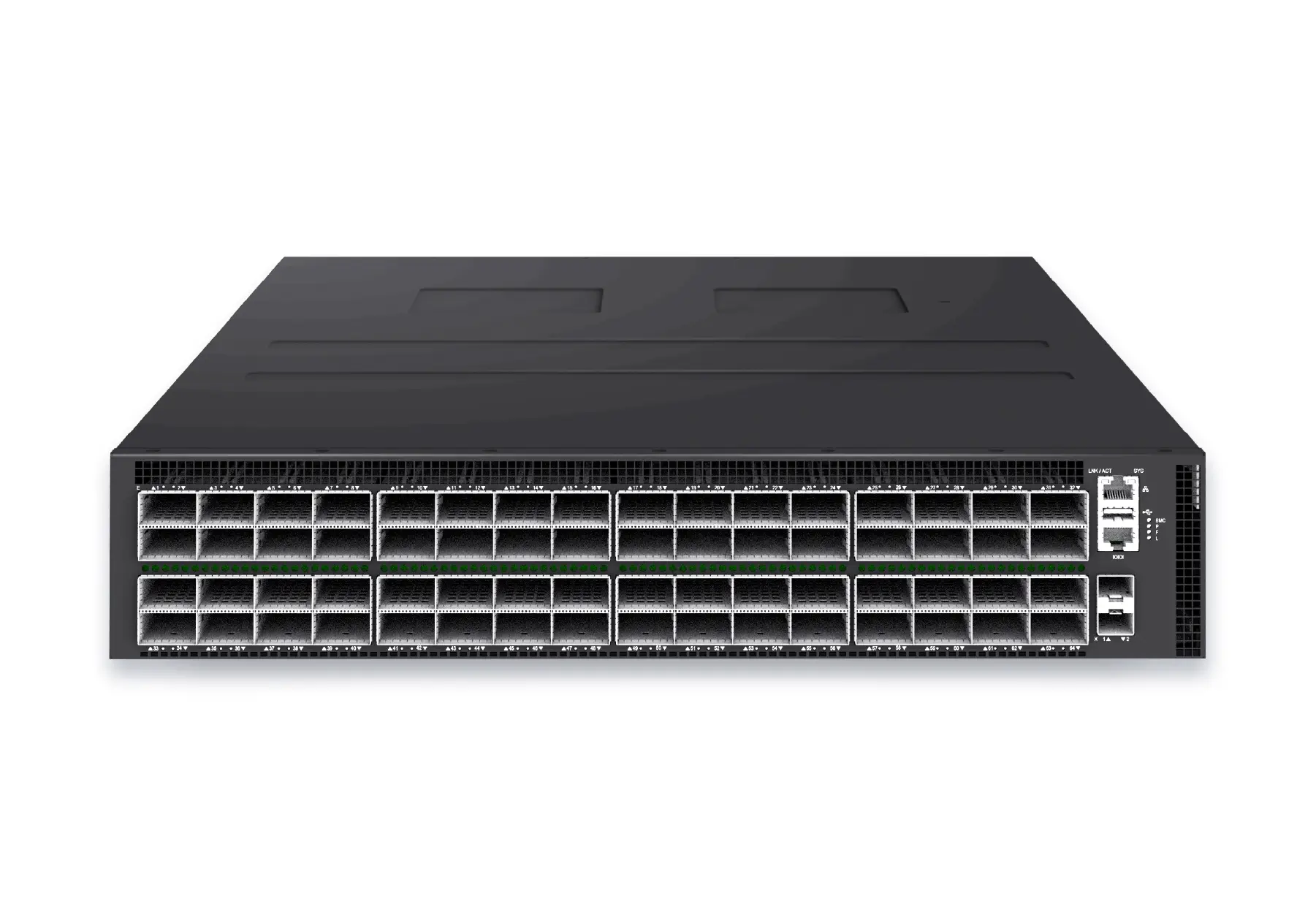 datacenter aiXS-DC-64X800-AI-G164-port 800G AI fabric switch for large-scale GPU clusters, HPC backbones, and ultra-high-throughput data center networks.View product
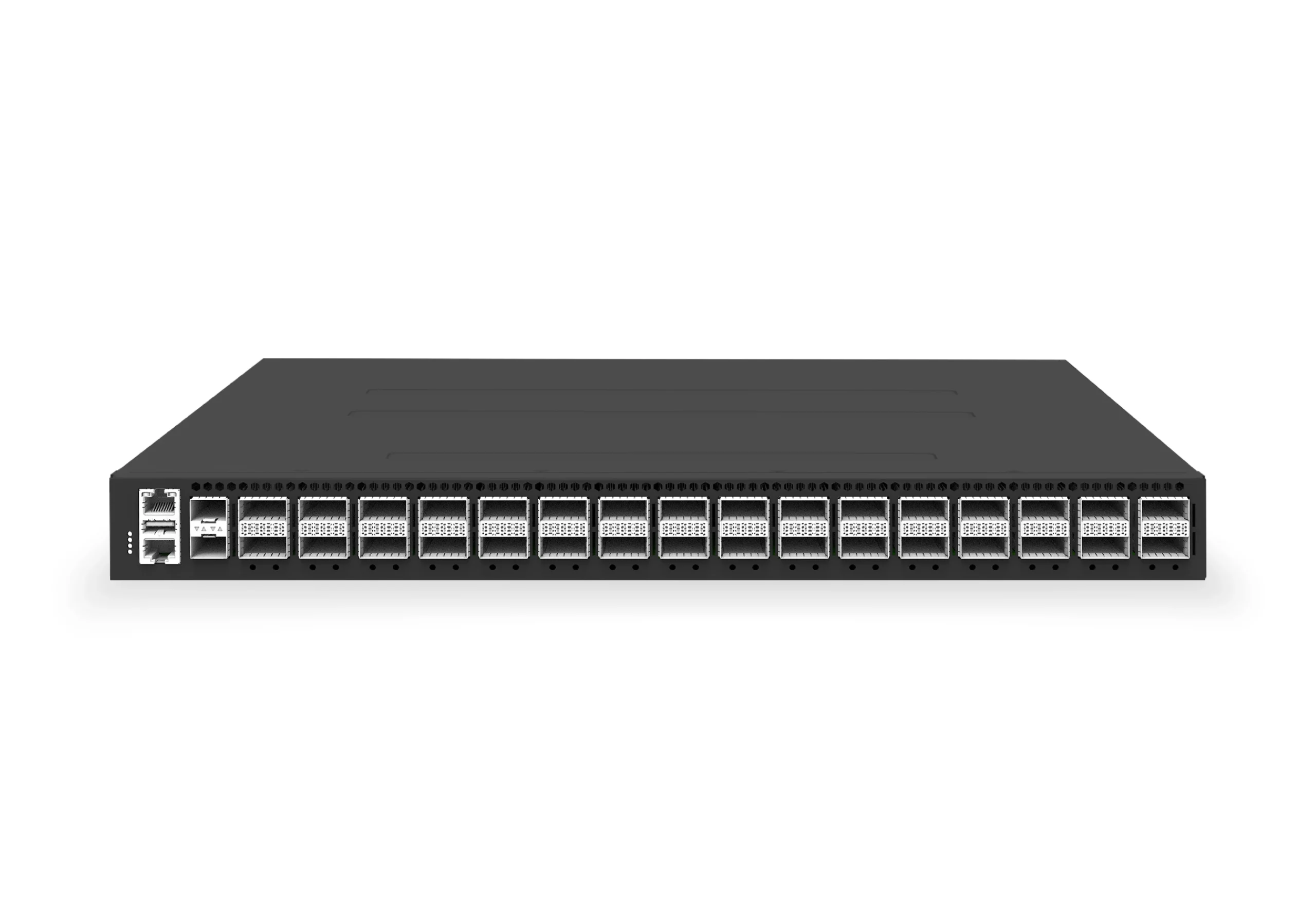 datacenter aiXS-DC-32X400-SP-G232-port 400G spine/core switch for high-capacity data center fabrics and AI-ready backbones.View product
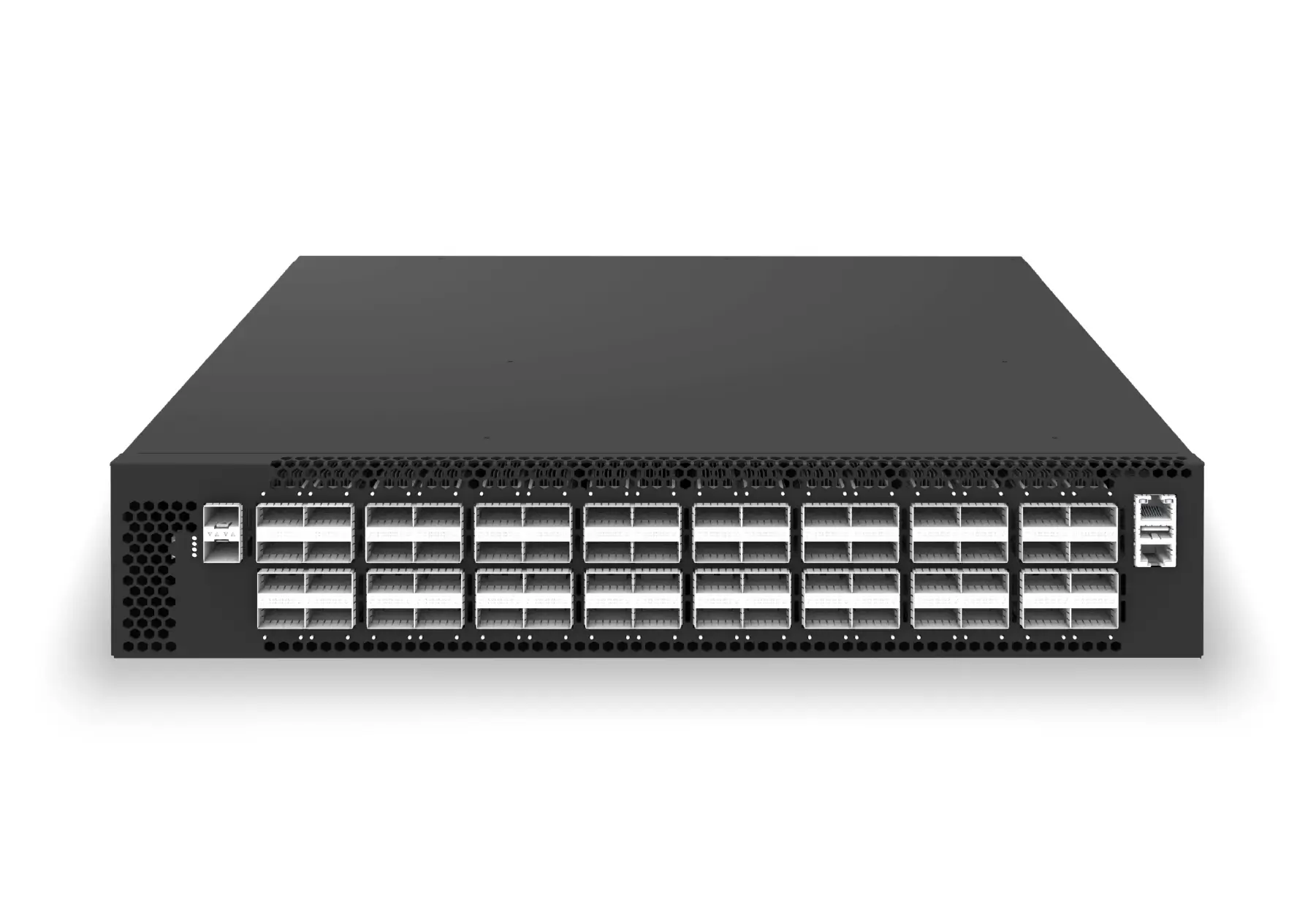 datacenter aiXS-DC-64X200-LS-G164-port 200G leaf/spine switch for high-bandwidth storage, compute, and scale-out data center fabrics.View product
Continue reading
Related articles
 Technical ArticleUniversity Campus Access and Aggregation with Enterprise SONiC: An Australian Evaluation GuideA practical Australian university campus guide to evaluating Enterprise SONiC for PoE access, resilient aggregation, migration, and operations.Read article
 Technical ArticleNETCONF and YANG Automation for SONiC Switches: A Practical Guide for Data Center and Campus NetworksLearn how NETCONF and YANG data models enable structured, vendor-neutral network automation on SONiC switches for data center and enterprise campus deployments in Australia.Read article
 Technical ArticleMC-LAG, STP, and Policy-Based Routing: Why Enterprise Campus Networks Are Finally on the Open Networking RadarEngineering guidance on MC-LAG, STP and PBR for Australian campus refresh teams evaluating open networking, failover and policy control.Read article