In brief
What Australian buyers should validate as SONiC moves from data center fabrics into campus access and aggregation.
Key takeaways
- Software for Open Networking in the Cloud (SONiC) is a free and open-source network operating system based on Linux that runs on switches from multiple vendors and ASICs.
- According to the SONiC Foundation, the project has gained wide industry support that includes major network chip vendors.
- The notable signal for enterprise campus buyers is that major switching silicon and system vendors are now positioning SONiC as a viable NOS option beyond hyperscale environments.
What Happened: SONiC’s Ecosystem Broadens Beyond Cloud
Software for Open Networking in the Cloud (SONiC) is a free and open-source network operating system based on Linux that runs on switches from multiple vendors and ASICs. Originally production-hardened in the data centers of the largest cloud service providers, SONiC offers a full suite of network functionality including BGP and RDMA. The project operates under the Linux Foundation and is built on the Switch Abstraction Interface (SAI), which decouples hardware from software.
According to the SONiC Foundation, the project has gained wide industry support that includes major network chip vendors. The GitHub repository shows active community development with 2,800+ stars and 1,300+ forks. SONiC’s architecture uses Docker containers for each network function, providing fault isolation, simplified upgrades, and modular scalability.
The notable signal for enterprise campus buyers is that major switching silicon and system vendors are now positioning SONiC as a viable NOS option beyond hyperscale environments. NVIDIA’s Ethernet switching portfolio explicitly lists Pure SONiC alongside Cumulus Linux as supported NOS choices for their Spectrum switch families, spanning from the SN2000 series (up to 100 Gb/s) through to the SN6000 series (800 Gb/s). This vendor endorsement extends SONiC’s credibility into broader deployment scenarios.
Why It Matters: The Open Networking Model Reaches the Campus Edge
For more than a decade, enterprise campus networks have been dominated by vertically integrated stacks from incumbent vendors. Access switches, aggregation layers, management platforms, and wireless controllers are typically purchased from a single supplier, creating long-term lock-in and limited negotiating leverage.
SONiC’s core value proposition challenges this model directly. The SONiC Foundation describes it as a system that decouples hardware from software through the SAI abstraction layer, enabling multi-vendor hardware support. Its container-based architecture breaks what the project calls the monolithic switch software model into modular components that can evolve independently.
For campus network buyers, this architecture has significant implications:
- Hardware flexibility: Organizations can select switching platforms from multiple vendors while running a common NOS, reducing single-vendor dependency at the access and aggregation layers.
- Operational consistency: A unified NOS across data center and campus domains simplifies staff training, automation tooling, and troubleshooting workflows.
- Programmability: SONiC uses JSON-based configuration files and supports both CLI and programmatic configuration methods, aligning with modern network automation practices.
- Cost structure: Open-source licensing under Apache 2.0 eliminates per-switch NOS license fees, though total cost of ownership depends on support, integration, and operational factors.
The campus aggregation layer is a particularly interesting target for open networking because it sits at the boundary between access edge devices and core infrastructure. Here, features like MC-LAG, policy-based routing, virtual chassis, and VLAN segmentation must operate reliably. SONiC’s production heritage in large-scale environments provides a foundation, but campus-specific feature completeness needs careful evaluation.
The Australian Context: Enterprise Campus Refresh Cycles and Open Networking Opportunity
Australian enterprise network teams face a convergence of pressures that make the campus access and aggregation layer a strategic priority:
-
Aging campus infrastructure: Many Australian organizations deployed their current campus switching between 2016 and 2020. As these platforms approach end-of-support windows, refresh decisions create natural evaluation moments for alternative architectures.
-
PoE demand growth: The proliferation of PoE-powered devices including Wi-Fi 6E and Wi-Fi 7 access points, IoT sensors, AV equipment, security cameras, and building management endpoints is pushing PoE budget requirements upward. Campus switches must deliver higher per-port and aggregate PoE power while maintaining operational simplicity.
-
Automation expectations: Australian IT teams managing distributed campus sites across large geographic areas need programmatic network management. SONiC’s support for standard Linux interfaces, JSON-based configuration, and CLI programmability aligns with infrastructure-as-code practices increasingly adopted by Australian enterprises.
-
Supply chain diversification: The Australian market has seen increasing interest in multi-vendor strategies to reduce supply chain concentration risk. SONiC’s multi-vendor hardware support through SAI directly addresses this concern.
-
Skills availability: SONiC’s Linux-based foundation means network engineers with Linux skills can transfer their knowledge to campus switching operations, potentially broadening the talent pool for Australian organizations facing networking skills shortages.
The Australian market also has specific regulatory and compliance considerations. Organizations in critical infrastructure sectors, government, healthcare, and education must evaluate open-source networking platforms against security, support, and compliance requirements. SONiC’s Apache 2.0 licensing and active community security processes provide a foundation, but enterprise-grade support arrangements and Australian data sovereignty requirements need verification.
Where the Sources Stop: What We Know Versus What We Are Inferring
It is essential to separate what the reviewed source material confirms from what is editorial inference or projection.
What the sources confirm:
- SONiC is an open-source NOS based on Linux, licensed under Apache 2.0 (sonicfoundation.dev, github.com/sonic-net/SONiC)
- SONiC runs on switches from multiple vendors and ASICs through the SAI abstraction layer (sonicfoundation.dev)
- SONiC has been production-hardened in hyperscale cloud data centers (sonicfoundation.dev, github.com/sonic-net/SONiC)
- SONiC uses containerized, modular architecture with Docker containers (github.com/sonic-net/SONiC)
- SONiC supports JSON-based configuration and programmatic management (github.com/sonic-net/SONiC)
- NVIDIA explicitly supports Pure SONiC as a NOS option on Spectrum Ethernet switches (nvidia.com/en-us/networking/ethernet-switching)
- The SONiC ecosystem includes major network chip vendors (sonicfoundation.dev)
- The GitHub community is active with 2,800+ stars and 1,300+ forks (github.com/sonic-net/SONiC)
What is editorial inference:
- SONiC’s data center heritage provides a credible foundation for campus expansion
- The multi-vendor model could disrupt incumbent campus switching economics
- Australian enterprise refresh cycles create a natural evaluation window
- The containerized architecture enables campus-specific feature development
The xSONiC Buyer Angle: What to Evaluate for Campus Access and Aggregation
For enterprise network teams evaluating open networking at the campus access and aggregation layer, this analysis suggests the following evaluation framework:
Decision criteria for SONiC-based campus switching:
-
Feature completeness: Does the target hardware platform’s SONiC image support the full campus feature set including PoE management, VLAN operations, spanning tree, MC-LAG, policy-based routing, and virtual chassis capabilities?
-
Hardware ecosystem: Which switching ASIC vendors have mature SAI implementations for campus features? The SAI abstraction is proven at data center scale, but campus-specific SAI maturity varies by vendor and silicon generation.
-
Management and automation: SONiC’s JSON configuration model and Linux foundation enable integration with Ansible, Terraform, and NETCONF/YANG-based automation. Verify that campus-specific automation modules and templates are available.
-
Support model: Enterprise campus networks require responsive support. Evaluate whether the open-source community model, vendor-supplied support, or third-party support arrangements meet enterprise SLA requirements.
-
Migration path: For organizations with existing incumbent campus infrastructure, evaluate staged migration approaches. Start with aggregation layer or new site deployments before replacing access edge switches.
-
Wireless integration: Campus networks increasingly require tight integration between wired switching and wireless access points. Evaluate SONiC’s compatibility with OpenWiFi-aligned or enterprise wireless platforms.
xSONiC’s access-aggregate product direction positions the brand at the intersection of these evaluation criteria, offering enterprise SONiC campus access, aggregation, PoE edge, and distribution switching. The campus refresh and PoE campus solution pillars provide additional depth for organizations planning open networking transitions at the campus edge.
Campus SONiC acceptance matrix
Campus SONiC should be accepted only after the access-layer operating model is proven. A switch that forwards traffic in a lab is not ready for a building closet until PoE, endpoint diversity, change rollback, monitoring, and support escalation have all been exercised.
| Campus decision area | Evidence to capture | Reject or rework if |
|---|---|---|
| Endpoint and PoE readiness | Endpoint inventory, IEEE 802.3bt class mix, per-closet PoE budget, AP/camera/voice-phone draw, and failed-PSU behaviour | The proposal uses average PoE load and does not prove worst-case boot, brownout, or power-supply failover behaviour |
| Access control integration | 802.1X, MAB, guest VLAN, quarantine VLAN, RADIUS failover, and help-desk exception workflow | A failed NAC server, unknown endpoint, or policy mismatch cannot be handled without manual switch-by-switch changes |
| Resilience and loop control | STP or MC-LAG design, uplink failure, link flap, multicast, LLDP, and recovery timing | The pilot proves normal forwarding but not uplink loss, loop prevention, or access-layer convergence |
| Operations and telemetry | Syslog, gNMI/OpenConfig or equivalent telemetry, container health, config diff, image version, and alert routing | Operators must SSH into the switch during a routine incident because the NMS/SIEM cannot see the SONiC state |
| Rollout and support ownership | Pilot site, rollback image, backup config, spare switch, local escalation path, and known caveat register | The organisation cannot name who owns a NOS, ASIC, optics, PoE, or support defect during Australian business hours |
The pilot should include at least 2 aggregation switches, 1 representative access closet, 30 days of telemetry, PoE and 802.1X checks, and failover testing across both uplinks. A campus SONiC claim is credible only when it survives ordinary endpoint diversity, not just a clean lab topology.
For larger estates, add scale gates before rollout: at least 48 ports of mixed endpoint testing, the expected maximum PoE budget per closet, 24 hours of RADIUS failover observation, and 1 image rollback during a maintenance window. Those tests are not glamorous, but they reveal whether SONiC campus operations are ready for help-desk reality.
Engineering FAQ
What should be tested before moving campus switching to SONiC or open networking? Test PoE behaviour, NAC integration, VLAN and policy design, STP or MC-LAG interaction, multicast, monitoring, upgrade rollback, and help-desk workflows. Campus readiness is an operations test, not only a forwarding test.
Where do campus refresh projects usually carry hidden risk? The risk often sits in closets: power budget, old cabling, undocumented uplinks, mixed endpoint types, voice devices, cameras, badge systems, and change windows. Those details should be inventoried before selecting switch models.
How should Australian campus teams structure a pilot? Choose one representative site or building, document endpoint classes, run PoE and failover tests, verify monitoring, train operations staff, and define rollback steps before expanding to the broader estate.
Related xSONiC Resources
Sources Reviewed
- IEEE 802.1Q Bridges and Bridged Networks
- IEEE 802.1AX Link Aggregation
- OpenConfig gNMI Specification
- OpenConfig
- RFC 7950 - The YANG 1.1 Data Modeling Language
- RFC 6241 - Network Configuration Protocol (NETCONF)
- ACSC Essential Eight
- OAIC Notifiable Data Breaches
- APRA CPS 234 Information Security
- IEEE 802.11be Wireless LAN Standard
- IEEE 802.3bt Power over Ethernet
- SONiC Project Documentation
- NVIDIA Ethernet Switching
- Open Compute Networking
- SONiC GitHub
- SONiC Foundation
Product fit
Products referenced for evaluation
These products are referenced for evaluation context in the article. Confirm workload, port, optics, software, interoperability, and support requirements against the exact deployment before procurement.
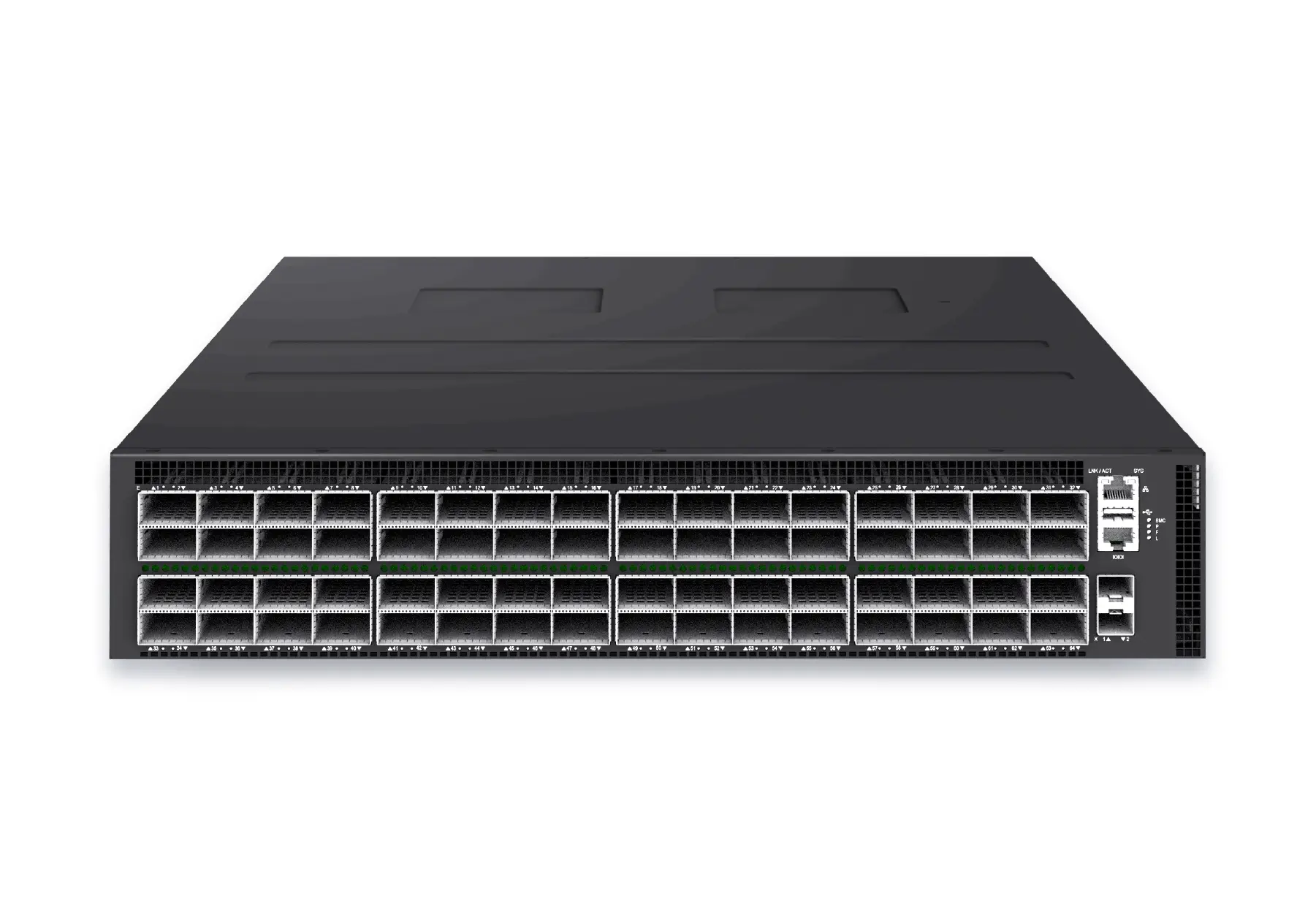 datacenter aiXS-DC-64X800-AI-G164-port 800G AI fabric switch for large-scale GPU clusters, HPC backbones, and ultra-high-throughput data center networks.View product
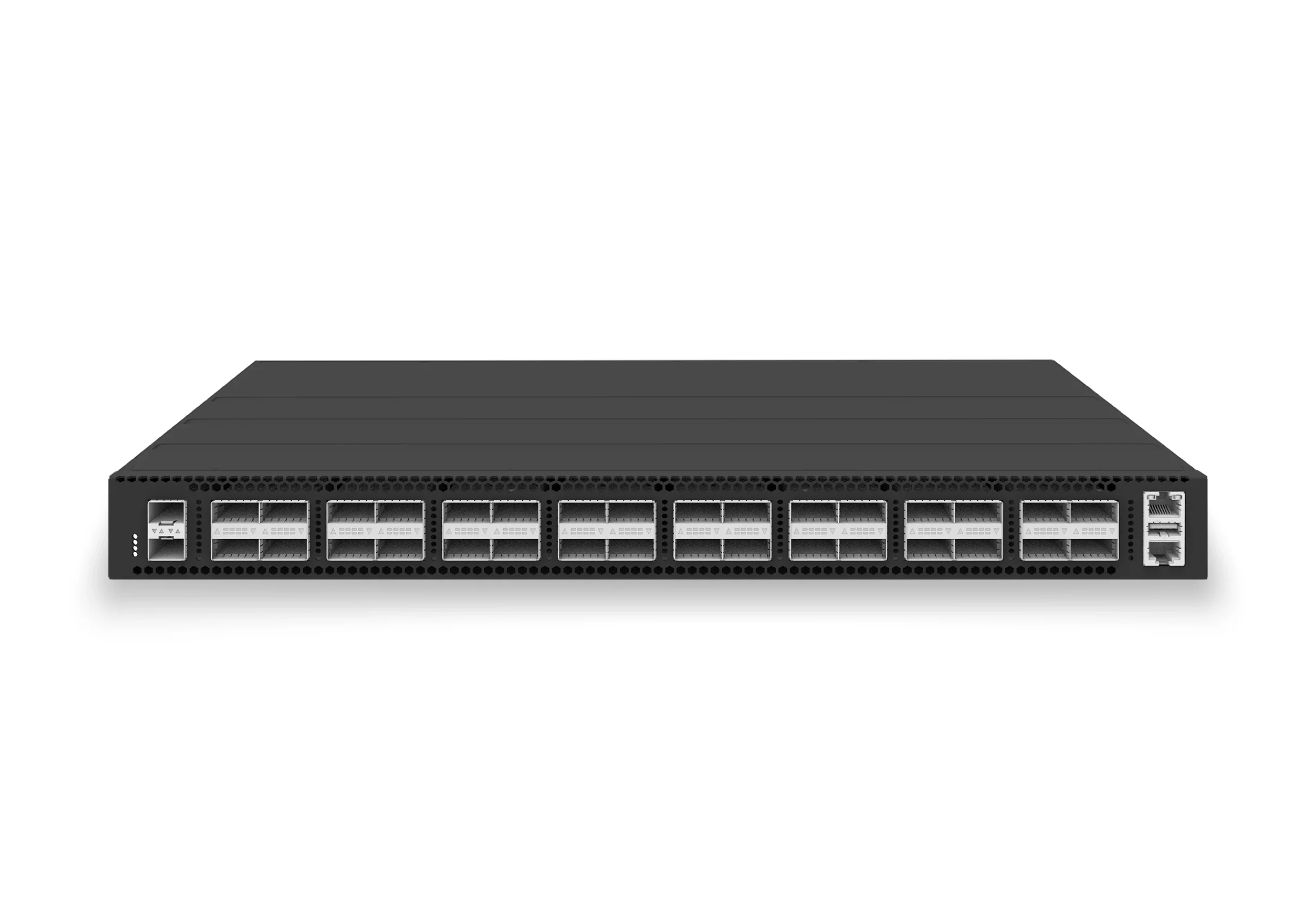 datacenter aiXS-DC-32X100-LS-G232-port 100G leaf/spine switch for VXLAN fabrics, RoCE-ready workloads, and tenant-scale routing.View product
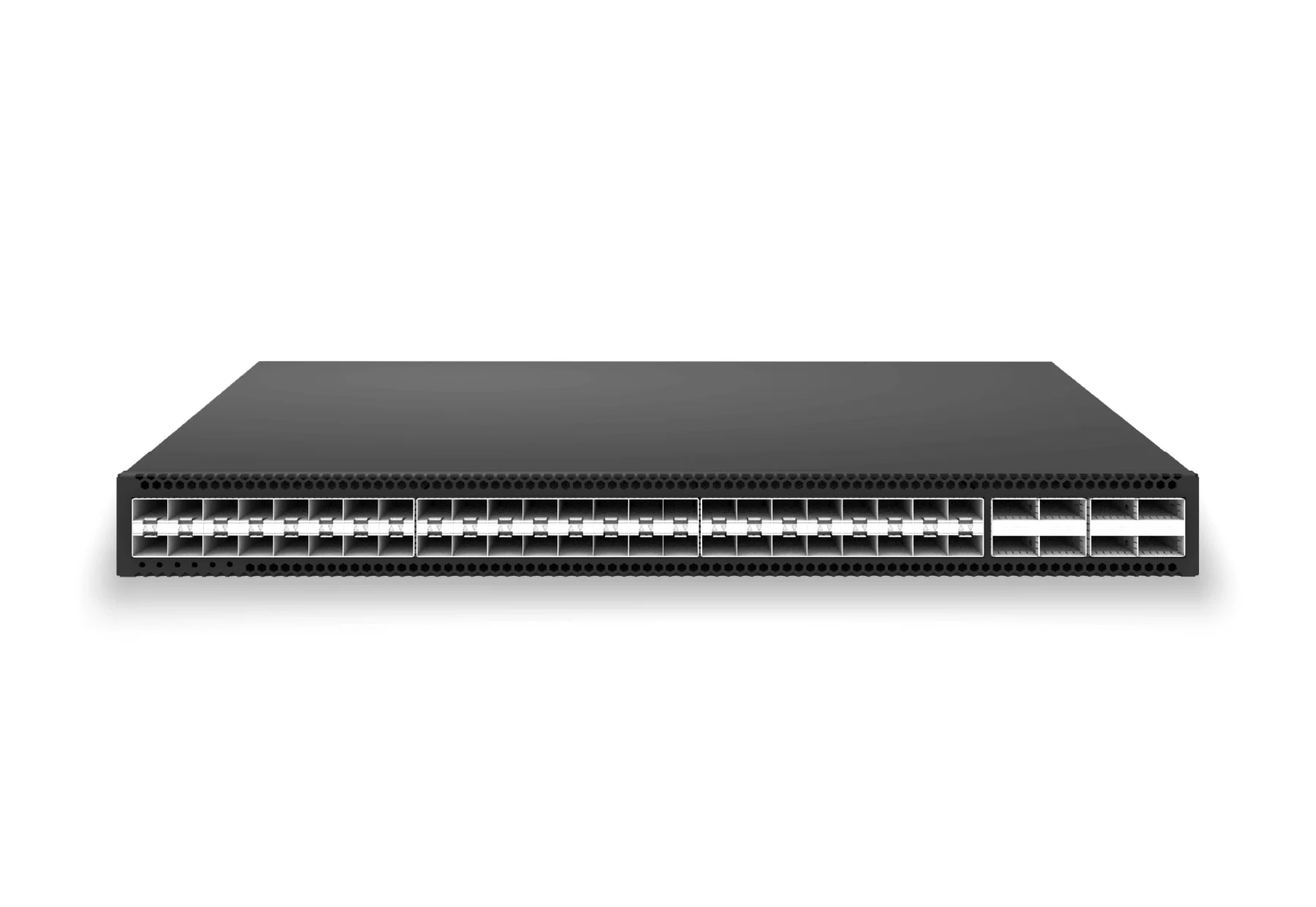 access aggregateXS-AA-48X25-8X100-AGG48x 25G SFP28 aggregation/core switch with 8x 100G QSFP28 for enterprise access and aggregation networks.View product
Continue reading
Related articles
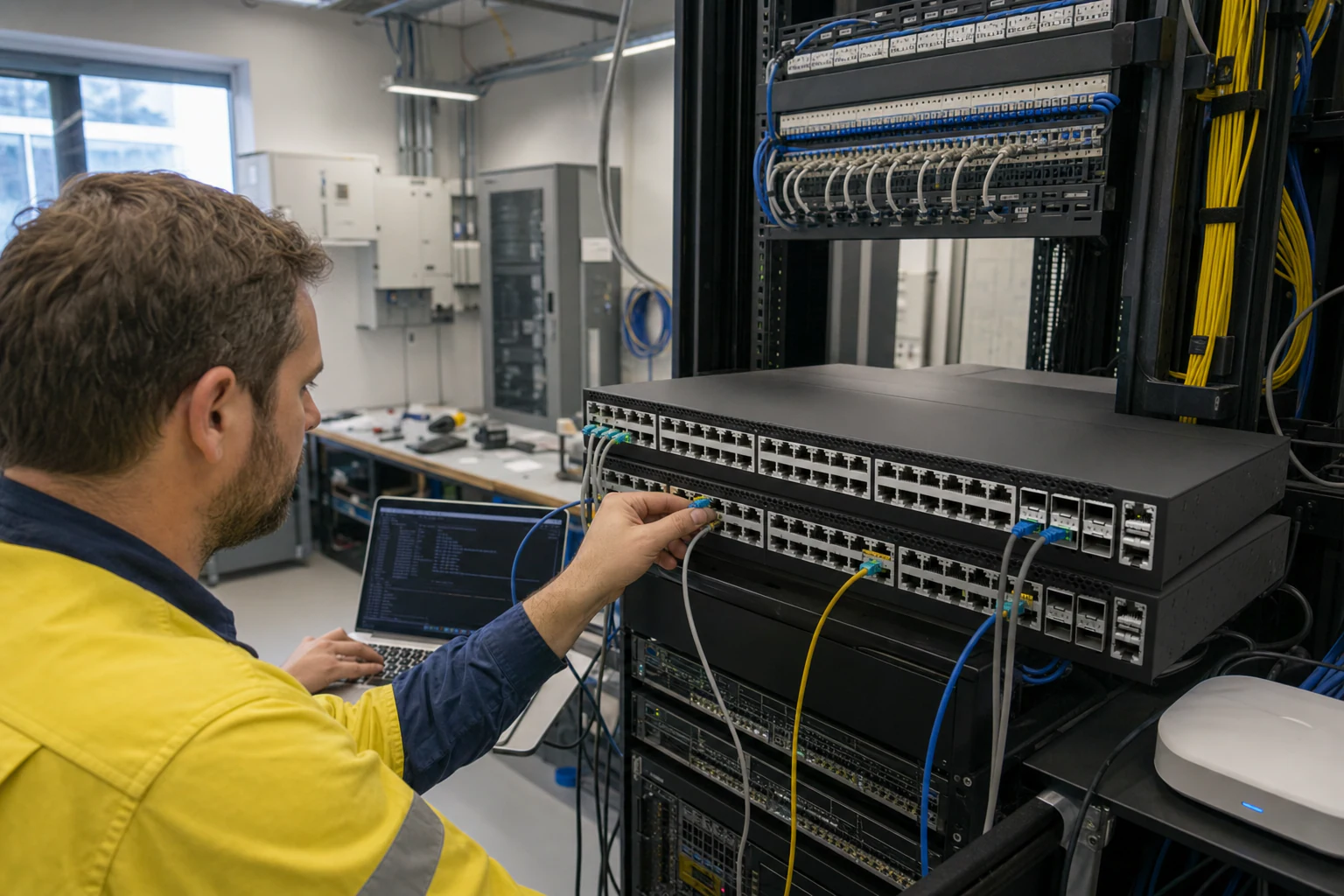 Technical ArticleMC-LAG, STP, and Policy-Based Routing: Building Resilient Enterprise Campus Networks on Open SwitchingEngineering guidance on MC-LAG, STP, and policy-based routing for Australian campus teams building resilient open switching designs with SONiC.Read article
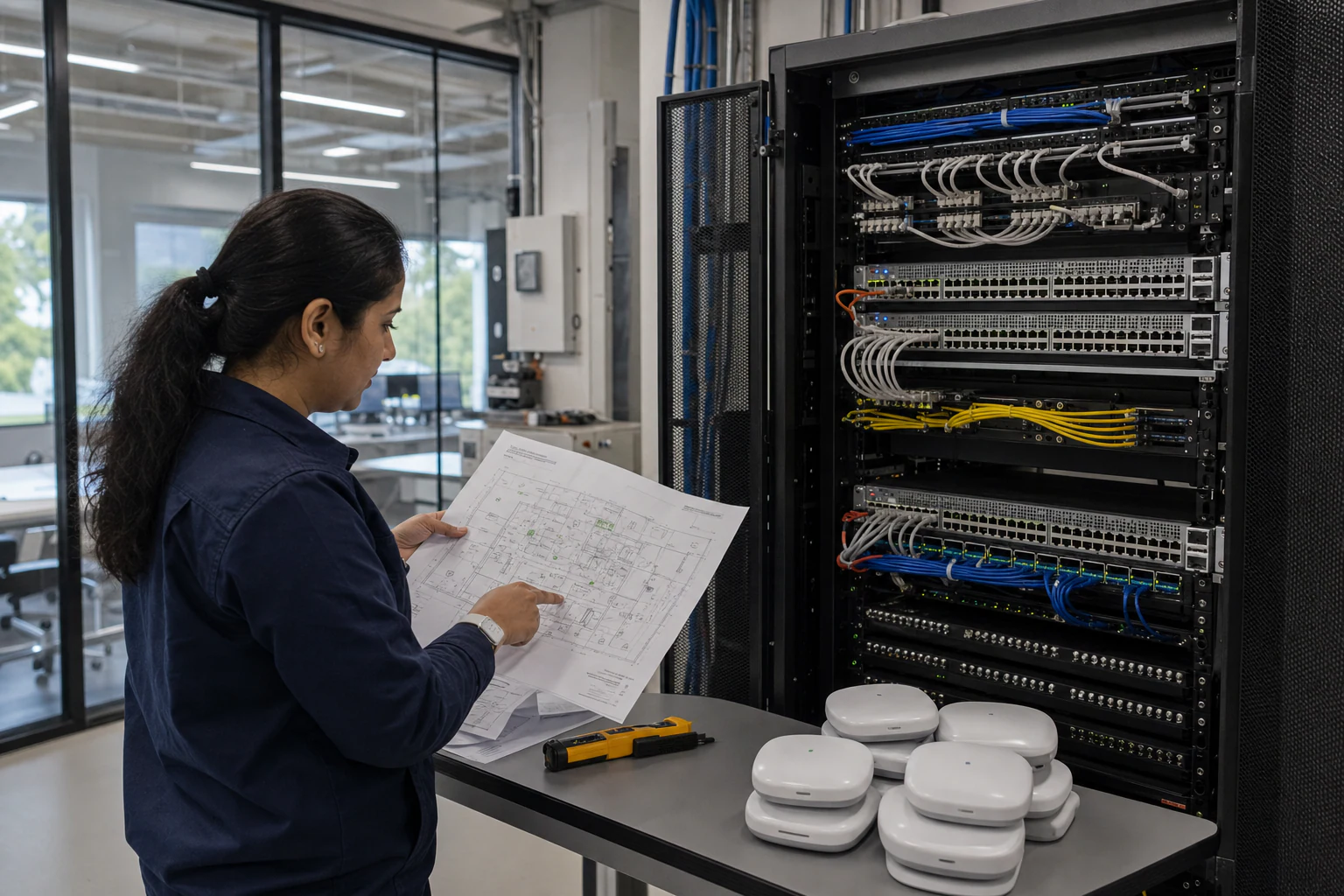 Technical ArticleUniversity Campus Access and Aggregation with Enterprise SONiC: An Australian Evaluation GuideA practical Australian university campus guide to evaluating Enterprise SONiC for PoE access, resilient aggregation, migration, and operations.Read article
 Technical ArticleWhy Australian Enterprise Campus Networks Are Looking Beyond Proprietary SwitchingWhy Australian campus teams are evaluating Enterprise SONiC for aggregation, automation, telemetry and reduced switching lock-in.Read article