
In brief
Engineering guide for SONiC and open networking buyers covering platform fit, automation, support, telemetry, and validation evidence.
Key takeaways
- SONiC is not a cheaper version of a traditional switch operating system.
- For data center, AI fabric, and large campus programs, the decision should be made through a proof of concept, not a slogan.
- Traditional switch platforms usually optimize for accountability and operational simplicity.
Bottom Line
SONiC is not a cheaper version of a traditional switch operating system. It is a different operating model. A traditional networking stack gives the buyer one vendor-owned package for hardware, NOS, support, tooling, and lifecycle policy. SONiC separates the network operating system from the switch hardware through open software, merchant silicon, SAI, and community or vendor distribution choices. That separation can reduce lock-in and improve hardware flexibility, but it also moves more design validation and Day-2 operations responsibility onto the buyer or integrator.
For data center, AI fabric, and large campus programs, the decision should be made through a proof of concept, not a slogan. The right question is not “is SONiC better?” The right question is whether the team can operate the selected SONiC distribution, switch ASIC, optics, telemetry stack, and support model at the required reliability level.
What Traditional Networking Optimizes For
Traditional switch platforms usually optimize for accountability and operational simplicity. The same vendor controls the hardware, ASIC integration, NOS, management tools, documentation, TAC process, and software release train. That model can be valuable when the network team is small, the environment already depends on vendor-specific features, or the business wants one escalation path during an outage.
The tradeoff is control. Hardware refresh timing, NOS feature availability, license structure, telemetry model, and automation interfaces are tied to the vendor roadmap. In many enterprises, this becomes visible during 100G, 400G, and 800G upgrades, AI fabric planning, or campus refresh cycles where the buyer wants port speed, optics, and automation flexibility without replacing the whole operating model.
Key Differences
Network Operating System Control
SONiC is a Linux-based network operating system developed in the open under the SONiC Foundation. The sonic-net GitHub repository and Azure SONiC documentation expose architecture, configuration model, containerized services, and operational commands in a way that traditional NOS platforms rarely do. That matters for teams that want to version-control configuration, inspect behavior, build automation, or align network operations with Linux and DevOps practices.
Traditional NOS platforms can still be easier to run when the team wants a complete vendor-managed experience. Their advantage is not openness; it is packaging, documentation consistency, and established support paths.
Hardware and ASIC Abstraction
SONiC relies on the Switch Abstraction Interface (SAI) to separate the NOS from ASIC-specific implementations. In theory, this allows the same operational model to run across switches from different vendors and ASIC families. In practice, the quality of a SONiC deployment depends heavily on the selected ASIC, SAI implementation, switch platform, optics matrix, and vendor image.
Traditional switches hide most of this integration work. The buyer receives a validated hardware/NOS combination, but also inherits the vendor’s chosen silicon roadmap and feature exposure.
Automation and Telemetry
SONiC fits well when a buyer wants programmatic operations through Linux tooling, gNMI, OpenConfig-style telemetry, NETCONF/YANG workflows, or custom observability pipelines. That is especially relevant for AI fabrics, where congestion, queue depth, optics health, ECN marking, and RDMA behavior need more than periodic SNMP polling.
Traditional stacks often provide polished dashboards and vendor-specific management systems. That can be faster to deploy, but buyers should verify whether telemetry exports cleanly into existing SIEM, NOC, and automation systems rather than staying inside a closed management plane.
Support Ownership
The largest SONiC risk is not packet forwarding; it is ownership. A production deployment needs a clear answer to five questions:
- Who validates the SONiC image on the selected switch SKU?
- Who owns SAI and ASIC SDK defects?
- Who publishes security fixes and how quickly?
- Who tests optics, cables, and transceivers?
- Who is the first escalation path during a production incident?
If those answers are unclear, the deployment is not ready, even if the lab switch boots SONiC successfully.
When SONiC Makes Sense
SONiC is a strong candidate when the buyer has clear operational reasons for openness:
- Data center fabrics where BGP EVPN, automation, telemetry, and switch vendor flexibility matter more than a single-vendor GUI.
- AI and GPU backend fabrics where the team needs to validate 400G/800G Ethernet, RoCE v2, PFC, ECN, optics, and telemetry on a known switch/ASIC/NIC combination.
- Large campus refresh programs where access and aggregation switches need repeatable configuration, open telemetry, and lifecycle flexibility across multiple sites.
- Service provider or lab environments where teams are comfortable qualifying hardware, software images, and automation workflows as part of the engineering process.
xSONiC data center platforms and campus solutions should be evaluated against these use cases through a lab plan that includes data center switches, AI fabric, RoCE v2, campus refresh, and telemetry requirements.
When Traditional May Be Better
Traditional vendor stacks remain a better fit when the environment depends on proprietary campus features, the operations team cannot own release qualification, the deployment is small enough that hardware flexibility has little value, or the business requires one vendor to contractually own the whole switching stack.
They can also be preferable when a regulated environment lacks the internal process to validate open-source software images, track CVEs, verify vendor distributions, or document configuration compliance. SONiC can support disciplined compliance workflows, but it does not provide that discipline automatically.
Proof-of-Concept Checklist
Before selecting SONiC or a traditional stack, run the same acceptance test against both options:
| Test area | What to validate |
|---|---|
| Hardware fit | Port speed, breakout modes, optics support, airflow, power draw, and spare availability |
| NOS behavior | BGP, VLAN, EVPN-VXLAN, ACL, QoS, management, and rollback behavior |
| ASIC/SAI behavior | Buffering, ECMP, counters, telemetry, PFC, ECN, and feature parity on the selected silicon |
| Automation | ZTP, config push, drift detection, backup, restore, and API behavior |
| Observability | gNMI, syslog, counters, optics DOM, queue telemetry, and external dashboard export |
| Support | Image ownership, TAC path, security patch SLA, RMA process, and Australian-timezone escalation |
| Failure cases | Link loss, switch reboot, optics fault, control-plane restart, bad config rollback, and upgrade recovery |
Engineering Evidence Floor
For SONiC and open networking articles, the acceptance standard is operational proof, not community momentum. The evidence package should name the switch SKU, ASIC, SAI version, ONIE status, SONiC image, optics matrix, automation interface, support path, and rollback procedure. A practical pilot should run for 30 days, include 3 automated configuration changes, validate 100G/400G links where relevant, and prove that a P1 evidence bundle can be assembled within 2 hours.
| Evidence area | What to validate | Acceptance gate | Rework trigger |
|---|---|---|---|
| Platform | SKU, ASIC, ONIE, SAI, image, and optics | 2 platforms boot, upgrade, and rollback | Hardware support is assumed |
| Automation | Source of truth, API/gNMI/NETCONF, backup, and diff | 3 changes pass state readback | CLI drift becomes normal |
| Operations | Logs, telemetry, failure runbook, and escalation owner | P1 bundle ready within 2 hours | Fault isolation depends on one engineer |
| Lifecycle | Patch cadence, CVE process, spare plan, and support SLA | 12 months plan approved | Security and RMA ownership is unclear |
| Commercial | Hardware, support, optics, training, and migration labour | Risk-adjusted TCO is documented | Savings vanish after rework |
This section deliberately avoids treating the topic as a feature checklist. The buyer should be able to hand the evidence to engineering, security, finance, and support teams and have each group understand what was tested, what failed, what was accepted, and what still needs rework. That is also the content pattern most useful for generative search: the page states a clear conclusion, names measurable parameters, identifies risk, and cites the operational proof required before deployment.
Engineering FAQ
Is SONiC automatically lower cost than a traditional switch stack? No. SONiC can reduce license and hardware lock-in costs, but the buyer must include lab validation, support contracts, automation work, staff training, optics qualification, and release testing in the total cost model.
What is the most important technical dependency in SONiC? SAI and the vendor’s ASIC implementation. The same SONiC feature can behave differently across switch platforms if the underlying SAI, SDK, and hardware support differ.
Can SONiC replace a traditional campus switch stack? Sometimes, but campus use cases need extra validation for PoE, STP or MC-LAG design, NAC integration, multicast, access policy, and operational tooling. Do not assume data center SONiC maturity automatically transfers to access switching.
What should buyers request from a SONiC supplier? Ask for supported hardware lists, SONiC image version, SAI version, optics matrix, known caveats, upgrade procedure, CVE process, telemetry examples, support SLA, and proof that the selected SKU has been tested for the intended design.
Sources Reviewed
- IEEE 802.1Q Bridges and Bridged Networks
- IEEE 802.1AX Link Aggregation
- Ethernet Network Adapters - ConnectX NICs | NVIDIA
- NVIDIA BlueField Data Processing Unit
- NVIDIA Spectrum-X Ethernet Platform
- OpenConfig gNMI Specification
- OpenConfig
- RFC 7950 - The YANG 1.1 Data Modeling Language
- RFC 6241 - Network Configuration Protocol (NETCONF)
- IEEE 802.11be Wireless LAN Standard
- IEEE 802.3bt Power over Ethernet
- SONiC Project Documentation
- Broadcom Ethernet Switching
- Marvell Switching
- NVIDIA Ethernet Switching
- Open Compute Networking
- SONiC GitHub
- SONiC Foundation
Product fit
Products referenced for evaluation
These products are referenced for evaluation context in the article. Confirm workload, port, optics, software, interoperability, and support requirements against the exact deployment before procurement.
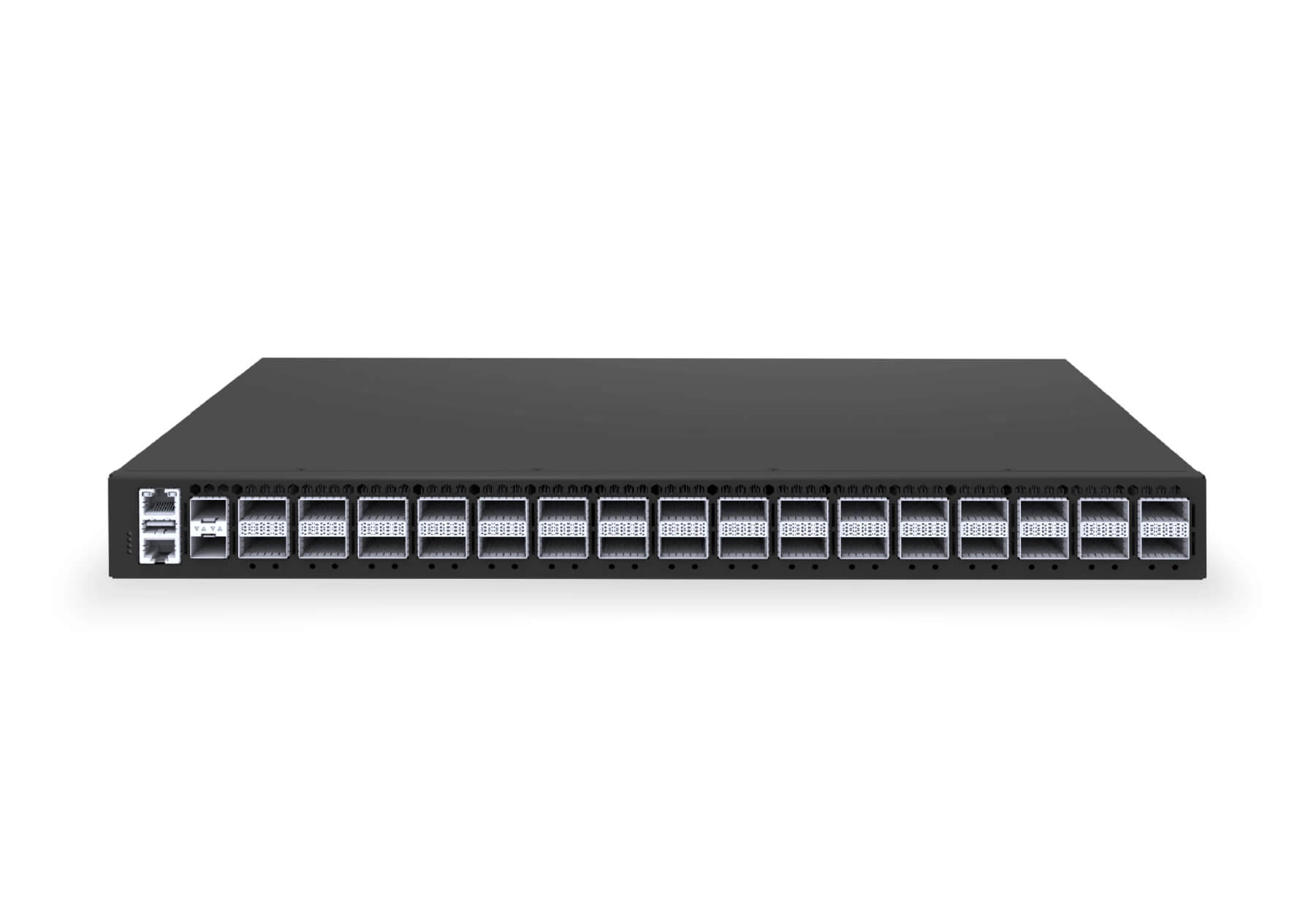 datacenter aiXS-DC-32X400-SP-G132-port 400G spine/core switch for high-capacity data center aggregation and next-generation leaf/spine fabrics.View product
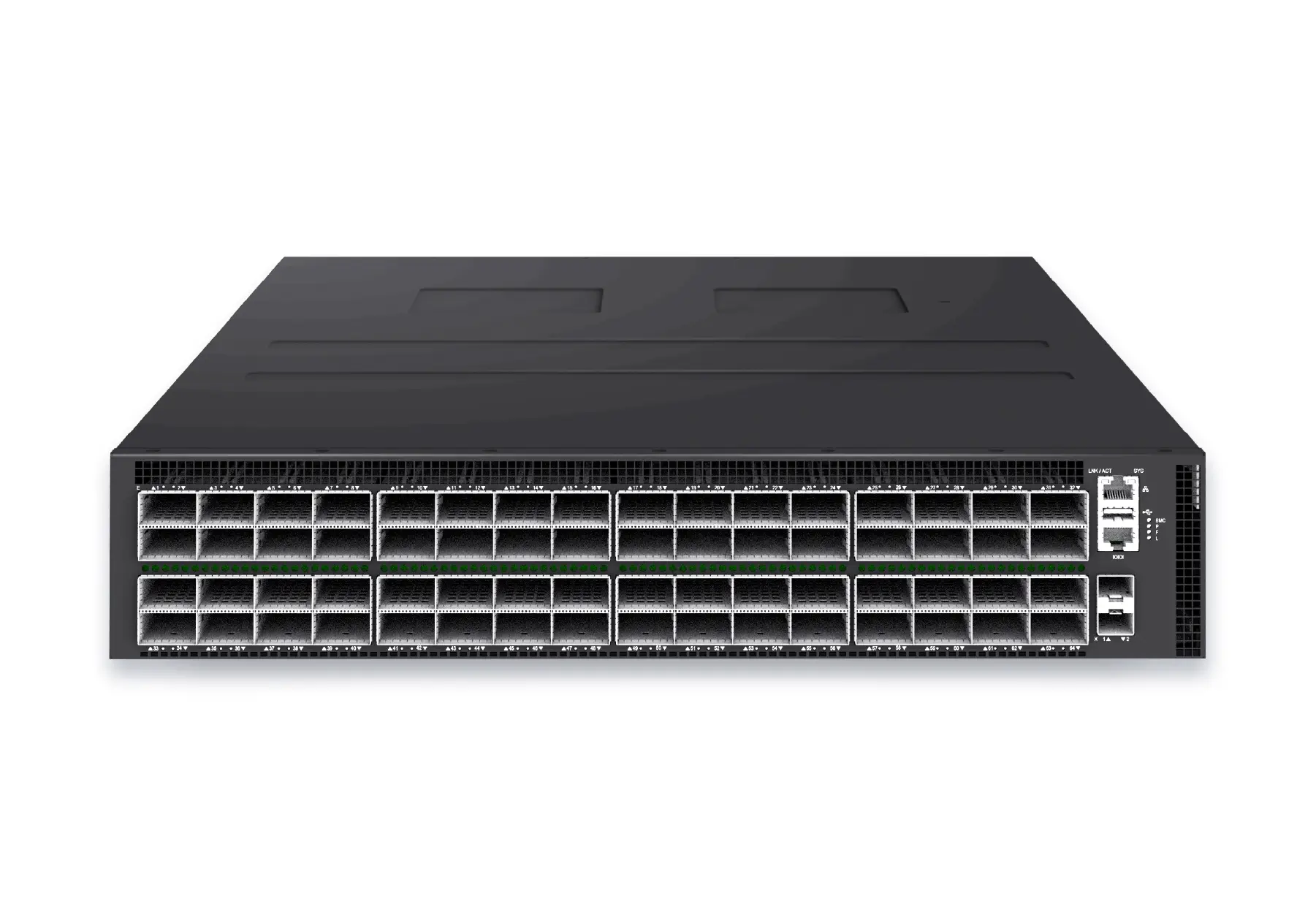 datacenter aiXS-DC-64X800-AI-G164-port 800G AI fabric switch for large-scale GPU clusters, HPC backbones, and ultra-high-throughput data center networks.View product
Continue reading
Related articles
 Technical ArticleWhat AI Fabric Ethernet Switching Requires: A Buyer Guide for SONiC-Based Data CentersEngineering guidance on AI Fabric Ethernet Switching Requires for Australian network and security teams, covering traffic visibility, capacity modelling, tool feeds.Read article
 Technical ArticleProprietary Switch OS Lock-in vs Enterprise SONiC: An Australian Buyer Migration AnalysisMigration analysis for Australian buyers comparing proprietary switch OS lock-in with Enterprise SONiC pilot, support, automation, and TCO evidence.Read article
 Technical ArticleWhite Box Switch vs Traditional Switch: What Enterprise Buyers in Australia Need to KnowEngineering comparison of white-box and traditional switches for Australian enterprise buyers, covering SONiC, support, optics, risk, and TCO.Read article