
In brief
A security operations review of SONiC-based open networking for Australian teams, covering failure modes, patch ownership, SAI risk, compliance mapping, and deployment controls.
Key takeaways
- When an Australian enterprise or colocation operator proposes SONiC-based switching for a new AI data center fabric or campus refresh, the procurement conversation almost always ends at the same desk: the security operations team.
- The SONiC ecosystem has matured significantly since its origins at Microsoft Azure.
- Yet none of that history automatically answers the questions security operations teams actually ask.
Why Security Operations Teams Are the Last Gate on SONiC Adoption
When an Australian enterprise or colocation operator proposes SONiC-based switching for a new AI data center fabric or campus refresh, the procurement conversation almost always ends at the same desk: the security operations team. SecOps leaders are asked to validate that an open-source network operating system can meet the same assurance bar as a proprietary alternative, and they are given very little structured guidance on how to do so.
The SONiC ecosystem has matured significantly since its origins at Microsoft Azure. SONiC is now a Linux Foundation project with a formal foundation charter, a multi-vendor contributor base, and production deployments across hyperscale cloud providers and enterprise data centers worldwide. The Open Compute Project lists SONiC alongside ONIE and SAI as a core networking sub-project, with a stated goal of fully disaggregated and open networking hardware and software.
Yet none of that history automatically answers the questions security operations teams actually ask. What happens when a critical vulnerability is disclosed in a SONiC container? Who is responsible for patching across a multi-vendor fleet? What are the realistic failure modes when SONiC runs on bare-metal switches from different OCP-accepted hardware vendors? And how does an Australian program handle data sovereignty, the Critical Infrastructure Act, and APRA CPS 234 requirements when the NOS is community-maintained?
This article is a structured risk and failure-mode review written for security operations professionals evaluating SONiC in Australian enterprise and data center programs. It is not a sales pitch. It is an honest catalog of what can go wrong, what the community has done to address those risks, and where buyer-side validation and vendor-specific evidence remain essential.
The SONiC Ecosystem: Who Builds It, Who Runs It, Who Patches It
Understanding SONiC risk starts with understanding who actually maintains the code. SONiC is developed as an open-source project under the sonic-net GitHub organization. It is built on a containerized, Docker-based architecture where each network function — BGP, LLDP, DHCP relay, and others — runs in its own isolated container. This modularity provides fault isolation: if one container crashes, the others continue operating. That architectural choice is a meaningful security advantage over monolithic NOS designs where a single process failure can take down the entire control plane.
The Switch Abstraction Interface (SAI) decouples the SONiC software layer from the underlying switching ASIC. This means the same SONiC image can theoretically run on switches powered by Broadcom switch silicon, Marvell Teralynx, or other merchant silicon families, provided the hardware vendor supplies a compliant SAI implementation. The Open Compute Project’s Networking project oversees this disaggregation model, with contributions from chip vendors, switch OEMs, and cloud operators.
For Australian security teams, the critical question is: who is your first call when something breaks or when a CVE is published? The answer depends on your procurement model. If you buy SONiC through a commercial distribution — for example, through an OCP Accepted switch vendor that provides enterprise support — your patch and escalation path runs through that vendor. If you deploy community SONiC directly from the GitHub repository, your team absorbs the integration, testing, and patching burden internally. This distinction is the single largest risk differentiator in any SONiC evaluation, and it is a question security operations teams must resolve before procurement, not after.
Known Failure Modes Security Teams Should Catalog
Security operations teams evaluating SONiC should build a failure-mode register that covers at least the following categories. Each of these represents a documented or architecturally predictable risk, not a hypothetical concern.
Container isolation failure. SONiC’s Docker-based architecture isolates network functions into separate containers. However, all containers share the same Linux kernel and the same host operating system. A kernel-level vulnerability — for example, a privilege escalation in the networking stack — could theoretically escape container boundaries. SONiC inherits this risk from the broader Linux container security model. Mitigation: track kernel CVEs independently of SONiC container updates, and ensure your patch cadence accounts for both.
SAI implementation inconsistency. Because SAI is an abstraction layer, the actual behavior of a given SONiC feature can differ across hardware vendors depending on how each vendor implements the SAI API. A feature that works correctly on one vendor’s switch may exhibit subtle differences on another. For security-sensitive configurations like ACLs, control plane policing, or management plane isolation, these inconsistencies can create gaps. Mitigation: require vendor-specific SAI compliance documentation and test security-critical features on each hardware platform before fleet deployment.
Configuration drift in large fleets. SONiC uses JSON-based configuration files and supports programmatic configuration through both CLI and management interfaces. In a large Australian data center deployment with hundreds of switches, configuration drift is a real risk. A switch that falls behind on its intended configuration state may expose unintended attack surface. Mitigation: implement continuous configuration validation using tools like NETCONF/YANG-based management or an AIDC Controller that can enforce desired state across the fleet.
Patch fragmentation across vendor distributions. When a critical vulnerability is disclosed, the timeline to a patched image depends on your vendor relationship. Community SONiC releases may receive patches quickly in the source repository, but each hardware vendor must rebuild and validate the image for their platform. In a multi-vendor SONiC fleet — which is the whole point of disaggregation — different switch models may be patched on different timelines. Mitigation: maintain a vendor patch SLA matrix as part of your security operations runbook.
Control plane exposure on management interfaces. SONiC exposes management access through SSH, SNMP, RESTCONF, and gNMI. Each of these interfaces represents a potential attack surface if not properly hardened. The community provides baseline security guidance, but hardening is not always enabled by default. Mitigation: treat every new SONiC switch deployment as requiring a security baseline configuration pass before production traffic flows.
Supply chain and image integrity. When you download a SONiC image from a vendor or from the community build infrastructure, how do you verify its integrity? SONiC images are large, complex, and include dozens of upstream packages. A compromised build pipeline or a tampered image could introduce backdoors. Mitigation: verify image checksums, use vendor-signed images where available, and integrate image verification into your provisioning automation.
The OCP Vendor Landscape: What Australian Programs Need to Know
The Open Compute Project’s Networking project is the umbrella under which SONiC, SAI, and ONIE operate. OCP Accepted networking products must demonstrate compliance with approved OCP specifications and meet at least four of OCP’s tenets: efficiency, openness, impact, scale, and sustainability. For Australian security teams, the OCP Accepted label provides a baseline quality signal, but it is not a security certification.
The SONiC ecosystem includes hardware and silicon contributions from multiple vendors. NVIDIA offers Pure SONiC as a supported option alongside Cumulus Linux on its Spectrum Ethernet switch portfolio. Broadcom provides switching ASICs that are widely deployed in SONiC-compatible platforms. Marvell and other silicon vendors also participate in the SAI ecosystem. For a bare-metal switching evaluation, Australian programs should note that the quality and timeliness of SAI implementations, firmware updates, and security patches vary across vendors.
A key risk factor for Australian programs is geographic vendor support. Many OCP networking vendors have strong presence in North America and Asia-Pacific, but local Australian engineering and support presence varies. Security operations teams should verify that their chosen vendor provides Australian-timezone support for critical vulnerability response, not just business-hours email support routed through a regional hub. This is particularly important for AI data center programs where downtime directly impacts GPU cluster utilization and model training schedules.
The OCP Podcast Episode 18 features David Hirst, CEO of Macquarie Data Centres, discussing the unique nature of the Australian market. Hirst highlights that Australia’s sovereign approach to data center infrastructure matters, and that early collaboration across hyperscalers, government, and the supply chain is becoming essential. For SONiC security evaluation, this sovereign context means Australian programs need to think about where SONiC images are built, who has access to the source code supply chain, and how community governance maps to Australian regulatory expectations.
Australian Compliance Mapping: APRA CPS 234, Critical Infrastructure Act, and Data Sovereignty
Australian financial services organizations regulated by APRA must comply with CPS 234, which requires information security controls commensurate with the size and extent of threats to information assets. When a network switch running SONiC is classified as an information asset — which it should be, given that it processes and routes sensitive data — CPS 234 requires the organization to:
- Identify and classify the asset based on its criticality.
- Implement controls to protect the asset from compromise.
- Test the effectiveness of those controls through vulnerability assessment and penetration testing.
- Maintain an incident response capability that includes the network infrastructure layer.
For programs covered by the Security of Critical Infrastructure Act (SOCI), network infrastructure supporting critical infrastructure assets must meet additional obligations around risk management programs, mandatory cyber incident reporting, and government assistance measures. SONiC-based switches deployed in data centers supporting critical infrastructure sectors — including financial services, communications, data storage, and healthcare — fall within scope.
Data sovereignty is the third dimension. When SONiC is downloaded from the community repository or from a vendor’s build system, the image includes packages sourced from global upstream repositories. Australian programs with strict data sovereignty requirements should verify where build infrastructure is hosted, whether telemetry or analytics data leaves Australian jurisdiction, and whether the vendor’s support infrastructure processes data within Australian borders.
Where SONiC Gives Security Teams Better Visibility Than Proprietary Alternatives
This article has focused on risks because that is what security operations teams need to evaluate. But a fair assessment also requires acknowledging where SONiC’s open architecture provides security advantages that proprietary NOS platforms cannot match.
Source code transparency. Every line of SONiC’s source code is publicly auditable. Security teams can perform or commission independent code reviews, static analysis, and vulnerability research on the actual NOS running in their network. With proprietary platforms, you are trusting the vendor’s internal security team and hoping they find and disclose vulnerabilities responsibly.
Faster vulnerability research response. Because the source is public, the global security research community can identify and report issues directly. The SONiC project maintains a formal security process, and the Linux Foundation provides governance infrastructure for coordinated disclosure.
Telemetry depth. SONiC supports INT (In-band Network Telemetry) and IPTPath telemetry capabilities that give security operations teams granular, per-hop visibility into packet flow through the fabric. When combined with a network packet broker layer for traffic aggregation and replication to security tools, SONiC-based fabrics can deliver richer security telemetry than many closed alternatives. For Australian programs deploying AI data center fabrics with EVPN-VXLAN overlays, this telemetry depth is a genuine security advantage.
Configuration auditability. SONiC’s JSON-based configuration model means every configuration state is a document that can be version-controlled, diffed, audited, and rolled back. This aligns well with infrastructure-as-code security practices and makes configuration compliance verification straightforward compared to proprietary CLI-based models where configuration state is opaque.
Multi-vendor fleet diversity. While multi-vendor diversity introduces patch management complexity (as noted above), it also reduces monoculture risk. A vulnerability in a single vendor’s proprietary NOS affects 100 percent of that vendor’s installed base. In a SONiC fleet, a vulnerability in the SONiC codebase affects all vendors, but a vulnerability in a specific SAI implementation or firmware component may only affect switches from that vendor.
Engineering Evidence Floor
For this topic, treat the article as buyer-ready only when the fabric claim is tied to measurable acceptance data. The baseline evidence package should include the selected switch SKU, SONiC image, ASIC/SAI version, NIC firmware, optics list, RoCE policy, telemetry counters, support owner, and rollback method. In a small pilot, capture at least 30 minutes of traffic at the intended 100G/400G/800G speed, one link failure, one switch reboot, one optics fault, and one support handoff. That evidence separates a credible AI fabric plan from a bandwidth brochure.
| Evidence area | What to validate | Acceptance gate | Rework trigger |
|---|---|---|---|
| Transport | PFC, ECN, DCBX, MTU, queue mapping, and CNP counters | 30 minutes load test at 100G/400G/800G | RoCE is asserted but not measured |
| Platform | Switch SKU, ASIC, SAI, SONiC image, and optics list | 2 switch roles pass upgrade and rollback | Generic compatibility is used as proof |
| Failure | Link loss, switch reboot, route convergence, and workload impact | 3 failure cases captured with timestamps | Steady-state throughput is the only evidence |
| Telemetry | Queue depth, drops, optics DOM, gNMI, and packet visibility | Operators explain a slowdown within 15 minutes | GPU and network teams use different data |
| Support | APAC escalation, RMA, spares, and patch lifecycle | 12 months operating plan approved | Ownership splits across vendors |
Engineering FAQ
What is the highest-risk SONiC deployment model? Community SONiC deployed directly across production switches without a release qualification lab, vendor patch SLA, image-signing process, or configuration compliance pipeline. The software may be capable, but the operating model is incomplete.
What should SecOps ask before approval? Ask who owns CVE triage, which vendor validates each image, how quickly critical fixes are delivered, how images are verified, how management interfaces are hardened, and how configuration drift is detected across the fleet.
Does OCP Accepted mean security certified? No. OCP alignment is a useful openness and interoperability signal, but it is not a substitute for security testing, patch ownership, vulnerability management, or compliance evidence under APRA CPS 234 or SOCI obligations.
Where does SONiC improve security posture? SONiC improves auditability through public source code, version-controllable configuration, open telemetry paths, and multi-vendor hardware choice. Those benefits become real only when the deployment includes disciplined patching, logging, access control, and release testing.
Related xSONiC Resources
Sources Reviewed
- Ethernet Network Adapters - ConnectX NICs | NVIDIA
- NVIDIA BlueField Data Processing Unit
- NVIDIA Spectrum-X Ethernet Platform
- OpenConfig gNMI Specification
- OpenConfig
- RFC 7950 - The YANG 1.1 Data Modeling Language
- RFC 6241 - Network Configuration Protocol (NETCONF)
- ACSC Essential Eight
- OAIC Notifiable Data Breaches
- APRA CPS 234 Information Security
- NETSCOUT Network Packet Definition
- Cloudflare Network Packet Definition
- SONiC Project Documentation
- Broadcom Ethernet Switching
- Marvell Switching
- NVIDIA Ethernet Switching
- Open Compute Networking
- SONiC GitHub
- SONiC Foundation
Product fit
Products referenced for evaluation
These products are referenced for evaluation context in the article. Confirm workload, port, optics, software, interoperability, and support requirements against the exact deployment before procurement.
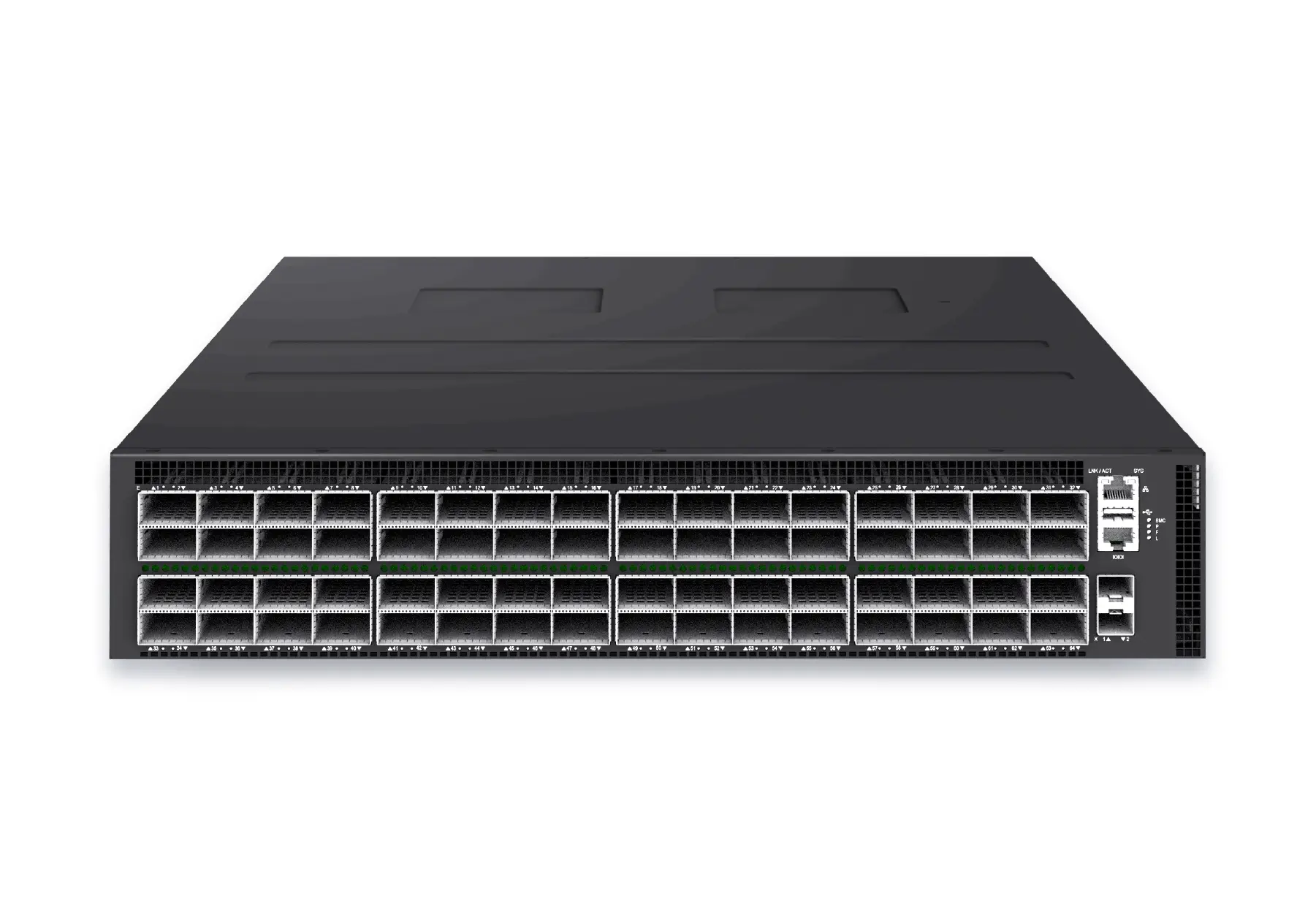 datacenter aiXS-DC-64X800-AI-G164-port 800G AI fabric switch for large-scale GPU clusters, HPC backbones, and ultra-high-throughput data center networks.View product
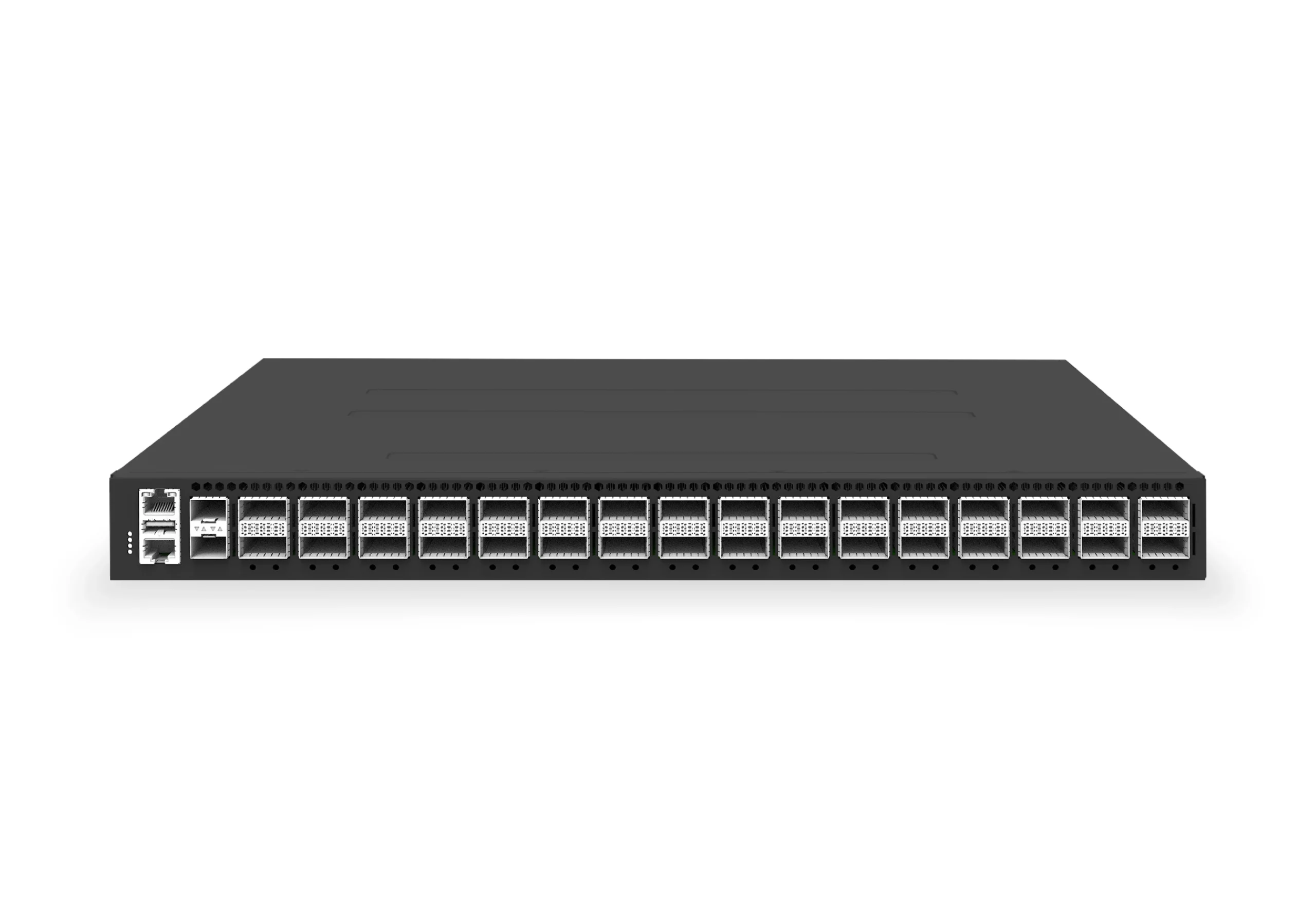 datacenter aiXS-DC-32X400-SP-G232-port 400G spine/core switch for high-capacity data center fabrics and AI-ready backbones.View product
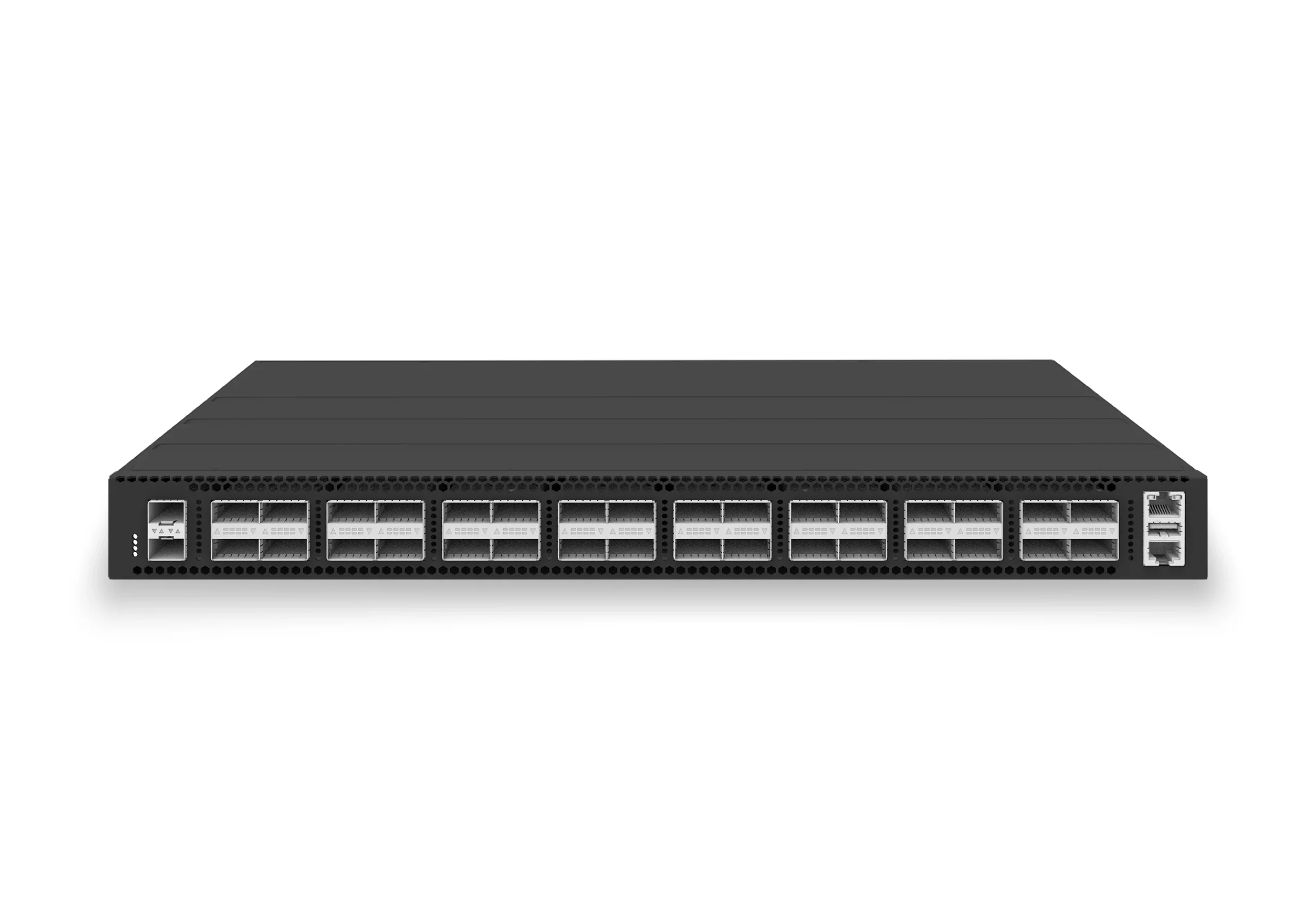 datacenter aiXS-DC-32X100-LS-G232-port 100G leaf/spine switch for VXLAN fabrics, RoCE-ready workloads, and tenant-scale routing.View product
Continue reading
Related articles
 Technical ArticleOpen Networking Support for Enterprise Buyers: How SONiC and Open NOS Models Actually WorkEngineering guidance on Open Networking Support for Enterprise Buyers for Australian campus teams, covering PoE budgets, access-layer resilience, migration risk.Read article
 Technical ArticleFrom Proprietary Lock-In to Open Networking: A Practical Enterprise SONiC Migration PlaybookA practical Enterprise SONiC migration playbook for Australian buyers moving from proprietary switch OS to open networking.Read article
 Technical ArticleWhy Centralized AI Fabric Management Is the Missing Layer in Open NetworkingEngineering guidance on Centralized AI Fabric Management Is the Missing Layer in Open Networking for Australian network teams, covering underlay design, EVPN-VXLAN.Read article