
In brief
Engineering guide for SONiC and open networking buyers covering platform fit, automation, support, telemetry, and validation evidence.
Key takeaways
- Software for Open Networking in the Cloud, or SONiC, is an open-source network operating system built on Linux that runs on switches from multiple hardware vendors and ASIC families.
- For Australian infrastructure teams, SONiC represents a structural shift in how network software and hardware decisions are made.
- SONiC offers a full suite of production-grade network functionality including BGP, RDMA, and standard Linux networking tools.
What Is SONiC and Why Should Australian Buyers Care?
Software for Open Networking in the Cloud, or SONiC, is an open-source network operating system built on Linux that runs on switches from multiple hardware vendors and ASIC families. Originally developed and production-hardened inside the data centers of some of the world’s largest cloud service providers, SONiC is now a Linux Foundation project with a growing ecosystem of contributors, chip vendors, and enterprise adopters.
For Australian infrastructure teams, SONiC represents a structural shift in how network software and hardware decisions are made. Instead of buying a proprietary switch where the operating system is bundled and locked to a single vendor, SONiC lets you choose the hardware platform separately from the software stack. That decoupling has real consequences for procurement leverage, operational flexibility, and long-term total cost of ownership.
SONiC offers a full suite of production-grade network functionality including BGP, RDMA, and standard Linux networking tools. It is not a lab experiment. It is the same NOS that powers hyperscale cloud data centers, now available to enterprise buyers through supported distributions and certified hardware platforms.
The Core Architecture: SAI, Containers, and Modularity
Understanding SONiC architecture matters for buyers because it explains why this NOS behaves differently from traditional switch software. Three design principles define how SONiC works:
Switch Abstraction Interface (SAI) SAI is the hardware abstraction layer that sits between SONiC’s software and the underlying switch ASIC. It provides a standard, vendor-neutral API that lets SONiC communicate with different silicon from Broadcom, Marvell, NVIDIA, and other chip vendors without rewriting the NOS codebase. For buyers, SAI means you can evaluate and swap switch hardware without retraining your operations team on a different operating system. This is the technical mechanism behind the hardware-software decoupling that SONiC promotes.
Container-Based Modular Architecture SONiC was the first network operating system to break monolithic switch software into multiple Docker containers, each running a discrete network function. BGP runs in its own container. The database layer runs in its own container. VLAN management, LLDP, DHCP relay, and other services each have isolated container processes.
This modular design delivers four practical benefits:
- Fault isolation — a failure in one container does not crash the entire switch
- Easier debugging — operators can inspect, restart, or replace individual containers without affecting the whole system
- Simplified upgrades — individual components can be updated or rolled back independently
- Enhanced scalability — the same architecture scales from a single leaf switch to thousands of nodes in a spine-leaf fabric
Redis-Based Centralized Database SONiC uses a Redis-based database as the central state store. All containers read from and write to this shared database, which acts as the single source of truth for the switch configuration and runtime state. This architecture makes SONiC programmable and inspectable through standard interfaces, which matters for teams building automation pipelines or integrating with network controllers.
SONiC in the AI Data Center: RDMA, RoCE, and Fabric Design
SONiC’s relevance to AI infrastructure is not theoretical. The same BGP and RDMA capabilities that power cloud provider networks are directly applicable to AI/ML cluster fabrics where GPU-to-GPU communication demands lossless, low-latency networking.
For Australian organizations building or expanding private AI inference clusters, SONiC-based data center switches support the protocol stack required for high-performance AI fabrics:
- RoCE v2 (RDMA over Converged Ethernet) — enables direct memory access between GPU servers over Ethernet, reducing CPU overhead and latency for distributed model training and inference workloads
- BGP-based underlay routing — provides scalable, standards-based routing for large spine-leaf topologies without proprietary routing protocols
- EVPN-VXLAN overlay — enables network virtualization and multi-tenancy, which is essential for shared GPU infrastructure where different teams or workloads need isolated network segments
- Data Center Bridging (DCBX) — supports lossless Ethernet configuration required by RoCE traffic, including priority flow control and enhanced transmission selection
Teams evaluating AI fabric architectures should understand that SONiC is not a stripped-down open-source alternative. It is the production NOS running in some of the largest GPU clusters in the world. The question for enterprise buyers is not whether SONiC can handle AI workloads, but whether their procurement and operations teams are ready to adopt it.
xSONiC’s Data Center AI Switches are built on SONiC to deliver exactly this kind of AI-ready infrastructure, with support for 100G, 400G, and 800G Ethernet in spine-leaf configurations. For teams planning GPU backend fabrics, the AI Fabric and GPU Backend Fabric solution pages provide detailed architecture guidance.
SONiC for Enterprise Campus: Beyond the Data Center
While SONiC’s reputation was built in hyperscale data centers, the ecosystem has expanded to address enterprise campus and branch networking. This is relevant for Australian organizations running campus refresh projects or evaluating alternatives to proprietary campus switching stacks.
Enterprise SONiC distributions add campus-relevant capabilities on top of the core architecture:
- PoE support for powering access points, IP phones, and IoT devices at the network edge
- MC-LAG and STP for high-availability access layer design without proprietary stacking dependencies
- Policy-Based Routing (PBR) for traffic steering and application-aware forwarding
- Virtual chassis capabilities that let multiple physical switches operate as a single logical device
For campus environments, the same SONiC containerized architecture applies. Individual services can be updated without disrupting the entire switch. Automation through standard Linux tools and NETCONF/YANG interfaces works the same way in the campus as it does in the data center.
xSONiC’s Access and Aggregation Switches bring SONiC to the campus edge, and the Campus Refresh solution guide provides a framework for teams planning multi-site enterprise network upgrades.
Ecosystem and Multi-Vendor Support: What It Means for Procurement
One of SONiC’s most significant architectural advantages for buyers is its growing multi-vendor ecosystem. The SAI abstraction layer means SONiC can run on switch hardware from multiple vendors using different ASIC families. Major silicon vendors including Broadcom and NVIDIA actively contribute to SAI and SONiC development.
NVIDIA, for example, offers SONiC as a NOS choice across its Spectrum Ethernet switch portfolio, alongside Cumulus Linux. The Spectrum line spans from 100Gb/s to 800Gb/s platforms, all of which support SONiC through the SAI layer. This demonstrates that SONiC is not a fringe project — it is a first-class NOS option on production-grade hardware from major vendors.
For Australian buyers, this multi-vendor support translates to:
- Reduced vendor lock-in — you are not tied to a single hardware supplier for the life of your network
- Competitive procurement — multiple vendors can bid on the same SONiC-compatible hardware requirements
- Operational consistency — your operations team learns one NOS regardless of which hardware vendor wins the bid
- Community-driven innovation — features and bug fixes come from a broad contributor base, not a single vendor’s roadmap
Data Center AI Switches from xSONiC are purpose-built for teams that want to evaluate SONiC on open switching hardware, giving engineering-led network programs full control over their NOS and hardware stack.
Installation, Configuration, and Operations
Understanding how SONiC is deployed and operated helps buyers assess the operational impact of adoption.
Installation Methods: SONiC supports three installation paths. ONIE (Open Network Install Environment) installation is the recommended method for production deployments, allowing SONiC images to be loaded onto compatible bare-metal switches at the factory or in the field. Docker-based installation is available for development and testing. Virtual machine deployment supports learning and lab environments.
Configuration Model: SONiC uses JSON-based configuration files, which means network state is declarative and version-controllable. Both CLI and programmatic configuration methods are supported. This is a meaningful shift for teams accustomed to proprietary CLI syntax, but it aligns with modern infrastructure-as-code practices.
Management and Automation: Standard Linux interfaces and tools work natively on SONiC. Teams can use familiar debugging tools, scripting languages, and automation frameworks. NETCONF and YANG model support enables integration with network controllers and intent-based networking platforms. For enterprises evaluating centralized fabric management, the xSONiC AIDC Controller provides a SONiC-native management plane.
Community and Support:
The open-source project provides the base architecture, but production buyers still need a commercial operating model. That means release ownership, patch cadence, support escalation, tested switch images, optics validation, and documentation that maps the SONiC architecture to the buyer’s actual topology. A mature supplier should be able to explain which components are upstream SONiC, which are vendor-packaged, and which are deployment-specific configuration.
Architecture Acceptance Matrix
SONiC architecture should be evaluated as an operating model, not only as software design. Buyers need to know whether the architecture can be installed, inspected, automated, upgraded, and recovered by their team.
| Architecture Area | What to Validate | Acceptance Evidence | Rework Trigger |
|---|---|---|---|
| SAI and ASIC layer | ASIC family, SAI version, feature dependencies, route/ACL/QoS scale | Vendor provides switch SKU, ASIC generation, SAI dependency, and tested scale notes for the quoted image | Supplier cannot separate SONiC capability from ASIC-specific behaviour |
| Container services | BGP, LLDP, database, telemetry, syncd, and management containers | After 3 reloads, container health, logs, config persistence, and service restart behaviour are documented | A single service restart causes unexplained routing or management instability |
| Redis state model | Config DB, App DB, ASIC DB, and state inspection workflow | Engineer can inspect intended config and runtime state without relying on a proprietary GUI | Support cannot explain where a failed config is stored or rejected |
| ONIE install and recovery | Image installation, rescue process, rollback image, config restore | Switch can be rebuilt from baseline image and config in a controlled maintenance window | Recovery depends on factory-only tools or undocumented console steps |
| Automation interfaces | JSON config, CLI, NETCONF/YANG, gNMI/OpenConfig where supported | Golden config push, backup, restore, telemetry export, and change audit all work in the pilot | Automation requires unversioned manual CLI sequences |
| Lifecycle support | Release cadence, CVE process, upgrade path, 36-month and 60-month plan | Supplier provides a lifecycle map and rollback procedure before production acceptance | Open-source project activity is used as a substitute for commercial support ownership |
For Australian buyers, this matrix turns SONiC’s architecture from a concept into a procurement control. It also gives operations teams the right acceptance target: prove how the switch behaves when a container restarts, a config is restored, a link fails, or an image rollback is required.
Buyer Checklist: Evaluating SONiC for Your Network
SONiC’s architecture is not just a technical curiosity. The combination of SAI-based hardware abstraction, containerized modularity, and a centralized Redis state store creates a NOS that is simultaneously production-hardened and operationally flexible. For Australian enterprise and data center buyers, this architecture enables a procurement model where hardware and software decisions are made independently, operations teams work with standard Linux tooling, and network automation is a native capability rather than a bolt-on.
Whether you are planning a spine-leaf fabric for AI workloads, a campus refresh across multiple sites, or an evaluation of open networking for your next infrastructure cycle, understanding SONiC architecture is the foundation of an informed decision.
xSONiC delivers SONiC-based infrastructure across data center, campus, and AI environments. Explore Data Center AI Switches, Access and Aggregation Switches, and Data Center AI Switches to see how SONiC maps to your network strategy.
Engineering FAQ
Why does SONiC use containers on a switch? Containers isolate major network services such as BGP, LLDP, telemetry, and database functions. That improves fault isolation and makes service-level troubleshooting possible, but it also means operations teams need visibility into container health and restart behaviour.
What does SAI actually do for buyers? SAI provides a common interface between SONiC and the switch ASIC. It reduces NOS lock-in, but it does not remove ASIC-specific limits. Buyers still need validation for route scale, ACL scale, QoS, buffers, telemetry, and optics.
Is ONIE important in production? Yes. ONIE is the recovery and installation layer that makes open networking operationally practical. Buyers should test image install, config restore, and rollback before accepting a SONiC switch fleet.
Where should xSONiC buyers focus during an architecture pilot? Focus on the exact switch SKU, SONiC image, ASIC behaviour, telemetry export, automation workflow, rollback procedure, and support boundary. Architecture value is proven by repeatable operations, not by a diagram.
Related xSONiC Resources
Sources Reviewed
- IEEE 802.1Q Bridges and Bridged Networks
- IEEE 802.1AX Link Aggregation
- Ethernet Network Adapters - ConnectX NICs | NVIDIA
- NVIDIA BlueField Data Processing Unit
- NVIDIA Spectrum-X Ethernet Platform
- OpenConfig gNMI Specification
- OpenConfig
- RFC 7950 - The YANG 1.1 Data Modeling Language
- RFC 6241 - Network Configuration Protocol (NETCONF)
- ACSC Essential Eight
- OAIC Notifiable Data Breaches
- APRA CPS 234 Information Security
- NETSCOUT Network Packet Definition
- Cloudflare Network Packet Definition
- IEEE 802.11be Wireless LAN Standard
- IEEE 802.3bt Power over Ethernet
- SONiC Project Documentation
- Open Network Install Environment (ONIE)
- Switch Abstraction Interface (SAI)
- Broadcom Ethernet Switching
- Marvell Switching
- NVIDIA Ethernet Switching
- Open Compute Networking
- SONiC GitHub
- SONiC Foundation
Product fit
Products referenced for evaluation
These products are referenced for evaluation context in the article. Confirm workload, port, optics, software, interoperability, and support requirements against the exact deployment before procurement.
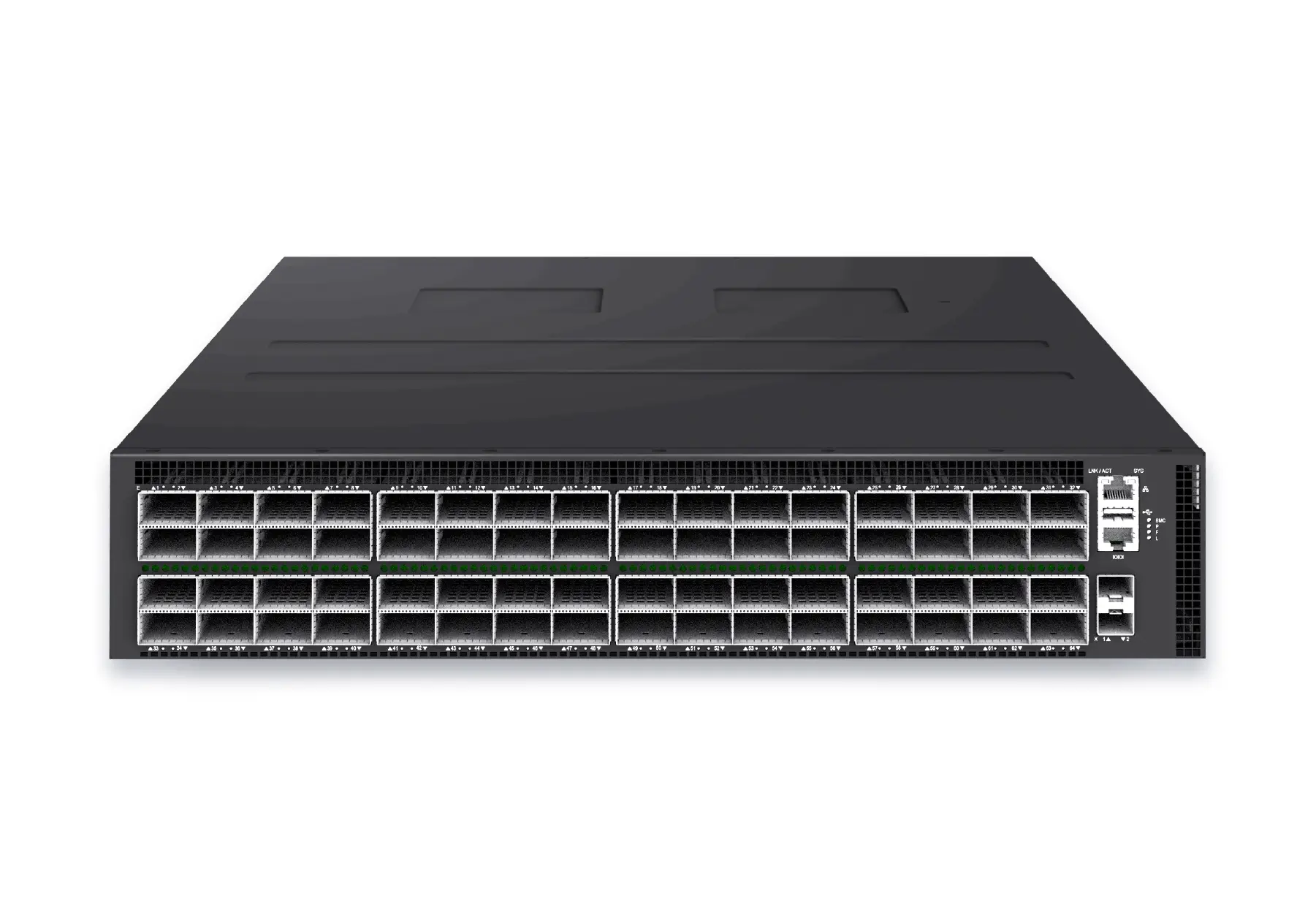 datacenter aiXS-DC-64X800-AI-G164-port 800G AI fabric switch for large-scale GPU clusters, HPC backbones, and ultra-high-throughput data center networks.View product
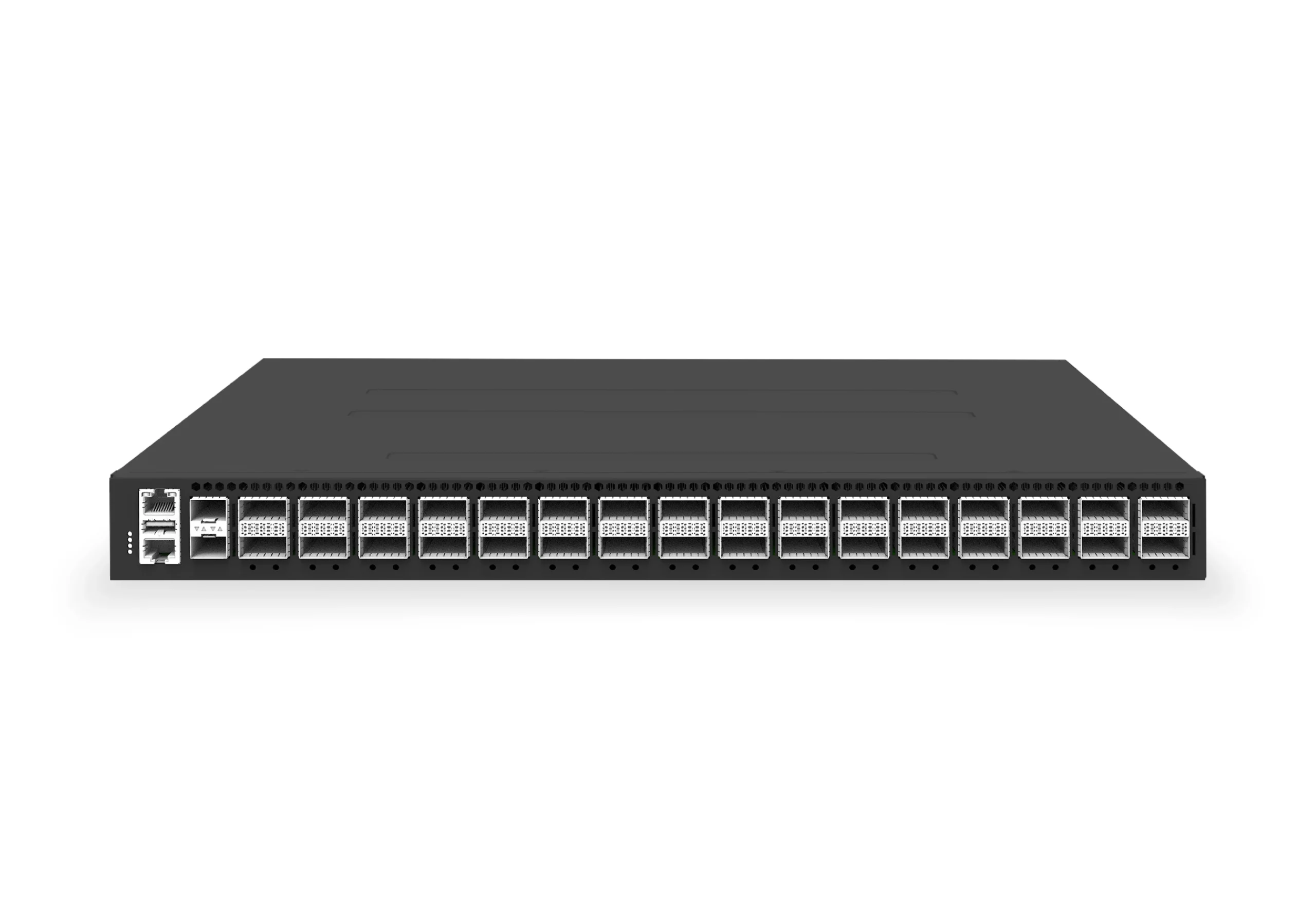 datacenter aiXS-DC-32X400-SP-G232-port 400G spine/core switch for high-capacity data center fabrics and AI-ready backbones.View product
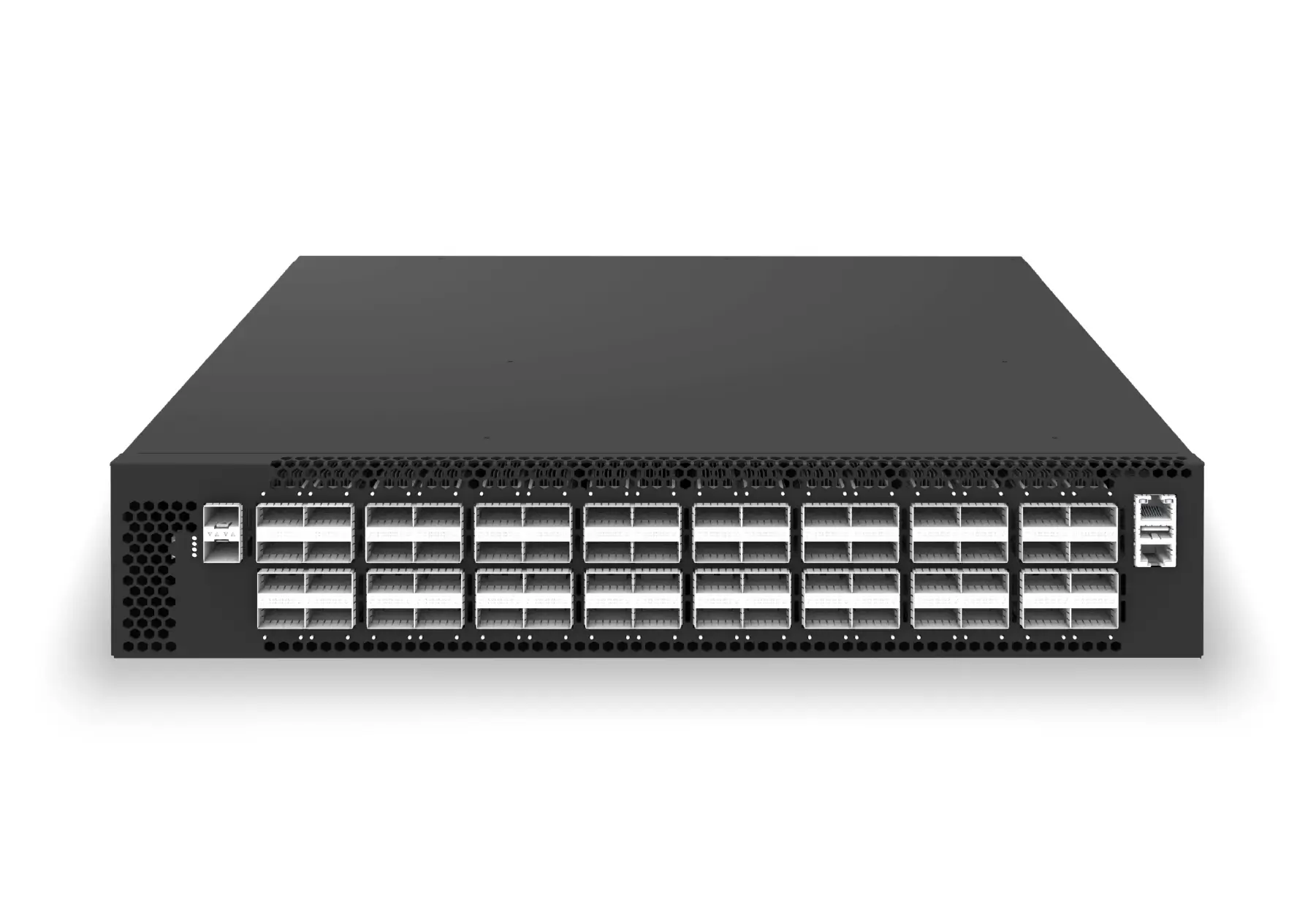 datacenter aiXS-DC-64X200-LS-G164-port 200G leaf/spine switch for high-bandwidth storage, compute, and scale-out data center fabrics.View product
Continue reading
Related articles
 Technical ArticleSONiC Switch Pre-Production Validation Checklist: A 12-Point Testing Playbook for Open Networking TeamsEngineering guidance on SONiC Switch Pre-Production Validation Checklist for Australian data centre buyers, covering form factor choice, link budgets, cabling.Read article
 Technical ArticleWhy Australian Data Centers Are Re-evaluating Open Networking for AI InfrastructureEngineering guide for AI fabric buyers covering RoCE, SONiC, telemetry, optics, support ownership, and deployment validation.Read article
 Technical ArticleSONiC Switch Validation Before Production: What Australian Network Teams Need on Their ChecklistEngineering guide for SONiC and open networking buyers covering platform fit, automation, support, telemetry, and validation evidence.Read article