In brief
Analysis of SONiC for AI data center Ethernet fabrics, covering architecture, RoCE v2 readiness, telemetry, support, and Australian buyer risk.
Key takeaways
- SONiC (Software for Open Networking in the Cloud), the Linux Foundation-backed open-source network operating system, continues to expand its footprint as a production-grade NOS for large-scale data center deployments.
- SONiC runs on switches from multiple hardware vendors and supports multiple ASICs through the Switch Abstraction Interface (SAI).
- The SONiC GitHub repository shows active community development with nearly 3,000 commits and a growing contributor base.
What Happened
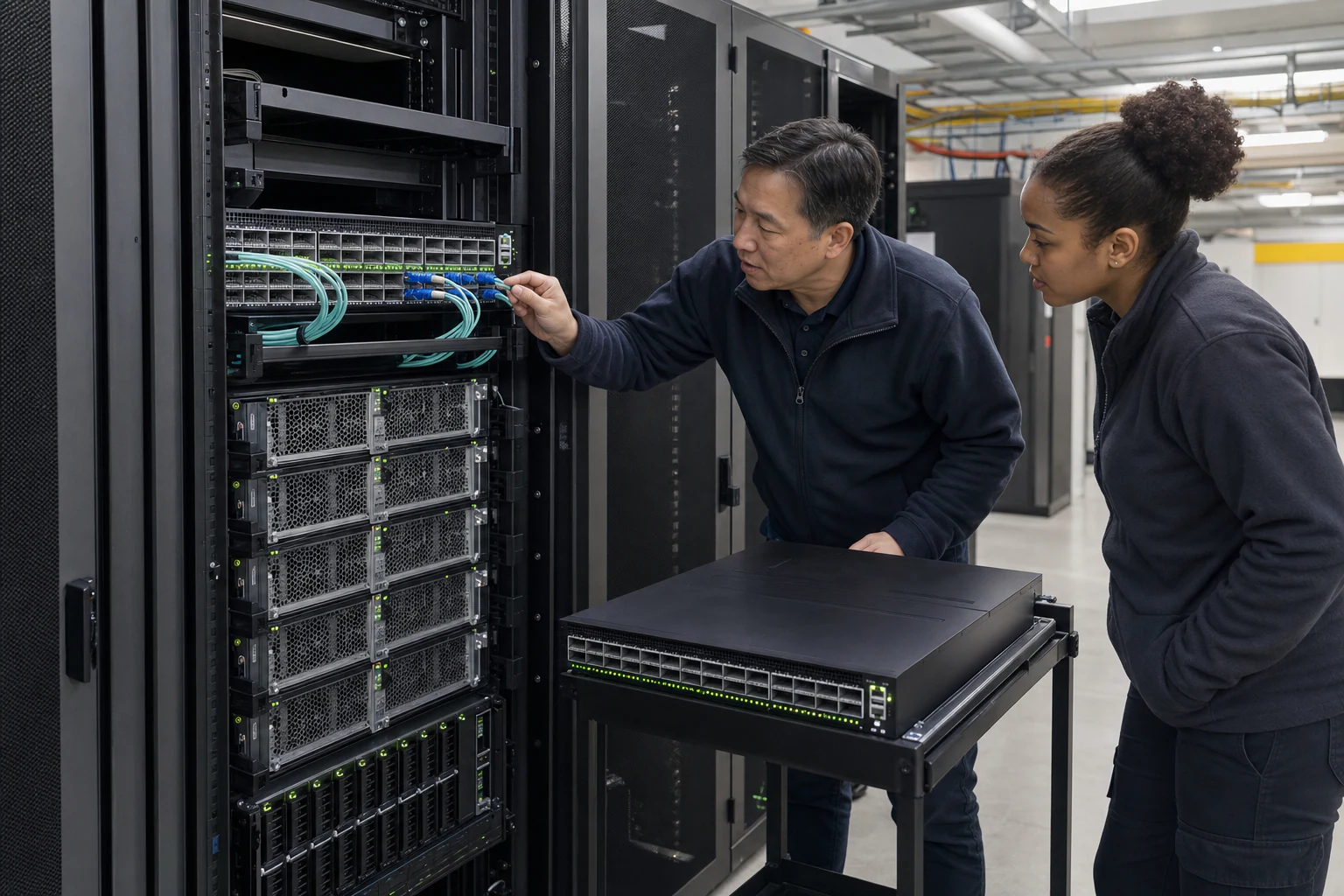
SONiC (Software for Open Networking in the Cloud), the Linux Foundation-backed open-source network operating system, continues to expand its footprint as a production-grade NOS for large-scale data center deployments. Originally hardened inside the hyperscaler data centers of cloud service providers, SONiC is now drawing attention from enterprises building AI and ML infrastructure where low-latency Ethernet fabrics are critical.
SONiC runs on switches from multiple hardware vendors and supports multiple ASICs through the Switch Abstraction Interface (SAI). Its container-based architecture breaks traditional monolithic switch software into modular Docker containers, enabling independent fault isolation, simplified upgrades, and accelerated feature evolution. According to the SONiC Foundation, the project offers a full suite of network functionality including BGP and RDMA — both essential protocols for AI cluster backend fabrics.
The SONiC GitHub repository shows active community development with nearly 3,000 commits and a growing contributor base. The project operates under the Apache License 2.0, giving network engineering teams full access to source code for customization and integration.
Why It Matters for AI Data Center Networking
AI and ML training clusters impose demanding requirements on the network fabric: consistent low latency, lossless Ethernet for RDMA over Converged Ethernet (RoCE v2), deep buffer management, and predictable congestion handling. Traditionally, enterprises building these fabrics relied on proprietary switch operating systems from a single vendor, locking themselves into a closed ecosystem with limited visibility and customization.
SONiC’s architecture addresses several of these concerns. Its multi-vendor, multi-ASIC support means buyers can select switching hardware based on silicon capabilities and price-performance rather than being forced into a single vendor’s NOS. The SAI abstraction layer provides a standardized API between SONiC and the underlying switch ASIC, allowing hardware from different manufacturers to run the same software stack.
For AI fabrics specifically, SONiC supports BGP for underlay routing in leaf-spine topologies and RDMA for GPU-to-GPU communication in backend clusters. These capabilities are production-tested in hyperscaler environments where AI workloads operate at massive scale.
However, enterprises should note that SONiC’s production heritage in hyperscaler environments does not automatically translate to turnkey enterprise deployment. Network engineering teams need Linux and container expertise to operate SONiC effectively. The gap between downloading an open-source image and running a stable AI fabric is non-trivial and requires either deep in-house capability or a commercial distribution partner.
The Australian Buyer Angle
Australia’s data center market is experiencing growth driven by cloud region expansion, sovereign data requirements, and emerging AI infrastructure demand. Australian enterprises, universities, and research institutions building private AI inference and training environments face a familiar dilemma: proprietary switch stacks from dominant vendors carry significant licensing costs and limited flexibility, while open networking options require engineering investment.
For Australian network buyers evaluating SONiC-based switching for AI data centers, the key considerations include:
Hardware availability and support: SONiC-compatible bare-metal switches must be sourced and supported in the Australian market. Buyers should confirm that their chosen hardware platform has SONiC image availability, local warranty support, and compatible optics.
Engineering capability: SONiC deployment requires Linux administration skills, container orchestration familiarity, and BGP fabric design expertise. Australian organizations without a dedicated network engineering team may need to partner with a systems integrator or consider a commercial SONiC distribution.
AI fabric design: Building a lossless Ethernet fabric for GPU clusters using SONiC involves configuring RDMA, RoCE v2, Data Center Bridging Capability Exchange (DCBX), Priority Flow Control (PFC), and Explicit Congestion Notification (ECN). These configurations are well-documented in the SONiC community but require careful tuning for each AI workload profile.
Total cost of ownership: Open networking can reduce per-switch software licensing costs, but total cost of ownership depends on hardware sourcing, support contracts, and the operational cost of managing an open-source NOS stack.
SONiC Architecture: What Makes It Different
SONiC’s technical architecture differentiates it from both proprietary NOS platforms and other open-source alternatives:
Switch Abstraction Interface (SAI): SAI provides a standardized API between the NOS and the switch ASIC. This means SONiC can run on silicon from multiple vendors — including Broadcom, Marvell, and others — without requiring NOS-level changes. For buyers, this breaks the traditional coupling between hardware and software purchasing decisions.
Containerized microservices: Each network function (BGP, LLDP, DHCP relay, etc.) runs in its own Docker container. This modular design allows individual services to be updated, restarted, or debugged independently. For AI fabric operators who need to minimize downtime during configuration changes, this architecture provides meaningful operational advantages.
Production-hardened at scale: SONiC’s production heritage in hyperscaler data centers means core routing and switching functions have been validated at scales that exceed typical enterprise deployments by orders of magnitude. This does not eliminate enterprise-specific challenges, but it does establish baseline reliability for fundamental switching operations.
JSON-based configuration: SONiC uses JSON configuration files and supports both CLI and programmatic configuration methods. For teams running infrastructure-as-code pipelines, SONiC integrates with standard automation frameworks.
AI Fabric Readiness Matrix for SONiC Buyers
| Requirement | What to verify | Acceptance evidence | Risk if skipped |
|---|---|---|---|
| RoCE v2 transport | PFC, ECN, DCBX, MTU, and queue mapping on the exact switch/NIC pair | Lossless traffic class test with congestion and recovery records | GPU jobs stall under burst traffic |
| BGP leaf-spine underlay | ECMP, route scale, failure convergence, and rollback | 2-link failure test with convergence time and packet loss notes | Fabric behaves well in lab but not during maintenance |
| ASIC and SAI maturity | Feature matrix for the selected ASIC and SONiC image | SAI version, SDK release, known caveats, optics matrix | Required feature is present in SONiC but absent on the platform |
| Telemetry and operations | gNMI, counters, buffer visibility, queue drops, optics DOM | Dashboard or runbook showing 5 key fabric health signals | Operations team cannot explain a GPU slowdown |
| Australian support model | APAC escalation, spare switch plan, optics availability | Written SLA and replacement path for 100G/400G/800G parts | Long incident windows due to import or timezone delay |
xSONiC Buyer Relevance
For network buyers in Australia evaluating open networking for AI data center fabrics, SONiC represents the most mature open-source NOS option with real production track record. The decision framework centers on three axes: hardware choice freedom, engineering investment required, and AI-specific fabric capabilities.
xSONiC positions its data center AI switches and bare-metal switching platforms within this SONiC ecosystem, offering hardware that is designed to run Enterprise SONiC for spine-leaf fabrics, AI/ML cluster backends, and RoCE v2 deployments. For Australian buyers, this means access to open networking switching hardware paired with SONiC-compatible software for AI fabric builds.
The broader SONiC ecosystem, including optical transceiver compatibility, packet broker integration for network visibility, and NVMe SSD options for AI storage tiers, represents a composable infrastructure approach that aligns with how modern AI data centers are designed.
Related xSONiC resources:
- Data center AI switch options
- Data center AI switch hardware
- AI fabric solution overview
- RoCE v2 deployment guidance
- GPU backend fabric architecture
- EVPN-VXLAN overlay networking
What to Watch Next
Several developments are worth tracking for Australian buyers evaluating SONiC for AI data center networking:
800G Ethernet silicon maturity: As 800G switch ASICs become available from multiple vendors, SONiC support for these platforms will determine how quickly open networking can scale to next-generation AI fabrics.
SONiC Enterprise distributions: The gap between community SONiC and production-ready enterprise deployment is being addressed by commercial distributions. Australian buyers should evaluate whether a commercial distribution provides the support SLA and feature completeness they need.
RoCE v2 and congestion management advances: AI training workloads are highly sensitive to tail latency and packet loss. SONiC’s implementation of DCBX, PFC, ECN, and congestion notification profiles will continue to evolve as AI networking requirements become more demanding.
Australian cloud and colocation expansion: As hyperscalers and colocation providers expand Australian data center capacity, the availability of SONiC-compatible infrastructure in local facilities may improve.
Engineering FAQ
What should be proven before adopting SONiC for an AI fabric? Prove the exact switch, ASIC, SONiC image, optics, NIC, and GPU server combination under congestion. A paper feature list is not enough; the acceptance test should include RoCE v2 traffic, link failures, queue telemetry, and rollback.
Why does the underlay design still matter for AI workloads? AI training and inference traffic depends on predictable east-west paths. MTU, ECMP, addressing, route policy, link failure behaviour, and telemetry determine whether the fabric remains predictable during bursty GPU communication.
What should be included in a SONiC AI fabric runbook? Include naming, IP plan, BGP policy, RoCE traffic classes, PFC/ECN settings, change process, rollback commands, failure checks, telemetry fields, backup and restore steps, and escalation ownership for the selected SONiC image.
Related xSONiC Resources
Sources Reviewed
- Ethernet Network Adapters - ConnectX NICs | NVIDIA
- NVIDIA Spectrum-X Ethernet Platform
- IEEE 802.1Qbb Priority Flow Control
- RFC 3168 Explicit Congestion Notification
- SONiC Project Documentation
- NVIDIA Ethernet Switching
- Open Compute Networking
- SONiC GitHub
- SONiC Foundation
Product fit
Products referenced for evaluation
These products are referenced for evaluation context in the article. Confirm workload, port, optics, software, interoperability, and support requirements against the exact deployment before procurement.
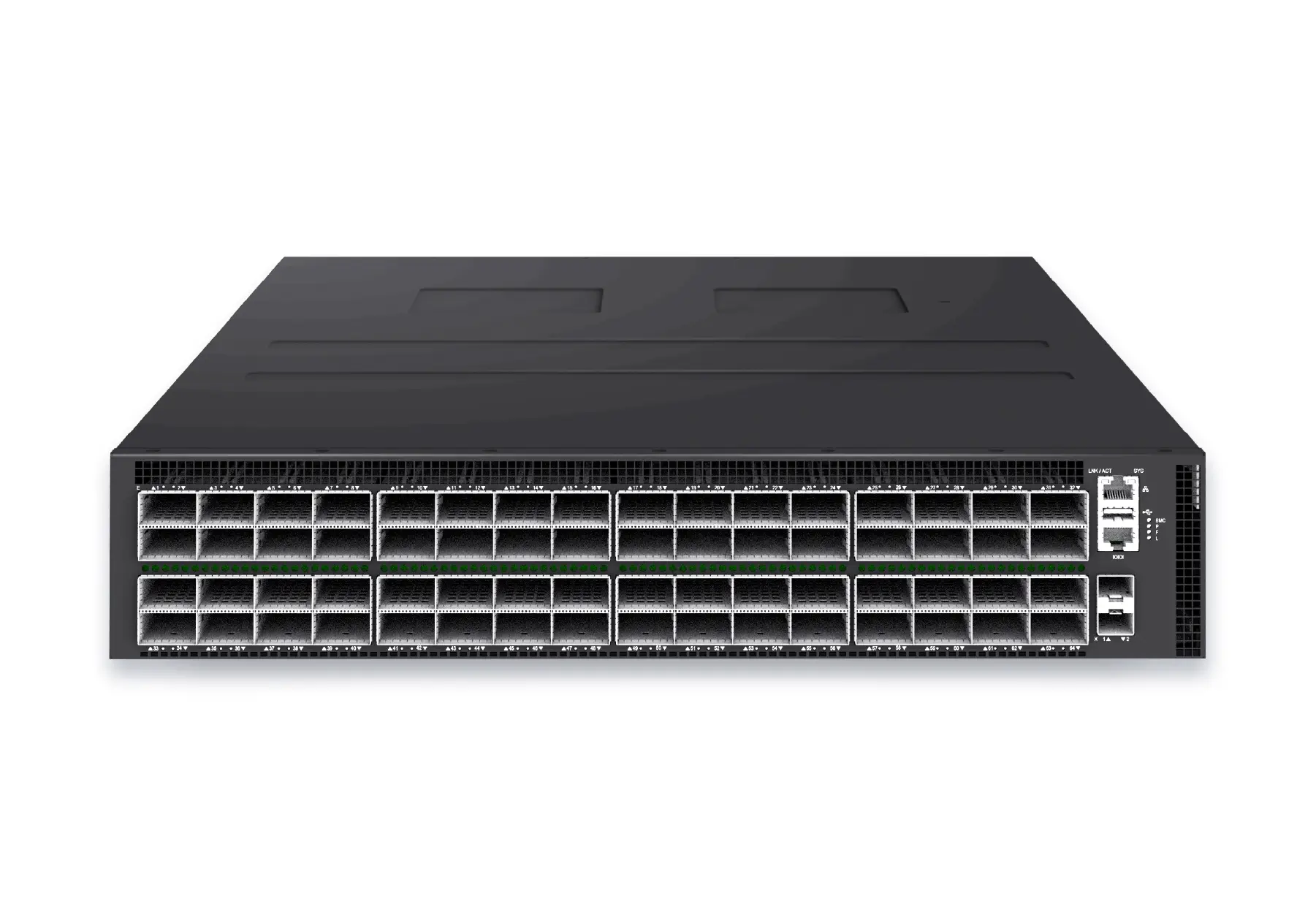 datacenter aiXS-DC-64X800-AI-G164-port 800G AI fabric switch for large-scale GPU clusters, HPC backbones, and ultra-high-throughput data center networks.View product
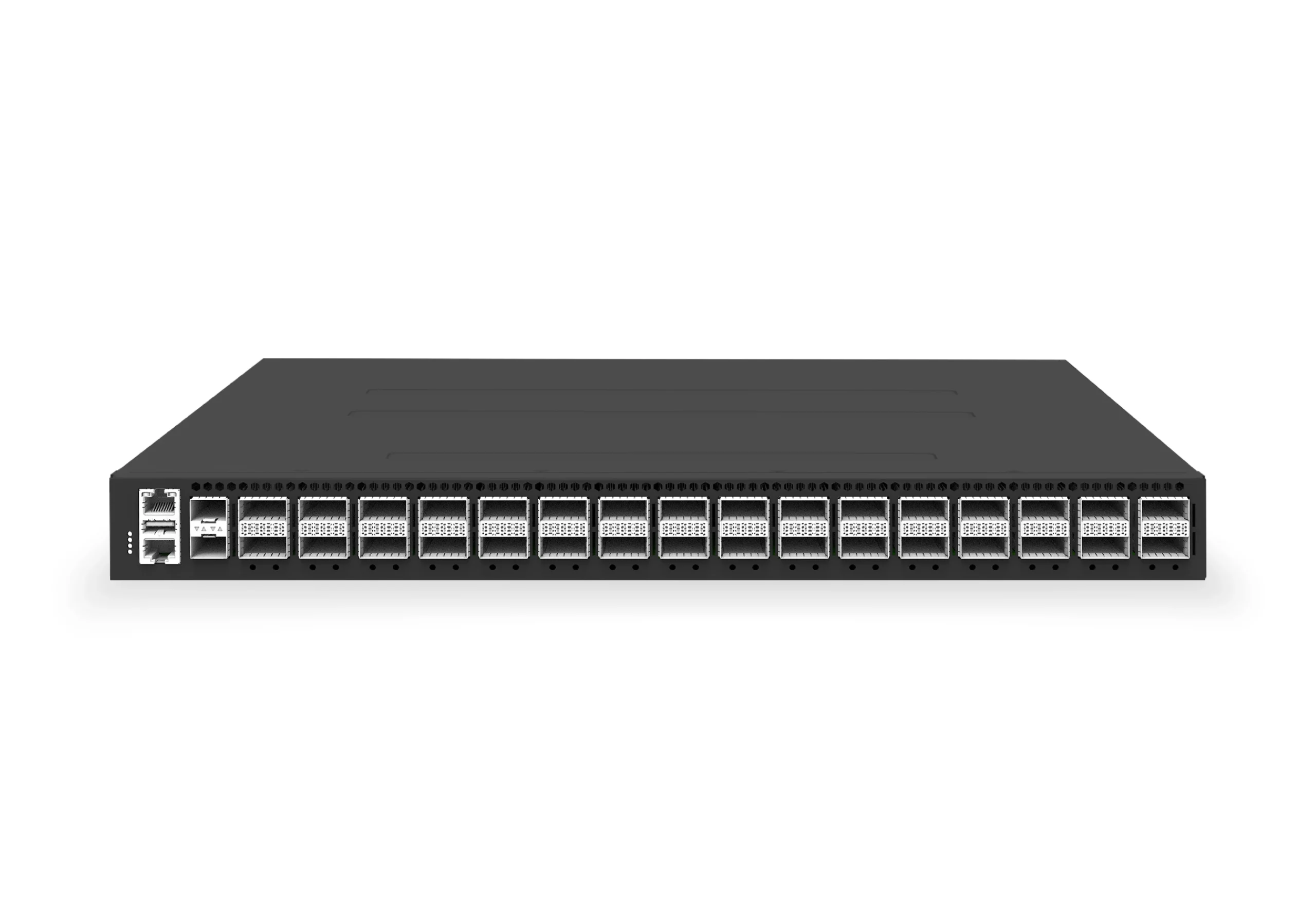 datacenter aiXS-DC-32X400-SP-G232-port 400G spine/core switch for high-capacity data center fabrics and AI-ready backbones.View product
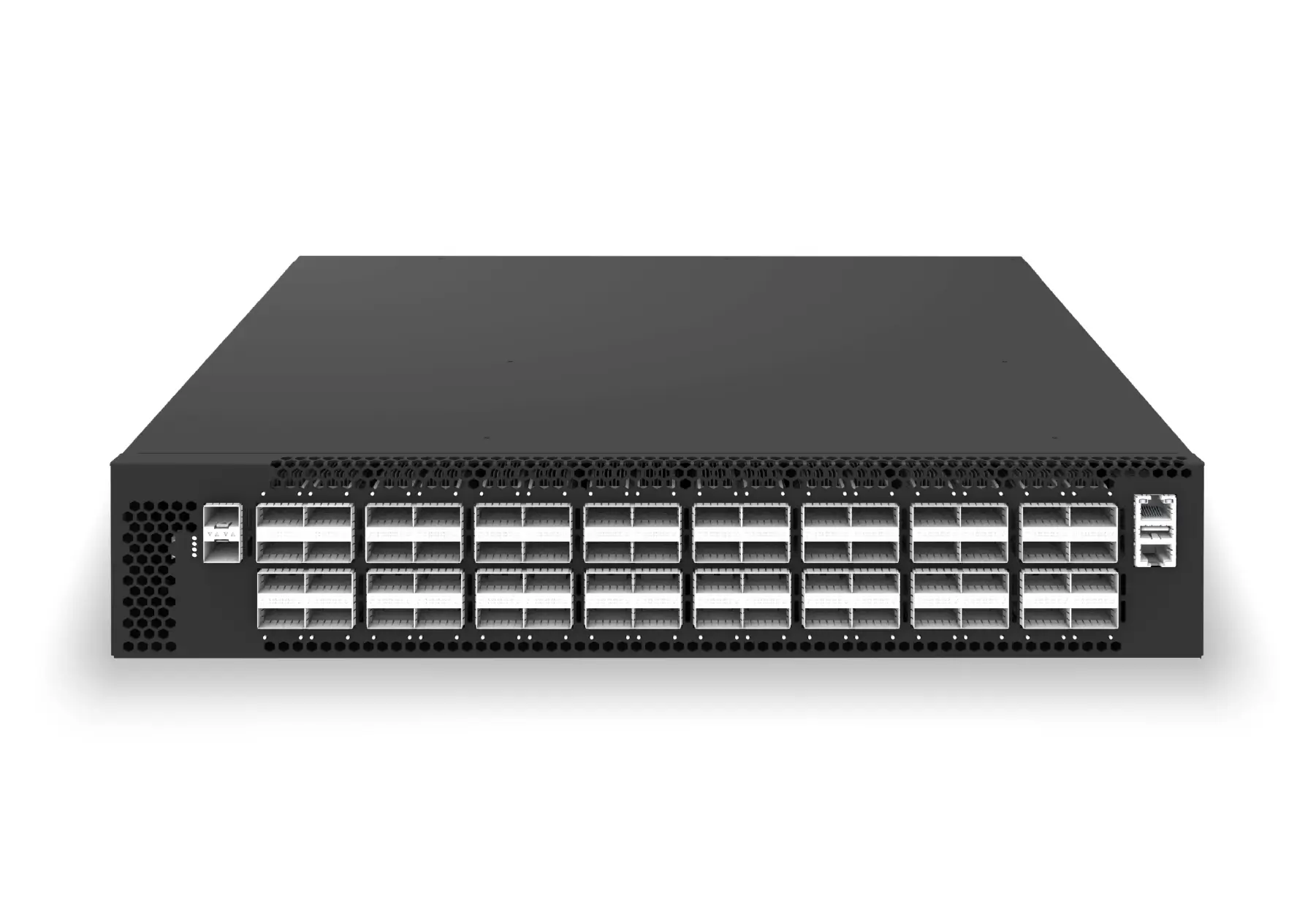 datacenter aiXS-DC-64X200-LS-G164-port 200G leaf/spine switch for high-bandwidth storage, compute, and scale-out data center fabrics.View product
Continue reading
Related articles
 Technical ArticleHow Private AI Inference Is Reshaping Australian Data CentresEngineering guide to private AI inference networking for Australian enterprises, covering SONiC, RoCE, NVMe-oF, GPUDirect Storage, telemetry, and sovereignty.Read article
 Technical Article800G SONiC Switches Are Reshaping AI Data Center Fabric Economics: What Australian Buyers Need to Know in 2025Engineering guidance on 800G SONiC Switches Are Reshaping AI Data Center Fabric Economics for Australian data centre buyers, covering form factor choice, link budgets.Read article
 Technical ArticleDesigning GPU Backend Fabrics with RoCE v2: How SONiC 400G/800G Switches Transform AI Data CentersEngineering guide for AI fabric buyers covering RoCE, SONiC, telemetry, optics, support ownership, and deployment validation.Read article