In brief
Engineering guide to private AI inference networking for Australian enterprises, covering SONiC, RoCE, NVMe-oF, GPUDirect Storage, telemetry, and sovereignty.
Key takeaways
- When enterprises move from consuming AI inference via public cloud APIs to running inference on their own GPU servers, the networking fabric connecting those GPUs becomes the critical path.
- This is not a problem that any Ethernet switch can solve. It requires switches that support RoCE v2 for GPU-direct memory access, DCBX for traffic prioritisation, and congestion management mechanisms like fast congestion notification.
- The SONiC Foundation, operating as a Linux Foundation project, describes SONiC as 'an open source network operating system based on Linux that runs on switches from multiple vendors and ASICs' offering 'a full suite of network functionality, like BGP and RDMA, that has been production-hardened in the data centers of some of the largest cloud service providers.' That description - particularly the explicit mention of RDMA support - directly addresses the GPU backend fabric requirement.
The Networking Bottleneck Behind Private AI Inference
When enterprises move from consuming AI inference via public cloud APIs to running inference on their own GPU servers, the networking fabric connecting those GPUs becomes the critical path. GPU inference workloads - whether serving a 70-billion-parameter language model, running retrieval-augmented generation against a private document corpus, or processing multimodal inputs - generate bursty, latency-sensitive traffic between GPU memory and storage. The network must deliver consistent low latency, handle RDMA traffic without packet loss, and provide the telemetry that operations teams need to diagnose performance degradation before it hits end users.
This is not a problem that any Ethernet switch can solve. It requires switches that support RoCE v2 for GPU-direct memory access, DCBX for traffic prioritisation, and congestion management mechanisms like fast congestion notification. Until recently, getting this capability meant buying into a proprietary switching stack from a single vendor, accepting their pricing, their optics ecosystem, and their software roadmap.
The SONiC Foundation, operating as a Linux Foundation project, describes SONiC as ‘an open source network operating system based on Linux that runs on switches from multiple vendors and ASICs’ offering ‘a full suite of network functionality, like BGP and RDMA, that has been production-hardened in the data centers of some of the largest cloud service providers.’ That description - particularly the explicit mention of RDMA support - directly addresses the GPU backend fabric requirement.
What the Sources Actually Say About SONiC for AI Networking
The SONiC project’s GitHub repository confirms that SONiC uses a container-based architecture where ‘each network function runs in its own Docker container,’ providing ‘better fault isolation, easier debugging and troubleshooting, simplified upgrades and maintenance, and enhanced scalability.’ For AI infrastructure teams managing inference clusters that must stay online during model updates and configuration changes, this modular architecture matters. A BGP route change in a containerised SONiC deployment does not require a full switch reboot.
On the vendor side, NVIDIA’s Ethernet switching page explicitly lists ‘NVIDIA Pure SONiC’ as one of the supported network operating systems for its Spectrum Ethernet switch portfolio, alongside Cumulus Linux. The page describes Pure SONiC as ‘a community-developed, open source network operating system based on Linux that runs on switches from multiple vendors and powers some of the largest data centers in the world.’ This is notable because NVIDIA is not a neutral party - it sells both the switching hardware and the alternative NOS (Cumulus). Listing SONiC as a supported option signals market demand that even vertically integrated vendors cannot ignore.
Why This Matters for Australian Enterprise AI Strategy
Australia’s enterprise AI market is at an inflection point. Organisations across financial services, healthcare, mining, government, and education are evaluating or deploying private AI inference for data sovereignty, latency, and compliance reasons. The Australian Privacy Act, sector-specific regulations in healthcare and financial services, and growing interest in sovereign AI capability all push inference workloads toward on-premises or collocated infrastructure rather than public cloud endpoints hosted offshore.
For these organisations, the networking decision is upstream of the GPU decision. A poorly designed backend fabric will bottleneck GPU utilisation regardless of whether the inference servers run NVIDIA, AMD, or other accelerators. And the fabric must be operable by Australian engineering teams without requiring vendor-specific certifications that are difficult to recruit for in a tight labour market.
SONiC’s Linux-based operational model - standard CLI tools, JSON configuration files, and programmable interfaces - aligns with the skills that data center and infrastructure teams in Australia already possess. The SONiC Foundation notes that SONiC ‘uses standard Linux interfaces and tools,’ which reduces the operational learning curve compared to proprietary NOS environments that require vendor-specific training.
The Disaggregated Networking Argument for GPU Fabrics
The traditional approach to building a GPU backend fabric has been to purchase a complete switch-and-software bundle from a single vendor. This simplifies procurement but concentrates pricing power, limits hardware refresh flexibility, and creates dependency on a single vendor’s release cycle for feature updates and security patches.
Disaggregated networking - where the network operating system, the switch hardware, and the optical transceivers are sourced from separate suppliers - is an alternative model that SONiC enables. The SONiC architecture is built on the Switch Abstraction Interface (SAI), which the Foundation describes as helping to ‘accelerate hardware innovation’ by decoupling the software from the underlying ASIC. In practice, this means a buyer can evaluate switch hardware from multiple OEMs running the same SONiC image, compare performance on their specific traffic patterns, and select the best option without being locked into a single vendor’s ecosystem.
For Australian buyers, this has a practical implication: procurement leverage. When the NOS is open source and the hardware is interchangeable, the switching vendor must compete on silicon quality, port density, power efficiency, and support - not on software lock-in. This is particularly relevant for AI inference fabrics where the number of required switch ports scales with GPU count, and the optics budget (SFP28, QSFP28, QSFP-DD, OSFP modules) can represent a significant portion of the total fabric cost.
NVIDIA’s own product table for the SN5000 series shows configurations ranging from the SN5400 (64x QSFP-DD 400GbE) to the SN5610 (64x OSFP 800GbE), delivering up to 51.2 Tb/s throughput. The SN6000 series, based on the Spectrum-6 ASIC, introduces co-packaged optics and scales to 409.6 Tb/s in a 5U form factor. These are the switch classes relevant to GPU inference fabrics, and SONiC support means buyers are not required to adopt Cumulus Linux or any proprietary NOS to operate them.
What This Means for xSONiC’s Position in the Australian Market
xSONiC operates in the exact intersection that this industry trend defines: open networking infrastructure for enterprise and data center buyers who need AI-grade Ethernet performance without proprietary lock-in. The data center AI switch portfolio, built on Enterprise SONiC, addresses the GPU backend fabric requirement directly. The AI infrastructure systems line addresses the inference server side. Together, they offer Australian buyers a disaggregated stack where the networking fabric, the NOS, and the inference compute can be evaluated and procured on their individual merits.
The SONiC Foundation’s statement that SONiC has been ‘production-hardened in the data centers of some of the largest cloud service providers’ provides the credibility anchor. NVIDIA’s endorsement of Pure SONiC as a supported NOS on its Ethernet switching portfolio provides the vendor ecosystem anchor. The remaining gap - and the opportunity for xSONiC in Australia - is making this stack accessible, supported, and operable for enterprises that are not hyperscalers but need the same networking capabilities for their private inference deployments.
This is not a market where a press release or a spec sheet will win. Australian enterprise buyers evaluate based on proof: local support capability, reference architectures that match their GPU and model deployment patterns, and the ability to see the full networking stack in their own lab before committing. The open-source SONiC foundation provides the technology credibility. The execution in-market is what will differentiate.
What to Watch Next
Three developments will shape how quickly Australian enterprises adopt SONiC-based AI inference fabrics:
-
SONiC’s expanding ASIC and platform support. The SONiC Foundation lists supported devices and platforms on its site, and the breadth of that list determines how many hardware options buyers can evaluate. Broader support means more competitive procurement.
-
NVIDIA’s Pure SONiC positioning relative to Cumulus Linux. If NVIDIA continues to invest in Pure SONiC as a first-class NOS option on its Spectrum switch line, it validates the open-source path for AI networking. If Cumulus becomes the clear priority, SONiC buyers may need to look to other switch OEMs.
-
Australian enterprise AI deployment timelines. The networking fabric decision is typically made at the infrastructure planning stage, before GPU servers are ordered. As more Australian organisations move from AI proof-of-concept to production inference, the fabric evaluation cycle will accelerate.
For buyers currently evaluating private AI inference infrastructure, the networking layer deserves early attention - not as an afterthought once GPU servers are selected.
The first lab should be small but numerically useful: 2 GPU nodes, 1 storage target, 100G or 400G links, 30 minutes of mixed inference and retrieval traffic, and at least 3 failure cases: storage path loss, leaf uplink loss, and telemetry collector outage. Record p95/p99 application latency, GPU utilisation, ECN/CNP counters, queue depth, model load time in seconds, and recovery time in minutes. These measurements make the design defensible when the project moves from proof of concept to procurement.
Private AI inference network acceptance matrix
Private inference fabrics should be accepted from the application path backwards. The fabric must show that prompts, embeddings, model weights, GPU memory transfers, storage reads, and telemetry can coexist without creating hidden latency or sovereignty risk.
| Acceptance item | Evidence to capture | Reject or rework if |
|---|---|---|
| Inference workload profile | Model size, context length, concurrency, RAG lookup rate, p95/p99 latency target, and response streaming pattern | The design uses training-cluster assumptions but never measures inference traffic |
| GPU and storage path | Local NVMe, shared NVMe-oF, vector database, GPUDirect Storage requirement, model load time, and storage queue depth | GPUs sit idle during model load or retrieval even though raw switch throughput looks healthy |
| RoCE and traffic classes | RoCE v2 use, PFC/ECN/DCBX policy, MTU, storage class, management class, and mixed traffic test | Inference, storage, and management traffic share queues without tested congestion boundaries |
| Observability | GPU utilisation, queue depth, ECN/CNP counters, storage latency, interface drops, and application latency correlation | Operators can see application latency but cannot map it to a network, storage, or GPU cause |
| Sovereignty and compliance | Data location, prompt logging, telemetry export, access controls, capture policy, and Australian regulatory mapping | Prompt, embedding, or diagnostic data leaves the approved environment without audit evidence |
Engineering FAQ
Why does inference need a different network review than training? Inference combines user-facing latency, model loading, vector retrieval, GPU memory movement, and telemetry. Training reviews focus more heavily on sustained collective GPU traffic.
When does GPUDirect Storage matter? GPUDirect Storage matters when storage-to-GPU movement is part of the critical path. It should be tested when model weights, embeddings, or data streams are large enough that CPU staging adds latency or burns host cycles.
What should be measured before go-live? Measure p95 and p99 inference latency, GPU utilisation, model load time, storage latency, ECN/CNP counters, packet drops, queue depth, and failover behaviour under representative concurrent users.
Related xSONiC Resources
- data center switches
- AI infrastructure systems
- NVMe SSDs
- packet broker platforms
- AI fabric solution
- GPU backend fabric guide
- RoCE v2 guide
Sources Reviewed
- Ethernet Network Adapters - ConnectX NICs | NVIDIA
- NVIDIA Spectrum-X Ethernet Platform
- NVIDIA GPUDirect Storage Documentation
- NVIDIA GPUDirect Storage Overview
- NVM Express Specifications
- SNIA NVMe over Fabrics Overview
- SONiC Project Documentation
- NVIDIA Ethernet Switching
- Open Compute Networking
- SONiC GitHub
- SONiC Foundation
Product fit
Products referenced for evaluation
These products are referenced for evaluation context in the article. Confirm workload, port, optics, software, interoperability, and support requirements against the exact deployment before procurement.
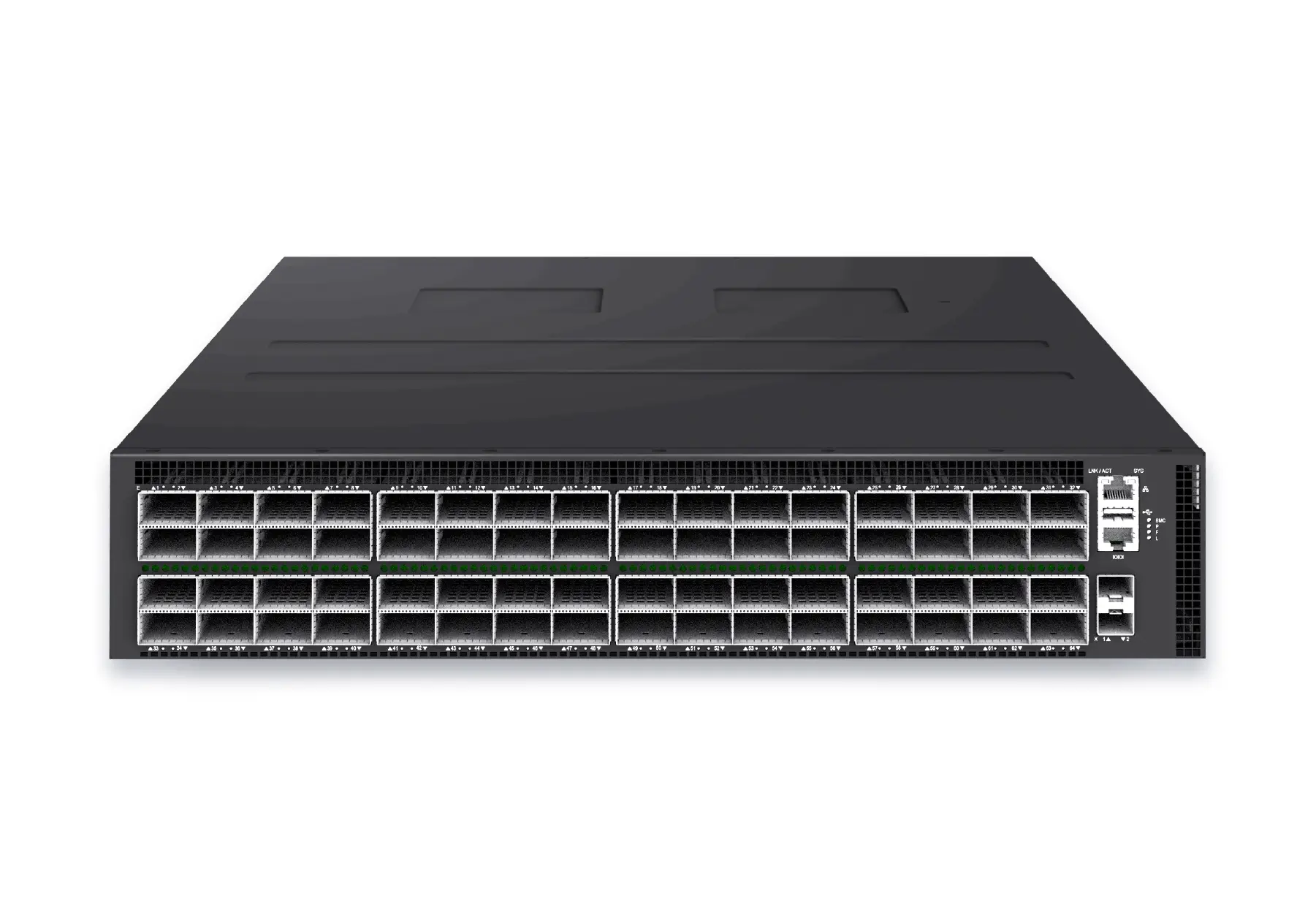 datacenter aiXS-DC-64X800-AI-G164-port 800G AI fabric switch for large-scale GPU clusters, HPC backbones, and ultra-high-throughput data center networks.View product
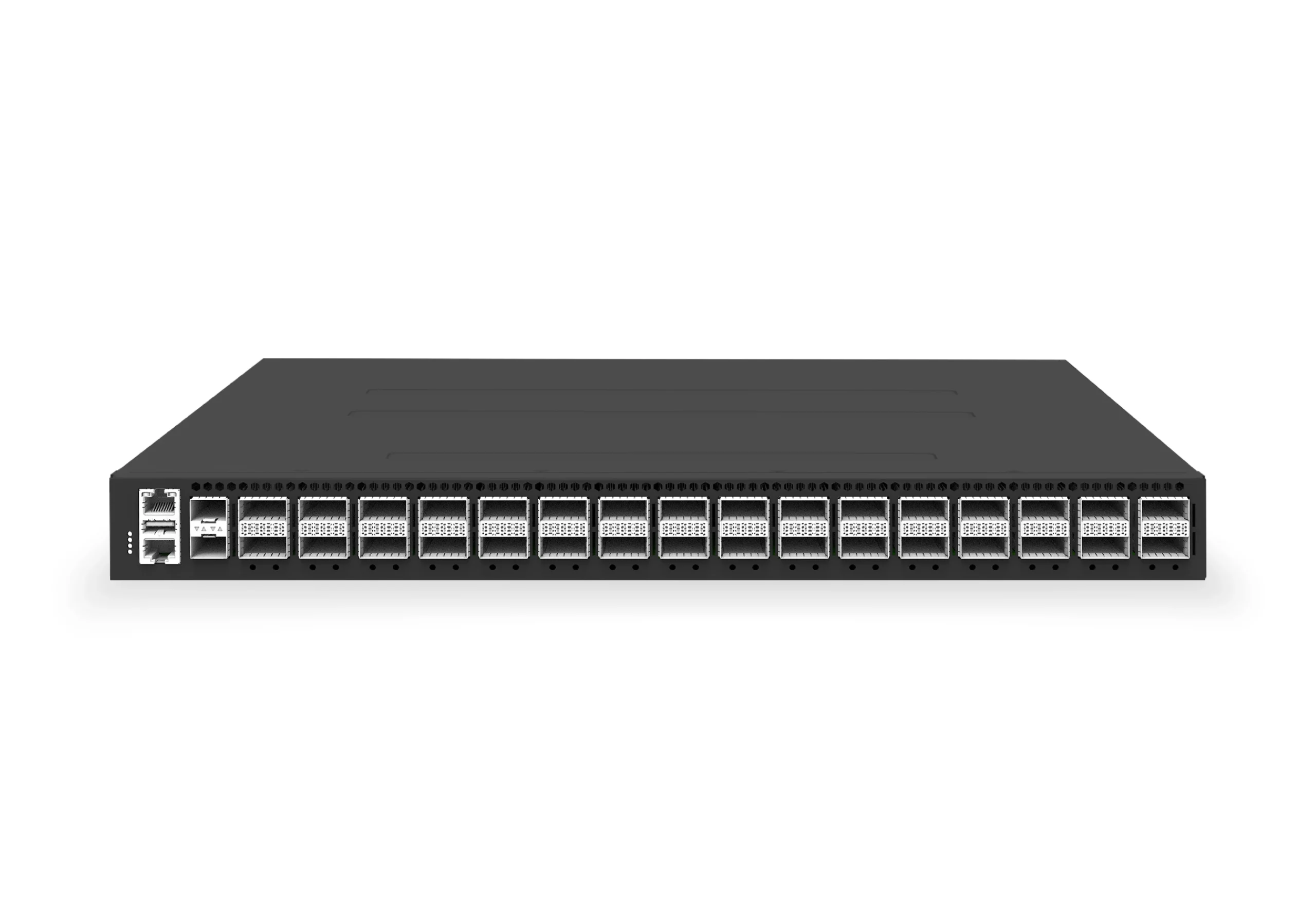 datacenter aiXS-DC-32X400-SP-G232-port 400G spine/core switch for high-capacity data center fabrics and AI-ready backbones.View product
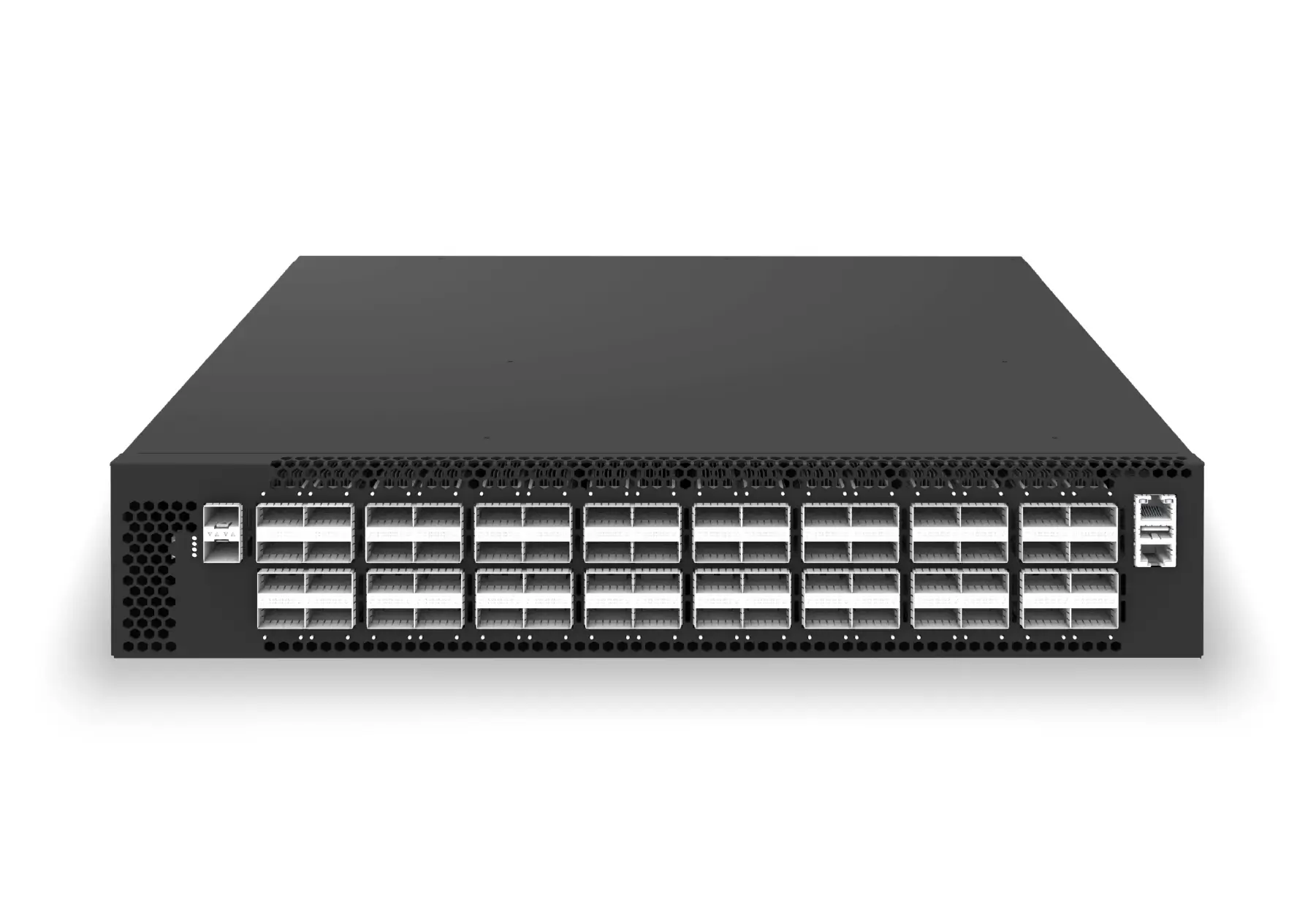 datacenter aiXS-DC-64X200-LS-G164-port 200G leaf/spine switch for high-bandwidth storage, compute, and scale-out data center fabrics.View product
Continue reading
Related articles
 Technical ArticleSONiC Gains Ground in AI Data Center Fabrics: What Australian Network Buyers Should KnowAnalysis of SONiC for AI data center Ethernet fabrics, covering architecture, RoCE v2 readiness, telemetry, support, and Australian buyer risk.Read article
 Technical Article800G SONiC Switches Are Reshaping AI Data Center Fabric Economics: What Australian Buyers Need to Know in 2025Engineering guidance on 800G SONiC Switches Are Reshaping AI Data Center Fabric Economics for Australian data centre buyers, covering form factor choice, link budgets.Read article
 Technical ArticleDesigning GPU Backend Fabrics with RoCE v2: How SONiC 400G/800G Switches Transform AI Data CentersEngineering guide for AI fabric buyers covering RoCE, SONiC, telemetry, optics, support ownership, and deployment validation.Read article