In brief
Engineering guidance on 800G SONiC Switches Are Reshaping AI Data Center Fabric Economics for Australian data centre buyers, covering form factor choice, link budgets.
Key takeaways
- This is not an NVIDIA-only story. SONiC (Software for Open Networking in the Cloud), the open-source network operating system hosted under the Linux Foundation, runs on switches from multiple vendors and ASIC families.
- For Australian data center operators evaluating AI fabric builds, the convergence of 800G switching hardware, mature SONiC software, and open networking economics represents a procurement inflection point that demands careful analysis.
- Traditional AI data center fabric procurement has been dominated by proprietary switch-plus-NOS bundles.
What Happened: 800G Ethernet Hits the AI Infrastructure Mainstream
This is not an NVIDIA-only story. SONiC (Software for Open Networking in the Cloud), the open-source network operating system hosted under the Linux Foundation, runs on switches from multiple vendors and ASIC families. According to the SONiC Foundation, SONiC offers a full suite of network functionality including BGP and RDMA that has been production-hardened in the data centers of some of the largest cloud service providers. The GitHub repository for SONiC shows 2,800 stars and 1,300 forks, indicating sustained community engagement.
For Australian data center operators evaluating AI fabric builds, the convergence of 800G switching hardware, mature SONiC software, and open networking economics represents a procurement inflection point that demands careful analysis.
Why It Matters: Open Networking Changes the AI Fabric Buyer Calculus
Traditional AI data center fabric procurement has been dominated by proprietary switch-plus-NOS bundles. A buyer purchasing a Cisco Nexus or Arista 7800R3 platform is locked into that vendor’s software ecosystem, licensing model, and upgrade cadence.
SONiC disrupts this model by decoupling hardware from software. The SONiC Foundation describes SONiC as built on the Switch Abstraction Interface (SAI), which helps accelerate hardware innovation by separating the NOS layer from the ASIC and chassis layer. This architecture means a buyer can evaluate 800G switching hardware from multiple vendors — including white-box and bare-metal platforms — while running a common, containerized NOS.
The practical implications for AI infrastructure are significant:
- RoCE v2 support in SONiC enables RDMA over Converged Ethernet for GPU-to-GPU communication, which is essential for distributed training workloads.
- BGP and EVPN-VXLAN support allows large-scale leaf-spine fabric designs that scale to thousands of GPU nodes.
- Container-based modularity means individual network services (BGP, LLDP, DHCP relay, telemetry) run in isolated Docker containers, enabling targeted upgrades without full switch reboots.
For Australian operators building AI infrastructure — whether for sovereign AI model training, private LLM inference, or GPU-as-a-service offerings — the open networking path with SONiC on 800G hardware offers a credible alternative worth evaluating alongside incumbent vendor proposals.
The Vendor Landscape: Who Is Shipping 800G SONiC-Capable Platforms
The 800G switching market for AI fabrics is concentrated among a small number of ASIC vendors and their OEM/ODM ecosystems:
NVIDIA Spectrum-4 and Spectrum-6: The SN5000 series (Spectrum-4) delivers 800GbE on 64 OSFP ports with 51.2 Tb/s throughput. NVIDIA explicitly lists Pure SONiC alongside Cumulus Linux as supported NOS options. The SN6000 series (Spectrum-6) introduces co-packaged silicon photonics with the SN6800-LD delivering up to 409.6 Tb/s across a 5U modular chassis. NVIDIA frames Spectrum-X as an Ethernet platform specifically designed for AI cloud networking.
Broadcom and Switching: Broadcom’s Tomahawk and Jericho switch ASIC families power a large portion of the white-box and bare-metal 800G switch market. SONiC has broad support across Broadcom-based platforms, which is one of the reasons the SONiC ecosystem includes switches from multiple hardware vendors.
Marvell and Others: Additional ASIC vendors contribute to the SONiC-supported device ecosystem, though specific 800G product details require separate verification.
For Australian buyers, the key insight is that SONiC-capable 800G hardware is not limited to a single vendor. This creates competitive tension in procurement that benefits the buyer.
| Vendor | 800G Platform Example | SONiC Support | Max Throughput |
|---|---|---|---|
| NVIDIA | SN5600 (Spectrum-4) | Yes (Pure SONiC) | 51.2 Tb/s |
| NVIDIA | SN6800-LD (Spectrum-6) | Yes (Pure SONiC) | 409.6 Tb/s |
| Broadcom-based ODMs | Various Tomahawk 5 platforms | Yes (community and enterprise) | Varies by platform |
Australian Market Angle: Sovereign AI and Data Center Expansion
Australia’s data center market is in a growth phase driven by cloud adoption, edge computing, and emerging sovereign AI requirements. Australian enterprises and government agencies exploring private AI infrastructure — including GPU clusters for LLM training and inference — face the same 800G fabric decisions as their global counterparts, but with additional constraints:
- Supply chain and lead time sensitivity: Australian buyers often face longer hardware lead times than US or APAC-north counterparts. Open networking platforms with multi-vendor hardware availability can mitigate single-vendor supply risk.
- Licensing cost visibility: Proprietary NOS licensing models (per-port, per-feature, or subscription-based) add ongoing cost that is often less transparent than open-source alternatives. SONiC is licensed under Apache 2.0, meaning no per-feature NOS licensing fees.
- Local support and integration: Australian buyers evaluating SONiC-based platforms need to confirm local partner support for integration, ongoing operations, and firmware lifecycle management.
xSONiC Buyer Angle: What to Evaluate When Comparing 800G SONiC Platforms
For Australian buyers evaluating 800G SONiC-based switching for AI infrastructure, the following evaluation criteria are relevant:
-
ASIC and hardware platform maturity: Confirm that the target 800G switch platform has production-grade SONiC support, not just development-branch compatibility. Check the SONiC supported devices list for hardware compatibility.
-
RoCE v2 and RDMA readiness: AI training fabrics require lossless Ethernet with RoCE v2, DCBX configuration for priority flow control, and congestion notification mechanisms. Verify that the SONiC build on your target platform supports these features in production.
-
Telemetry and visibility: INT (In-band Network Telemetry) and path telemetry capabilities allow fabric operators to monitor GPU-to-GPU latency and congestion in real time. These features are critical for AI workload performance troubleshooting.
-
EVPN-VXLAN scale: Large AI clusters require scalable overlay networking. Confirm the EVPN-VXLAN route scale supported by the SONiC build on your target 800G platform.
-
Optical transceiver ecosystem: 800G links require OSFP or QSFP-DD transceivers. Confirm transceiver compatibility, including both vendor-branded and third-party optics options.
-
Automation and programmability: SONiC supports configuration via JSON files, CLI, and programmatic interfaces including NETCONF and gNMI. Evaluate the automation tooling that integrates with your existing infrastructure-as-code pipeline.
| Evaluation Criterion | What to Verify | xSONiC Relevance |
|---|---|---|
| SONiC maturity on target HW | Production-grade SONiC build, not dev branch | /products/datacenter-ai/ |
| RoCE v2 / RDMA | Lossless Ethernet, PFC, ECN, DCBX | /solutions/data-center/roce-v2-guide/ |
| INT telemetry | In-band latency and congestion monitoring | /solutions/data-center/int-technology/ |
| EVPN-VXLAN scale | Route capacity for target cluster size | /solutions/data-center/evpn-vxlan-guide/ |
| 800G optics | OSFP/QSFP-DD transceiver compatibility | /products/optical-transceiver/ |
| Automation | NETCONF, gNMI, JSON config, Ansible support | /solutions/data-center/netconf-guide/ |
What This Means for AI Infrastructure Buyers
The 800G Ethernet transition is not just a speed upgrade. It is a structural shift in how AI data center fabrics are designed, procured, and operated. SONiC’s maturity as a production-grade, multi-vendor NOS — combined with the availability of 800G switching hardware from multiple ASIC vendors — gives buyers more choice than at any previous networking generation.
For Australian buyers specifically, the open networking path with SONiC offers:
- Multi-vendor hardware procurement flexibility, reducing supply chain single-point-of-failure risk
- Transparent, Apache 2.0-licensed NOS with no per-feature fees
- Production-proven RDMA and BGP capabilities for AI fabric workloads
- A growing ecosystem of supported platforms from bare-metal hardware vendors
The trade-off is operational: SONiC-based deployments require engineering teams comfortable with Linux-based network operations, JSON configuration management, and community-driven support models. For organizations with that capability, the economics and flexibility are compelling.
Australian data center operators should include SONiC-based 800G platforms in their next AI fabric RFP evaluation cycle, even if they ultimately select a proprietary alternative. The competitive pressure alone improves negotiation leverage with incumbent vendors.
Engineering FAQ
What should be checked before ordering 400G or 800G optics? Check port form factor, lane speed, reach, fibre type, breakout plan, DOM telemetry, firmware compatibility, thermal budget, and the switch vendor optics support matrix. The same speed can behave differently across QSFP-DD, OSFP, DAC, AOC, and fibre modules.
Why is optics validation part of a SONiC deployment? SONiC exposes the NOS layer, but optics behaviour still depends on the switch platform, transceiver EEPROM data, firmware, thermal design, and operational tooling. Buyers should test the exact module and cable combination before volume rollout.
What should be included in an optics procurement record? Record SKU, reach, connector, fibre type, temperature class, supported breakout modes, switch platform, SONiC image, DOM fields, link test result, and spare strategy. That record becomes the reference for future replacements.
Related xSONiC Resources
Sources Reviewed
- Ethernet Network Adapters - ConnectX NICs | NVIDIA
- NVIDIA BlueField Data Processing Unit
- NVIDIA Spectrum-X Ethernet Platform
- OpenConfig gNMI Specification
- OpenConfig
- RFC 7950 - The YANG 1.1 Data Modeling Language
- RFC 6241 - Network Configuration Protocol (NETCONF)
- SONiC Project Documentation
- Broadcom Ethernet Switching
- Marvell Switching
- NVIDIA Ethernet Switching
- Open Compute Networking
- SONiC GitHub
- SONiC Foundation
Product fit
Products referenced for evaluation
These products are referenced for evaluation context in the article. Confirm workload, port, optics, software, interoperability, and support requirements against the exact deployment before procurement.
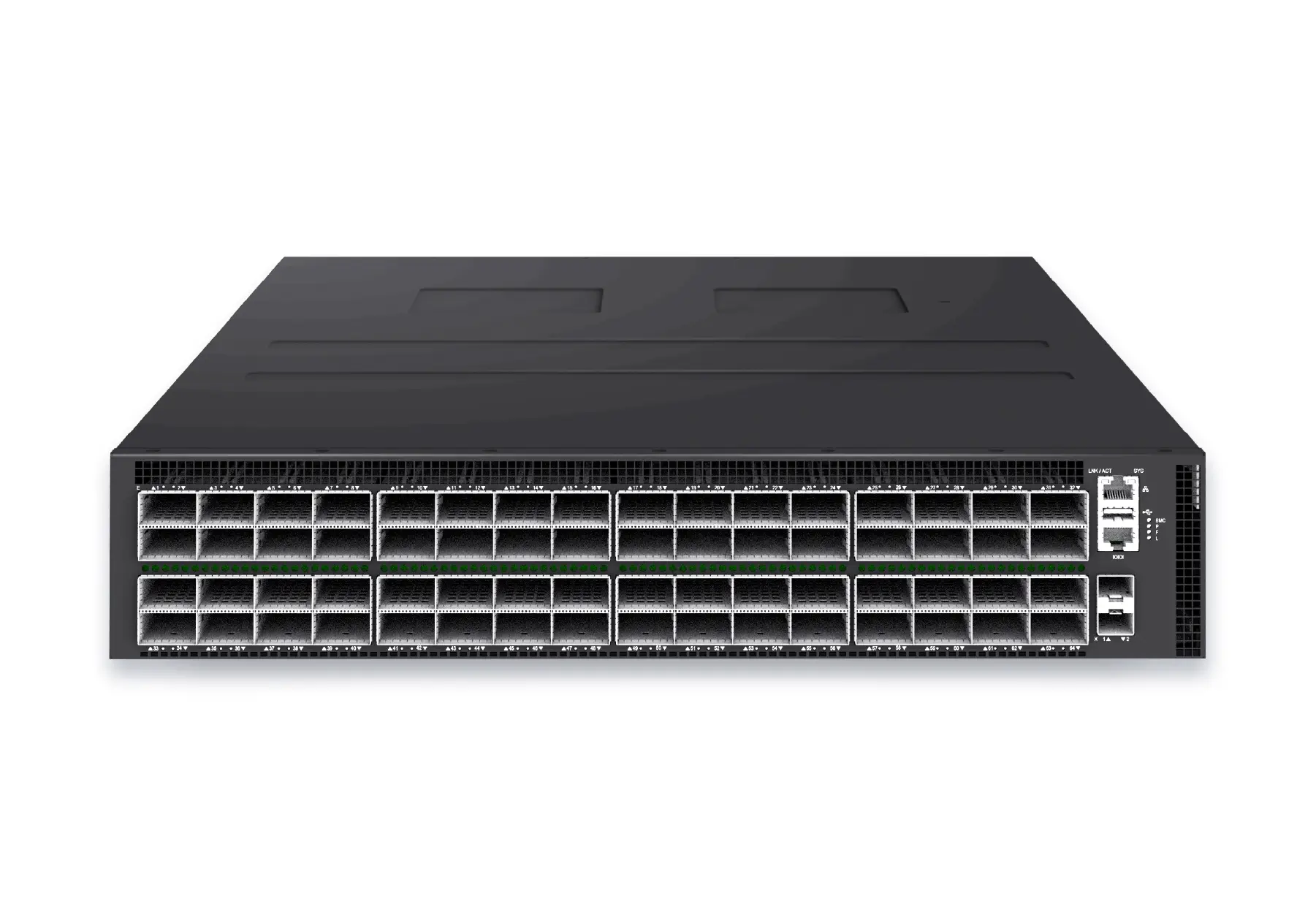 datacenter aiXS-DC-64X800-AI-G164-port 800G AI fabric switch for large-scale GPU clusters, HPC backbones, and ultra-high-throughput data center networks.View product
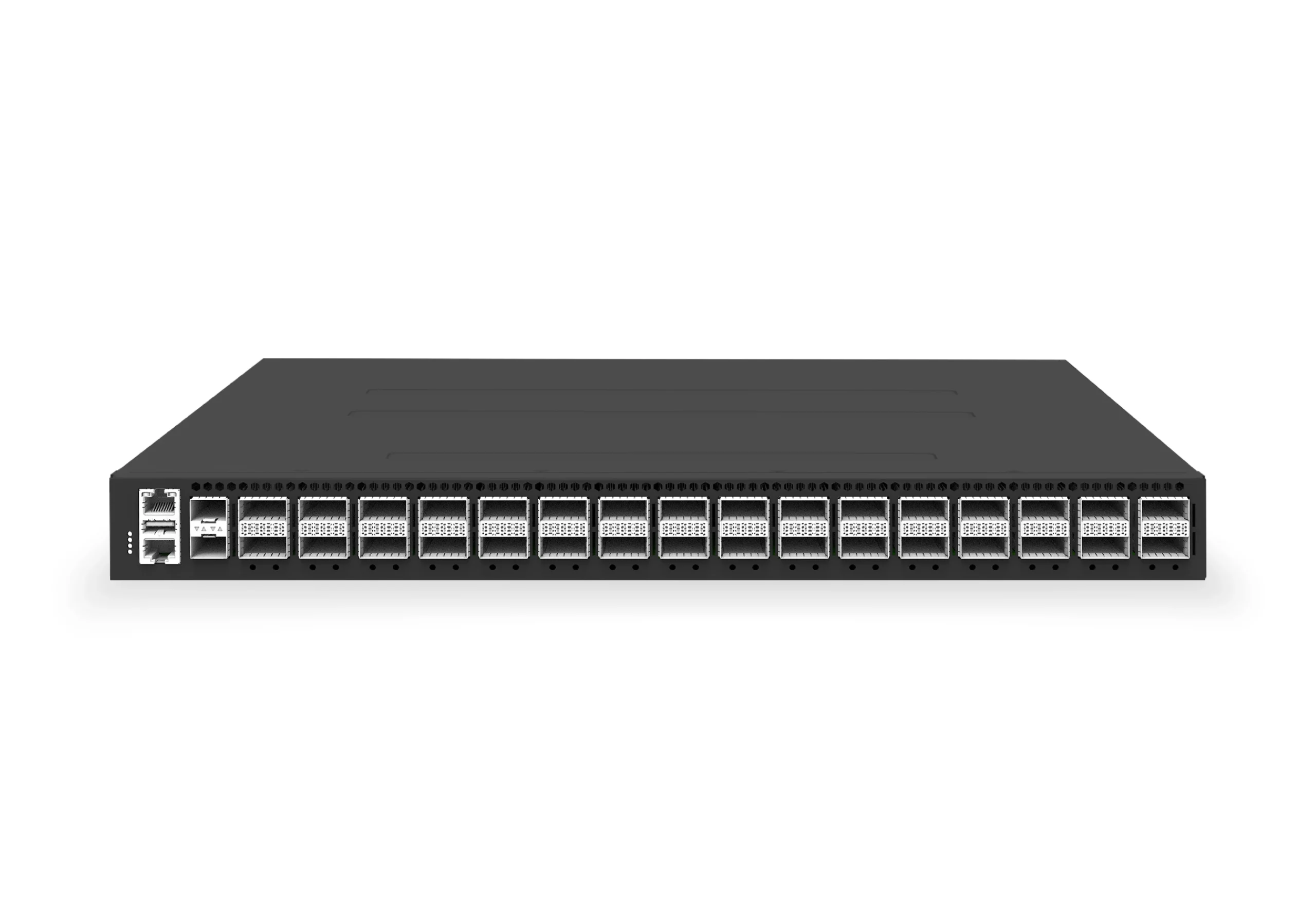 datacenter aiXS-DC-32X400-SP-G232-port 400G spine/core switch for high-capacity data center fabrics and AI-ready backbones.View product
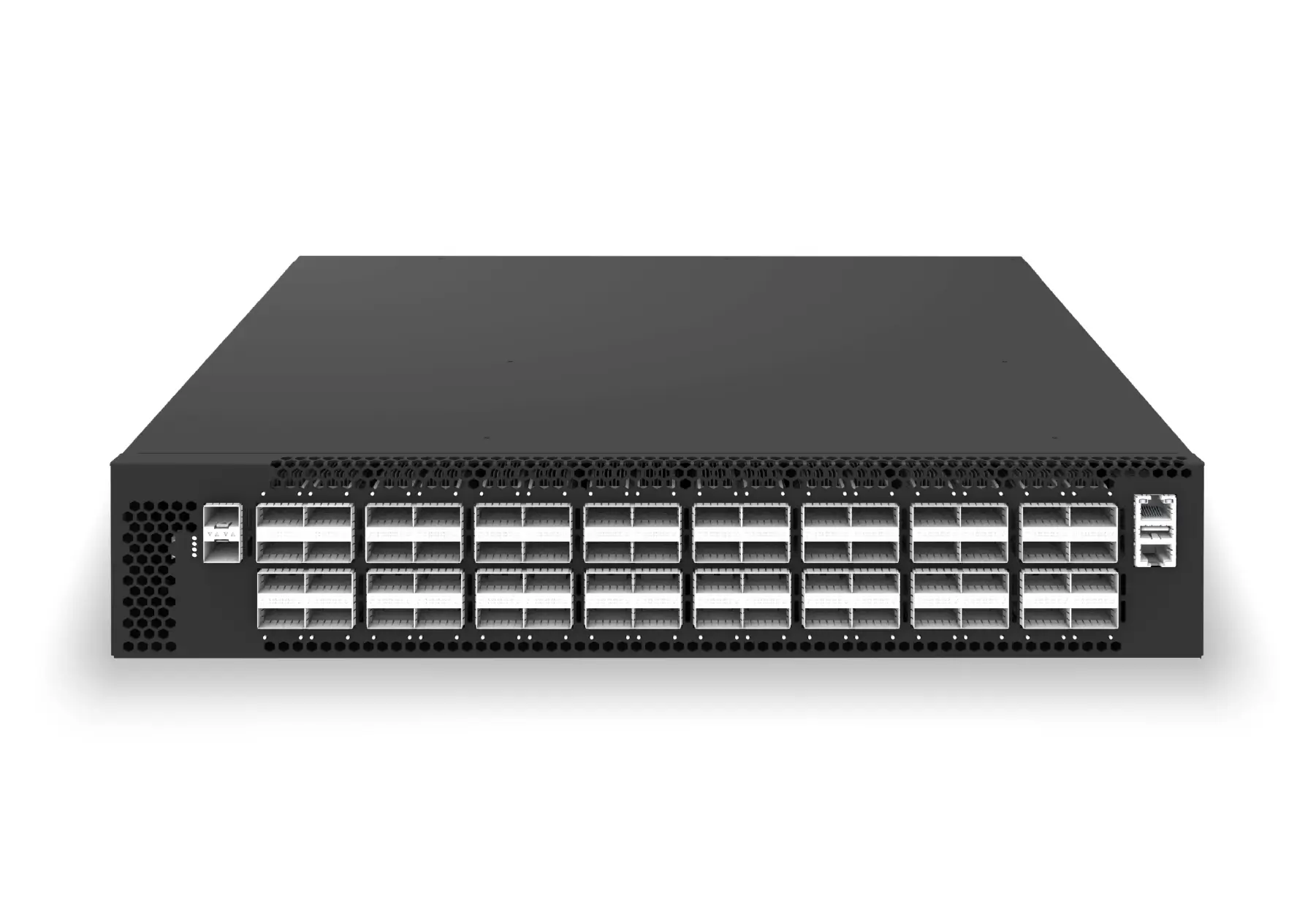 datacenter aiXS-DC-64X200-LS-G164-port 200G leaf/spine switch for high-bandwidth storage, compute, and scale-out data center fabrics.View product
Continue reading
Related articles
 Technical ArticleHow Private AI Inference Is Reshaping Australian Data CentresEngineering guide to private AI inference networking for Australian enterprises, covering SONiC, RoCE, NVMe-oF, GPUDirect Storage, telemetry, and sovereignty.Read article
 Technical ArticleSONiC Gains Ground in AI Data Center Fabrics: What Australian Network Buyers Should KnowAnalysis of SONiC for AI data center Ethernet fabrics, covering architecture, RoCE v2 readiness, telemetry, support, and Australian buyer risk.Read article
 Technical ArticleDesigning GPU Backend Fabrics with RoCE v2: How SONiC 400G/800G Switches Transform AI Data CentersEngineering guide for AI fabric buyers covering RoCE, SONiC, telemetry, optics, support ownership, and deployment validation.Read article