In brief
AI workload growth, colocation expansion, and vendor lock-in costs are pushing Australian data center operators toward SONiC-based open networking.
Key takeaways
- Most Australian enterprise and colocation data centers still run proprietary network operating systems from a small number of incumbent vendors.
- GPU cluster backends, inference pipelines, and high-bandwidth storage fabrics demand low-latency, lossless Ethernet with RoCE v2, DCBX, and real-time telemetry.
- The question for Australian buyers is no longer whether SONiC works. It is whether their current vendor stack can keep pace with AI infrastructure demands without inflating cost and limiting hardware choice.
The Proprietary Stack Is the Default in Australia. That Is Starting to Cost More.
Most Australian enterprise and colocation data centers still run proprietary network operating systems from a small number of incumbent vendors. That architecture worked when traffic patterns were predictable and hardware refresh cycles stretched to seven or ten years. AI workloads are breaking that assumption.
GPU cluster backends, inference pipelines, and high-bandwidth storage fabrics demand low-latency, lossless Ethernet with RoCE v2, DCBX, and real-time telemetry. Proprietary NOS licensing models add cost and complexity exactly where buyers need flexibility. SONiC, the Linux Foundation-backed open source network operating system, has become the production-proven alternative at hyperscale globally.
The question for Australian buyers is no longer whether SONiC works. It is whether their current vendor stack can keep pace with AI infrastructure demands without inflating cost and limiting hardware choice.
What SONiC Actually Delivers: Source-Backed Fundamentals
SONiC is not a lab experiment. According to the SONiC Foundation and the project’s GitHub repository, it is a free and open-source NOS based on Linux that runs on switches from multiple vendors and multiple ASIC families. The project is licensed under Apache 2.0 and has accumulated nearly 3,000 commits and over 1,300 forks, indicating active community development.
Key technical characteristics from the source documentation include:
- Multi-vendor hardware support through the Switch Abstraction Interface (SAI), which decouples the NOS from any single ASIC vendor.
- Containerized architecture where each network function (BGP, RDMA, LLDP, telemetry) runs in its own Docker container, enabling isolated fault domains and independent upgrades.
- Production-hardened in cloud environments, with the SONiC Foundation explicitly stating the system has been battle-tested in the data centers of the largest cloud service providers.
- Full suite of network functionality including BGP and RDMA, both critical for AI fabric and GPU backend networks.
NVIDIA’s Ethernet switching documentation further validates this. NVIDIA lists Pure SONiC alongside Cumulus Linux as a supported NOS choice for its Spectrum switch family, including the Spectrum-4 SN5000 and Spectrum-6 SN6000 series designed for AI workloads at up to 800 Gb/s per port.
This is not fringe technology. SONiC is an accepted production NOS for the same class of switches that power hyperscale AI clusters.
Why Australia Is at an Inflection Point
Australia’s data center market is expanding. Colocation providers in Sydney and Melbourne are adding capacity to serve cloud region demand, sovereign data requirements, and AI inference proximity. Simultaneously, enterprise buyers are evaluating private AI infrastructure for use cases including RAG pipelines, private LLM hosting, and multimodal AI services.
This convergence creates a specific networking pressure: traditional campus-grade or monolithic switching architectures cannot deliver the deterministic low-latency, lossless fabric that RoCE v2 and GPU backend networks require.
The Vendor Lock-In Cost Problem
Proprietary NOS licensing carries direct and indirect costs that become visible at AI fabric scale:
- Per-switch software license fees that scale linearly with fabric size.
- Hardware coupling that forces buyers to source switches, optics, and support from the same vendor ecosystem.
- Limited ability to customize or extend network telemetry, automation, and traffic engineering.
- Upgrade timelines tied to vendor roadmaps rather than buyer urgency.
SONiC eliminates the NOS licensing line item entirely. It allows buyers to select best-of-breed hardware from multiple switch vendors and ASIC platforms, then standardize on a single open NOS across the fabric.
What Buyers Should Evaluate: A SONiC Readiness Checklist
Australian data center operators and enterprise network teams considering SONiC-based infrastructure should assess the following:
| Evaluation Area | What to Verify | Why It Matters |
|---|---|---|
| ASIC and switch compatibility | SAI compatibility for target hardware | Multi-vendor freedom depends on SAI support |
| RoCE v2 and lossless fabric support | DCBX, PFC, ECN, Fast CNP configuration | AI backend networks require lossless RDMA transport |
| EVPN-VXLAN overlay capability | Multi-tenant segmentation and mobility | Colocation and enterprise segmentation requirements |
| Telemetry and observability | INT, gNMI, streaming telemetry support | AI fabric health monitoring and troubleshooting |
| Optical transceiver compatibility | 100G/400G/800G optics interop | Open optics prevent vendor markup on fiber plants |
| Operational tooling | NETCONF/YANG, Ansible, CI/CD integration | Day-2 operations at fabric scale |
| Support model | Community, vendor, or hybrid support | Enterprise buyers need escalation paths |
xSONiC’s product families map directly to several of these evaluation areas. The data center AI switch portfolio covers spine-leaf switching with Enterprise SONiC at 100G/400G/800G. Bare-metal switches provide the open hardware foundation for custom NOS deployments. Optical transceivers offer SFP through OSFP form factors without proprietary lock-in on the fiber plant.
Where xSONiC Fits: Not Just Hardware, but a Fabric Strategy
xSONiC positions itself as an open networking infrastructure brand. For Australian buyers, this means access to:
- Data Center AI Switches for spine-leaf AI fabrics with Enterprise SONiC, RoCE v2, and low-latency forwarding.
- Data Center AI Switches for engineering-led teams that want full NOS control, including SONiC image builds.
- Optical Transceivers covering SFP28, QSFP28, QSFP-DD, and OSFP form factors for 25G to 800G interconnects.
- AI Fabric and GPU Backend Fabric solution guidance for end-to-end cluster design.
- RoCE v2 and EVPN-VXLAN solution pillars that address the two most critical fabric requirements for AI and multi-tenant workloads.
This is not about swapping one vendor for another. It is about moving to an open infrastructure model where the NOS, hardware, optics, and tooling can be selected and evolved independently.
SONiC Adoption Readiness Matrix
Adoption should be measured by operational readiness, not by whether a switch can boot SONiC in a lab. Australian buyers should keep the first production step small enough to validate evidence but large enough to expose real operations risk.
| Adoption gate | Evidence to collect | Acceptance threshold | Rework trigger |
|---|---|---|---|
| Platform support | Switch SKU, ASIC family, SAI version, SONiC image, and optics matrix | 2 switch models and 3 optics types validated in the same lab | Platform appears on a roadmap but not in a tested build |
| AI fabric function | BGP, RoCE v2, ECN, PFC, telemetry, and rollback records | 100G/400G/800G links pass traffic and failure tests without hidden drops | RDMA works only without congestion or failure injection |
| Operations | Config backup, image upgrade, rollback, log bundle, NOC runbook | 1 upgrade and 1 rollback completed by the buyer’s operations team | Vendor engineer must perform routine recovery |
| Support | Named owner for hardware, NOS, ASIC, optics, and security patches | P1 response path documented for Australian business hours and after-hours | Support boundary is unclear across suppliers |
| Commercial control | 3-year hardware, optics, support, training, and automation cost model | At least 2 sourcing options for critical switch or optics SKUs | Open NOS savings are offset by unplanned integration cost |
The Honest Limitations of This Analysis
The limitation is evidence depth. Public sources can confirm architecture direction and ecosystem momentum, but buyers still need supplier-specific proof for the selected SKU, image version, optics, feature set, support process, and production operating model.
What Happens Next
The question is not whether SONiC works at scale. The source evidence is clear: it does. The question is whether Australian buyers will adopt it before their competitors do.
Engineering FAQ
What proves SONiC adoption is ready for production? The buyer should prove switch/NOS compatibility, optics support, RoCE or EVPN feature behaviour, telemetry, rollback, and support ownership on the exact platform that will ship.
Where do Australian teams usually underestimate adoption effort? The hidden work is operations: image lifecycle, config backup, support escalation, optics replacement, telemetry integration, and training for Linux-based network troubleshooting.
Should SONiC be adopted everywhere at once? No. Start with a bounded fabric role, such as an AI test pod, packet broker layer, or new spine-leaf segment, then expand after failure recovery and support evidence are proven.
Related xSONiC Resources
Sources Reviewed
- Ethernet Network Adapters - ConnectX NICs | NVIDIA
- NVIDIA BlueField Data Processing Unit
- NVIDIA Spectrum-X Ethernet Platform
- OpenConfig gNMI Specification
- OpenConfig
- RFC 7950 - The YANG 1.1 Data Modeling Language
- RFC 6241 - Network Configuration Protocol (NETCONF)
- SONiC Project Documentation
- Broadcom Ethernet Switching
- Marvell Switching
- NVIDIA Ethernet Switching
- Open Compute Networking
- SONiC GitHub
- SONiC Foundation
Product fit
Products referenced for evaluation
These products are referenced for evaluation context in the article. Confirm workload, port, optics, software, interoperability, and support requirements against the exact deployment before procurement.
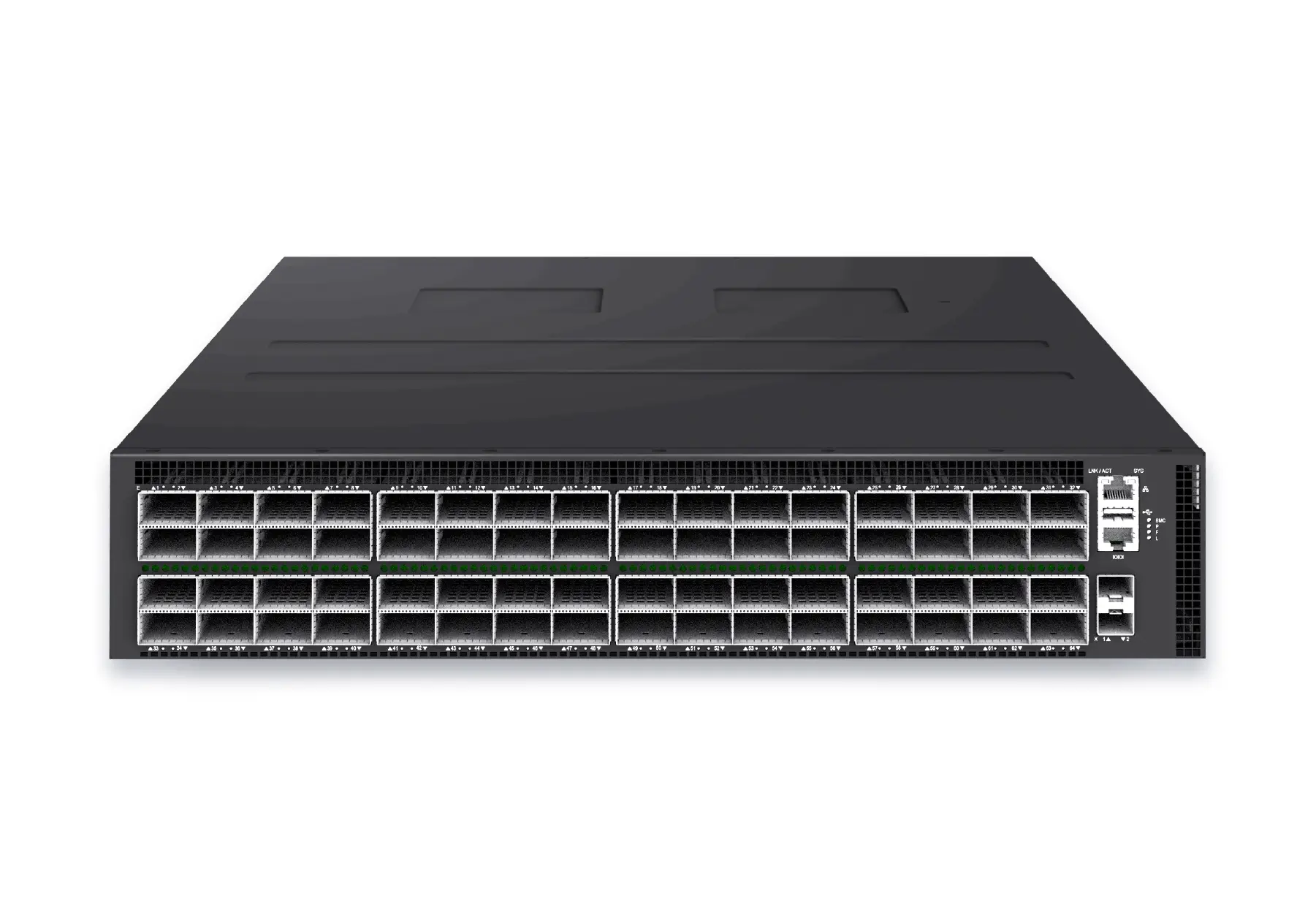 datacenter aiXS-DC-64X800-AI-G164-port 800G AI fabric switch for large-scale GPU clusters, HPC backbones, and ultra-high-throughput data center networks.View product
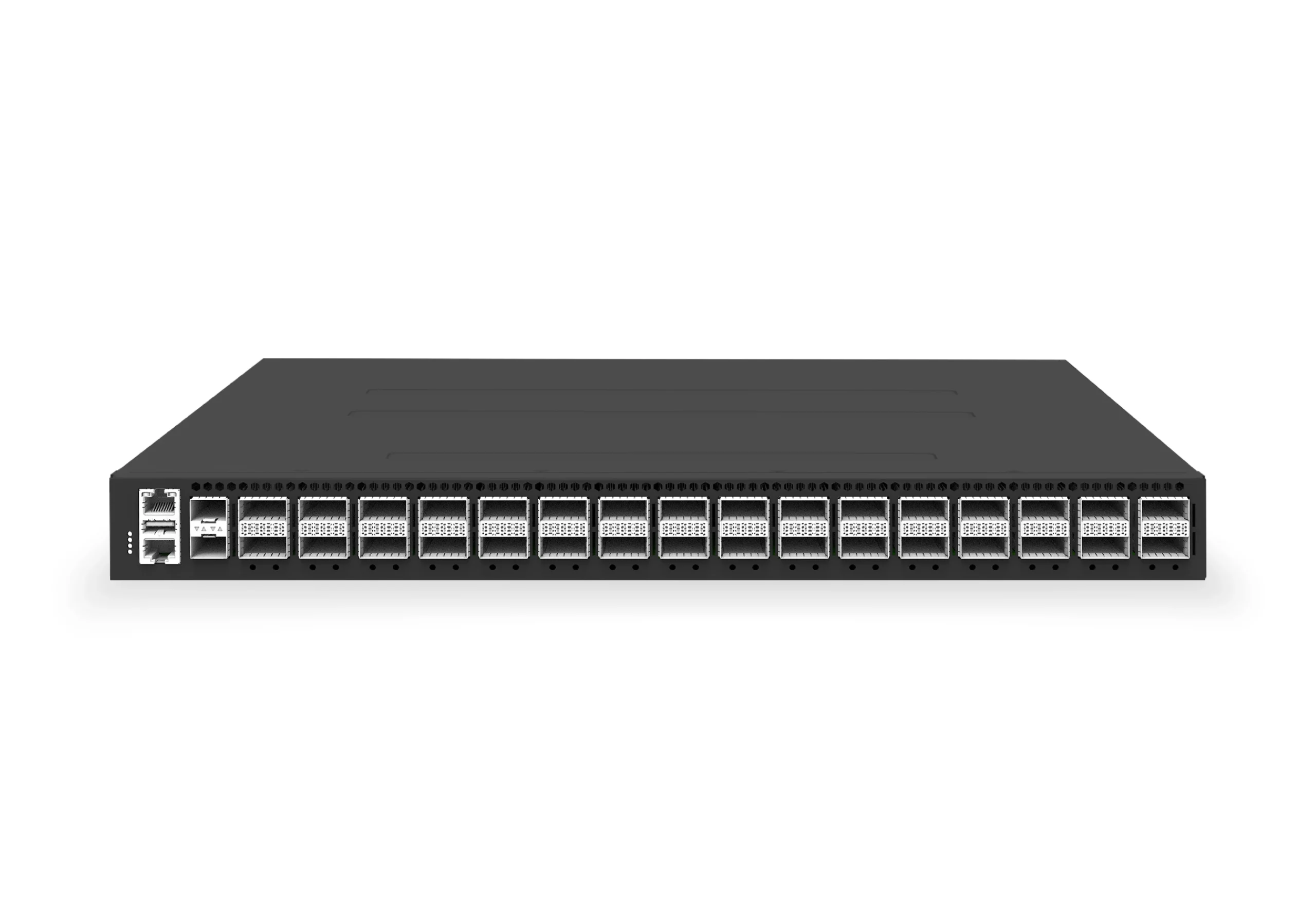 datacenter aiXS-DC-32X400-SP-G232-port 400G spine/core switch for high-capacity data center fabrics and AI-ready backbones.View product
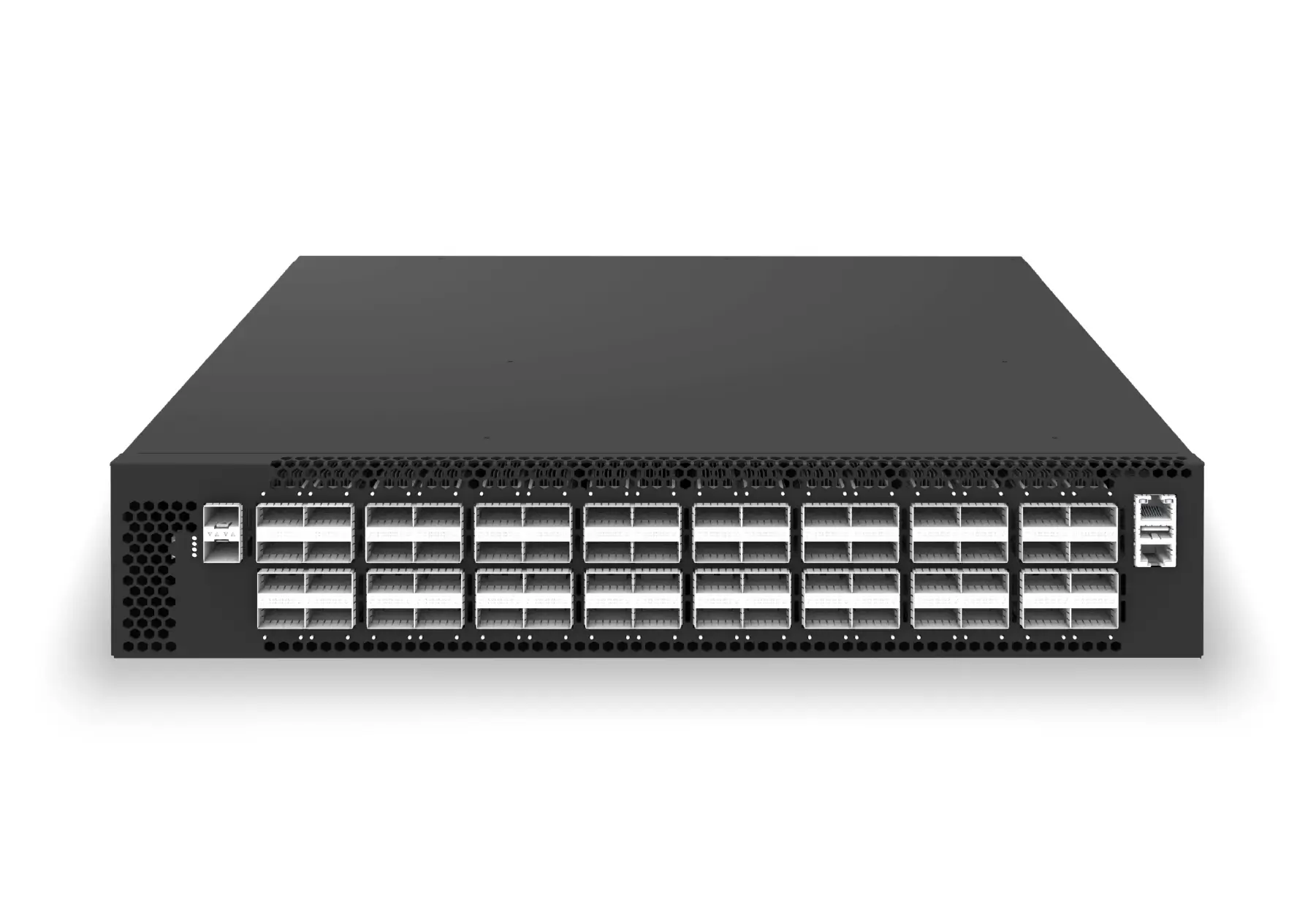 datacenter aiXS-DC-64X200-LS-G164-port 200G leaf/spine switch for high-bandwidth storage, compute, and scale-out data center fabrics.View product
Continue reading
Related articles
 Technical ArticleWhat Enterprise Buyers Actually Get From Open Networking Support: A SONiC Reality CheckA SONiC support reality check for Australian enterprise buyers covering community, commercial distribution, hardware, integration, SLA, and escalation.Read article
 Technical ArticleWarm Reboot and Fast Reboot in SONiC: How to Validate High Availability Without a Full OutageEngineering guide to validating SONiC warm reboot and fast reboot, covering ASIC support, control-plane recovery, traffic loss, telemetry, and rollback.Read article
 Technical ArticleSONiC Security Hardening: A Practical Guide for Data Center Network TeamsA practical SONiC security hardening guide for data center teams covering management access, patching, logging, RBAC, image provenance, telemetry, and audit evidence.Read article