
In brief
A practical SONiC security hardening guide for data center teams covering management access, patching, logging, RBAC, image provenance, telemetry, and audit evidence.
Key takeaways
- When your data center fabric runs on an open-source network operating system, security is both a shared responsibility and a shared advantage.
- This guide walks through the security hardening fundamentals that matter for SONiC-based data center switches, from the platform's built-in isolation model to Linux-native controls you can apply today.
- SONiC takes a different approach to switch software. Instead of bundling every network function into a single monolithic image, SONiC runs each major function -- BGP, LLDP, DHCP relay, SNMP, database services, and more -- in its own Docker container on a Debian-based Linux host.
When your data center fabric runs on an open-source network operating system, security is both a shared responsibility and a shared advantage. SONiC (Software for Open Networking in the Cloud) ships with a container-based architecture that gives network teams granular control over each network function — and that architecture changes the security calculus compared to monolithic proprietary switch OSes.
This guide walks through the security hardening fundamentals that matter for SONiC-based data center switches, from the platform’s built-in isolation model to Linux-native controls you can apply today.
Why SONiC’s Architecture Matters for Security
SONiC takes a different approach to switch software. Instead of bundling every network function into a single monolithic image, SONiC runs each major function — BGP, LLDP, DHCP relay, SNMP, database services, and more — in its own Docker container on a Debian-based Linux host. This containerized design is not just a development convenience. It is a structural security property.
When one container is compromised or crashes, the blast radius is contained. An issue in the SNMP agent, for example, does not automatically give an attacker access to the BGP routing process or the management database. Each container has its own filesystem, its own process space, and its own network namespace. This isolation mirrors what security teams already expect from microservice architectures in application environments.
The SONiC Foundation, a Linux Foundation project, describes SONiC as offering ‘better fault isolation, easier debugging and troubleshooting, simplified upgrades and maintenance, and enhanced scalability’ through its modular Docker-based design. That modularity extends to security: you can audit, patch, or replace individual containers without rebuilding the entire switch image.
For Australian data center operators evaluating open networking, this is a meaningful differentiator. A proprietary NOS that bundles all functions into a single binary gives you one attack surface you cannot inspect. SONiC gives you discrete, auditable components.
The SONiC Security Process: Open Source as a Security Model
The SONiC project maintains a published security policy in its GitHub repository under the SECURITY.md file, and the SONiC Foundation lists a Security Process among its community resources. This means vulnerabilities in SONiC follow a structured disclosure and response workflow rather than depending on a single vendor’s internal timeline.
In practice, the open-source security model for SONiC means:
- Transparent code review. Any organization can audit the SONiC source code. Security researchers, enterprise buyers, and cloud providers all contribute to identifying and fixing issues.
- Community-driven patching. Security fixes are visible as pull requests in the SONiC GitHub repositories. Network teams can track exactly what was changed and why.
- No security through obscurity. Unlike closed-source NOS options where you rely entirely on the vendor to find and fix vulnerabilities, SONiC lets your own security team inspect the code running on your switches.
- Multi-vendor ecosystem. SONiC runs on switches from multiple hardware vendors and ASIC platforms. This diversity means a vulnerability in one vendor’s hardware abstraction layer does not necessarily affect your entire fleet.
This does not mean open-source software is automatically more secure. It means the security posture is auditable. For regulated industries in Australia — financial services, healthcare, government — that auditability can matter as much as the vulnerability count.
Practical Security Hardening Steps for SONiC Switches
The following hardening practices apply to SONiC-based data center switches. Some are SONiC-specific, and others are standard Linux security controls that SONiC inherits from its Debian base.
1. Restrict Management Access
SONiC supports standard Linux access controls. At minimum:
- Disable password-based SSH authentication. Use key-based authentication only.
- Restrict management plane access to a dedicated out-of-band management network or VLAN.
- Use iptables or nftables rules to limit which source IPs can reach the switch management interfaces.
- Disable unused management services (for example, if you do not use SNMP, do not leave the SNMP container running).
2. Apply the Principle of Least Privilege
SONiC’s configuration is stored in a centralized Redis-based database (Config DB) that individual containers query. Review which containers and which users have write access to configuration. In production environments:
- Restrict sudo and root access to the Linux host.
- Use role-based access where your automation framework supports it.
- Audit container-level permissions to ensure only the database and BGP containers, for example, can modify routing state.
3. Keep Containers and the Base OS Patched
Because SONiC runs on Debian Linux, standard Debian security patching applies. SONiC releases include updated base images, but your operational practice should include:
- Subscribing to SONiC release announcements and security advisories.
- Tracking the Debian security tracker for CVEs affecting packages in the SONiC base image.
- Testing and applying SONiC image upgrades on a regular cadence, not just for feature releases.
4. Secure the Southbound and Data Plane
SONiC switches in a data center fabric handle both management plane and data plane traffic. Hardening the data plane means:
- Using EVPN-VXLAN with proper tenant isolation to prevent lateral movement between network segments.
- Enabling control plane policing to protect BGP, OSPF, and other routing protocols from denial-of-service attacks.
- Applying ACLs at the hardware level through SONiC’s SAI (Switch Abstraction Interface) to filter unwanted traffic before it reaches the CPU.
5. Use NETCONF and YANG for Configuration Integrity
SONiC supports NETCONF and YANG data models for programmatic configuration management. Using NETCONF with transport-layer security (TLS or SSH) rather than ad-hoc CLI scripting provides:
- Configuration transactions with rollback capability.
- Auditable configuration changes with timestamps and source attribution.
- Validation against YANG models before configuration is applied.
This is particularly relevant for teams running AI fabric or spine-leaf topologies at scale, where manual CLI changes are both error-prone and hard to audit.
6. Monitor and Log
SONiC exposes system logs through standard Linux logging mechanisms (syslog, journald). For security hardening:
- Forward logs to a centralized SIEM or log aggregation platform.
- Monitor for authentication failures, configuration changes, and container restarts.
- Use SONiC’s telemetry capabilities (gNMI, gNOI) to build real-time visibility into switch state.
What SONiC Security Hardening Cannot Do Alone
Security hardening is necessary but not sufficient. A hardened SONiC switch in a poorly segmented network is still exposed. A few things to keep in mind:
- Physical security of the switch hardware is your responsibility. SONiC cannot protect against someone with console access.
- Supply chain validation for the switch hardware and the SONiC image itself should be part of your procurement process. Verify image checksums. Source hardware from trusted suppliers.
- Incident response planning should include network devices. Know how you would isolate and recover a compromised switch in your SONiC fleet.
SONiC Security in the Australian Data Center Context
Australian data center operators face specific regulatory and operational pressures: the Australian Cyber Security Centre (ACSC) Essential Eight framework, the Security of Critical Infrastructure Act, and APRA CPS 234 for financial services. SONiC’s open-source, auditable model aligns well with the transparency requirements these frameworks encourage.
However, compliance is not automatic. Hardening SONiC switches to meet these frameworks requires documented configurations, regular patching, and evidence of control effectiveness — the same discipline you would apply to any infrastructure component.
For organizations moving from proprietary switch platforms to open networking, the security conversation often shifts from ‘what does the vendor guarantee?’ to ‘what can we verify ourselves?’ SONiC gives you the tools to verify. The hardening practices in this guide are your starting point.
Security Hardening Acceptance Matrix
A hardening guide becomes useful only when it produces evidence. Data center teams should convert SONiC controls into a baseline that can be tested during commissioning, reviewed every quarter, and repeated after every image upgrade.
| Control Area | Baseline Requirement | Evidence to Capture | Rework Trigger |
|---|---|---|---|
| Management access | SSH keys only, management VRF or OOB network, restricted source IPs, no shared admin accounts | User list, SSH config, ACL or firewall policy, authentication logs for the last 30 days | Password login remains enabled or management is reachable from production VLANs |
| Privilege and RBAC | Named accounts, least privilege, controlled sudo, separate automation identity | Account review, sudoers policy, automation token owner, change approval record | Root access is shared or automation uses a human admin account |
| Image and supply chain | Approved SONiC image, checksum or signature process, vendor release notes, rollback image | Image version, hash record, release notes, rollback test result, hardware SKU mapping | Switches run mixed untracked images or unsupported community builds in production |
| Patch and CVE process | Monthly advisory review, emergency patch path, tested maintenance window, rollback runbook | CVE review log, 90-day patch ageing report, pilot upgrade evidence | Critical CVEs have no owner or patch ageing exceeds agreed SLA |
| Logging and telemetry | Central syslog/SIEM, container restart alerts, auth failure alerts, config-change records | 24-hour log sample, alert mapping, telemetry export, failed-login test | Events remain only on the switch or cannot be correlated by time and device |
| Configuration integrity | Version-controlled baseline, NETCONF/YANG or reviewed automation, backup and restore | Golden config, diff record, restore test, change ticket | Manual CLI changes cannot be traced or reverted |
| Incident response | Isolation command set, config capture, image rollback, escalation owner | 1-hour tabletop exercise or pilot incident test | Team cannot state who owns hardware, NOS, optics, and controller escalation |
For Australian regulated environments, this matrix maps well to the evidence mindset behind ACSC Essential Eight maturity work, APRA CPS 234 control assurance, and internal audit. It does not make SONiC “compliant” by itself; it gives network teams a defensible control set to prove.
Engineering Evidence Floor
For SONiC and open networking articles, the acceptance standard is operational proof, not community momentum. The evidence package should name the switch SKU, ASIC, SAI version, ONIE status, SONiC image, optics matrix, automation interface, support path, and rollback procedure. A practical pilot should run for 30 days, include 3 automated configuration changes, validate 100G/400G links where relevant, and prove that a P1 evidence bundle can be assembled within 2 hours.
| Evidence area | What to validate | Acceptance gate | Rework trigger |
|---|---|---|---|
| Platform | SKU, ASIC, ONIE, SAI, image, and optics | 2 platforms boot, upgrade, and rollback | Hardware support is assumed |
| Automation | Source of truth, API/gNMI/NETCONF, backup, and diff | 3 changes pass state readback | CLI drift becomes normal |
| Operations | Logs, telemetry, failure runbook, and escalation owner | P1 bundle ready within 2 hours | Fault isolation depends on one engineer |
| Lifecycle | Patch cadence, CVE process, spare plan, and support SLA | 12 months plan approved | Security and RMA ownership is unclear |
| Commercial | Hardware, support, optics, training, and migration labour | Risk-adjusted TCO is documented | Savings vanish after rework |
Engineering FAQ
Is open-source SONiC less secure than a proprietary switch OS? Not inherently. SONiC is inspectable and patchable, but the buyer still needs disciplined image control, hardening, monitoring, and support ownership. Openness improves auditability; it does not replace operations.
How often should SONiC hardening be reviewed? Review access, images, logs, and patch status at least monthly for production data centers, with a deeper quarterly control review. After every NOS upgrade, repeat the management access, telemetry, rollback, and config restore tests.
What evidence should be ready for an audit? Keep image version records, checksums, user reviews, configuration diffs, CVE review logs, SIEM samples, backup/restore evidence, and incident-response ownership. The strongest security posture is the one you can prove quickly.
Where does xSONiC fit in a security baseline? xSONiC should provide the supported switch image, product documentation, validated update path, telemetry exposure, and escalation workflow. The buyer remains responsible for account policy, monitoring integration, and change control.
Related xSONiC Resources
Sources Reviewed
- OpenConfig gNMI Specification
- OpenConfig
- RFC 7950 - The YANG 1.1 Data Modeling Language
- RFC 6241 - Network Configuration Protocol (NETCONF)
- ACSC Essential Eight
- APRA CPS 234 Information Security
- OAIC Notifiable Data Breaches
- SONiC Security Policy
- SONiC Project Documentation
- Open Compute Networking
- SONiC GitHub
- SONiC Foundation
Product fit
Products referenced for evaluation
These products are referenced for evaluation context in the article. Confirm workload, port, optics, software, interoperability, and support requirements against the exact deployment before procurement.
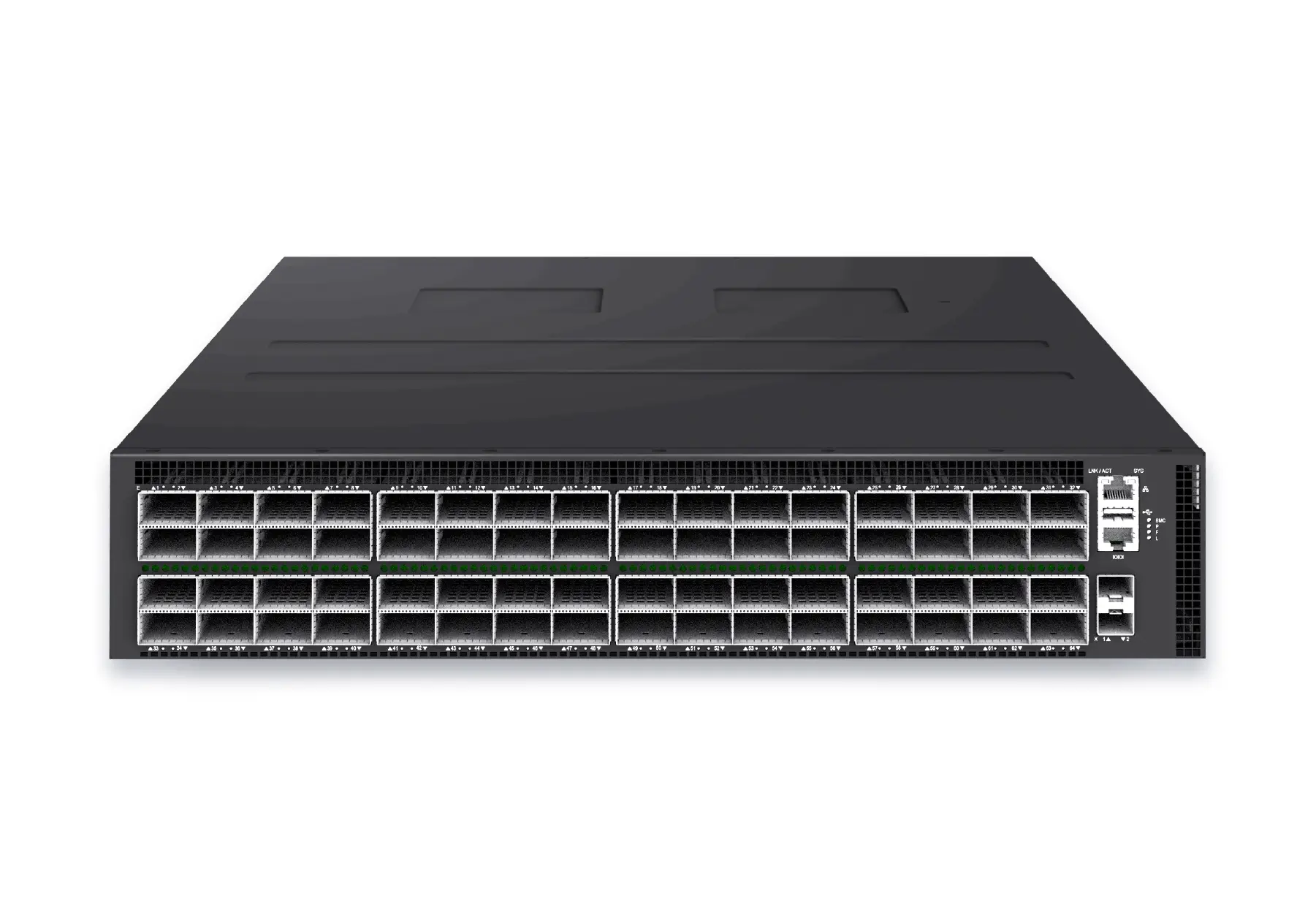 datacenter aiXS-DC-64X800-AI-G164-port 800G AI fabric switch for large-scale GPU clusters, HPC backbones, and ultra-high-throughput data center networks.View product
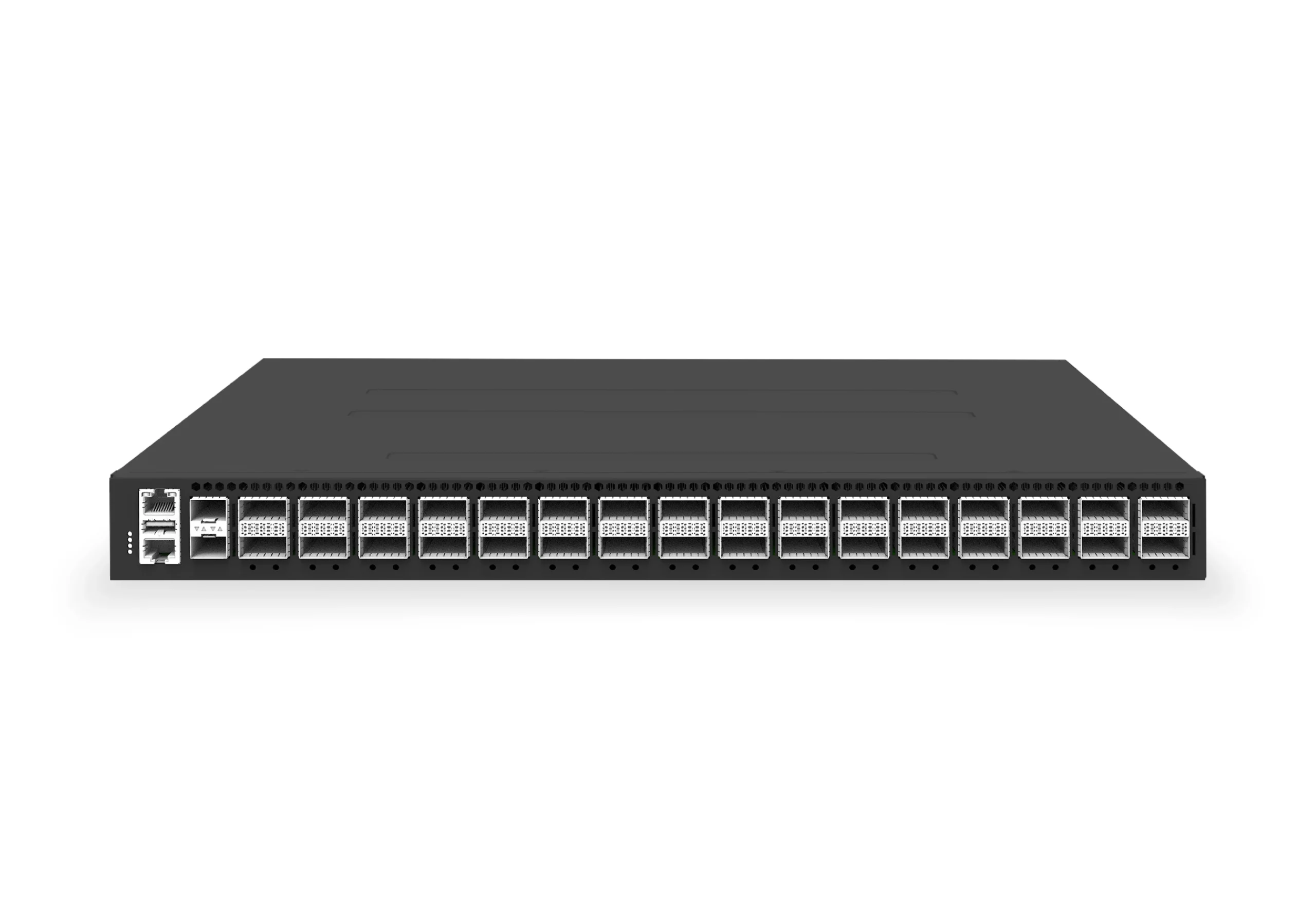 datacenter aiXS-DC-32X400-SP-G232-port 400G spine/core switch for high-capacity data center fabrics and AI-ready backbones.View product
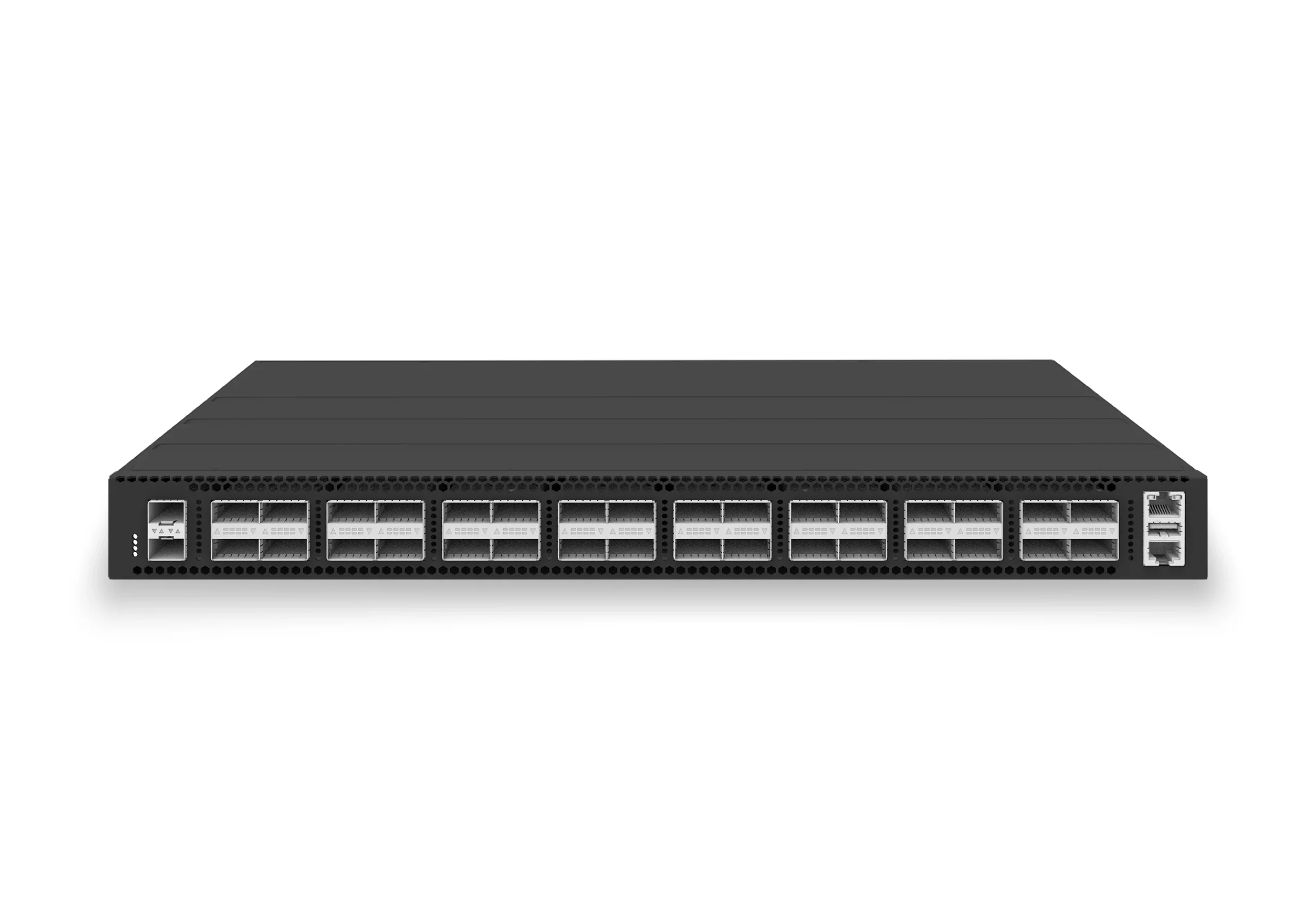 datacenter aiXS-DC-32X100-LS-G232-port 100G leaf/spine switch for VXLAN fabrics, RoCE-ready workloads, and tenant-scale routing.View product
Continue reading
Related articles
 Technical ArticleWhat Enterprise Buyers Actually Get From Open Networking Support: A SONiC Reality CheckA SONiC support reality check for Australian enterprise buyers covering community, commercial distribution, hardware, integration, SLA, and escalation.Read article
 Technical ArticleWarm Reboot and Fast Reboot in SONiC: How to Validate High Availability Without a Full OutageEngineering guide to validating SONiC warm reboot and fast reboot, covering ASIC support, control-plane recovery, traffic loss, telemetry, and rollback.Read article
 Technical ArticleSONiC Adoption Signals a Shift in Australia's Data Center Networking Strategy as AI Workloads ScaleAI workload growth, colocation expansion, and vendor lock-in costs are pushing Australian data center operators toward SONiC-based open networking.Read article