
In brief
A SONiC support reality check for Australian enterprise buyers covering community, commercial distribution, hardware, integration, SLA, and escalation.
Key takeaways
- If you have ever sat in a network refresh evaluation meeting, you know the moment.
- For open networking, the perception is different. Enterprise teams hear "open source" and assume there is no support, no accountability, and no phone number to call.
- This article breaks down the support stack that enterprise buyers actually interact with when deploying SONiC-based infrastructure, maps it to real operational scenarios, and identifies where the gaps still exist.
The Support Question That Stops Most Enterprise Buyers
If you have ever sat in a network refresh evaluation meeting, you know the moment. The CTO asks: “Who do we call at 2 a.m. when the spine switch drops?” For traditional single-vendor networking, the answer is straightforward — you call the vendor TAC, open a case, and wait in queue. The support contract is bundled with the hardware. The process is familiar.
For open networking, the perception is different. Enterprise teams hear “open source” and assume there is no support, no accountability, and no phone number to call. That perception is outdated, but it persists because the support model is genuinely layered rather than monolithic. Understanding those layers is the first step toward evaluating open networking for production workloads in your Australian campus or data center.
This article breaks down the support stack that enterprise buyers actually interact with when deploying SONiC-based infrastructure, maps it to real operational scenarios, and identifies where the gaps still exist.
What SONiC Actually Is (And Why the Support Model Matters)
SONiC — Software for Open Networking in the Cloud — is a free, open-source network operating system based on Linux that runs on switches from multiple hardware vendors and multiple ASIC families. It is a Linux Foundation project with a modular, container-based architecture where each network function runs in its own Docker container. This design provides fault isolation, simplified troubleshooting, and independent upgrade paths for individual components.
Key facts from the SONiC Foundation and the project’s GitHub repository:
- SONiC supports multi-vendor hardware through the Switch Abstraction Interface (SAI), which decouples the network operating system from the underlying silicon.
- The architecture is production-hardened in hyperscaler data centers. SONiC is not a lab experiment; it runs at scale in some of the largest cloud service providers in the world.
- It offers a full suite of network functionality including BGP, RDMA, and standard Linux tooling.
- The community is active and growing, with contributions from major chip vendors and networking companies.
For enterprise buyers, the critical point is this: SONiC’s open-source nature means the NOS itself is not tied to a single vendor’s support organization. The support you receive depends on which layer of the stack you are looking at, and which commercial partners you choose to work with.
The Four Layers of Open Networking Support
Enterprise buyers evaluating open networking for data center or campus deployments should understand that support is not a binary — “you have it” or “you do not.” It is a layered model.
Layer 1: Community Support
The SONiC community provides public issue tracking on GitHub, a community Slack channel, mailing lists, weekly community meetings, and an expanding wiki and documentation set. The GitHub repository shows hundreds of open issues and pull requests, which indicates active development but also means that bug resolution depends on community prioritization, not a commercial SLA.
For enterprise buyers, community support is useful for learning, evaluation, and non-production environments. It is not a substitute for a support contract when production traffic is flowing.
Layer 2: Commercial SONiC Distribution Support
Several vendors offer enterprise SONiC distributions with commercial support contracts. These typically include tested and validated images, backporting of security patches, phone and email support channels, and SLAs that cover response and resolution times. This is the layer that most closely mirrors the traditional vendor TAC model.
Layer 3: Hardware Vendor Support
When you deploy SONiC on commodity or branded switching hardware from any vendor, the hardware itself carries its own warranty and support terms. The separation of hardware and software support is a feature of open networking, not a bug. It means you can choose best-of-breed silicon and hold the hardware vendor accountable for physical failures, power supply issues, optics compatibility, and port-level problems independently of the NOS.
This model is well understood in the server world. Enterprise teams already buy servers from one vendor and run operating systems supported by another. Open networking applies the same principle to switches.
Layer 4: Integration and Solution Support
For complex deployments such as EVPN-VXLAN fabrics, RoCE v2 GPU backend networks, or campus refresh projects with PoE edge and MC-LAG, the integration layer matters as much as the individual components. Who validates the end-to-end design? Who tests firmware compatibility across optics, switches, and controllers? Who provides the deployment runbook?
This is where solution-level partners and value-added infrastructure providers close the gap. In the xSONiC ecosystem, integration support covers validated solution architectures, pre-tested configurations, and access to engineering resources that understand how SONiC, the hardware, and the network design interact in production.
What This Means for Australian Enterprise Buyers
The Australian enterprise networking market has specific characteristics that affect how buyers should evaluate open networking support:
Regulatory and compliance context. Australian enterprises in financial services, healthcare, and government face data sovereignty and compliance requirements. Open networking deployments must align with local standards. The open-source nature of SONiC provides auditability advantages — you can inspect the code — but compliance documentation and certifications still need to be verified at the solution level.
Skills availability. One common objection to open networking is the skills gap. SONiC is Linux-based and uses standard networking protocols like BGP and EVPN-VXLAN. Australian network engineers with Linux and data center protocol experience can transition to SONiC operations with structured training. The skills required are not exotic; they are the same skills that underpin modern network engineering, applied to an open platform.
Supply chain flexibility. Open networking’s multi-vendor hardware model gives Australian buyers supply chain resilience. You are not locked into a single manufacturer’s production schedule or pricing. This matters in a market where hardware lead times can be affected by geographic distance from manufacturing centers.
Comparing Support Models: Open Networking vs. Traditional Vendor
| Dimension | Traditional Single-Vendor | Open Networking with SONiC |
|---|---|---|
| Support channel | Single vendor TAC | Layered: community, commercial distribution, hardware vendor, solution partner |
| Hardware and NOS coupling | Tightly bundled | Separated via SAI abstraction |
| SLA enforcement | Through the vendor contract | Through commercial distribution and solution partner contracts |
| Upgrade path | Vendor-controlled release cycle | Community releases plus commercial distribution backports |
| Vendor lock-in | High | Low; hardware and software can be changed independently |
| Debugging transparency | Vendor-internal tools and processes | Open-source stack allows deep inspection with standard Linux tooling |
| Multi-vendor flexibility | Limited to approved partner ecosystem | Native; SAI enables cross-vendor hardware support |
The takeaway is not that open networking support is universally better or worse. It is that the model is different, and enterprise buyers need to understand the layers to set correct expectations and make informed procurement decisions.
Where the Support Gaps Still Exist
Honesty matters in this conversation. Open networking support has real gaps that enterprise buyers should plan for:
Feature parity. Not every feature available in a proprietary NOS is available in SONiC on day one. Enterprise buyers should validate that their specific feature requirements — campus features like PBR, virtual chassis, or policy enforcement, data center features like INT telemetry or specific EVPN-VXLAN topologies — are production-ready in the SONiC distribution they plan to deploy.
Single-pane management. Traditional vendors provide tightly integrated management platforms. In the open networking world, management and orchestration may require integration with NETCONF/YANG controllers, OpenConfig, or third-party NMS platforms. The AIDC Controller in the xSONiC ecosystem addresses this for unified fabric management, but buyers should evaluate the management experience alongside the data plane.
Edge case handling. When an obscure protocol interaction causes a production issue, the resolution path in an open networking stack may involve more parties (hardware vendor, NOS distribution, community contributors) than a single-vendor TAC case. Clear escalation agreements and defined ownership boundaries mitigate this, but buyers should negotiate these terms before deployment, not after an incident.
A Practical Evaluation Checklist for Enterprise Buyers
If your Australian enterprise team is evaluating open networking, work through these questions:
- What SONiC distribution will you run, and what is the commercial support contract behind it?
- What is the SLA for critical severity issues, and does it cover your operational hours in the AEST/AEDT time zone?
- Which hardware platforms are validated for your target SONiC distribution, and what is the hardware warranty process?
- For your specific solution design (for example, EVPN-VXLAN spine-leaf, campus PoE refresh, or AI fabric), is there a validated reference architecture and deployment runbook?
- Who owns escalation when the issue spans hardware, NOS, and network design?
- What training path exists for your operations team to build SONiC competence?
- What management and monitoring tools are included, and do they integrate with your existing NOC stack?
These are the same questions you should ask any networking vendor. Open networking does not change the questions; it changes where the answers come from.
Support Acceptance Gate
Convert the support discussion into explicit evidence. The buyer should know who owns a P1 incident at 2 a.m., whether first response is 2 hours or 24 hours, how hardware replacement works in Australia, and whether critical CVEs are triaged within 48 hours. Before go-live, rehearse 1 hardware RMA, 1 NOS rollback, 1 optics fault, and 1 escalation from integrator to distribution or ASIC owner. If the support chain cannot survive a rehearsal, it will not survive an outage.
The Bottom Line
The support model behind open networking is not a leap of faith. It is a structured, layered system that separates concerns in ways that give enterprise buyers more control and more choice. The trade-off is that buyers must do the work of understanding those layers and choosing their partners deliberately.
For Australian enterprise teams evaluating SONiC-based campus, data center, or AI infrastructure, the support question is real and deserves a clear answer. The answer is not “figure it out yourself” — it is “choose your support stack as carefully as you choose your hardware and software.”
If you want to discuss how xSONiC structures support for enterprise deployments in Australia, reach out to our team.
Contact xSONiC for an enterprise support consultation
Engineering FAQ
What does enterprise-grade open networking support include? It includes hardware RMA, supported SONiC image, SAI/ASIC escalation, optics compatibility, security patches, runbooks, and a named incident owner across all those layers.
What should be written into the support contract? Define P1 response, Australian support hours, RMA target, CVE triage window, supported image lifecycle, escalation path, and what happens when the incident spans hardware, NOS, optics, and design.
When is community support enough? Community support is useful for labs, learning, and non-critical testing. Production traffic needs a commercial or partner support path with clear ownership and response targets.
Related xSONiC Resources
Sources Reviewed
- IEEE 802.1Q Bridges and Bridged Networks
- IEEE 802.1AX Link Aggregation
- Ethernet Network Adapters - ConnectX NICs | NVIDIA
- NVIDIA BlueField Data Processing Unit
- NVIDIA Spectrum-X Ethernet Platform
- OpenConfig gNMI Specification
- OpenConfig
- RFC 7950 - The YANG 1.1 Data Modeling Language
- RFC 6241 - Network Configuration Protocol (NETCONF)
- ACSC Essential Eight
- OAIC Notifiable Data Breaches
- APRA CPS 234 Information Security
- NETSCOUT Network Packet Definition
- Cloudflare Network Packet Definition
- IEEE 802.11be Wireless LAN Standard
- IEEE 802.3bt Power over Ethernet
- SONiC Project Documentation
- Broadcom Ethernet Switching
- Marvell Switching
- NVIDIA Ethernet Switching
- Open Compute Networking
- SONiC GitHub
- SONiC Foundation
Product fit
Products referenced for evaluation
These products are referenced for evaluation context in the article. Confirm workload, port, optics, software, interoperability, and support requirements against the exact deployment before procurement.
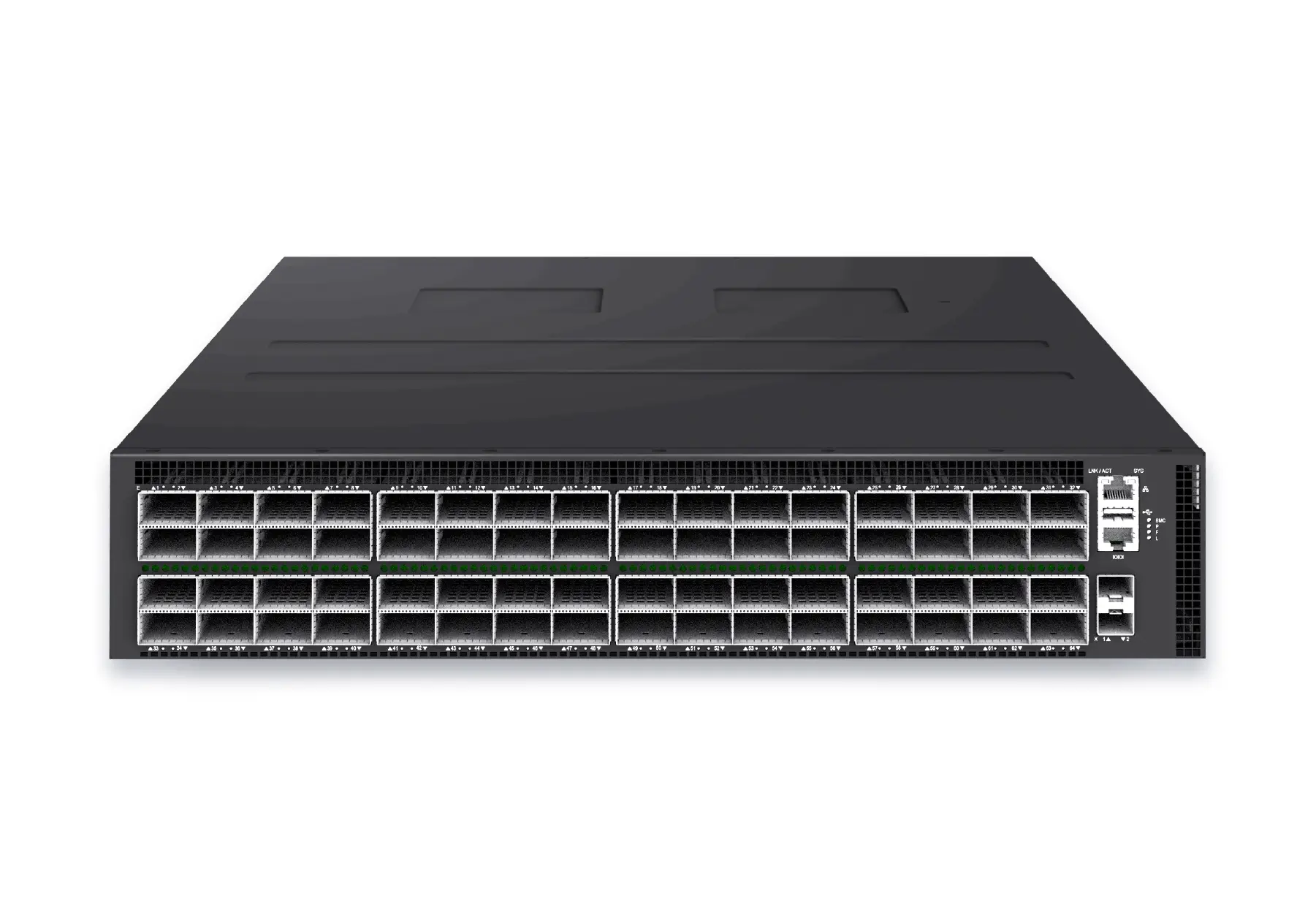 datacenter aiXS-DC-64X800-AI-G164-port 800G AI fabric switch for large-scale GPU clusters, HPC backbones, and ultra-high-throughput data center networks.View product
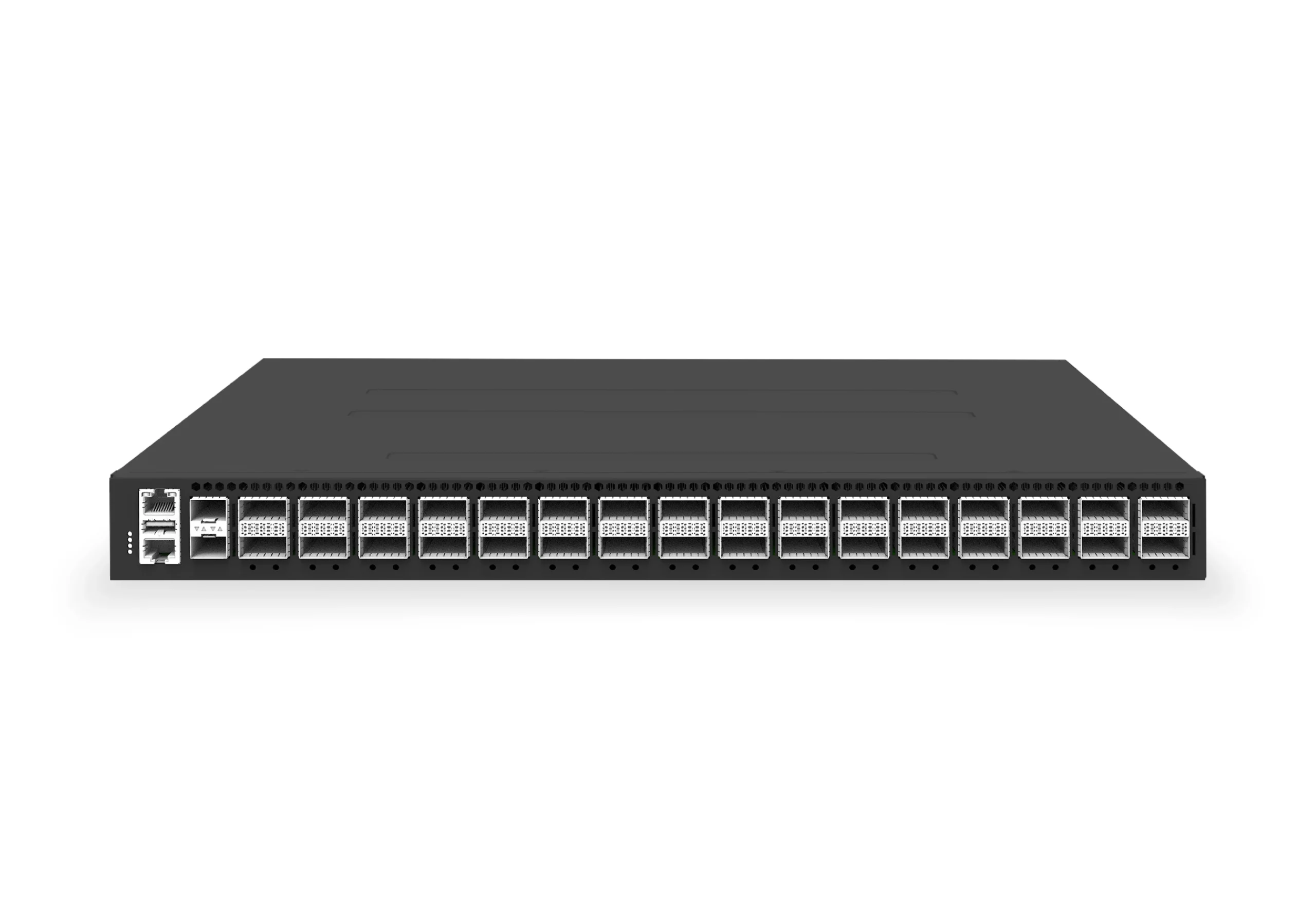 datacenter aiXS-DC-32X400-SP-G232-port 400G spine/core switch for high-capacity data center fabrics and AI-ready backbones.View product
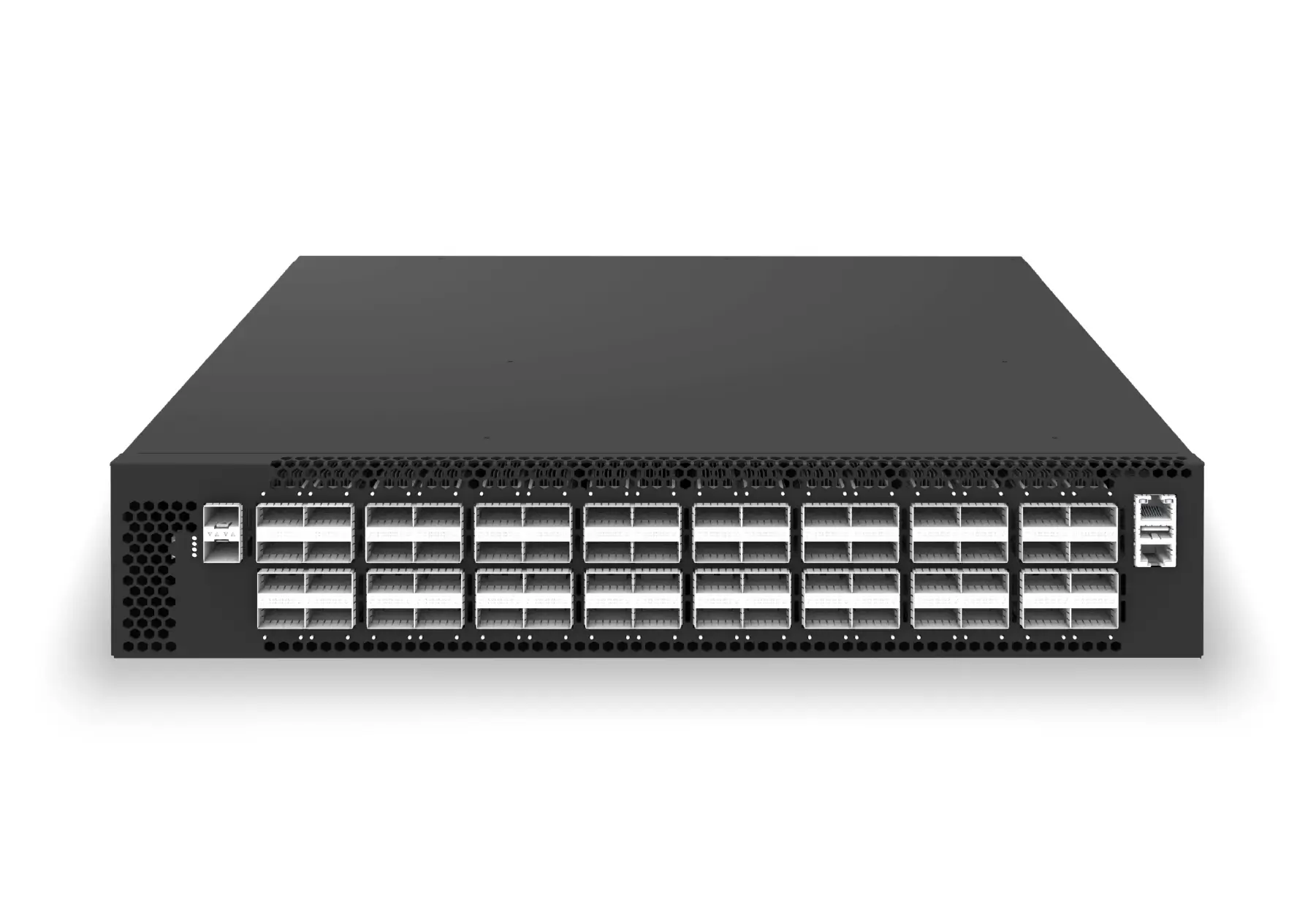 datacenter aiXS-DC-64X200-LS-G164-port 200G leaf/spine switch for high-bandwidth storage, compute, and scale-out data center fabrics.View product
Continue reading
Related articles
 Technical ArticleWarm Reboot and Fast Reboot in SONiC: How to Validate High Availability Without a Full OutageEngineering guide to validating SONiC warm reboot and fast reboot, covering ASIC support, control-plane recovery, traffic loss, telemetry, and rollback.Read article
 Technical ArticleSONiC Security Hardening: A Practical Guide for Data Center Network TeamsA practical SONiC security hardening guide for data center teams covering management access, patching, logging, RBAC, image provenance, telemetry, and audit evidence.Read article
 Technical ArticleSONiC Adoption Signals a Shift in Australia's Data Center Networking Strategy as AI Workloads ScaleAI workload growth, colocation expansion, and vendor lock-in costs are pushing Australian data center operators toward SONiC-based open networking.Read article