
In brief
How Australian campus teams can use PBR for traffic steering, segmentation and application-aware forwarding without proprietary lock-in.
Key takeaways
- Most enterprise campus networks still forward traffic based on a single criterion: the destination IP address.
- Policy-based routing (PBR) lets network teams override the destination-based forwarding decision and route packets based on source address, protocol, port number, DSCP marking, packet length, or a combination of match criteria.
- This article explains what PBR does, where it fits in campus network design, and why open networking platforms like those running SONiC give Australian enterprises a practical path to policy-driven forwarding without proprietary lock-in.
Most enterprise campus networks still forward traffic based on a single criterion: the destination IP address. That model works fine when every application behaves the same way, every user needs the same path, and every compliance boundary maps cleanly to a subnet. In practice, none of those assumptions hold in a modern Australian enterprise campus.
Policy-based routing (PBR) lets network teams override the destination-based forwarding decision and route packets based on source address, protocol, port number, DSCP marking, packet length, or a combination of match criteria. When deployed at the access or aggregation layer, PBR gives enterprises fine-grained traffic steering without bolting on an expensive overlay.
This article explains what PBR does, where it fits in campus network design, and why open networking platforms like those running SONiC give Australian enterprises a practical path to policy-driven forwarding without proprietary lock-in.
Why Destination-Based Routing Breaks Down in Campus Networks
Traditional campus architectures assume a simple model: access switches connect endpoints, aggregation switches aggregate uplinks, and the core or distribution layer makes routing decisions based on destination prefixes. That model was adequate when most traffic flowed north-south to a central data centre or internet breakout.
Several trends have changed the picture:
- Hybrid work and cloud-first applications. Staff connect from campus, home, and branch locations. Traffic to Microsoft 365, Salesforce, and SaaS platforms now rivals or exceeds traffic to on-premises servers. Routing all SaaS traffic through a centralised internet gateway adds latency and cost.
- Security segmentation requirements. Compliance frameworks such as the Australian Government Information Security Manual (ISM) and industry-specific standards demand traffic isolation between user groups, IoT devices, and sensitive workloads. VLANs alone cannot enforce inter-VLAN routing policy at scale.
- Multi-path aggregation fabrics. Modern aggregation layers often use MC-LAG, MLAG, or virtual chassis designs that provide multiple equal-cost or unequal-cost paths. Without policy control, the network cannot prefer one path for latency-sensitive traffic and another for bulk transfers.
- Application-aware SLAs. Voice, video, real-time collaboration, and industrial control traffic need deterministic forwarding. Destination-based ECMP hashing cannot distinguish a Teams voice flow from a software update download headed to the same CDN edge.
PBR addresses each of these gaps by letting the network team define match-and-forward rules at the point where traffic enters the campus fabric: the access or aggregation switch.
What Policy-Based Routing Actually Does
At its core, PBR replaces or supplements the standard routing table lookup for packets that match a defined policy. The forwarding decision can:
- Redirect traffic to a specific next-hop. For example, send all traffic from the finance VLAN destined to the internet through a next-generation firewall cluster rather than the default gateway.
- Set a DSCP or traffic class. Mark packets so downstream switches and routers apply the correct QoS treatment without re-classifying.
- Drop or deny traffic. Act as a lightweight access control mechanism at the routing layer, complementing ACLs.
- Load-balance across paths based on policy. Steer high-priority traffic over a low-latency link and bulk traffic over a secondary path, rather than relying on ECMP hashing alone.
A typical PBR configuration involves three elements:
- Match criteria. Source IP subnet, destination port, protocol, DSCP value, VLAN ID, or a combination.
- Action. Set next-hop IP, set DSCP, redirect to a tunnel interface, or drop.
- Application point. The ingress interface or VLAN where the policy is applied.
On a switch running SONiC, PBR policies are configured through the standard SONiC configuration model, leveraging access control lists (ACLs) with redirect actions. This means the same declarative, JSON-based configuration workflow that manages VLANs, L3 interfaces, and BGP peers also manages PBR rules. Network automation tools that interact with SONiC via NETCONF, RESTCONF, or gNMI can push PBR policies as part of a broader campus configuration pipeline.
PBR Design Patterns for Access and Aggregation Layers
Pattern 1: Internet Breakout Steering
In a multi-site campus with distributed internet breakout, PBR at the aggregation layer can steer SaaS traffic directly to the local internet gateway while sending corporate application traffic to a centralised security stack. Match criteria might include destination prefixes for known SaaS providers (pulled from a regularly updated object group) combined with source VLANs for corporate versus guest users.
This pattern reduces backhaul cost and improves SaaS performance without requiring a full SD-WAN overlay.
Pattern 2: Security Zone Enforcement
When the campus network includes IoT devices, guest Wi-Fi, and corporate endpoints on separate VLANs, PBR can enforce that IoT traffic always traverses a firewall or network access control (NAC) appliance before reaching any other zone. The aggregation switch applies a PBR rule matching the IoT subnet and redirecting all traffic to the security appliance next-hop.
This approach is simpler to audit than relying solely on inter-VLAN ACLs spread across dozens of access switches.
Pattern 3: Application-Aware Path Selection
In aggregation fabrics with redundant paths — for example, an MC-LAG pair providing two active uplinks — PBR can direct latency-sensitive traffic (voice, video, real-time telemetry) over the path with lower measured latency or jitter, while bulk data takes the alternate path. Match criteria use DSCP markings applied at the access layer by endpoint QoS policies or by the access switch itself.
Pattern 4: Compliance-Driven Traffic Mirroring or Redirection
Australian organisations subject to data sovereignty requirements may need to ensure that certain traffic flows through inspection or logging infrastructure before leaving the campus. PBR at the aggregation layer can redirect flows matching specific source-destination pairs to a packet broker or inline inspection tool.
| Pattern | Match Criteria | Action | Typical Deployment Point |
|---|---|---|---|
| Internet breakout steering | Source VLAN + destination prefix | Set next-hop to local internet gateway | Aggregation layer |
| Security zone enforcement | Source subnet (IoT, guest) | Redirect to firewall next-hop | Aggregation layer |
| Application-aware path selection | DSCP marking or protocol/port | Set next-hop to preferred uplink | Access or aggregation layer |
| Compliance traffic redirection | Source-destination pair | Redirect to inline inspection tool | Aggregation layer |
Why Open Networking Changes the PBR Equation
Traditional campus switch vendors support PBR, but the implementation is often tied to proprietary CLI syntax, proprietary management platforms, and licensed feature tiers. In some cases, PBR is only available on premium switch models or requires a separate license key. This creates a situation where a foundational routing capability becomes a vendor tax.
SONiC-based open networking platforms break that pattern in several ways:
- Consistent configuration model. PBR rules are expressed through the same SONiC configuration schema used for VLANs, interfaces, and routing. No proprietary CLI to learn.
- Automation-native. Because SONiC configuration is JSON-based and supports standard management interfaces (NETCONF, RESTCONF, gNMI, REST API), PBR policies can be version-controlled, peer-reviewed, and deployed through CI/CD pipelines — the same way infrastructure teams manage compute and storage.
- Hardware decoupling. SONiC runs on switches from multiple hardware vendors built on merchant silicon from vendors such as Broadcom and Marvell. This means PBR capabilities travel with the NOS, not the hardware SKU.
- Community-driven feature velocity. The SONiC open-source project, hosted under the Linux Foundation, benefits from contributions by hyperscale operators, silicon vendors, and enterprise users. PBR and ACL redirect features have been production-hardened in large-scale data centre environments and are now available for campus use cases.
For Australian enterprises evaluating a campus refresh, this means PBR should not require a forklift upgrade to a premium switch tier. It should be a baseline capability of the access and aggregation platform.
Practical Considerations for Australian Campus Deployments
Scale and Rule Complexity
PBR rules are processed in hardware (ASIC-based ACL/redirect lookups) on modern switches, so performance at line rate is achievable. However, the number of PBR rules that can be applied per interface depends on the switch ASIC and its TCAM or ACL table capacity. Before deploying hundreds of PBR rules at the access layer, validate rule capacity against the target hardware platform.
Interaction with STP, MC-LAG, and Virtual Chassis
PBR does not replace spanning tree or MC-LAG. It operates at Layer 3 and supplements the forwarding decision after the Layer 2 topology has determined which physical path is available. In an MC-LAG or virtual chassis design, PBR next-hops must point to addresses that remain reachable during failover events. Validate that PBR policies degrade gracefully during link or node failures.
Operational Tooling
PBR rules that are manually configured on individual switches create operational risk. Treat PBR policies as code: store them in a Git repository, validate them in a lab or virtual SONiC instance, and deploy through tested automation. This approach aligns with the operational model that SONiC encourages and reduces the risk of configuration drift across dozens of aggregation switches.
Observability and Troubleshooting
When a packet takes an unexpected path, the network team needs to confirm which PBR rule matched (or did not match). SONiC provides standard Linux diagnostic tools and show commands to inspect ACL counters and forwarding decisions. Packet broker integration — mirroring traffic to a visibility platform — adds another layer of diagnostic capability for PBR-steered flows.
PBR Campus Acceptance Matrix
| Validation item | Engineering proof | Rework trigger |
|---|---|---|
| Policy inventory | Every rule has owner, source, destination, match field, next hop and business reason | A rule cannot be traced to an owner or has not been reviewed in 90 days |
| Match precision | Source subnet, destination prefix, DSCP, protocol and L4 port behaviour tested with synthetic traffic | Policy catches unintended traffic classes or duplicates ordinary routing-table behaviour |
| Failure handling | Primary next hop, secondary next hop and default route behaviour tested in at least 2 failure cases | Traffic black-holes, bypasses inspection or fails differently on each MC-LAG peer |
| Auditability | Config diff, hit counters, rollback command and post-change telemetry stored with the change record | Operations cannot prove which policy changed or how to reverse it |
Where PBR Fits in the Campus Refresh Conversation
If your organisation is planning a campus refresh in the next 12 to 24 months, PBR should be on the evaluation checklist alongside VLAN design, Layer 3 routing protocol selection, MC-LAG or virtual chassis topology, PoE capacity, and wireless integration. It is not an advanced feature reserved for data centre fabrics. It is a practical tool for solving real campus traffic engineering problems.
The key question is not whether your vendor supports PBR, but whether your platform makes PBR operationally sustainable: version-controlled, automatable, hardware-decoupled, and free from per-feature licensing.
Open networking answers that question differently than proprietary alternatives.
Next Steps
- Explore the xSONiC Policy-Based Routing Guide for configuration examples and design templates.
- Review the xSONiC Campus Refresh Solution for a broader framework on modernising access and aggregation layers.
- See how MC-LAG and STP interact with PBR in resilient aggregation topologies.
- Browse xSONiC Access and Aggregation Switches for hardware platforms that support PBR with SONiC.
- Contact xSONiC to discuss your campus network requirements.
Engineering Evidence Floor
For campus and access switching topics, acceptance should be based on endpoint behaviour under real operating constraints. The evidence package should include endpoint classes, PoE budget, NAC/802.1X, LLDP-MED, voice VLANs, multicast, STP or MC-LAG behaviour, uplink capacity, monitoring, rollback, and help-desk workflow. A representative pilot should run at least 48 ports for 30 days, include one planned rollback inside 24 hours, and document support ownership before scale-out.
| Evidence area | What to validate | Acceptance gate | Rework trigger |
|---|---|---|---|
| Endpoint mix | APs, phones, cameras, laptops, IoT, and printers | 48 ports run mixed load for 24 hours | Only laptop traffic is tested |
| Power and uplinks | PoE budget, 1G/2.5G/5G/10G access, and 100G uplinks | No power or uplink bottleneck in pilot | Refresh ignores closet constraints |
| Resilience | STP, MC-LAG, link loss, member loss, and rollback | 3 failure cases captured | Campus works only in steady state |
| Operations | Monitoring, logs, backup, restore, and help-desk runbook | Incident evidence ready within 2 hours | Support depends on informal notes |
| Rollout | Site selection, training, spares, and change windows | 30 days pilot approved before estate rollout | Procurement scales before validation |
Engineering FAQ
What should be tested before moving campus switching to SONiC or open networking? Test PoE behaviour, NAC integration, VLAN and policy design, STP or MC-LAG interaction, multicast, monitoring, upgrade rollback, and help-desk workflows. Campus readiness is an operations test, not only a forwarding test.
Where do campus refresh projects usually carry hidden risk? The risk often sits in closets: power budget, old cabling, undocumented uplinks, mixed endpoint types, voice devices, cameras, badge systems, and change windows. Those details should be inventoried before selecting switch models.
How should Australian campus teams structure a pilot? Choose one representative site or building, document endpoint classes, run PoE and failover tests, verify monitoring, train operations staff, and define rollback steps before expanding to the broader estate.
Related xSONiC Resources
Sources Reviewed
- IEEE 802.1Q Bridges and Bridged Networks
- IEEE 802.1AX Link Aggregation
- Ethernet Network Adapters - ConnectX NICs | NVIDIA
- NVIDIA BlueField Data Processing Unit
- NVIDIA Spectrum-X Ethernet Platform
- OpenConfig gNMI Specification
- OpenConfig
- RFC 7950 - The YANG 1.1 Data Modeling Language
- RFC 6241 - Network Configuration Protocol (NETCONF)
- ACSC Essential Eight
- OAIC Notifiable Data Breaches
- APRA CPS 234 Information Security
- NETSCOUT Network Packet Definition
- Cloudflare Network Packet Definition
- IEEE 802.11be Wireless LAN Standard
- IEEE 802.3bt Power over Ethernet
- SONiC Project Documentation
- Broadcom Ethernet Switching
- Marvell Switching
- NVIDIA Ethernet Switching
- Open Compute Networking
- SONiC GitHub
- SONiC Foundation
Product fit
Products referenced for evaluation
These products are referenced for evaluation context in the article. Confirm workload, port, optics, software, interoperability, and support requirements against the exact deployment before procurement.
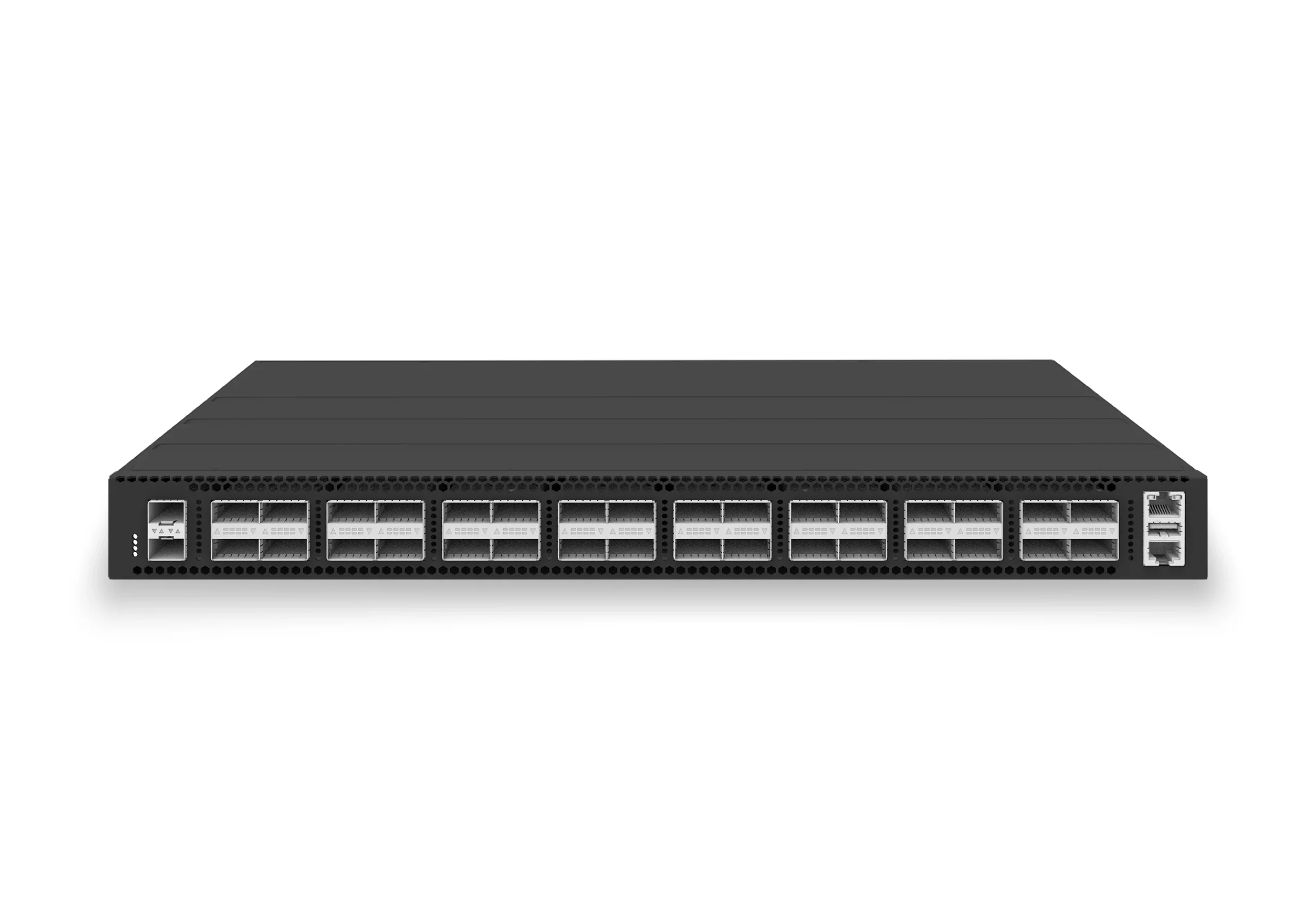 datacenter aiXS-DC-32X100-LS-G232-port 100G leaf/spine switch for VXLAN fabrics, RoCE-ready workloads, and tenant-scale routing.View product
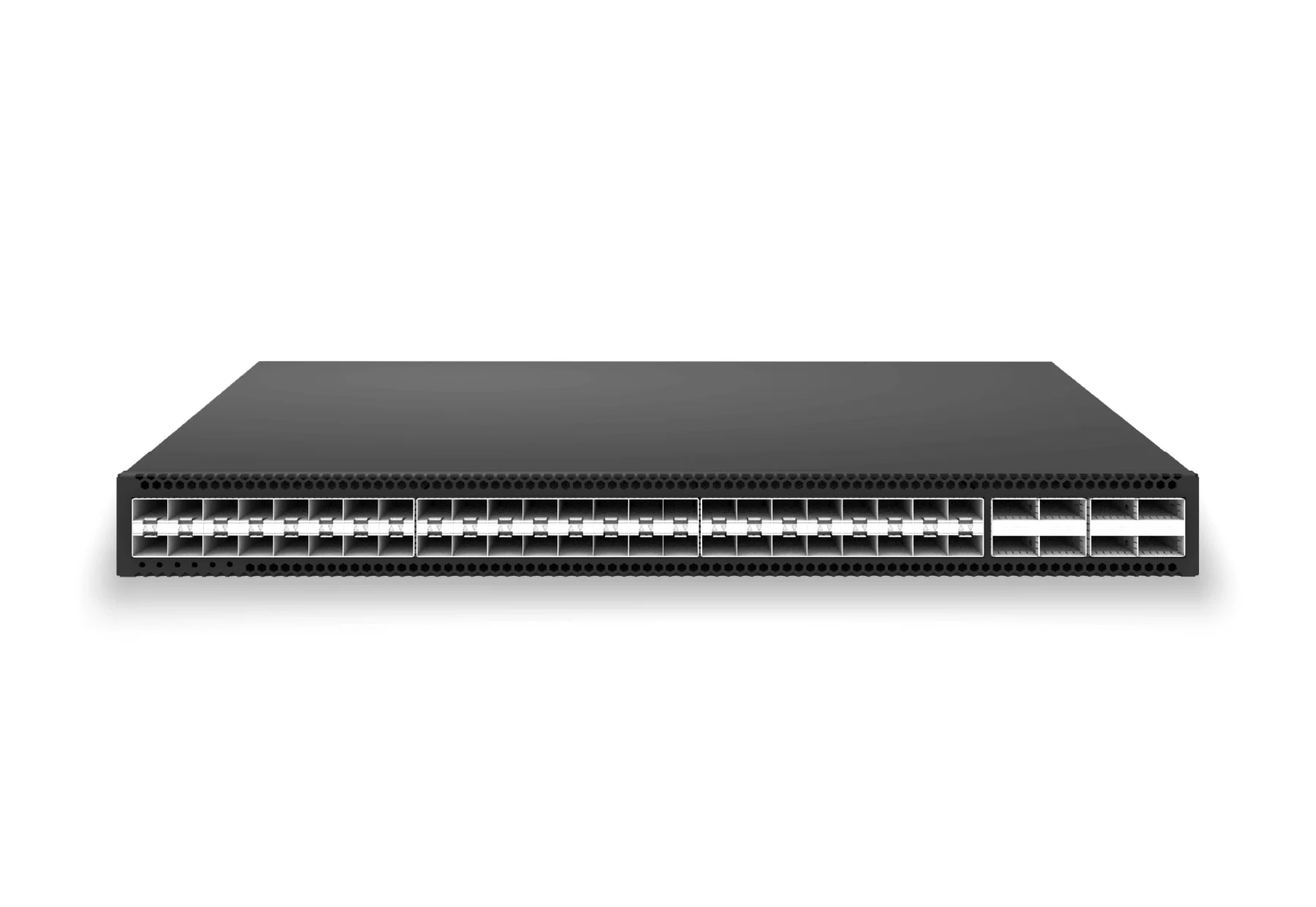 access aggregateXS-AA-48X25-8X100-AGG48x 25G SFP28 aggregation/core switch with 8x 100G QSFP28 for enterprise access and aggregation networks.View product
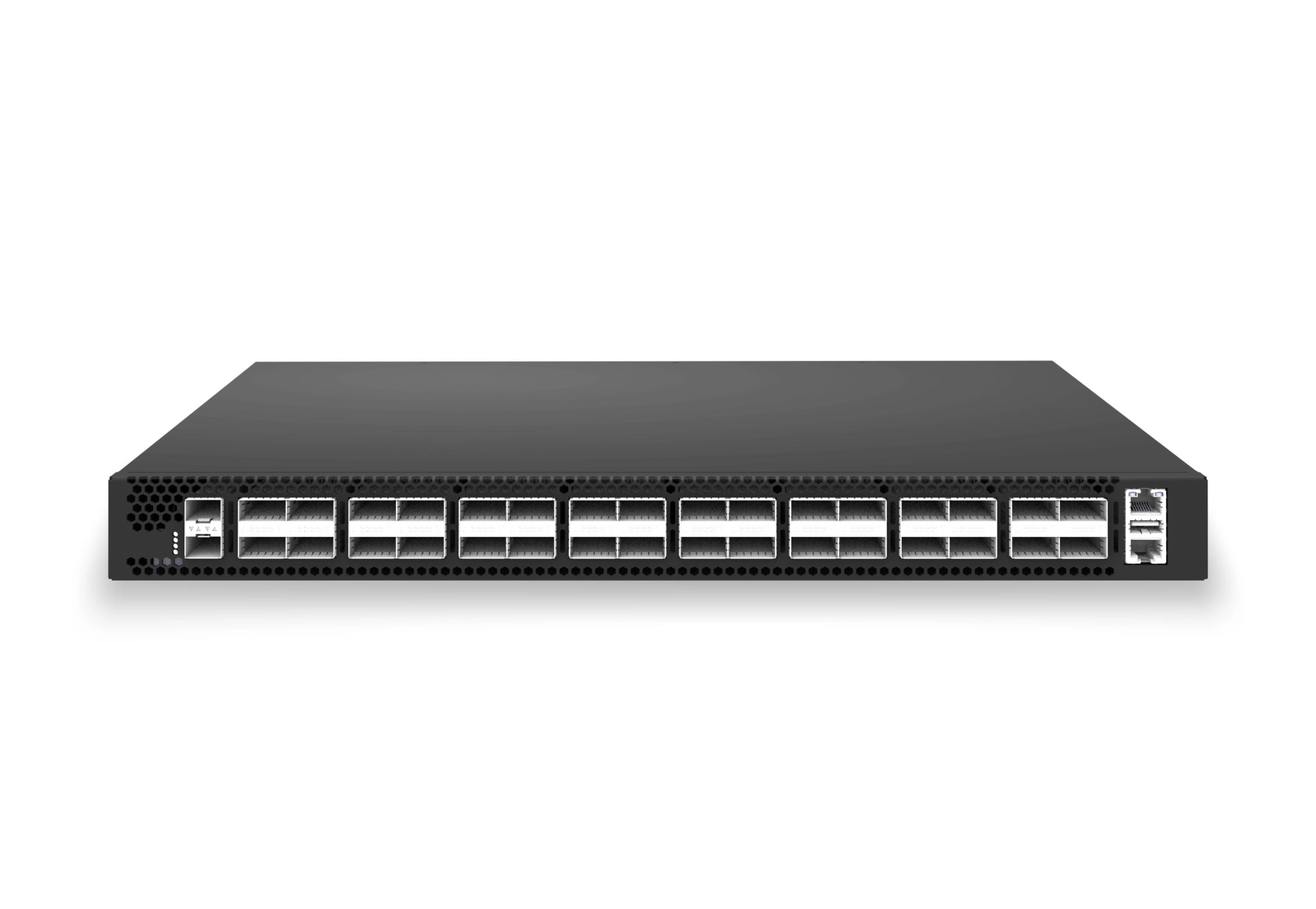 access aggregateXS-AA-32X100-CORE32x 100G QSFP28 aggregation/core switch with 2x 10G SFP+ auxiliary for enterprise access and aggregation networks.View product
Continue reading
Related articles
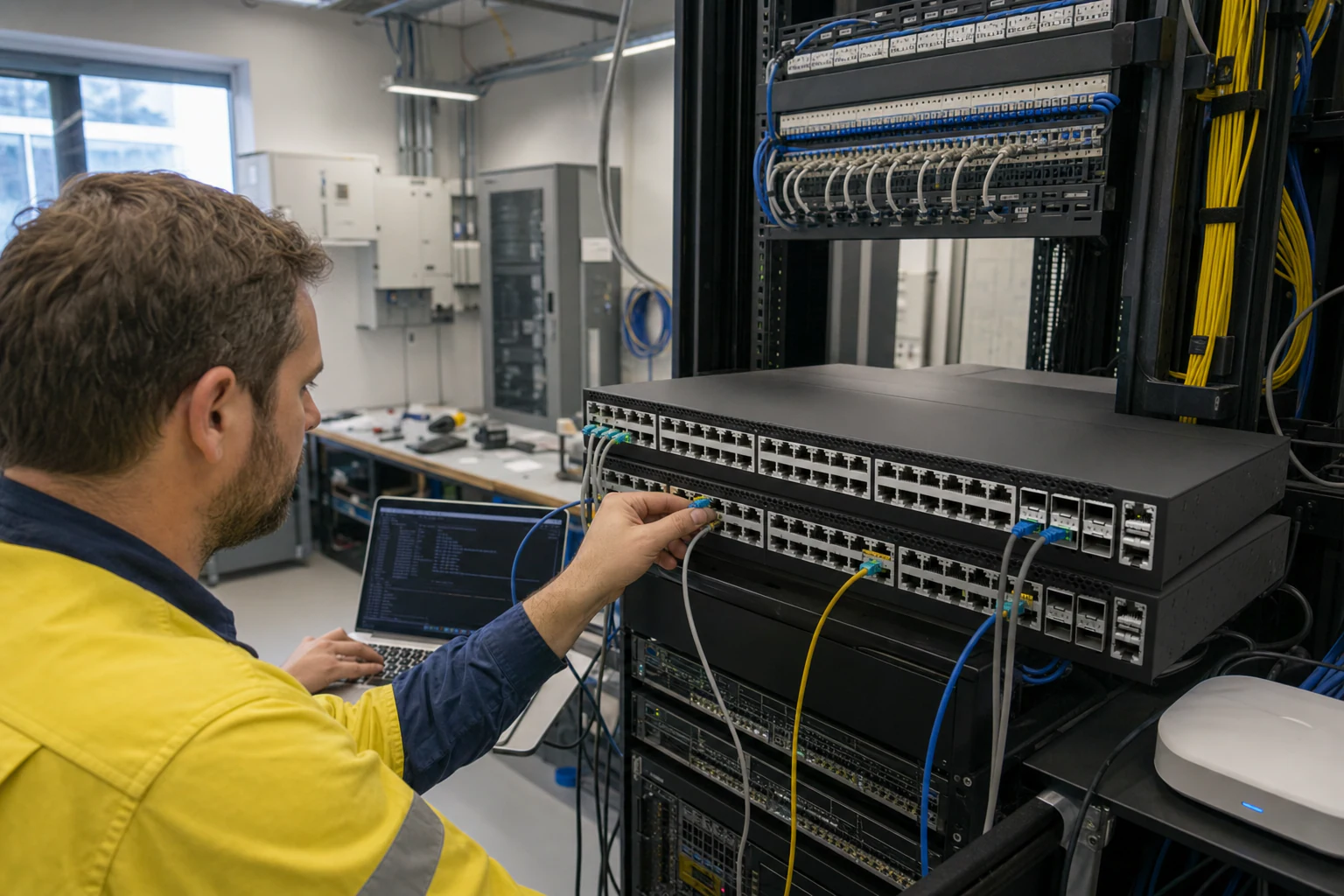 Technical ArticleMC-LAG, STP, and Policy-Based Routing: Building Resilient Enterprise Campus Networks on Open SwitchingEngineering guidance on MC-LAG, STP, and policy-based routing for Australian campus teams building resilient open switching designs with SONiC.Read article
 Technical ArticleWhy Australian Enterprise Campus Networks Are Looking Beyond Proprietary SwitchingWhy Australian campus teams are evaluating Enterprise SONiC for aggregation, automation, telemetry and reduced switching lock-in.Read article
 Technical ArticleSONiC Moves Beyond the Data Center: What the Enterprise Campus Push Means for Australian Network BuyersWhat Australian buyers should validate as SONiC moves from data center fabrics into campus access and aggregation.Read article