In brief
Engineering guidance on MC-LAG, STP, and policy-based routing for Australian campus teams building resilient open switching designs with SONiC.
Key takeaways
- Enterprise campus networks in Australia face a familiar tension: business units demand always-on connectivity, while network teams manage budgets, staffing, and aging infrastructure.
- Multi-Chassis Link Aggregation (MC-LAG), Spanning Tree Protocol (STP), and Policy-Based Routing (PBR) are three technologies that, when combined correctly, give campus networks both redundancy and traffic predictability.
- This article explains how MC-LAG, STP, and PBR work together in a campus distribution and access layer, why open networking changes the economics of campus resilience, and what Australian enterprise buyers should evaluate when planning a campus refresh.
Why Campus Network Resilience Starts with the Right Link Aggregation and Loop Prevention Strategy
Enterprise campus networks in Australia face a familiar tension: business units demand always-on connectivity, while network teams manage budgets, staffing, and aging infrastructure. When a distribution-layer link fails at 9 AM on a Monday, the difference between sub-second failover and a 30-second STP reconvergence can mean hundreds of disrupted users and a flood of helpdesk tickets.
Multi-Chassis Link Aggregation (MC-LAG), Spanning Tree Protocol (STP), and Policy-Based Routing (PBR) are three technologies that, when combined correctly, give campus networks both redundancy and traffic predictability. What has changed in recent years is that these features are no longer locked inside proprietary switch stacks. Open networking operating systems like SONiC (Software for Open Networking in the Cloud) now support MC-LAG, STP, and PBR on multi-vendor hardware, giving network teams more choice in how they design and refresh their campus fabric.
This article explains how MC-LAG, STP, and PBR work together in a campus distribution and access layer, why open networking changes the economics of campus resilience, and what Australian enterprise buyers should evaluate when planning a campus refresh.
MC-LAG: Eliminating Single Points of Failure at the Aggregation Layer
Traditional link aggregation (LACP/802.3ad) bonds multiple physical links into a single logical link, but both ends of the bundle must terminate on the same physical switch. If that switch fails, all aggregated links go down. MC-LAG solves this by allowing two separate switches to participate in the same LAG toward downstream devices. From the access switch or server perspective, the link bundle looks like a single logical connection, but the physical endpoints span two chassis.
In a campus distribution layer, MC-LAG typically works as follows:
- Two distribution or aggregation switches form an MC-LAG peer relationship, exchanging state information over a keepalive or ICCP (Inter-Chassis Communication Protocol) link.
- Access-layer switches connect one or more uplinks to each distribution switch, forming a single LAG that spans both chassis.
- If one distribution switch fails, traffic automatically shifts to the surviving peer without waiting for STP reconvergence.
The practical benefit is that MC-LAG provides active-active forwarding across both distribution switches, unlike traditional active-standby STP failover. Network teams get full utilization of uplink bandwidth during normal operation and fast failover during faults.
For SONiC-based campus deployments, MC-LAG support is an area of active development within the open-source community. Network teams evaluating open switches for campus use should confirm MC-LAG feature maturity on their target platform and SONiC distribution. This is a critical evaluation step, and we recommend consulting the xSONiC MC-LAG and STP solution guide for current feature coverage.
STP: Still Essential, Even When MC-LAG Handles Most Failover
A common misconception is that MC-LAG eliminates the need for Spanning Tree Protocol. In practice, STP remains essential in campus networks for three reasons:
-
Loop prevention at the access layer. Not every access switch will have dual uplinks configured as an MC-LAG. Edge switches in smaller floors, meeting rooms, or branch offices may connect with single links or simple LACP bundles. STP prevents loops when users accidentally plug cables into the wrong ports or when unmanaged switches appear on the network.
-
Backup path selection. Even in MC-LAG-enabled fabrics, STP serves as a safety net. If the MC-LAG peer link fails and split-brain conditions arise, STP can block redundant paths to prevent broadcast storms.
-
Legacy device integration. Many campus environments include printers, IoT devices, and building management systems that do not participate in LACP. STP provides a catch-all loop prevention mechanism for these connections.
Modern STP variants like Rapid Spanning Tree Protocol (RSTP, IEEE 802.1w) and Multiple Spanning Tree Protocol (MSTP, IEEE 802.1s) converge in under one second for most campus topologies. RSTP is the minimum recommended baseline for new campus deployments. MSTP adds the ability to map different VLANs to different spanning tree instances, allowing traffic engineering across redundant paths.
A practical design pattern for campus networks is to combine MC-LAG at the distribution layer with RSTP or MSTP at the access layer. The distribution switches run MC-LAG for active-active uplinks, while access ports participate in STP for loop prevention. This gives network teams both bandwidth utilization and safety.
Policy-Based Routing: Steering Traffic Beyond Destination-Based Forwarding
Traditional IP routing forwards packets based solely on the destination address. In many campus environments, this is not granular enough. Policy-Based Routing (PBR) lets network teams match traffic based on source address, protocol, port number, DSCP marking, or other criteria, and then forward matching traffic along a specific path.
Common campus PBR use cases include:
- Internet breakout steering. Direct guest VLAN traffic through a dedicated firewall or internet gateway, while corporate traffic uses the primary WAN path.
- Application-aware forwarding. Route voice and video traffic over a low-latency path, while bulk data transfers use a secondary link.
- Compliance and security. Force traffic from specific departments or VLANs through an inspection appliance before it reaches the core or WAN.
- Multi-site WAN optimization. In campus environments with multiple WAN links, PBR can distribute traffic types across circuits based on application requirements rather than simple load-balancing.
PBR is typically implemented at the distribution or core layer, where traffic from multiple access VLANs converges. On SONiC-based switches, PBR policies are configured through the routing configuration and applied to specific interfaces. Network teams should plan their PBR match criteria carefully to avoid creating asymmetric routing paths, which can break stateful firewalls and NAT devices.
For Australian enterprises with compliance requirements, PBR offers a way to enforce traffic inspection policies at the network layer without relying on host-based agents or application-layer proxies. This is particularly relevant for organisations in regulated industries such as financial services, healthcare, and government.
Combining MC-LAG, STP, and PBR in a Campus Design
The three technologies serve complementary roles in a well-designed campus network:
| Layer | Technology | Role |
|---|---|---|
| Distribution | MC-LAG | Active-active uplinks, fast failover, full bandwidth utilisation |
| Access | RSTP / MSTP | Loop prevention, backup path blocking, edge safety net |
| Distribution / Core | PBR | Application-aware traffic steering, compliance enforcement |
A typical campus design using all three:
- Distribution switches run MC-LAG toward access-layer switches, providing active-active uplinks.
- Access switches run RSTP or MSTP on all ports to catch loops from edge devices.
- PBR policies on distribution switches steer guest traffic through a DMZ firewall and voice traffic over a dedicated WAN circuit.
- If one distribution switch fails, MC-LAG fails over in sub-second time. STP reconverges only for non-MC-LAG segments.
This layered approach ensures that no single failure domain causes a campus-wide outage. Network teams gain predictable failover behavior, full bandwidth utilisation, and traffic-level control.
Why Open Networking Changes the Campus Resilience Equation
Historically, MC-LAG, STP, and PBR were features sold as part of proprietary switch stacks. Enterprises purchased a vendor’s distribution and access switches together, locked into that vendor’s management plane, licensing model, and upgrade cycle. SONiC disrupts this model by offering a community-developed, Linux-based network operating system that runs on switches from multiple vendors and ASICs.
SONiC is an open-source NOS that has been production-hardened in the data centers of some of the largest cloud service providers. Its modular, container-based architecture allows individual network functions to be updated or replaced independently, which accelerates software evolution and simplifies troubleshooting. For campus networks, this means network teams can:
- Select switching hardware from multiple vendors based on price, port density, and PoE budget, without being locked into a single vendor’s NOS.
- Manage campus switches using standard Linux tooling, NETCONF/YANG, or SONiC’s own configuration framework.
- Benefit from a rapidly growing ecosystem of supported platforms, as the SONiC community continues to expand enterprise campus support.
The Open Compute Project (OCP) Networking initiative, which includes SONiC as a sub-project, aims to give end users the ability to forgo traditional closed and proprietary network switches in favour of a fully open network technology stack. For Australian enterprises evaluating campus refresh options, this represents a meaningful shift in how network infrastructure is procured and operated.
What Australian Network Teams Should Evaluate
If you are planning a campus refresh or evaluating alternatives to a proprietary switch stack, consider these questions:
- MC-LAG maturity. Does the SONiC distribution on your target hardware support MC-LAG with the keepalive and failover behavior your campus requires? Confirm feature support before committing to a design.
- STP configuration. What STP variants (RSTP, MSTP) are supported, and how do they interact with MC-LAG peer failover? Test the combined behavior in a lab before production deployment.
- PBR granularity. What match criteria (source IP, DSCP, protocol, port) are available for PBR policies? Can PBR be applied at the interface level where you need it?
- Management and automation. Does the switch platform support NETCONF/YANG, gNMI, or SNMP for integration with your existing campus management tools?
- PoE and access features. For access-layer deployments, confirm PoE budget, 802.1X support, and VLAN capabilities on the target hardware.
- Local support and supply chain. For Australian deployments, evaluate whether your open networking vendor can provide local technical support, RMA turnaround, and supply chain reliability.
A campus network is a long-lived asset. Choosing open switching hardware with a SONiC-based NOS gives you the flexibility to change software, add features, and avoid end-of-life lock-in as your network evolves.
Next Steps
MC-LAG, STP, and PBR are proven technologies that deliver resilience and traffic control in enterprise campus networks. Open networking brings these capabilities to a broader range of hardware platforms, with the added benefit of vendor independence and community-driven innovation.
If you are evaluating a campus refresh or want to understand how SONiC-based switching supports MC-LAG, STP, and PBR for your environment, explore the xSONiC Campus Refresh solution, MC-LAG and STP guide, and Policy-Based Routing guide. You can also contact the xSONiC team to discuss your campus design requirements.
Campus Resilience Acceptance Matrix
Campus resilience is only proven during failure. A design diagram that shows dual uplinks is not enough; the team must validate convergence, loop prevention, policy steering, monitoring, and rollback under controlled fault injection.
| Design Area | Evidence to Capture | Acceptance Target | Rework Trigger |
|---|---|---|---|
| MC-LAG peer health | Peer-link status, keepalive path, LACP state, MAC sync, failover logs | One distribution switch fails without user-visible outage beyond the accepted window | Split-brain or MAC instability appears during peer-link failure |
| STP safety | RSTP/MSTP mode, root placement, BPDU guard, edge port policy, loop test | Accidental edge loop is blocked and logged within the expected convergence window | Broadcast storm or unlogged loop during test |
| PBR policy | Match criteria, next-hop health, firewall path, rollback policy | Guest, voice, and regulated VLANs follow intended paths before and after failover | PBR creates asymmetric routing through stateful firewalls |
| Access-layer power and uplinks | PoE budget, uplink speed, oversubscription, 1G/10G/25G aggregation | Access switches retain PoE and uplink service during distribution failure | Link redundancy exists but switch power or UPS fails the design |
| Operations telemetry | Syslog, SNMP/gNMI, event timestamps, config diff, alert mapping | Operations team can identify failed link, blocked port, policy path, and recovery time | Failover succeeds but evidence cannot be reconstructed |
Engineering FAQ
Does MC-LAG remove the need for STP? No. MC-LAG reduces dependence on STP for normal uplink redundancy, but STP still protects edge loops, unmanaged devices, and failure states outside the MC-LAG domain.
What should be tested before enabling PBR in a campus design? Test next-hop failure, firewall statefulness, asymmetric return paths, route-map order, policy rollback, and monitoring. PBR should improve control without making troubleshooting opaque.
How should Australian teams pilot open campus switching? Choose one representative building or floor, test MC-LAG failover, STP loop protection, PBR policy paths, PoE recovery, telemetry, and rollback before expanding to the estate.
Where does xSONiC fit in campus resilience? xSONiC access and aggregation switches should be evaluated where teams want SONiC operations plus MC-LAG, STP, PBR, PoE, and open automation. The pilot should prove failure behaviour, not only feature availability.
Related xSONiC Resources
Sources Reviewed
- IEEE 802.1Q Bridges and Bridged Networks
- IEEE 802.1AX Link Aggregation
- Ethernet Network Adapters - ConnectX NICs | NVIDIA
- NVIDIA BlueField Data Processing Unit
- NVIDIA Spectrum-X Ethernet Platform
- OpenConfig gNMI Specification
- OpenConfig
- RFC 7950 - The YANG 1.1 Data Modeling Language
- RFC 6241 - Network Configuration Protocol (NETCONF)
- ACSC Essential Eight
- OAIC Notifiable Data Breaches
- APRA CPS 234 Information Security
- NETSCOUT Network Packet Definition
- Cloudflare Network Packet Definition
- IEEE 802.11be Wireless LAN Standard
- IEEE 802.3bt Power over Ethernet
- SONiC Project Documentation
- Broadcom Ethernet Switching
- Marvell Switching
- NVIDIA Ethernet Switching
- Open Compute Networking
- SONiC GitHub
- SONiC Foundation
Product fit
Products referenced for evaluation
These products are referenced for evaluation context in the article. Confirm workload, port, optics, software, interoperability, and support requirements against the exact deployment before procurement.
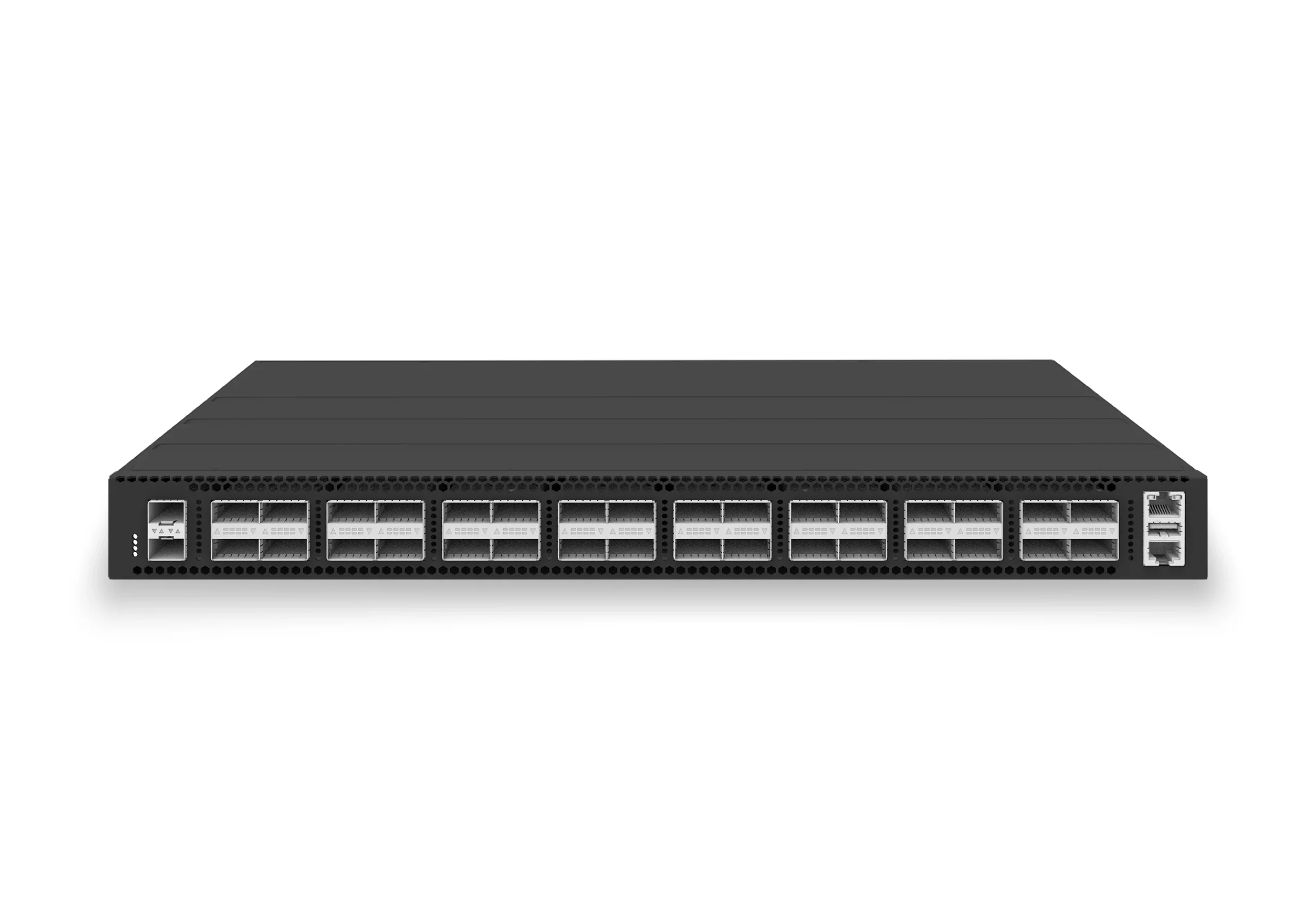 datacenter aiXS-DC-32X100-LS-G232-port 100G leaf/spine switch for VXLAN fabrics, RoCE-ready workloads, and tenant-scale routing.View product
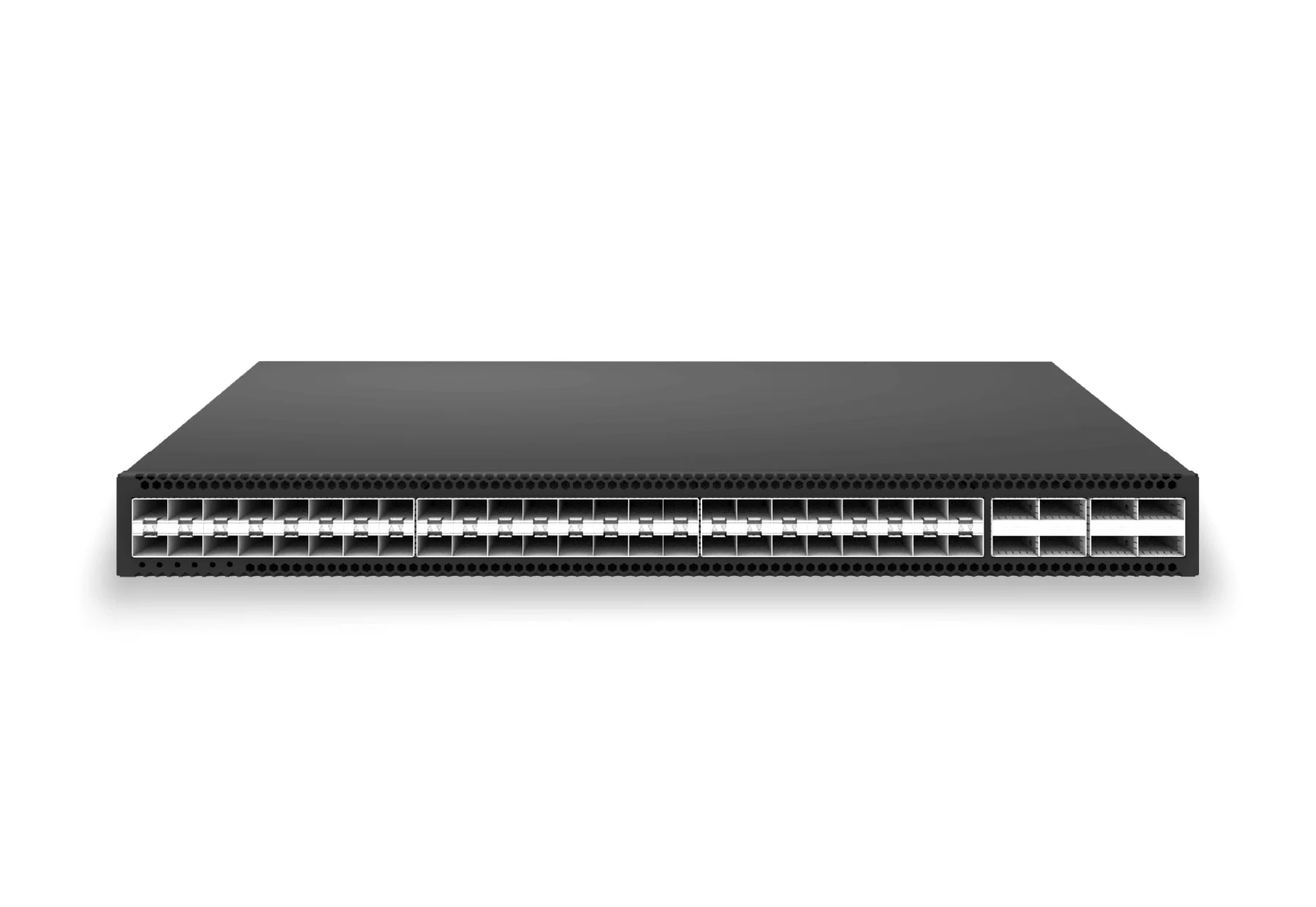 access aggregateXS-AA-48X25-8X100-AGG48x 25G SFP28 aggregation/core switch with 8x 100G QSFP28 for enterprise access and aggregation networks.View product
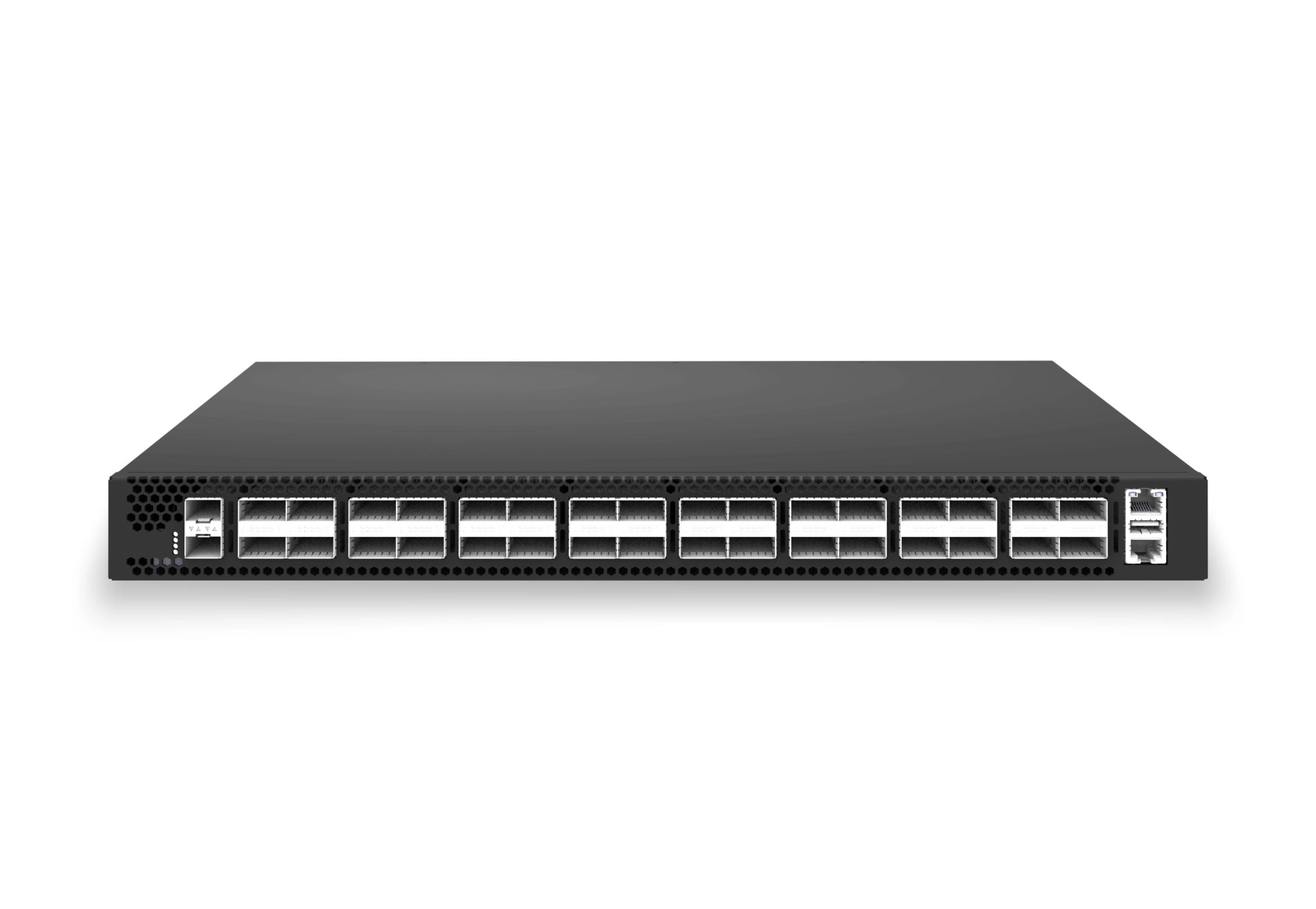 access aggregateXS-AA-32X100-CORE32x 100G QSFP28 aggregation/core switch with 2x 10G SFP+ auxiliary for enterprise access and aggregation networks.View product
Continue reading
Related articles
 Technical ArticleWhy Australian Enterprise Campus Networks Are Looking Beyond Proprietary SwitchingWhy Australian campus teams are evaluating Enterprise SONiC for aggregation, automation, telemetry and reduced switching lock-in.Read article
 Technical ArticlePolicy-Based Routing for Enterprise Campus Networks: When Destination-Only Routing Is Not EnoughHow Australian campus teams can use PBR for traffic steering, segmentation and application-aware forwarding without proprietary lock-in.Read article
 Technical ArticleSONiC Moves Beyond the Data Center: What the Enterprise Campus Push Means for Australian Network BuyersWhat Australian buyers should validate as SONiC moves from data center fabrics into campus access and aggregation.Read article