
In brief
Practical PBR guidance for Australian access-aggregation teams using SONiC to steer traffic, preserve failover and reduce vendor lock-in.
Key takeaways
- In most enterprise campus networks, routing decisions follow a simple rule: send packets toward the best destination-based path.
- Consider a typical Australian mid-market enterprise. The finance team's traffic must stay on a dedicated MPLS link for compliance.
- Destination-based routing alone cannot solve these problems. Policy-Based Routing (PBR) can.
Why Policy-Based Routing Matters in Modern Enterprise Access Networks
In most enterprise campus networks, routing decisions follow a simple rule: send packets toward the best destination-based path. That works fine until real business requirements collide with default behaviour.
Consider a typical Australian mid-market enterprise. The finance team’s traffic must stay on a dedicated MPLS link for compliance. Guest Wi-Fi should exit directly through a local ISP breakout. VoIP packets need strict QoS and low-latency paths through the aggregation layer. And all of this must happen at line rate, on switches that serve hundreds of access ports.
Destination-based routing alone cannot solve these problems. Policy-Based Routing (PBR) can.
PBR lets network administrators define routing policies based on criteria beyond the destination IP address — source subnet, protocol, port number, DSCP marking, packet size, or VLAN membership. Instead of relying solely on the routing table, the switch evaluates incoming packets against configured policies and forwards them through the next hop or interface the policy specifies.
For enterprise access and aggregation networks, PBR is not a niche feature. It is the mechanism that lets a single physical network serve multiple logical traffic domains without building parallel infrastructure.
The Problem: Traffic Steering Without PBR
Without PBR, enterprise network teams face a recurring set of problems at the access and aggregation layer:
-
All traffic follows the same path. If the default gateway points to a core firewall, every packet hits that firewall — even trusted internal traffic that does not need inspection. This creates unnecessary latency and forces expensive firewall capacity upgrades.
-
Multi-WAN load balancing is coarse. Equal-Cost Multi-Path (ECMP) distributes flows by hash, not by business intent. You cannot direct a specific department’s traffic to a specific WAN link based on policy.
-
Compliance enforcement is manual. Australian organisations subject to the Privacy Act 1988, APRA CPS 234 for financial services, or Essential Eight maturity requirements often need to prove that certain traffic stays within defined network segments. Static routing does not adapt when network topology changes.
-
Vendor lock-in limits flexibility. Proprietary PBR implementations on incumbent campus switches (Cisco, Aruba, Juniper) tie the feature to a specific NOS and hardware platform. Migrating to new hardware means re-implementing policies from scratch, often with undocumented proprietary syntax.
These problems are not theoretical. They are the reason many Australian enterprise network teams delay campus refresh projects — the risk of breaking traffic policies during migration outweighs the benefit of new hardware.
PBR Fundamentals: How It Works at the Access-Aggregate Layer
PBR operates as a per-interface input feature. When a packet arrives on a routed interface (or an SVI serving a VLAN), the switch checks whether a PBR policy map applies to that interface. If it does, the policy evaluates the packet against configured match criteria.
Here is a simplified decision flow:
- Packet arrives on the ingress interface.
- PBR policy map is evaluated (if configured on that interface).
- Match criteria are checked: source IP, destination IP, protocol, DSCP, port, VLAN, or ACL.
- If a match occurs, the policy action applies: set next-hop IP, set output interface, set DSCP, or redirect to a VRF.
- If no match occurs, normal destination-based routing applies.
At the access-aggregate layer, PBR typically sits on Layer 3 SVIs or routed uplink interfaces between the aggregation and distribution/core tiers. Common deployment patterns include:
| Use Case | Match Criteria | Policy Action |
|---|---|---|
| Department-based WAN steering | Source VLAN or subnet | Set next-hop to specific WAN router |
| Guest traffic local breakout | Source VLAN (guest Wi-Fi) | Set next-hop to local ISP gateway |
| VoIP QoS enforcement | Protocol = UDP, port range | Set DSCP EF, prefer low-latency path |
| Compliance traffic isolation | Source + destination subnet | Redirect to compliance VRF |
| Security tool redirection | Source VLAN + destination port | Set next-hop to inline IDS/IPS |
This table is representative of common PBR patterns. Actual implementation syntax and feature availability depend on the NOS and switch platform.
SONiC and Open Networking: A Different Approach to PBR
SONiC (Software for Open Networking in the Cloud) is an open-source network operating system built on Linux, maintained under the Linux Foundation. Originally developed for hyperscale data centres, SONiC has expanded into enterprise campus and aggregation use cases through community contributions and vendor distributions.
SONiC’s architecture matters for PBR in several ways:
-
Containerised modularity. SONiC runs each network function (BGP, LLDP, ACL, PBR) in its own Docker container. This means PBR policy changes can be tested and deployed without restarting the entire switch stack.
-
JSON-based configuration. SONiC uses a unified configuration model where policies are defined in JSON and applied through the ConfigDB. This makes PBR policies auditable, version-controllable, and portable across switch hardware from different vendors.
-
Multi-vendor hardware support. SONiC runs on switches powered by ASICs from Broadcom, Marvell, NVIDIA, and others. A PBR policy written for one SONiC switch can be deployed on hardware from a different vendor without rewriting the policy definition.
-
Standard Linux tooling. Because SONiC is Linux-based, network teams can use standard tools (tcpdump, iptables concepts, systemd) for troubleshooting PBR behaviour, reducing the learning curve compared to proprietary CLIs.
For Australian enterprises evaluating campus refresh options, SONiC-based switching offers a practical path: define PBR policies once, deploy them on open hardware, and avoid the cycle of vendor-locked re-implementation that accompanies every hardware refresh.
Practical PBR Deployment: What Australian Network Teams Should Consider
Implementing PBR in an enterprise access-aggregate network requires planning. Here are the key considerations:
1. Define Traffic Classes by Business Intent
Before touching switch configuration, map your traffic to business categories. For a typical Australian enterprise:
- Corporate user traffic (internal apps, cloud SaaS)
- Finance and compliance traffic (must stay on private WAN)
- Guest and BYOD traffic (local internet breakout)
- Voice and real-time traffic (QoS-sensitive)
- Management and monitoring traffic (out-of-band preferred)
Each class gets a PBR match rule and a forwarding action. Document these in a traffic policy matrix before implementation.
| Traffic class | Typical match | Primary action | Failure behaviour to test |
|---|---|---|---|
| Finance and regulated apps | Source VLAN plus destination prefix | Send to private WAN or inspection path | Secondary next hop takes over within the change window and unauthorised internet breakout is rejected |
| Guest and BYOD | Guest VLAN or captive-portal subnet | Send to local internet breakout | Policy does not leak into corporate VRF during gateway failure |
| Voice and collaboration | DSCP EF or configured voice VLAN | Prefer low-latency WAN or QoS path | Calls survive a single uplink failure without route flapping |
| IoT and cameras | Device VLAN plus ACL group | Send through inspection, recorder or segmentation firewall | Unknown endpoints hit the default deny or quarantine policy |
2. Choose the Right Match Criteria
PBR match criteria should be as specific as possible to avoid unintended traffic steering:
- Source VLAN/subnet is the most common and reliable match criterion at the access layer. It maps directly to department or user group.
- DSCP markings work well for QoS-driven policies but require consistent marking at the access edge.
- ACL-based matching offers the most flexibility but adds complexity and can impact TCAM utilisation.
Avoid matching on destination IP alone — that is what the routing table already does.
3. Plan for Failure and Fallback
PBR policies should include fallback behaviour. If the configured next-hop becomes unreachable, the switch should either:
- Fall back to normal destination-based routing (common for WAN steering).
- Drop the traffic (required for compliance isolation scenarios).
- Fail over to a secondary next-hop (preferred for high-availability designs).
Test failure scenarios before production deployment. A PBR policy that black-holes traffic during a WAN outage is worse than no PBR at all.
4. Integrate PBR with MC-LAG and STP
In access-aggregation designs using MC-LAG for redundant uplinks, PBR next-hops must resolve through the correct forwarding path. If a PBR policy points to a next-hop that is only reachable via one MC-LAG peer, a failover event could break the policy.
Pair PBR planning with your MC-LAG and STP design to ensure next-hop reachability is consistent across all redundancy states.
5. Audit and Version Control
Australian organisations with compliance obligations should treat PBR policies as controlled configuration artifacts. On SONiC-based switches, the JSON configuration model supports this directly:
- Store PBR policy definitions in a Git repository.
- Use CI/CD pipelines to validate and deploy policy changes.
- Maintain an audit trail of who changed what and when.
This approach aligns with the governance expectations described in Australian business risk management frameworks, where documented policies and procedures are essential for demonstrating control over critical infrastructure.
Migration Path: Moving PBR from Proprietary to Open
For organisations currently running PBR on proprietary campus switches, migration to SONiC-based platforms is a staged process:
Phase 1 — Inventory. Document all existing PBR policies, match criteria, and forwarding actions on the incumbent platform. Export configurations where possible.
Phase 2 — Translate. Map proprietary PBR syntax to SONiC ConfigDB JSON equivalents. This is the step where most teams benefit from working with an experienced open networking partner, as syntax translation is not always one-to-one.
Phase 3 — Lab test. Deploy translated policies on SONiC switches in a lab environment. Validate traffic steering, failover behaviour, and performance under load.
Phase 4 — Staged rollout. Migrate one aggregation block at a time. Monitor traffic flows and policy hit counts before and after cutover.
PBR Acceptance Matrix
| Acceptance item | Engineering proof | Rework trigger |
|---|---|---|
| Policy inventory | Every existing policy has owner, source, destination, match field, action and business reason | Any rule cannot be traced to an owner or has not been used in 90 days |
| TCAM and scale | Target switch has capacity for current policy count plus 30% headroom | ACL or PBR scale depends on an undocumented vendor default |
| Failure handling | Primary and secondary next hops are tested with link-down and gateway-down events | Traffic black-holes, loops or bypasses required inspection |
| Change control | ConfigDB changes are versioned, peer reviewed and reversible | No tested rollback command or no pre-change counter baseline |
Where xSONiC Fits
xSONiC access-aggregate switches are designed for enterprise campus and aggregation deployments running SONiC. For Australian network teams evaluating PBR as part of a campus refresh, xSONiC offers:
- Open, standards-based PBR configuration through SONiC ConfigDB.
- Hardware options across multiple ASIC platforms, giving teams flexibility to choose the right port density and TCAM scale for their PBR policy count.
- Integration with Campus Refresh and MC-LAG/STP solution designs.
- A migration path from proprietary campus switching that preserves policy intent through documented, auditable configuration.
Explore the xSONiC Policy-Based Routing solution guide for detailed configuration examples and design templates. For Australian organisations ready to evaluate open networking for their access-aggregation layer, contact the xSONiC team to discuss your traffic policy requirements.
Key Takeaways
- PBR is essential for enterprise access-aggregation networks that need traffic steering by business intent, not just destination address.
- Common Australian enterprise use cases include compliance-driven traffic isolation, multi-WAN steering, guest breakout, and VoIP QoS enforcement.
- SONiC-based switches offer PBR configuration through auditable JSON, multi-vendor hardware portability, and standard Linux troubleshooting tools.
- Migration from proprietary PBR requires a phased approach: inventory, translate, lab test, staged rollout.
- Pair PBR design with MC-LAG and STP planning to ensure next-hop reachability during failover events.
This article is part of the xSONiC enterprise campus networking series. See also: Campus Refresh Guide, MC-LAG and STP Guide, Policy-Based Routing Solution.
Engineering Evidence Floor
For campus and access switching topics, acceptance should be based on endpoint behaviour under real operating constraints. The evidence package should include endpoint classes, PoE budget, NAC/802.1X, LLDP-MED, voice VLANs, multicast, STP or MC-LAG behaviour, uplink capacity, monitoring, rollback, and help-desk workflow. A representative pilot should run at least 48 ports for 30 days, include one planned rollback inside 24 hours, and document support ownership before scale-out.
| Evidence area | What to validate | Acceptance gate | Rework trigger |
|---|---|---|---|
| Endpoint mix | APs, phones, cameras, laptops, IoT, and printers | 48 ports run mixed load for 24 hours | Only laptop traffic is tested |
| Power and uplinks | PoE budget, 1G/2.5G/5G/10G access, and 100G uplinks | No power or uplink bottleneck in pilot | Refresh ignores closet constraints |
| Resilience | STP, MC-LAG, link loss, member loss, and rollback | 3 failure cases captured | Campus works only in steady state |
| Operations | Monitoring, logs, backup, restore, and help-desk runbook | Incident evidence ready within 2 hours | Support depends on informal notes |
| Rollout | Site selection, training, spares, and change windows | 30 days pilot approved before estate rollout | Procurement scales before validation |
Engineering FAQ
What should be validated before enabling PBR on an access-aggregation switch? Validate match criteria, next-hop reachability, TCAM usage, hit counters, rollback steps and failure behaviour for every business-critical policy. A PBR rule is not accepted until it has been tested in normal and degraded states.
Why does PBR become risky when MC-LAG is introduced? A PBR next hop can appear reachable from one peer but not the other. Test both MC-LAG peers, both uplinks and at least 2 failure cases so the policy does not depend on a single forwarding state.
What evidence should vendors provide for enterprise PBR projects? Ask for supported match fields, route-map behaviour, TCAM scale, ConfigDB examples, telemetry counters, rollback commands and a pilot report showing at least 24 hours of stable production-like traffic.
Related xSONiC Resources
Sources Reviewed
- IEEE 802.1Q Bridges and Bridged Networks
- IEEE 802.1AX Link Aggregation
- Ethernet Network Adapters - ConnectX NICs | NVIDIA
- NVIDIA BlueField Data Processing Unit
- NVIDIA Spectrum-X Ethernet Platform
- SONiC Project Documentation
- Broadcom Ethernet Switching
- Marvell Switching
- NVIDIA Ethernet Switching
- Open Compute Networking
- SONiC GitHub
- SONiC Foundation
Product fit
Products referenced for evaluation
These products are referenced for evaluation context in the article. Confirm workload, port, optics, software, interoperability, and support requirements against the exact deployment before procurement.
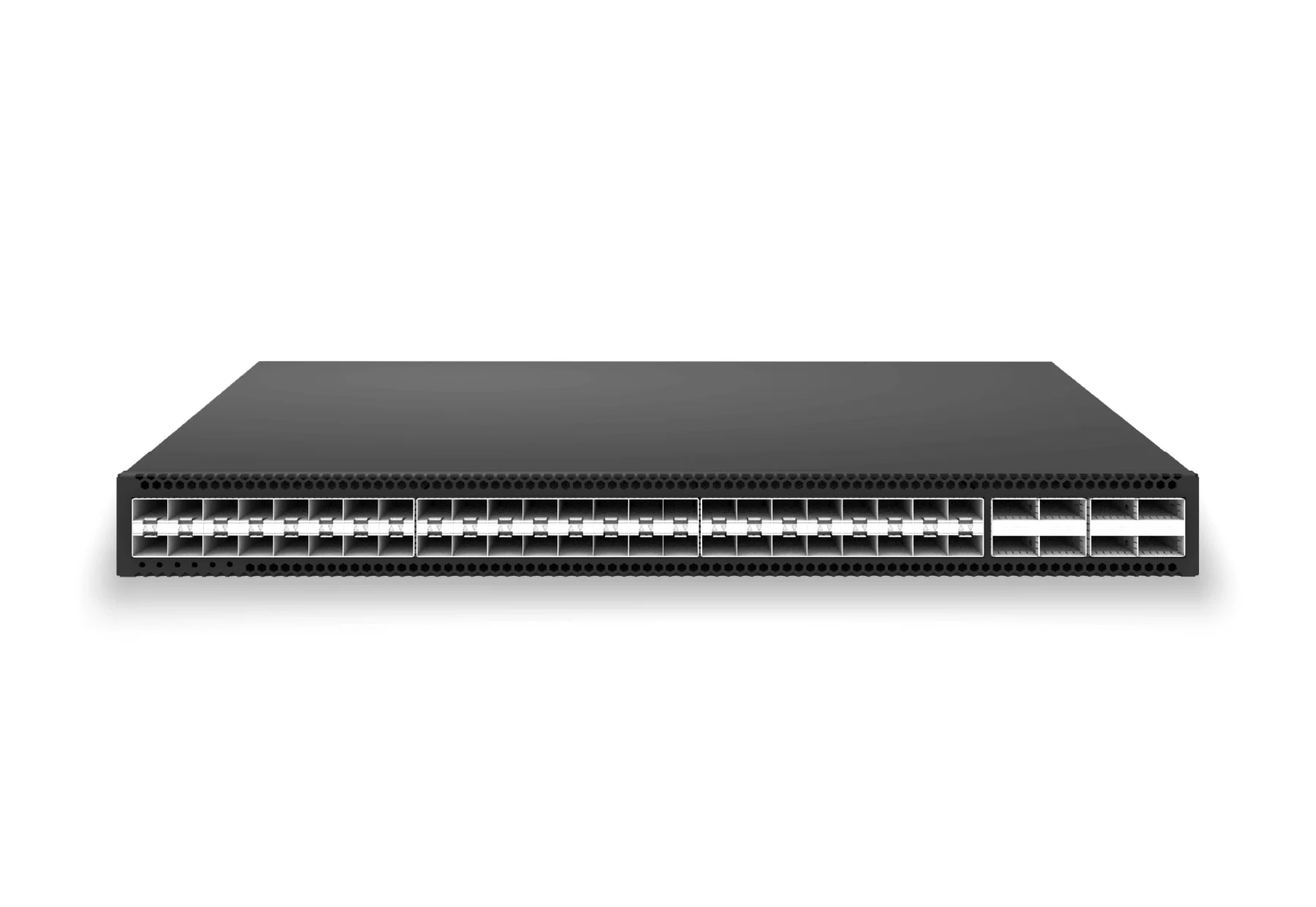 access aggregateXS-AA-48X25-8X100-AGG48x 25G SFP28 aggregation/core switch with 8x 100G QSFP28 for enterprise access and aggregation networks.View product
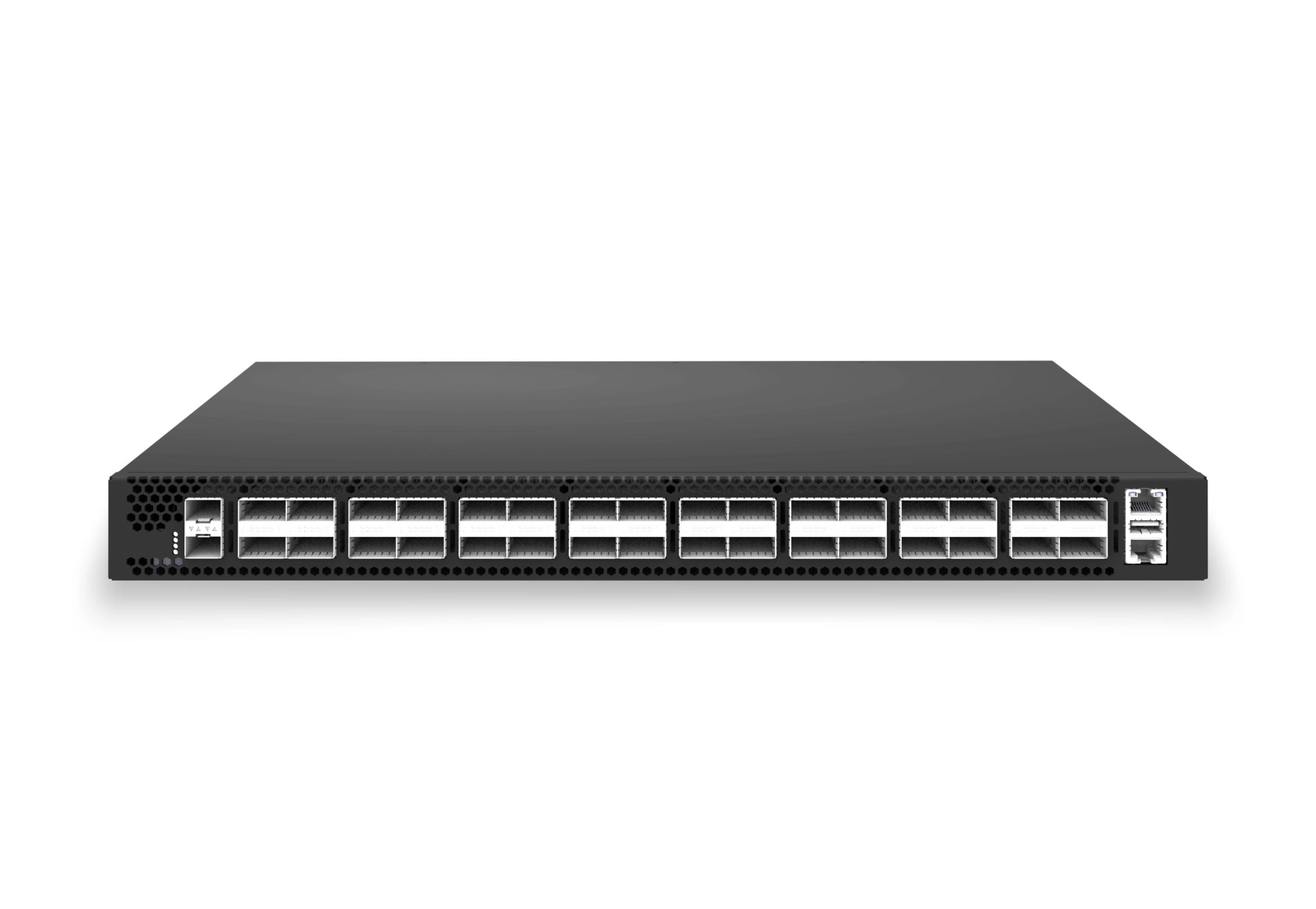 access aggregateXS-AA-32X100-CORE32x 100G QSFP28 aggregation/core switch with 2x 10G SFP+ auxiliary for enterprise access and aggregation networks.View product
Continue reading
Related articles
 Technical ArticleOpen Networking Support for Enterprise Buyers: How SONiC and Open NOS Models Actually WorkEngineering guidance on Open Networking Support for Enterprise Buyers for Australian campus teams, covering PoE budgets, access-layer resilience, migration risk.Read article
 Technical ArticleSecurity Hardening Checklist for Virtual Chassis and Cluster ConfigurationsSecurity hardening checklist for virtual chassis and cluster designs, covering management plane, RBAC, segmentation, logging, and failover risk.Read article
 Technical ArticleWhy SONiC Open Networking on Celestica Data Center Switches Matters for Australian EnterprisesHow SONiC on Celestica data center switches should be evaluated by Australian operators for ASIC fit, support, RoCE, automation, and TCO.Read article