
In brief
Security hardening checklist for virtual chassis and cluster designs, covering management plane, RBAC, segmentation, logging, and failover risk.
Key takeaways
- Virtual chassis and clustered switch architectures let network teams manage a stack of physical switches as a single logical device.
- For managed service providers (MSPs) and integrators delivering campus networks across Australian enterprise and government programs, this concentrated risk surface demands a security hardening checklist that goes beyond the generic switch lockdown playbook.
- This guide provides a practical, review-ready checklist that maps industry security control frameworks to the specific configuration concerns of virtual chassis and cluster deployments on campus switches.
Why Virtual Chassis and Cluster Topologies Need Their Own Security Checklist
Virtual chassis and clustered switch architectures let network teams manage a stack of physical switches as a single logical device. That consolidation simplifies operations, but it also concentrates risk. A compromised management session, a stale firmware image, or an overlooked control-plane ACL on one member node can expose the entire fabric.
For managed service providers (MSPs) and integrators delivering campus networks across Australian enterprise and government programs, this concentrated risk surface demands a security hardening checklist that goes beyond the generic switch lockdown playbook. The Australian Signals Directorate’s Essential Eight, the Privacy Act 1988, and sector-specific frameworks like the APRA CPS 234 information security standard all raise the bar for how network infrastructure must be configured and maintained.
This guide provides a practical, review-ready checklist that maps industry security control frameworks to the specific configuration concerns of virtual chassis and cluster deployments on campus switches. It is written for MSPs and integrators evaluating or deploying open networking fabrics, including those built on Enterprise SONiC.
Understanding the Virtual Chassis Attack Surface
A virtual chassis connects multiple physical switch units through dedicated stacking links or software-defined clustering protocols. The control plane, management plane, and data plane span all member devices. Key security implications include:
- Single management entry point. Compromising the master node or primary controller gives an attacker access to every member switch.
- Shared control plane. Routing protocols, spanning tree, and VLAN databases are synchronized across the cluster. A misconfiguration or malicious route injection on one node propagates instantly.
- Stacking link exposure. Dedicated inter-chassis links carry control and data traffic. If these links are not isolated and authenticated, they become interception points.
- Firmware consistency. All members should run the same validated firmware version. Mixed versions create compatibility gaps and unpatched vulnerabilities.
- Split-brain scenarios. When cluster members lose communication, each segment may elect its own master, leading to duplicate IP addresses, MAC flapping, and security policy divergence.
Each of these risks maps to a specific hardening control. The following checklist addresses them in order of deployment priority.
The Checklist: 12 Security Hardening Steps for Virtual Chassis Deployments
The checklist below adapts security control categories from the CompTIA Security+ SY0-701 framework, which covers secure baselines, hardening, access control, segmentation, patching, monitoring, and incident response. These categories are widely recognized in Australian MSP security programs and align with ASD Essential Eight maturity expectations.
1. Establish a Secure Baseline Configuration
Before deploying any virtual chassis, define and document a golden configuration template. This template should include:
- Default-deny ACLs on all management interfaces
- Disabled unused services (Telnet, HTTP, SNMPv1/v2c)
- Enabled SSH v2 with key-based authentication where supported
- NTP synchronization to trusted Australian time sources
- Syslog forwarding to a centralized, access-controlled SIEM
Store the golden template in version control. Every deployment and firmware upgrade should be validated against this baseline.
2. Harden the Management Plane
The management plane is the highest-value target in a virtual chassis. Recommended controls:
- Restrict management access to a dedicated out-of-band (OOB) VLAN or management VRF
- Enforce multi-factor authentication (MFA) for all administrative access, or at minimum use RADIUS/TACACS+ with strong shared secrets
- Set session timeouts and lockout thresholds
- Disable unused management protocols and ports
- Enable HTTPS with valid certificates for any web-based management interface
For Enterprise SONiC platforms, NETCONF and gNMI provide model-driven management that can be restricted by source IP and authenticated with TLS client certificates.
3. Implement Role-Based Access Control (RBAC)
Not every operator needs full administrative access. Define roles such as:
- Read-only auditor: Can view configuration and logs but cannot make changes
- Network operator: Can modify interface and VLAN settings but cannot change security policies or firmware
- Security administrator: Can modify ACLs, firewall rules, and authentication settings
- Super administrator: Full access, limited to named personnel with documented justification
Audit RBAC assignments quarterly. Remove access for departed staff immediately.
4. Isolate the Control Plane
Routing protocols, ARP, DHCP relay, and other control-plane traffic should be protected:
- Enable control-plane policing (CoPP) or control-plane rate limiting to prevent protocol flooding
- Use MD5 or TCP-AO authentication for BGP and OSPF neighbor sessions
- Enable storm control on all access ports to limit broadcast and multicast traffic
- Apply infrastructure ACLs (iACLs) that permit only authorized management sources to reach control-plane addresses
5. Secure Stacking and Inter-Chassis Links
Virtual chassis stacking links carry both control and user traffic. Hardening steps:
- Use dedicated physical ports for stacking where the platform supports it; do not share stacking and user traffic on the same physical link
- Enable link-level encryption or MACsec on stacking links if the hardware supports it
- Monitor stacking link health and alert on topology changes (member additions, removals, or role changes)
- Document the expected stack topology and alert on any deviation
6. Enforce Network Segmentation
Segmentation limits the blast radius of a compromised segment:
- Assign management traffic to a dedicated VLAN that does not carry user data
- Use private VLANs or micro-segmentation to isolate guest, IoT, and corporate endpoints
- Apply inter-VLAN routing ACLs to enforce least-privilege traffic flows
- Where the campus uses EVPN-VXLAN overlays, apply segment-level policies at the VTEP boundary
For Australian government and critical infrastructure programs, segmentation also supports compliance with the ASD Essential Eight network segmentation requirement.
7. Standardize Firmware and Patch Management
Firmware consistency is critical in a virtual chassis:
- Run the same validated firmware version on all cluster members
- Maintain a firmware rollback image on each member switch
- Subscribe to security advisories from the NOS vendor and the SONiC community
- Test patches in a lab environment before rolling to production
- Document firmware versions and patch dates in a configuration management database (CMDB)
The SONiC open-source community publishes release notes and security advisories through the GitHub repository at github.com/sonic-net/SONiC and the SONiC Foundation at sonicfoundation.dev. MSPs should include these sources in their vulnerability monitoring workflow.
8. Enable Comprehensive Logging and Monitoring
Visibility is the foundation of incident detection:
- Forward all syslog, SNMP traps, and NETCONF notifications to a centralized log collector
- Enable configuration change auditing so every admin action is logged with a timestamp and user identity
- Monitor for virtual chassis topology changes: member join, member leave, master failover, stack split
- Set up alerts for authentication failures, ACL violations, and routing protocol neighbor flaps
- Retain logs for a minimum of 12 months to satisfy Australian regulatory and incident response requirements
9. Protect Against Split-Brain and Dual-Master Scenarios
Split-brain events create duplicate control planes and can bypass security policies:
- Configure dual-active detection mechanisms (MAD, BFD-based detection, or vendor-specific split-brain prevention)
- Define a preferred master and backup master with deterministic priority values
- Test failover and recovery procedures during a maintenance window and document the results
- Alert immediately on any split-brain or dual-master event
10. Harden Physical Access
Virtual chassis members may be distributed across wiring closets and server rooms:
- Lock all network cabinets and wiring closets
- Use tamper-evident seals on chassis that carry sensitive VLANs
- Disable console and USB ports on deployed switches if the platform supports it
- Document physical access logs and review them quarterly
11. Validate with Vulnerability Scanning and Penetration Testing
After deployment, validate the hardened configuration:
- Run authenticated vulnerability scans against all management and data-plane interfaces
- Conduct annual penetration tests that include virtual chassis attack scenarios (stacking link injection, management plane compromise, split-brain exploitation)
- Remediate findings before handing the network to the customer
- Provide the customer with a remediation report and residual risk register
12. Document and Transfer Operational Security Procedures
The final step is ensuring the customer or downstream operator can maintain the hardened state:
- Deliver a runbook covering firmware updates, failover testing, log review, and access control audits
- Include the golden configuration template and change management workflow
- Train the customer’s operations team on virtual chassis-specific security monitoring
- Schedule a 30-day and 90-day post-handover review to verify controls are holding
Australian Compliance Considerations
MSPs and integrators operating in Australia should align their campus switch hardening practices with the following frameworks:
| Framework | Relevance to Virtual Chassis Hardening |
|---|---|
| ASD Essential Eight | Patching, application control, admin privilege restriction, MFA |
| Privacy Act 1988 and APPs | Access control, logging, data breach notification |
| APRA CPS 234 | Information security controls for financial services entities |
| ISO 27001 | Annex A controls for network management, access control, and operations security |
| CompTIA Security+ SY0-701 | Secure baselines, hardening, segmentation, patching, monitoring, IAM, incident response |
Why Open Networking Changes the Hardening Equation
Traditional proprietary virtual chassis solutions lock the MSP into a single vendor’s security patch cycle, CLI syntax, and vulnerability disclosure process. Open networking platforms built on Enterprise SONiC offer a different model:
- Transparent source code. Security researchers and MSPs can audit the NOS directly. Vulnerability disclosures are public through the SONiC community.
- Model-driven management. NETCONF and YANG models enable automated compliance checking against golden configurations.
- Multi-vendor hardware. The same SONiC image can run on switches from multiple ASIC vendors, reducing supply chain lock-in and enabling faster hardware replacement.
- Containerized architecture. SONiC’s Docker-based modular design provides better fault isolation than monolithic switch OSes. A compromised container can be restarted without affecting the entire switch.
For Australian MSPs evaluating campus refresh programs, this openness translates into faster patch deployment, more granular security auditing, and the ability to validate configurations programmatically at scale.
Next Steps for MSPs and Integrators
- Download or bookmark this checklist and adapt it to your standard deployment template.
- Map each checklist item to your existing security policy framework (Essential Eight, ISO 27001, or SOC 2).
- Evaluate whether your current campus switch platform supports all 12 hardening controls. If gaps exist, consider an open networking alternative.
- Contact xSONiC to discuss campus refresh options and virtual chassis solution availability in Australia.
This checklist is a starting point, not a complete security program. Every deployment has unique risk factors that require site-specific assessment.
For acceptance, require 30 days of security log retention, 24 hours clock-synchronised syslog validation, MFA on all administrative access, backup and restore proof within 2 hours, and at least 3 split-brain or member-failure simulations. Those numbers make the checklist auditable for security teams rather than a set of good intentions.
Engineering FAQ
What should be measured before sizing a packet broker? Measure source link speed, 95th-percentile utilisation, burst peaks, replication factor, filter complexity, tunnel handling needs, and tool-port capacity. Packet broker sizing fails when it is based on average traffic rather than copied and filtered traffic.
What proves that a visibility design is production ready? The design should prove aggregation, filtering, replication, load balancing, packet slicing or deduplication if required, and tool failover under realistic traffic. Security teams should also verify that drops are reported rather than hidden.
Where do Australian buyers most often under-scope visibility projects? The common gaps are east-west data centre traffic, encrypted or tunneled flows, AI cluster bursts, retention requirements, and tool oversubscription. A procurement brief should model those before asking vendors for a bill of materials.
Related xSONiC Resources
Sources Reviewed
- IEEE 802.1Q Bridges and Bridged Networks
- IEEE 802.1AX Link Aggregation
- Ethernet Network Adapters - ConnectX NICs | NVIDIA
- NVIDIA BlueField Data Processing Unit
- NVIDIA Spectrum-X Ethernet Platform
- OpenConfig gNMI Specification
- OpenConfig
- RFC 7950 - The YANG 1.1 Data Modeling Language
- RFC 6241 - Network Configuration Protocol (NETCONF)
- ACSC Essential Eight
- OAIC Notifiable Data Breaches
- APRA CPS 234 Information Security
- NETSCOUT Network Packet Definition
- Cloudflare Network Packet Definition
- SONiC Project Documentation
- Broadcom Ethernet Switching
- Marvell Switching
- NVIDIA Ethernet Switching
- Open Compute Networking
- SONiC GitHub
- SONiC Foundation
Product fit
Products referenced for evaluation
These products are referenced for evaluation context in the article. Confirm workload, port, optics, software, interoperability, and support requirements against the exact deployment before procurement.
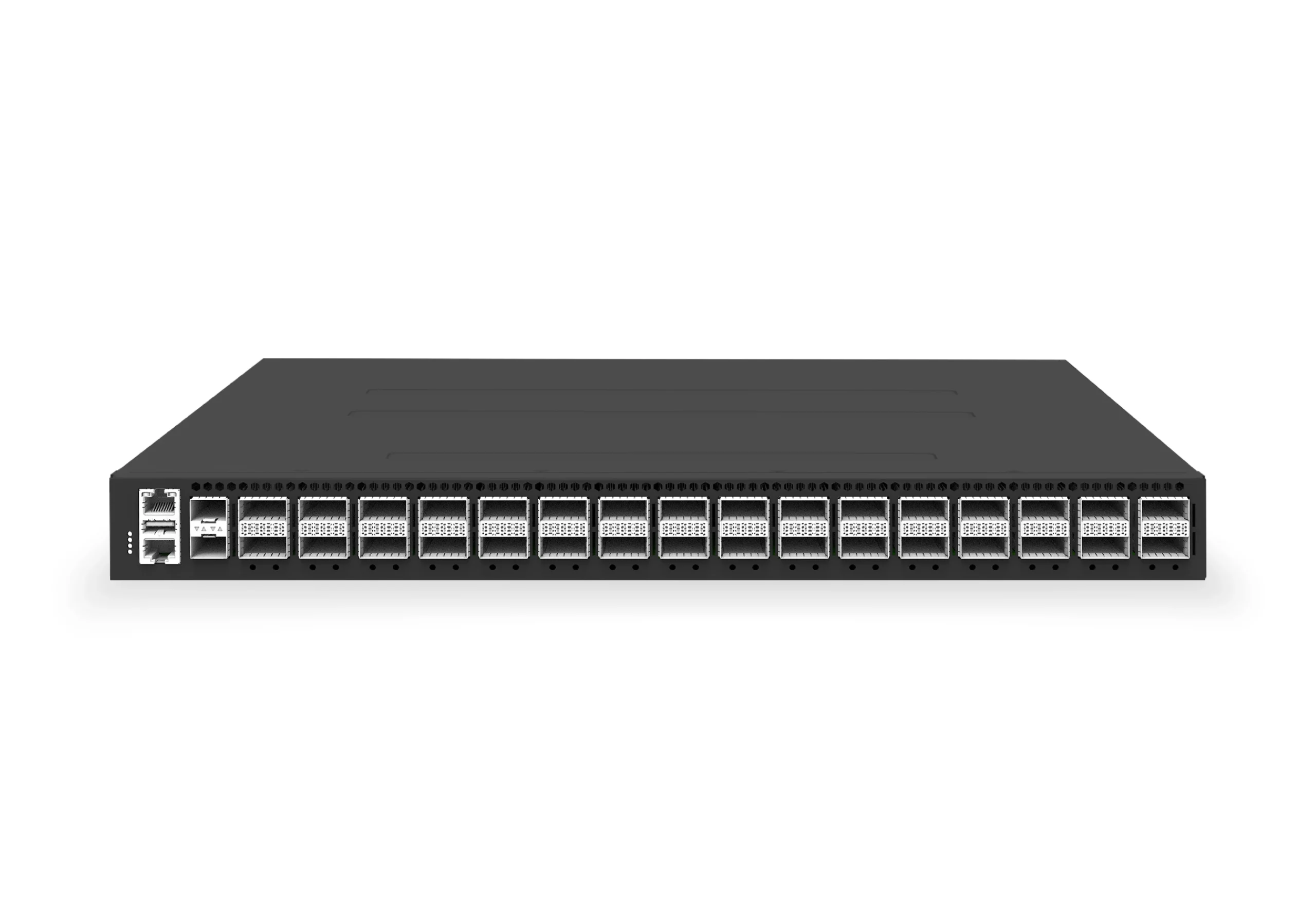 datacenter aiXS-DC-32X400-SP-G232-port 400G spine/core switch for high-capacity data center fabrics and AI-ready backbones.View product
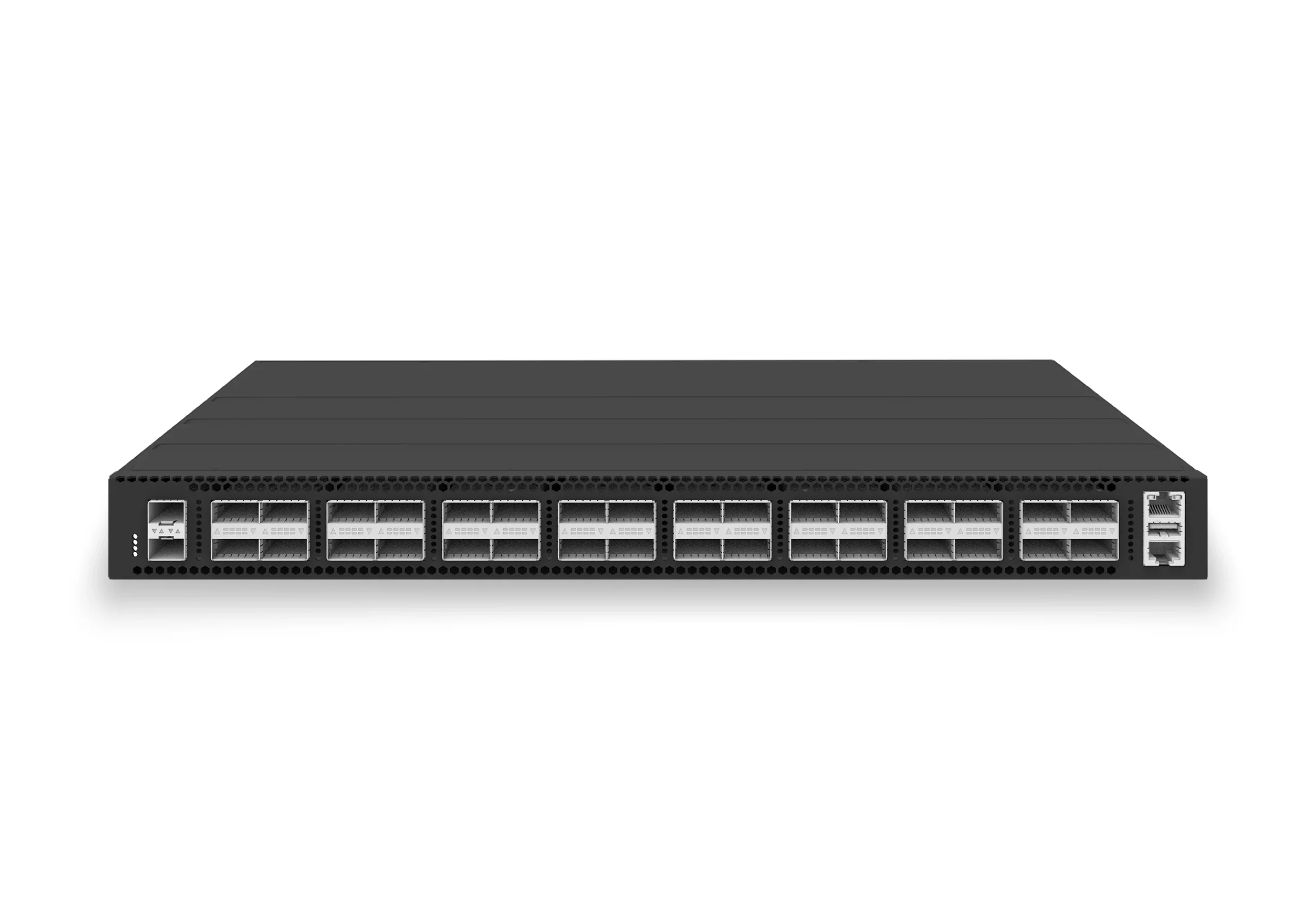 datacenter aiXS-DC-32X100-LS-G232-port 100G leaf/spine switch for VXLAN fabrics, RoCE-ready workloads, and tenant-scale routing.View product
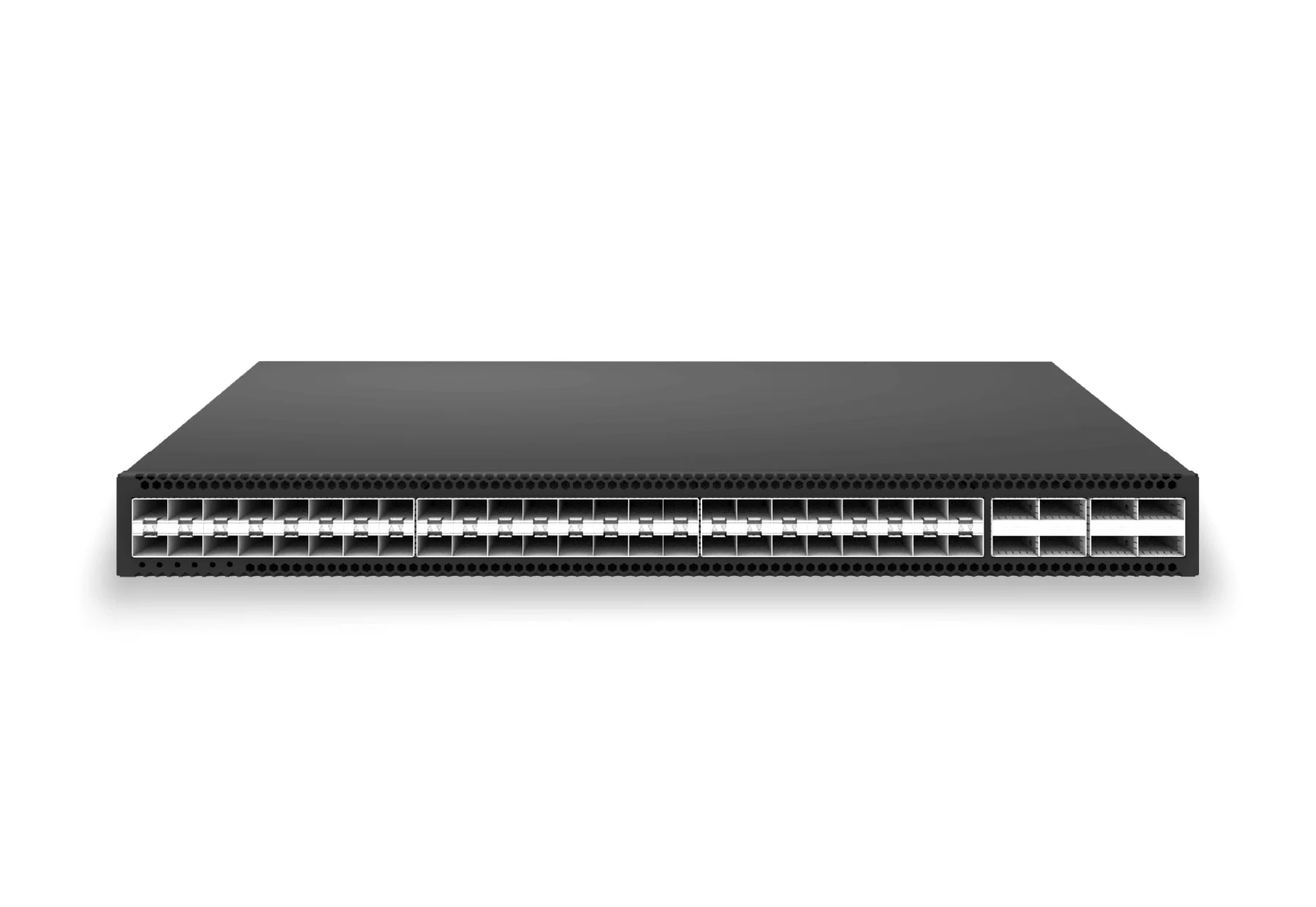 access aggregateXS-AA-48X25-8X100-AGG48x 25G SFP28 aggregation/core switch with 8x 100G QSFP28 for enterprise access and aggregation networks.View product
Continue reading
Related articles
 Technical ArticleSONiC Switch Validation Before Production: What Australian Network Teams Need on Their ChecklistEngineering guide for SONiC and open networking buyers covering platform fit, automation, support, telemetry, and validation evidence.Read article
 Technical ArticleHow Open NOS Options Like SONiC Are Reshaping Data Center Switch Lock-In Calculations for Network LeadersEngineering analysis of how SONiC and open NOS options change data center switch lock-in, covering SAI, support ownership, migration risk, and validation.Read article
 Technical ArticleWhite Box Switch Risks and Validation Checklist: What Australian Enterprise Teams Must Prove Before DeploymentA structured risk analysis and pre-purchase validation checklist for Australian enterprise teams evaluating white box and bare-metal switches with SONiC or other open NOS options.Read article